Successful First-Time JAGM Quad Launcher Demo Showcases Mission Integration Capabilities 
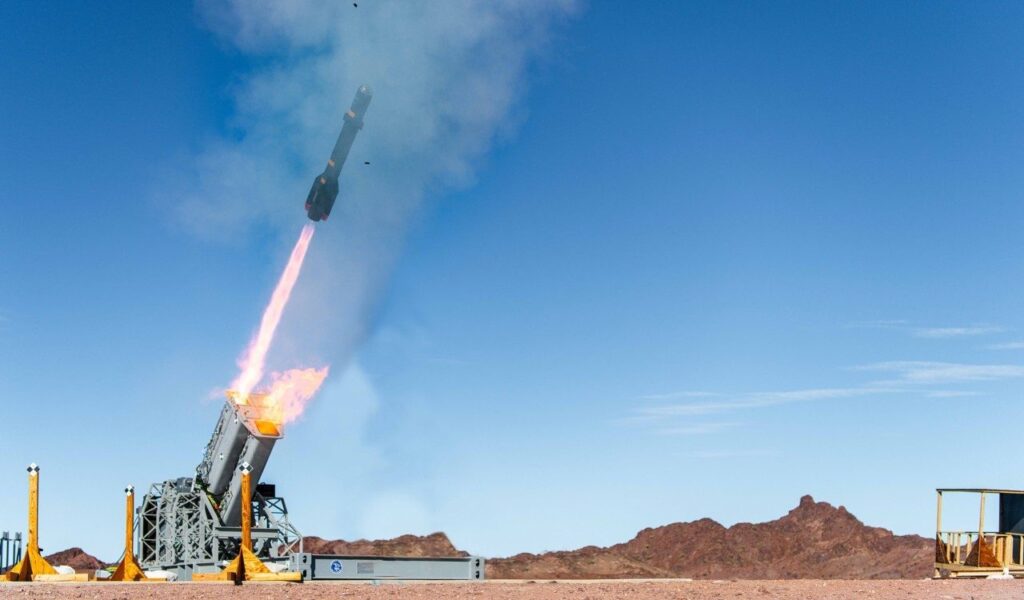
JAGM Quad Launcher (JQL) successful firing during demonstration  

Release From Lockheed Martin

In a world where threats are increasingly complex and interconnected, Lockheed Martin is redefining the art of mission integration, accelerating the delivery of innovative solutions that strengthen deterrence and enable modern forces to stay ahead of ready. 

Lockheed Martin successfully conducted a JAGM Quad Launcher (JQL) ground-based demonstration, marking a significant development milestone for the vertical launching system (VLS). Held on August 28 at Yuma Proving Grounds in Arizona, the demonstration showcased the successful integration of the Joint Air-to-Ground Missile (JAGM) with the JQL, culminating in a first-time launch event. 

The successful shot resulted in a direct hit on a stationary ground target and collection of real-time data of JAGM’s ignition, launch and flight from the launcher to target impact. The demonstration took place with the JQL positioned at a 45-degree angle, underscoring the system’s flexibility and potential for various operational applications. 

Mission-focused Innovation 

This demonstration is a testament to the collaborative efforts and agile forward-thinking of Lockheed Martin’s Missile & Fire Control and Rotary & Mission Systems teams. By leveraging cutting-edge technology and expertise from both teams, this demonstration paves the way for further advancements in JAGM’s VLS and Counter-Unmanned Aircraft Systems (C-UAS) capabilities. 

“This pivotal milestone achievement showcases the versatility and adaptability of JAGM to provide a robust defense capability for multiple mission scenarios,” said Casey Walsh, program management director of Multi-Domain Missile Systems at Lockheed Martin Missiles and Fire Control. “By driving progress in areas like vertical launch and counter-UAS capabilities with JAGM, we’re helping to ensure that our users have the tools they need to stay innovative and ahead of emerging threats.” 

With this demonstration being the first time a JAGM was flown from a cannister-based launcher, the integration of JAGM with the JQL system showcases its versatility to be adapted for multiple mission scenarios, providing a robust defense capability for both American forces and our allied partners.  

The JQL system features four independent, modular composite cells, known as canisters, and one of the biggest benefits and features of the system is that it allows for rapid reload of individual canister cells based on existing JAGM procedures, enhancing its operational efficiency. The JQL system is equipped with a pivot fixture, which enables the ease of loading and launching of JAGM at angled or vertical orientations. The JQL’s vertical launch capability supports rapid 360-degree engagement against targets (maritime, air and ground) around the launching platform. The self-contained vertical missile gas management system provides enhanced safety to crew members and launching platforms 

In addition, JQL’s modular design facilitates ease of installation onto any number of launching platforms: ships, patrol craft, vehicles and other various fixed-based applications. This design versatility also enables the JQL system to be adapted and scaled for multiple mission scenarios, providing a robust defense capability for armed forces. For example, the JQL system could be scaled down to one or two launch tubes, or multiple JQL systems could be mounted together on a platform to support a larger arsenal.  

“By continuing to build upon our five decades of vertical launching systems expertise, we are excited to see our scalable, flexible launching solutions continue to successfully meet expeditionary capability needs,” said Edward Dobeck, director of Launching Systems at Rotary and Mission Systems.  “The JQL launcher provides a combat-ready capability that meets multi-domain deployment objectives in a lightweight, easily transportable footprint that provides the same reliability expected of all our launching systems.” 

As the JQL development and integration timeline moves forward, Lockheed Martin continues to push the boundaries of what is possible in vertical launch system development, driving innovation and advancement in the field. 

The Future of Vertical Launch Capability 

The success of the recent JQL ground-based demonstration paves the way for future advancements for both JAGM and the JQL system, including an upcoming vertical launch demonstration in November 2025. This demonstration will showcase the vertical launch capability of the JAGM at a 90-degree angle, as well as its application in Counter-Unmanned Aerial Systems (C-UAS) operations. 

As the integration of JAGM with the JQL system evolves, it is expected to provide enhanced capabilities for users that require expedient multi-domain capabilities, enabling more effective and efficient operations in a variety of environments. With our focus on mission integration and innovation, Lockheed Martin is poised to play a leading role in shaping the future of global defense and security, delivering game-changing capabilities that enable modern forces to stay ahead of ever-evolving threats. 


Leonardo DRS Wins First Place in DoD Counter-UAS Competition

New electronic warfare system expands rapid-response capability to detect and neutralize drone threats in dynamic environments 

Release From Leonardo DRS

ARLINGTON, VA, Oct. 9, 2025  ̶   Leonardo DRS, Inc. (NASDAQ: DRS) announced today that it won first place in a Department of Defense counter drone competition by demonstrating an advanced electronic warfare system that can be integrated into the company’s range of proven and fielded counter-UAS (C-UAS) capabilities. This latest capability highlights the company’s leadership role as a developer and provider of proven counter-UAS and air defense systems that enhance force protection across today’s complex and dynamic battlespace. 

During a demonstration event hosted by the DoD’s Joint Counter-small Unmanned Aircraft Systems Office (JCO), Leonardo DRS demonstrated the cutting-edge Ring C-UxS system that employs proprietary, advanced radio frequency-based electronic warfare capabilities to detect, identify, and defeat enemy drones and autonomous systems, from air, land, or sea. 

Leonardo DRS and its technology partner, Regulus, excelled in the portion of the demonstration that focused on Dismounted Detect-Identify-Track-Defeat of group 1 and 2 UAS.  During the demonstration, Leonardo DRS successfully employed the system to detect, identify and defeat mock enemy drones with its radio frequency-based electronic warfare capabilities. The demonstration gave industry the chance to inform the JCO of new capabilities that are able to operate in a contested electromagnetic environment. 

“We are proud to have been recognized with a first-place award in this critical JCO demonstration used to inform requirements for keeping ahead of the ever-growing small UAS threat,” said Aaron Hankins, senior vice president and general manager of the Leonardo DRS Land Systems business unit. “As an agile and experienced company in the space, we are honored to support the JCO as they identify capabilities that can be quickly integrated and deployed to defend our warfighters across the battlespace.”  


The Ring system leverages radio frequency (RF) detection, unique Global Navigation Satellite Systems techniques, and RF datalink manipulation to counter both commercial and military uncrewed threats.  The technology has been actively deployed across multiple platforms and operational theaters and has demonstrated exceptional effectiveness against uncrewed threats—from commercial Group 1 systems to military Group 3 platforms. 

The Ring demonstration highlights Leonardo DRS’ proven capability to identify and rapidly integrate best-of-breed technologies to enhance its counter-UAS and air defense portfolio to support the critical needs of its customer.  The company’s leadership in this space includes serving as prime contractor and lead systems integrator for the Mobile-Low, Slow Small Unmanned Aircraft Integrated Defeat System (MLIDS) program as well as developer and provider of the integrated Mission Equipment Package for the SGT Stout Maneuver Short Range Air Defense (M-SHORAD) program. The company’s integration capability also extends across all domains to support force protection, computer networking and C5I, as well as naval power and propulsion systems. 


GA-ASI and AeroVironment Complete First-Ever Air Launch of Switchblade 600 from MQ-9A UAS

Release of Smaller Loitering Munition Further Validates Large UAS as Motherships 

From General Atomics Aeronautical Systems Inc.

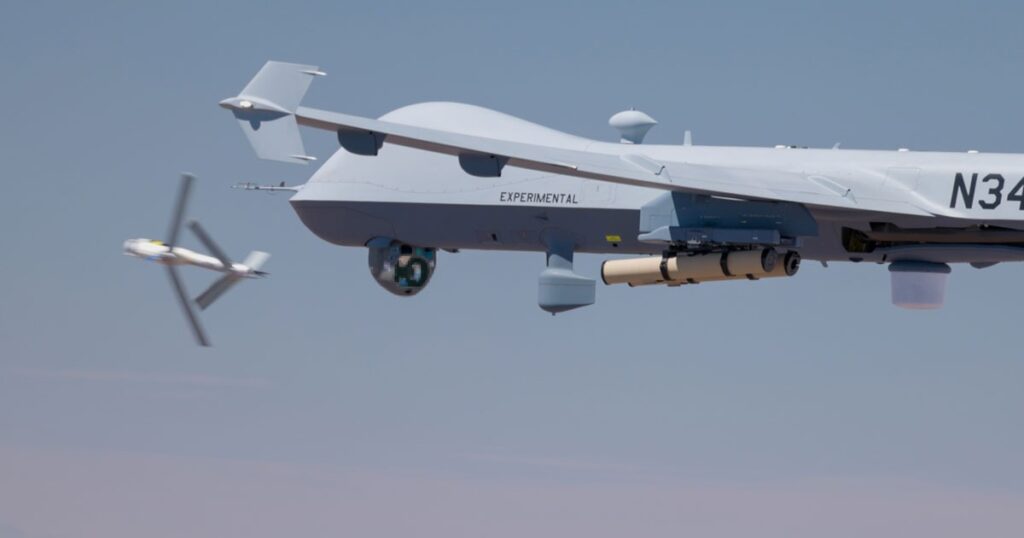
SAN DIEGO – 10 September 2025 – General Atomics Aeronautical Systems, Inc. (GA-ASI) and AeroVironment (“AV”) (NASDAQ: AVAV) collaborated on the air launch of a Switchblade 600 loitering munition (LM) from a GA-ASI Block 5 MQ-9A unmanned aircraft system (UAS). The flight testing took place from July 22-24 at the U.S. Army Yuma Proving Grounds Test Range. It marked the first time a Switchblade 600 has ever been launched from an unmanned aircraft. 

“This cooperative effort showcased how combining different unmanned technologies could really provide value and effects to the warfighter,” said GA-ASI President David R. Alexander. “By using MQ-9A to carry the Switchblade, the MQ-9A is able to stand off farther from enemy weapons systems and increase the range of the SB600, which will provide greater access and options in contested airspace.”  

After successfully integrating the SB600 with the MQ-9A, the team released two LMs: one with an inert warhead and the other with a high-explosive round. After launch, the team transferred control of the Switchblade from a user in the MQ-9A’s ground control station to a user on the ground nearer the operational area.  

The test further validated GA-ASI’s ability to integrate and operate a variety of airborne launched effects on the battlefield – including both those built by GA-ASI and by partners such as AV – and how their use in conflict provides risk-tolerant options to commanders in contested operations. 


Leonardo DRS Launches New AI-Enabled Rugged Smart Displays

New Product Line Expands Company’s Advanced Tactical Computing Portfolio 

From Leonardo DRS 

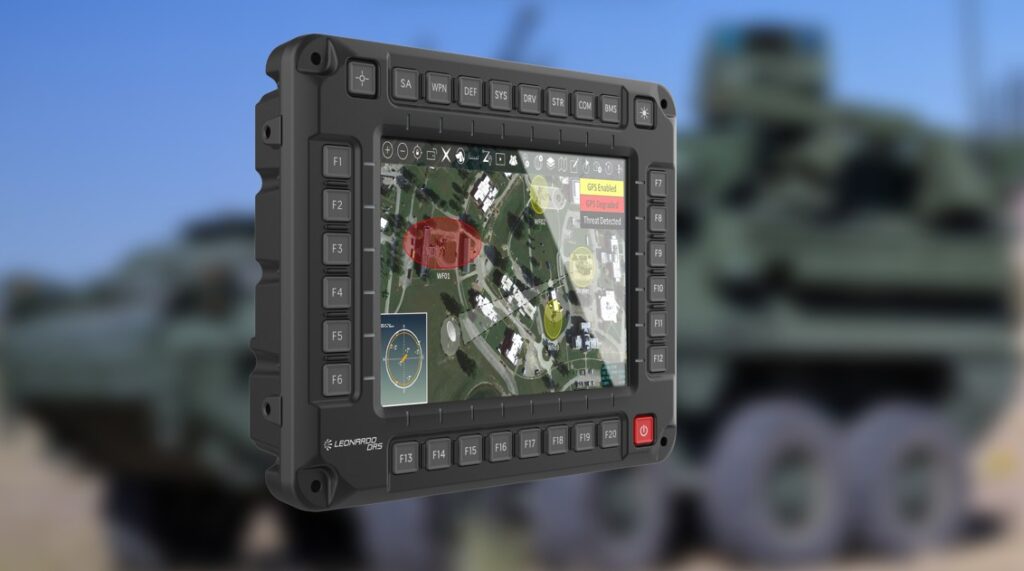
ARLINGTON, Va., Sept. 8, 2025  ̶   Leonardo DRS, Inc. (NASDAQ: DRS) announced today the launch of its new product line of high-performance AI-enabled Ground Vehicle Architecture Smart Display systems called Rugged Smart Displays – Ground (RSD-G).  The next-generation, tactical computing systems are designed to set a new standard for ruggedness, performance, and connectivity over existing tactical smart display systems used in ground combat vehicles. 

The new modular RSD-G systems bring the latest in advanced combat smart display technology.  By integrating Intel Core™ i7 extended temperature processors with embedded AI capability, users have significant advantages in performance, autonomy, and responsiveness on the battlefield.  The displays combine advanced computing technology with high-resolution, multi-function displays in four sizes, enabling military customers to modernize with common computing architecture across platforms. 

At the heart of the RSD-G family is the embedded powerful AI capability designed to quickly analyze data from various vehicle-based sensors (cameras, radar, thermal imaging, and more), and combine it into a single comprehensive view for operators.  By quickly providing reliable real-time situational awareness, users are able to make faster and more informed decisions during stressful combat scenarios. 

“We are excited to launch this cutting-edge family of rugged smart displays designed to provide our military and allied forces with a decisive advantage in today’s complex battlespace,” said Denny Crumley, senior vice president and general manager of the Leonardo DRS Land Electronics business unit.  “And by meeting the growing demand for AI-enabled, modular architectures for ground combat vehicles with this capability, we have proudly reinforced our position as industry leader in mission computing technology.” 

Network computing and integration is a key strategic focus for Leonardo DRS as it continues to be the leading provider of advanced C5I technologies with the U.S. military, the U.K. Ministry of Defense, and allied militaries around the world.  These capabilities are enabling increased data and communications needed for situational awareness in multi-domain battlefield operations. The company is investing in the future of C5 through the development of next-generation battle management systems, AI processing solutions and advanced C5ISR/EW Modular Open Suite of Standards/ Sensor Open System Architecture aligned mounted systems – all aimed at enabling future network and platform processing to improve sensor fusion, situational awareness, and reduce the cognitive burden for commanders and crews. 


Crowley-managed CS Anthem Joins Tanker Security Program

From Crowley, Aug. 28, 2025 

Through the program, CS Anthem and its crew will support MARAD’s mission to ensure fuel transport readiness for the U.S. Department of Defense, while advancing the nation’s strategic sealift capabilities. 

JACKSONVILLE, Fla., Aug. 28, 2025 /PRNewswire-PRWeb/ — Crowley Stena Marine Solutions, the joint venture between Crowley and Stena Bulk, has received approval from the U.S. Maritime Administration (MARAD) to operate the CS Anthem tanker under the Tanker Security Program. 

The addition of the CS Anthem demonstrates our commitment to strengthening U.S. maritime security and providing reliable, U.S.-crewed tanker capacity in support of national defense. 

The CS Anthem, a U.S.-flagged, 49,990-metric-ton, medium-range tanker, is crewed and managed by Crowley under a bareboat charter through the joint venture. The vessel joins Crowley-managed tankers Stena Imperative and Stena Impeccable in the Tanker Security Program, replacing the Stena Immaculate. 

Through the program, CS Anthem and its crew will support MARAD’s mission to ensure fuel transport readiness for the U.S. Department of Defense, while advancing the nation’s strategic sealift capabilities. 

“The addition of the CS Anthem demonstrates our commitment to strengthening U.S. maritime security and providing reliable, U.S.-crewed tanker capacity in support of national defense,” said Tucker Gilliam, vice president of fleet operations for Crowley Shipping. “Together with Stena Bulk, we are proud to continue advancing solutions that serve both commercial and government energy transportation needs.” 

The Crowley Stena Marine Solutions joint venture combines Crowley’s leadership in U.S. flag operations and mariner crewing with Stena Bulk’s global tanker expertise, delivering agile, reliable and secure solutions for government and commercial customers. 


Sparton selected by Australia, Canada and India for maritime defense technologies

Multiple contract awards to exceed $34 million, equipping allies with sophisticated Undersea Warfare and Anti-Submarine Warfare solutions

DELEON SPRINGS, FLORIDA– Aug. 18, 2025 – Sparton DeLeon Springs, LLC (Sparton) was recently awarded multiple firm-fixed-price contracts to supply electro-acoustic devices and various models of sonobuoys to the Australian Department of Defence, the Canadian Department of National Defence, and the Indian Ministry of Defence. The combined value of these contracts exceeds $34 million. All work to support these contracts will be performed at Sparton’s facility in DeLeon Springs, Florida.  

“Sparton is the global leader in designing, developing and producing complex underwater systems that are used to locate submarines,” said Sparton President and CEO Donnelly Bohan. “Securing contracts from multiple allied nations demonstrates the superiority of our solutions and their globally recognized utility in Anti-Submarine Warfare and Undersea Warfare efforts.”   


Saronic Unveils Echelon: A Unified Platform for Autonomous Surface Vessels

Release From Saronic 

Austin, Texas, July 30, 2025 — Saronic Technologies today unveiled Echelon, a unified platform that enables advanced mission planning, high-fidelity simulation, and real-time command-and-control (C2) for its growing fleet of Autonomous Surface Vessels (ASVs). Built to enable scalable, distributed operations, Echelon allows a single operator to plan, simulate, and execute complex missions across multiple autonomous assets—using a single interface. 

As maritime environments become increasingly contested and operationally complex, both defense and commercial users require intuitive solutions to deploy, manage, and dynamically task autonomous systems at scale. Success in these domains hinges on advanced mission planning, scalable C2, and the ability to operate reliably with or without continuous connectivity. Echelon aims to deliver on this need by combining mission planning, simulation, and execution capabilities into one system, accelerating deployment timelines and reducing cognitive load for operators. 

With Echelon, operators are provided with an intuitive interface for rapidly designing and testing missions in a high-fidelity simulation environment. Enabled by Saronic’s deep instrumentation across the hardware and software stack, this simulation layer delivers full visibility into vessel autonomy, providing insight into the vessel’s performance capabilities prior to deployment. Once validated in simulation, the mission is easily deployed to the designated ASV(s). Mission observation and real-time control are available as needed, though Saronic ASVs are uniquely capable of operating independently without persistent communications, a critical requirement for denied or degraded environments. 

During operation, Echelon prioritizes the safety, reliability, and effective control of Saronic ASVs. The platform combines ultra-low-latency video streaming with intelligent, autonomy-aware alerts generated from the vessels’ onboard sensors and mission telemetry. By surfacing only the most relevant data, from subsystem telemetry to autonomy behaviors, Echelon helps operators stay focused, informed, and ready to make high-impact decisions in real-time.  

“Echelon is aligned with Saronic’s core belief that a vertically integrated system across both software and hardware will best enable our end users to achieve their mission objectives,” said Vibhav Altekar, Co-Founder and CTO at Saronic. “While our vessels remain compatible with third-party C2 systems, Echelon was purpose-built to unlock the full potential of Saronic’s autonomy stack and deliver an intuitive mission-ready capability to our customers.”   

Saronic continues to push the boundaries of distributed autonomy with Echelon. The unified platform represents a critical step forward in Saronic’s mission to enable one-to-many operations, where a single operator can command and control a heterogeneous fleet of ASVs—reliably, safely, and at scale. 


Bell to Build X-Plane for Phase 2 of DARPA Speed and Runway Independent Technologies (SPRINT) X-Plane Program 

From Bell Textron Inc., July 9, 2025 

Bell awarded funding for X-plane build phase of SPRINT program 

Fort Worth, TX (July 9, 2024) — Bell Textron Inc., a Textron Inc. (NYSE: TXT) company, has been down-selected for Phase 2 of Defense Advanced Research Projects Agency (DARPA) Speed and Runway Independent Technologies (SPRINT) X-Plane program with the objective to complete design, construction, ground testing and certification of an X-plane demonstrator. 

“Bell is honored to have been selected for the next phase of DARPA’s SPRINT program and is excited to demonstrate a brand-new aircraft with the first-ever stop/fold technology,” said Jason Hurst, executive vice president, Engineering. “This is an achievement we’ve been working towards for over 10 years, as we’ve leveraged our nearly 90-year history of X-plane development to bring new technology to our warfighters.” 

The goal of the program is to provide these aircraft with the ability to cruise at speeds from 400 to 450 knots at relevant altitudes and hover in austere environments from unprepared surfaces. In Phase 1A and 1B, Bell completed conceptual and preliminary design efforts for the SPRINT X-plane. Phase 2 includes detailed design and build culminating in flight test during Phase 3. 

In preparation for X-plane development, Bell has completed significant risk reduction activities including demonstrating folding rotor, integrated propulsion, and flight control technologies at Holloman Air Force Base as well as wind tunnel testing at the National Institute for Aviation Research (NIAR) at Wichita State University. Bell has a rich history of breaking barriers and high-speed vertical lift technology development, pioneering innovative VTOL configurations like the X-14, X-22, XV-3 and XV-15 for NASA, the U.S. Army and U.S. Air Force, and continues to build on the legacy of the Bell X-1. 


Lockheed Martin Delivers AN/SPY-7(V)1 Radar Antennas to Japan

Release From Lockheed Martin

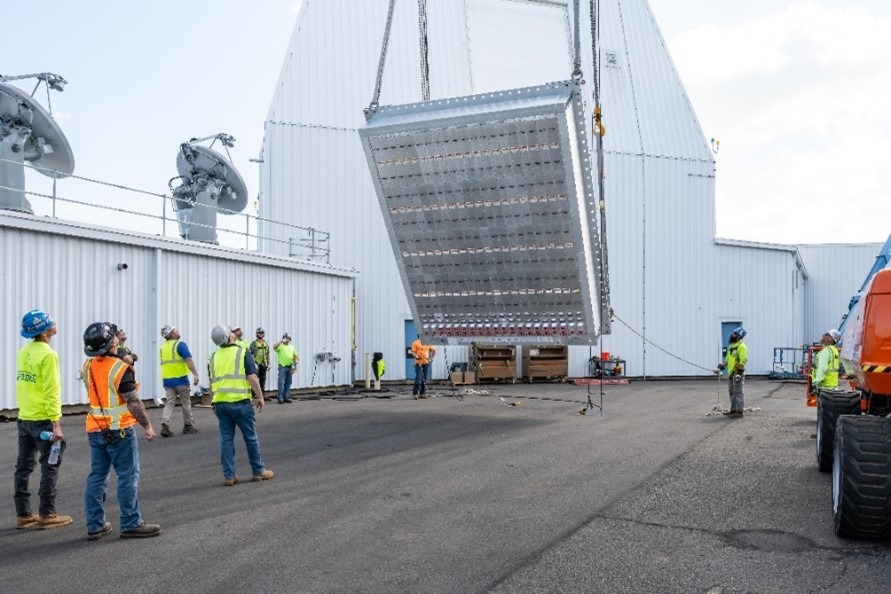
MOORESTOWN, N.J. July 7, 2025 – Lockheed Martin (NYSE: LMT), successfully delivered the first Aegis System Equipped Vessel (ASEV) shipset comprised of four AN/SPY-7(V)1 radar antennas to the Japan Ministry of Defense (JMOD). The delivery was facilitated through Mitsubishi Corporation under a Direct Commercial Sale arrangement after rigorous acceptance testing. 

“The successful on-time delivery of all antennas for the first ASEV showcases the maturity and scalability of the SPY-7 radar as well as production capacity, while also demonstrating Lockheed Martin’s dedication and expertise in system integration,” said Chandra Marshall, vice president of Multi-Domain Combat Solutions at Lockheed Martin. 

The JMOD is acquiring two ASEVs, and both are on track for commissioning in Japan Fiscal Year 2027 and 2028. Marshall continued, “We will continue full system integration and testing with all four antennas at the Production Test Center in Moorestown, New Jersey this year, prior to equipment delivery to Japan, which will significantly reduce integration risk and enable commissioning on schedule.” 

The SPY-7 Advantage 

With advanced detection and tracking capabilities, SPY-7 effectively counters complex threats, enabling simultaneous engagement of multiple targets and delivering a robust 21st century security capability that enhances the effectiveness of naval forces in an increasingly uncertain and dynamic environment. 

In addition to Japan’s ASEVs, the SPY-7 radar is also being produced for Canada’s River-Class Destroyers, Spain’s F-110 Frigates, and the land-based version has been deployed by the Missile Defense Agency for the Guam Defense System (TPY-6) and the Long-Range Discrimination Radar. The selection of Lockheed Martin’s solid-state radar by both the U.S. and multiple international allies demonstrates the world-class capability and maturity of the radar. In December 2024, Lockheed Martin’s land-based version of the SPY-7 radar, known as TPY-6, successfully intercepted a mid-range ballistic missile as part of the Aegis Guam System during a flight experiment Flight Experiment Mission-02

Learn more about SPY-7 capability here


Baltic Sea Demonstration Showcases Saildrone Capabilities for NATO Task Force X Baltic 

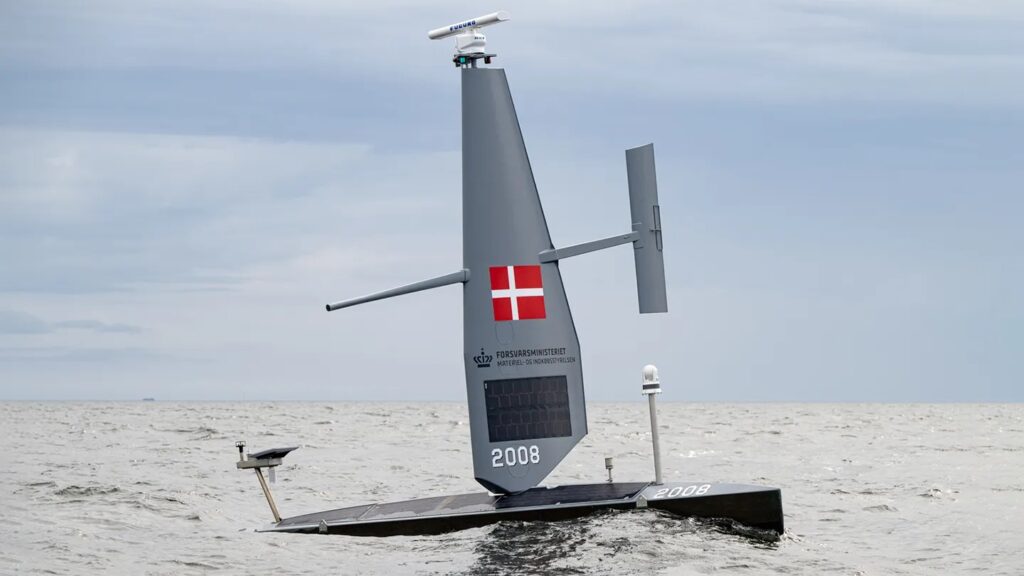
Courtesy NATO Maritime Command.


Saildrone Voyager USVs deliver persistent surveillance, detect high-interest vessels, and enable rapid-response coordination with unmanned maritime assets during NATO’s Baltic Sea demonstration. 

Release From Saildrone, July 7, 2025

COPENHAGEN, Denmark–Saildrone, the global leader in maritime autonomy, has successfully concluded its participation in NATO Task Force X’s multi-domain demonstration in the Baltic Sea—a landmark deployment showcasing the capability, reliability, and international utility of its Saildrone Voyager uncrewed surface vehicles (USVs). 

From June 16 to 27, 2025, four Saildrone Voyagers operated in both the Gulf of Finland and the western Baltic Sea as part of NATO’s innovative Task Force X Baltic initiative. Led by NATO Allied Command Transformation (ACT), in coordination with NATO Maritime Command (MARCOM) and the Centre for Maritime Research and Experimentation (CMRE), the demonstration aimed to integrate uncrewed systems into active Allied maritime operations. 

“We are honored to have participated in the NATO Task Force X Baltic Initiative. After eight years of operating Saildrone USVs in the Bering Sea, we are well placed to deal with the conditions in the Baltic Sea, which has very similar latitude, water depths, and sea conditions,” said Saildrone founder and CEO Richard Jenkins. “Task Force X Baltic has been fantastic to work with, and we look forward to future missions with NATO partners.” 

Throughout the operation, the Saildrone Voyagers maintained a 100% persistent presence on station, delivering 24/7 wide-area surveillance and real-time maritime domain awareness, including continued operations during recent passage of near-gale to gale-force winds and rough seas with waves over 2 meters (6.5 feet) through the area of operation. Saildrone detected and tracked hundreds of vessels daily, and successfully identified the exercises’ “red forces.” Additionally, Saildrone identified real-world dark targets in the area, including Russian “shadow fleet” and military vessels. 

Another important success of the deployment was pairing Saildrone’s long-range radar and persistent surveillance capability with high-speed unmanned maritime assets. The Voyagers’ ability to detect contacts of interest at extended range enabled rapid-response investigations by fast-moving uncrewed vessels, demonstrating a layered, autonomous force structure capable of responding to dynamic maritime scenarios in real time. 

The four Voyager USVs were deployed from Køge, Denmark, earlier this month. Saildrone operates on a contractor-owned and operated model, meaning it provides end-to-end mission operations and data delivery as a service. This approach enables rapid deployment, scalability, and reduced burden on government or commercial partners. 

Saildrone data is integrated into the customer’s common operating picture (COP) and is also available via the Saildrone Mission Portal. Saildrone’s global pilot team worked closely with NATO Maritime Command, delivering responsive, dynamic high-volume tasking to meet the operational objectives of the exercise. 

The Baltic Sea demonstration forms part of NATO’s Dynamic Messenger innovation pathway. Task Force X Baltic continues to advance NATO’s ability to rapidly integrate commercial-off-the-shelf autonomous systems, increasing scalability while preserving high-value crewed assets for critical missions. 

Saildrone’s impressive performance in the Baltic Sea further validates the Voyager USV platform’s primacy in defense and security applications, even in the harshest of conditions.