From U.S. Department of Defense Public Affairs, Jan. 25, 2025
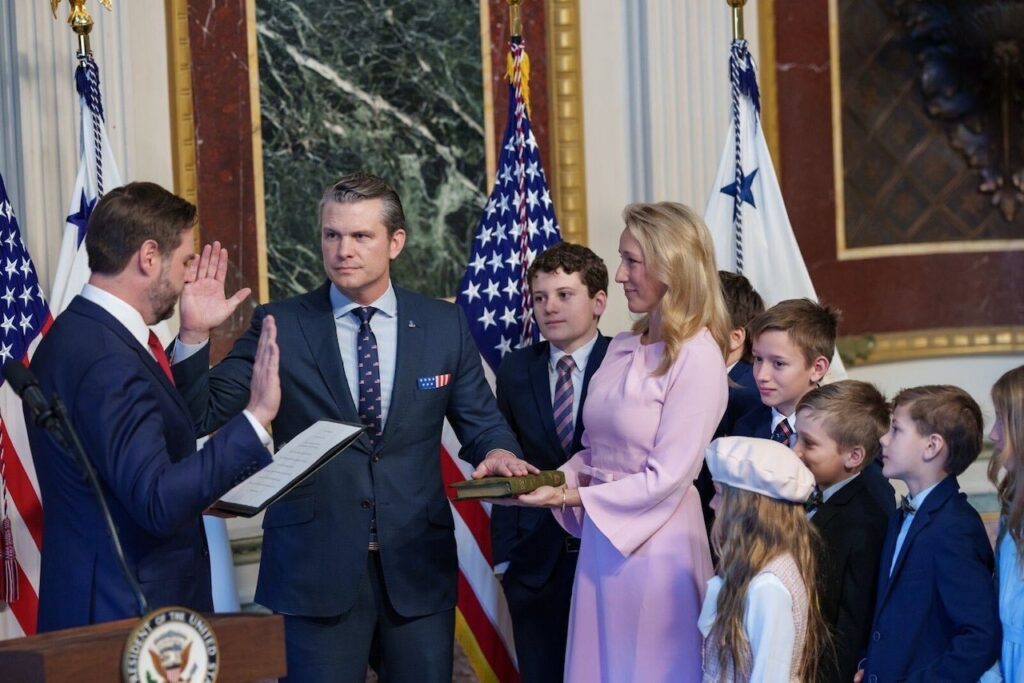
ARLINGTON, Va. — The following message to the U.S. armed forces was released by the new Defense Secretary, Pete Hegseth:
“It is the privilege of a lifetime to lead the warriors of the Department of Defense, under the leadership of our Commander in Chief Donald J. Trump. We will put America First, and we will never back down.
The President gave us a clear mission: achieve Peace through Strength. We will do this in three ways — by restoring the warrior ethos, rebuilding our military, and reestablishing deterrence.
o We will revive the warrior ethos and restore trust in our military. We are American warriors. We will defend our country. Our standards will be high, uncompromising, and clear. The strength of our military is our unity and our shared purpose.
o We will rebuild our military by matching threats to capabilities. This means reviving our defense industrial base, reforming our acquisition process, passing a financial audit, and rapidly fielding emerging technologies. We will remain the strongest and most lethal force in the world.
o We will reestablish deterrence by defending our homeland — on the ground and in the sky. We will work with allies and partners to deter aggression in the Indo-Pacific by Communist China, as well as supporting the President’s priority to end wars responsibly and reorient to key threats. We will stand by our allies — and our enemies are on notice.
All of this will be done with a focus on lethality, meritocracy, accountability, standards, and readiness.
I have committed my life to warfighters and their families. Just as my fellow soldiers had my back on the battlefield, know that I will always have your back. We serve together at a dangerous time. Our enemies will neither rest nor relent. And neither will we. We will stand shoulder to shoulder to meet the urgency of this moment.
Like each of you, I love my country and swore an oath to defend the Constitution. We will do that each and every day, as one team. Together we will accomplish the President’s mission to deter war, and if necessary, defeat and destroy our enemies. Godspeed!”
HII Closes on Asset Acquisition to Expand Shipbuilding Capacity
Operations Are Underway at Newport News Shipbuilding Charleston Operations
From HII
GOOSE CREEK, S.C., Jan. 27, 2025 (GLOBE NEWSWIRE) — HII (NYSE: HII) announced today it has closed on its acquisition of an advanced manufacturing facility and assets and begun work at its Newport News Shipbuilding (NNS) — Charleston Operations site in South Carolina.
“HII is committed to going where the labor is to increase shipbuilding capacity and increase throughput for our national security customers,” HII President and CEO Chris Kastner said. “This lets us efficiently add trained talent and state-of-the-art manufacturing capabilities to the urgent job of building ships, making it a unique opportunity to immediately accelerate throughput at Newport News Shipbuilding in support of the Navy and AUKUS.”
HII announced last month its intent to acquire the facility and associated assets. Since then, more than 99% of the legacy workforce have accepted offers to continue to work on site, supporting the construction of nuclear-powered submarine modules and aircraft carrier units for U.S. Navy programs. Working closely with the South Carolina state and regional leadership, HII plans to create hundreds of additional jobs to support the increased demand and growth at the Charleston facility.
In addition to existing trained talent, HII’s acquisition also provides:
Advanced production facilities with state-of-the-art manufacturing equipment, tooling and infrastructure used to fabricate complex metal modules and structures.
Facility location on 45-acres with more than 480,000 square feet of manufacturing space.
Access to barge and rail transportation.
Access in nearby Charleston and surrounding region to rapidly growing shipbuilding ecosystem and capacity to expand a highly skilled maritime trades workforce.
“This is great news for the South Carolina economy. This investment will allow us to expand our manufacturing footprint more aggressively in the shipbuilding industry,” U.S. Sen. Lindsey Graham, R-S.C., said. “If you can drive it, fly it, shoot it or float it, South Carolina makes it.”
“The expansion of our nation’s largest military shipbuilder in South Carolina underscores the pivotal role our state plays in strengthening America’s national security,” U.S. Sen. Tim Scott, R-S.C., said. “The dedicated shipbuilders in the Charleston area are part of a highly skilled workforce that will propel our nation forward. This innovation and modernization in our defense industrial base will create jobs and draw resources to our state’s already robust Navy presence.”
Amphibious Coalition Forecasts Benefits of Multi-Ship Amphib Ship Buy
By Richard R. Burgess, Senior Editor
ARLINGTON, Va. — The industry association for suppliers for the builder of U.S. Navy’s amphibious warfare fleet sees immediate benefits this year and the next one for its member companies, the association’s survey said.
In its annual survey of 219 member companies, the Amphibious Warfare Industrial Base Coalition (AWIBC) said that a majority of its member companies affirmed that the Navy’s announcement last year of a multi-ship buy will benefit their companies.
The survey focused on the August 2024 announcement by then-Secretary of the Navy Carlos Del Toro that the Navy would procure four amphibious warfare ships — one America-class amphibious assault ship (LHA) and three Flight II San Antonio-class amphibious transport dock ships (LPDs) in a bundle procurement according to the below schedule:
LPD 33 in FY25
LPD 34 in FY27
LHA 10 in FY27
LPD 35 in FY29
The four ships in the procurement would be built at the HII Ingalls Shipbuilding shipyard in Pascagoula, Mississippi.
“Our survey asked specifically about the impacts this bundle will have on the supplier base,” said Jack Feenick, a spokesman for the AWIBC. “We also included questions about the overall health of the industrial base, touching on key areas like workforce, training, inflation, and supply chain disruptions. Below are some of the key findings from our survey and attached is an infographic that provides some more insight on the data.”
Amphibious Warship Industrial Base Coalition (AWIBC) Survey
(Conducted survey from October – November 2024 from a sample of 219 total suppliers.)
65% of amphibious warship suppliers say that the bundle buy will lead to immediate benefits starting in 2025 or 2026.
82% of suppliers that support both amphibious ships and submarines agree that bundle buys benefit their capability to deliver on orders as well as their overall capacity.
52% say the bundle purchase will strengthen the shipbuilding industrial base to meet the demand of today and tomorrow
46% say the bundle purchase enables the hiring, retention, and training of a workforce
42% say the bundle purchase helps invest in equipment to ensure quality and on-time delivery
Consistent with findings from our survey last year, the top three challenges facing suppliers are:
Inflation
Workforce training and retention
Supply chain disruptions
Currently, only 10% of amphibious warship suppliers are operating at full capacity.
74% of suppliers who say they are sole-source/single-source supplier to the Navy are amphib suppliers.
Suppliers say that multi-ship procurements and earlier AP [advance procurement] funding are most likely factors to drive down material costs, help meet delivery schedules and improve their workforce and facilities.
Forging the Future: Training Center Opens to Train Next Generation of Defense Manufacturers
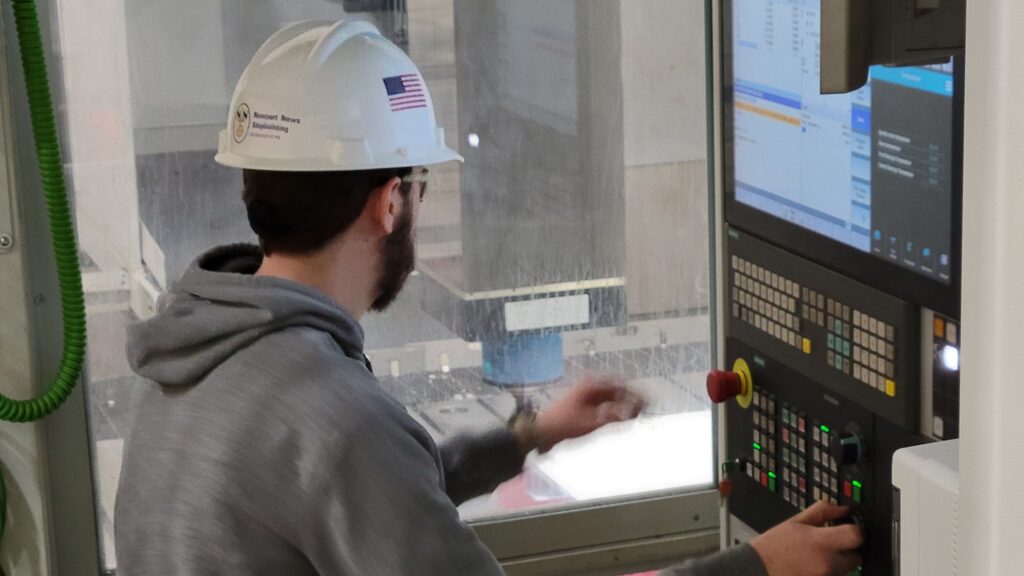
Jim Hook, an Accelerated Training for Defense Manufacturing (ATDM) instructor, teaches a student how to use a Haas CNC machine at the newly opened National Training Center in Danville, Virginia. This state-of-the-art facility, which opened on January 13, 2025, expands the program’s capacity to train skilled workers for submarine and surface ship manufacturing. (Courtesy photo from ATDM)
From The Maritime Industrial Base Program, Jan. 24, 2025
DANVILLE, Va. — The U.S. Navy strengthened its efforts to revitalize the nation’s shipbuilding capability with the opening of a new training center in Danville, Virginia.
The Accelerated Training in Defense Manufacturing (ATDM) program, launched in 2021, has graduated more than 777 students from 45 states, Guam, Puerto Rico, and Australia. About 25% of participants are veterans, and the program boasts a 90% job placement rate within the defense industrial base. New cohorts begin every eight weeks, offering a fast track to meaningful careers across five trades.
The new National Training Center, a state-of-the-art, 100,000-square-foot facility on the Institute for Advanced Learning and Research (IALR) campus, opened its doors on January 13. On that day, the center welcomed its first cohort of students, marking the beginning of an expanded operation that will train 1,000 students annually, creating a pipeline of skilled workers critical for building and maintaining the nation’s submarines and warships.
“This facility helps address our immediate workforce needs,” said Frederick “Jay” Stefany, the Direct Reporting Program Manager for the Maritime Industrial Base (MIB) Program. “It advances our efforts to restore our industrial base and ensure our industry partners have the skilled workforce they need to build and maintain the Navy’s fleet.”
ATDM’s graduates are essential in addressing the maritime industry’s expanding workforce needs. The Navy’s shipbuilding plans include the construction of Columbia-class and Virginia-class submarines, along with more than 10 different classes of surface ships, including aircraft carriers, destroyers, frigates, amphibious warships, and support vessels. This unprecedented scale of shipbuilding requires a comprehensive strategy to rebuild America’s manufacturing capabilities. The establishment of the National Training Center marks a significant milestone in this endeavor.
A National Imperative
The MIB Program leads the Navy’s workforce development initiatives while advancing shipbuilding and repair capabilities through industrial base development, supply chain resilience, and advanced manufacturing technologies. With the U.S. manufacturing base having shrunk to a third of its size from 30 years ago, the program must overcome major challenges. One of these pressing challenges involves recruiting and training 140,000 new workers over the next decade for submarine production and sustainment, with an additional 110,000 workers needed for surface vessel construction and maintenance.
“The decline in American manufacturing has created a critical skills gap,” said Erica Logan, Workforce Director for the MIB Program. “But we’re not just filling jobs—we’re rebuilding America’s maritime manufacturing capability and offering meaningful careers for the next generation of workers. Every graduate represents another step toward restoring our nation’s industrial strength.”
This workforce development initiative is vital for both new construction and fleet maintenance, underscoring the strategic importance of programs like ATDM in maintaining America’s naval readiness. This national revitalization effort takes shape through individual success stories and community partnerships.
The IALR campus, which hosts the National Training Center, also houses another key MIB Program initiative: the Navy’s Additive Manufacturing Center of Excellence. This co-location creates a hub for maritime manufacturing innovation.
Transforming Lives, Strengthening Communities
Natasha Barnes, part of the inaugural class that began training January 13 in the new facility, represents a growing wave of skilled workers entering the defense manufacturing workforce.
“ATDM has done an excellent job adapting during the transition into the new facility,” said Barnes, a CNC student. “It’s been an uplifting experience to learn in such a clean and well-maintained environment. I am very excited to see what the future holds for the program.”
For Telly Tucker, president of the Institute for Advanced Learning and Research (IALR), the program’s impact goes beyond the classroom.
“This facility is about more than training—it’s about revitalizing southern Virginia,” Tucker said. “It’s creating jobs, fostering economic growth, and building a pipeline of skilled workers who will strengthen our nation’s security.”
To deliver on this promise of regional revitalization and support to national security, the National Training Center provides intensive, hands-on preparation.
Hands-On Training for Real-World Impact
ATDM’s intensive, 16-week accelerated training program provides students with 600 hours of hands-on experience in one of five trades critical to maritime manufacturing: welding, CNC machining, additive manufacturing, quality assurance, and non-destructive testing. Training runs on three shifts, mirroring the 24/7 operations of the defense industry.
“This program isn’t theoretical—it’s practical,” said Christa Reed, ATDM’s Interim Vice-President. “When our students graduate, they’re not just trained—they’re ready to hit the ground running.”
The curriculum, developed in collaboration with industry leaders, ensures students are equipped with the skills and certifications needed to meet the Navy’s rigorous standards. By
simulating real-world manufacturing environments, the program prepares graduates to succeed in high-demand roles. This focused training approach directly enhances America’s maritime security.
A Shared Mission
The opening of the National Training Center represents a milestone in the Navy’s efforts to address workforce challenges and bolster the maritime industrial base. For Stefany, it’s a reminder of how these efforts impact national security.
“Every ship we build, every submarine we launch, is a promise to the American people,” Stefany said. “That promise begins here, with the people we train.”
As the Navy ramps up its fleet expansion, programs like ATDM and the new National Training Center are creating a ripple effect—transforming communities, empowering individuals, and ensuring America’s maritime superiority. The center highlights innovation, collaboration, and resilience, its impact extending beyond Danville to strengthen America’s maritime future.
For more information about ATDM and its programs, visit www.atdm.org.
General Dynamics Mission Systems To Provide Advanced Electronics In MK 54 Torpedoes For The U.S. Navy
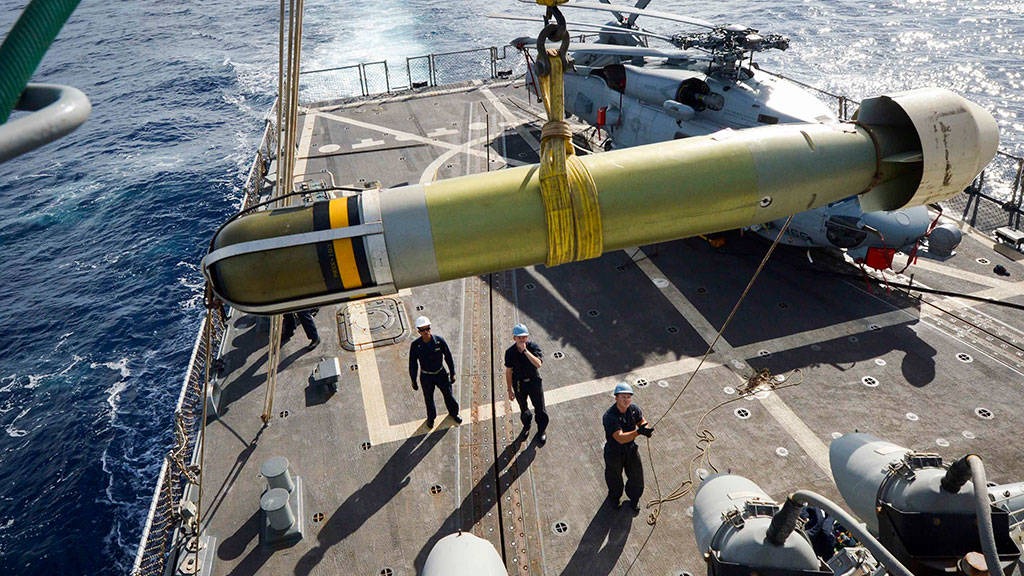
Sailors aboard the Arleigh Burke-class guided-missile destroyer USS Winston S. Churchill (DDG 81) maneuver a Mark-54 torpedo to the flight deck. Photo Credit: U.S. Navy
From General Dynamics Mission Systems, Jan. 21, 2025
FAIRFAX, Va. – General Dynamics Mission Systems announced today that it was awarded a fixed-price-incentive, firm-fixed-price, cost-plus-fixed-fee, and cost-only contract from the U.S. Navy in December for up to $808.6 million to produce MK 54 MOD 1 Lightweight Torpedo Kits and related test equipment, spares, provisioned item orders, engineering support and hardware support for the MK 54 Lightweight Torpedo Program. Work will be performed in Canonsburg, Pennsylvania, and is expected to be completed by December 2032.
“Our Progeny Systems employees have been providing advanced torpedo electronics to the U.S. and allied Navies for 18 years. This contract ensures that our surface ships and aircraft will have the most modern and capable torpedoes in the world for many years to come,” said Laura Hooks, vice president and general manager of Maritime and Strategic Systems at General Dynamics Mission Systems.
Progeny Systems was acquired by General Dynamics Mission Systems in 2022. Headquartered in Manassas, Virginia, Progeny Systems provides a wide spectrum of capabilities and lifecycle support services for U.S. submarines and surface ships.
General Dynamics Mission Systems provides mission-critical solutions for defense, intelligence and cybersecurity customers across all domains. Headquartered in Fairfax, General Dynamics Mission Systems employs approximately 12,000 people worldwide. More information about General Dynamics Mission Systems is available at gdmissionsystems.com.
NAWCAD Lakehurst Hosts Groundbreaking Ceremony For New Test Site Capability
Naval Air Warfare Center Aircraft Division Lakehurst held a groundbreaking ceremony on Jan. 14 for an upgrade of the Runway Arrested Landing Site testing facility. The update will house a Joint Precision Approach and Landing System (JPALS) and an Unmanned Carrier Aviation Mission Control System for the MQ-25 and other aircraft programs. (U.S. Navy Photo)
From Naval Air Systems Command, Jan. 22, 2025
JOINT BASE MCGUIRE-DIX-LAKEHURST, N.J. — On a day when the ground at Naval Air Warfare Center Aircraft Division Lakehurst was so cold it made digging into the dirt a challenge, a groundbreaking ceremony for an upgrade of the Runway Arrested Landing Site testing facility welcomed the start of a new chapter in the installation’s testing capabilities.
The Jan. 14 event was attended by representatives of the Unmanned Carrier Aviation (PMA-268), Aircraft Launch and Recovery Equipment (ALRE) (PMA-251) program offices, and NAWCAD Lakehurst leadership, including Capts. Daniel Fucito and Mike Kline, as well as other stakeholders of the project.
When completed, the update will house a Joint Precision Approach and Landing System (JPALS) and an Unmanned Carrier Aviation Mission Control System for the MQ-25 and other aircraft programs.
“This groundbreaking represents a significant step forward in Lakehurst’s ability to complete the initial carrier suitability testing for one of the Navy’s major North Star programs in the MQ-25,” said CDR. Adam Pawlak, NAWCAD Lakehurst Officer-in-Charge.
The JPALS update will allow compatibility testing for the MQ-25 on ALRE systems, starting with the TC-13 steam catapult and MK-7 arresting gear currently used on legacy aircraft carriers. Future testing will also be conducted using the Electromagnetic Aircraft Launch System and Advanced Arresting Gear found on the newer Ford-class carriers.
The update will also include a Mobile Integrated Telemetry System, which can be used to set up temporary aircraft data management telemetry systems during testing.
Pawlak added the groundbreaking ceremony lays the foundation for Lakehurst’s ability to test critical unmanned platforms of the future.
U.S. Seventh Fleet Opens New Navigation, Seamanship and Shiphandling Trainer (NSST) Facility
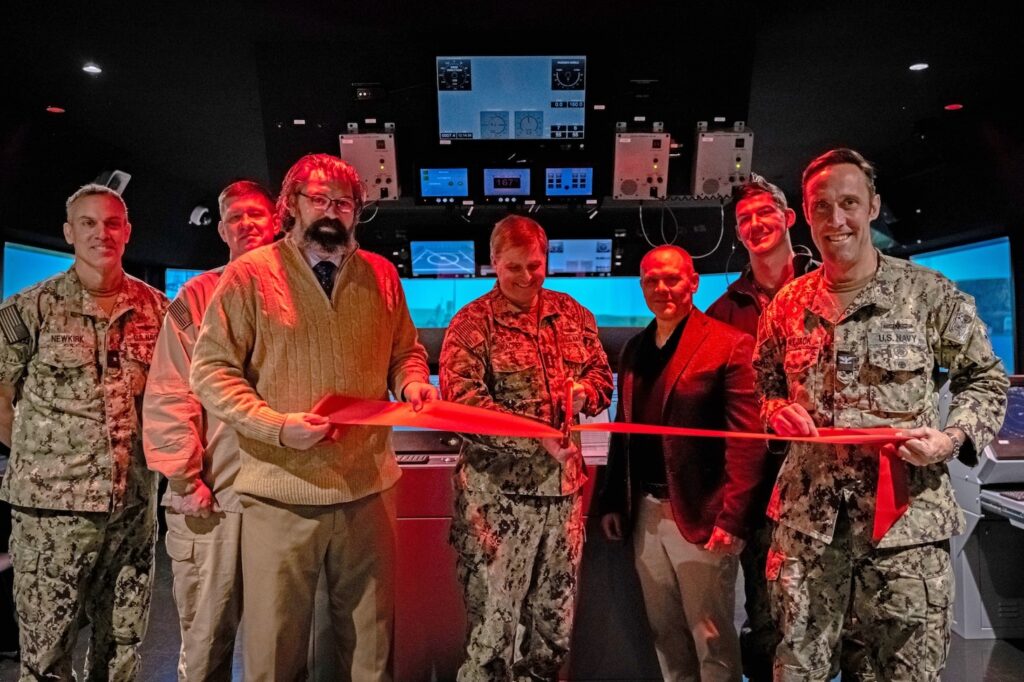
Vice Adm. Fred Kacher, center, commander of U.S. 7th Fleet, opens the new Navigation, Seamanship, and Shiphandling Trainer (NSST) facility during a ribbon-cutting ceremony at Commander, Fleet Activities Yokosuka (CFAY), Jan. 16, 2025. With Kacher are Rear Adm. Greg Newkirk, left, commander of Task Force 70, Capt. Dave Huljack, deputy commodore of Destroyer Squadron (DESRON) 15, Capt. Shockey Snyder, back, commander of Naval Surface Group Western Pacific, and NSST team members. (U.S. Navy photo by MC1 Caroline H. Lui)
From Destroyer Squadron 15, Jan. 21, 2025
YOKOSUKA, Japan — Adm. Fred Kacher, commander, U.S. Seventh Fleet, opened the new Navigation, Seamanship, and Shiphandling Trainer (NSST) facility at a ribbon-cutting ceremony in Yokosuka, Japan, Jan. 16, 2024.
“I’ve seen how history and time bend to the winner who works hard and plans—this is what simulation allows us to do,” said Kacher. “It’s great to see the power of these trainers, and we’re thrilled to bring this capability to the fleet.”
During the ceremony, Kacher received a tour of the new facility and observed Sailors and junior officers from the waterfront simulating harbor movements. Capt. Dave Huljack, deputy commodore of Commander, Destroyer Squadron (DESRON) 15, also attended the ribbon cutting ceremony.
“Our teams our busy, and we’re getting after it. We don’t only use these facilities for certification, we practice close-quarters shiphandling, tactical maneuvering, and just getting better,” said Huljack. “Building more trainers surges the volume of qualified and capable mariners that we’re able to bring to the fight.”
Members from the NSST staff Jesse Summerlin, Brad Stallings, and Bill Ault explained the capabilities of the new facility and spoke on the importance of the NSSTs as a whole.
“We’re already booked at 95% capacity for the remainder of the calendar year,” said Summerlin, an LB&B Associates NSST Instructor. “The demand from the ships has been overwhelming and our team stands ready to accept the challenge and continue to provide the best possible product to our customers on the Yokosuka waterfront.”
DESRON 15 is the Navy’s largest destroyer squadron and the U.S. 7th Fleet’s principal surface force. It is forward deployed to the U.S. 7th Fleet area of operations in support of security and stability in the Indo-Pacific.
U.S. 7th Fleet is the U.S. Navy’s largest forward-deployed numbered fleet, and routinely interacts and operates with allies and partners in preserving a free and open Indo-Pacific region.
USS Philippine Sea Departs Naval Station Norfolk On Final Scheduled Deployment
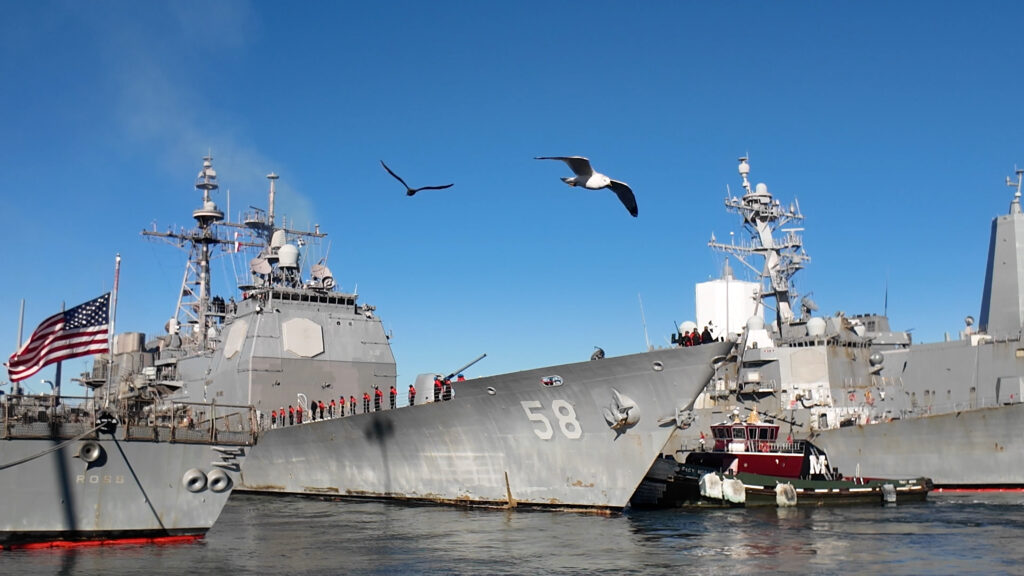
NORFOLK, Va. (January 20, 2025) The Ticonderoga-class guided-missile cruiser USS Philippine Sea (CG 58), departs from Naval Station Norfolk, January 20th, 2024. Philippine Sea will deploy to the U.S. Southern Command Area of Responsibility (USSOUTHCOM AOR) to support maritime operations with partners in the region, conduct Theater Security Cooperation (TSC) port visits, and support Joint Interagency Task Force South (JIATF-South) to deter illicit activity along Caribbean and Central American shipping routes. (U.S. Navy photo by Chief Mass Communication Specialist Evan Thompson/Released)
From U.S. Fleet Forces Command, Jan. 20, 2025
NORFOLK, Va. - The Ticonderoga-class guided-missile cruiser USS Philippine Sea (CG 58) departed Naval Station Norfolk for a scheduled deployment to the U.S. 4th Fleet area of operations, Jan. 20.
Philippine Sea will deploy to the U.S. Southern Command Area of Responsibility (USSOUTHCOM AOR) to support maritime operations with partners in the region, conduct Theater Security Cooperation (TSC) port visits, and support Joint Interagency Task Force South (JIATF-South) to deter illicit activity along Caribbean and Central American shipping routes.
“The deployment of Philippine Sea to the U.S. Southern Command area of responsibility highlights the Navy’s ability to generate and certify out of cycle combat-ready forces in order to execute critical missions,” said Adm. Daryl Caudle, commander, U.S. Fleet Forces Command. “The ship and crew will play a pivotal role in enhancing regional security and supporting bilateral and multinational efforts to counter challenges unique to Fourth Fleet. This deployment also underscores our commitment to building a resilient and adaptable force that meets global demands while fostering trust and interoperability with our global maritime partners.”
This is scheduled to be Philippine Sea’s final deployment after more than 35 years in service.
The ship previously deployed on October 14, 2023 as part of the Dwight D. Eisenhower Carrier Strike Group (IKECSG) to U.S. 5th and 6th Fleet area of operations in support of maritime security operations, theater security cooperation efforts, and enhanced vigilance activities operations with NATO Allies and Partners.
“My sailors have received the highest level of training and are fully prepared to meet the challenges of our deployment,” said Capt. Steven Liberty, commanding officer of Philippine Sea. “The vigilant and hard work of the War Dogs is a testament to the level of pride, professionalism, and resiliency in all of them.”
U.S. 4th Fleet employs maritime forces in cooperative maritime security operations in order to maintain access, enhance interoperability, and build enduring partnerships that foster regional security in the USSOUTHCOM AOR.
USSOUTHCOM AOR encompasses 31 countries and 16 dependencies and areas of special sovereignty, including the land mass of Latin America south of Mexico, waters adjacent to Central and South America, and the Caribbean Sea. The region represents about one-sixth of the landmass of the world assigned to regional unified commands.
U.S. Fleet Forces Command is responsible for manning, training, equipping, and providing combat-ready forces forward to numbered fleets and combatant commanders around the globe.
Navy, Industry Working to Surge Capability as 2027 Draws Closer
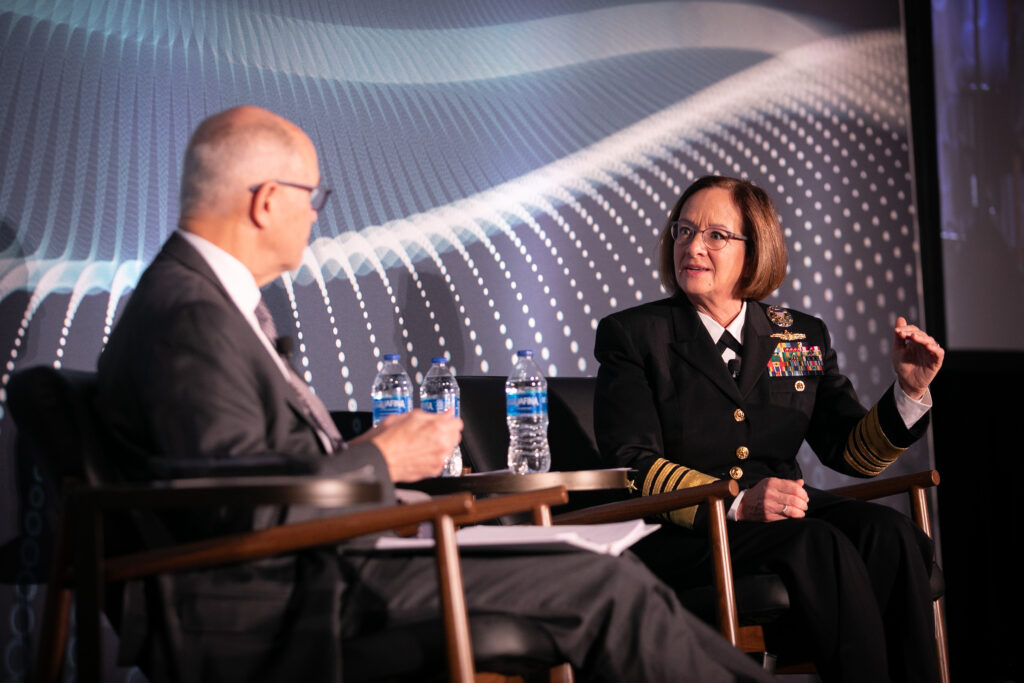
Chief of Naval Operations Adm. Lisa Franchetti participates in a Q&A session moderated by retired Vice Adm. Richard Hunt at the Surface Navy Association National Symposium in Arlington, Virginia, Jan. 14, 2025. Photo credit: U.S. Navy | Senior Chief Mass Communication Specialist Elliott Fabrizio
As the U.S. military braces for a potential conflict with China in 2027, maritime defense and industry leaders alike are trying to get the most out of the existing fleet while planning for a more capable future fleet with a mix of manned and uncrewed platforms.
“The countdown clock in my office continues to tick away and it tells me when I walked in today that there are 716 days left until 1 January, 2027. There is no time to waste,” Chief of Naval Operations Admiral Lisa M. Franchetti said this week at the Surface Navy Association’s annual symposium, referring to a year when Chinese President Xi Jinping has reportedly told his generals to be ready for war.
“The People’s Republic of China is our pacing challenge and presents a complex multi-domain and multi access threat,” Franchetti said. “And I’m eyes wide open that the challenge posed by the PRC to our Navy goes well beyond just the size of the PLAN [People’s Liberation Army Navy] fleet. It includes gray zone and economic campaigns, expansion of dual use infrastructure like airfield and dual use forces like the Chinese maritime militia and a growing nuclear arsenal.”
To counter that, and guard against the expected threat to Taiwan, Franchetti said she needs a larger fleet and one with more robotic and automated systems from programs such as the Replicator initiative, the rapid development effort NavalX and the Disruptive Capabilities Office.
From the Russian invasion of Ukraine to the Houthis in the Red Sea, “we are seeing the increase in use and effective adaptation of robotic and autonomous systems in every domain,” she said. “It’s abundantly clear that we need to both have these capabilities and have the capability to defeat ’em kinetically and non kinetically … the future of war at sea is neither fully robotic nor fully manned.”
Secretary of the Navy Carlos Del Toro, in his last address as SECNAV to the Surface Navy Association, agreed.
“…Our challenge is not only about maintaining naval superiority, but also ensuring that the U.S. military is prepared to confront the evolving threats that are opposed by the People’s Republic of China, especially in the realms of advanced technology, maritime claims, and military modernization,” he said. “Much like President Kennedy’s recognition of the need for modernized nuclear deterrent, today’s Navy and Marine Corps must continue to adopt, leveraging both man and unmanned capabilities to counter the PRC’s growing naval and technological advances.”
Admiral Daryl Caudle, commander of Fleet Forces Command, has the job of training and equipping the fleets that will need to contain China’s potential military expansion.
“The speed of modern warfare, combined with ever-shrinking indications and warnings windows, means we won’t have the luxury of long lead times to bring the full capabilities of our fleet to bear,” Caudle said in his keynote address to the SNA.
“Every day, about 100 [U.S. Navy] ships are deployed around the globe. Furthermore, about 100 ships are in lengthy depot maintenance availabilities that would take weeks, if not months, to close out just by buttoning up all the existing work and returning systems to service. This leaves the last 100 ships that are not deployed nor in depot, and the question — can we do more with those ships to make them ready to flow into combat? The answer is hell yes, and we are,” Caudle said.
That includes making use of the Combat Surge Ready certification for ships, a formal process and designation for getting ships on the Response Plan watchbill.
Efforts like the ongoing Shipyard Infrastructure Optimization Program, or SIOP, won’t add a lot of ship mass to the Navy by 2027, Caudle said, but the combat surge effort can up those numbers in the short term.
“When we sustain 80% Combat Surge Ready or better for all ships not in depot maintenance, the number of platforms ready to surge and flow into combat step-increases from around 100 to 180,” Caudle said. “…The goal of sustaining 80% Combat Surge Ready will require some new ways of thinking and may be uncomfortable for some, but we know our force structure will certainly not change between now and 2027 and will not significantly change over the next decade. Bottom Line: We must be constantly making ready ships not in depot or currently deployed.”
Industry Efforts
Getting more ships to the fleet requires having a large, well-trained workforce, something the maritime industry has been struggling with in recent years.
Christopher Kastner, CEO of shipbuilding giant HII, sat down with reporters on the eve of the SNA symposium to discuss how his company is trying to attract more workers, particularly more experienced ones, and dealing with an “almost arthritic” supply chain.
One way is by buying relevant suppliers. HII announced in December it has agreed to buy W International SC and Vivid Empire SC, South Carolina metal fabricators specializing in building structures, modules and assemblies for shipbuilders.
“We did that simply to increase capacity and increase throughput,” Kastner said. “We’re going to where the labor is, right? … We’re expanding into Texas, Louisiana, we’ve expanded in Norfolk, Virginia. You see this expansion in South Carolina. We’re going to where the labor is.”
Paying better wages for the shipbuilding workforce is also key, he said, and the Navy has taken steps to help do that for the submarine industrial base. It’s a key effort at a time when the gap between shipbuilding work and less demanding retail work has narrowed, making it harder to attract new workers.
“I definitely think there’s momentum, there’s recognition by the Navy, as you saw on the [defense budget] supplemental, that they want to address wages in the submarine industrial base. I don’t think it should be limited at the submarine industrial base, and it should be all of shipbuilding, [we] should be able to adjust wages to attract and increase talent into the industry.”
Raytheon is Cranking Out SPY-6 Radars for the Fleet
By Richard R. Burgess, Senior Editor
ARLINGTON, Va. — Raytheon, a sector of RTX, is humming with production of its SPY-6 family of four naval radars as the first three variants are either operational or installed on ships and the fourth variant enters production.
Scott Spence, Raytheon’s vice president for Naval Integrated Solutions, told Seapower that the company is “now really cranking them out” — referring to production and delivery of shipsets of the radars from its Andover, Massachusetts, facility.
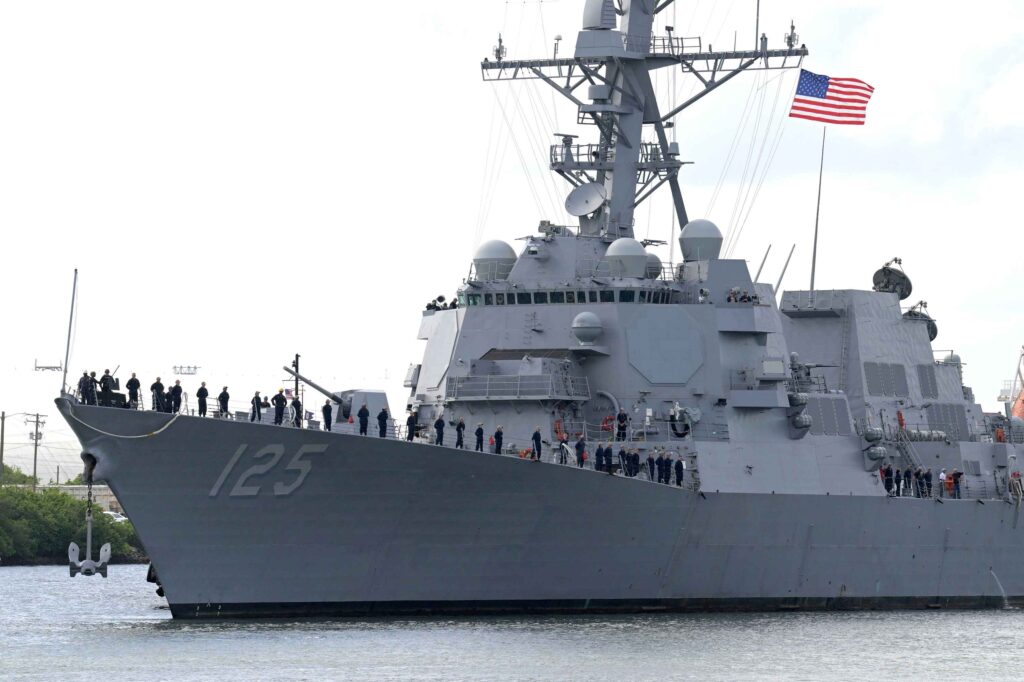
The SPY-6(V)1 Air and Missile Defense Radar, which became operational in 2024 on the Flight III Arleigh Burke-class guided-missile destroyer (DDG)USS Jack H. Lucas (DDG 125), is succeeding the SPY-1 as a sensor in new-production the Aegis Combat System and is the main sensor for the Flight III Arleigh Burke-class guided-missile destroyers (DDGs). Spence said that the flat-face fixed array(V)1 is in full-rate production and that Raytheon had delivered nine or ten shipsets so far for installation on the Flight III DDGs.
Spence said the Jack H. Lucas’s (V)6 has been going through integrated combat testing with the Aegis Baseline.
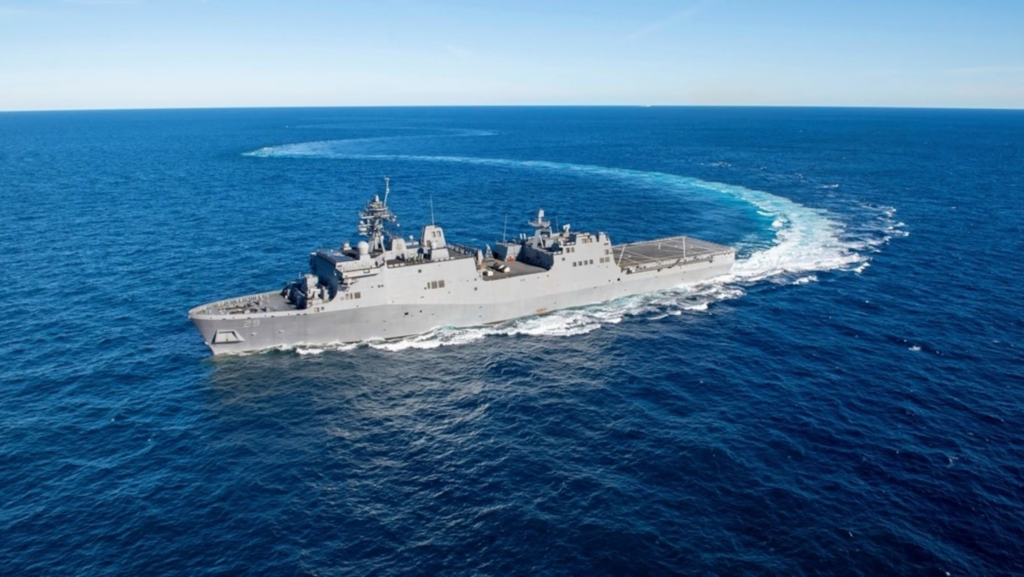
The SPY-6(V)2 Enterprise Air Search Radar (EASR) is the rotating version of the radar that will be installed on amphibious platform dock ships, amphibious assault ships, and Nimitz-class aircraft carriers, replacing the SPS-48 and SPS-49 radars. The radar has been installed on future San Antonio-class amphibious platform dock ship USS Richard M. McCool Jr. (LPD 29) and has been accepted by the Navy following the ship’s builder’s and acceptance trials.
The first SPY-6(V)3 EASR — which included three fixed-face arrays — has been installed on the future Gerald R. Ford-class aircraft carrier USS John F. Kennedy (CVN 79), which is scheduled for delivery to the fleet in 2025. The (V)3 was selected in lieu of the SPY-3 Dual Band Radar that is installed on the Gerald R. Ford (CVN 78).
The SPY-6(V)4 is on contract by the Navy for backfit onto Flight IIA Arleigh Burke-class DDGs. The (V)4 features four flat-face fixed arrays. The modularity of the system will ease the retrofit as the ships will have the same cooling and power systems of the (V)1. The Navy plans to equip 15 Flight IIA DDGs with the (V)4, the first being the USS Pinckney (DDG 91). Arrays are now being built for the (V)4.
Although unable to release details, Spence said that Raytheon continues to work “hand in glove” with the Navy to tweak the SPY-6 radars to be able to counter the latest threats. The lessons from the Navy’s combat with Houthi missiles and drones over the Red Sea over the last 14 months are being studied by Raytheon.
The SPY-6 “is clearly designed for that environment,” Spence said.
He also said that Raytheon has expand its supply chain to include companies in Japan to ensure reliable sources of some SPY-6 components.
Last summer year Raytheon entered contracts with MELCO (Mitsubishi Electric) and Sampa Kogyo to supply components of the SPY-6 for U.S. Navy ships and any potential future SPY-6(V) customers, said Briana Gabrys, a Raytheon spokeswoman.