National Security Leaders Underscore Need to Move at the Speed of Technology

For 11th Year, Defense Innovation Days Fosters Increased Collaboration in the Defense Industry 

Release From SENEDIA, Aug. 28, 2025

NEWPORT, R.I. – SENEDIA, the Alliance for Defense Tech, Talent, and Innovation, yesterday concluded Defense Innovation Days, a signature national event that attracted nearly 400 of the most important decisionmakers and innovators in the defense industry. 

“It is more important today than any time in our history that we have the capacity and skills to not only be competitive with other countries, but to far exceed them,” said Senator Jack Reed (RI), Ranking Member of the Senate Armed Services Committee. Reed called on the defense industry leaders in attendance to continue to advance American innovation and security. “What you do ultimately ensures the safety and security of our men and women in uniform across the world. This is a common purpose we share.” 

Distinguished speakers at the 11th annual sold-out event represented decades of experience across Navy, Army, Marine Corps, and private sector service, including RDML Peter Small, Chief Engineer and Commander of NAVSEA Warfare Centers; Dr. Andrew Erickson, Naval War College China Maritime Studies Institute; Dr. Michael Winter, Chief Scientist, RTX; COL David Brown (ret.), Naval War College Center for Irregular Warfare and Armed Groups; LtGen Eric E. Austin, Deputy Commander, Combat Development and Integration, US Marine Corps Combat Development Command, and BG Chris Hackler, Deputy Commanding General, US Army Combat Capabilities Development Command.  

Panels included “Future of the Surface Navy and Hybrid Fleet” and “Mastering the Depths: Navigating the Engineering Battlespace.” 

Key takeaways from this year’s event are: 

  • The threat landscape is rapidly evolving, including the unprecedented acceleration of China’s military capabilities and a global rise in authoritarianism.  

  • Innovation in autonomous vehicles and undersea technology is essential to stay competitive and has redefined traditional warfare.  

  • The foundation for increased collaboration and innovation exists, and equally important must be the focus on scaling and speed to execution. The priority is a nimble and responsive defense ecosystem that can quickly get new and interoperable technologies into the hands of warfighters. 

“More than a decade after we hosted the first Defense Innovation Days, SENEDIA continues to see the critical need to bring together industry and government, civilian and military leaders to connect, collaborate with one another, and ultimately innovate in service of our national security,” said Molly Donohue Magee, Chief Executive Officer of SENEDIA. “Investing in defense is an economic, workforce, and national security imperative.” 

More from Defense Innovation Days 

An Increasingly Challenging and Complex Environment 

Rapid advancements in technology have made internal research and development processes more challenging and increased external and geopolitical pressures have likewise made the warfighting landscape more complex. A rise in authoritarianism around the globe represents a threat to American democracy – including from China.  

Returning to Defense Innovation Days, Dr. Erickson provided a deep dive into changes in the Chinese military. He said that Chinese leader Xi Jinping has removed large numbers of military, defense, and political officials, but warned that it does not signal a slowdown. To the contrary, Erickson called it “the most dramatic military build-up since World War II.” 

“China’s military capabilities development and operational readiness are clearly advancing rapidly across the board,” he said. “The speed and scope are breathtaking. That is what needs to inform our dedication, our sense of purpose, and the missions to which we are directed.” 

Several speakers noted the importance of the workforce to maintain American dominance.  

“The Navy faces an urgent imperative to increase our capabilities, and our people are our biggest asset,” said RDML Small. “It’s not just the trades we need to strengthen. We need to rebuild the national maritime engineering workforce. A tremendous national effort to rebuild this workforce is underway.” 

The Unmanned and Undersea Advantage 

The United States submarine program is widely viewed as the greatest deterrent to American adversaries, and two panel discussions focused on undersea challenges and opportunities in an ever-changing maritime landscape. Several speakers used the ongoing conflict in the Black Sea as an illustration of how maritime strategy is changing, where Ukraine has used naval drones to stave off a strong Russian Navy. 

The Mastering the Depths panel was moderated by Marie Bussiere, the Technical Director of the Naval Undersea Warfare Center, Division Newport. She was joined on the stage by NUWC colleagues Mark Vacarro, Director of the Subsea and Seabed Warfare SSTM; Steve Plunkett, Next Generation Weapons and Defensive Systems SSTM; Steve Lamb, Chief of the Contracting Office, and CDR Shawn Stelzel of the Undersea Warfighting Development Center. 

Collectively, they urged industry leaders – especially those who have yet to engage with NUWC – to consider delivering their best-in-class tools and technology for defense applications. 

“To maintain the undersea advantage, we need to get solutions into the hands of the fleet faster,” Bussiere said. 

On the Future of the Surface Navy and Hybrid Fleet panel, CAPT Colin Corridan (ret.), the former leader of Task Force 59, the Navy’s first maritime robotics and AI task force, moderated a panel that included Commander David Brannighan, Royal Navy, British Defence Staff USA, and Austin Gray, Co-Founder and CSO, Blue Water Autonomy. 

One takeaway of the panel included a charge to industry to apply their solutions to national security and help ensure a high-low procurement strategy that is diversified between advanced yet expensive high-end systems and cheaper, more flexible low-end systems. 

Moving at the Speed of Technology 

Across all three days, multiple speakers talked about the need to move faster – from harnessing AI and new technology to developing and quickly scaling new capabilities – to ensure our warfighters have the systems and tools they need when they need them. 

Just as undersea technology has changed the maritime landscape, COL Brown (ret.) pointed to drones as a comparable example of how airpower has been democratized. Beyond weapons, he also warned about disinformation as a weapon of war and how increasingly convincing deepfakes are making it difficult for military leaders and civilians alike to distinguish the truth. 

“We are entering an era of breathtaking technological advancement,” he said. “The warning of history is clear: Unless we adapt, the upheavals of the last century may pale in comparison to what lies ahead.” 

LtGen Austin and BG Hackler agreed on the importance of government and industry collaboration.   

Speed to execution must consider future changes in technology. Dr. Winter shared that RTX has introduced a new military engine nearly every decade over the last century. Looking forward, RTX and other Primes – as well as the supply chain companies that support them – must bring together the digital thread, relying on model-based systems engineering that allows for greater efficiency and responsiveness.  

“It is critical that we build these tools with enough longevity and enough forethought,” he said.  

Other speakers featured at Defense Innovation Days included Senator Sheldon Whitehouse (RI), Congressman Seth Magaziner (RI-02); and Congressman Gabe Amo (RI-01).  

Thanks to Our Sponsors 

Sponsors for Defense Innovation Days 2025 include Platinum Sponsors General Dynamics, RTX, and the Undersea Technology Innovation Consortium. Leidos served as Gold Sponsor and IM Technology, Quantic Electronics, Northrop Grumman, SAIC, and SEACORP as Silver Sponsors.   

The sponsors for the two evening receptions were Adler Pollock & Sheehan and Anduril, and Bronze Sponsors included AstrodyneTDI, Comark – a Division of SourceCode, Exail Defense Systems, FORCYS, Globe Composite Solutions, Granite State Manufacturing, Guill Tool & Engineering Company, L3Harris Technologies, McLaughlin Research Corporation, NeQter Labs, PacMar Technologies, Preveil, Retlif Testing Laboratories, Rite Solutions, Serco, Teledyne Marine, and VATN Systems.   


Teledyne Brown Engineering Awarded $126.7M Contract to Advance Military Medical Readiness

Release from Teledyne

HUNTSVILLE, Ala. – August 27, 2025 – Teledyne Brown Engineering, a subsidiary of Teledyne Technologies Incorporated (NYSE: TDY), has been awarded a $126.7 million, five-year IDIQ contract by Naval Supply Systems Command (NAVSUP) Fleet Logistics Center Norfolk to support the Naval Health Research Center (NHRC). The contract supports continued development and enhancement of the NHRC’s medical modeling and simulation tools, including the Joint Medical Planning Tool (JMPT) and Medical Planners’ Toolkit (MPTk). 

“These solutions help ensure the right care is delivered at the right time, to the right place, to support the warfighter,” said Scott Hall, President of Teledyne Brown Engineering. “We’re honored to continue our partnership with the NHRC and contribute to the mission of optimizing medical readiness.” 

Used across the Department of Defense, JMPT and MPTk enable predictive analysis for casualty estimation, medical resource planning, and personnel support across combat, disaster relief, and humanitarian missions. Mandated by the Chairman of the Joint Chiefs of Staff and designated as tools of record by the U.S. Army and Marine Corps, these platforms are critical to operational readiness. 

Teledyne Brown Engineering has provided continuous development and support for these tools since their inception for over 24 years.  


Naval Aviation at Highest Readiness in Years, ‘Air Boss’ Said

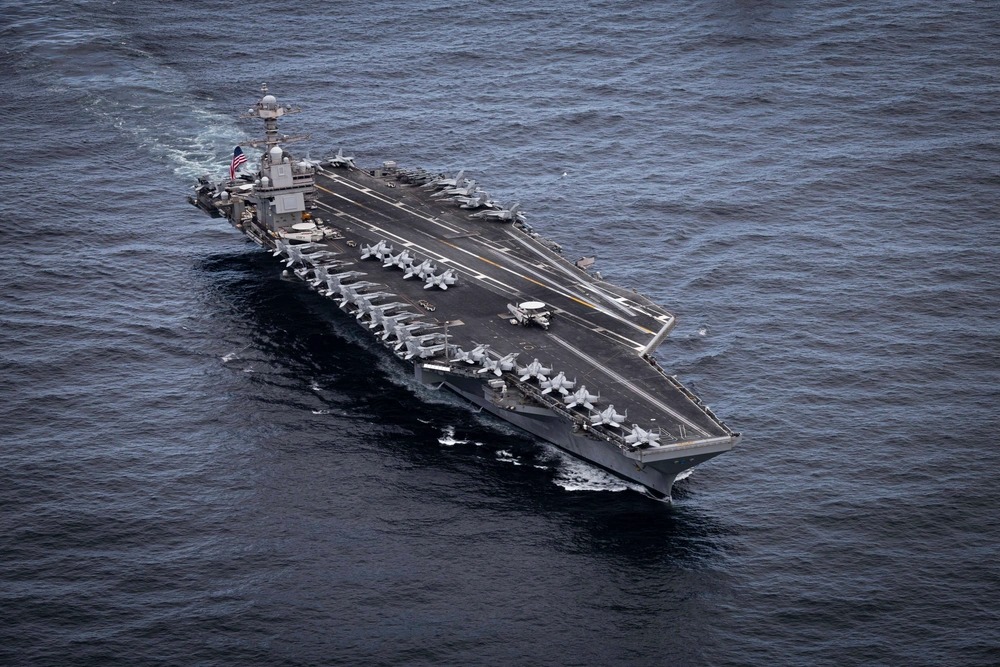
The world’s largest aircraft carrier, USS Gerald R. Ford (CVN 78), transits the North Sea, Aug. 23, 2025. (U.S. Navy photo by MC2 Tajh Payne) 

By Richard R. Burgess, Senior Editor 

ARLINGTON, Virginia — U.S. naval aviation is at its highest readiness in years, a senior naval aviation admiral said to an audience in Washington and online. 

Speaking Aug. 26 in an event of the U.S. Naval Institute and the Center for Strategic and International Studies sponsored by HII, Vice Admiral Daniel L. Cheever, commander Naval Air Forces and commander, Naval Air Force, U.S. Pacific Fleet — the Navy’s Air Boss’ — said the Naval Air Forces are “sustaining the readiness increases that we enjoyed” and “we’re at the “highest state of readiness we’ve had in at least 10 to 15 years back. And so, both carriers and the air wings with the carriers and our expeditionary forces are all at that heightened readiness.” 

Cheever said that small pockets of challenges to readiness remained, particularly with the management of the supply chain and sustainment,  

“We have a good playbook,” he said. “When there is a challenge, we get after it, and we have a perform-to-plan that re-energizes and gets us back to where we should be for readiness, and that’s across the board. And it’s pretty exciting to be part of that. It’s a lot of hard work but it is totally worth it. The return on investment from all of that parts supply is in the readiness of the force.” 

Cheever praised the F-35 Lightning II strike fighter as “a game changer, a difference maker in the fleet,” while noting that there are some supply-chain challenges that are being addressed. 

He said that a mixture of 4th-, 5th-, and 6th-generation mix of carrier-based strike fighters with manned-unmanned teaming is the “right blend.” 

The 6th-generation strike fighter is being designed to replace the F/A-18E/F Super Hornet strike fighter and the EA-18G Growler electronic attack aircraft. 

Cheever offered no details of the concept for the 6th-generation strike fighter but said that “I see a maritime version of the aircraft that starts at the carrier, is made for the carrier, and is a complete carrier version … I’m looking forward to the down-select… because that 6th generation means air superiority in that timeframe in the future, which means sea control.” 

He affirmed that aircraft carriers will be central to air superiority in the future for the Navy and America as a maritime nation. 

He noted that the MQ-25 Stingray unmanned refueling aircraft will fly this year and be integrated with the aircraft carrier next year. 

The air boss praised the design of the USS Gerald R. Ford, lead ship of the Navy’s newest class of aircraft carriers. The position of the island superstructure is farther aft than on the Nimitz class produces less of an air burble for approaching aircraft. The increase of aircraft parking space forward of the island eases aircraft handling and enables an aircraft to park directly over a weapons elevator for weapons download.  

He also noted that, unlike the Nimitz class carriers, the Gerald R. Ford is completely air conditioned. 


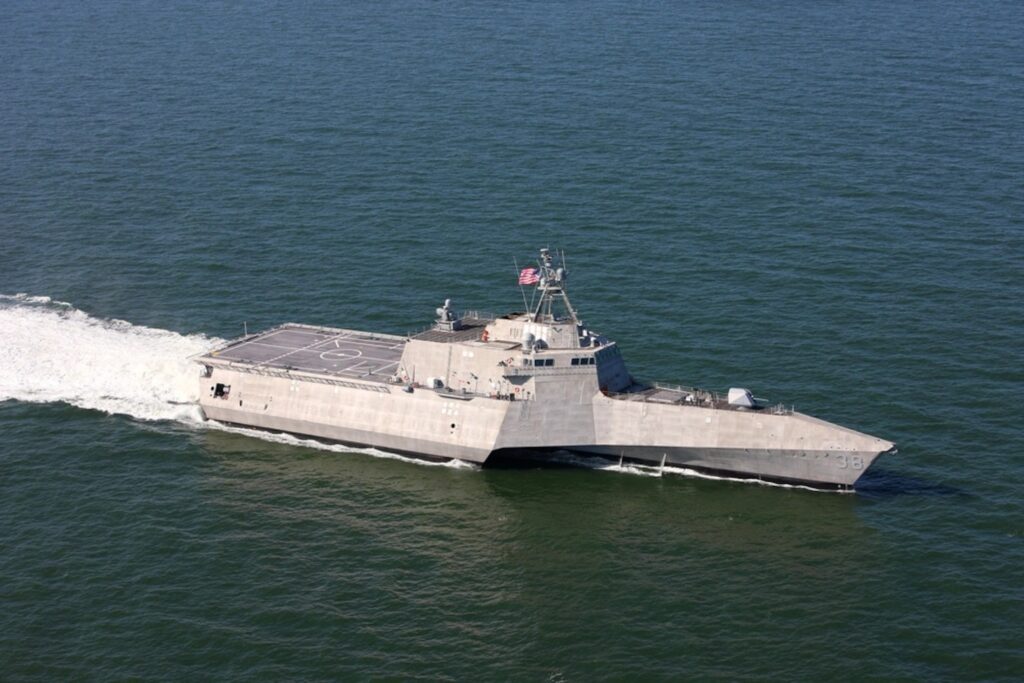
Navy Announces Commissioning Date and Location for the Future USS Pierre

Credit: Austal USA 

From Commander, Naval Surface Force, U.S. Pacific Fleet, Aug. 20, 2025 

SAN DIEGO, California — The U.S. Navy will commission the future USS Pierre (LCS 38), an Independence-variant littoral combat ship, in Panama City, Florida, Nov. 15. 
 
The naming of LCS 38 honors the legacy of the citizens of Pierre and the state of South Dakota and their support of the Navy and Marine Corps. 
 
Ship sponsor and South Dakota native Larissa Thune Hargens will lead the time-honored Navy tradition of giving the order “man our ship and bring her to life!” during the ceremony. Pierre becomes a proud ship of the fleet at the moment when the commissioning pennant is hoisted. 
 
Pierre is the 19th, and final, Independence-variant littoral combat ship (LCS) constructed. LCS 38 is the third ship named in honor of South Dakota’s capital city, and the second Navy warship to bear the name. The SS Pierre Victory (VC2-S-AP3), a Victory-class cargo ship, distinguished itself during World War II by shooting down a kamikaze plane near Okinawa. The first Navy warship named USS Pierre was a PC-461-class submarine chaser, PC-1141, commissioned in 1943, renamed in 1946, and decommissioned in 1958. 
 
The Pierre will transit to its new homeport in San Diego following commissioning. 
 
LCS is a fast, agile, mission-focused warship designed to operate in near-shore environments to counter 21st-century threats. It is a class of small surface combatants armed with capabilities to defeat challenges in the world’s littorals. LCS can operate independently or in high-threat scenarios as part of a networked battle force that includes larger, multi-mission surface combatants such as cruisers and destroyers supporting forward presence, maritime security, sea control, and deterrence in key operational theaters. 
 
The mission of Commander, Naval Surface Force, Pacific Fleet is to man, train, and equip the Surface Force to provide fleet commanders with credible naval power to control the sea and project power ashore. 


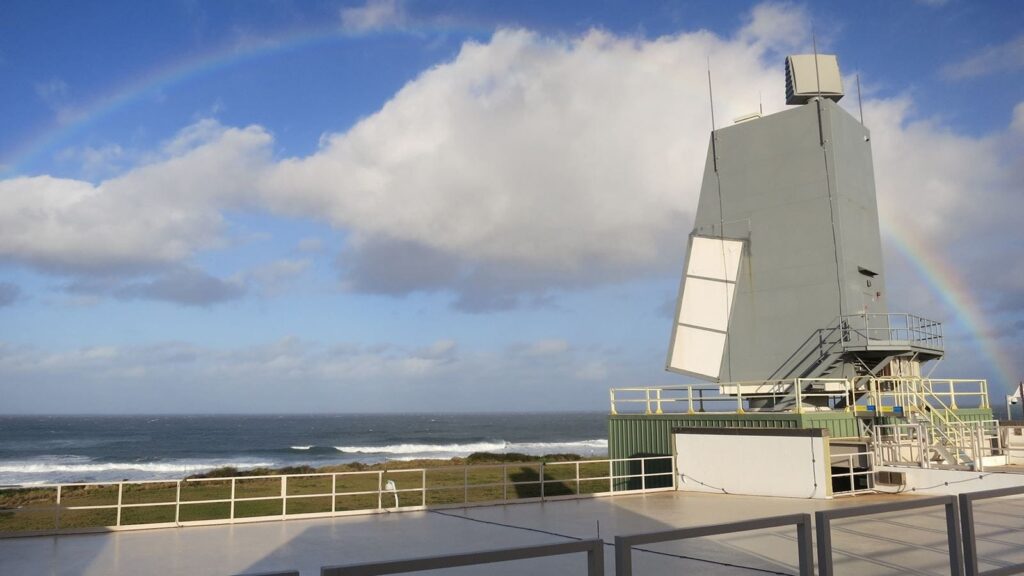
RTX’s Raytheon Successfully Demonstrates Advanced Tracking Capabilities of AN/SPY-6(V)4 Radar 

In partnership with the U.S. Navy, Raytheon has successfully completed its first live test of the AN/SPY-6(V)4 radar in a maritime environment. 

Milestone marks the first live test in a maritime environment  

BARKING SANDS, Hawaii (August 26, 2025) – In partnership with the U.S. Navy, Raytheon, an RTX (NYSE: RTX) business, has successfully completed its first live test of the AN/SPY-6(V)4 radar in a maritime environment. The milestone was achieved during recent testing at the Advanced Radar Detection Laboratory located at the Pacific Missile Range Facility in Hawaii. 

During multiple tests over open water, the radar successfully tracked air and surface targets under various conditions. These tests demonstrated the radar’s advanced tracking capabilities across different mission scenarios and validated years of modeling and simulation work. Additionally, the tests yielded the first live data set for the (V)4 configuration, which will help refine the system for future testing and eventual shipboard deployment.  

“The successful live demonstration of the SPY-6(V)4 radar is a major step forward in advancing the capabilities of today’s fleet and supporting allied operations worldwide,” said Barbara Borgonovi, president of Naval Power at Raytheon. “The radar will allow existing U.S. Navy Flight IIA Destroyers to significantly upgrade their detection and tracking capabilities, allowing sailors to more effectively monitor and respond to potential threats in real-time.” 

This is the next variant in the U.S. Navy’s SPY-6 Family of Radars to undergo live maritime testing. The program will continue with testing and system enhancements, leveraging common hardware and software across other variants to ensure seamless integration and scalability. 

Over the next decade, SPY-6 is expected to be deployed on more than 60 U.S. Navy ships, enhancing defense against air, surface, and ballistic threats. 


Vigor Marine Group, Samsung Heavy Industries Announce Strategic Partnership 

Leading repair and shipbuilding companies to team on flexible, innovative solutions to enhance U.S. Navy, MSC support in forward locations, U.S. shipbuilding 

From Vigor Marine Group 

PORTLAND, Ore. (August 26, 2025) — Vigor Marine Group (VMG), a leading, innovative U.S. provider of maintenance, modernization, and marine services, today announced a strategic partnership with Samsung Heavy Industries (SHI), one of the world’s largest and most technologically advanced shipbuilders. The collaboration will bring expanded forward-deployed maintenance, repair, and overhaul (MRO) capacity to the Indo-Pacific region, offering the U.S. Navy and Military Sealift Command (MSC) a compelling new option to keep vessels mission-ready. In addition, the two leading companies may explore opportunities to support a U.S. shipbuilding renaissance, including a return to Vigor Marine Group’s shipbuilding roots in the Pacific Northwest. 

The U.S. Navy has been actively seeking partners capable of executing forward repair to increase the availability of its fleet. Together, this partnership will combine VMG’s deep customer relationships, proven ability to deliver complex projects on time and on budget, and innovative, commercial mindset with SHI’s world-class Korean shipyard facilities, skilled workforce, and advanced technology leadership. The result is a powerful new forward repair solution designed to add high-quality repair capacity and operational agility, with Vigor Marine Group as the lead U.S.-based prime contractor. 

“At Vigor Marine Group, our primary focus is on providing solutions to our customers,” said Francesco Valente, President & CEO of Vigor Marine Group. “We understand the Navy’s evolving needs and have built a track record of delivering results in support of our national defense. Partnering with Samsung allows us to extend that same capability to forward-deployed operations in the Indo-Pacific and potential shipbuilding opportunities here in the U.S. — helping the Navy increase its operational tempo while maintaining the highest quality standards.” 

The partnership reflects both companies’ commitment to innovation. VMG continually develops new ways to perform maintenance and modernization work more efficiently and effectively, while SHI leads the global shipbuilding industry in automation, digital shipyard technology, and advanced engineering. Together, they will introduce new levels of innovation to forward repair operations, streamlining processes, reducing downtime, and enhancing overall fleet readiness. Looking ahead, investment and implementation of SHI’s advanced technology could support new shipbuilding opportunities here at home.  

“We find it very meaningful to partner with Vigor Marine Group, a leading MRO service provider in the U.S.,” said Sung-an Choi, Vice Chairman and CEO of Samsung Heavy Industries. “We will do our utmost to establish a foundation for building commercial and auxiliary ships for the U.S. through the successful delivery of world-class MRO services.” 

VMG’s unique ability to manage evolving scopes of work with a commercial mindset helps customers address emerging repair needs efficiently. The company’s leading project and customer management expertise, combing with SHI’s state-of-the-art facilities outside the U.S. provide opportunities to support key customers in real time, in their areas of need. This partnership both supports the readiness of our defense maritime fleet as well as a strong, U.S. industrial base by keeping work within U.S. companies and opening pathways for revitalization of U.S. shipyards for new construction. 


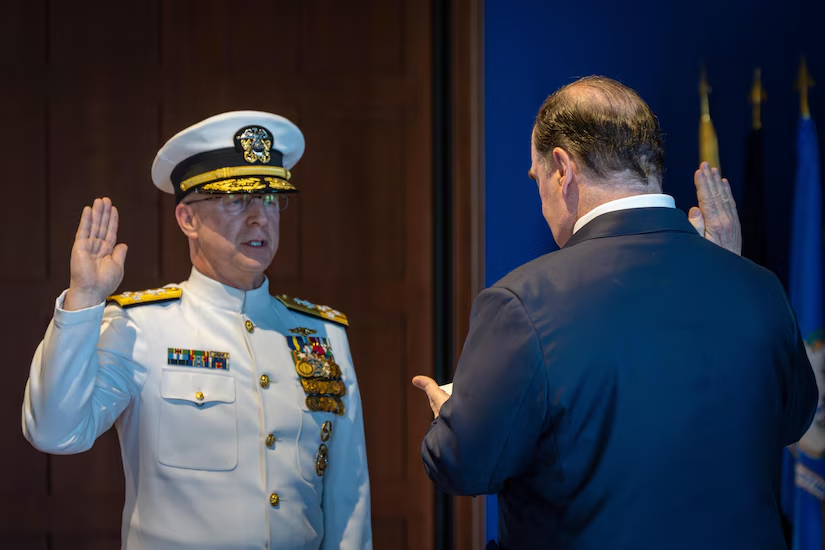
Navy Installs 34th Chief of Naval Operations 

Aug. 25, 2025 | From the Navy Office of Information 

Navy Adm. Daryl Caudle assumed the duties as the 34th chief of naval operations during an assumption of office ceremony, attended by over 300 Defense Department senior leaders, distinguished guests and families at the Washington Navy Yard today, in Washington. 

 The CNO is a member of the Joint Chiefs of Staff and serves as an advisor to the president, the National Security Council, the Homeland Security Council and the defense secretary and is responsible for the command, utilization of resources and operating efficiency of worldwide naval forces and shore activities. 

“As I step into the role as your 34th chief of naval operations, I do so with great pride, immense gratitude and an absolute focus on the mission ahead,” Caudle said in a video to the fleet, released shortly before the ceremony. 

During the ceremony, he further discussed his priorities, including sailors, operational readiness and fleet modernization. 

“The sailor will be front and center in my vision throughout my tenure as CNO — hands down, no exception,” Caudle said. “To ensure that they are ready to fight and win decisively — today, tomorrow and well into the future — we will view everything we do we through an operational lens focused on three priorities: the foundry, the fleet and the way we fight.” 

Secretary of the Navy John Phelan acted as the presiding officer and keynote speaker of the ceremony, highlighting the importance of the Navy and the prioritization of future shipbuilding development. 

 ”Admiral Caudle, ‘the honey badger,’ is the right man for the job,” Phelan said. “He has a reputation for challenging the status quo, demanding results and refusing to accept excuses. I look forward to seeing that relentlessness pursuit of excellence and persistence pervade the halls of the Pentagon.” 

During his remarks, Caudle emphasized his gratitude to his family, especially his wife, Donna Caudle, for their steadfast support throughout his 40-year career. 

“Your influence is woven into the very fabric of my being, into every decision I’ve ever made,” Caudle said. “From the moment we met, you’ve been the bedrock of my life. You’re the anchor that has kept me grounded, especially in the sometimes-turbulent seas of this profession.” 

Caudle’s previous assignments include commander of U.S. Fleet Forces Command, commander of Submarine Forces and commander of Submarine Force Atlantic. 

Vice Chief of Naval Operations Adm. Jim Kilby relinquished the office of the CNO after serving as the acting CNO from February to August 2025. 

Caudle and Phelan commended Kilby for his leadership, which ensured the uninterrupted performance of the Navy’s mission and continued to foster positive relationships with U.S. allies and partners. 


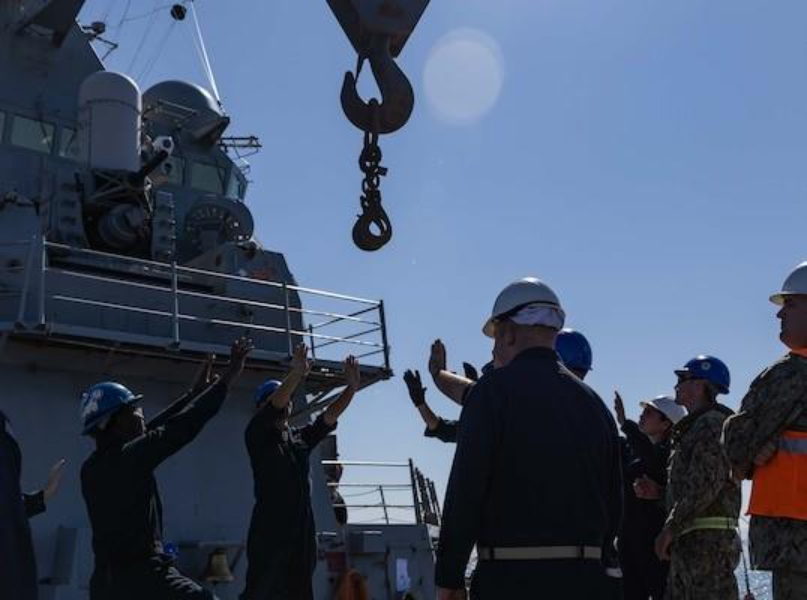
USS Higgins Completes Expeditionary Missile Reload Simulation At Sea 

From MC2 Trevor Hale, Aug. 25, 2025 

CLEVELAND BAY, Australia – The Arleigh Burke-class guided-missile destroyer USS Higgins (DDG 76) simulated an expeditionary reload of a Standard Missile (SM) 2 while anchored in the vicinity of Townsville, Australia, July 28. 

The exercise demonstrates enhanced expeditionary logistics capabilities essential for sustained naval operations in the Indo-Pacific region. U.S. Navy’s Commander, Logistics Group Western Pacific/Task Force 73 (COMLOG WESTPAC/CTF-73) led the reload effort ashore. 
 
“This successful rearm event was the result of exceptional teamwork between the ship’s crew, shore support teams, and technical experts,” said Chief Warrant Officer 3 Kevin Kodrin, COMLOG WESTPAC/CTF-73 ordnance officer. “Exercises like this are critical to validating our ability to safely and effectively reload at sea, ensuring our ships remain combat-ready whenever and wherever needed.” 
 
In 2023 and 2024, U.S. Navy destroyers conducted expeditionary vertical launching system (VLS) reloads in Eden, Australia, and Darwin, Australia, respectively. Following exercise Talisman Sabre in September 2023, the USS Rafael Peralta (DDG 115) rearmed with an SM-2 in Eden, while the USS Dewey (DDG 105) followed exercise Kakadu with an SM-2 reload in Darwin in September 2024. 
 
The Higgins operates under Destroyer Squadron (DESRON) 15, the Navy’s largest DESRON and the U.S. 7th Fleet’s principal surface force, and Task Force 70. 
 
“We are strengthening distributed logistics capabilities that enhance our collective operational readiness across the Indo-Pacific,” said Rear Adm. Eric Anduze, commander,Task Force 70. “This gives our warfighters a tremendous amount of agility to strike from sea, move, reload, reposition and strike again. It represents a lethal tactical advantage that helps us protect the safety and prosperity of the region.” 
 
COMLOG WESTPAC/CTF-73 sustains the U.S. Navy’s maritime forces and is responsible for all diving and salvage operations in the Western Pacific in support of a free and open Indo-Pacific. 
 
Task Force 70 directs the preponderance of forward-deployed air and surface maneuver and striking forces in the U.S. 7th Fleet area of operations, overseeing DESRON 15, Helicopter Maritime Strike Squadron (HSM) 51 and expeditionary Electronic Attack Squadron (VAQ) 131, as well as the ships and aircraft operating under Carrier Strike Group (CSG) 5, including the Nimitz-class aircraft carrier USS George Washington (CVN 73), the Ticonderoga-class guided-missile cruiser USS Robert Smalls (CG 62), the Arleigh Burke-class guided-missile destroyer USS Shoup (DDG 86) and Carrier Air Wing (CVW) 5. 
 
U.S. 7th Fleet is the U.S. Navy’s largest forward-deployed numbered fleet and routinely interacts and operates with allies and partners in preserving a free and open Indo-Pacific region. 


New facility at San Nicolas Island doubles target launch capacity 

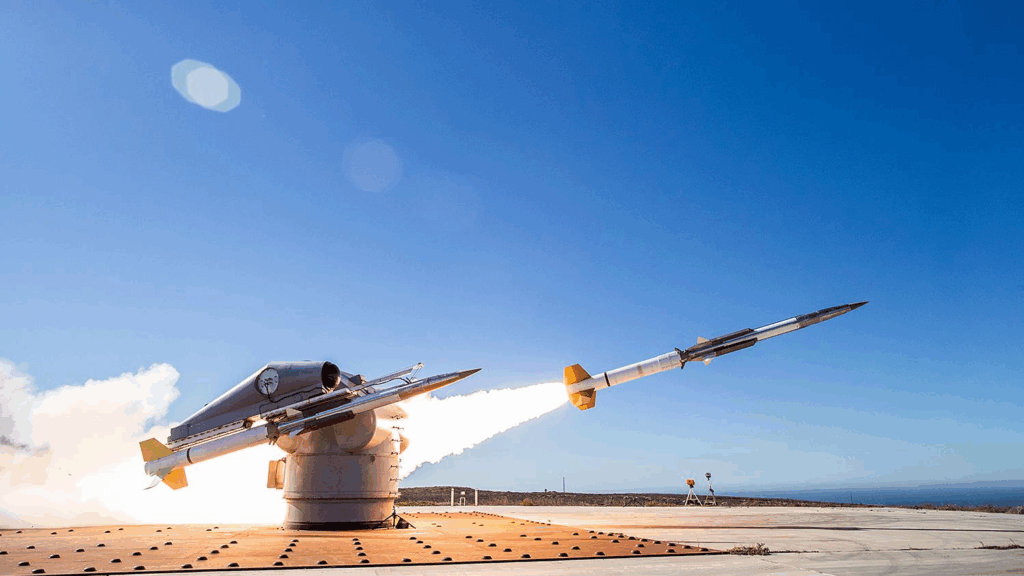
A GQM-163 target launches from San Nicolas Island as part of a quad-launch.

From Naval Air Systems Command, Aug 21, 2025 

SAN NICOLAS ISLAND, Calif.—Naval Air Warfare Center Weapons Division leaders, joined by Naval Surface Warfare Center – Port Hueneme Division, Naval Facilities Command, and Naval Base Ventura County leaders, cut the ribbon Aug. 20 on a new facility at San Nicolas Island that doubles the command’s capacity for launching supersonic targets on the Point Mugu Sea Range. 

The ground-launched GQM-163A Supersonic Sea Skimming Target is capable of maneuvering to simulate current threats facing the fleet and is a critical test and training asset for the Navy. NAWCWD’s Threat/Target Systems Department operates two launchers on SNI that together can launch four targets simultaneously, allowing sailors to train and qualify against multiple incoming threats – a more realistic scenario than single launches. 

That more complex training is especially critical given the escalating tensions abroad. 

“The threat environment is changing every day, and we must change and grow with it,” said Rear Adm. Keith Hash, NAWCWD commander. “Being able to present multiple, realistic threats is critical to ensure we deliver our warfighters a decisive advantage so they can deter aggression and, if necessary, win in conflict and return home safely.” 

“For the past two years, our surface Navy has been taking the fight, taking the shots, on the other side of the world,” said Capt. Anthony Holmes, commanding officer for NSWC-PHD. “Our warfighters are being asked to fight and use their ships and weapons in ways they never thought they would.” 

The new facility, a high explosive magazine, paired with a recently completed missile assembly building, allows NAWCWD to build and store eight GQM-163 targets every eight weeks, doubling the previous capacity of four targets. The Coyote, as the target is called, is nearly 20 feet in length, 30 with its booster attached. That extended size necessitated a much larger storage facility than previously existed at SNI. 

“We started this project in 2016 when PEO (IWS) came to us looking to do 30-plus launches a year. At the time, our assembly buildings could only build two each – so a maximum of four,” said Kevin Gross, TTSD director. “We began what became known as MILCON P-586 for both facilities, but due to funding it was split into two phases. The increase in capacity and capability with this project was only possible because of the funding and support from OPNAV N94.”  

The first facility completed was a Missile Assembly Building in December 2022. That allowed more targets to be assembled on site, but storing so many targets was still an issue until the HEM was completed in June 2025 and obtained its final explosives safety certification Aug. 13. 

The HEM’s ability to store up to 10 assembled targets and boosters significantly reduces the timeline for conducting final tests and acceptance prior to launches. The team can conduct two quad launches in a 24-hour period with two back-up targets ready to launch into the Point Mugu Sea Range, the Department of Defense’s largest and most extensively instrumented overwater test range. 

“The Range is so valuable to the Surface Navy and the Navy writ large. Threats are getting more complex, and the expanded capabilities this new facility brings are critical to ensuring our Sailors are ready to face them” said Capt. Anthony Holmes, NSWC-PHD commanding officer. 

Naval Base Ventura County, which encompasses Point Mugu, Port Hueneme, and SNI, also hosts three warfare centers including NAWCWD and NSWC-PHD. The partnerships between the warfare centers, particularly on the Range, are critical to ensuring effective, efficient weapons testing and surface fleet training. 

“The unique capabilities here at NBVC are force multipliers that ensure our Navy’s research and development, test and training, and deployable forces are equipped to meet today’s needs and tomorrow’s challenges,” said Capt. Daniel Brown, NBVC commanding officer. 

The HEM is already in use, just in time for fleet training this fall. 


UPDATE: USS New Orleans Fire Incident 

By U.S. 7th Fleet Public Affairs, Aug. 22, 2025 

YOKOSUKA, Japan  –  UPDATE Aug. 22: The San Antonio-class amphibious transport dock ship USS New Orleans (LPD 18) returned under its own propulsion to White Beach Naval Facility, Okinawa, Japan, Aug. 22. 

New Orleans is providing its own berthing and galley services remain open, allowing for the crew of nearly 380 Sailors to continue to work and reside aboard their ship. Several Sailors were treated for minor injuries and have returned to full duty. Family members have been updated on the status of the ship and crew. 

The cause of the fire is currently under investigation, and damage assessors are presently aboard inspecting the impact, which was limited to the forward area of the ship. 


Fire Aboard USS New Orleans Extinguished 

By U.S. 7th Fleet Public Affairs, Aug. 21, 2025 

YOKOSUKA– A fire aboard the San Antonio-class amphibious transport dock ship USS New Orleans (LPD 18), which is anchored near White Beach Naval Facility, Okinawa, was declared extinguished at 4 a.m., Aug. 21. 

The fire began at approximately 4 p.m., Aug. 20. The cause of the fire is currently under investigation. 

New Orleans Sailors’ firefighting efforts were supported by the crew of the San Antonio-class amphibious transport dock ship USS San Diego (LPD 22), which is moored at White Beach Naval Facility. 

Japan Maritime Self-Defense Force; Japan Coast Guard; and U.S. Navy commands from across Commander, Fleet Activities Okinawa also provided critical support to the firefighting efforts.   

Several Sailors were taken to New Orleans’ medical for minor injuries. 

New Orleans’ crew will remain aboard the ship. Additional services and berthing are available aboard San Diego and Commander, Fleet Activities Okinawa, if needed. 

Continue to follow U.S. 7th Fleet for updates www.c7f.navy.mil