CORAS Awarded ONR Contract to Advance Navy Leadership Assessment, Behavioral Modeling

MCLEAN, Va.– November 25, 2025: CORAS, the only IL5-authorized Agentic AI Decision Intelligence platform in the Department of War (DoW), announced today that it has been awarded a contract with the Office of Naval Research (ONR) to enhance and unify the Navy’s leadership assessment and behavioral modeling capabilities through the Talent Management Nexus effort in support of Naval Personnel Command’s Talent Management Center of Excellence. 

This award expands CORAS’s growing portfolio of U.S. Navy partnerships, following its successful deployment of the “Leader’s Compass” application at the U.S. Naval Academy. Under the new ONR contract, CORAS will configure its secure, low-code platform to deliver a unified web application supporting leadership assessment, behavioral modeling, and performance tracking across the fleet. 

“This CORAS collaboration will provide the U.S. Navy with a single, data-driven view of potential leadership and development across the force,” said Dan Naselius, President and CTO of CORAS. “By combining IL5-secure Decision Intelligence with behavioral science, the Navy can modernize and optimize how it nurtures, identifies, develops, and deploys its future officers and leaders.” 

Through this effort, CORAS will enable ONR to orchestrate and integrate data across multiple Navy systems in real time; administering assessments, conducting automated analyses with built-in Agentic AI, natural language processing (NLP) and machine learning (ML), and visualizing Sailor performance through dynamic briefs. These features will allow the Navy to track leadership growth over time, refine behavioral models, challenge program efficiency and effectiveness, and continuously improve the development processes for all Sailors. 

The CORAS platform built on a FedRAMP High and IL5 environments supports advanced security controls, multi-user access for administrators, panelists, and participants, and seamless integration with the Authoritative Data Environment (ADE) and other MyNavy HR data sources. As a Commercial-Off-The-Shelf (COTS) solution, CORAS is rapidly configured and deployed within days, providing immediate operational value to ONR and the Navy’s Manpower, Personnel, Training, and Education Information Sciences (MPTE-IS) portfolio. 

“The ONR award underscores CORAS’s expanding role as a trusted enabler of data-driven decision  and readiness  SaaS platform within the Department of War,” said Moe Jafari, CEO of CORAS. “From the PMO to the Pentagon, CORAS empowers the U.S. Navy to harness its data, identify future leaders, and make faster, more informed decisions.” 

CORAS and its Agentic Agent GARY operate at IL5 and FedRAMP High in government environments including NIPR and SIPR, offering profound ROI and 50+x productivity. Agencies can acquire CORAS and GARY through GSA, NASA SEWP, SBIR Phase III, Tradewinds AI Marketplace, Carahsoft, and AWS partner channels. Learn more at www.coras.ai


First Air Force T-38 Talon Arrives at Fleet Readiness Center Southeast for Overhaul and Repair 

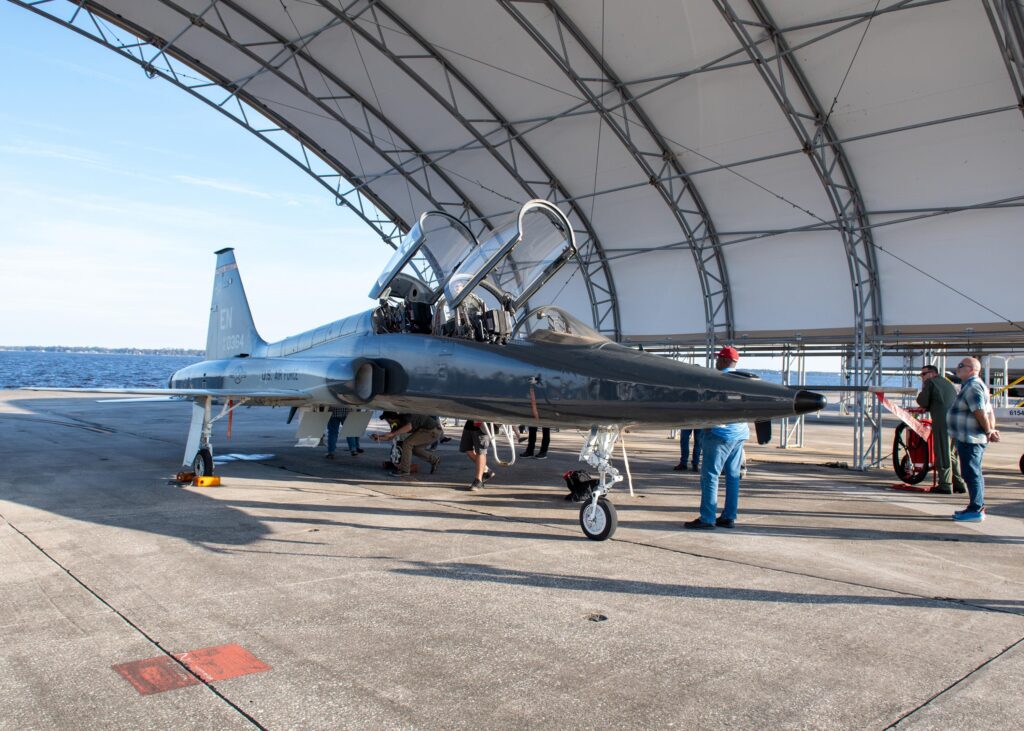
An Air Force T-38 Talon arrives at Fleet Readiness Center Southeast (FRCSE). This is FRCSE’s first T-38, which will undergo overhaul and repair as part of the Talon Repair, Inspection, and Maintenance program (TRIM). The TRIM program is an Air Force repair initiative that involves inspecting and replacing key structural components across the entire T-38 fleet, with the goal of extending the operational life of the aircraft by five to 10 years. (U.S. Navy photo byToiete Jackson) 

Release From Fleet Readiness Center Southeast

JACKSONVILLE, Fla. — The first Air Force T-38 Talon aircraft arrived at Fleet Readiness Center Southeast (FRCSE) Nov. 24 for overhaul and repair as part of the Talon Repair, Inspection and Maintenance program (TRIM). 

The TRIM program is an Air Force repair initiative that involves inspecting and replacing key structural components across the entire T-38 fleet, with the goal of extending the operational life of the aircraft by five to 10 years. 

Currently, the Air Force performs the bulk of T-38 TRIM repairs at its aviation depot facility at Joint Base San Antonio-Randolph, Texas. In August 2024, Air Force representatives from the T-38 Program Office reached out to FRCSE to see if it could take a portion of the workload. 

“When the Air Force asked us if we could support working on their T-38s, our team took a hard look at it and agreed we could assist,” said Capt. Mike Windom, FRCSE commanding officer. “Taking on this workload is another testament to our workforce’s commitment to doing whatever it takes to support our nation’s warfighters.” 

The T-38 Talon is a twin-engine, high-altitude, supersonic jet trainer used in a variety of roles. The Air Force uses the T-38 to prepare pilots to fly front-line fighter and bomber aircraft. 

“The Air Force has approximately of 270 aircraft they need to perform the TRIM package on by 2030, with the goal being 50 inductions per year,” said Paul Skinner, an FRCSE business management specialist. “FRCSE is going to take on a portion of those aircraft inductions to help them reach that goal.” 

Since August 2024, more than 160 process engineers, logisticians, components and manufacturing experts, production leaders and support personnel from FRCSE have been working together and with Air Force representatives to ensure the command had the necessary support equipment, technical data, software and qualifications to ensure the command was prepared to work on the new airframe. Additionally, FRCSE personnel made several visits to both Air Force and NASA T-38 repair sites to see maintenance and repair operations firsthand. 

“During the visit to El Paso to visit the NASA facility, their sheet metal mechanics were especially helpful,” said Troy James, an FRCSE sheet metal mechanic. “They took the time to walk me through several areas of the aircraft, explain component layouts and share practical knowledge of their day-to-day work.” 

The bulk of the TRIM work at FRCSE will be performed by seasoned artisans who already have a wide range of experience working on a very similar aircraft, the F-5 Tiger II.  While the two aircraft are not the same, they possess enough similarities that some of the tools and support equipment can be used on both airframes, which gives the F-5 artisans a leg up in starting their work on T-38. 

“We discovered that while the F-5 and T-38 share similarities, they can also differ significantly, which requires us to be cautious to avoid confusion,” said Steve Clayton, FRCSE’s F-5/T-38 ground check supervisor. 

In October, Naval Air Systems Command, Maryland, designated FRCSE as a secondary Depot Source of Repair for the T-38, which authorized the command to perform the requested repair work. 

“There’s been a lot of work put into getting to this point,” said Skinner. “We submitted over 180 pieces of support equipment to our manufacturing and plant services departments for them to make from scratch to ensure our artisans have the right equipment. This included things such as wiring harnesses, fixtures, and installation and removal tools.” 

The FRCSE T-38 capability establishment team has been working over the past 15 months to ensure the command was ready to receive its first T-38, and the arrival of the first aircraft felt like the culmination of the team’s efforts. 

FRCSE expects to induct a second aircraft later this year with the production line ultimately growing to six inductions per year. 

About Fleet Readiness Center Southeast  

Fleet Readiness Center Southeast (FRCSE) is Northeast Florida and Southeast Georgia’s largest maintenance, repair, overhaul and technical services provider, employing approximately 5,000 civilian, military and contract workers. The organization serves as an integral part of the greater U.S. Navy, Naval Air Systems Command, and Commander, Fleet Readiness Centers by maintaining the combat airpower for America’s military forces. 


Dahlgren Division Engineers Capture First Live Data on Projectile and Shockwave Interaction 

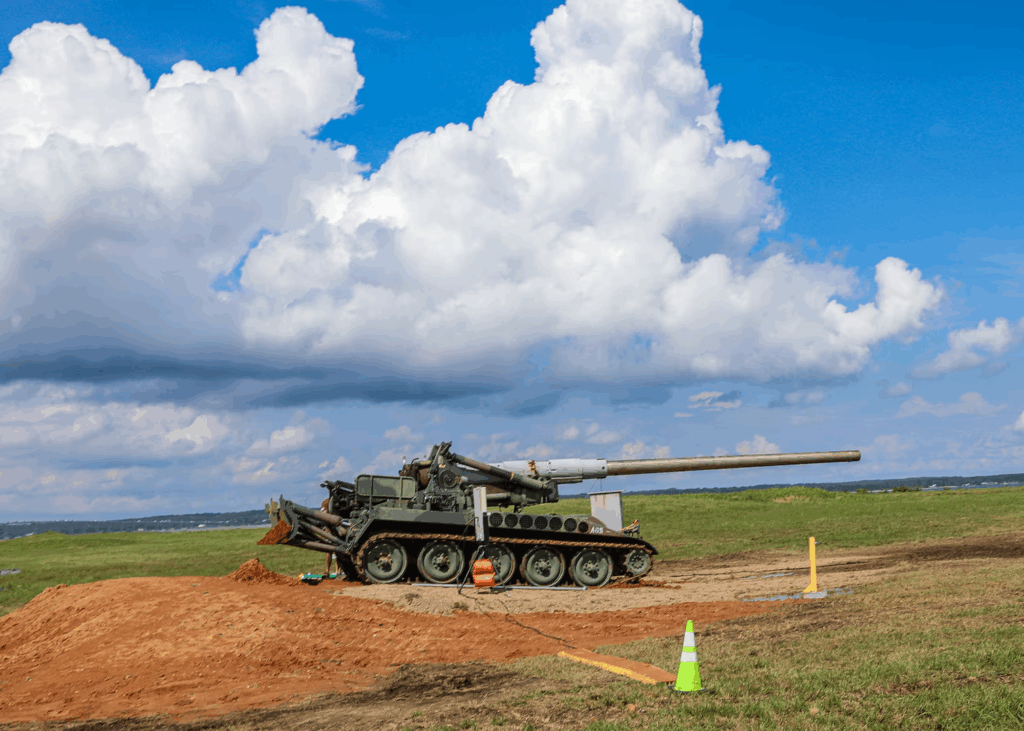
DAHLGREN, Va. – Naval Surface Warfare Center Dahlgren Division scientists and engineers used a M110 Howitzer modified with a 155 mm barrel to launch projectiles traveling nearly four times the speed of sound toward controlled blasts of 30 to 100 pounds of dynamite. The groundbreaking test was used to study how shockwaves affect high-speed rounds. (NSWCDD Photo)

By Kristin Davis, NSWCDD Corporate Communications, Nov. 21, 2025 

DAHLGREN, Va.  –  Naval Surface Warfare Center Dahlgren Division recently fired high-speed projectiles into timed explosions to study how shockwaves affect high-speed rounds in a groundbreaking test.  
 
Over two days, a team of scientists and engineers at Dahlgren Division used a M110 Howitzer modified with a 155 mm barrel to launch projectiles traveling nearly four times the speed of sound toward controlled blasts of 30 to 100 pounds of dynamite. 
 
“We took a high-speed projectile and did what Dahlgren does best — we shot it from a gun,” said Lyn Thomas, Distinguished Scientist for Surface Engagement Systems (Acting) at NSWCDD. “The new part was studying what happens when the projectile meets a blast wave mid-flight.” 
 
The mission was practical: gathering data to improve computer models that simulate missile and blast behavior. 
 
Coordinating the projectile’s flight with the explosion’s detonation required split-second accuracy. 
 
“As we prepared for the test, there was very little question if we could get the projectile to fly where we wanted it to fly and very little question if we could get the explosive to detonate at the right time,” Thomas said. “It was really about whether we could get those two things to coincide at the right time and place.” 
 
Because the team was using shadowgraphy, a high-speed imaging technique that makes normally invisible shockwaves visible and allows engineers to see how the blast moves around a fast-moving projectile, “we had only a tiny window where everything had to line up perfectly,” he said. 
 
To prepare, the team conducted a series of practice firings and static detonations before the main event. During the final shots, onboard sensors and high-speed cameras recorded how the shockwave and projectile interacted — data never captured during a live-fire event. 
 
Everything used in the test, from the launch package to the projectile’s internal electronics that collect and transmit data, was designed and built at NSWCDD, Thomas said. “We did all of it right here at Dahlgren.” 
 
The experiment took place at Pumpkin Neck, a range typically used for explosive warhead testing. Because this project required both gun firing and controlled detonations, Dahlgren Division combined two of its specialties — precision gun testing and high-explosive research — in one operation. 
 
The team was able to conduct two to three instrumented shots per day, producing an exceptional amount of data quickly and affordably.  
 
Though the test itself occurred over two days, safety planning took nearly a month. Engineers analyzed every possible outcome — from flight path variations to failed detonations — and designed multiple safety layers into the setup, Thomas said, “We analyze every possible failure mode and build in layers of protection. Each successful test builds confidence in our process — but nothing ever gets rubber-stamped.” 
 
For Thomas, the experiment highlights the range of talent and collaboration across NSWCDD’s workforce. 
 
“The interesting thing about Dahlgren is we’re over here doing this type of testing, and across base people are doing computer programming on very complex systems and combat systems work. There is just such a variety of work going on to support the Navy and support all our activities,” Thomas said. This was a test for a customer outside of the Navy, but they sought us out for our expertise, our ability to execute the test and build the projectile with onboard data to get the data they need. This is an example of Dahlgren expertise that can be applied across the board, which I find very rewarding.” 


Navy Awards SAIC $242M Contract to Operate, Maintain, Upgrade Propulsion Test Facility 

From SAIC, Nov. 24, 2025 

Contract enables essential operations of Navy’s premiere undersea weapon facility, including testing & production of Mk 48, Mk 45, UUV, sensors and more 

RESTON, Va., Nov. 24, 2025 (GLOBE NEWSWIRE) — Science Applications International Corp. (NASDAQ: SAIC) has been awarded a $242 million contract by the Naval Undersea Warfare Center Division, Newport (NUWCDIVNPT) to enable the continued operation, maintenance and modernization of the Propulsion Test Facility (PTF), in support of the Undersea Warfare (USW) Weapons, Vehicles and Defensive Systems Department. 

The U.S. Navy’s award of this 5-year, follow-on contract underscores their trust in SAIC’s engineering, technical and logistics experts to sustain, modernize and optimize the PTF’s complex mission environment. This includes multiple specialized testing facilities for torpedo components, submarine systems and propulsion technologies, such as the Deep Depth Test Facility, the Navy’s only land-based testing system capable of evaluating an Mk 48 torpedo afterbody throughout its entire operational envelope. 

“Supporting the Propulsion Test Facility and the Navy’s torpedo enterprise as a mission integrator has given SAIC the opportunity to deliver innovation directly where our customers need it most—from Mk 48 production to advanced test-equipment design and other critical programs across NUWC Division Newport. For more than a decade, we’ve partnered closely with the PTF to help it grow and modernize, strengthening our own capabilities to better serve the Navy,” said Barbara Supplee, SAIC executive vice president of the Navy Business Group. “This new contract allows us to further support our customers through next-generation torpedo test-set production for domestic and FMS maintenance facilities. Our success reflects SAIC’s customer-driven, technology-forward mission integration approach to solving the Navy’s toughest challenges and the strength of our engineering, technical, and logistics teams. We’re committed to helping the U.S. Navy sustain the world’s most advanced undersea weapons advantage.” 

Under the contract, SAIC will provide testing, Torpedo Test Equipment and Engineering and Technical services in the operation, maintenance and upgrading of facilities that comprise the NUWCDIVNPT PTF Complex in support of the MK 48 Heavyweight Torpedo, MK 54 Lightweight Torpedo, Undersea Targets and Sensors, Unmanned Underwater Vehicles and Submarine Sensors and Equipment. The company will deliver engineering and technical services, including prototyping, systems integration and digital engineering to ensure the PTF remains capable of supporting emerging Navy research and development needs. 


U.S., Qatar and Allies Enhance Regional Defense During Exercise Ferocious Falcon 6 

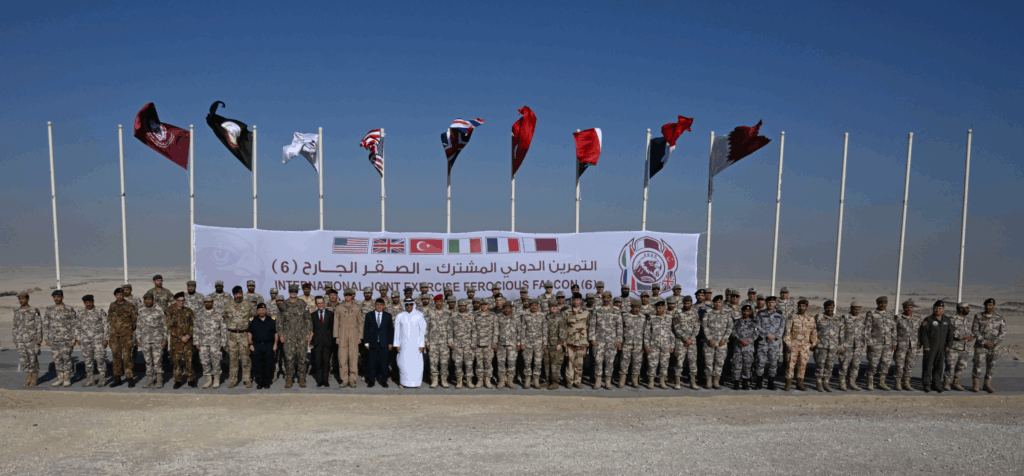
Senior military leaders from the U.S., Qatar, Italy, the United Kingdom, Turkey and France attend the exercise Ferocious Falcon 6 live-fire demonstration within the U.S. Central Command area of responsibility, Nov. 20, 2025. Ferocious Falcon 6 is a biennial, Qatar-hosted multinational joint exercise designed to enhance lethality and combat efficiency among U.S. and allied forces. (U.S. Air Force photo by Senior Master Sgt. Richard P. Ebensberger) (Photo by Senior Master Sgt. Richard P. Ebensberger)

By Ninth Air Force (Air Forces Central) Public Affairs and Fifth Fleet (U.S. Naval Forces Central Command) Public Affairs | November 22, 2025 

AL UDEID AIR BASE and UMM AL-HOUL NAVAL STATION, Qatar (Nov. 22, 2025) – More than 1,300 military personnel from the U.S., Qatar, Italy, United Kingdom, Turkey and France participated in Exercise Ferocious Falcon 6, a biennial, Qatar-hosted multinational joint exercise, Nov. 16-20. 
  
“Exercise Ferocious Falcon 6 showcased our ability to operate as a unified, lethal and agile force against regional threats,” U.S. Navy Commander Joseph W. Hontz, U.S. Naval Forces Central spokesperson, said. “Our commanders and battle staff received valuable training on the critical aspects of planning and management and using integrated command and control systems for effective unified operations, in order to enhance our collective combat readiness while building crucial partnerships across air, land and sea domains throughout the Middle East.” 
  
Both U.S. air and naval assets participated in the multi-domain exercise, which included a Bomber Task Force integration to demonstrate global power and a stake in the region, as well as surface, air and expeditionary forces, who executed multiple field exercises and maritime drills. 
  
Ferocious Falcon 6 integrated cutting-edge technology and methodologies to address modern challenges. The exercise was an opportunity for information-sharing across warfare domains and exemplifies partner nations’ shared commitment to adapting collective defense strategies in order to safeguard and strengthen regional commitments. 
  
“This exercise is as much about building relationships as it is about tactics and operations,” U.S. Air Force Maj. Katrina J. Cheesman, U.S. Air Forces Central spokesperson, said. “By exercising our shared defense capabilities, the United States and its regional partners seek to sustain trust, stabilize the Middle East, and reinforce the principles of peace and cooperation fundamental to rules-based international order.” 
  
Designed to enhance lethality and combat efficiency among allied forces, Ferocious Falcon 6 further solidified the enduring partnership between the U.S., Qatar and its allies by focusing on interoperability, warfighting readiness and overall maritime security in the region. The exercise provided vital training opportunities for all participants to test collaborative techniques within the U.S. Central Command area of responsibility. 
  
Training opportunities encompassed a command post exercise to train on integrated command-and-control; combined field training exercises involving multiple nations’ land, air and naval forces; air interdiction, escort and defensive counter-air training; tactical combat casualty care cross training; and Visit, Board, Search, and Seizure rehearsals among partners. 
  
U.S. Air Force assets were comprised of F-16 Fighting Falcons, KC-135 Stratotankers and a B-52 Stratofortress, while U.S. Naval Forces assets included the Independence-class littoral combat ship USS Tulsa (LCS 16), the fast-response cutter USCGC Clarence Sutphin Jr. and one P-8A Poseidon maritime patrol and reconnaissance aircraft. 
  
Ferocious Falcon 6 aimed to advance the operational capabilities of participating forces, strengthen coordinated defense strategies, and expand capabilities in maritime security and infrastructure protection. The exercise has evolved over the years to become a cornerstone of U.S.-Qatar and allied security cooperation. 


Navy Relieves USNA Commandant of Midshipmen 

From U.S. Naval Academy Public Affairs, Nov. 24-2025 

ANNAPOLIS, Md.- United States Naval Academy SuperintendentLt. Gen. Michael Borgschulte relieved the Commandant of Midshipmen Capt. Gilbert Clark Jr. today due to a loss of confidence in his ability to effectively lead the Brigade of Midshipmen. 

The naval service maintains the highest standards for leaders and holds them accountable when those standards are not met. 

Clark assumed the role as Commandant of Midshipmen in June 2025. Capt. Austin Jackson, Deputy Commandant of Midshipmen, has assumed duties as the interim Commandant. 

The Naval Academy Commandant is responsible for the day-to-day conduct, military training, and professional development of approximately 4,400 midshipmen. 

For questions related to this release, please contact United States Naval Academy Public Affairs at [email protected]


HII Delivers Virginia-Class Submarine Massachusetts (SSN 798) to U.S. Navy 

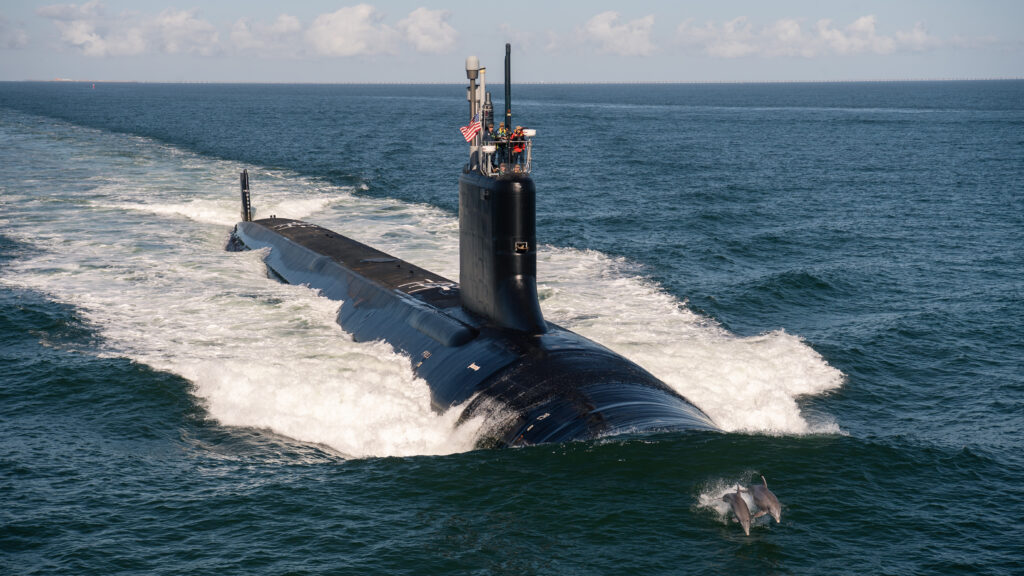
NEWPORT NEWS, Va., Nov. 21, 2025 (GLOBE NEWSWIRE) — HII (NYSE: HII) announced today that its Newport News Shipbuilding division has delivered Virginia-class fast-attack submarine Massachusetts (SSN 798) to the U.S. Navy. 

Massachusetts is the 12th Virginia-class submarine delivered by NNS, and the 25th built as part of the teaming agreement with General Dynamics Electric Boat. It is the fifth Navy vessel named for the commonwealth of Massachusetts. 

“Delivering Massachusetts after its rigorous sea trials is an important milestone commitment for our team this year,” NNS President Kari Wilkinson said. “We are absolutely steadfast in our resolve to increase the pace of submarine construction and see this as a solid step toward our overall objective.” 

More than 10,000 shipbuilders from NNS and Electric Boat participated in the construction of Massachusetts, alongside thousands of suppliers across the country, including more than 20 in Massachusetts that support Virginia-class submarine construction at NNS. 

Nuclear-powered fast attack submarine Massachusetts was christened in May 2023 at NNS by ship’s sponsor Sheryl Sandberg, founder of Lean In, and former chief operating officer of Meta (formerly Facebook). 


HII Completes Acceptance Trials for Destroyer Ted Stevens 

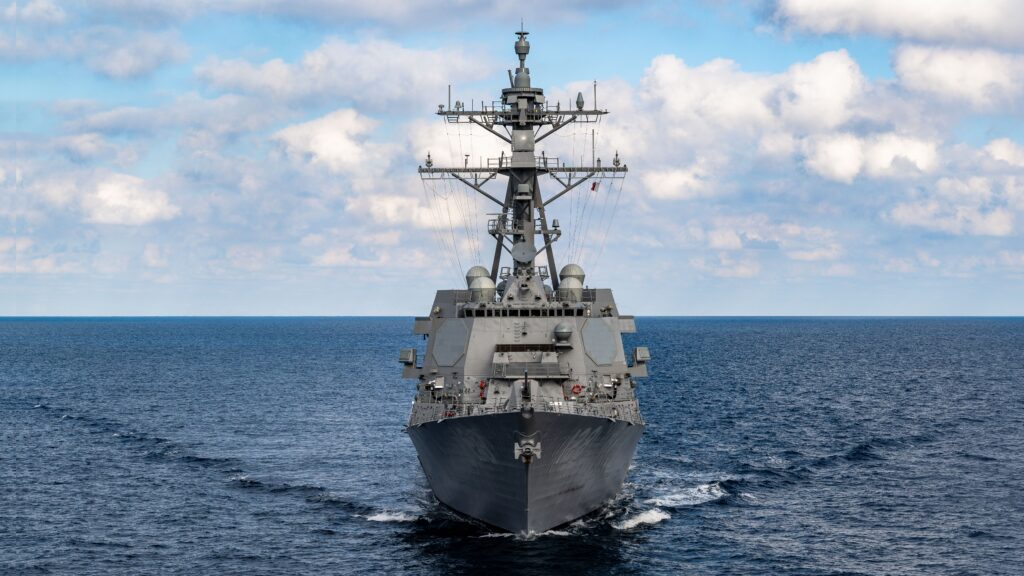
PASCAGOULA, Miss., Nov. 21, 2025 (GLOBE NEWSWIRE) — HII’s (NYSE: HII) Ingalls Shipbuilding division successfully completed the final round of sea trials for Arleigh Burke-class guided missile destroyer Ted Stevens (DDG 128). The Ingalls Test and Trials team spent several days in port and at sea conducting a comprehensive series of acceptance test and evaluations, overseen by the Navy’s Board of Inspection and Survey (INSURV). These trials confirmed that the ship successfully demonstrated required mission capabilities, preparing it for delivery to the U.S. Navy in the coming weeks. 

“Our goal is to deliver the most advanced and capable warships to the fleet as quickly as possible, addressing the increasing national security needs of the United States and our allies. The work of the entire DDG 128 team exemplifies our relentless pursuit to achieve this very mission,” Ingalls Shipbuilding President Brian Blanchette said. “Our shipbuilders take great pride in reaching this milestone, which stands as a testament to the teamwork and skill that define our destroyer program at Ingalls.” 

DDG 128, the second Flight III Arleigh Burke-class destroyer built by Ingalls, represents the next generation of surface combatants for the U.S. Navy and features the second-in-class Flight III AN/SPY-6 (V)1 radar system and the Aegis Baseline 10 combat system designed to counter threats well into the 21st century. 

To date, Ingalls Shipbuilding has delivered 35 Arleigh Burke-class destroyers to the U.S. Navy, including the first Flight III, USS Jack H. Lucas (DDG 125). Currently, Ingalls has five more Flight III destroyers under construction: Ted Stevens (DDG 128)Jeremiah Denton (DDG 129), George M. Neal (DDG 131), Sam Nunn (DDG 133), and Thad Cochran (DDG 135). 

As the largest manufacturing employer in Mississippi, Ingalls Shipbuilding has been designing, building, and maintaining destroyers for the U.S. Navy for 87 years. To learn more about the DDG 51 Arleigh Burke-class destroyer program at Ingalls work visit: https://hii.com/what-we-do/capabilities/guided-missile-destroyers/arleigh-burke-class/.  


Northrop Grumman Celebrates 30 Years of E-2 Collaboration with Potez Aéronautique 

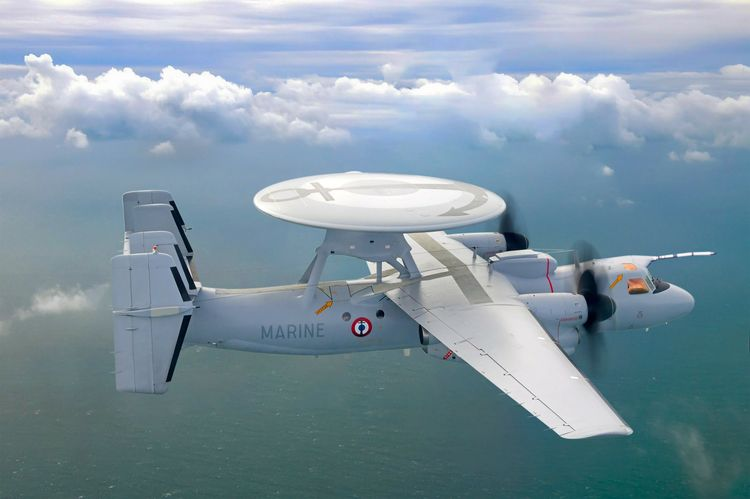
French E-2D Artist Rendering (Photo Credit: Northrop Grumman)

AIRE-SUR-L’ADOUR, France – Nov. 20, 2025 – Northrop Grumman Corporation (NYSE: NOC) recently commemorated its 30-year collaboration with empennage supplier Potez Aéronautique on E-2 Airborne Command and Control aircraft programs. This collaboration continues today with Potez producing empennages that will be fitted on E-2D Advanced Hawkeye aircraft manufactured by Northrop Grumman for the French Navy.  

  • The ceremony hosted by Potez Aéronautique—which brought together representatives from the French and U.S. Navy, the Direction Générale de l’armement, and Northrop Grumman, marked the completion of the empennage that will be fitted on the French Navy’s first E-2D at Northrop Grumman’s St. Augustine, Fla. manufacturing facility. 

  • Northrop Grumman is contracted to produce three E-2D aircraft for the French Navy, the first of which is scheduled for delivery in 2027. Advanced Hawkeyes will replace France’s E-2C Hawkeye 2000 fleet, which has been in operation for over 25 years. 

  • Potez Aéronautique is a supplier for Northrop Grumman’s E-2D Advanced Hawkeye, manufacturing empennages for all E-2Ds produced for the United States and international customers, and has produced these components for E-2C Hawkeye variants. The company earned Northrop Grumman’s Performance Excellence Award in 2022. 

Expert:  

“Our three-decade collaboration with Potez reflects our commitment to building global industrial partnerships,” said Janice Zilch, vice president of multi-domain command and control programs at Northrop Grumman. “We look forward to providing the French Navy a generational leap in decision dominance with the E-2D Advanced Hawkeye, the world’s premier airborne command and control aircraft.” 

Details on Program:  

Northrop Grumman’s E-2C Hawkeye 2000, which entered service with the French Navy in 1998, provides air defense and supports the Charles de Gaulle carrier strike group. France is the only country other than the U.S. to operate its E-2C Hawkeyes from an aircraft carrier. This capability has enabled interoperability exercises that support Hawkeyes and other aircraft from the French and U.S. fleets. 

Northrop Grumman’s E-2D Advanced Hawkeye is the latest in a line of Airborne Early Warning aircraft that stretches back over 60 years. The E-2D is the world’s premier Airborne Command & Control aircraft, effective over land and sea. Northrop Grumman has evolved the E-2D into a cutting-edge platform, capable of facing threats anywhere in the world. 

E-2 variants are operated by Air Forces and Navies around the world. With an active production line and an excellent delivery history, the E-2D continues to introduce new technology to outpace ever-evolving threats.


Cubic Announces Collaboration with SNC to Redefine Naval Aviation Training

The Freedom Trainer provides a digitally designed, modern and cost-effective aircraft 

From Cubic Defense 

SAN DIEGO – November 19, 2025 – Cubic Defense, the world’s leading provider of advanced air combat training, is honored to be part of SNC’s Freedom Trainer team of distinguished industry partners for the U.S. Navy UJTS competition. Freedom promises uncompromising training excellence, cost efficiency and advanced capabilities as the only aircraft capable of Carrier touch-and-go and Field Carrier Landing Practice (FCLP) to Touchdown. 

“The SNC Freedom Trainer Jet exemplifies how leveraging the capabilities of mid-tier companies can lead to superior training solutions,” stated Russ Marsh, President, Cubic Defense. “We are proud to be part of the agile and proven team bringing innovation, speed with discipline, impeccable engineering, and on-cost and accelerated deliveries to revolutionize naval aviation training.” 

“SNC’s Freedom Trainer boasts a range of key features that sets it apart as the premier choice for UJTS. In addition to meeting the U.S. Navy’s traditional rigorous landing requirements, this innovative aircraft offers significantly reduced lifecycle costs, with engine-related expenses that are 40% lower than the U.S. Navy’s current trainers and half the cost of land-centric trainers. Its advanced design and robust reliability, with an airframe life of 16,000 hours, eliminate the need for unplanned Service Life Extension Programs (SLEP), while still allowing for 30-40% longer average sortie duration.” SNC 

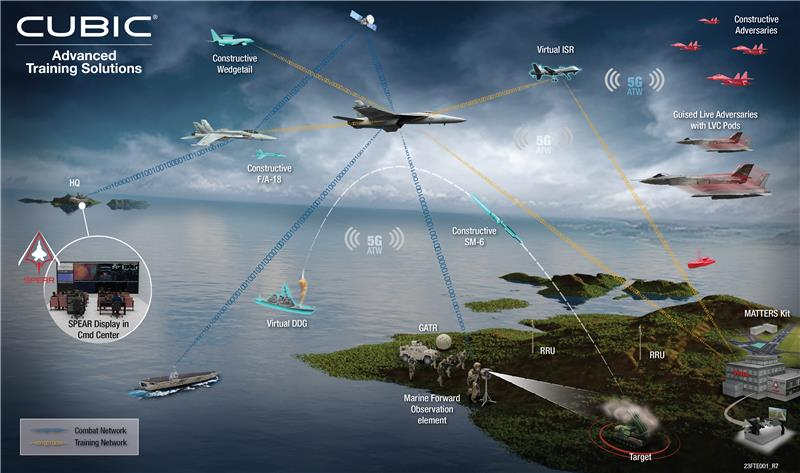
Cubic’s contribution will include Synthetic Inject to Live – Live, Virtual and Constructive (SITL-LVC) and Simplified, Planning, Execution, Analysis, Reconstruction (SPEAR). SITL-LVC training is a revolutionary approach to training and simulation. Integrating computer-generated (synthetic) elements, or scenarios, into live training exercises, SITL-LVC augments the realism and complexity of the training environment and enhances the efficiency and effectiveness of the training experience. The SITL-LVC solution has been validated in operational U.S. Air Force and U.S. Navy fighter aircraft during over 97 sorties, distinguishing Cubic as the lone company to demonstrate the ability to inject virtual and constructive synthetic entities into live fighter cockpit displays at Large Force Employment (LFE) scale. 
 
SPEAR is a proven common data model and data collection platform that provides a comprehensive and congruent common operational picture during live and post mission training by seamlessly integrating data from LVC feeds, multi-domains, kinetic and non-kinetic effects, objective and subjective data, with analytics. The solution provides unparalleled insights and optimization opportunities for mission rehearsal, real-time training enhancement, post-mission debriefs, and resource management. SPEAR enables next level learning to exercise participants and has achieved demonstrated success at major international training events, including Checkered Flag, Red Flag, Cobra Warrior, and Talisman Sabre.