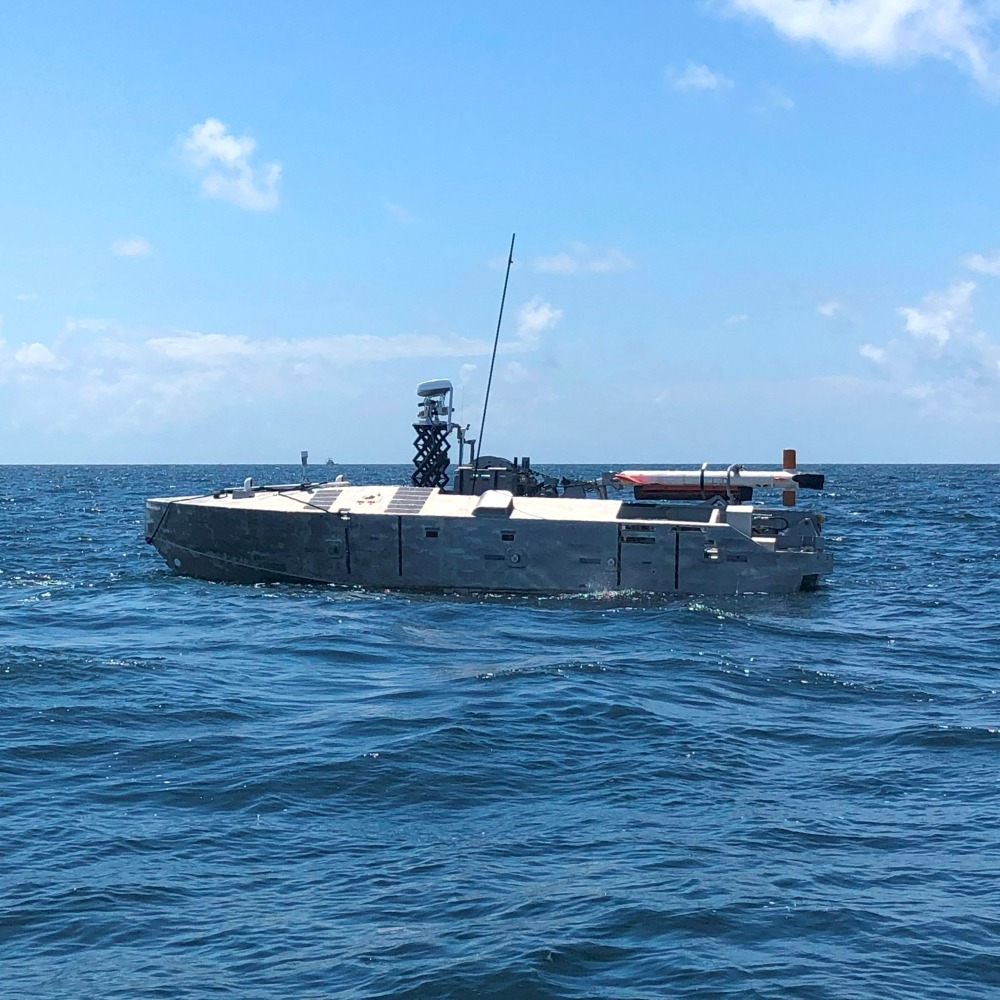
In just 45 days, Northrop Grumman paired the AN/AQS-24 minehunting system withan unmanned surface vehicle
PANAMA CITY, Fla. – Dec. 15, 2025 – (PHOTO RELEASE) Northrop Grumman Corporation (NYSE: NOC) successfully demonstrated the integration of its proven AN/AQS-24 minehunting system with a Mine Countermeasures Unmanned Surface Vehicle (MCM USV), addressing the U.S. Navy’s growing need for an uncrewed, towed MCM solution. Just 45 days after signing a contract with the Navy, Northrop Grumman began open-water testing in Panama City to demonstrate the high-performing, helicopter-towed AN/AQS-24 can effectively pair with a MCM USV. The U.S. Navy confirmed that the AN/AQS-24 meets all primary government objectives for a safer and more efficient mine-hunting capability.
Collins Elbit Vision Systems Helmet-Mounted Display System+ Achieves Milestone with Navy
Sixth-generation helmet system will provide pilots with superior battlespace awareness
From Collins Elbit Vision Systems
FORT WORTH, TEXAS – Dec.12, 2025 – Collins Elbit Vision Systems (CEVS), a joint venture between Elbit Systems of America (Elbit America) and Collins Aerospace, an RTX (NYSE: RTX) business, has successfully completed the Critical Design Review for the Zero-G Helmet Mounted Display System+ (HMDS+), tailored specifically to meet the United States Navy’s requirements under the Improved Joint Helmet-Mounted Cueing System (IJHMCS) program. This program focuses on adapting and integrating the advanced Zero-G HMDS+ into the F/A-18E/F Super Hornets and EA-18G Growlers, ensuring these aircraft benefit from enhanced operational capabilities that align with the U.S. Navy’s mission needs.
The Zero-G HMDS+™ is a sixth-generation helmet-mounted display system that provides a fully immersive, high-definition view of the battlespace. This enables aircrew to make split-second decisions at high speeds with superior situational awareness, enhancing mission effectiveness and survivability.
Captain Joseph Kamara, Naval Aircrew Systems (PMA-202) program manager said, “Aircrew health and safety is our number one priority. The Zero-G being integrated through our IJHMCS program promises to relieve aircrew of neck and back strain and greatly improve ejection safety. We are excited to be at the leading edge of safety and technology, and this important milestone is a critical step toward deploying this capability for our F/A-18 and EA-18 aircrew.”
The Zero-G HMDS+ builds on CEVS’ legacy of delivering fourth- and fifth-generation HMDS. It combines combat-tested tracking and low-latency technologies with a cutting-edge display to deliver accurate, real-time information. The superiority of the Zero-G HMDS+ is in its ability to fuse mission data, sensor video and weapon system information while serving as a primary flight instrument.
“Zero-G is providing sensor fusion at the edge,” said Luke Savoie, Elbit America’s President and CEO and CEVS board member. “This system is critical technology, while remaining lightweight. As fighter aircraft level-up, the HMDs of those systems need to as well. Zero-G provides unmatched head-up, sixth-generation battle management capabilities.”
“When our team began working on the Zero-G HMDS+, our goal was to provide aircrew with the safest, most advanced helmet system on the market,” said Collins Aerospace’s Daniel Karl, co-general manager of CEVS. “This milestone confirms our helmet is ready for the next phase of development and brings us one step closer to delivering this advanced capability to naval aviators.”
The program will now begin rigorous airworthiness testing and full integration with aircraft avionics and mission systems. Initial operational capability is expected in 2027. The system is planned to be fielded on all operational U.S. Navy and Royal Australian Air Force Super Hornets and Growlers, totaling more than 750 aircraft.
HII Announces Major Milestone for ROMULUS USV Technology
From HII
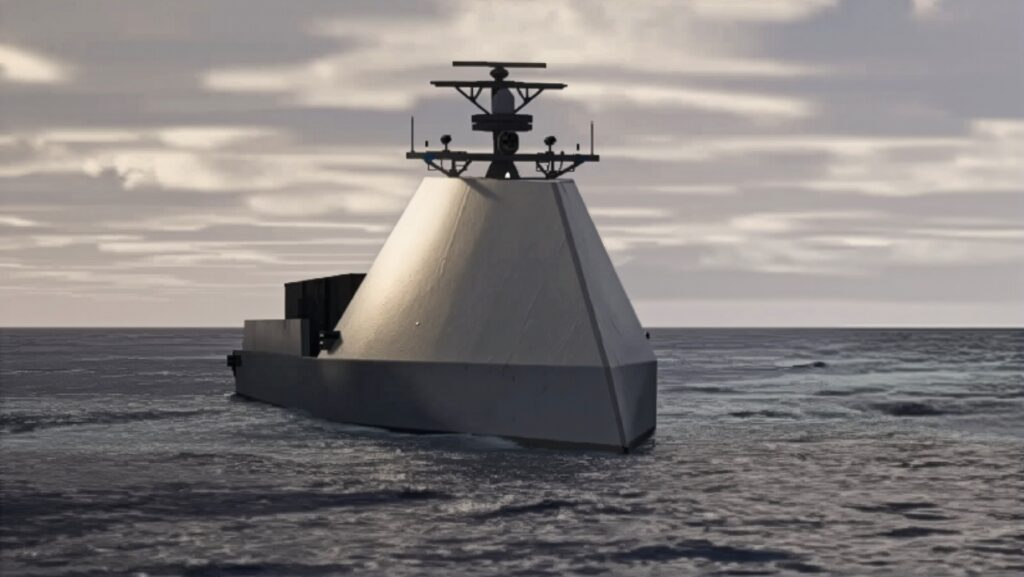
LOREAUVILLE, La., Dec. 11, 2025 (GLOBE NEWSWIRE) — HII (NYSE: HII) executives toured Breaux Brothers Enterprises in Loreauville, Louisiana, and announced that construction of a prototype of ROMULUS, the company’s new unmanned surface vessel (USV) family, has reached 30% completion. The vessel remains on schedule for sea trials in the fourth quarter of 2026.
During the visit, HII leaders toured the shipyard with build partners Breaux Brothers and Incat Crowther, and reviewed progress on hull construction, integration of the HII’s Odyssey Autonomous Control System (ACS), and outfitting work.
“ROMULUS is progressing at a pace that reflects the urgency of the mission and the strength of our partnerships,” said Andy Green, president of HII’s Mission Technologies division. “Breaux Brothers and our industry team are delivering a platform that brings scale, autonomy and real operational advantage to the fleet. At 30% complete, the ROMULUS prototype is well on its way to becoming the benchmark for unmanned surface capability.”
ROMULUS USVs are designed to meet the current and emerging requirements of the U.S. Navy, U.S. Marine Corps, joint forces and allies. They deliver high-endurance, sustained open-ocean autonomy with a focus on lethality, cost efficiency and scalability.
The family of USVs will support missions including intelligence, surveillance and reconnaissance, counter-unmanned air systems, mine countermeasures, strike, and the launch and recovery of unmanned underwater vehicles (UUV) and unmanned aerial vehicles (UAV).
Paired with HII’s REMUS UUVs, ROMULUS extends undersea reach and supports a scalable dual-domain force package built for distributed maritime operations.
This ROMULUS prototype is the first in HII’s modular, AI-enabled ROMULUS USV line. The ships are engineered for rapid, repeatable production and high endurance at sea. With speeds over 25 knots and a range of 2,500 nautical miles, all ROMULUS USVs are designed for mission flexibility across global theaters.
ROMULUS is built around Odyssey ACS, HII’s proven autonomy suite used across more than 35 USV platforms and over 750 REMUS UUVs in 30 countries. Odyssey enables sustained open-ocean autonomy, multi-agent swarming, modular payload integration, and manned-unmanned teaming. ROMULUS platforms will also feature integrated capabilities from Shield AI, Applied Intuition, and C3 AI for enhanced autonomous performance and lifecycle sustainment.
The Odyssey software suite’s open-access, government-aligned architecture enables rapid integration of new sensors, payloads and third-party autonomy technologies. It allows industry, government and academia to test and refine capabilities, ensuring ROMULUS evolves in step with emerging naval concepts of operations.
In November, HII and Shield AI announced that they have successfully completed the first major test of their integrated autonomy solution aboard HII’s ROMULUS 20 USV, marking a key step toward operational deployment of the AI-enabled ROMULUS fleet.
ROMULUS is being developed with support from HII’s Dark Sea Labs Advanced Technology Group.
U.S. Navy Partners With Meteomatics to Pilot Weather Drones in Maritime Operations
Meteomatics’ Meteodrones Aim to Fill Persistent Gap in Atmospheric Observation Over the Open Ocean
NEW YORK CITY, N.Y., December 11, 2025 /EINPresswire.com/ — Weather intelligence and technology company Meteomatics, today announced its work with the U.S. Navy, launching their automated weather drones, Meteodrones, from a moving vessel to collect frequently unobserved atmospheric data critical to maritime operations. Conducted as part of the Advanced Naval Technology Exercise (ANTX) in the Mississippi Sound near Gulfport, the trial has marked a step forward in enhancing operational readiness and safety for naval missions.
Naval operations rely on precise, localized weather intelligence, but capturing these insights on ships has historically proven difficult. Weather balloons are nearly impossible to launch and track reliably from moving vessels, and the broad coverage satellites provide, lack the vertical resolution needed for tactical decisions. This leaves the Navy with a blind spot in the first lower levels of the atmosphere – exactly where weather conditions most influence flight operations, radar performance, and mission safety.
“For the last decade, U.S. military weather services have sought to consistently and reliably measure the atmosphere over the open ocean to improve forecast accuracy and identify atmospheric anomalies,” said Kevin Lacroix, Weather Services Technology Lead, Naval Meteorology and Oceanography Command. “Products with the capability to collect-high resolution, real-time atmospheric data, repeatedly, in environments of interest are valuable to military weather services for sensing the maritime boundary layer of the atmosphere.”
To fill this gap, the U.S. Navy’s Gulfport demonstration tested the Meteodrone’s ability to launch and recover from a moving ship at speeds ranging from 1.5 knots to 16 knots. Operating under FAA regulations, shipboard Meteodrones collected complete vertical atmospheric profiles including temperature, humidity, pressure, dew point, and wind. Across multiple runs, the Meteodrones returned safely for recovery and the system validated stable and autonomous performance in a maritime environment.
With the real-time observations that the Meteodrones collect, the Navy can enhance mission safety by reducing risks for aircraft takeoffs, landing and in-flight operations. Additionally, they are able to strengthen operational readiness and improve awareness of how the environment may extend or degrade radar and communication ranges.
“Beyond the weather forecasting improvements the real-time information gathered by the Meteodrone give us, we have an opportunity to feed critical information into our electromagnetic tactical decision aids, making the safety and security of the ship and the battlegroup more effective by optimizing our radar performance, LaCroix added. “Ship captains will have the confidence to make rapid decisions knowing that the METOC team has given them every advantage possible.”
“This demonstration underscored not just the technical success of our Meteodrones, but also the practical value of capturing critical weather data at sea. By proving that launches and recoveries can be achieved from moving vessels, we’ve shown how Meteomatics can help the Navy bridge one of the most significant gaps in operational forecasting,” said Brad Guay, Head of Government & Defense Solutions at Meteomatics.
Meteomatics is committed to working with the U.S. Navy, and other government partners, to continue bringing innovations from demonstration to deployment. Read more about the drones here.
BAE Systems Awarded $1.7B Navy Contract for APKWS Laser-Guidance Kits
Contract enables production of tens of thousands of guidance kits for effective, cost-efficient precision strikes
Release From BAE Systems
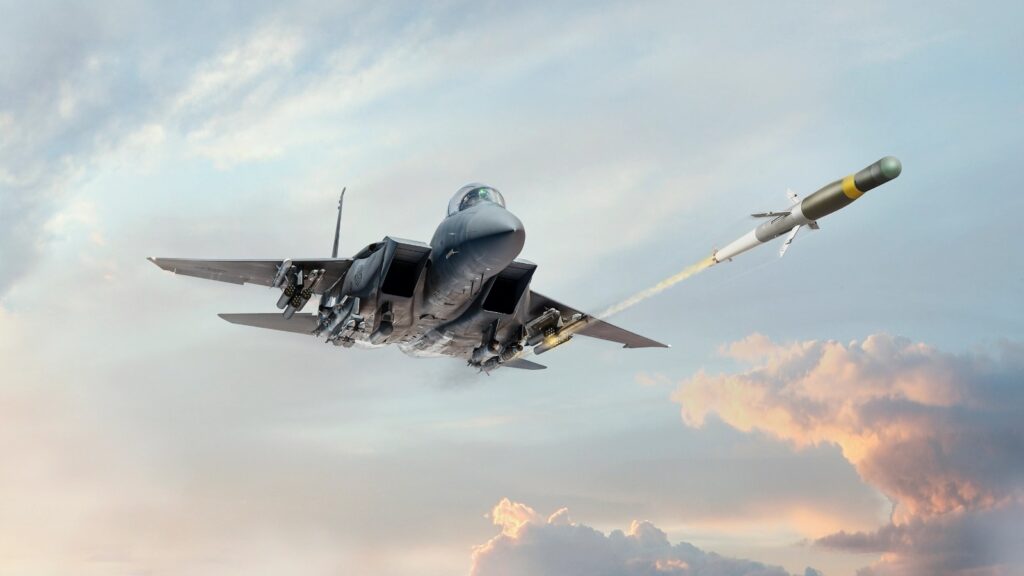
HUDSON, N.H. — December 10, 2025 — The U.S. Navy has awarded BAE Systems a new five-year, indefinite delivery, indefinite quantity contract for APKWS® laser-guidance kits to equip U.S. armed forces with tens of thousands of additional low-cost precision munitions. The contract has a maximum value of $1.7 billion, with an initial $322 million order.
The new contract supports increased domestic and international demand, enabling the Navy to purchase APKWS guidance kits over a five-year period. The kits are available to all U.S. armed forces, as well as allies via foreign defense sales. The APKWS guidance kit completes the mission and controls the cost. APKWS kits are combat proven as an air-to-surface, surface-to-surface, surface-to-air, and air-to-air munition.
“This award reinforces the value of proven and cost-efficient precision munitions, which have consistently demonstrated their effectiveness and versatility across multiple platforms and missions,” said Neeta Jayaraman, director of Precision Guidance and Sensing Solutions at BAE Systems. “The APKWS guidance kit provides advanced capabilities to our armed forces and foreign allies, and high-volume production ensures rapid and efficient delivery to the warfighter.”
APKWS guidance kits transform unguided 2.75-inch rockets into laser-guided rockets for precision strikes. Operators can use the combat-proven kit to engage a range of soft and armored stationary and moving targets, minimizing collateral damage. APKWS guidance kits accurately strike air and ground targets, giving operators the ability to use them in a wide range of missions. The highly versatile kit can be fired by various platforms, including rotary- and fixed-wing aircraft, as well as unmanned aerial vehicles, static and mounted ground platforms, and maritime vessels.
The APKWS guidance kit is compatible with new and existing inventories of rocket motors, warheads, and fuzes. It requires minimal training to use in the field and has a simple, affordable maintenance concept, making it an efficient way to transform an unguided rocket into the precision munition of choice.
BAE Systems has been in full-rate production with its APKWS guidance kit for more than 12 years, allowing the U.S. armed forces and its allies to engage a variety of targets at a fraction of the cost of traditional munitions. BAE Systems leverages a robust supply chain and proven manufacturing capacity to deliver the guidance kit with speed and reliability.
APKWS laser-guidance kits are produced at BAE Systems’ state-of-the-art manufacturing facilities in Hudson, New Hampshire and Austin, Texas.
ARLINGTON, Va., Dec. 09, 2025 (GLOBE NEWSWIRE) — HII (NYSE: HII) and Babcock International Group (Babcock) announced today they have signed a contract that expands their strategic partnership to further support Virginia-class submarine construction throughput at HII’s Newport News Shipbuilding (NNS) division. Additionally, the contract will build resiliency within HII’s submarine supply base.
This is the first Virginia-class outsourced contract to Babcock in support of NNS-specific submarine work, authorizing Babcock to build complex submarine assemblies at the Rosyth facility in Scotland for Virginia-class Block VI fast-attack submarines.
The expansion of the partnership with Babcock will increase the number of suppliers that can perform large structure work with requisite quality.
“This is a significant next step in delivering on our joint commitment to enhance both organizations’ capabilities, for the benefit of U.S. and U.K. programs,” said Chris Kastner, HII president and CEO. “Leveraging Babcock’s reach and expertise in the U.K. will reinforce our supplier base, strengthen submarine production in the U.S., and support the trilateral AUKUS partnership.”
David Lockwood, CEO Babcock International Group said, “Babcock’s advanced manufacturing expertise has enabled us to build on our established missile tube assembly capability, to deliver additional components for the U.S. submarine fleet. This expansion of our strategic partnership with HII enables us to optimize our joint capabilities for the benefit of the wider AUKUS security partnership.”
In July 2023, HII and Babcock entered into a strategic agreement to collaborate on naval and civil nuclear decommissioning and construction opportunities in the U.K. and U.S.
Since then, the companies have successfully worked across the United States, United Kingdom and Australia, including the Australian Submarine Supplier Qualification (AUSSQ) program to accelerate the identification and qualification of Australian suppliers and products into the U.S. submarine industrial base. The program is working toward expanding to include products entering the U.K. submarine industrial base for the Astute-class.
At Defence and Security Equipment International (DSEI) earlier this year, Babcock and HII signed a memorandum of understanding to bring together HII’s REMUS unmanned underwater vehicles (UUVs) and Babcock’s world-leading submarine Weapon Handling and Launch Systems (WHLS). The collaboration aims to deliver UUV torpedo tube launch and recovery (TTLR), strengthening the undersea advantage of the U.K. Royal Navy and allied navies.
BAE Systems Selected to Modernize USS Forrest Sherman
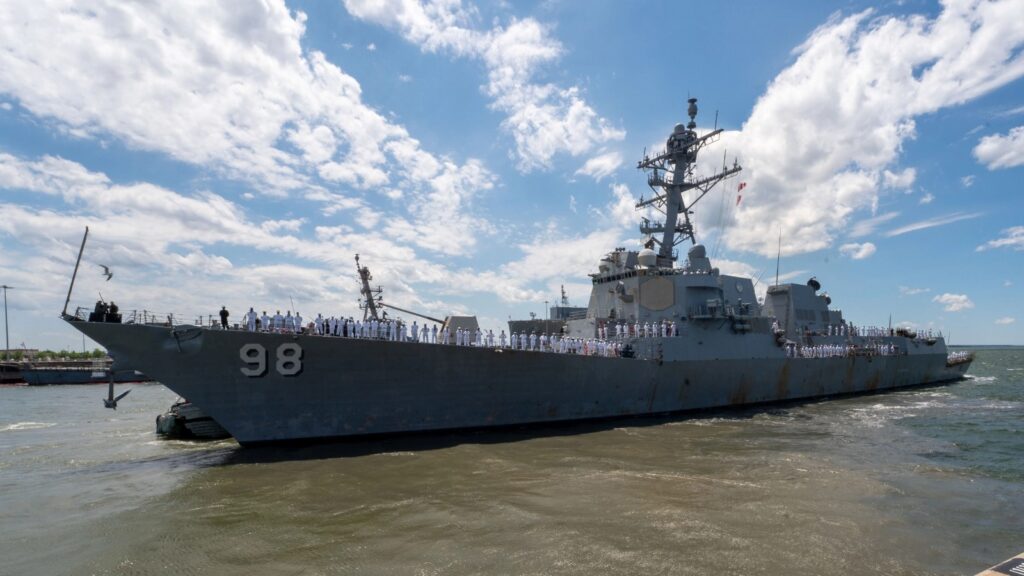
BAE Systems has received a $123 million contract from the U.S. Navy to modernize the Arleigh Burke-class guided-missile destroyer USS Forrest Sherman (DDG 98).
The total value of the competitively awarded contract could reach $139 million if all options are exercised.
BAE Systems’ Norfolk shipyard will begin work aboard the 9,200-ton ship in February 2026 under the Navy Depot Modernization Period (DMP) contract. In addition to underwater hull preservation work, the team will also recondition the ship’s engineering spaces, upgrade its command-and-control equipment, and refurbish the crew’s living spaces. The DMP work is expected to be completed in early 2027.
“The modernization of USS Forrest Sherman will be a major project for our team, building upon our recent DMP work,” said David M. Thomas, Jr., vice president and general manager of BAE Systems Maritime Solutions Norfolk. “More importantly, our work will ensure that the Forrest Sherman is fit to provide a high level of service in the fleet for many years.”
The shipyard completed similar work aboard the guided-missile destroyer USS Nitze (DDG 94) in June 2024, and other types of repair work are currently being performed aboard five Navy and commercially operated vessels.
USS Forrest Sherman is the 48th ship of the Arleigh Burke class and was commissioned in January 2006. The ship is named in honor of former Chief of Naval Operations Admiral Forrest P. Sherman. A previous U.S. Navy destroyer, USS Forrest Sherman (DD 931), also bore the admiral’s name and was the lead ship in a class of 18 destroyers built in the 1950s.
BAE Systems recently renamed its U.S. maritime business to Maritime Solutions, reflecting the broadened mission of its shipyards and continued investment in serving a wider range of customers. Today, the company is a leading provider of maintenance and modernization services to the U.S. Navy’s fleet of combatant ships; refit and hauling services for privately held leisure vessels and workboats; and fabrication services for U.S. submarine and ship builders. The company operates three full-service shipyards in California, Florida, and Virginia, and it employs a highly skilled, experienced workforce and a large team of suppliers and subcontractors.
HII Hosts Keel Laying of Virginia-Class Attack Submarine Barb (SSN 804)
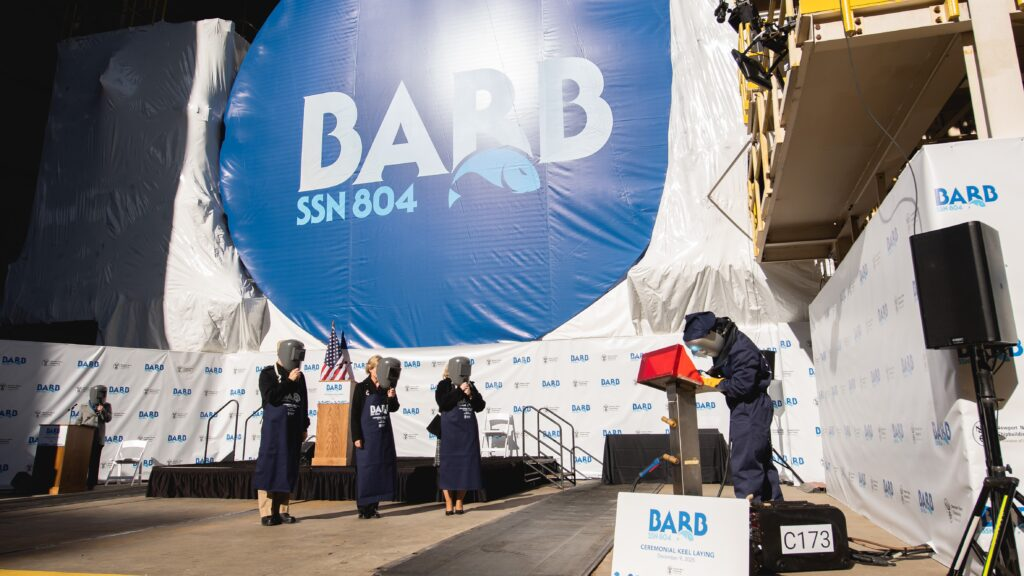
From HII NEWPORT NEWS, Va., Dec. 09, 2025 (GLOBE NEWSWIRE) — HII’s (NYSE: HII) Newport News Shipbuilding (NNS) division hosted the keel laying ceremony today for Virginia-class attack submarine Barb (SSN 804).
“Our reason to come together this morning represents not only the laying down of our next submarine keel, but a solemn commitment we are making to our country,” NNS President Kari Wilkinson said. “It marks the beginning of a construction journey, and while it is a journey measured in inches of weld, amount of pipe, and amount of cable pulled, it is fueled by the strength and determination of shipbuilders and our partners working together toward a common objective.”
SSN 804 will be the third U.S. Navy submarine to carry the name Barb. The first, SS 220, was commissioned in 1942. During World War II, the submarine conducted missions under the command of Eugene “Lucky” Fluckey, earning the submarine four Presidential Citations, a Navy Unit Commendation and eight battle stars for outstanding service. The second, SSN 596, was a nuclear-powered submarine commissioned in 1963. It was sponsored by Marjorie Fluckey, the wife of Rear Adm. Fluckey. The submarine took part in special operations during the Vietnam War.
Pamela Bove serves as ship’s sponsor for the newest Barb. Bove began her analytical career working as a civilian within the submarine division at the Navy Operational Intelligence Center. She later accepted a position with a defense company where she met her husband Thomas “Tom” Bove, grandson of Rear Adm. Fluckey.
“It is an honor to serve as sponsor for Barb and see the legacy of this historic submarine carried forward to a new generation,” Bove said. “I am humbled knowing that the third Barb and her crew will soon serve silently in the depths of the world’s oceans and seas protecting this great nation of ours. I am grateful for the shipbuilders who are working diligently to construct this mighty vessel and all the sailors who will selflessly serve aboard her for decades to come.”
During Tuesday’s ceremony, NNS welder Andrew Kahler etched Bove’s initials onto a metal plate, signifying the keel of SSN 804 as being “truly and fairly laid.” The metal plate will remain affixed to the submarine throughout its life.
Barb is the 31st Virginia-class fast attack submarine and will be the 15th delivered by NNS.
The advanced capabilities of Virginia-class submarines increase firepower, maneuverability and stealth.
U.S. Navy UAS surpass one million hours in ISR operations
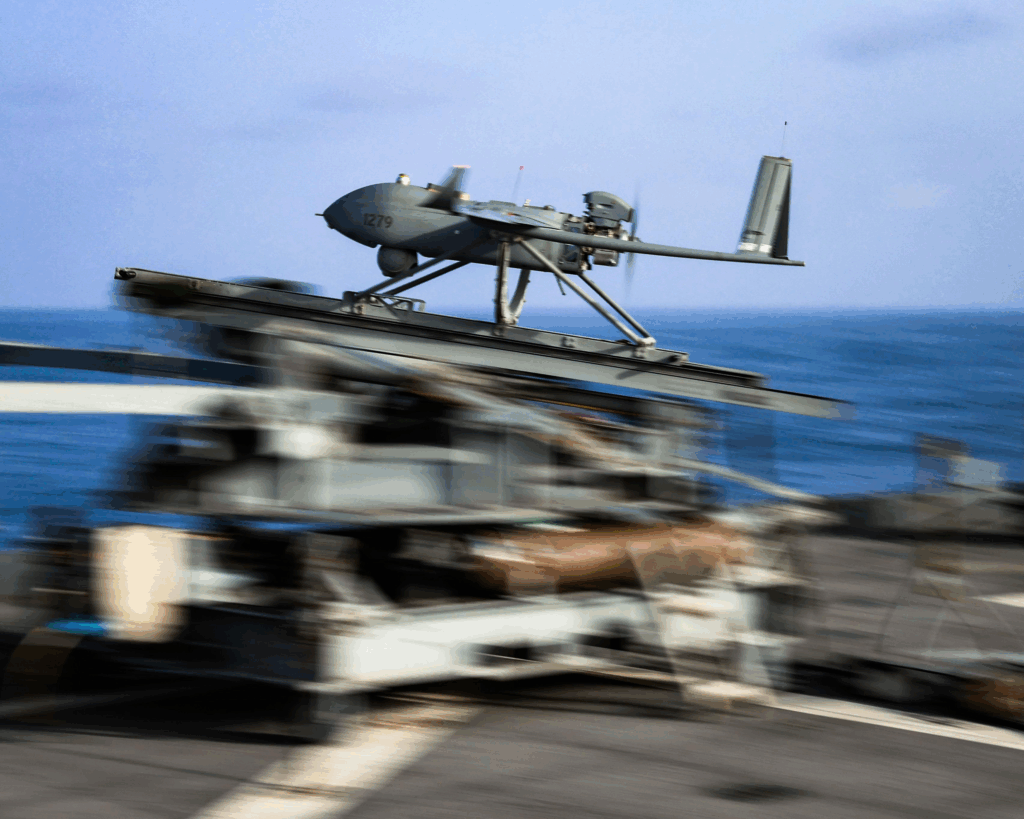
A Textron MQ-19 Aerosonde Unmanned Aircraft system is launched from the expeditionary sea base USS Hershel “Woody” Williams. (U.S. Navy photo)
From Naval Air Systems Command, Dec. 9, 2025
NAS PATUXENT RIVER, Md. — The Navy and Marine Corps Small Tactical Unmanned Aircraft Systems (UAS) program office (PMA-263) recently announced that the Intelligence, Surveillance, and Reconnaissance (ISR) Services UAS surpassed one million flight hours in support of operations on land and at sea.
Sailors aboard achieved the one million flight hours milestone during routine mission support in the 6th Fleet.
Since the program’s inception in 2005, PMA-263 has successfully completed more than 50 UAS installations aboard Navy and Military Sealift Command (MSC) ships and operated from more than 50 land-based locations worldwide. The ISR Services team ensures ships in the 4th, 5th,6th and 7th fleets, as well as land-based operations worldwide are equipped to provide day and night ISR support to joint force and coalition partners.
“Every hour flown represents more than mission success – it reflects the resilience of our people, the trust of our partners and the impact we’ve had on history,” said Gregg Skinner, PMA-263 program manager. “Together, we’ve supported operations in every corner of the globe, advanced unmanned systems into the fight, and stood ready in times of uncertainty”
Currently, more than a dozen ships are equipped with ISR Services UAS, enabling naval vessels to deploy and retrieve aircraft in support of missions. Sea- and land-based systems include the Boeing Insitu MQ-27 ScanEagle and the Textron MQ-19 Aerosonde, both delivering unique capabilities to the warfighter. They provide day and night surveillance, supporting around the clock mission support.
The UAS installations are optimized to facilitate the seamless transfer of full-motion video and other sensor data to personnel in critical locations. The information gathered by these systems plays a vital role in tactical operational decision-making and long-term intelligence gathering, enhancing the Navy and Marine Corps’ ability to maintain maritime domain awareness and operational readiness.
PMA-263 manages a portfolio of small unmanned systems for U.S. and international partners and leads training operations for all service branches.
Navy Demonstrates Multi-Day Solar UAS Flight
The Navy, in partnership with Skydweller Aero, recently achieved continuous solar-powered unmanned flight during a nonstop three-day test from Stennis, Mississippi. Led by the Naval Air Warfare Center Aircraft Division (NAWCAD), the test of Skydweller UAS marks a significant advancement in both long-endurance solar-powered UAS technology and its potential to enhance maritime intelligence, surveillance, and reconnaissance (ISR). (U.S. Navy)
From Naval Air Warfare Center Aircraft Division, Dec. 5. 2025
PATUXENT RIVER, Md. – The Navy, in partnership with Skydweller Aero, recently achieved continuous solar-powered unmanned flight during a nonstop three-day test from Stennis, Mississippi.
Led by the Naval Air Warfare Center Aircraft Division (NAWCAD), the test of Skydweller UAS marks a significant advancement in both long-endurance solar-powered unmanned air systems (UAS) technology and its potential to enhance maritime intelligence, surveillance and reconnaissance (ISR).
“This demonstration is a prime example of how NAWCAD partners with industry to deliver what the fleet needs,” said NAWCAD Commander Rear Adm. Todd Evans. “It also reflects the technical depth of our workforce and our ability to translate ideas into capability.”
The 73-hour flight proved Skydweller’s ability to maintain continuous solar-powered operation and demonstrated the feasibility of achieving a positive energy balance to power the aircraft during extended flights. It also validated the system’s communication links, autonomous real-time decision making and ability to adapt to turbulent weather.
“Integrating Skydweller into the Navy’s ISR architecture creates a layered and resilient network that maximizes the capabilities of all our assets,” says NAWCAD’s Special Purpose UAS lead Bill Macchione. “This collaborative approach ensures we have the right platform for the right mission, optimizing our resources and enhancing our overall maritime domain awareness.”
Skydweller’s strength lies in its ability to provide continuous, wide-area surveillance over extended periods, enabling more advanced systems to focus on missions that require such specialized capabilities as rapid response and advanced sensor packages.
NAWCAD began experimentation with Skydweller’s solar-powered UAS capabilities in 2020 to address U.S. Southern Command (SOUTHCOM) operational challenges, including drug trafficking and border security. This technology provides continuous surveillance over vast areas, enabling the U.S. and its allies to enhance maritime security and disrupt illicit activities.