Textron Systems’ Tsunami Autonomous Maritime Surface Vessel Sold to NIWC PAC 
From Textron Systems, Dec. 17, 2025 

TSUNAMI™ Vessel Provides Capability for Scale, Maturity and Capacity 

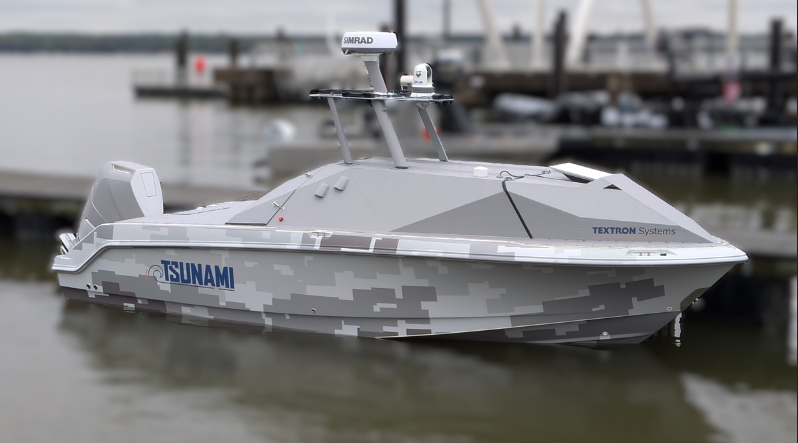
HUNT VALLEY, Md., Dec. 17, 2025 – Textron Systems Corporation, a Textron Inc. (NYSE:TXT) company, announced today that it has sold a 21-ft. TSUNAMI USV to the Naval Information Warfare Center (NIWC) Pacific (PAC) to support the testing of the Maritime Digital Experimentation Federation (MDEF) – an Australia, United Kingdom, and United States (AUKUS) testing initiative to distribute testing of interoperability standards with uncrewed vehicles. The order includes the state-of-the-art TSUNAMI craft and engineering and training support. 

The TSUNAMI family of autonomous maritime surface vessels are designed to meet the needs of the U.S. Navy and its allies for a readily available, versatile portfolio of multi-mission uncrewed assets to team effectively across the fleet. Utilizing Brunswick Corporation’s reliable, high-performance vessels, Textron Systems developed the TSUNAMI family of products with its trusted CUSV® vessel-based autonomy control system. The TSUNAMI family of vessels offer several variants to meet diverse mission requirements, including size, speed and range. Our solution leverages mature commercial technologies to deliver increased capacity and immediate scale. 

“The TSUNAMI craft provide the Navy with a rapidly deployable, fully autonomous solution to support their missions,” said Senior Vice President, Air, Land and Sea Systems David Phillips. “Our expertise in designing and fielding trusted autonomous solutions results in a family of small, uncrewed surface vehicles (sUSVs) that are scalable, modular in design and globally sustainable, allowing for maximum mission flexibility in an attritable system.” 

The order follows the recent sale of a 24-ft. vessel to the Naval Surface Warfare Center (NSWC) Dahlgren Division. The TSUNAMI family is a low-cost, rapidly deployable solution that pairs Textron Systems’ 40+ years of multi-domain autonomous vehicle experience with the capacity and maturity of the U.S. commercial shipbuilding industry’s manufacturing and design capabilities. 


Navy Launches Improvement Projects for Sailors Living in Barracks 

From Navy Installations Command, Dec. 18, 2025 

Washington, D.C. (Dec. 18, 2025) – Commander, Navy Installations Command (CNIC) is enhancing the safety, comfort, and cleanliness of barracks across the Navy Shore Enterprise with $375 million of Barracks Task Force funding. Driven by the Secretary of War (SECWAR) Barracks Task Force initiative and “Sailors First” principle, these investments will improve the well-being of Sailors living in barracks throughout the Navy’s Unaccompanied Housing (UH) program.

To swiftly improve quality of service, CNIC identified several projects focused on immediate needs, encompassing safety repairs, improved cleanliness, accelerated maintenance, and upgrades to essential building systems. These improvements will address critical living conditions for Sailors living in Navy barracks. 

“Quality of service is inseparable from readiness,” said Vice Adm. Scott Gray, commander of Navy Installations Command. “Providing safe, comfortable, and clean housing is not optional. It is a responsibility we owe to every Sailor who volunteers to serve.” 

The Navy received approximately $375 million from the One Big Beautiful Bill for Navy UH program investments. About $75 million will support 95 prioritized projects across 50 installations, tailored to the unique needs of each base and may include kitchen modernizations, HVAC system upgrades, flooring replacements, and new furniture. The remaining $300 million will be used for six sustainment, restoration, and modernization projects, which range from enhancing energy efficiency and renovating bathrooms to replacing HVAC, plumbing, and electrical distribution systems. 

“This is not a one-time fix, but a sustained commitment,” Gray said. “We are dedicated to continuous improvement and ensuring our Sailors have the quality housing they deserve throughout their careers.” 

Commander, Navy Installations Command is responsible for worldwide U.S. Navy Shore installation management, designing and developing integrated solutions for sustainment and development of Navy shore infrastructure as well as quality of life programs. CNIC oversees 10 Navy regions, 70 installations, and more than 48,684 employees who are focused on warfighting and manning, training and equipping the Shore to fight and win. Navy installations are warfighting platforms essential to every Fleet operation.  


Enhancing the Maritime Patrol Operational Picture 

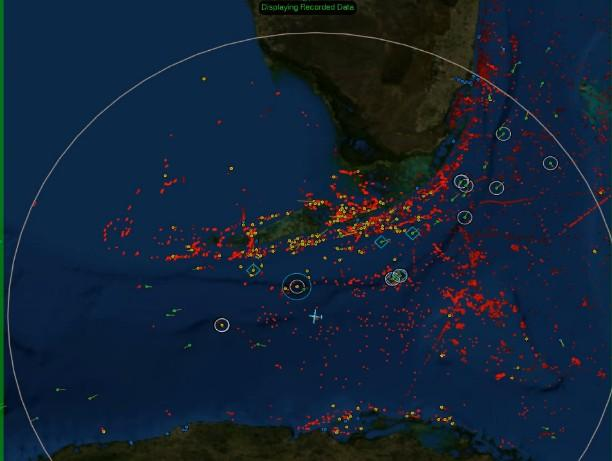
A screen grab of the Labyrinth, a Minotaur cloud-platform, software. Labyrinth adds robust scalability in handling and correlating large volumes of data while providing external stakeholders access via a secure web-based interface.  

From Naval Air Systems Command, Dec. 16, 2025 

NAS Patuxent River, Md. — The Maritime Patrol and Reconnaissance Aircraft program office (PMA-290) achieved an airborne connectivity landmark when the P-8A Poseidon Increment 3 Block 2 (I3B2) aircraft successfully connected to the Minotaur Family of Systems (MFoS) Labyrinth hub. This pivotal connection occurred during a combined development test / operational test event this December at Naval Air Systems Command (NAVAIR). 

I3B2 is a significant upgrade to the P-8A airframe and avionics systems. The upgrade includes new airframe racks, radome, antennas, sensors, and wiring. The modification incorporates a new combat systems suite with improved computer processing, higher security architecture, a wide-band satellite communication system, an anti-submarine warfare (ASW) signals intelligence capability, the Minotaur mission management system, and additional communications and acoustics systems to enhance search, detection and targeting capabilities. 

The Minotaur mission management system is a government-owned, open-architecture software suite. This government-off-the-shelf product combines data from various sensors to create a coherent picture for aircrews. Minotaur offers multiple aircraft and/or assets to share networked information, enhancing intelligence, surveillance, and reconnaissance (ISR) capabilities. 

Labyrinth, a Minotaur cloud-platform, adds robust scalability in handling and correlating large volumes of data while providing external stakeholders access via a secure web-based interface.  The addition of Labyrinth capability into the Minotaur Enterprise enables the auto-scaling of services to allow for all Minotaur-equipped platforms to access vital shared information. 

Further proving Labyrinth’s expansive capabilities, during a recent test flight Air Test and Evaluation Squadron Two Zero (VX-20) connected to Labyrinth for the duration of the mission and provided thousands of relevant tracks.  

P-8A Poseidon test aircraft connecting to the Labyrinth cloud environment is a critical step forward in expanding the tactical utility for both in-flight aircrew and worldwide stakeholders. This achievement revolutionizes data sharing and enhances real-time situational awareness in the maritime domain. 

“With P-8A connected to Labyrinth, our MPRA community is now able to exchange multi-domain, multi-sensor tracks between existing Minotaur-equipped platforms and the new I3B2 aircraft,” said Capt. Erik Thomas, PMA-290 program manager. “This connection allows the P-8A and the watch floor to share critical operational data, ensuring that all stakeholders are synchronized to deliver a decision-advantage.” 

In response to evolving threats around the world, P-8A modifications are made via a sequence of rapid capability insertion efforts that build upon I3B2 baseline. In addition to Labyrinth, I3B2 modified Poseidon’s add top-secret architecture, Minotaur mission management system, Enhanced Multi-static Acoustics Capability (MAC-E), ASW Signals Intelligence Systems (SIGINT), wide-band satellite communication (SATCOM), and application-based architecture. 

“This milestone was the result of a collaborative effort between PMA-290 and VX-20,” added Thomas. “Advancing the strategic goals outlined by the program office and demonstrating a commitment to rapid capability development we are directly supporting continuous development of a naval “family of systems” for maritime surveillance.” 

The MPRA community, assisted by PMA-290, continues to prove the technical viability of integrating frontline warfighting aircraft with enterprise-level cloud services, paving the way for future fleet-wide implementation and a more connected, lethal force. 

PMA-290 manages the acquisition, development, support and delivery of the U.S. Navy’s maritime patrol and reconnaissance aircraft, in addition to executing the overarching Minotaur program of record for the U.S. Navy, Marine Corps, and U.S. Coast Guard, as well as other services and agencies.  


Nimitz Returns to Homeport 

From USS Nimitz Public Affairs, Dec. 17, 2025 

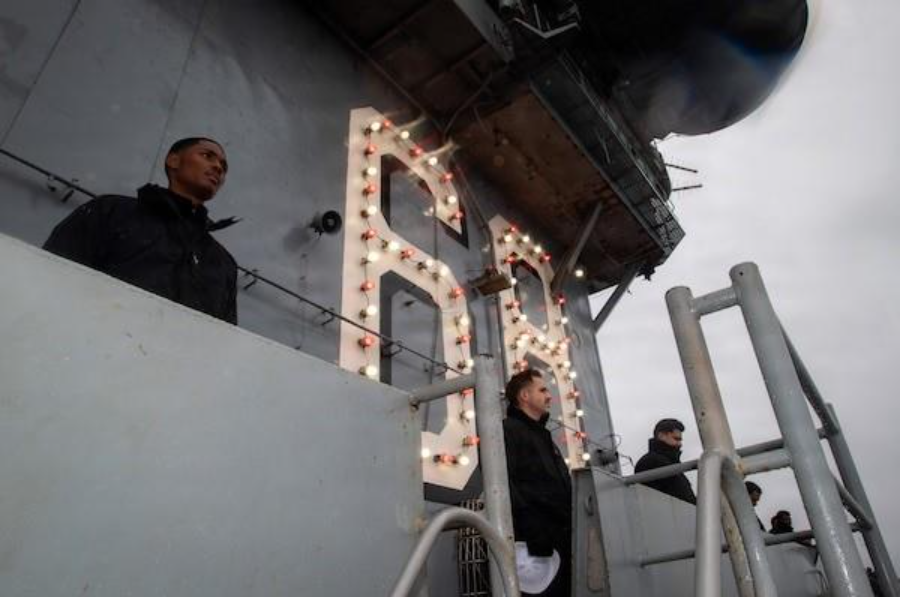
The Nimitz class carrier USS Nimitz (CVN 68) returned to its homeport of Bremerton following nine months underway in the U.S. 3rd, 5th, and 7th Fleets, Dec. 16. 

Nimitz departed Bremerton as the flagship of the Nimitz Carrier Strike Group (NIMCSG), Mar. 21, 2025. The nine months underway included three months in the U.S. Indo-Pacific Command area of responsibility and nearly four months in U.S. Central Command. While overseas, NIMCSG worked alongside allies and partners to strengthen relationships and interoperability, deter conflict, and promote regional stability.  
  
“We have traveled more than two thirds of this planet during this nine month deployment, and I cannot overstate the positive impact Nimitz Strike Group has made as part of our mission to maintain peace through strength by sustaining credible deterrence alongside our Allies and Partners,” said Rear Adm. Fred Goldhammer, commander, Carrier Strike Group 11.  “With USS Nimitz as our flagship, I am extremely proud of how our Sailors carried forth our Navy’s 250 year legacy of promoting prosperity and security, deterring aggression and protecting the American way of life.” 
  
In 5th fleet, Nimitz supported freedom of navigation in the Arabian Sea, completing four Strait of Hormuz transits. The strike group provided power projection for U.S. Central Command, setting conditions for regional stability and enabling the Iran-Israel ceasefire. Additionally, the strike group supported U.S. Africa Command operations by conducting strikes against ISIS targets in Somalia. 
  
Nimitz also conducted port visits in Bahrain. Oman, and the United Arab Emirates, marking the first visit by a U.S. aircraft carrier to both UAE and Bahrain in over five years. Nimitz and its strike group also engaged in key leader exchanges and interoperability exercises with the Bahrani, Emirati, French, Indian, Malaysian, Omani, Pakistani, Saudi Arabian and Qatari Navies. 
  
While in 7th Fleet, Nimitz supported operations to uphold a free and open Indo-Pacific, providing credible deterrence and reassuring allies and partners of enduring U.S. commitment to the region. Nimitz participated in Langkawi International Maritime and Aerospace Exhibition (LIMA 25), strengthening relations with regional partners. The ship also conducted routine port visits in Malaysia and Guam, where the crew participated in key leader engagements, community relations, sporting events and cultural exchanges. 
  
“I am deeply proud of this crew for proving, over nine months of sustained operations at sea, that they are well-trained, fit to fight and ready to win,” said Capt. Joseph Furco, commanding officer of Nimitz. “These men and women, these world-class warfighters, truly exemplified our Navy’s warrior ethos through their honor, integrity, resilience and relentless commitment to the mission and to each other.” 
  
Nimitz Sailors completed more than 8,500 sorties and 17,000 flight hours, carried out 50 replenishments-at-sea aboard the carrier and sailed over 82,000 nautical miles combined. 
  
Nimitz Carrier Strike Group consists of USS Nimitz, flagship of Carrier Strike Group (CSG) 11, embarked staff of CSG 11, Destroyer Squadron (DESRON) 9, embarked Carrier Air Wing (CVW) 17, and the Arleigh Burke-class guided-missile destroyers Curtis Wilbur (DDG 54), Wayne E. Meyer (DDG 108), USS Lenah Sutcliffe Higbee (DDG 123) and USS Gridley (DDG 101). 
  
An integral part of the U.S. Pacific Fleet, U.S. 3rd Fleet leads naval forces in the Indo-Pacific and provides the realistic, relevant training necessary to execute the U.S. Navy’s role across the full spectrum of military operations. U.S. 3rd Fleet works together with allies and partners to advance freedom of navigation and overflight, the rule of law and other principles that underpin security for the Indo-Pacific region. 


Atlantic Council Launches Task Force to Bolster US Maritime Industrial Base 

Task Force brings together leaders across government, industry, labor, and academia to advance a bold vision for US naval shipbuilding and maintenance  

Release From the Atlantic Council

WASHINGTON, D.C. – December 16, 2025 – The Atlantic Council’s Scowcroft Center for Strategy and Security and its Forward Defense program announced today the launch of the Revitalizing US Shipbuilding Task Force in collaboration with the Johns Hopkins University Applied Physics Laboratory (JHU/APL).  

Galvanized by momentum in the shipbuilding sector, the Task Force will develop actionable recommendations to strengthen US shipbuilding. It will develop novel approaches to design, construction, and sustainment, while balancing those innovative steps with proven measures to address persistent gaps across the sector.   

“The United States has a highly capable Navy, but to remain competitive, it needs to modernize its shipbuilding industry,” said Christine Fox, former acting deputy secretary of defense and a co-chair of the Task Force. “It is vital that the United States regains its ability to rapidly repair and produce ships today, while simultaneously preparing to take advantage of modern technology. Only with the adoption of new technology and processes will it be able to produce new, more capable ships, rapidly and affordably.”   

The Revitalizing US Shipbuilding Task Force is co-chaired by Fox; Mark Esper, the 27th secretary of defense; and Kenneth Braithwaite, the 77th secretary of the Navy. It will explore, among other aspects, how the United States can:  

Integrate advanced manufacturing capabilities in shipbuilding and maintenance;  

Develop workforce incentives to energize the maritime industrial base; and   

Evaluate the role that ally-headquartered shipbuilding firms can play in increasing US shipbuilding capacity.  

Over the next twelve months, this high-level Task Force will convene a bipartisan group of senior leaders to generate practical steps that ensure the maritime industrial base can restore US naval primacy and ensure the nation can effectively compete with China in the Indo-Pacific through sustained maritime presence and power projection.  

The Task Force’s world-class leaders will include former government officials, private-sector executives, academics, and experts in manufacturing, acquisition, and naval operations. They will convene for the first time on Tuesday, December 16.  

Task Force Members  

  • Doug Beck, former director of the Defense Innovation Unit  

  • Meredith Berger, formerly performed the duties of US under secretary of the Navy; former assistant secretary of the Navy for energy, installations, and environment  

  • Admiral James Foggo, US Navy (retired), former commander, United States Naval Forces Europe-Africa and Allied Joint Force Command Naples  

  • Admiral Lisa Franchetti, US Navy (retired), 33rd chief of naval operations  

  • Vice Admiral William Galinis, US Navy (retired), former commander, Naval Sea Systems Command  

  • Nickolas Guertin, former assistant secretary of the Navy for research, development, and acquisition  

  • Ellen Lord, former under secretary of defense for acquisition and sustainment  

  • Erik Raven, former under secretary of the Navy  

  • Admiral John Richardson, US Navy (retired), 31st chief of naval operations  

  • Russell Rumbaugh, former assistant secretary of the Navy for financial management and comptroller  

  • Christopher Watkins, chief mission engineering and integration officer, Johns Hopkins University Applied Physics Laboratory  

Industry Task Force Members:  


  • George Moutafis, chief executive officer, Fincantieri Marine Group (foundational partner) 

  • Rear Admiral Tom Anderson, US Navy (retired), president of US shipbuilding, Hanwha Defense USA  

  • Nicholas Galanos, vice president, navy and maritime industrial base, C3 AI  

  • Hank Holland, chairman and chief executive officer, Amaero 

  • John Lehman, vice president of strategy, corporate development and government relations, Abyss Defense  

  • Rob Lehman, co-founder and chief commercial officer, Saronic Technologies  

  • Vice Admiral Thomas Moore, US Navy (retired), senior vice president, government relations, HII  

  • Danny Poisson, federal aerospace and defense chief technology officer, PTC  

  • Dennis Pyatt, president and chief executive officer, Element US Space & Defense  

  • Robert Smith, executive vice president, marine systems, General Dynamics  

  • Vince Stammetti, executive vice president and chief operating officer, BlueForge Alliance  

  • Jordan Webb, president and general manager, Colonna’s Shipyard  

  • Brooke Weddle, senior partner, McKinsey & Company  

  • Austal USA representative  

The Task Force is directed by Stephen Rodriguez and is managed by Mark Massa, Theresa Luetkefend, and Gabrielle Ellicott.  
  

The lead authors will be Michael Presley and Steven Wills. This work will build on the success of the Atlantic Council’s previous Commission on Software Defined Warfare, Commission on Defense Innovation Adoption, and Hypersonic Capabilities Task Force, and work in collaboration with the recently launched ReForge Commission.  

More information is available on the Task Force’s website. To follow its progress and receive updates, subscribe to Forward Defense. For press inquiries, please contact: [email protected].  


Marines Unveil First Full-Rate Production of Marine Air Defense Integrated System

By Adolphina Vander VeldeProgram Executive Officer Land Systems

TWENTYNINE PALMS, Calif. — In September, the Marine Corps unveiled the first full-rate production version of the Marine Air Defense Integrated System (MADIS), marking a major milestone in expeditionary air defense and rapid capability delivery. Following weeks of intensive new equipment training and a live-fire exercise at the Marine Corps Air Ground Combat Center, Marines are now equipped with a significantly upgraded system designed to counter the evolving threat of unmanned aerial systems and low-altitude air attacks. 
 
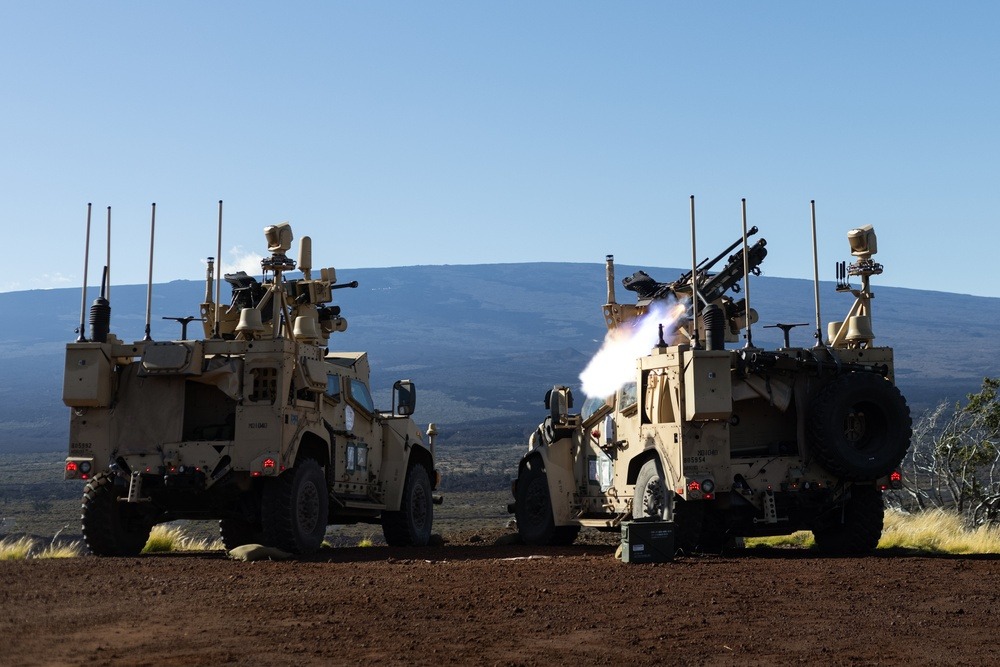
The MADIS relies on a complementary pair of Joint Light Tactical Vehicles that form a maneuverable Ground Based Air Defense (GBAD) weapon system. It is designed to defeat UAS and manned aircraft while on the move or at the halt, providing an organic, expeditionary, and fully integrated Short-Range Air Defense capability. This fielding represents a deliberate and accelerated approach to capability delivery—one that prioritizes readiness, responsiveness and relevance to the modern battlefield. 
 
The MADIS has undergone substantial upgrades since its prototype phase. The full-rate production variant integrates advanced sensors, improved targeting algorithms, and enhanced mobility features that allow Marines to detect, track, and neutralize aerial threats faster and more effectively than ever before. 
 
The system’s modular design allows for future upgrades, ensuring MADIS remains adaptable as the threat evolves. Its integration with expeditionary platforms means it can be deployed rapidly, providing organic air defense to maneuver units without relying on external support. 
“Having supported the GBAD community for the last 22 years, from the schoolhouse to the program office, it’s clear that MADIS brings a critical new capability to the warfighter,” said Master Sgt. Brandon Meadors. “Marines have always said, ‘Anytime, anyplace,’ and this system helps us get there. It provides a state-of-the-art, mobile defense that directly supports our forces in the field.” 
 
During their time at the Marine Corps Air Ground Combat Center, Marines participated in classroom instruction and field exercises designed to familiarize themselves with the MADIS’s architecture, capabilities, and tactical employment. The NET phase emphasized hands-on learning, with Marines engaging directly with the system’s radar, electro-optical/infrared sensor, and weapon platforms. 
 
The training culminated in a full-day, live-fire event, where Marines executed simulated engagements against aerial targets. The exercise validated the system’s performance and demonstrated the readiness of its operators. 
 
“I would tell other Marines training on this system to be open and be creative,” said 1st Lt. Michael Rushane. “This is the future of the Marine Corps and the future of GBAD as a whole. The ideas you come up with for how to employ this system, whether you’re a PFC or a General, will pay dividends in the success of this system moving forward,” Rushane added. 
 
With the successful completion of the NET and live-fire validation, the Marine Corps has taken a critical step in modernizing its air defense capabilities. This training represents a deliberate and accelerated approach to capability delivery—one that prioritizes readiness, responsiveness, and relevance. 


Future USS Idaho Delivered to U.S. Navy 

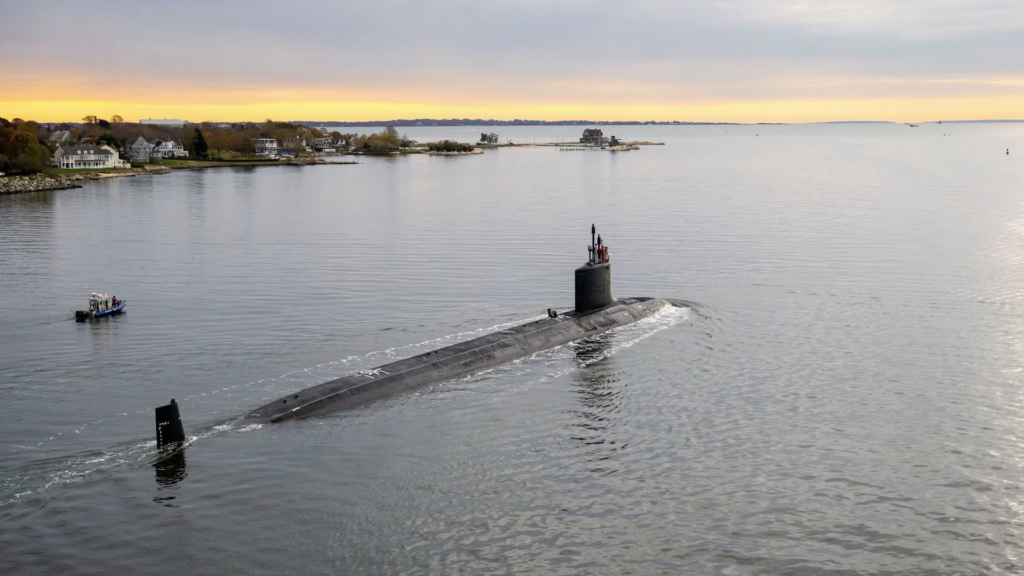
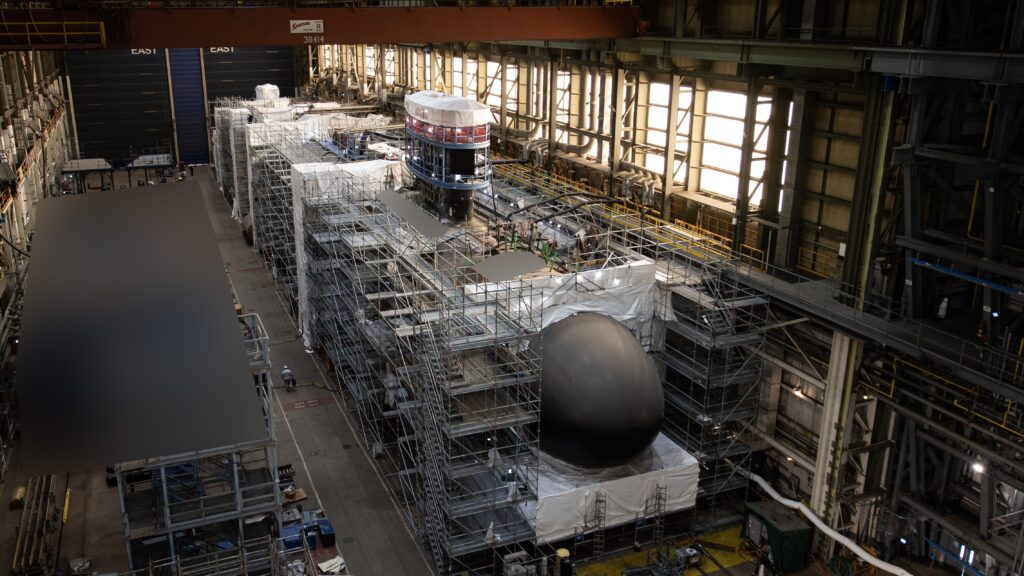
PCU Idaho successfully completed Alpha and Bravo sea trials, bringing the 26th submarine of the Virginia class one step closer to joining the fleet. Here she is departing the Groton, Conn., shipyard on two picturesque mornings to showcase the expert craftmanship of General Dynamics Electric boat shipbuilders. 

By Team Submarine Public Affairs, Dec. 15, 2025 

GROTON, Conn. – The U.S. Navy accepted delivery of the Submarine Force’s newest fast attack submarine, the future USS Idaho (SSN 799), from General Dynamics Electric Boat (GDEB) Dec. 15, marking the second delivery of a Virginia-class fast attack submarine this year. 

The delivery represents the official transfer of the submarine from the shipbuilder to the Navy. The submarine and crew will continue to undergo a series of tests and trials before being commissioned into active service, which is expected to take place in the spring.   

“Idaho represents the hard work and tenacity of shipbuilders, industry partners and Navy personnel to deliver the best undersea warfighting platform to the fleet,” said Capt. Mike Hollenbach, Virginia-class submarine program manager. “With each delivery, the Navy reinforces our Nation’s superiority in the maritime domain.” 

Idaho is the 26th Virginia-class submarine co-produced by GDEB and HII-Newport News Shipbuilding through a long-standing teaming arrangement. It is the 14th delivered by GDEB and is the eighth of 10 Block IV configured attack submarines.     

When it joins the fleet, Idaho will bring significant warfighting capability to the fleet, underscoring the Nation’s asymmetrical advantage at sea. Virginia-class fast-attack submarines have enhanced stealth, sophisticated surveillance capabilities and special warfare enhancements that enable them to meet the Navy’s multi-mission requirements.   

The future USS Idaho is the fifth Navy ship to be named for the state of Idaho. The first was a wooden-hulled storeship commissioned in 1866. The last was battleship BB 42, which was commissioned in 1919 and received seven battle stars for service in World War II.  

The delivery of USS Idaho symbolizes the Navy’s 250-year commitment to innovation and maritime dominance. From seabed to space, the Navy delivers power for peace – always ready to fight and win. This milestone marks the Navy’s enduring legacy and commitment to shaping the future of maritime power. 


HII Marks Oklahoma Construction Milestone at Newport News Shipbuilding 

From HII 
 

NEWPORT NEWS, Va., Dec. 16, 2025 (GLOBE NEWSWIRE) — HII (NYSE: HII) announced today that its Newport News Shipbuilding division has reached a significant construction milestone for Virginia-class submarine Oklahoma (SSN 802). 

Oklahoma is now “pressure hull complete,” which signifies all of the hull sections have joined to form a single, watertight unit. 

“Achieving pressure hull complete on Oklahoma highlights our commitment to accelerating production and delivering unmatched capability to our Navy customer,” said Jason Ward, NNS vice president of new construction submarine programs. “Our dedicated shipbuilders, Navy teammates and suppliers from across the country, are working hand-in-hand to bring Oklahoma to life.” 

Oklahoma is the 29th Virginia-class fast attack submarine, the first of Block V and the 14th to be delivered by NNS. 

The ship’s sponsor is Mary “Molly” Slavonic, an Oklahoma native. Slavonic has long supported both the state of Oklahoma and the Navy. She worked alongside her husband, former acting Under Secretary of the Navy Greg Slavonic, in building the USS Oklahoma (BB 37) Memorial in Pearl Harbor, Hawaii, to honor the 429 sailors and Marines who died aboard the battleship during the Dec. 7, 1941 attack on Pearl Harbor. 

NNS designs and builds nuclear-powered submarines for the U.S. Navy. The advanced capabilities of Virginia-class submarines increase firepower, maneuverability and stealth. 


Navy Renews HawkEye 360 Contract to Advance Indo-Pacific Maritime Domain Awareness 

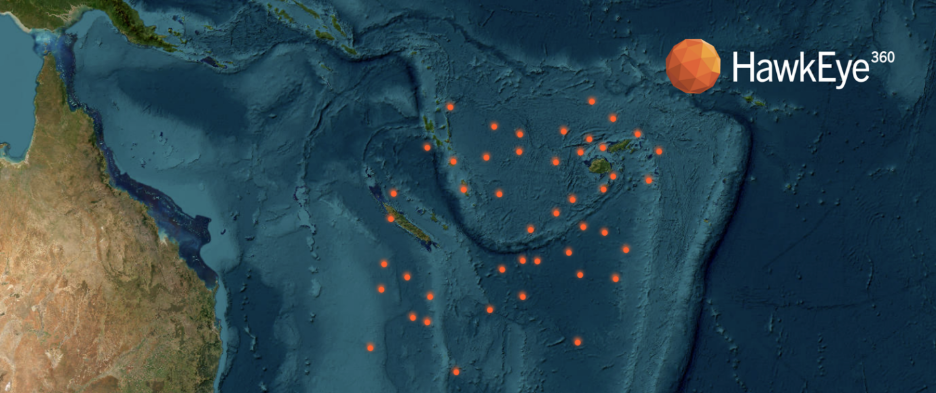
Herndon, VA, (December 9, 2025) – HawkEye 360, the global leader in signals intelligence data and analytics, today announced that the US Navy has renewed its contract with the company for a fourth consecutive year under the Indo-Pacific Partnership for Maritime Domain Awareness (IPMDA) initiative. The $98.8 million firm-fixed-price, indefinite-delivery/indefinite-quantity (IDIQ) contract extends the U.S. Navy’s access to HawkEye 360’s commercial radio frequency (RF) data and analytics for vessel detection and monitoring over key areas of interest throughout the Pacific. 

“This renewal represents a vote of confidence in the partnership between the U.S. Navy and HawkEye 360 and an investment in future innovative solutions,“ affirms Andy Charles, General Manager for the Department of War, HawkEye 360. “With the pace at which commercial companies can move, especially one so mission-focused as HawkEye 360, this action welcomes a host of technological advancements through IPMDA to drive information sharing and Coalition command and control to the speed of modern warfare.” 

HawkEye 360’s RF signals intelligence supports the Department of Defense’s efforts to identify and characterize vessel behavior, detect illicit maritime activity, and share insights with allied partners to promote regional stability. The company’s data is integrated into operational tools that help users gain a more complete picture of vessel movement and maritime dynamics over vast ocean areas. 

“Our ongoing partnership with the US Navy represents a shared commitment to advancing maritime domain awareness and supporting the missions of our partners across the Indo-Pacific,” said James G. McAden, General Manager, Asia Pacific, HawkEye 360. “We’re proud to be entering our fourth year of collaboration, delivering advanced RF data and analytics that strengthen situational awareness and decision-making for maritime security operations.” 

HawkEye 360’s constellation detects, characterizes, and geolocates RF signals from ships and other emitters worldwide, creating a powerful data layer that complements existing maritime information sources. When combined with other data streams, HawkEye 360’s signals intelligence helps defense and intel users identify potential “dark vessels,” uncover patterns of activity, and build a consistent, shared operating picture across the region. 


USSOCOM Upgrades Personal Diver Equipment

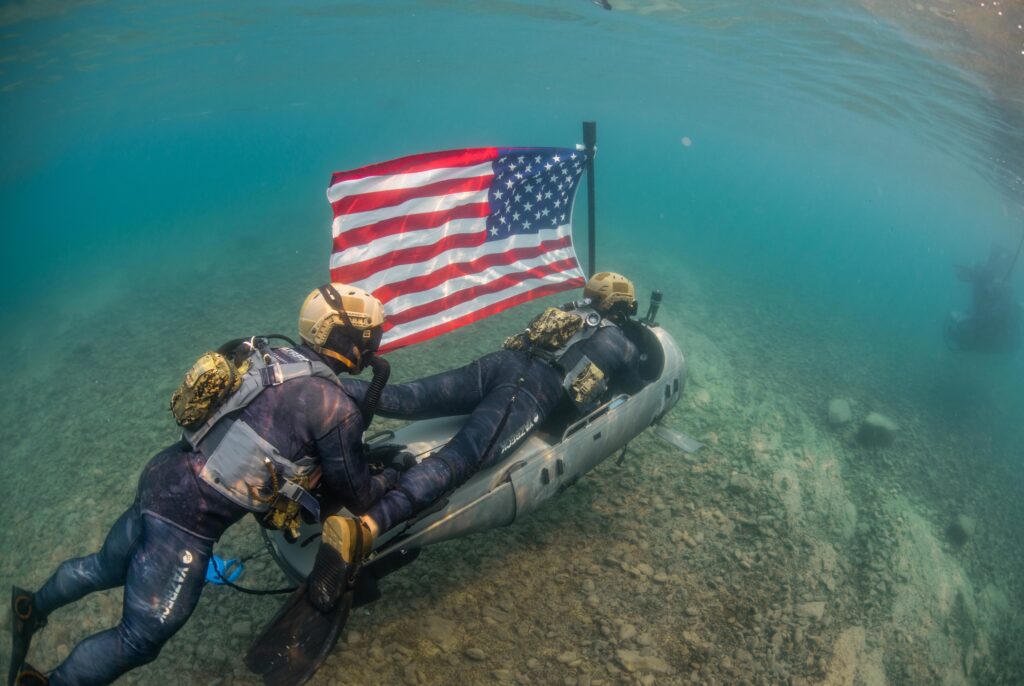
Sailors assigned to various Naval Special Warfare commands operate a Diver Propulsion Device during high-altitude dive training in 2022. Photo credit: U.S. Navy | Mass Communication Specialist 2nd Class Alex Perlman

U.S. Special Operations Command is upgrading its Special Operations Forces’ personal diving equipment.

“Technology for the combat diver has advanced significantly and SOF continues to enhance diver capabilities to maintain an agile and lethal combat diving force,” Lieutenant Commander Kassie Collins of USSOCOM said in response to a question from Seapower.

The SOF Combat Diver program (under U.S. Special Operations Command PEO Maritime) consists of maritime environmental protection (free diver heating and cooling, full face masks, and chemical, biological, radiological, and explosive protection), life-support systems (underwater breathing apparatus, treatment systems, and decompression systems), diver navigation (handheld digital navigation and integrated navigation), diver propulsion (collective, hands-free), underwater communication (acoustic, optical, and diver-to-host) and signature management (equipment signature reductions and signature detection), Collins said.

“Early wins for the SOF Combat Diver program include digitizing legacy navigation and equipping energized propulsion devices in lieu of fins. As a result, the program has been able to rapidly accelerate development and fielding of navigation and propulsion devices. The SOF Combat Diver program also continuously evaluates battery technology to ensure safety and maximize endurance. Currently, this program does not have a requirement for drones or AI [artificial intelligence].”

Because many USSOCOM programs are generally classified, USSOCOM didn’t provide equipment specifics to the categories.

For Diver Propulsion, a search of SAM.gov., the official U.S. federal government contracting website did provide some details. In the summer of 2025, the Naval Special Warfare Center was looking into acquiring the Patriot3 Brand Jetboots V6 Diver Propulsion Device, essentially a low-noise, low-weight brushless motor ducted thruster propeller strapped to a diver’s thighs. The hands-free Jetboots provide 40 pounds of thrust and increase a special operations diver speed by around four knots at a depth of 300 feet and a range of a dozen miles on two batteries, or one to six hours of battery life.

TheWarZone website reported U.S. Navy SEALs having Jetboots since July 2020, but Jetboots was conceptualized and patented in 2013, so USSOCOM could be seeking supply support and maintenance in addition to new Jetboot replacements. A $10 million dollar contract was awarded to Patriot3 Inc. that runs through 2027.

For Diver Navigation, USSOCOM is working with Safety and Security International (SSI) regarding its Tactical Diver Readiness Assembly. This increases special operations divers’ situational awareness and rapid deployment in maritime and expeditionary environments by combining the functions and features of a mission critical multi-function dive watch with a modular load carriage and safety components to provide advanced underwater navigation instrumentation and real-time dive diagnostics in MOLLE-compatible pouches.

The navigation devices can be made digitalized, smaller and lighter, while still incorporating GPS features, real-time diving diagnostics, and advanced underwater navigation instruments.

Further investigation into SAM.gov. yields a request for information on underwater communications technologies that are not radio frequency based, as well as for power sources focused on power-harvesting technologies instead of batteries or connected power sources. The current status of USSOCOM’s underwater communications technologies and novel power sources is unknown.

The 2019 USSOCOM RFI also seeks improvements in human performance in harsh maritime conditions for extended operating periods “with or without personal protective equipment,” to:

  • Reduce the potential of musculoskeletal injuries related to combat diving
  • Improve combat diving-related physical performance capabilities
  • Enable continuous physiologic monitoring of diver biometrics in sea water at depths greater than 90 feet for periods of up to or greater than 72 hours
  • Provide a variety of nutrition and hydration products for consumption while underway
  • Manage bodily functions while underway
  • Provide force resistance equipment for confined environments
  • Reduce cognitive deficits related to prolonged undersea exposure
  • Provide active heating/cooling protection in the water column.