Penn State Project with NSWC Dahlgren Division Explores Safer, Smarter Ordnance Handling 
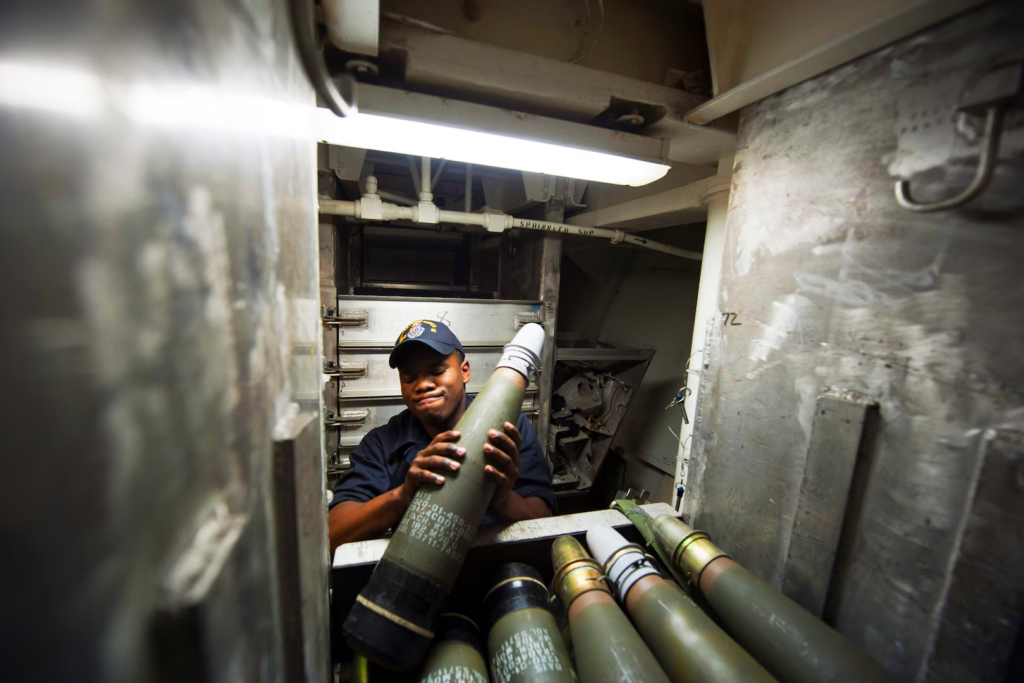
ATLANTIC OCEAN – U.S. Navy Gunner’’s Mate Seaman Desmond Summers removes a Mark 45 5-inch round from an ammunition bin aboard the guided missile destroyer USS Arleigh Burke (DDG 51) Feb. 26, 2014, in the Atlantic Ocean. Onboard today’s naval warships, some of the most critical weapons tasks still depend on human muscle. Automating projectile handling could make the task safer and more efficient. (U.S. Navy photo by Mass Communication Specialist 2nd Class Carlos M. Vazquez II/Released)

By Kristin Davis, NSWCDD Corporate Communications, Jan. 21, 2026 

DAHLGREN, Va.  –  While modern naval warships field advanced weapons systems, many essential ordnance-handling tasks still depend on human muscle. Sailors manually move heavy projectiles and propellant charges through cramped, hot and constantly moving spaces. 

The work is labor-intensive – and inherently dangerous. 

Engineers at Naval Surface Warfare Center Dahlgren Division are exploring how commercial robotics systems can be adapted to automate projectile handling, making the process both safer and more efficient. While some technology already exists, the end-of-arm tool – a component that directly interfaces with the ordnance – must be customized for each weapon system, said Matt Lehr, Mechanical Design and Integration lead for the Gun Weapon Systems Mechanical Design Branch of the Integrated Engagement Systems Department at NSWCDD. 

This past fall, NSWCDD partnered with Penn State, sponsoring a capstone project in which engineering students took on the task of developing such a tool. They had one semester to research existing robotic grippers and effectors, design a custom end-of-arm tool, build and test prototypes and refine their product. 

The project brought a fresh perspective to NSCWDD engineers working to make ammunition handling safer, faster and more sustainable for today’s fleet – while giving students the chance to tackle a real-world defense challenge.  

There were surprises along the way – and ultimately, success. 

But before any of that work could begin, the project started the same way many real-world engineering challenges do: with a team of strangers. 

Hands-on innovation 

None of the students knew each other at first. 

“Starting a big project with random people you don’t know was definitely a new experience,” said Jackoy Gayle, an electrical engineering senior at Penn State.  

But they quickly organized into team roles and divided up tasks based on their experience and areas of expertise. Victoria Walker, a mechanical engineering student who has analyzed acoustic data from unmanned underwater vehicles and built a robotic dog, would serve as project manager.  

Walker was immediately drawn to the project. She plans to study robotics in graduate school and has already worked on unmanned underwater vehicles for Naval Surface Warfare Center Carderock Division. Still, the end-of-arm tool was different from anything she’d worked on before. 

“At Carderock, it was a lot of code processing and data. This was very hands-on,” she said.  

It was also the first time Walker and the other students had relatively free rein to engineer a solution to a problem. 

“In school, we receive really structured projects,” she said. “Dahlgren gave us parameters and told us to come up with what we thought would work best. We started by coming up with a ton of different solutions for the end-of-arm tool.” 

Among them: an electromagnetic gripper to retrieve projectiles from their inventory and place them into a loading system. They nixed the idea; such a gripper would only be compatible with certain materials. 

“We talked to others at the university and settled on a vacuum gripper,” Walker said. 

It was an out-of-the-box solution that surprised Lehr. 

“I was initially skeptical of the vacuum approach,” Lehr said. “But it allowed the team to keep the design compact, which is needed for the system to be able to deposit the projectile into the narrow receptacle of the handling system.” 

The engineering challenges weren’t theoretical – they showed up immediately in the lab. Gayle, the electrical engineering student, discovered that the electronic prototyping platform he utilized was rated for 5 volts but the equipment he needed to run was more than twice that. He solved the problem by using a relay. When air began to leak through the vacuum system once it reached a certain level, he resized the tubing. And with no real-life projectile to work with, Gayle earned a metal shop certification so he could resize their dummy ammunition. 

From concept to proof of capability 

Over the course of the semester, students had regular meetings with NSWCDD engineers as they designed and 3D-printed a custom vacuum manifold fitted with suction cups, paired with a simple vacuum system and pressure reservoir. Early prototypes successfully lifted a 40-pound model projectile. Later versions successfully handled a 70-pound model — the equivalent of a Mark 45 5-inch gun round. 

To take it a step further, the team integrated the tool with a robotic arm, demonstrating that it could lift and place a projectile into a loading bay — a key step toward automating future magazine-to-gun workflows.  
From Lehr’s perspective, the students more than met the intent of the project. 

“They did a wonderful job and accomplished a lot within the time and budget they were given,” he said. “They developed a prototype end-of-arm tool, integrated it with a robot, demonstrated projectile manipulation and proved the design could pick up a round in both vertical and horizontal orientations.” 

In a fitting finale to the project that bridged academic innovation with real-world Navy impact, the team attended the Capstone Project Showcase at Penn State College of Engineering’s Learning Factory, where their end-of-arm tool took second place. 

“We’re really proud of it,” Walker said. “It worked, we were able to demonstrate it worked, and we were able to show that on a specific robot. We’re proud of how far we came, and I think another team in the future could make it even better.”  

Looking ahead 

If the project is funded for further refinement, the prototype could be improved to ensure it would be capable of operating in harsh environments, Lehr said. “We would also add redundancy features to ensure there is no possibility of a mishap in the event of a fault.”  

While many other portions of automation must be developed before fielding a complete system, this project represents an important first step toward reducing risk and physical strain for Sailors. 

“This type of technology could be used in the deep magazine to withdraw projectiles and feed them into the ammunition hoist,” Lehr said. “This would allow the system to keep up a high rate of fire over long durations without fatiguing the crew.” 

Similar robotic tooling could one day be applied to propelling charges and other ordnance, forming the backbone of semi-automated or fully-automated weapons handling systems across the fleet. 

If matured and fielded, the impact on Sailors and the Navy could be significant. 

“The goal is to provide Sailors with tools that reduce their workload,” Lehr said. “From a Navy standpoint, automation can reduce the demands for crew size, allowing more assets to be fielded for a given force and enabling that force to be prioritized for other tasking.” 

For the Penn State engineering students, the experience offered a rare opportunity to work on technology that could one day be used by Navy warfighters. 

“I’m grateful for the team, the support we had from NSWCDD and the chance to work on something that really matters,” Gayle said. 
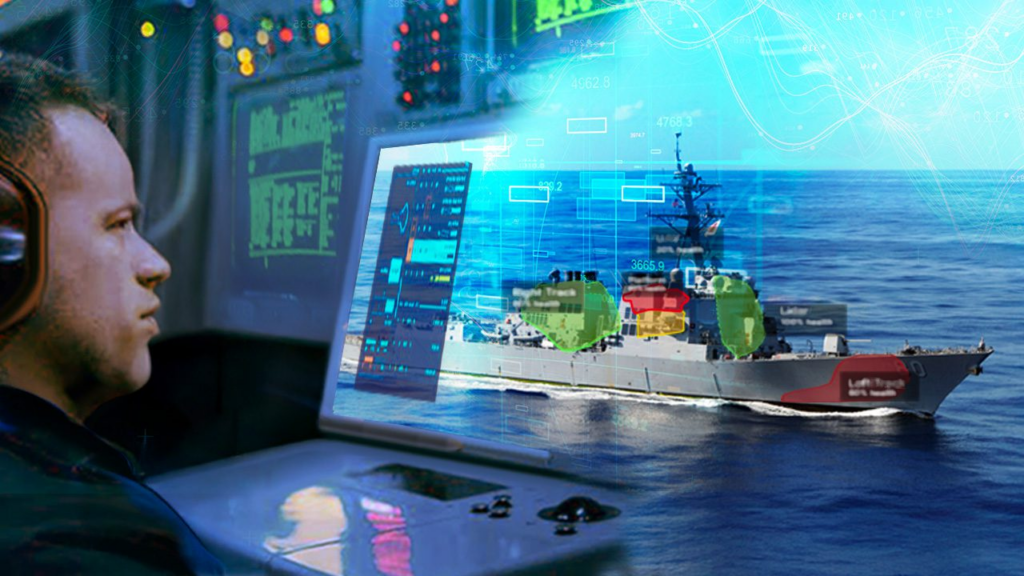


Charles River Analytics Advancing Predictive Maintenance Capabilities for Naval Systems     

Advanced predictive maintenance and logistics technologies will enable the Navy to transition from reactive to proactive maintenance strategies.

From Charles River Analytics, Jan. 20, 2026 

Charles River Analytics is developing advanced predictive maintenance and logistics technologies for the United States Navy’s ship systems. The technology helps ensure reliability across the entire lifecycle of complex assets, including ships, fleets, and equipment. The work is sponsored by the Naval Sea Systems Command (NAVSEA) and supported through a series of contracts totaling $6.6 million over 8.5 years. The multidisciplinary team is using system modeling, hybrid AI reasoning, and cognitive systems engineering to create software services that predict system performance and proactive maintenance needs.  

Traditional prescriptive maintenance relies on fixing or replacing degraded parts on rigid schedules. This reactive approach can lead to wasted resources, late or premature maintenance, and operational delays. Logistics and timely availability of parts are especially critical for long-duration or hard-to-reach assets, such as ships at sea, where system failures can have severe consequences and teams have small windows of opportunity to complete any necessary repairs.  

“By predicting when failures occur, you can optimize resource and labor allocation by prioritizing the failures or degradations that are most pressing or most impactful for the mission,” says Kenny Lu, Machine Learning Scientist at Charles River Analytics. 

The Navy is shifting toward a more proactive approach that uses data to forecast maintenance needs before catastrophic failure. The Charles River team is supporting this effort by developing software that provides on-platform, real-time prognostics and real-time diagnostics, including actionable insights for operators and maintainers. The solution features a back-end analytics engine that uses a statistical modeling technique called probabilistic programming to forecast failures and assess risk. It is based on a hybrid AI approach that combines domain expertise with available sensor and log data. The system translates complex technical data into clear recommendations through a front-end decision support interface, delivering user-friendly guidance to maintenance personnel in an intuitive format.  

“We’re not framing the information from a system engineering perspective, but from a perspective where maintenance staff can interpret the maintenance picture,” says Mandy Warren, UX Senior Scientist at Charles River Analytics. She adds, “Our end users greatly appreciate that they don’t need the same understanding as the engineer who architected the system; they only need to know what’s relevant and what they need to do in that moment.”  

These predictive analytics technologies enable junior technicians to quickly identify potential problem areas and prioritize maintenance tasks, ultimately allowing the Navy to deploy technical specialists strategically when advanced knowledge is required.  

The team is addressing a fundamental challenge with predictive systems and AI by helping users understand how the system arrives at its conclusions.  

“We’re building the system with the idea of being able to collect performance data over time, to make sure that the output is explainable, and that the provenance of the forecasting is constantly updating, so that the operator knows  that they can trust the predictions of our system,” said Samuel Mahoney, Vice President and Chief Product Officer at Charles River Analytics.  

After more than eight years of development and testing, the system is now transitioning from research to operational use, and a prototype will soon be deployed on a Naval ship. By reducing unnecessary maintenance, the technology frees up the Navy’s resources for mission-critical needs while increasing operational readiness through early failure prediction and prevention.  

Charles River Analytics is also exploring opportunities for its predictive maintenance and logistics technology beyond the Navy to other military and commercial domains, including ground and air autonomy, oil and gas, power grids, and industrial maintenance. The focus is on making complex analytics accessible to non-engineers through improved trust and a user-friendly interface.  

Visit cra.com to learn more about advanced predictive maintenance and logistics and our other human-machine teamingand probabilistic programming capabilities. 

This material is based upon work supported by the Naval Sea Systems Command under Contract No. N00024-25-C-S174 and N00024-25-C-S175. Any opinions, findings and conclusions or recommendations expressed in this material are those of the author(s) and do not necessarily reflect the views of the Naval Sea Systems Command. 


U.S. Maritime Security Cooperation and Attaché Symposium concludes in Naples, Italy 

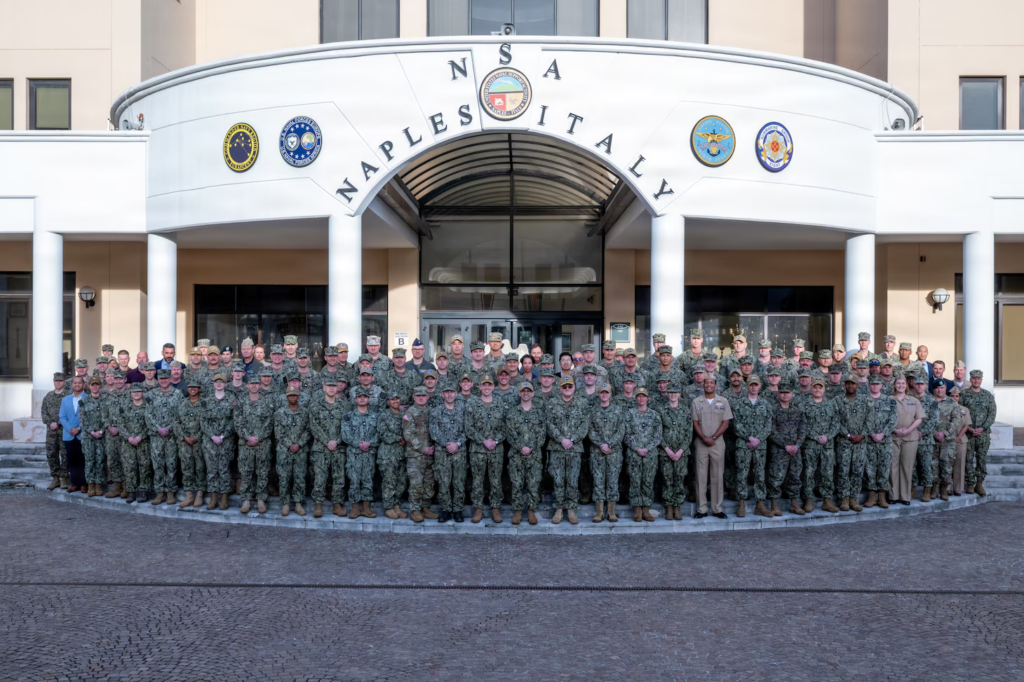
U.S. service members attending the January 2026 Maritime Security Cooperation and Attaché Symposium gather for a group photo at U.S Naval Support Active Naples, Italy, Jan. 12, 2026. 

By Mass Communication Specialist 2nd Class Caleb Foote, Jan. 21, 2026 

NAPLES, Italy  –  U.S. Naval Forces Europe-Africa (NAVEUR-NAVAF) hosted the U.S. Maritime Security Cooperation and Attaché Symposium (MSCAS), an annual symposium hosting more than 80 U.S. Navy and Marine Corps attachés, Personnel Exchange Program Officers, and U.S. 6th Fleet liaison officers stationed throughout Europe and Africa, from Jan. 12-15, 2026, in Naples, Italy. 

The four-day symposium featured discussions with senior U.S. Navy leadership and naval attachés on the importance of developing relationships with ally and partner nations, advocating for U.S. naval operations and activities in Europe and Africa, and strengthening coordination and collaboration between the naval forces and embassy staff. 

“This is an important forum for our Maritime Security Cooperation and Naval Attaché communities to align with policy objectives, share best practices, and highlight opportunities to enhance collective maritime security in both Africa and Europe,” said Adm. George Wikoff, commander, U.S. Naval Forces Europe-Africa. 

The symposium also featured discussions facilitated by Raymond P. Owens III, director, Navy International Programs Office, Office of the Secretary of the Navy, and Cmdr. Nick Avila, N51 Division Lead; and a Task Force Commander roundtable led by Vice. Adm. J.T. Anderson, commander, U.S. 6th Fleet. 

“In working together, our goal is to try to create an environment where integration, interoperability, and interchangeability can help our, allies and partners,” said Vice Adm. J.T. Anderson, commander, U.S. 6th Fleet. “Testing tactics, techniques and procedures for their own capabilities in conjunction with their neighbors and their allies. I think that’s where we can help sustain something that is an enduring synchronized effort and not just episodic events. “ 

In 1872, Secretary of the Navy George M. Robeson ordered Commander Francis M. Ramsay to report to the U.S. Minister in England, as, “Naval Attaché to his Legation.” This is the first known historical reference to an assignment as a U.S. Naval attaché, according to a 1946 article maintained by the U.S. Naval Institute. 

Generations later, U.S. naval attaché ally and partner collaboration continues. They serve as key military advisors to their ambassadors on all naval matters, act as liaisons between the U.S. Navy and their host nation, collaborate to improve military interoperability between allied and partner naval forces and support U.S. military theater security cooperation and security assistance programs in their respective countries. 

For more than 80 years, NAVEUR-NAVAF has forged strategic relationships with Allies and partners, leveraging a foundation of shared values to preserve security and stability. Headquartered in Naples, Italy, NAVEUR-NAVAF operates U.S. naval forces in the U.S. European Command and U.S. Africa Command areas of responsibility. 


New ATC radar boosts aviator safety 

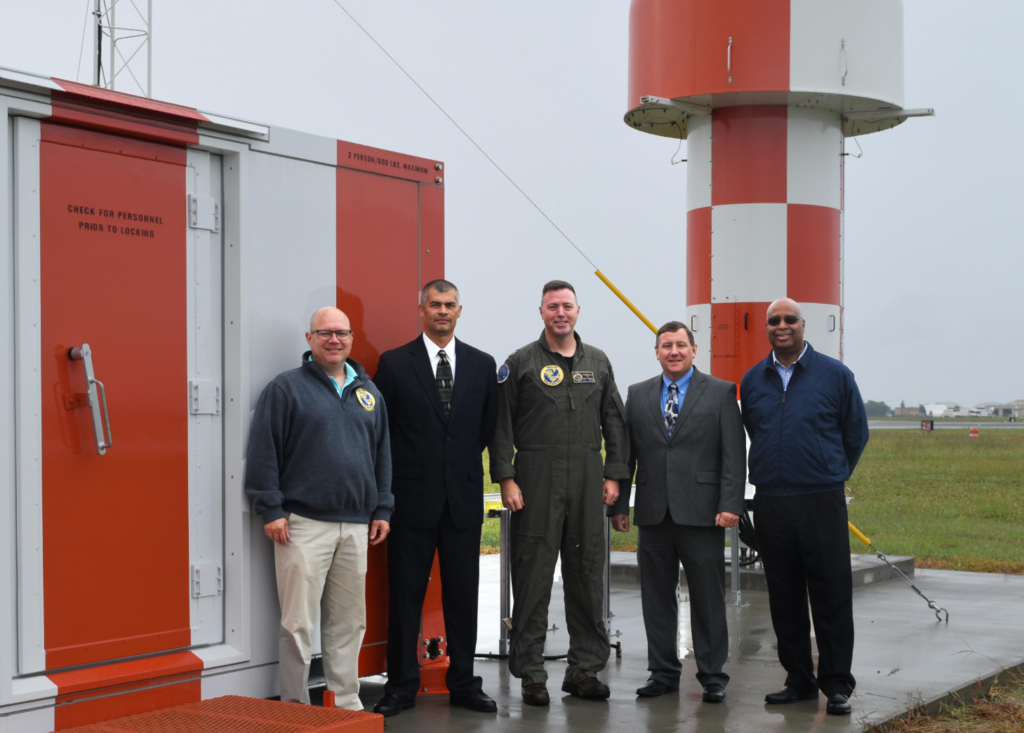
The AN/FPN-68 Precision Approach Radar replacement project, led by the Naval Air Traffic Management Systems Program Office (PMA-213) in collaboration with the Naval Information Warfare Center Pacific (NIWC PAC) team, introduces a cutting-edge system to replace the aging AN/ FPN-63. Pictured in front of the new radar at NAS Patuxent River are representatives from PMA-213 and NIWC PAC. (U.S. Navy) 

From Naval Air Systems Command, Jan 21, 2026 

NAS PATUXENT RIVER, Md. – The new AN/FPN-68 Precision Approach Radar at Naval Air Station Patuxent River is providing critical support to pilots and air traffic controllers, bringing reliable technology that delivers accurate data for safe aircraft landings even in adverse weather.  

The AN/FPN-68 was successfully installed and flight-checked last summer on Pax, marking the 23rd installation of this new radar system at various locations. 

“This system’s advanced precision and digital technology play a significant role in enhancing air traffic control and pilot safety, especially in challenging weather,” said Capt. Walter B. Massenburg Jr., Naval Air Traffic Management Systems Program Office (PMA-213) program manager. 

Massenburg commended the Shore Air Traffic Management Team for their dedication, adding, “Due to their incredible perseverance, this radar performs at a high readiness state and is meeting the fleet’s needs with critical ATC [Air Traffic Control] capabilities.” 

The AN/FPN-68 replaces the aging AN/FPN-63 system, first commissioned in 1978, and brings state-of-the-art capabilities to the fleet. 


Groundbreaking Held for KONGSBERG’s Missile Manufacturing and Maintenance Facility

Release From Kongsberg Defense and Aerospace Inc. 

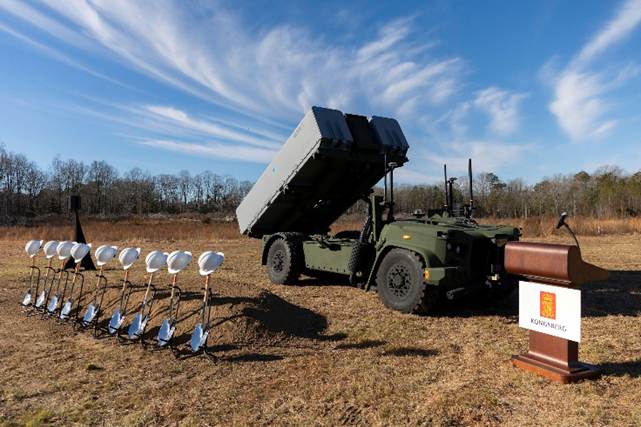
Jan. 16, 2026 – Kongsberg Defense and Aerospace, Inc. (‘KONGSBERG’) held a groundbreaking ceremony Friday for its first state-of-the-art US-based missile production facility in James City County, Va.  

Speakers at the event included Kongsberg Defence and Aerospace (Norway) President Eirik Lie, James City County Board of Supervisors Chair Dr. John McGlennon, Virginia Secretary of Transportation Hon. Shep Miller, U.S. Representative Rob Wittman (VA-1) and Norwegian Ambassador to the United States Anniken Huitfeldt.  

This facility, located in Toano, Va, between Richmond and Williamsburg and conveniently near Naval Station Yorktown, will help the company meet global demand for its precision strike missiles.   

“This new KONGSBERG factory will provide additional production capacity, sustainment and in-country tech refresh capabilities for our Naval Strike Missile (NSM) and Joint Strike Missile (JSM) – both highly advanced, fifth generation cruise missiles capable of both maritime strike and land attack,” said Lie.  

The United States Navy awarded KONGSBERG a multi-year procurement contract for NSM in 2024 for the Navy’s Over-the-Horizon weapon weapon system, as well as the Marine Corps’ NMESIS (Navy Marine Expeditionary Ship Interdiction System). The United States Air Force selected the JSM in 2024 for use on the F-35A Joint Strike Fighter.  

“We are proud to invest in defense manufacturing in the United States and excited to onshore our world-class capabilities in James City County, Va. The state of Virginia, including the Virginia Economic Development Partnership and the Hampton Roads Alliance, have been integral in this process and we look forward to growing our presence in the US as we ramp up hiring,” said Heather Armentrout, KDA, Inc. president and general manager.   

The KONGSBERG facility was announced in September 2024 and will create more than 180 jobs in the James City County area. It will inject more than $100 million in economic benefits, as well as create opportunities for local suppliers to support the production and manufacturing of these weapons.  

Preparatory site work has commenced with construction expected to begin by Q2 2026. Missile manufacturing will begin in late 2027, ramping up to full rate production by the end of 2028. 

The NSM has been selected by 14 countries and the JSM by 5 nations, including the US. 


Tripoli Expeditionary Strike Group operates in 7th Fleet

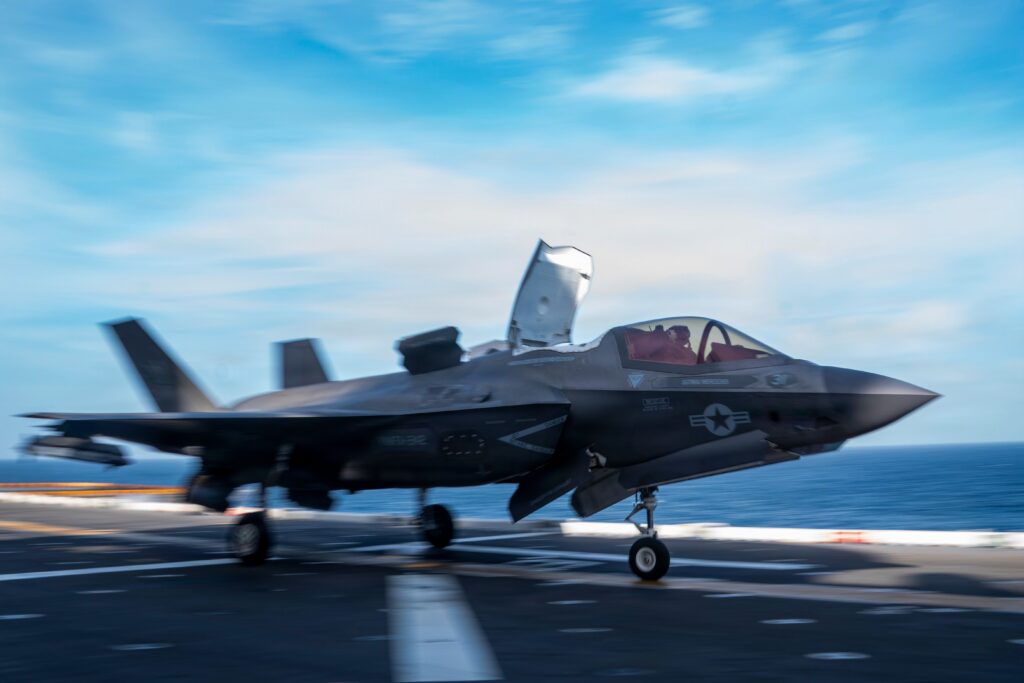
An F-35B Lighting II, attached to Marine Fighter Attack Squadron 242 takes off from the flight deck of America-class amphibious assault ship USS Tripoli (LHA 7) during flight operations in the South China Sea, Dec. 11, 2025. (U.S. Navy photo by Mass Communication Specialist Seaman Angel Conde)

Release From Tripoli Expeditionary Strike Group

U.S. 7th FLEET AREA OF OPERATIONS — The Tripoli Expeditionary Strike Group, composed of the 31st Marine Expeditionary Unit (MEU), America-class amphibious assault ship USS Tripoli (LHA 7), Ticonderoga-class guided-missile cruiser USS Robert Smalls (CG 62) and Arleigh Burke-class guided-missile destroyer USS Rafael Peralta (DDG 115), is conducting routine operations in the U.S. 7th Fleet area of operations, Dec. 11. 

This marks Tripoli’s initial forward-deployed assignment as the flagship for the Tripoli Expeditionary Strike Group. The group’s presence promotes regional stability and maritime security in U.S. 7th Fleet. 

“The Tripoli Expeditionary Strike Group is maintaining peace and security in the Indo-Pacific while assuring access to the seas for all nations,” said Rear Adm. Tom Shultz, commander of the Tripoli Expeditionary Strike Group. “As the only permanently forward-deployed expeditionary strike group, our Navy and Marine Corps team’s ability to operate in the air, on land, and sea, combined with anti-air warfare, anti-submarine warfare and anti-surface warfare capabilities allows us to support any contingency in the region.” 

The 31st MEU brings the ability to conduct a variety of joint, maritime and amphibious multi-domain operations and activities. They are permanently positioned to provide a flexible and combat-capable force to contribute to deterrence, security, crisis response and multi-domain military operations in the Indo-Pacific. 

“The 31st MEU is flexible and responsive. We’re forward deployed and have longstanding, habitual relationships with Amphibious Squadron 11, the Japan Ground Self-Defense Force’s Amphibious Rapid Deployment Brigade and Special Operations Command Pacific,” said Col. Chris Niedziocha, commanding officer of the 31st MEU. “Those relationships, coupled with the unit’s high operational tempo ensure the MEU is always ready to respond to crises and campaign with our allies or fight tonight.” 

Embarked aboard Tripoli is a detachment of F-35B Lightning II aircraft from Marine Fighter Attack Squadron (VMFA) 242, which provides the Tripoli Expeditionary Strike Group more stealth and flexibility than any other aircraft. The Tripoli Expeditionary Strike Group is capable of conducting expeditionary warfare operations with Navy and Marine Corps capabilities to support theater contingencies that range from crisis response to full combat operations. U.S. 7th Fleet, the U.S. Navy’s largest forward-deployed numbered fleet, routinely interacts and operates with allies and partners in preserving a free and open Indo-Pacific region. 


Navy’s New Mobile Ship Target Arrives in Port Hueneme 

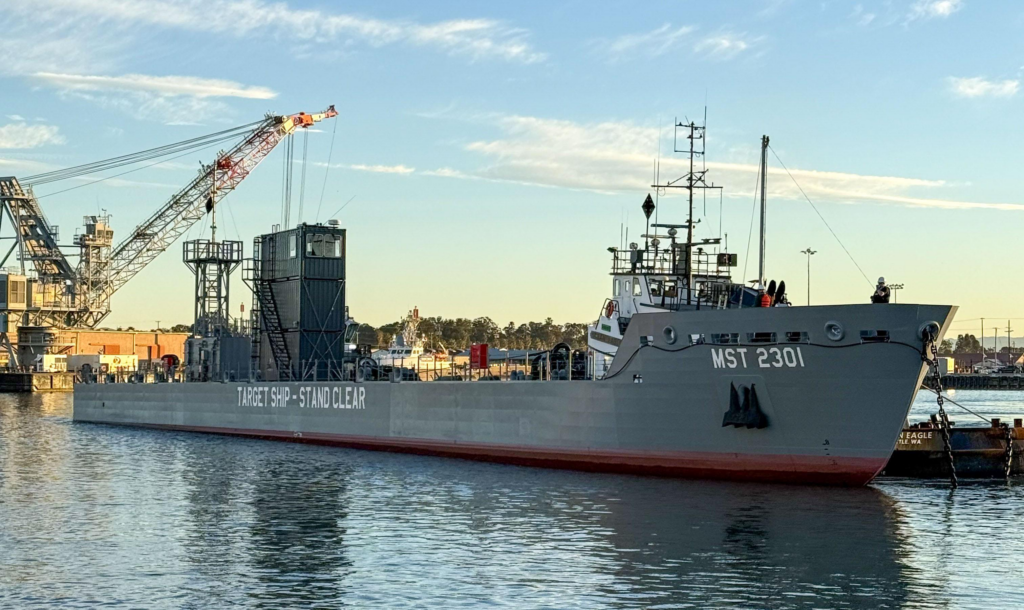
The Navy’s Mobile Ship Target MST 2301, known as MST-2, arrives at Port Hueneme to begin outfitting and preparation for future weapons testing operations. The remotely operated vessel is designed to provide a realistic, reusable surface target for live-fire and sensor testing. (Courtesy photo)

From Naval Air warfare Center Weapons Division, Jan. 14, 2026 

PORT HUENEME, Calif. — The Navy’s newest test ship, the Mobile Ship Target, arrived in Port Hueneme Jan. 14, where Naval Air Warfare Center Weapons Division teams will prepare it for operations supporting advanced weapons testing. 

Gunderson Marine built and launched the 260-foot Mobile Ship Target, known as MST-2 and designated MST 2301, in Portland, Oregon, in July 2025 for builder’s sea trials before delivering it to the Navy. 

At Port Hueneme, NAWCWD teams will outfit MST 2301 for operational use. To enable remote operation, the Threat Target Systems Department’s seaborne engineering team will install a government-developed remote-control system. This capability will allow the vessel to operate safely during live-fire events. 

“Once complete, the MST will give us a safe, repeatable way to run some of the toughest weapons tests the fleet depends on,” said Kevin Gross, director, Threat Target Systems Department. 

Unlike smaller or single-use targets, MST-2 was designed for long-term use. Missions will include sensor and tracking evaluations as well as live-fire events with weapons launched from ships or aircraft. Its size, speed and reconfigurable design make it a flexible platform for testing future naval capabilities. 

MST-2 will replace the Advanced Target Launch System, also known as MST-1 (MST 9301), which is being removed from government ownership after decades of supporting fleet and maritime testing operations. 

“This is about giving Sailors and Marines confidence,” said Rear Adm. Keith Hash, commander, Naval Air Warfare Center Weapons Division. “When they go into harm’s way, they need to trust their systems completely. The MST lets us prove that trust under the most realistic conditions possible.” 

NAWCWD expects MST 2301 to complete outfitting and begin supporting weapons testing in early 2026. 


US Navy and Marines Select L3Harris T7 Robots to Enhance Ordnance Disposal Capabilities

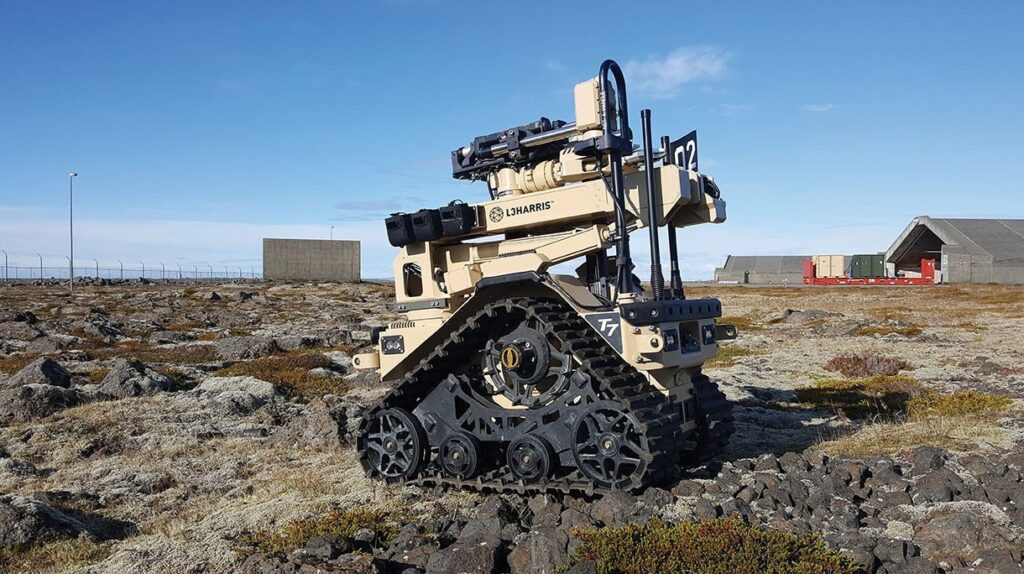
The L3Harris large T7 robotic systems will provide U.S. Navy and U.S. Marines with enhanced dexterity and performance to safely execute explosive ordnance disposal missions. (L3Harris)

Release From L3Harris Technologies

MELBOURNE, Fla., Jan. 14, 2026 — L3Harris Technologies (NYSE: LHX) has received an award to support the U.S. Navy and the U.S. Marines with 34 large T7™ robots that will deliver enhanced capabilities for explosive ordnance disposal (EOD) missions.  

L3Harris T7 robots help keep troops out of harm’s way by neutralizing explosive threats from a safe distance. The company designed the robotic systems for high-risk missions, providing mobility, manipulation and intuitive control.  

“Recognized by both the Navy and Marines for outstanding dexterity and performance, L3Harris T7 robotic systems will provide them a significant advantage for their most challenging EOD missions,” said Dave Kornick, President, Intelligence and Cyber, Space and Mission Systems, L3Harris. “We’re honored to continue working with the Department of War and our key partners in the U.K. and Australia, who also use the most advanced robotic technology available.” 

Deliveries under this multi-year contract are scheduled to begin this year. L3Harris will also provide robotic system and comprehensive operator training.  

This award follows a U.S. Air Force order for more than 100 robots in 2021. The Australian Defence Force and U.K. Ministry of Defence also use large T7 and medium-sized T4 robots to support their EOD missions.  


BAE Systems Awarded $62 Million Contract to Stand up Hawkeye IFF Service Depot 

New depot capability speeds up repairs and increases combat readiness for U.S. Navy 

Release From BAE Systems

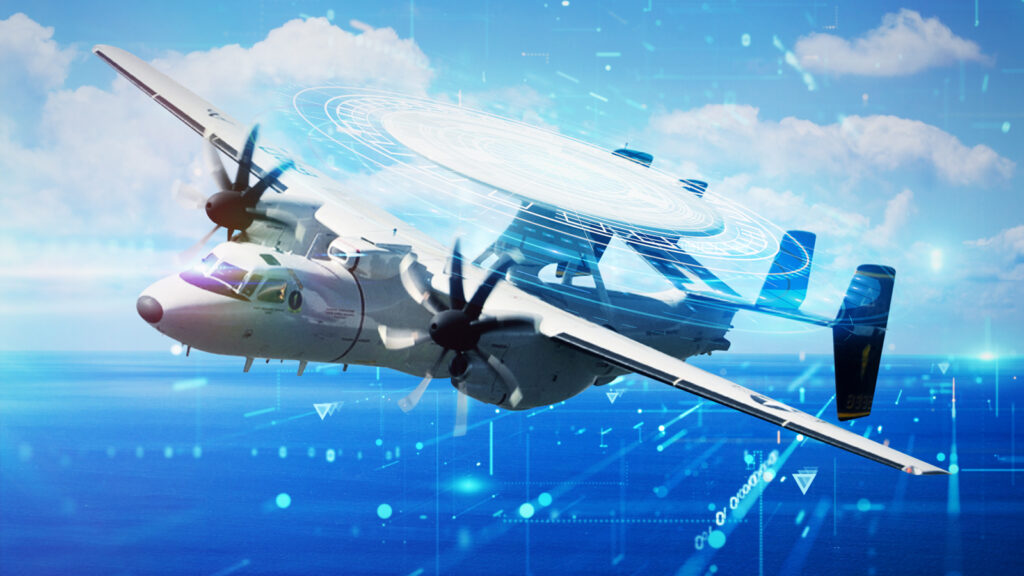
GREENLAWN, N.Y. — January 15, 2026 – The U.S. Navy has awarded BAE Systems a $62 million contract to begin a new capability in the current depot line at the Fleet Readiness Center Southwest in San Diego, California for the E-2D Advanced Hawkeye aircraft interrogator system. The effort will provide testing, troubleshooting, diagnostic, and repair capabilities for the AN/APX-122A Identification Friend or Foe (IFF) interrogator system.  

“This onsite maintenance center will enable the Navy to enhance mission readiness and platform availability, while reducing lifecycle costs and turnaround time,” said Damon Brady, director of Tactical Systems at BAE Systems. “It will establish a new operational capability to get critical command and control technologies to U.S. joint forces and allies faster.” 

The interrogator system provides enhanced identification and enables faster decision making to distinguish between allied forces and potential threats in contested scenarios, giving operators the situational awareness they need to complete their missions. The E-2D carries out a variety of tactical missions that include command and control, border security, search and rescue, and missile defense.  

BAE Systems will develop a depot test station within its facilities to perform diagnostics and repairs on critical modules within the E-2D IFF system and provide sustainment support once delivered to the U.S. Navy at the Fleet Readiness Center Southwest. 

With more than 80 years of IFF experience, BAE Systems has delivered over 16,000 transponders, 1,500 interrogators, and 6,000 combined interrogator transponder systems for use on new and existing platforms, including unmanned aerial vehicles, ships, and rotary- and fixed-wing aircraft. IFF products are available for all service branches and support the U.S. and coalition forces in air defense, weapon systems, air traffic control, and range instrumentation. 

The Hawkeye interrogator system is manufactured at BAE Systems’ facilities in Greenlawn, New York and Manassas, Virginia.  


Lockheed Martin Delivers 350th MH-60R Helicopter to U.S. Navy 

From Lockheed Martin  

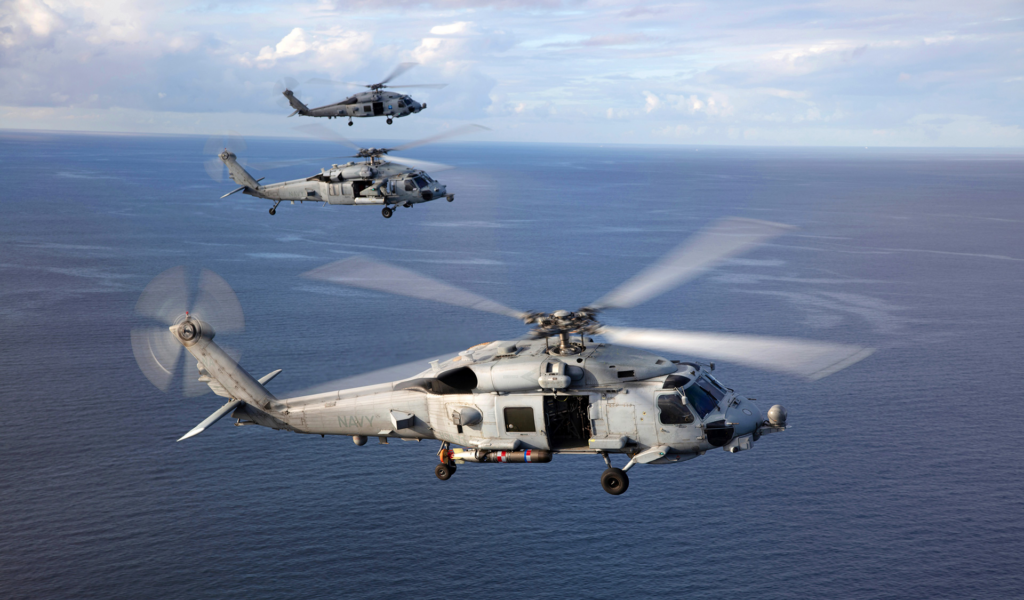
OWEGO, N.Y., Jan. 13, 2026 – In a recent ceremony, Lockheed Martin (NYSE: LMT) delivered its 350th MH-60R “Romeo” helicopter to the United States Navy. The aircraft was delivered to HSM-41, the U.S. Navy’s Helicopter Maritime Strike Fleet Replacement Squadron, training the U.S. Pacific Fleet’s newest naval aviators and naval aircrewmen to operate the MH-60R helicopter. This milestone marks a significant achievement in the production and delivery of world’s most advanced naval helicopter. 

The Sikorsky MH-60R has earned a reputation as the premier global anti-submarine warfare (ASW) helicopter platform, thanks to its advanced sensors, integrated mission systems, precision weapons and network-centric capability. Its proven operational performance has made it an unmatched asset in the global effort to counter increasingly capable submarine threats. 

“The delivery of the 350th MH-60R helicopter is a testament to the exceptional capabilities of this aircraft and the dedication of our team,” said Ali Ruwaih, Maritime Systems vice president. “We are proud to support the U.S. Navy and our global partners with this highly advanced multi-mission platform, which will remain a critical component of global ASW operations for decades to come.” 

 With advanced sensors, radars, Electronic Support Measures, data links and weapons, the MH-60R has repeatedly proven its combat worth, most recently shooting down an enemy drone during a maritime security patrol in the Gulf of Aden by utilizing its advanced sensor suite and rapid engagement capability. The Romeo crew successfully sank multiple Houthiarmed skiffs in the Red Sea, neutralizing threats to merchant vessels and safeguarding vital shipping lanes. The MH60R also played a key role in the Resolute Hunter exercise, integrating seamlessly with allied surface combatants, enhancing antisubmarine warfare coordination and showcasing its versatility in joint multinational operations. 

“The MH-60R has been the U.S. Navy’s primary anti-submarine and surface warfare helicopter since 2010. This true multi-mission asset has proven itself in all aspects of land or maritime operations providing various mission requirements around the globe. We are grateful to the artisans at Sikorsky for keeping this invaluable asset at the ready for all our service men and women for decades to come,” said Captain William Hargreaves, H-60 Multi-Mission Helicopters program manager.  

With its network-centric design, the MH-60R enables seamless communication and data exchange with other ASW assets, enhancing situational awareness and facilitating coordinated ASW operations. Aligned with Lockheed Martin’s 21st Century Security framework, the aircraft’s openarchitecture avionics suite allows rapid integration of emerging sensors and weapons. 

The Romeo’s service life is expected to extend into the 2050s, and its active production line ensures that customers can continue to acquire new aircraft and upgrade their existing fleets with the latest capabilities. 

With more than one million collective flight hours, Lockheed Martin has delivered MH-60R aircraft to the United States, Australia, Denmark, Saudi Arabia, India, Greece and South Korea, with upcoming scheduled deliveries to Spain and Norway.