P-8A Poseidon Reaches IOC with Increment 3 Block 2 Modifications
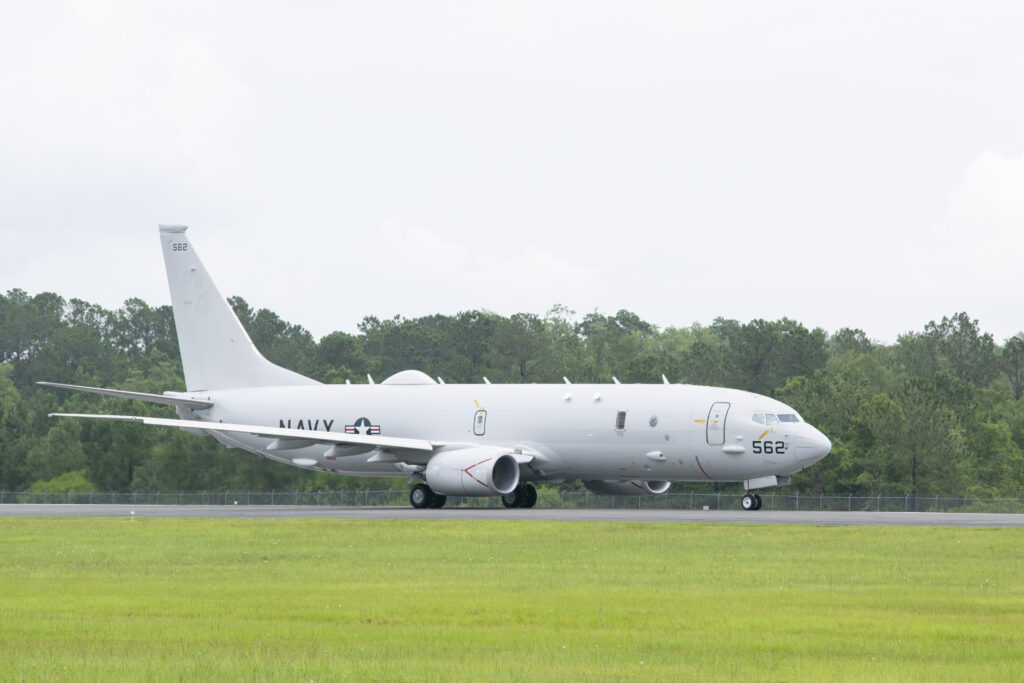
P-8A Poseidon Increment 3 Block 2 system reached initial operating capability. Increment 3 Block 2 provides a significant upgrade to the P-8A airframe and avionics systems, and includes new airframe racks, radome, antennas, sensors, and wiring. Photo courtesy of Boeing. 

From Naval Air Systems Command, April 24, 2026 

NAS PATUXENT RIVER, Md. — The U.S. Navy declared Initial Operational Capability (IOC) for the P-8A Poseidon Increment 3 Block 2 (Inc 3 Blk 2) system. This significant milestone was achieved after the initial phase of Initial Operational Test performed by Air Test and Evaluation Squadron One (VX-1) with support from the Maritime Patrol and Reconnaissance Aircraft Program Office (PMA-290). 

“The P-8A Inc 3 Blk 2 modifications enhance Naval Aviation’s Maritime Intelligence, Surveillance, Reconnaissance, and Targeting (ISR&T) capabilities – the eyes of the Fleet,” said Rear Adm. Michael Wosje, Director of Air Warfare (OPNAV N98). “This capability enhancement is in line with the CNO Fighting Instructions and the Golden Fleet Initiative, which shifts the paradigm from platform-centric thinking to a warfighting system. We are delivering the P-8A Inc 3 Blk 2 as a high-end, networked, and rapidly adaptable platform.” 

The P-8A is the Department of War’s only long-range full-spectrum anti-submarine warfare (ASW), cue-to-kill platform, with substantial armed anti-surface warfare (ASuW) and networked intelligence, surveillance, and reconnaissance (ISR) capabilities.  Inc 3 Blk 2 provides a significant upgrade to the P-8A airframe and avionics systems, and includes new airframe racks, radome, antennas, sensors, and wiring. The modification incorporates a new combat systems suite with improved computer processing, higher security architecture, a wideband satellite communication system, an ASW signals intelligence capability, a track management system, and additional communications and acoustics systems to enhance search, detection and targeting capabilities. 

“The recent deployment of P-8A Increment 3 Block 2 marks the culmination of a spiral development strategy that delivers winning capability to the Fleet and ensures that the P-8A will remain agile, relevant, and lethal for decades to come,” said Rear Adm. Craig Mattingly, Commander Patrol and Reconnaissance Group (CPRG), responsible for the manning, training, and equipping of the Maritime Patrol and Reconnaissance fleet of aircraft for the U.S. Navy. 

PMA-290 has advanced P-8A’s capabilities through a phased, incremental acquisition strategy using Engineering Change Proposals (ECPs). This approach began with Increment 1, which reconstituted the capabilities of the legacy P-3C Orion, and continued with further upgrades in Increment 2. 

“I am extremely proud of the dedicated and focused acquisition team that is delivering this capability to the fleet,” said Capt. Erik Thomas, PMA-290 program manager. “The P-8A Increment 3 Block 2 modifications could not have come at a better time in our current state of evolving threats. The Poseidon is the cornerstone of sophisticated and lethal global maritime patrol and reconnaissance forces, and this enhanced capability ensures we sustain the core pillar of world-class maritime intelligence, surveillance, reconnaissance and targeting (ISR&T) and remain ready for our current and future fights.” 

PMA-290 is responsible for the acquisition, sustainment, and continuous modernization of the P-8A Poseidon, ensuring it remains the world’s premier multi-mission maritime patrol and reconnaissance aircraft. 

CPRG works with the Joint Force, Allies, and Partners to find things beneath or on the sea and destroy them. Everything else is in support. 
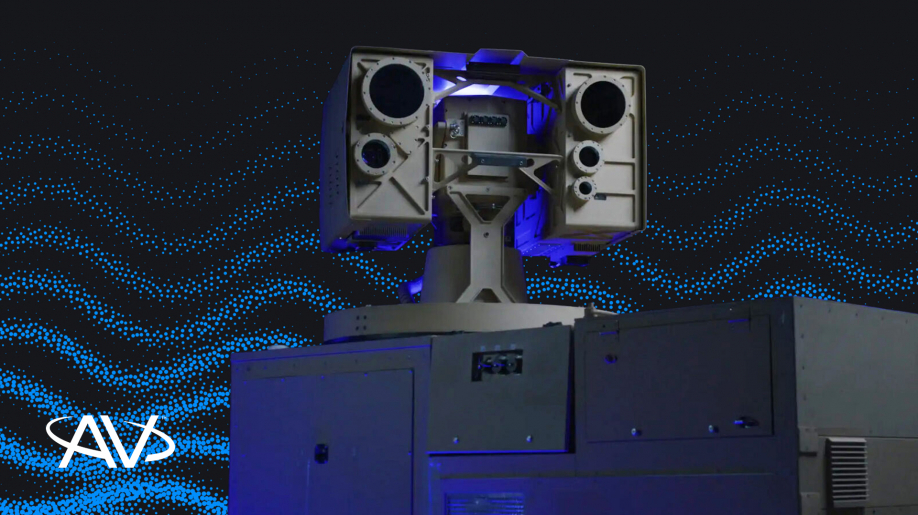


AV Successfully Demonstrates LOCUST Laser Weapon System Aboard USS George H.W. Bush

From AeroVironment, Inc., April 21, 2026 

ARLINGTON, Va., April 21, 2026 – AeroVironment, Inc. (“AV”) (NASDAQ: AVAV) today announced the successful demonstration of its palletized LOCUST® Laser Weapon System (LWS) aboard the USS George H.W. Bush (CVN-77) in October 2025 in collaboration with the U.S. Navy and the U.S. Army Rapid Capabilities and Critical Technologies Office (RCCTO). 

During the live-fire event, the Palletized High Energy Laser (P-HEL) system tracked, engaged, and neutralized multiple target drones—marking a major milestone toward fielding operational directed energy capabilities across all domains and platforms. This achievement validates that the LOCUST LWS is truly platform-agnostic, seamlessly transitioning from fixed-site and land-based mobile platforms, such as the Joint Light Tactical Vehicle (JLTV) and Infantry Squad Vehicle (ISV), to the dynamic and demanding environment of a maneuvering aircraft carrier. 

“LOCUST delivers effective, all-domain protection against emerging drone threats at the speed of light—on any platform, in any domain, for any mission,” said John Garrity, Vice President of Directed Energy Systems at AV. “Rolling LOCUST onto a ship and quickly initiating operations facilitates the expanded use of high-energy lasers across the Fleet without the need for costly, time-consuming ship modifications. This is a game-changer for the Navy and for our national security.” 

LOCUST’s successful shipboard operation showcases: 

  • True platform flexibility: Rapid integration across ground and maritime platforms 

  • Ship compatibility: LOCUST features roll-on, roll-off capabilities and can recharge its battery bank or fully run off ship’s power,–marrying an unlimited DE magazine with an essentially unlimited power source while reducing logistical footprint and integration complexity 

  • Precision aim point and beam control: Accurately acquiring targets, tracking, and eliminating threats on a dynamic, moving shipboard platform 

  • Proven lethality: Engaging and defeating multiple aerial threats in a realistic operational environment 

  • Cross-service commonality: Open interfaces and a common laser weapon system architecture fulfill the requirements of multiple services 

AV’s LOCUST family of high-energy laser systems provides scalable, proven solutions for countering unmanned aerial systems and other evolving threats, enabling the joint force to defend against emerging challenges with unmatched precision, speed, and efficiency–on land and at sea. LOCUST is part of AV’s suite of layered C-UAS solutions, including the radio frequency (RF)-based Titan C-UASTM family of products and the Freedom Eagle (FE-1) kinetic missile–all enabled by AV_Halo open architecture software. 


Addressing Challenges Ahead: NAVAIR Leadership Discusses Organizational Changes and Industry’s Role at Sea-Air-Space

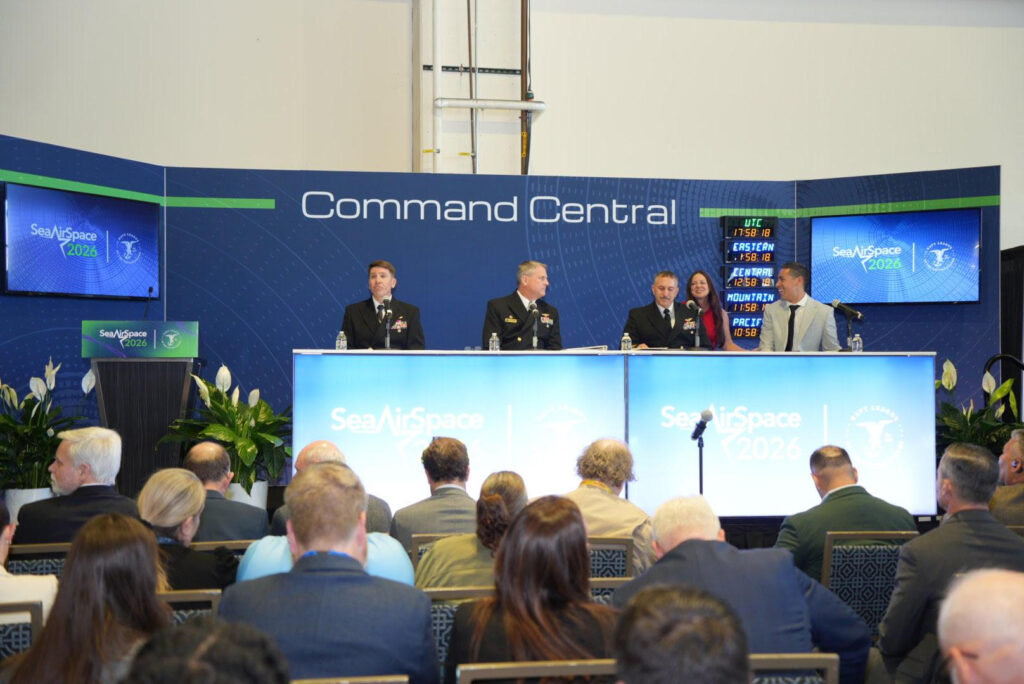
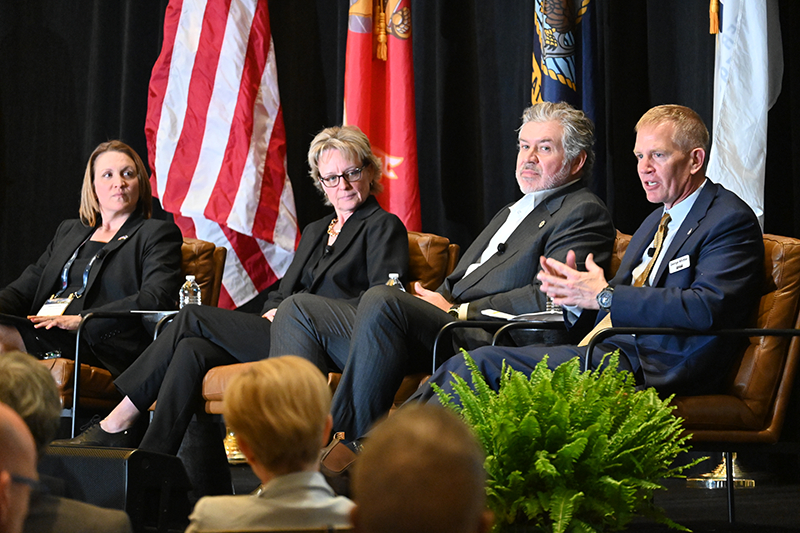
From left, NAVAIR Commander Vice Adm. John E. Dougherty IV;  Rear Adm. Todd Evans, Commander, Naval Air Warfare Center Aircraft Division and chief engineer with NAVAIR; Vice Commander Capt. Joseph Hidalgo, Commander, Fleet Readiness Centers (COMFRC); and Paul McGinty, director of the NAVAIR Rapid Capability Cell speak during the panel “Start with the Fleet: Readiness, Capability, Speed,” Tuesday afternoon at the Sea-Air-Space 2026 Exposition.

From Naval Air Systems Command, Apr 21, 2026 

NATIONAL HARBOR, Md. — NAVAIR personnel kicked off Tuesday at Sea-Air-Space Exposition 2026 with “Start with the Fleet: Readiness, Capability, Speed,” a panel led by NAVAIR Commander Vice Adm. John E. Dougherty IV, who was joined by Rear Adm. Todd Evans, Commander, Naval Air Warfare Center Aircraft Division and chief engineer with NAVAIR; Vice Commander Capt. Joseph Hidalgo, representing Commander, Fleet Readiness Centers (COMFRC); and Paul McGinty, director of the NAVAIR Rapid Capability Cell. 

Dougherty began the panel by laying out NAVAIR’s highest priorities. 

“[At NAVAIR we need] to develop our people and grow our culture, to provide the readiness the warfighter needs, to accelerate delivery capability and to elevate our game,” he said. “It’s about focusing on outcomes and transforming our business so that we find better ways to deliver capability to the warfighter. We have got to go quicker, and I know that we’re ready to meet that challenge. 

“What we can’t forget is that we’re in a great power competition, and in great power competition, the bar for our performance is raised. The threat is moving very fast in terms of capability and capacity and it’s up to us to get after that.” 

Dougherty said the Navy is currently transitioning to Portfolio Acquisition Executive organizations. Under the PAE model, leaders are empowered —and expected— to make disciplined, data-driven trade-offs across cost, schedule and performance, with a clear priority on time to field. Additionally, each PAE is responsible for understanding and actively managing the industrial base supporting their portfolio, including production capacity, supply chain risk and opportunities to expand or diversify suppliers. He encouraged industry partners to “be aggressive” in engaging with naval aviation programs during this time to get input and ideas and keep the production engines running. 

“This is a generational opportunity for this industry,” Evans said regarding the acquisition changes. “This industry has been around for a long time, and we’ve always heard ‘go fast, just go faster.’ That is tremendously difficult to change. In order to enable that change, we also have to change.” 

“What gets me excited about it for naval aviation is [having a] single, accountable owner,” Dougherty said. “[The way we are organized now] there isn’t really one leader that’s in charge of making sure that all our capability roadmaps are aligned, that we’re putting our dollars toward the most consequential outcomes as we deliver warfighting capability. I like ‘portfolio’ over ‘program management.’ It’s about integrated warfighting capability. I think there is real opportunity in this PAE structure to drive better warfighting outcomes across all our programs with a capability mindset.” 

Hidalgo highlighted the depot work done at the various Fleet Readiness Center sites, where most maintenance and sustainment work is performed on aircraft components and engines. 

“We’re here for the warfighter,” Hidalgo said. “COMFRC is one of the sole source places where we can do work that gets it to the warfighter right there on the flight line. We get direct calls back from the warfighters because we’re on the flight line and working hand in hand with industry to help us improve anything we need to get done in a more expeditious timeframe.” 

“On the rapid capability front, we’re trying to connect those [warfighter] needs and capabilities to true outcomes,” McGinty said, outlining what the NAVAIR Rapid Capability Cell is focused on. “We’re partnering with industry early, bringing our resources to bear with the expertise we have resident in our warfare centers and working within the systems and authorities we have … I think the key to this is really connecting to those problem sets, really trying to break down the barriers between what the warfighter needs and what we are asking industry to do and pin us all up in that space together to get after it.” 

In response to a question about what keeps the panelists up at night, Dougherty said he knows that there is someone in NAVAIR who knows how to do things better. 

“I don’t know it, but they do, and I need to get that information,” he said. “I believe that good ideas come from the heart of the organization. Our people are our most important asset. We have a world-class workforce here at NAVAIR. They’ve got fantastic ideas. I worry that there’s a lot more of that for us to tap into.” 

“I want to make sure we are taking care of our people, making sure that they are adequately trained, that they have the equipment they need, and have the components [for aircraft],” Hidalgo said. “The people that we have at FRC are driving to get readiness to the warfighter. That is one of the things that keeps me up at night, making sure we have the things ready for the warfighter.” 

When asked how NAVAIR is changing the contracting process in order to speed projects along, Dougherty said the organization is always “looking for ways to accelerate that timeline.” 

“Our contracts team on the government side does pretty good on hitting their timelines. The ask that I would have for industry is to hit the timelines and get proposals back Negotiations can take too long, for sure, so there’s room for improvement.” 

Dougherty said industry is needed now to help with current needs as well as any coming future fight. 

“That future fight is maybe not so distant, if you look at the geopolitics in the world,” he said. “I would double-down on my message of urgency and double-down on the message that we have many operational needs. I need to connect you to those operational needs better and I want your thoughts. 

“We’re in great power competition and we intend to win. And we’re going to get after it with you.” 


HII Accelerates ROMULUS USV Program: Four New ROMULUS Vessels Head into Production 

From HII, April 21, 2026 

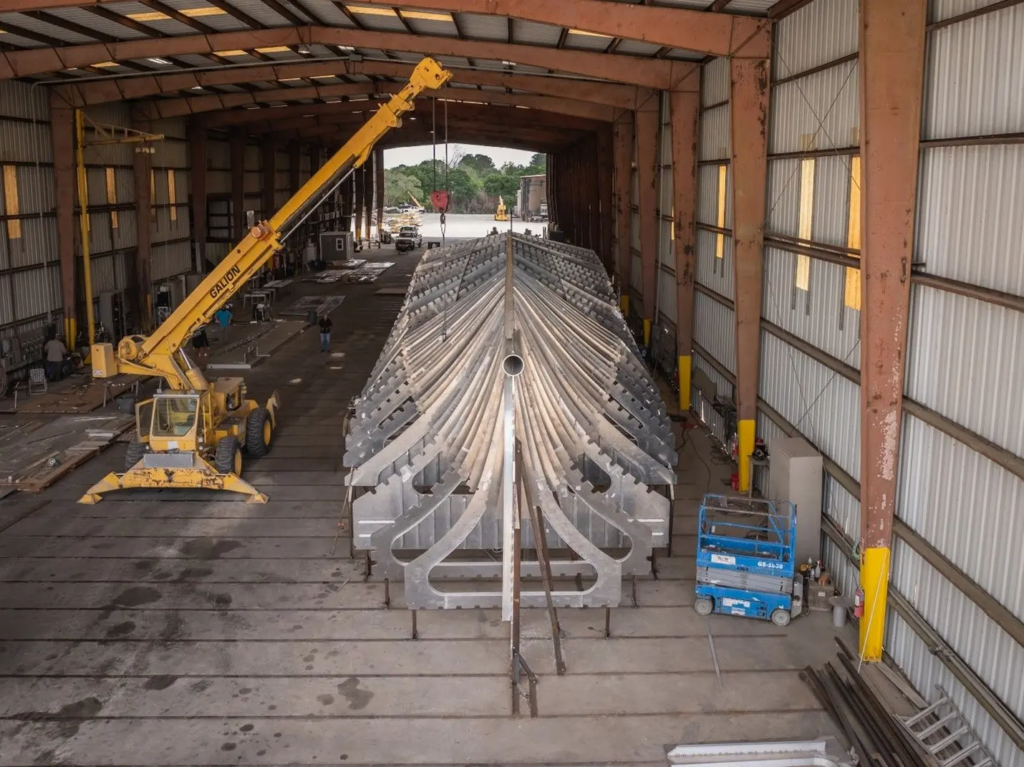
NATIONAL HARBOR, Md., (April 21, 2026) —HII (NYSE: HII), America’s largest military shipbuilder and global leader in autonomous maritime systems, announced today plans for the production of four ROMULUS 151 vessels to be built by Breaux Brothers Enterprises in Louisiana in addition to the ROMULUS 151 currently under construction. 

The announcement signals a rapid shift toward initial production, as HII pushes to accelerate delivery of autonomous surface capability to the U.S. Navy and allied partners. 

“ROMULUS represents a shift in how we deliver unmanned capability to the fleet,” said Andy Green, executive vice president of HII and president of HII’s Mission Technologies division. “We are combining shipbuilding experience, scalable manufacturing, proven autonomy, and strong industry partnerships to move quickly from prototype to operational deployment. The progress we are seeing today — including these initial production vessels — reinforces that we are on a disciplined path to deliver meaningful capability at speed and at scale.” 

Built for Scale and Mission Flexibility 

ROMULUS is a modular family of AI-enabled USVs designed to meet current and emerging requirements for the U.S. Navy, U.S. Marine Corps, joint forces, and allied partners. The platform supports a wide range of missions, including intelligence, surveillance and reconnaissance (ISR), mine countermeasures, strike operations, counter-unmanned systems, and the launch and recovery of unmanned underwater and aerial vehicles. 

Engineered for serial, repeatable production, ROMULUS vessels combine endurance, global reach, and modular adaptability. The family is designed to scale across multiple vessel sizes while maintaining a common manufacturing approach and autonomy baseline. 

Advancing a Scalable Manufacturing Model 

The ROMULUS program is supported by HII’s expanding unmanned vessel production ecosystem, including its assembly facility at Breaux Brothers Enterprises and the High-Yield Production Robotics (HYPR) initiative. Together, these efforts are designed to transition unmanned vessel production from prototype builds to high-rate, digitally enabled manufacturing. 

In March, HII released a plan outlining an expanded ROMULUS assembly facility at Breaux Brothers and introduced HYPR as HII’s initiative to apply industrial robotics and digital quality systems to unmanned platform manufacturing. By integrating automation, advanced tooling, and standardized workflows, HII aims to reduce unit costs, improve schedule predictability, and enable program-level delivery of unmanned systems aligned with evolving fleet needs. 

“ROMULUS is engineered from the outset for scale,” Green added. “By aligning design, autonomy, and manufacturing, we are creating a production model that delivers predictable outcomes and positions us to meet growing demand for autonomous maritime capability.” 


GA-ASI Selected by U.S. Navy PMA-281 for Collaborative Autonomy Mission Planning and Debrief Project

From General Atomics Aeronautical Systems Inc. 

CAMP Initiative To Demonstrate Advanced Mission Planning, AI Model Management,  
and Autonomy Workflows  

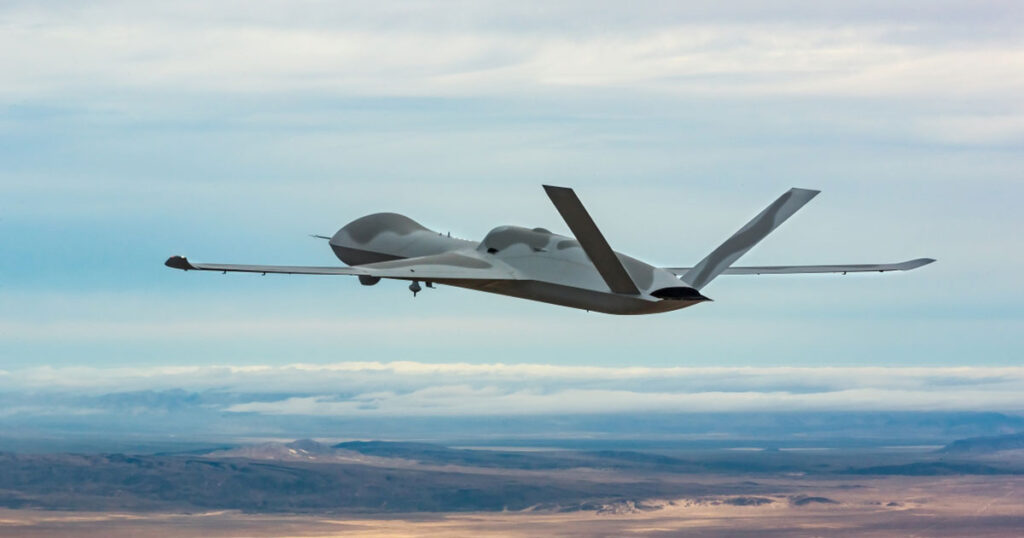
SAN DIEGO – 20 April 2026 – General Atomics Aeronautical Systems, Inc. (GA-ASI) was selected by the U.S. Navy’s Naval Air Systems Command (NAVAIR) PMA-281 for the Collaborative Autonomy Mission Planning and Debrief (CAMP) project. The initiative will advance mission planning capabilities, AI model management, and autonomy workflows for Autonomous Combat Platforms, culminating in a government sponsored demonstration targeting a 2026 Fleet exercise. 

The project will demonstrate the potential for extending PMA-281’s Mission Planning Software framework to support advanced autonomy operations, including behavioral tasking, Rules of Engagement (ROE) configuration, AI decision thresholds, and comprehensive mission debrief capabilities. The effort integrates with the Navy’s Joint Digital Autonomy Range (JDAR) and Joint Simulation Environment (JSE) to enable rapid testing and validation of autonomy-enabled mission profiles. 

“This project demonstrates our commitment to delivering integrated mission planning and debrief solutions that enable effective human-autonomy teaming,” said Mike Atwood, Vice President of Advanced Programs for GA-ASI. “By advancing collaborative autonomy workflows and leveraging government simulation environments, we’re providing the Navy with critical capabilities to rapidly test, evaluate, and deploy autonomous systems for complex operational missions.” 

The CAMP project will demonstrate key capabilities on the MQ-20 Avenger® platform equipped with Government Reference Implementation (GRI) autonomy, Electronic Warfare (EW), and Infrared Search and Track (IRST) payloads. The initiative emphasizes robust communications architectures featuring Link 16, Tactical Targeting Network Technology (TTNT), and Starlink satellite communications for resilient command and control. 

In addition, this project advances operationally scalable autonomy by delivering enterprise mission planning, trusted AI governance, and accelerated digital validation to support Autonomous Combat Aircraft. By integrating secure AI model lifecycle management, human-centered oversight, and high-fidelity simulation environments, GA-ASI is enabling rapid capability iteration and seamless human-autonomy teaming.  

The planned demonstration will showcase advanced mission planning and debrief capabilities for autonomy-enabled operations, integrated with Navy systems and evaluated in complex contested operational scenarios. The effort will highlight how mission planning software enables behavioral tasking, Electronic Warfare (EW) and Infrared Search and Track (IRST) employment, combat air patrol, and target engagement, with execution and coordination demonstrated via Link 16-enabled platforms including F/A-18 Super Hornets. 


Caudle: ‘Era of Platform-Centric Thinking is Over’ 

CNO Caudle met with reporters the morning of his luncheon keynote address. 
 

By Brett Davis, Editor-in-Chief 

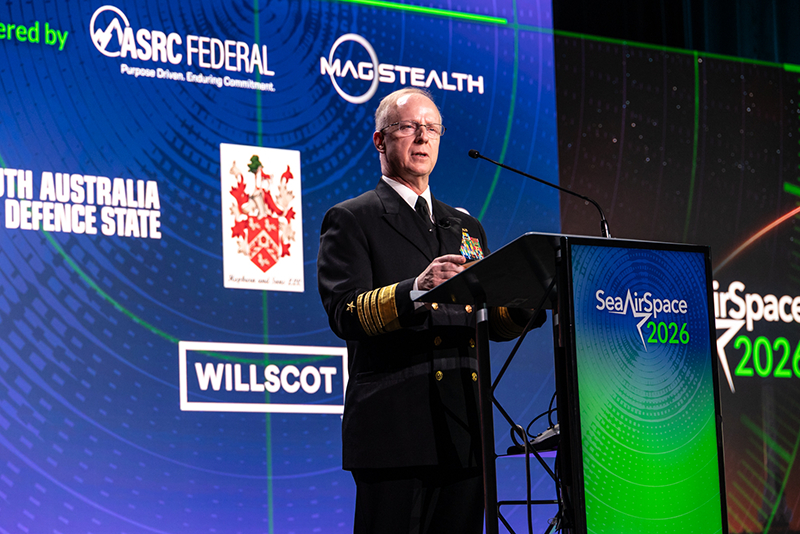
Ongoing operations against Iran are the “early expression of the Golden Fleet design” the Navy is pursuing, which will require a new way of doing business with the defense industry, Chief of Naval Operations Admiral Daryl Caudle said at the opening luncheon at Sea-Air-Space 2026 on Monday, April 20. 

The Golden Fleet Initiative “integrates a high-low mix of crewed and uncrewed platforms,” including uncrewed surface and underwater vehicles, into “tailored force packages” for combatant commanders, he said. 

All of these will be “enabled by advanced manufacturing, artificial intelligence, directed energy and containerized capabilities,” he said, “because the era of platform-centric thinking is over.” 

The low side would be attritable uncrewed systems that could be built and deployed rapidly, and the high side would be the main battle force, including submarines, destroyers and the new battleship, which would begin design work under the new Pentagon budget. 

“It creates a continuous engine that can produce, adapt and employ combat power faster than any adversary, levering the hedge strategy in order to optimize our Navy,” Caudle said. 

His message to the industry officials in the room was simple: “Build systems that integrate. Build systems that scale. Build systems that sustain in contact. And build them fast.” 

To that end, Caudle said he has introduced the Fleet Introduction Operating System, or FIOS.  

“Under FIOS, when the Navy receives a new capability, subsequent updates and upgrades should be as seamless as updating an app on your phone,” he said. “That means common interface standards. It means modularity. Open architecture. Virtualization with digital twins. Familiar look and feel. Modern training content that matches the style of what we are doing … FIOS is how we end the era where the fleet is the integration lab. If a capability shows up, it’s ready to fight, day one.” 

Sailor Concerns  

Earlier in the day, Caudle met with reporters to discuss his priorities and to push back on recent news reports about poor Sailor food during Operation Epic Fury. 

“Nutrition for Sailors has been one of my top priorities,” he said, as he wants to treat Sailors “like world-class athletes.” 

He said at least some of the photos sent to media reports appear to have been taken on shore facilities, not at sea, and all ships in the operation had at least 10 days’ worth of food, and most had more than 30. 

“But in no way, shape or form has there been a time, at least in this deployment, where they’ve not meant the nutritional requirements” of Sailors, Caudle said. 

Sailors occasionally might grumble about individual meals but otherwise he had heard no food complaints until the story broke. 

The food is just part of the Navy’s push to better the lives of its service members, which Caudle said will be reflected in the pending defense budget request. 

The Navy tries to get a quick jump on unsafe living conditions if there is a “tactical” issue, he said, but a recent unhealthy leak situation at the Red Hill facility in Hawaii led to a pilot program where responses to public works issues have been moved from Naval Facilities Command, a systems command, to a local captain and region commander to align solving those issues with the base command. 

“public work divisions is not only base operations stuff … but it’s also tied into NAVFAC, so it’s not that easy just to split that out, so we had to figure out how to do that, so we’re working that with the mid-South region now down in Norfolk and Hampton Roads.” 

The Navy has been pushing to improve unaccompanied housing for Sailors. “When the budget rolls out, that the administration and secretary of the Navy are certainly behind funding barracks and getting more and better quality situations there … you’re going to see that in the budget and you’re going to see that as a high priority for us,” he said. 


Lockheed Martin to Integrate PAC-3 MSE Into Aegis Combat System

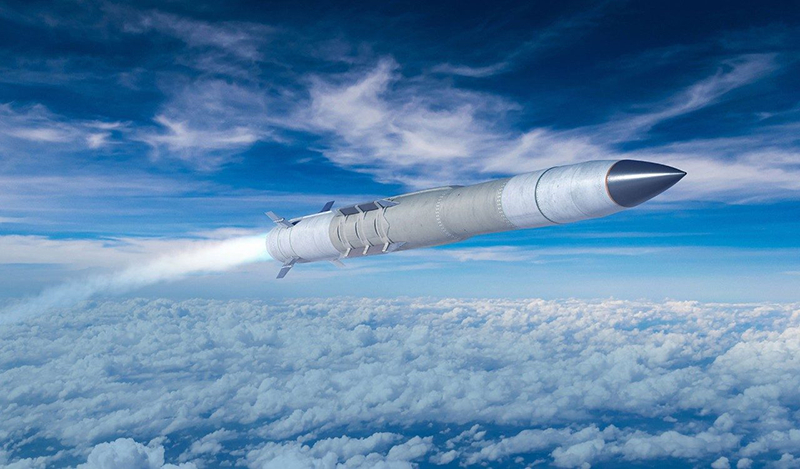
An artist’s rendering of a PAC-3 MSE in flight. Credit: Lockheed Martin 

The U.S. government announced a contract with Lockheed Martin (Booth 901) for the development, integration and testing of PAC-3 Missile Segment Enhancement (MSE) into the Aegis Combat System for the first time. 

This move places the U.S. Navy among the ranks of PAC-3 MSE users around the world, including the U.S. Army and 16 partner nations, giving Navy warships “a razor-sharp defense that helps keep America’s freedom of the seas unchallenged,” the company announced Tuesday. 

PAC-3 MSE is a key integrated air and missile defense capability for the U.S. and its allies. The U.S. government awarded Lockheed Martin a multi-million contract to continue munitions acceleration efforts and deliver a record number of PAC-3 MSE interceptors in 2026. This new contract builds on the framework agreement Lockheed Martin signed with the U.S. Department of Defense to rapidly accelerate the production and delivery of PAC-3 MSE. 

“By integrating PAC‑3 MSE’s capabilities into Aegis, the Navy is taking a decisive step forward in defending America’s fleet and our global interests against the most advanced threats,” Jason Reynolds, vice president and general manager of Lockheed Martin IAMD, said in a press release. “Lockheed Martin is driving the innovation behind this effort — bringing together advanced, combat‑proven systems in new ways to accelerate capability and deliver a decisive advantage in maritime defense.”  

Before receiving government funding, Lockheed Martin said it made internal investments to integrate the system with Aegis and the MK41 Vertical Launching System. 

“This integration further expands the capability of Aegis to engage missile threats at multiple layers, enabling a more comprehensive and effective defense against evolving threats, ensuring the warfighter has the strategic advantage,” Chandra Marshall, vice president of Lockheed Martin Multi-Domain Combat Solutions, said in the release. 

PAC-3 MSE hit-to-kill technology that delivers exponentially more kinetic energy on the target than can be achieved with blast fragmentation mechanisms, the company said. PAC-3 MSE is combat proven against ballistic and cruise missiles as well as hypersonic and airborne threats.   


Greenroom Robotics Wants to Put its Brains on Your Boat

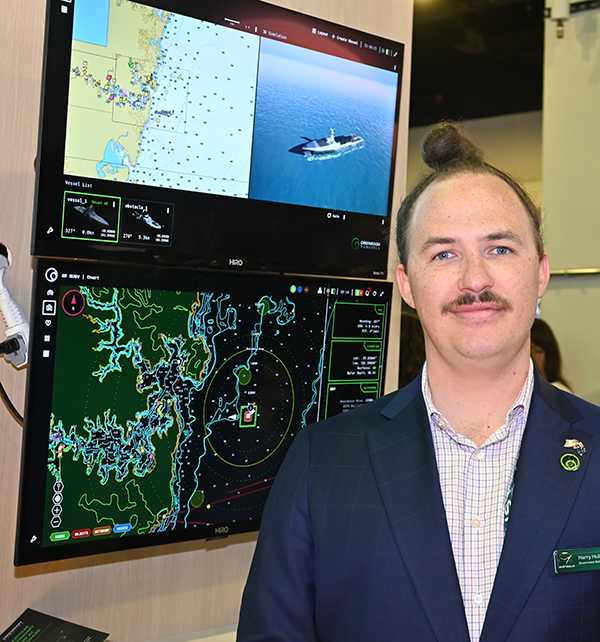
Harry Hubbert, COO for the relatively new Australian company Greenroom Robotics. Credit: Brett Davis 

By Brett Davis, Editior-in-Chief 

New small- and medium-sized uncrewed surface vessels are emerging from the waves everywhere at Sea-Air-Space, and one small Australian company is marketing its software to operate them. 

“We are a pure software company,” said Harry Hubbert, chief operating officer for Greenroom Robotics (Booth 1537 in the Australian pavilion), formed in 2017 when its founders met at the Australian Maritime College in Launceston, Tasmania, and bonded over a passion for ocean adventures and maritime robotics (the company’s name is a surfing term referring to the inside of a barrel produced by a wave). 

The company has four products: GAMA, a navigation and control system; Lookout +, an AI-powered optical radar that’s fully passive and can be used in contested environments, according to James Griffin, sales engineer at Greenroom; MIS-SIM, a mission simulator for training and planning; and MAROPS, a digitized mission management system. The products can work alone or together. 

The company’s software has been used on a retrofitted Aermidale-class patrol boat with Austal in Australia; a high-speed, agile uncrewed surface vessel from Subsea Craft in Australia, the United States and the United Kingdom; a EGS Survey USV in Australia and about 30 other vessels around the world, Hubbert said. 

“You can come to us with a boat that’s 25 or 30 years old, and we can make it into a fully autonomous boat,” Griffin said, or companies can bake the software into new USVs being developed. 

There are many USVs on display at the show this year and Greenroom Robotics has been talking to them, and the Navy push with the new Medium USV program and others is helping, Hubbert said. 

“The United States is a really big focus for us, given the scale of the operation over here but also the clear need,” Hubbert said. “The U.S. government’s been great at actually defining that they want this and this is what they want to do, and we happen to meet a lot of their requirements, so it’s been a good opportunity for us here.” 

The AUKUS agreement between the U.S., U.K. and Australia has eased the regulatory burden, “cracked the door open and allowed us to get moving a little bit faster,” Hubbert said, but the self-funded company is also setting up a shop in the U.S. and hiring Americans to help navigate the defense market. 


A Panoply of USVs Graces the Gaylord Pier

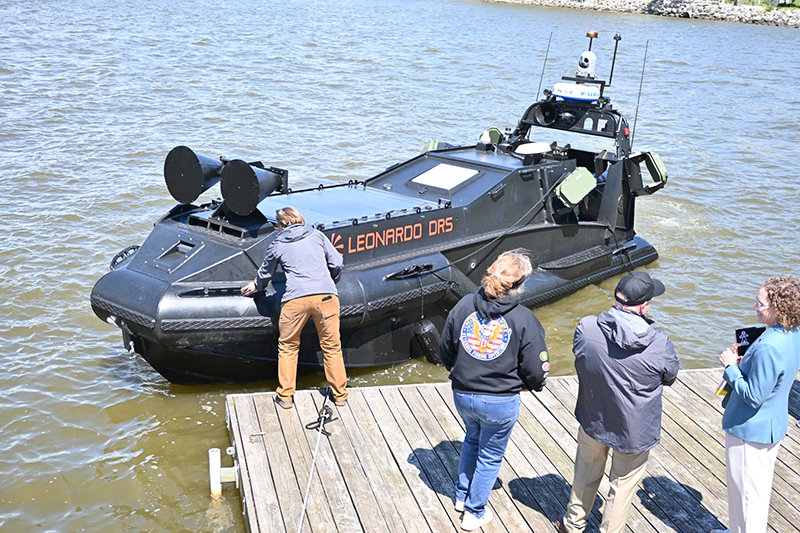
Leonardo DRS displayed its counter-UAS at sea system. (Credit: Brett Davis)

By Brett Davis, Editor-in-Chief 

In his keynote speech on Monday, Chief of Naval Operations Admiral Daryl Caudle said the future Golden Fleet will include a mix of main battle force ships and attritable, rapidly manufactured uncrewed systems. 

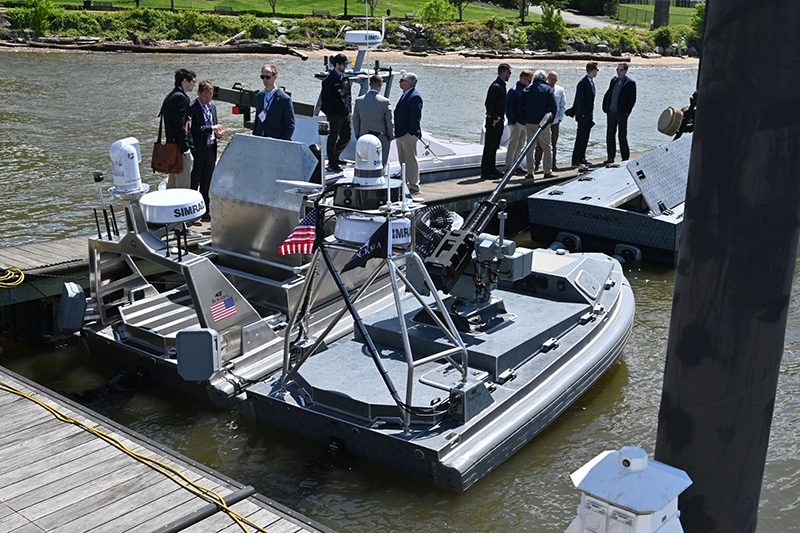
To get started on his shopping Caudle would only need to take a short walk to the Gaylord Pier, where 10 exhibitors featured a variety of small to medium boats, many of them autonomous and uncrewed. 

One was Leonardo DRS, which showcased its counter-UAS at sea system, which features a Ring counter-UAS system from partner Regulus mounted on a Sea Machines Stormrunner USV. 

As presented at Sea-Air-Space, the system uses a GPS spoofer to defeat UAS, including small ones that can be detected up to about a kilometer away, according to Jason Beaty, Leonardo DRS’ program director for unmanned systems. 

Further down the pier, California-based Navier made its show debut with two of its vessels, which can operate autonomously or with a crew. The company says its N30 Quanta-D system’s retractable hydrofoil design, based on the commercial N30 hydrofoil platform, enables superior speed, range and performance for the autonomous vessel. 

The company has systems already deployed with the U.S. Navy, said Navier founder and CEO Sampriti Bhattacharyya, although she could not discuss specifics. 

The N30 Quanta-D has a 2,000 nautical mile range, could be built quickly by a variety of shipyards and is cheap to operate, she said. 

“This boat costs 50 percent less to operate, or much less [than comparable vehicles],” she said. “You think of hundreds of these boats over 10 years, or even five years, or three years, the operational cost savings adds up massively. So, everybody is thinking attritable, but even beyond attritable, these are definitely low cost to build but the operational cost is also super, super low.” 

Another company on the pier is Michigan-based Ghostworks, which has a family of carbon fiber systems in use by Special Operations Forces and commercial users, said Britt Ward, the company’s chief naval architect. 

The company was formed four years ago and marked its third appearance at Sea-Air-Space, Ward said. Ghostworks’ MUT 3.5-meter composite USV, its smallest, aimed at attritable and intelligence, surveillance and reconnaissance missions, and Magic, an eight-meter foil-assisted catamaran which can carry electronic equipment, nonlethal payloads and autonomous controls. 

Further down the pier is BlackSea Technologies, which is displaying two small new USVs, Chaser and Comet. 

BlackSea Technologies unveiled two small new USVs, Chaser (above) and Comet. (Credit: Brett Davis (above), BlackSea Technologies (below))

“Chaser and Comet reflect our focus on giving operators scalable, mission ready platforms that can adapt quickly to evolving threats and mission demands,” BlackSea President Bob Pudney said in a press release. “We are proud to launch them alongside a group of industry partners whose technology helps make these vessels possible.” 

Chaser is a small USV designed to expand payload capacity, range and mission flexibility while maintaining rapid deployability and ease of use (meeting the Navy requirement to fit in a 20’ shipping container).  

Comet is BlackSea’s larger, high speed combat ready platform, designed to bridge the gap between small tactical USVs and larger unmanned combat craft. The 13.1 meter vessel can exceed 45 knots, carry a 10,000 pound payload including fuel, and support advanced payloads for missions including counter UAS, mine countermeasures, surface warfare, antisubmarine warfare, electronic warfare, maritime domain awareness and high value unit escort.   

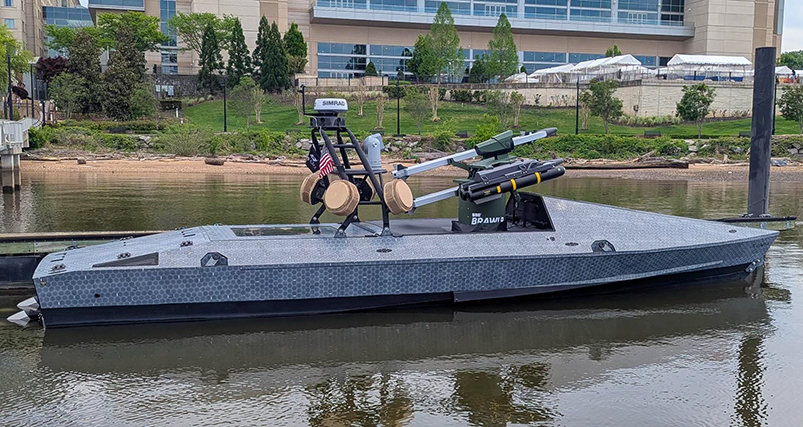
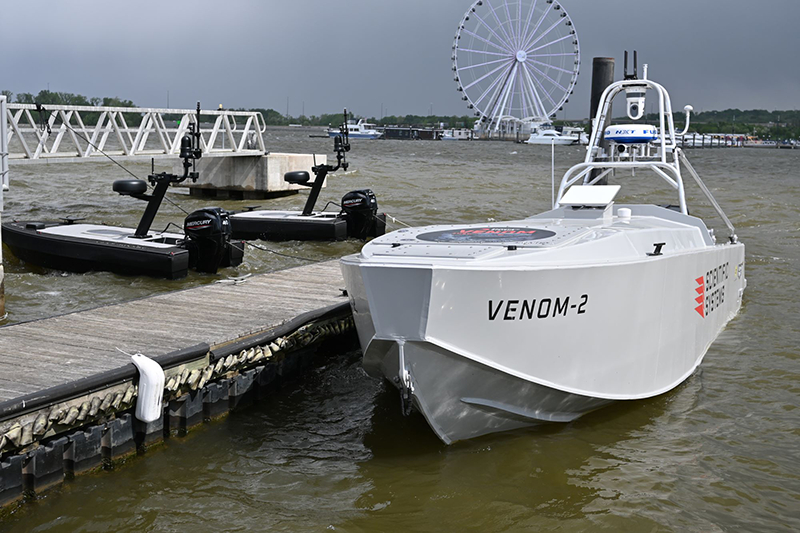
Other companies displaying on the pier include Scientific Systems with its Vehicle for Expeditionary Naval Over-the-Horizon Missions (VENOM), announced last year; Martec with its Mantas T38 Devil Ray autonomous USV, which has been used in various military exercises; Textron Systems with its Tsunami USV, which the company says is ready for mission-ready autonomy and is based on a commercial hull; Saronic with its Corsair USV, which debuted last year at Sea-Air-Space; HavocAI, whose software-defined hardware approach powers military and commercial autonomous systems; Maritime Robotics, which builds small “sea drones;” and Zodiac Milpro, one of the rare boats on the pier intended to carry people. 

Scientific Systems showcased its Vehicle for Expeditionary Naval Over-the-Horizon Missions (VENOM), announced last year. (Credit: Brett Davis)


White House Commitment to Shipbuilding Sparks Industry Optimism

From left, Amber Stein, Kari Wilkinson, Ben Bordelon and George Whittier speak at the panel on Navy and Coast Guard shipbuilding. Credit: Brett Davis

By Erika Fitzpatrick, Seapower Correspondent 

The White House’s commitment to multiyear investments in new Navy ships, including the recently announced fiscal 2027 request of $65.8 billion for the Golden Fleet Initiative, is spurring changes in the shipbuilding industrial base, industry leaders said April 21 at Sea-Air-Space 2026.  

The Pentagon’s $1.5 trillion budget request would provide the Navy with more than $377 billion, a 24% increase over fiscal 2026 levels. Industry players, including George Whittier, CEO of Wisconsin-based Fairbanks Morse Defense (Booth 1337), a U.S. Navy warship service and component provider and supplier, welcomed the budget details, also released Tuesday. 

“Critically, the Pentagon said it would request multiyear authorities from Congress for long-running programs,” Whittier said in a statement. “Much of the nation’s strategic manufacturing capacity and technical expertise is in our maritime supplier base. This is exactly the kind of certainty the shipbuilding industrial base needs to thrive.” 

Although shipbuilding manufacturers and suppliers now have confidence that pledged investments in sea power have a better chance to happen, Congress decides appropriations for the coming fiscal year, which begins Oct. 1, 2026. 

Nevertheless, the budget visibility is helping manufacturers prepare for the massive workload in the pipeline, said Kari Wilkinson, executive vice president and president of Newport News Shipbuilding at HII (Booth 923).  

“We have built submarine and carriers for many years, and we know we can do this,” she said. “We expect our customers to be demanding. 

“It’s fundamentally about people,” Wilkinson said, including hiring, training and equipping personnel to fulfill orders. That requires changing the narrative that shipbuilding careers are unstable and distributing the workload to suppliers. 

“It is a different landscape today than it has been, but that isn’t daunting,” she said. “This is a team sport.” 

The administration’s emphasis on schedule — rapid delivery — is pushing shipbuilding to ramp up planning and workforce development, concurred Ben Bordelon, president and CEO at Louisiana-based Bollinger Shipyards.  

Bollinger supports shipbuilding for the Navy and U.S. Coast Guard, which also received a cash infusion from Congress that’s led to a boom in icebreaker and cutter shipbuilding.  

With these investments, the industry can now say to its talent pipeline that shipbuilding is sustained, profitable work. “We’re selling a career versus a job,” Bordelon said.