Ships Announced to Participate in Navy and Marine Corps 250th Birthday Celebration
From U.S. Fleet Forces Command, Sept. 24, 2025
NORFOLK, Va — The cities of Philadelphia and Camden will host the Navy Marine Corps 250 celebration October 9-16, 2025, with four U.S. Navy ships, two Coast Guard cutters, and four U.S. Navy Academy Yard Patrol boats (YPs) and sailboats. These vessels will participate in the Parade of Ships on Thursday, Oct 9.
USS Arlington (LPD 24) – https://www.surflant.usff.navy.mil/LPD24/, USS Lassen (DDG 82) – https://www.surflant.usff.navy.mil/ddg82/, USS Cooperstown (LCS 23) – https://www.surflant.usff.navy.mil/lcs23/, USS Billings (LCS 15) – https://www.surflant.usff.navy.mil/lcs15/, USCGC Lawrence Lawson (WPC 1120), and USCGC James Rankin (WLM 555) will be available for public ship tours Oct 10-15.
Ship and pier locations include:
Philadelphia, Penn’s Landing: (Ship public tours Oct 10-14 from 10 a.m. to 4 p.m. and Oct 15 from 10 a.m. – 1 p.m.) • Freedom-class littoral combat ship, USS Cooperstown (LCS-23) from Mayport, Florida • USCGC Lawrence Lawson (WPC 1120) from Cape May, New Jersey and USCGC James Rankin (WLM 555) from Baltimore, Maryland • U.S. Naval Academy Yard Patrol boat and Sailboat from Annapolis, Maryland
Philadelphia, Pier 4: (Ship public tours Oct 10 from 10 a.m. to 1 p.m., Oct 11-14 from 10 a.m. to 4 p.m. and Oct 15 from 10 a.m. to 1 p.m.) • San Antonio-class amphibious transport dock USS Arlington (LPD-24) from Norfolk, Virginia • U.S. Naval Academy Yard Patrol boat and Sailboat from Annapolis, Maryland
Gloucester City, NJ, Gloucester Marine Terminal: (Ship public tours Oct 10-14, from 10 a.m. to 4 p.m. and Oct 15 from 10 a.m. to 1 p.m.) • Arleigh Burke-class Aegis guided missile destroyer USS Lassen (DDG-82) from Mayport, Florida
Camden ex-Battleship New Jersey: (Ship public tours Oct 10-14 from 10 a.m. to 4 p.m. and Oct 15 from 10 a.m. to 1 p.m.) • Freedom-class littoral combat ship USS Billings (LCS-15) from Mayport, Florida
Media interested in covering any NMC250 events can contact the Regional Public Affairs Office at (757) 322-2853 for more information.
Vice Admiral John Gumbleton, Acting Commander, U.S. Fleet Forces Command – https://www.navy.mil/Leadership/Flag-Officer-Biographies/Search/Article/2236432/vice-admiral-john-gumbleton/
For up-to-date information on all NMC250 events, visit the official website: https://www.navy.mil/Navy-250/Events/
Join the conversation on social media by using the hashtags #NMC250, #NavyBirthday
Lockheed Martin Sikorsky to Build Up to 99 CH-53K Heavy Lift Helicopters for U.S. Marine Corps
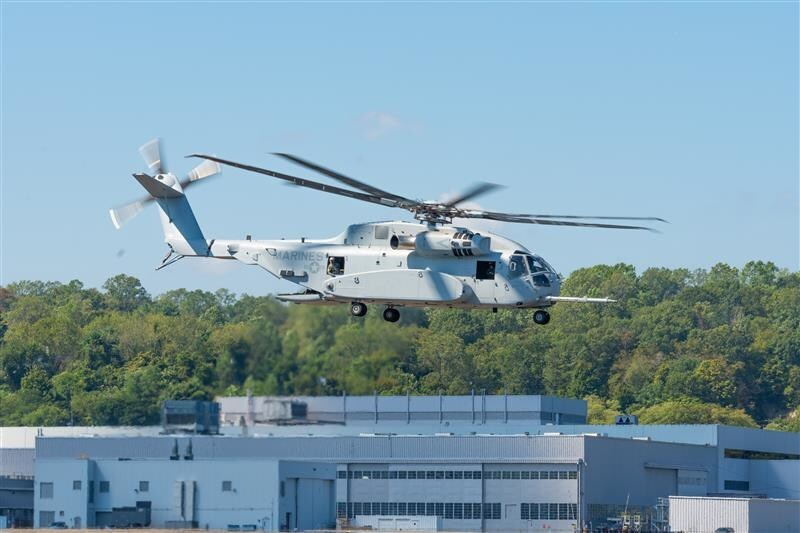
Sikorsky delivered a 20th CH-53K helicopter to the U.S. Marine Corps in September 2025. The heavy lift helicopter will be based at Marine Corps Air Station (MCAS) Yuma, Arizona. Photo courtesy Sikorsky, a Lockheed Martin company.
From Lockheed Martin Sikorsky
Multi-year award will help stabilize U.S. industrial base, ensure consistent aircraft deliveries
STRATFORD, Conn., Sept. 26, 2025 /PRNewswire/ – Sikorsky, a Lockheed Martin company (NYSE: LMT), received a $10.855 billion contract from the U.S. Navy to build up to a maximum of 99 CH-53K® King Stallion® helicopters for the U.S. Marine Corps over five years, the largest-quantity order to date for the aircraft. The award will ensure consistent deliveries of the United States’ most powerful heavy-lift helicopter between 2029 and 2034 and reinforce the U.S. industrial base by sustaining thousands of production roles at Sikorsky and across its nationwide supply chain.
“This award reflects trust and confidence in Sikorsky to deliver these technologically advanced, heavy-lift helicopters that will revolutionize the Marine Corps’ operational capabilities by adding unrivaled power, performance, survivability and dependability to the fleet,” said Rich Benton, Sikorsky vice president and general manager. “The multi-year contract enables Sikorsky to partner with the Department of the Navy to drive long-term affordability, optimize production efficiencies and stabilize our supply chain and workforce, ensuring the Marines maintain the strategic advantage with the CH-53K in a rapidly evolving battlespace.”
The contract combines five separate aircraft orders — defined as Lots 9-13 — into a five-year multi-year procurement, ensuring price predictability and consistent flow of materials from 267 CH-53K suppliers across 37 states, and 17 suppliers from eight countries. The contract allows the U.S. Government to buy up to 99 CH-53K aircraft for the Marine Corps or to fulfill orders from international military customers.
Sikorsky has delivered 20 CH-53K aircraft to the Marine Corps. An additional 63 aircraft (Lots 4-8) are in various stages of production and assembly.
“This contract represents a huge ‘win’ for the entire CH-53K team,” said Col. Kate Fleeger, Program Manager, H-53 Heavy Lift Helicopter Program Office (PMA-261). “The contract allows Sikorsky to bundle purchase orders from suppliers to achieve better pricing and pass the savings on to the government, giving us the ability to provide dependable delivery to the fleet and a consistent and predictable timeline for the transition from the CH-53E to the CH-53K.”
To date, the U.S. Marine Corps has transitioned one CH-53K fleet squadron, and has CH-53K aircraft flying at one developmental test squadron, one operational test squadron and one training squadron to support operational requirements.
Sikorsky designed the CH-53K helicopter to meet the Marine Corps’ lift requirements for today’s battlefield — to transport troops, supplies and heavy equipment forces across a contested environment — and survive.
The Department of the Navy declared Full Rate Production for the CH-53K program in December 2022. The U.S. Marine Corps’ Program of Record remains at 200 CH-53K aircraft.
Marine Corps Announces Project Dynamis to Accelerate AI-Powered Decision Advantage
From Communications Directorate, Headquarters, U.S. Marine Corps, Sept. 23, 2025
WASHINGTON, D.C. — The Assistant Commandant of the Marine Corps, Gen. Christopher J. Mahoney, signed a memorandum Sept. 10 to formally establish Project Dynamis, an initiative to accelerate the modernization of Marine Corps contributions to Combined Joint All-Domain Command and Control (CJADC2) in partnership with the Department of the Navy’s Project Overmatch.
This effort is aligned with the Marine Corps’ broader Force Design concept with a specific focus on developing end-to-end, joint interoperable capabilities that enable Marines to act as the forward element of the Joint Force—sensing, making sense, and communicating weapons quality data at the speed and scale of relevance.
The memorandum established a 3-star council comprised of the Deputy Commandant for Combat Development and Integration (DC CD&I) and the Deputy Commandant for Information (DC I) to govern the project.
“The Marine Corps has been moving fast to modernize for the future,” said Lt. Gen. Jerry Carter, DC I. “To outpace the threat, we realized we needed a dedicated cross-functional team laser focused on prioritizing and accelerating the deployment of advanced technologies to enable AI-powered decision advantage at the tactical edge. That’s what Project Dynamis does in partnership with the Navy’s Project Overmatch.”
The memorandum tasks the council to present an initial plan and a charter for governance, organization, authorities, and responsibilities within 30 days. The ACMC has also tasked the council to coordinate with the Assistant Secretary of the Navy for Research, Development and Acquisitions to designate a USMC Deputy Direct Report Program Manager within Project Overmatch.
Colonel Arlon Smith has been appointed as the Director of Project Dynamis.
“As Marines, our ability to aggregate, orchestrate, analyze, and share fused data at machine speeds is a warfighting imperative,” said Smith. “It is central to our value proposition. Project Dynamis is our bid for success to realize that vision.”
Although it had not yet been formally established, Project Dynamis already helped orchestrate the Marine Corps’ recent enterprise-level contract with Maven Smart System and was integral in September deployments of a Marine Air-Ground Task Force Command and Control Prototype (MCP) to the 12th Marine Littoral Regiment in Okinawa, Japan and the 15th Marine Expeditionary Unit in Camp Pendleton.
HII Hosts Marine Corps Commandant Gen. Eric Smith at Ingalls Shipbuilding
From HII, Sept. 17, 2025
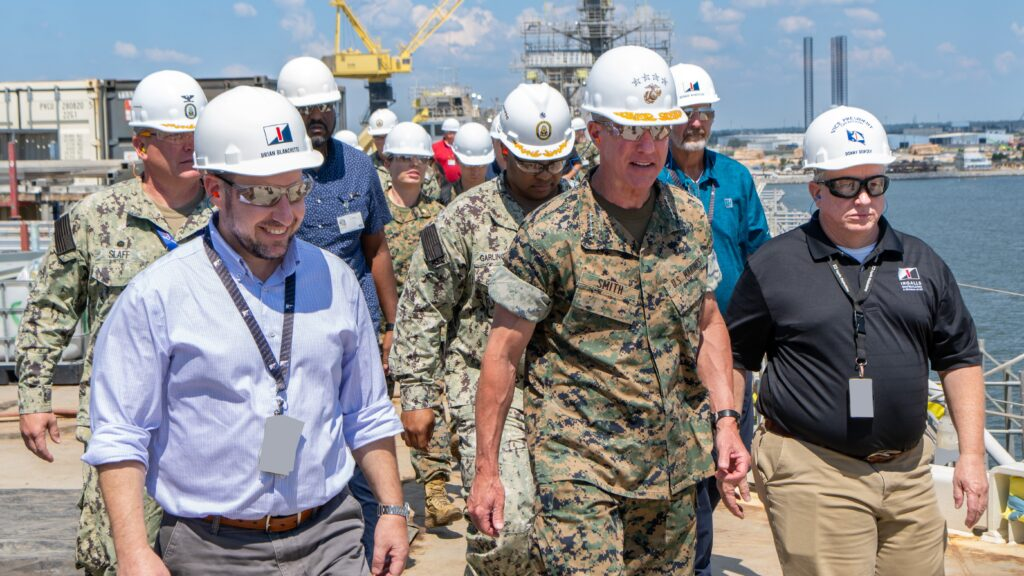
PASCAGOULA, Miss., Sept. 17, 2025 (GLOBE NEWSWIRE) — HII (NYSE: HII) hosted Gen. Eric Smith, the 39th commandant of the U.S. Marine Corps, at the company’s Ingalls Shipbuilding division Wednesday. During his visit, Smith met with Ingalls leadership and toured the shipyard, including America-class amphibious assault ship Bougainville (LHA 8).
“The skills and dedication of our Ingalls shipbuilders were on full display during this visit and I am proud of the critical role our team plays in supporting the U.S. Marine Corps and Navy mission,” said Brian Blanchette, Ingalls Shipbuilding president. “Our amphibious programs remain one of our highest priorities and we are fully committed to delivering the most advanced ships to the fleet.”
This visit marked the third time Smith has toured Ingalls Shipbuilding as the commandant. While at Ingalls, Smith spoke on the broader importance of amphibious capability to the fleet and expressed his appreciation for the workforce at Ingalls.
“The construction of these ships is vital to our national interest,” Smith said. “The work done here in this shipyard by these workers directly supports the Navy and Marine Corps in our ability to project power and serve as a global naval expeditionary force.”
Ingalls currently has two LHAs under construction including Bougainville (LHA 8) and Fallujah (LHA 9) and three Flight II LPDs under construction including Harrisburg (LPD 30), Pittsburgh (LPD 31) and Philadelphia (LPD 32). Additionally, in September 2024, the Navy awarded Ingalls a contract for the construction of three San Antonio-class amphibious transport dock ships (LPD 33, LPD 34 and LPD 35) and a contract modification for the fifth America-class amphibious assault ship, Helmand Province (LHA 10).
HII Hosts Marine Corps Commandant Gen. Eric Smith at Ingalls Shipbuilding
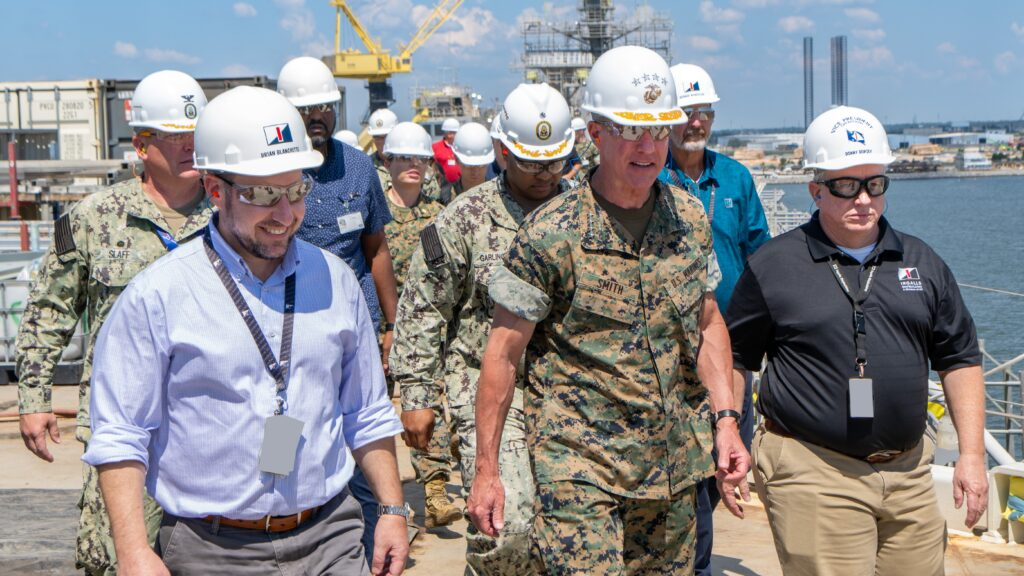
PASCAGOULA, Miss., Sept. 17, 2025 (GLOBE NEWSWIRE) — HII (NYSE: HII) hosted Gen. Eric Smith, the 39th commandant of the U.S. Marine Corps, at the company’s Ingalls Shipbuilding division Wednesday. During his visit, Smith met with Ingalls leadership and toured the shipyard, including America-class amphibious assault ship Bougainville (LHA 8).
“The skills and dedication of our Ingalls shipbuilders were on full display during this visit and I am proud of the critical role our team plays in supporting the U.S. Marine Corps and Navy mission,” said Brian Blanchette, Ingalls Shipbuilding president. “Our amphibious programs remain one of our highest priorities and we are fully committed to delivering the most advanced ships to the fleet.”
This visit marked the third time Smith has toured Ingalls Shipbuilding as the commandant. While at Ingalls, Smith spoke on the broader importance of amphibious capability to the fleet and expressed his appreciation for the workforce at Ingalls.
“The construction of these ships is vital to our national interest,” Smith said. “The work done here in this shipyard by these workers directly supports the Navy and Marine Corps in our ability to project power and serve as a global naval expeditionary force.”
Ingalls currently has two LHAs under construction including Bougainville (LHA 8) and Fallujah (LHA 9) and three Flight II LPDs under construction including Harrisburg (LPD 30), Pittsburgh (LPD 31) and Philadelphia (LPD 32). Additionally, in September 2024, the Navy awarded Ingalls a contract for the construction of three San Antonio-class amphibious transport dock ships (LPD 33, LPD 34 and LPD 35) and a contract modification for the fifth America-class amphibious assault ship, Helmand Province (LHA 10).
USS America Enhances Joint Readiness with Army and Marine Corps Rotary-Wing Operations
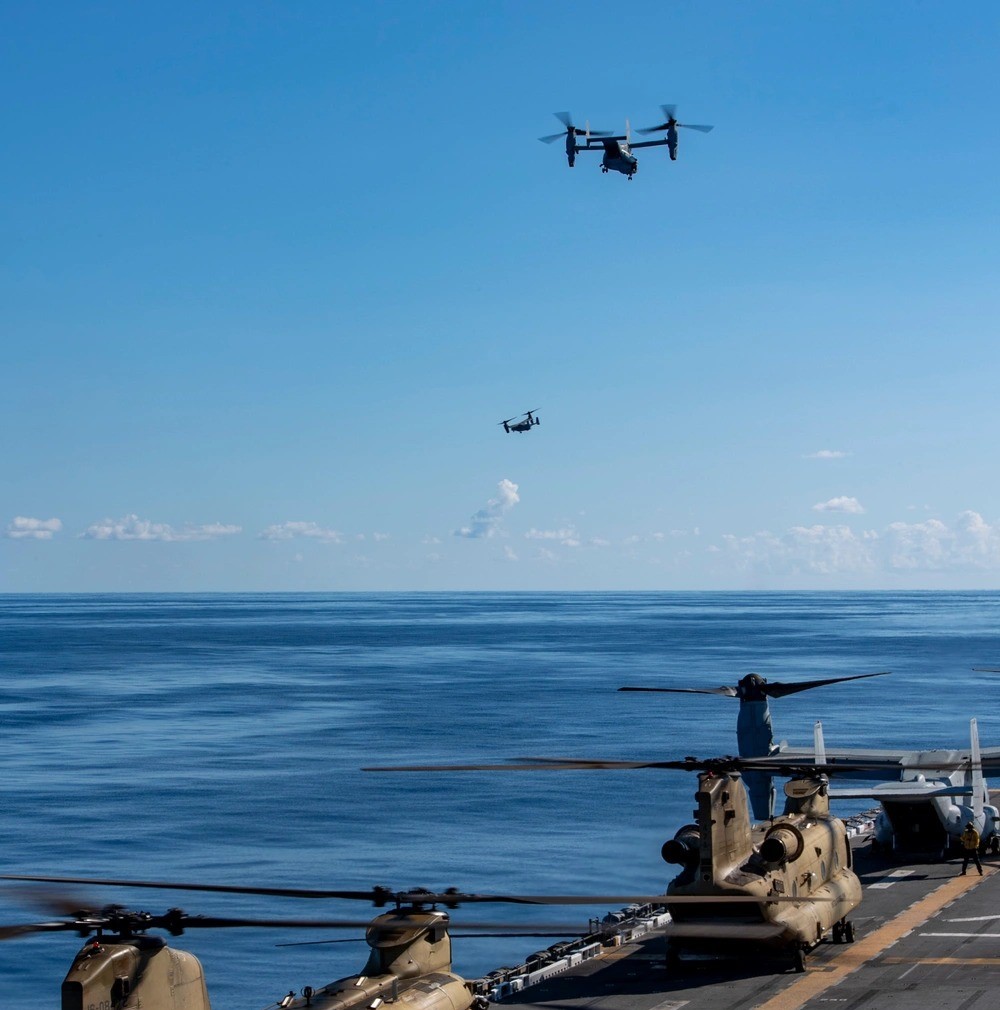
PACIFIC OCEAN (Sept. 7, 2025) Two U.S. Marine Corps MV-22B Osprey assigned to Medium Tiltrotor Squadron (VMM) 268 takeoff from the flight deck of the amphibious assault ship USS America (LHA 6) while conducting flight operations in the Pacific Ocean, Sept. 7. (U.S. Navy photo by MCSN Nicholas Douglass)
NORTH PACIFIC OCEAN — Amphibious assault ship USS America (LHA 6) concluded joint aviation training with the U.S. Army and U.S. Marine Corps, boosting interoperability and readiness in the Indo-Pacific region. On Sept. 7 and 11, 2025, off the coast of Pearl Harbor, America served as a floating airfield for rotary-wing aircraft from the Army’s 25th Combat Aviation Brigade (CAB) and Marine Corps’ Marine Medium Tiltrotor Squadron (VMM) 268.
“This joint training enhances interoperability amongst the Services and increases our capacity to project combat power from sea.” said Cmdr. Weideman, air officer, USS America. “By working together, we improve our collective readiness and ability to respond to any contingency.”
Over two days, Army and Marine Corps pilots and crew members flew CH-47F Chinook, AH-64 Apache, and MV-22B Osprey aircraft, executing more than 200 deck landings on USS America. The training boosted their overwater operational proficiency and earned them valuable deck landing qualifications critical for maritime environments.
“This training is extremely valuable for the 25th Infantry Division and the 25th CAB,” said Chief Warrant Officer 3 Michael James, senior standardization instructor pilot for 3-25 AVN Regiment. “It allows us to be proficient in deck landing operations which increases our lethality and operability with our Navy and Marine partners. Overall, it increases the U.S. Military’s combat power!”
The exercise involved three types of rotary-wing aircraft: Marine Corps MV-22B Ospreys from VMM-268, along with Army CH-47F Chinook helicopters from the 3rd Battalion, 25th Aviation Regiment, and Army AH-64 Apache helicopters from the 2nd Squadron, 6th Cavalry Regiment, both assigned to the 25th CAB. This diverse participation highlighted the commitment of all services to joint operations.
“My training goal for the 25th CAB was to increase our proficiency and build more competent air crews in an overwater environment,” said James. “Our crews need to be able to operate from ship to shore. During this training, we were able to learn more about LHA operations, their flight deck patterns and the ship’s capabilities.”
Companies within the Army’s 25th CAB maintain proficiency in shipboard operations to be prepared to fight under all conditions. The brigade conducts Deck Landing Operations several times per year depending on the Navy’s availability, in order to maintain a high level of aviation preparedness.
America is operating in the U.S. 3rd Fleet area of operations. An integral part of the U.S. Pacific Fleet, U.S. 3rd Fleet leads naval forces in the Indo-Pacific and provides the realistic, relevant training necessary to execute the U.S. Navy’s role across the full spectrum of military operations. U.S. 3rd Fleet works together with allies and partners to advance freedom of navigation and overflight, the rule of law and other principles that underpin security for the Indo-Pacific region.
For more USS America news visit: https://www.surfpac.navy.mil/lha6/ and https://www.dvidshub.net/unit/USSA
UNITAS 2025 Kicks off at Naval Station Mayport
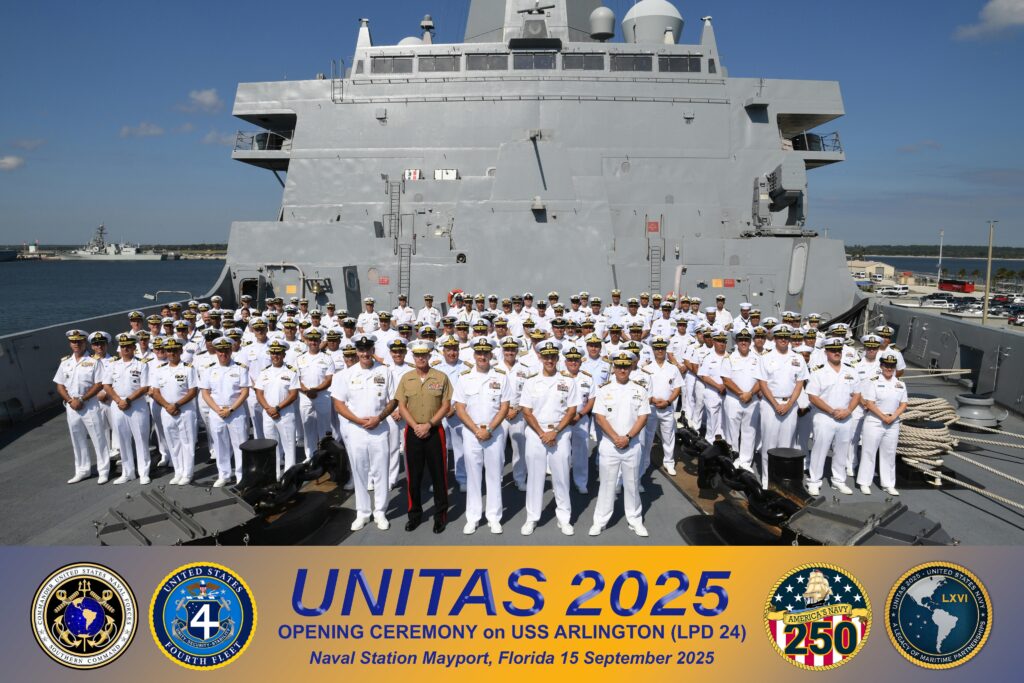
MAYPORT, Fla. (Sept. 15, 2025) Navy and Marine leaders celebrated the opening of UNITAS 2025 from onboard the San Antonio-class amphibious transport docking ship USS Arlington (LPD 24) at Naval Station Mayport September 15, 2025. (U.S. Navy photo illustration by MCSN Steven Khor)
NAVAL STATION MAYPORT, Fla. – UNITAS 2025 officially kicked off at an opening ceremony aboard Naval Station Mayport, Sept. 15. UNITAS, Latin for unity, united, or oneness, is the longest-running annual multinational maritime exercise in the world.
UNITAS is featuring approximately 8,000 personnel from 25 allied and partner nations, including multiple ships, submarines, and aircraft (fixed wing and rotary). Forces will conduct operations off the East Coast of the United States and ashore in the vicinity of Naval Station Mayport, Fla., Marine Corps Base Camp Lejeune, N.C., and Naval Station Norfolk, Va. through October 6.
Participating nations include Argentina, Belize, Brazil, Canada, Chile, Colombia, Dominican Republic, Ecuador, El Salvador, France, Germany, Greece, Guatemala, Honduras, Italy, Jamaica, Japan, Mexico, Morocco, Netherlands, Panama, Paraguay, Peru, Spain, and the United States.
“It is a distinct honor to stand before you today as we commence UNITAS 2025, the 66th iteration of the world’s longest-running multinational maritime exercise, which is a testament to enduring partnerships,” said Rear Adm. Carlos Sardiello, Commander, U.S. Naval Forces Southern Command/4th Fleet. “We have a rich history that began with the 1959 Inter-American Naval Conference in Panama, and we continue to grow each year. This year’s theme, ‘UNITAS Legacy of Maritime Partnerships’ celebrates the enduring strength of alliances and the upcoming 250th anniversary of the U.S. Navy.”
UNITAS is a comprehensive multinational exercise that aims at strengthening interoperability, enhancing operational readiness, and fostering enduring partnerships among the participating nations. Through a blend of advanced warfare training, cultural exchange, and historical commemoration, the goal for the exercise is to collaboratively demonstrate the commitment to maritime security, crisis response, and the shared values that unite all participating forces in the defense of freedom and global stability.
Following the UNITAS 2025 Opening Ceremony, the in-port phase of the exercise features subject matter expert exchanges, professional symposiums, ship rider exchanges, and operations meetings. During this time, Marines and Sailors will conduct training events in Mayport to include medical, cyber defense, and diving and salvage operations.
During the UNITAS 2025 Underway Phase, forces will participate in events testing all warfare operations, to include live-fire exercises such as a SINKEX, an amphibious ship-to-shore landing and force withdrawal in Camp Lejeune, North Carolina.
“Our combined efforts as a maritime sea service are critical to ensuring free and open seas,” explained Sardiello. “UNITAS is an extraordinary opportunity for us to unite, operate, enhance proficiency, and improve interoperability of participating forces to respond to common threats.”
Following the successful completion of UNITAS 2025, senior leaders from participating countries will join in a series of high-profile events along the East Coast, celebrating a historic milestone: the United States Navy 250th birthday. This commemoration honors a legacy of protecting American interests, deterring aggression, and promoting prosperity and security, while also showcasing the Navy’s enduring commitment to defending the American way of life.
UNITAS 2025 is just one of the major events in support of the U.S. Navy’s 250th birthday in 2025. UNITAS and other major leadership events will lead into 2026, the United States’ 250th birthday. In 2026, the Navy will again commemorate its contribution to the nation’s defense as part of a whole-of-government 250 celebration planned by the U.S. Semi quincentennial Commission. Navy-related events will include port calls and community outreach events in major U.S. cities.
U.S. Naval Forces Southern Command/U.S. 4th Fleet is the trusted maritime partner for Caribbean, Central and South America maritime forces leading to improved unity, security and stability.
USMC, CDAIO and DIU Partner for Acceleration of Palantir System
From Communications Directorate, Headquarters, U.S. Marine Corps, Sept. 10, 2025
WASHINGTON, D.C. — The U.S. Marine Corps, in partnership with Defense Innovation Unit (DIU), the DoD Chief Digital and Artificial Intelligence Officer (CDAO) and Army Research Lab, finalized a contract with Palantir Technologies Inc. for an enterprise Marine Corps license for Maven Smart System (MSS), a foundational, data-centric command and control (C2) platform. This contract provides all Marines – from tactical units within the Fleet Marine Force (FMF) to the Supporting Establishment – with access to the MSS platform, complete with embedded advanced AI capabilities and functionality across the spectrum of warfighting functions.
This partnership, finalized on August 15, 2025, is a key enabler for the Marine Corps’ ongoing modernization efforts, designed to deter conflict and, if deterrence fails, to defeat any adversary.
“As part of Force Design, we’ve made a deliberate effort to support maritime domain awareness and joint fires integration,” said Gen. Eric M. Smith, the Commandant of the Marine Corps. “This capability enhances intelligence, targeting, and battlespace awareness to aid in faster decision-making, allowing us to sense and make sense more quickly.”
MSS is a mission command application (MCA) and data integration platform that aggregates data across Service and Joint C2 technology stacks to share a live, synchronized view of the battlespace. MSS provides warfighters and decision-makers with real-time understanding in support of the overall Combined Joint All Domain Command and Control (CJADC2) mission. This enables rapid sensor-to-shooter engagements through a fully digital workflow, leveraging automation and AI-driven tools for advanced target management.
Notably, the Marine Corps contracted this C2 platform Service solution within five months of receiving a request from the FMF, through collaborative efforts with the CDAO and DIU. This contract accelerates the Marine Corps’ scaling and adoption of critical CJADC2 capabilities, ensuring the nation’s expeditionary force remains relevant and ready in an era of software-defined warfare. The Marine Corps will continue to use this system in their Exercise Lifecycle – for example, the I Marine Expeditionary Force (I MEF), based out of Camp Pendleton, California, most recently leveraged the system at Exercise BALIKATAN 25 and during their re-certification as a Joint Task Force Headquarters.
“The Marine Corps is at the forefront of adopting technologies that make our Marines more agile, adaptable, and responsive to any threat,” said Lt. Gen. Jerry Carter, the Deputy Commandant for Information. “Maven Smart System adds significant value to our ability to support the Joint Force and shows how the Marine Corps is demonstrating its ability to adapt to, harness, and drive the changing character of war. We continue to look for opportunities to leverage AI and other emerging capabilities at speed and scale.”
FMF units will have expanded access to MSS licensing down to the tactical level within each Major Subordinate Command (MSC) to ensure Marines have the tools to fight and win. Supporting Establishment elements will use licensing to support training, integration testing, and reach-back support.
Marines Test Drone Systems During Defense Innovation Unit Challenge
Sept. 10, 2025 | By Marine Corps 2nd Lt. Logan Tompkins
Marines assigned to I Marine Expeditionary Force partnered with the Defense Innovation Unit and industry leaders during phase two of the DIU’s Project GI challenge to evaluate commercial small unmanned aerial systems in realistic operational environments, Aug. 18-29.
The 12-day event brought together Marines assigned to 1st Marine Division — including operators, leaders and subject matter experts — to test vendor-loaned systems across multiple ranges. The training period included four days of Marine-led familiarization, followed by six days of scenario-based demonstrations. Assessments will directly inform War Department procurement decisions and accelerate the integration of resilient, cost-effective small UASs into the joint force.
“The GI challenge puts our Marines at the center of capability development. Their expertise, combined with the innovation of our industry partners, is shaping the next generation of unmanned systems,” said Marine Brig. Gen. Michael Nakonieczny, deputy commanding general of I Marine Expeditionary Force. “I MEF is proud to play a leading role in advancing technologies that directly enhance the lethality and survivability of our Marines.”
Marines evaluated systems against operational criteria, including setup, deployment time, weatherproofing, payload capacity and performance across varying terrain and climates. Evaluations emphasized how each system affected tactics, techniques and procedures during realistic combat scenarios.
“Robotics are revolutionizing the battlefield, and it’s no secret that first-person-view drones have become one of the most lethal and disruptive weapons worldwide,” said Marine Maj. Steven Atkinson, I Marine Expeditionary Force DIU event lead planner. “Our mission is to ensure America’s warfighters get the very best, battle-tested technology so they can be effective anywhere in the world.”
The challenge represents the second phase of a three-part competitive selection process. Phase one involved an initial screening in which the DIU reviewed vendor proposals and chose the most promising systems for further testing. Phase two brought those selected vendors to Marine Corps Base Camp Pendleton, California, for hands-on evaluation by the I Marine Expeditionary Force. A final phase three round will determine which systems advance to procurement, with winning platforms expected to be added to DOW’s “Blue UAS Cleared List” — drones compliant with current law and policy, validated as cybersecure and available for DOW purchase and operation — by March 15, 2026.
“Bottom-up refinement is something the Marine Corps has always valued. The ability for dedicated to test, stress and provide input on these products is exactly what was needed for this project and the service,” said Marine 2nd Lt. Kienan Morrissey, an intelligence officer assigned to 3rd Light Armored Reconnaissance Battalion who participated in the evaluation of the vendor-loaned small UAS platforms.
Marines stress-tested the systems in contested environment simulations, focusing on modern kill chain operations and first-person view effects capabilities. Vendors were required to provide at least three prototypes for testing, though some platforms received exemptions due to design characteristics or employment concepts.
Following evaluations, Marines conducted detailed debriefs to capture feedback that will guide procurement and influence future small UAS capability development across DOW. Units within I Marine Expeditionary Force will continue working with selected systems beyond the challenge to provide additional recommendations for improvement.
The DIU’s Project GI challenge represents one of the Marine Corps’ largest field-based industry engagements, focusing on emerging drone technology and directly supporting modernization priorities identified by Marine Corps and Pentagon leaders for operations against peer adversaries.
“Events like these ensure our Marines will have the best available tools at their disposal in the next conflict,” Morrissey said.
HII Unveils AI-Enabled ROMULUS Family of USVs Powered by Odyssey to Strengthen the Fleet
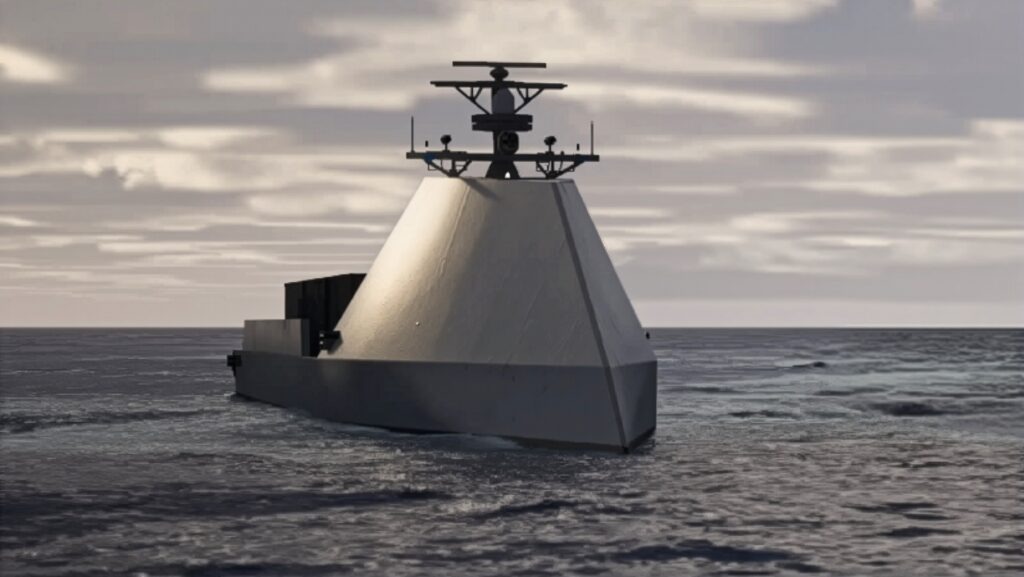
NEWPORT NEWS, Va., Sept. 09, 2025 (GLOBE NEWSWIRE) — HII (NYSE: HII), America’s largest military shipbuilder and a global leader in autonomous maritime systems, today introduced ROMULUS, a modular, AI-enabled family of unmanned surface vessels (USVs) powered by HII’s Odyssey Autonomous Control System (ACS) software suite.
ROMULUS 190, the flagship of the ROMULUS family, is currently under construction. Built on a commercial-standard hull, it is engineered for rapid, repeatable production and immediate mission readiness. Designed for speeds exceeding 25 knots, the 190-foot vessel is capable of a minimum range of 2,500 nautical miles (nmi) carrying 4 x 40 foot ISO intermodal containers on the payload deck. ROMULUS 190 is being developed in partnership with Breaux Brothers, Beier Integrated Systems, and Incat Crowther.
ROMULUS is designed to meet the current and emerging requirements of the U.S. Navy, U.S. Marine Corps, joint forces, and allies. It delivers high-endurance, sustained open-ocean autonomy with a focus on lethality, cost efficiency, and scalability.
“The future fight demands speed, agility, and resilience, all embedded in the Odyssey-powered ROMULUS family,” said Chris Kastner, HII president and CEO. “By matching world-class shipbuilding with decades of unmanned systems expertise, we are delivering a mission-ready, swarm USV capability built for the next generation of operations.”
Odyssey: Proven, Open, and Evolving Odyssey ACS software suite has demonstrated performance on more than 35 USV platforms with over 6,000 operational hours in U.S. Navy, U.S. Marine Corps, U.S. Coast Guard, and international allied programs. Odyssey’s intuitive interface and enhanced, customizable features generate the required mission behaviors for greater lethality and survivability with simplified control of unmanned swarms across domains, making it a force multiplier for the modern fleet.
The software suite’s open-access, government-aligned architecture enables rapid integration of new sensors, payloads, and third-party autonomy technologies. It allows industry, government, and academia to test and refine capabilities, ensuring ROMULUS evolves in step with emerging naval concepts of operations.
ROMULUS integrates technologies from Shield AI, Applied Intuition, and C3 AI with HII’s Odyssey for enhanced autonomy, object classification, and lifecycle sustainment.
Multi-Mission, Multi-Domain Flexibility ROMULUS’s reconfigurable design supports teaming across surface, subsurface, and air domains for missions including counter-unmanned air systems (C-UAS), intelligence, surveillance and reconnaissance (ISR), strike operations, and the launch and recover of unmanned undersea vehicles (UUV) and unmanned aerial vehicles (UAV).
Enhanced-Domain Advantage with HII’s REMUS UUV Paired with HII’s proven REMUS UUVs, ROMULUS significantly extends undersea reach, closing anti-submarine warfare sensing gaps and keeping manned platforms at a safer standoff distance. REMUS’s decades-long track record in mine counter-measures (MCM) missions accelerates clearance operations and reduces fleet risk. Together, ROMULUS and REMUS deliver a scalable dual-domain solution across surface and subsurface missions.
Reinforcing HII’s Leadership With ROMULUS, HII reinforces its position as the global leader in durable, autonomous unmanned systems. Developed with support from HII’s Dark Sea Labs Advanced Technology Group, ROMULUS takes its place alongside the proven REMUS UUV line, of which more than 700 have been delivered to over 30 nations and more than 90% are still operational after more than two decades. Together, ROMULUS and REMUS, powered by HII’s Odyssey autonomy, form a dual-domain family of unmanned platforms that expands operational reach, maximizes mission flexibility, and ensures dependable performance across the full maritime spectrum.
Key ROMULUS Capabilities:
Modular, Open Architecture: Built on open standards, including Unmanned Maritime Autonomy Architecture (UMAA), Robot Operating System (ROS), and Data Distribution Service (DDS), Odyssey ensures compatibility with U.S. Navy autonomy requirements and control stations now and into the future. Odyssey’s modular architecture also allows for rapid reconfiguration and integration with modular payloads, new sensors and systems.
Multi-Agent Autonomy: Odyssey enables control of either individual assets or swarms, a key capability for enabling the future fight. Odyssey’s mission library delivers high-level autonomy with ease in executing rapid single-agent tasks or complex, multi-agent scenarios in coordination with crewed and unmanned platforms. Secure data management enables instant analytics or detailed post-mission review, while its modular design supports seamless integration of customer or third-party sensors, payloads, algorithms, and interfaces.
Intelligent Operations: Autonomous health monitoring, sensor fusion, and perception deliver intuitive mission planning, real-time situational awareness, and diagnostics. Navigation is compliant with the International Regulations for Preventing Collisions at Sea (COLREGS), ensuring operational reliability in all conditions.
Fleet Integration: Designed to align with future fleet Concepts of Operations (CONOPS), supporting unmanned and optionally manned missions and integrated operations with aircraft carrier strike groups and surface action groups.