Northrop Grumman to Rapidly Develop Marine Corps CCA with Kratos’ Valkyrie UAS 
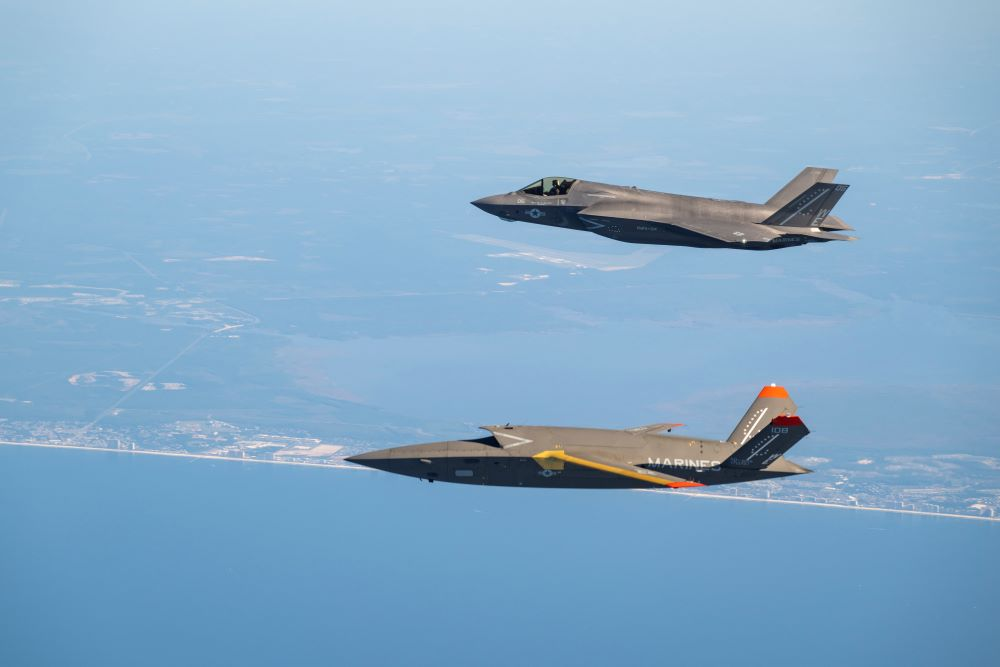
This agile solution integrates Northrop Grumman’s proven mission systems with Kratos’ mature Valkyrie. (Photo Credit: U.S. Marine Corps)

From Northrop Grumman, Jan. 8, 2026 

BALTIMORE – Jan. 8, 2026 – Northrop Grumman (NYSE: NOC) was competitively awarded the U.S. Marine Corps’ Marine Air-Ground Task Force Uncrewed Expeditionary Tactical Aircraft (MUX TACAIR) Collaborative Combat Aircraft (CCA). This award combines Northrop Grumman’s uncrewed capabilities and autonomous leadership with Kratos’ Valkyrie uncrewed aerial system to work alongside crewed fighters to provide air dominance in high-threat environments. 

Northrop Grumman will develop and rapidly deliver platforms that include: 

  • Advanced Mission Kit: Northrop Grumman’s cost-effective mission kit is inclusive of sensors and software-defined technologies designed specifically for uncrewed aircraft. The mission kit’s flexible technology can perform various kinetic and non-kinetic effects, making the platform a combat-ready asset. 

  • Open Architecture Autonomy Software: Northrop Grumman’s open architecture autonomy software package – known as Prism – will manage the aircraft’s operations autonomously. 

  • Valkyrie Uncrewed Aerial System from Kratos Defense and Security Solutions: Fully equipped for a variety of missions that will include conventional takeoff and landing capabilities, enhanced runway flexibility with a modular airframe and payload bays for customizable effects. 

Experts: 

Krys Moen, vice president, advanced mission capabilities, Northrop Grumman: “Northrop Grumman remains at the forefront of advanced sensing capabilities, delivering innovative solutions that meet the needs of the warfighter with unmatched speed and reliability. This enhanced capability set ensures optimal performance for both crewed and uncrewed platforms.” 

Steve Fendley, president Kratos Unmanned Systems Division: “The integration of the Kratos Valkyrie aircraft system configured with the world’s best multifunction mission systems from Northrop Grumman results in a high-capability CCA at a price point that enables the uncrewed systems to be deployed in mass with crewed aircraft.” 

Details: 

Northrop Grumman has packaged its sensors and other mission capabilities into a smaller envelope, resulting in a more cost-effective solution that is compatible with an uncrewed platform. Combining existing product lines and proven capabilities, Northrop Grumman, Kratos, and commercial partners developed a missionized CCA that includes survivability, connectivity, lethality and supportability elements. With more than 20 successful flight demonstrations in operationally relevant environments, Northrop Grumman and Kratos are offering the U.S. Marine Corps a low risk, expedited path to MUX TACAIR mission capability and persistent joint crewed and uncrewed expeditionary operations. 


Marine Corps Launches New Drone Training Program 

By Marine Corps Staff Sgt. Claudia Nix, U.S. Marine Corps Training and Education Command, Dec. 31, 2025 | 

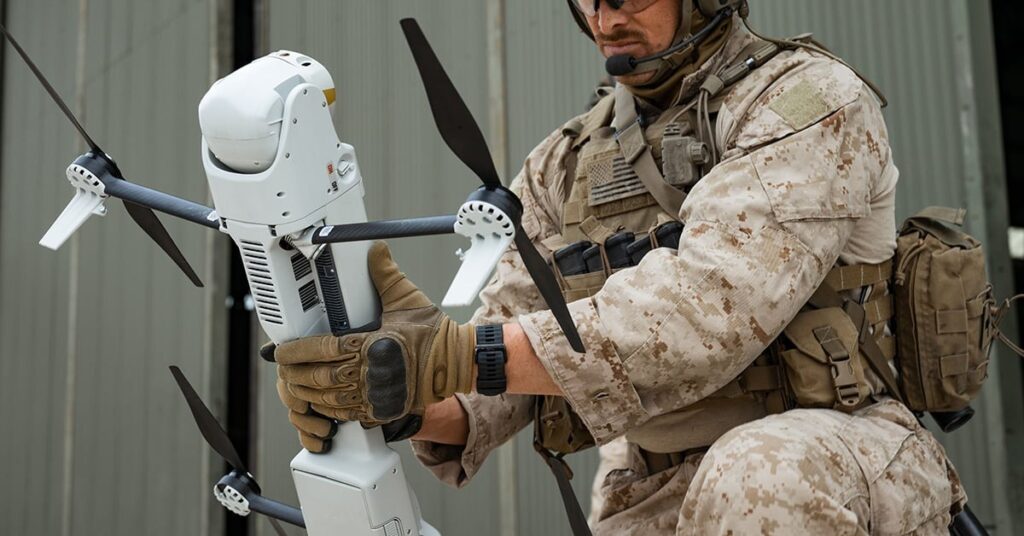
The Marine Corps has launched a training program to rapidly increase the number of small unmanned aircraft system operators for commercial off-the-shelf attack drones.  

The program, announced in Marine Corps administrative message 624/25, addresses a critical need for standardized training as the service integrates new systems, including the Neros Archer first-person-view attack drone and prepares for this significant investment in various drone technologies.   

This initiative builds on the service’s success over the past few months scaling FPV attack drones across the Fleet Marine Force. It also aligns directly with War Department plans to field tens of thousands, and then hundreds of thousands, of attack drones across service components starting in March 2026 and continuing over the next several years.  

The new framework, created by Training and Education Command, establishes six pilot courses and eight certifications to create a standard for drone operators across the force. These initiatives are designed to provide foundational skills for a variety of small unmanned aircraft systems.  

“We are fielding these courses as pilot programs to move quickly while maintaining our commitment to quality training and safety,” said Marine Corps Lt. Gen. Benjamin T. Watson, commanding general, Training and Education Command. “This allows us to validate all aspects of the training, from prerequisites and instructional methods to resourcing needs and certification standards, ensuring that we refine and perfect the curriculum before it becomes part of our long-term training framework.”  

Six approved pilot courses will certify Marines while testing instructional methods and curriculum. These courses include training for drone operators, payload specialists and instructors, with specific prerequisites such as simulator experience on Training and Education Command-approved systems. The courses aim to ensure proper integration and supervision of new drone capabilities. The Training and Education Command has also established a process to grant certifications to Marines who have existing qualifications and experience through an exception to policy.  

Seven organizations are designated as regional training hubs with the authority to immediately begin conducting the pilot courses, including schools within Training and Education Command, 1st Marine Division, 2nd Marine Division, III Marine Expeditionary Force, and Marine Forces Special Operations Command.  

Weapons Training Battalion at Marine Corps Base Quantico, Virginia, will serve as the interim central hub, responsible for standardizing training, certification and safety across the force. It will consolidate lessons learned and function as the Marine Corps’ focal point for adapting training to emerging platforms, payloads and evolving operational requirements.  

This effort to scale standardized FPV attack drone training was shaped by lessons from recent certifications, including two Marine Corps attack drone competitions, one in the National Capitol Region and the other in Okinawa, Japan. These efforts certified 19 attack drone operators, five attack drone instructors, seven payload specialists, and two payload specialist instructors.  

In mid-November, the Marine Corps Attack Drone Team also supported the certification of 22nd Marine Expeditionary Unit Marines, resulting in 14 attack drone operators and 11 payload specialists fully trained, equipped and ready for contingency operations.  

Over the next few months, the Marine Corps Attack Drone Team, alongside Weapons Training Battalion and regional hubs, will certify hundreds more Marines. By May 2026, all infantry, reconnaissance battalions and littoral combat teams across the Corps will be equipped to employ FPV attack drone capabilities.  


Northrop Grumman Enhances USMC Amphibious Combat Vehicles with Bushmaster Chain Guns

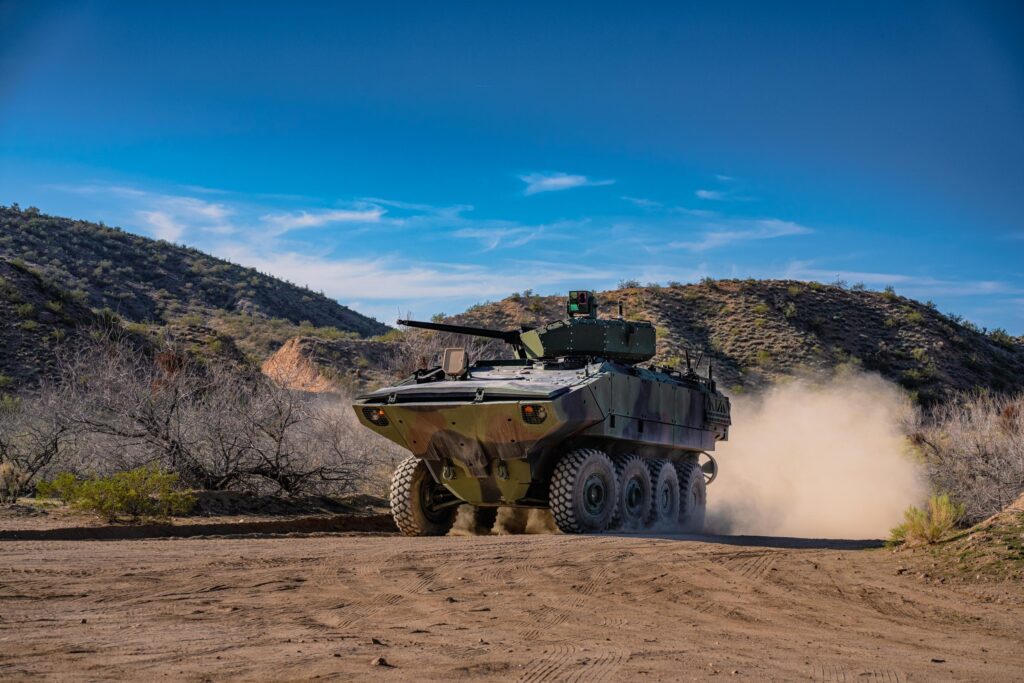
The Mk44S was recently showcased during a live-fire event at the Bushmaster Users Conference, demonstrating the weapon’s seamless integration with the ACV. (Photo Credit: Northrop Grumman) 

Release from Northrop Grumman

MESA, Ariz. – Dec. 16, 2025 – Northrop Grumman Corporation (NYSE: NOC) has entered full-rate production to deliver Mk44 Stretch Bushmaster® Chain Guns® for the U.S. Marine Corps’ new Amphibious Combat Vehicles (ACVs). The Mk44S will be integrated into the Kongsberg remote turret used on the Amphibious Combat Vehicle 30mm program (ACV-30), significantly improving firepower for the Marines. 

  • The Mk44S offers enhanced range, reliability and overmatch as well as the ability to fire all NATO-standard 30x173mm cartridges, including Northrop Grumman’s suite of advanced ammunition. 

  • The Mk44S includes the option to upgrade from 30mm to 40mm by simply changing the barrel and a few key parts, allowing for future flexibility.  

  • Production is underway at Northrop Grumman’s Mesa, Arizona, facility. 

Experts: 

Dave Fine, vice president, armament systems, Northrop Grumman: “The Mk44 Bushmaster Chain Gun delivers unmatched firepower and reliability in even the most unforgiving conditions. By integrating this proven capability into the Amphibious Combat Vehicle program, we’re equipping Marines with the tools they need to dominate the battlefield and stay ahead of evolving threats.” 

Details on the Mk44S Bushmaster Chain Gun: 

The Mk44S is a medium-caliber weapon designed to fire 30x173mm ammunition and can be upgraded to fire 40mm rounds. It offers unmatched flexibility and reliability and is ideal for use with Northrop Grumman’s advanced programmable munitions.  


Marines Unveil First Full-Rate Production of Marine Air Defense Integrated System

By Adolphina Vander VeldeProgram Executive Officer Land Systems

TWENTYNINE PALMS, Calif. — In September, the Marine Corps unveiled the first full-rate production version of the Marine Air Defense Integrated System (MADIS), marking a major milestone in expeditionary air defense and rapid capability delivery. Following weeks of intensive new equipment training and a live-fire exercise at the Marine Corps Air Ground Combat Center, Marines are now equipped with a significantly upgraded system designed to counter the evolving threat of unmanned aerial systems and low-altitude air attacks. 
 
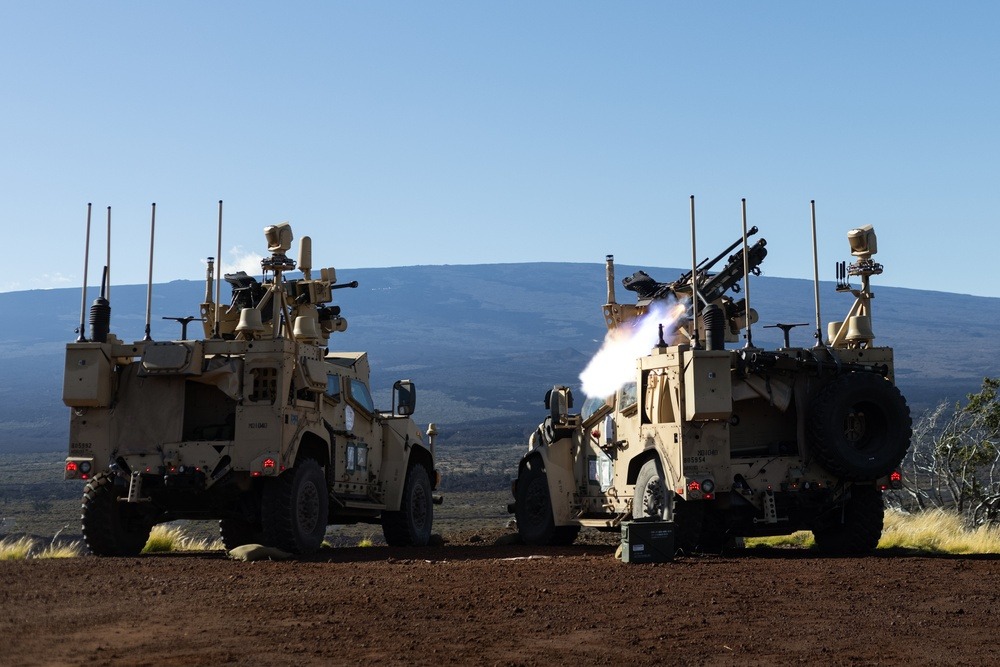
The MADIS relies on a complementary pair of Joint Light Tactical Vehicles that form a maneuverable Ground Based Air Defense (GBAD) weapon system. It is designed to defeat UAS and manned aircraft while on the move or at the halt, providing an organic, expeditionary, and fully integrated Short-Range Air Defense capability. This fielding represents a deliberate and accelerated approach to capability delivery—one that prioritizes readiness, responsiveness and relevance to the modern battlefield. 
 
The MADIS has undergone substantial upgrades since its prototype phase. The full-rate production variant integrates advanced sensors, improved targeting algorithms, and enhanced mobility features that allow Marines to detect, track, and neutralize aerial threats faster and more effectively than ever before. 
 
The system’s modular design allows for future upgrades, ensuring MADIS remains adaptable as the threat evolves. Its integration with expeditionary platforms means it can be deployed rapidly, providing organic air defense to maneuver units without relying on external support. 
“Having supported the GBAD community for the last 22 years, from the schoolhouse to the program office, it’s clear that MADIS brings a critical new capability to the warfighter,” said Master Sgt. Brandon Meadors. “Marines have always said, ‘Anytime, anyplace,’ and this system helps us get there. It provides a state-of-the-art, mobile defense that directly supports our forces in the field.” 
 
During their time at the Marine Corps Air Ground Combat Center, Marines participated in classroom instruction and field exercises designed to familiarize themselves with the MADIS’s architecture, capabilities, and tactical employment. The NET phase emphasized hands-on learning, with Marines engaging directly with the system’s radar, electro-optical/infrared sensor, and weapon platforms. 
 
The training culminated in a full-day, live-fire event, where Marines executed simulated engagements against aerial targets. The exercise validated the system’s performance and demonstrated the readiness of its operators. 
 
“I would tell other Marines training on this system to be open and be creative,” said 1st Lt. Michael Rushane. “This is the future of the Marine Corps and the future of GBAD as a whole. The ideas you come up with for how to employ this system, whether you’re a PFC or a General, will pay dividends in the success of this system moving forward,” Rushane added. 
 
With the successful completion of the NET and live-fire validation, the Marine Corps has taken a critical step in modernizing its air defense capabilities. This training represents a deliberate and accelerated approach to capability delivery—one that prioritizes readiness, responsiveness, and relevance. 


Teledyne FLIR Defense Awarded $42.5M Contract for U.S. Marine Corps Drones

Release From Teledyne FLIR Defense

Will deliver more than 600 Rogue 1™ reusable loitering munition systems that enable small units to directly engage enemy targets beyond line of sight 

Highly accurate loitering munition features mission-specific payload options, boosting warfighter efficiency and effectiveness 

BOSTON ― December 5, 2025 ― Teledyne FLIR Defense, part of Teledyne Technologies Incorporated (NYSE:TDY), announced that it has been awarded a $42.5 million contract by the U.S. Marine Corps Systems Command for Delivery Order 3 of its Organic Precision Fires-Light (OPF-L) program. 

Teledyne FLIR Defense will deliver more than 600 of its advanced Rogue 1™ lethal loitering munition systems, along with ground control stations and training kits, for fielding to Marine Corps units starting this summer. 

Organic Precision Fires-Light is a program designed to provide rifle squads and platoons with a man-packable “organic, loitering, precision strike capability to engage the enemy beyond the line of sight.” 

Teledyne FLIR’s Rogue 1 has proven highly successful in multiple exercises against moving and stationary armor, soft-skinned vehicles, and dismounted targets.  Operators can attach modular, mission-specific payloads with lethal effects designed for distinct target types.  An advanced fuzing system on Rogue 1 allows the aircraft to be safely returned to the operator and reused when targets are disengaged or missions aborted, which lightens the pack load for Marines while increasing their tactical effectiveness. 

Rogue 1 also features advanced electro-optical and FLIR Boson® 640+ thermal cameras to deliver day/night long-range reconnaissance and surveillance.  Plus, a novel coupling between sensors and warhead in the gimballed payload enables extremely precise targeting. 

“The accuracy and modularity of the Rogue 1 platform will enhance Marine lethality against whatever threats they may encounter in future conflicts,” said Dr. JihFen Lei, president of Teledyne FLIR Defense.  “We’re honored to support the OPF-L program and will continue to work with the Marine Corps to quickly field technology innovations they need to win on the battlefield.” 

“While Teledyne provides a broad range of unmanned air, ground, and subsea systems, this award represents our first production rate contract in the loitering munition market, following the initial test and evaluation contract in 2024,” said George Bobb, president and chief executive officer of Teledyne Technologies. 

Visit us online to learn more about the wide range of FLIR Defense loitering munitions, unmanned aerial systems and advanced payload options. 


AN/TPS-80 G/ATOR Software Upgrade Boosts Air Surveillance Range and Fire Control Precision

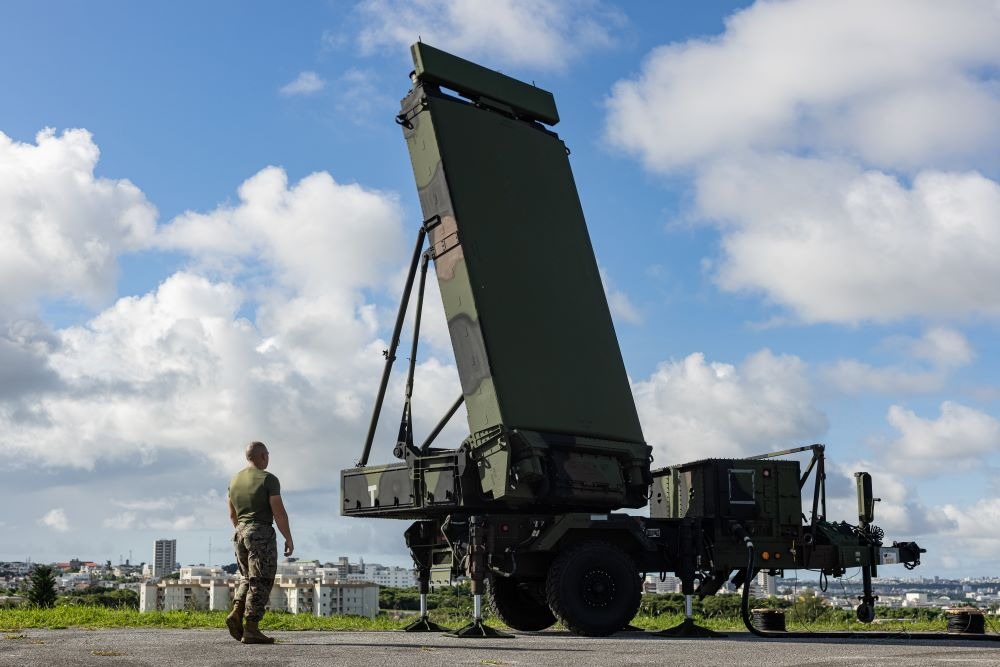
USMC Lance Cpl. Tanner Angiletta readies a G/ATOR during a joint fire support rehearsal training in August. (Photo Credit: USMC Cpl. Evelyn Doherty) 

BALTIMORE, Md. – Dec. 9, 2025 – A software update to Northrop Grumman Corporation’s (NYSE: NOC) AN/TPS-80 Ground/Air Task-Oriented Radar (G/ATOR) has enabled new, extended range capabilities, allowing the U.S. Marine Corps (USMC) and U.S. Air Force (USAF) to detect threats at greater distances and respond more swiftly. 

In addition to a new extended range mode, this update refines G/ATOR’s identification friend or foe system and enhances interoperability. These improvements enable the radar to better categorize detected threats and share intelligence with friendly assets through an open architecture command and control connection. All currently deployed G/ATOR systems received this update. 

“G/ATOR’s extended range and improved identification systems provide U.S. and allied forces with a crucial tactical advantage,” said Bob Gough, vice president, maritime and land systems and sensors, Northrop Grumman. “Our radar system is designed to perform in the most complex air defense environments – detecting, tracking and targeting threats in real time.” 

G/ATOR is a highly mobile, long range active electronically scanned array (AESA) radar system that operates in the S-band frequency range. G/ATOR provides precise fire control and real-time 360-degree, four-dimensional tracking of a wide range of airborne threats, including cruise missiles, hypersonic missiles, crewed aircraft and uncrewed aerial systems. 

Currently, thirty-nine G/ATOR radars have been delivered to the USMC and USAF, with the 40th delivery anticipated later this year. The radar incorporates Northrop Grumman’s U.S.-manufactured microelectronics to support advanced multifunction and multi-mission capability. 

Northrop Grumman is a leading global aerospace and defense technology company. Our pioneering solutions equip our customers with the capabilities they need to connect and protect the world, and push the boundaries of human exploration across the universe. Driven by a shared purpose to solve our customers’ toughest problems, our employees define possible every day.  


Flank Speed Wireless Supports POTUS, Sailors, Sea Power Demonstration

Release From Lindsey A Phillips, PEO Digital Public Affairs

Flank Speed Wireless, born as a Sailor quality-of-life upgrade, proved its strategic power when it quietly enabled secure, seamless communications for the President and First Lady during the Navy’s 250th Birthday celebration at sea. 

When the President and First Lady of the United States stepped aboard USS George H. W. Bush (CVN 77) to celebrate the Navy’s 250th Birthday during a high-profile Sea Power Demonstration, much of the world was watching. Behind the scenes, ensuring seamless and secure communications for the Commander-in-Chief and his team was a quiet but powerful capability: Flank Speed Wireless (FSW), formerly known as Sailor Edge Afloat and Ashore (SEA2), a capability led and delivered by Program Executive Office for Digital and Enterprise Services (PEO Digital). 

Originally developed to provide Sailors with reliable wireless connectivity at sea, FSW proved to be more than a quality-of-life initiative, it became a mission-critical enabler. During the President’s visit and subsequent speech aboard USS Harry S. Truman (CVN 75), FSW allowed the White House Communications Agency (WHCA) to integrate with shipboard technologies to maintain secure communications for the President, First Lady, White House Military Office, U.S. Secret Service, and senior Department of Defense leadership. 

“This event proved that our investments in Sailor-focused digital infrastructure are also strategic assets,” Navy Enterprise Networks (NEN) Deputy Director, Capt. Frederick Crawford said. “Flank Speed Wireless was designed to serve Sailors, and it’s now proving itself mission-critical in high-stakes national operations.” 

From MWR to Mission Enabler 

FSW began as SEA2, an afloat connectivity initiative launched by PEO Digital as part of the “Get Real, Get Better” campaign. The aim: improve Sailor quality of life, especially during extended deployments, by providing secure, reliable internet access in shipboard environments. 

This capability directly addressed persistent challenges related to Sailor isolation, morale, and mental health, and was shaped around the realities of life underway. 

“This started as a pilot effort between our afloat Sailors and the engineering community,” said Capt. Kevin White, now Program Manager for PMW 770. “As the Combat Systems Officer aboard the USS Abraham Lincoln, I worked closely with our engineers to design a wireless capability that could actually function in the complex environment of a carrier. We designed Flank Speed Wireless from the deckplates up, built by Sailors for Sailors. Together, we ensured not only the design, but also the security and authorization needed to scale it rapidly across the fleet. What began on a single carrier quickly became a Navy-wide capability through the World Class Alignment Metrics [WAM] initiative.” 
 
“We created Flank Speed Wireless to reduce barriers for Sailors trying to stay connected to family and support networks while deployed,” said FSW Architect, Damon Regan. “It’s a small capability with an outsized impact on mental resilience and readiness.” 
With installations now underway across the fleet, FSW’s infrastructure is not only improving quality of life, it is enabling fleet-wide operations at the highest level. 

Engineering the Presidential Visit 

Supporting the President’s embark required close collaboration across the fleet. PEO Digital, together with shipboard IT teams and mission partners, ensured that secure and resilient communications capabilities were in place throughout the event. 

In a dynamic and time-constrained environment, the Flank Speed Wireless team executed a series of critical readiness activities to confirm that all necessary systems were prepared and functioning ahead of the Presidential party’s arrival. 

“This kind of real-time responsiveness is only possible because of the groundwork we laid with Flank Speed Wireless,” said FSW Product Owner, Brad Terry. “We didn’t build this just to check a box, we built it to meet real-world mission demands, and that’s exactly what it did.”

A Blueprint for Fleet Modernization 

PEO Digital’s success with FSW reflects a broader approach to digital modernization, one that starts with Sailors, scales for operations, and adapts to strategic demand. 

“The Flank Speed Wireless story shows what happens when we focus on real user needs and deliver with urgency,” Program Executive Officer Louis Koplin said. “That’s what Get Real, Get Better is about, and it’s what digital modernization across the Navy must be.” 

Whether enabling a Sailor to video call home or supporting secure comms for the Commander-in-Chief, PEO Digital’s Flank Speed Wireless stands as a powerful example of what agile, user-centered delivery can achieve for the Navy. 

About PEO Digital 

The Program Executive Office for Digital and Enterprise Services (PEO Digital) delivers services throughout the Department of the Navy that improve performance, security, mobility, and customer experience. PEO Digital embraces business agility to ensure quality, accelerate innovation, continuously deliver value, and meet the dynamic needs of the warfighter. 

Our mission is to provide the Marine Corps and Navy with a decisive information advantage through a modern, innovative, and secure digital experience – any data, any time, anywhere. 
 
Our vision is to deliver a world-class digital experience at the speed of mission. 

Learn more at: 

www.peodigital.navy.mil 
https://www.linkedin.com/company/donpeodigital 
https://twitter.com/donpeodigital 


CH-53K King Stallion: 10 Years since First Flight

From Naval Air Systems Command

NAS PATUXENT RIVER, Md. — October 27, 2015 –The CH-53K King Stallion took to the skies for its first flight. Today, more than 10 years later, there are 20 CH-53Ks executing missions with four different Navy and Marine Corps squadrons. 

The CH-53K, which will deploy for the first time in fiscal year 2027, achieved Initial Operational Capability in April 2022 and entered full rate production the following November. The only heavy lift helicopter in the U.S. military, the King Stallion can lift 36,000 pounds; refuel mid-air; provide ship-to-shore mobility and maneuverability along with multiple other assault support missions. 

According to Col. Kate Fleeger, Program Manager, H-53 Heavy Lift Helicopters Program Office (PMA-261), the CH-53K will be used to ensure forces remain agile and supported, sustaining operations and maintaining a forward presence on the battlefield. 

“With its unique capability to lift all Marine Corps air-transportable equipment from ship-to-shore, the CH-53K will play a crucial role in rapidly and flexibly deploying forces and supplies, supporting Expeditionary Advanced Base Operations  and Distributed Air Operations  concepts, and ultimately enabling the Marine Corps to project power and sustain its presence with greater speed and agility,” she said.   

The Marine Corps plans to procure 200 CH-53Ks and the program office recently entered a five-year, multi-year contract with Sikorsky to purchase up to 99 more helicopters. 

“We will be equipping six active-duty squadrons, one reserve squadron, two test squadrons and a training squadron with the CH-53K as the Marine Corps transitions from the CH-53E Super Stallion,” said Fleeger. “The full changeover is expected to be completed in FY32.” 

PMA-261 manages the cradle to grave procurement, development, support, fielding and disposal of the entire family of H-53 heavy lift helicopters. 


Military Deploys Foreign Disaster Relief Support for Philippine Response to Successive Storms 

From 3d Marine Expeditionary Brigade, Nov. 13, 2025 

CLARK AIR BASE, Philippines — At the request of the government of the Philippines, the U.S. military is working shoulder to shoulder with the Armed Forces of the Philippines to provide foreign disaster relief to communities affected by consecutive Typhoons Kalmaegi (Tino) and Fung-Wong (Uwan), which caused extensive damage and tragic loss of life.  

The forward presence and ready posture of United States Indo-Pacific Command in the region facilitated a rapid and effective response to these natural disasters, demonstrating the U.S. commitment as friends, allies, and partners during times of need. 

Working in close coordination with the AFP, Philippine National Disaster Risk Reduction and Management Council, Philippine Office of Civil Defense, Joint U.S. Military Assistance Group, Task Force – Philippines, and U.S. Department of State, the U.S military deployed a variety of assets and personnel to the Philippines to support with foreign disaster relief operations.  

“I have been thoroughly impressed by the preparedness and forward-leaning measures taken by the Philippine government during this situation, and we will support the lead of our Philippine counterparts as we carry out this relief mission together as a fully-aligned team,” said U.S. Marine Corps Brig. Gen. Robert Brodie, the 3d Marine Expeditionary Brigade commanding general. “Support to our friends, allies, and partners, and their people in a time of need, is non-negotiable. Together, we are overcoming distance, weather, and logistical challenges to save lives.” 

Since Nov. 5, 2025, the U.S. military has coordinated mission planning with the Philippine government and military agencies to continue the work of providing vital supplies to regions impacted by the storm. This effort highlights the long-standing U.S.-Philippine Alliance and the shared commitment to regional resilience and humanitarian assistance. 


Department of the Navy Honors 250 Years of the U.S. Navy and Marine Corps on Veterans Day 

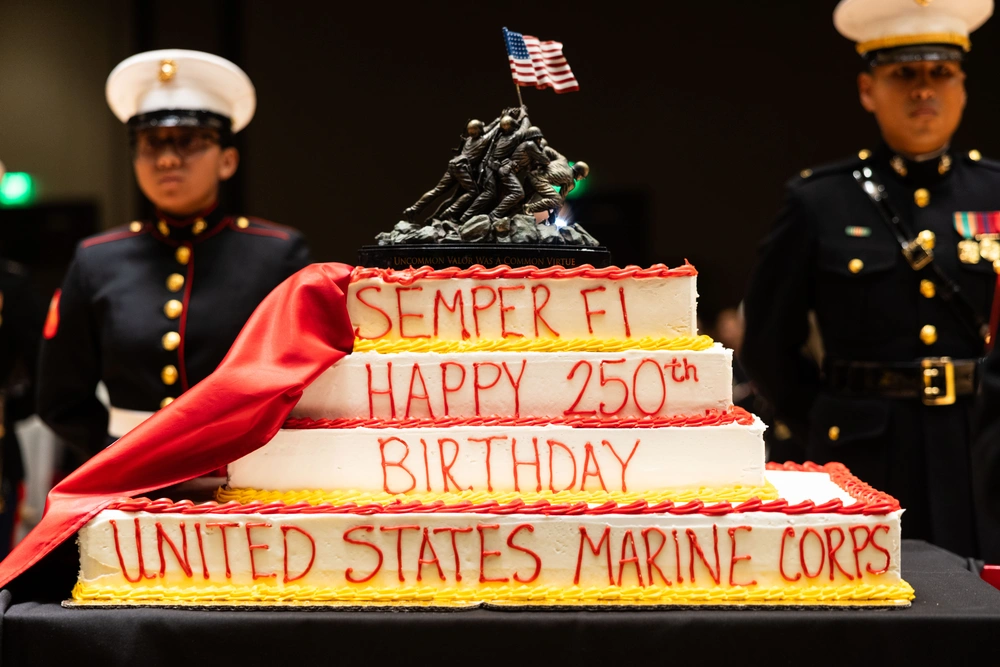
U.S. Marines with I Marine Expeditionary Force present the ceremonial birthday cake during I MEF’s 250th Marine Corps Birthday Ball at Harrah’s Resort Southern California in Valley Center, California, Nov. 1, 2025.  (U.S. Marine Corps photo by Lance Cpl. Nan Yang)

From Headquarters, U.S. Marine Corps, Nov. 5, 2025 

WASHINGTON, D.C. — This Veterans Day, the Department of the Navy commemorates 250 years of American seapower with “Above, Below, and Beyond,” a two-hour Presidential special airing Sunday, Nov. 9, 2025, on Fox Nation.  

A once-in-a-generation broadcast, the special takes viewers behind the scenes of the world’s preeminent maritime force; revealing never-before-seen footage, rare access, and first-hand accounts from Sailors, Marines, and the families who stand the watch with them. 

Using never-before-seen footage, viewers will see dynamic Navy and Marine Corps operations across air, land, sea, space, and cyber; a rare look at how our sea services deliver peace through strength.  

Filmed across the nation and around the globe, the special moves from the decks of aircraft carriers to the depths of submarine commands, offering an inside view of the operations that keep the Navy–Marine Corps team the most lethal and vital force in America’s arsenal so when the world looks to the sea, it sees our flag, and behind it a team that is disciplined, lethal, and dominant.  

It also spotlights the men and women of American industry: the shipyard workers, welders, pipefitters, electricians, engineers, and suppliers, whose craftsmanship turns steel into ships and keeps the Fleet at sea. 

Viewers will witness seapower at speed—carrier strike groups executing blue-water power projection, amphibious forces driving ship-to-shore operations in contested littorals, and elite naval aviators flying precision profiles inside the Navy’s TOPGUN training squadron.  

The two-hour special shows the world that the United States Navy – Marine Corps Team has been the enduring, forward deployed force that keeps danger far from our shores.  Across these two hours, the Navy–Marine Corps team will show why the United States commands the seas, secures global trade, and sets the course for the future. 

We show the world that ‘freedom isn’t free’ is not just a tagline.  

“In 1775, the Founders made a bet; that America’s future would be written at sea. For 250 years, Sailors and Marines have written freedom’s story from the front lines of history,” said John C. Phelan, Secretary of the Navy. “To be a superpower, you must be a seapower. In this tribute, we show the world and our adversaries that America’s Navy–Marine Corps team and their families is what makes America a superpower. This honors both those in uniform and the families who give them strength. The next century of American seapower won’t be defined by a single platform, but by the character of our people.”  

Featuring participation from the President, Vice President, Secretary of War, Secretary of the Navy alongside active-duty service members and veterans, “Above, Below, and Beyond” spans every domain of modern seapower. 

This special reminds the world that freedom is not free; it’s defended by the strength of America’s Navy and Marine Corps team. We safeguard something infinitely greater than our might. Their resolve keeps the future open and ensures the blessings our Founders promised: life, liberty, and the pursuit of happiness. 

Viewers will see carrier strike groups protecting vital sea lanes; Marines conducting expeditionary training alongside allies; and the shipbuilders, engineers, logisticians, and families whose quiet professionalism sustains the Fleet. It is a living portrait of American seapower: past, present, and the future we are building now. 

“For 250 years, America’s Navy and Marine Corps have stood the watch—bold, resilient, and always ready—protecting our Nation and defending the ideals of freedom across every domain,” said Adm. Daryl Caudle, Chief of Naval Operations. “This tribute honors not only our history, but the extraordinary Sailors and Marines who continue to shape our future with innovation, courage, and an unbreakable commitment to service.” 

“The Marine Corps’ 250th anniversary is a testament to our enduring legacy as the Nation’s expeditionary force, always ready to answer the Nation’s call,” said Gen. Eric Smith, Commandant of the Marine Corps. “As we celebrate this historic milestone, we honor our past and those who have gone before us. We reaffirm our commitment to our culture, one another, our Corps, and our Nation.” 

For more than two centuries, the Navy–Marine Corps team has ensured freedom of navigation, safeguarded global commerce, and provided the Nation unmatched capability to deter aggression and respond to crisis. With two-thirds of trade and 80% of goods moving by sea, the maritime security provided by our Navy- Marine Corps team is the backbone of prosperity and deterrence. 

Today, they continue to adapt—advancing shipbuilding, unmanned systems, hypersonics, AI, and cyber defense so America’s maritime dominance endures into the two hundred and fifty years and beyond.