How Marines are 3D Printing Lethality Behind Enemy Lines
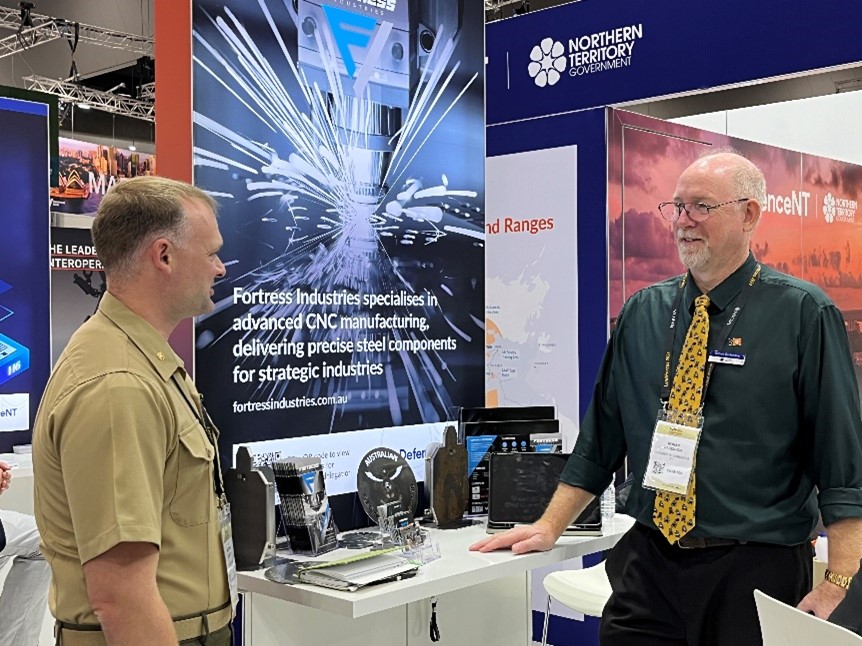
An AM Marine talks to a member of the Northern Territory Chamber of Commerce about local manufacturing capability at the Land Forces 2024 Symposium.

Logistics in a Contested Environment: A New Operational Reality

Although Washington’s military focus over the past three decades has centered on counterinsurgency operations in the Middle East, the 2018 National Defense Strategy (NDS) marked a critical shift, as revisionist powers reignited long-term strategic competition across regions and theaters of operation. Chief among them, China — America’s pacing threat — has moved with speed and intent, creating flashpoints in the Indo-Pacific, complicating U.S. posture in the Middle East, and reshaping the strategic calculus in Eastern Europe.

“The world is a dangerous place, as evidenced by Putin’s adventures in Ukraine, the war between Israel and Hamas, the aggressive behavior of China, and other threats from Iran and North Korea,” said Glenn Lamartin, an acquisition expert and adjunct professor at Georgetown’s McCourt School of Public Policy. “These actors share neither our values nor our interests, and their behavior contravenes them. Because of this, we have recognized that our acquisition architecture needs to be fast and agile to respond to — and be resilient in the face of — these challenges.”[i]

In this new era of great power competition, navigating logistics in a contested environment has become a critical challenge, with adversaries targeting supply chains to disrupt U.S. military capabilities. Ensuring rapid and resilient resupply is thus essential for combat effectiveness.

In response to this new reality, the Marine Corps — guided by Force Design’s vision for modernization — is undergoing significant transformation to enhance its agility and resilience, ensuring that it can effectively confront and neutralize these evolving threats across multiple domains and contested environments. By introducing additive and advanced manufacturing, or 3D printing capabilities, Marine Corps Systems Command (MCSC) is bolstering commands’ abilities to rapidly produce critical parts in the field, further strengthening operational flexibility and effectiveness in the First Island Chain today.

3D Printing Warfighter Lethality

Recognizing this new operational reality, MCSC’s Program Manager for Combat Support Systems (PM CSS) is actively integrating additive manufacturing capabilities to the warfighter’s toolkit in order to streamline supply chains and enable on-demand fabrication of critical capability components.

According to Terry Ritchie, product manager for Maintenance and Support Systems, “AM capabilities are revolutionizing the Marine Corps across the range of military operations by flattening the supply chain and enhancing the Marine Air Ground Task Force (MAGTF) ability to achieve truly distributed operations. As the Marine Corps conducts operations over greater distances, AM capabilities will enable expeditionary forces to shorten supply chains by streamlining the fabrication authorization and approval process.”[ii]

Such capabilities are especially critical in the context of Expeditionary Advanced Base Operations (EABO), where mobile, distributed forces must be highly self-reliant. PM CSS’s Tactical Fabrication (TACFAB) and Expeditionary Fabrication (XFAB) systems enable forward-deployed units to rapidly produce essential items like unmanned aerial system components and vehicle repair parts, supplementing traditional supply chains that may be vulnerable or overextended.

Building on these capabilities, the Corps envisions leveraging forward-deployed 3D printing even further. In advanced operational environments, acquisition experts see the potential to produce essential components on the spot. While metal parts might not be made behind enemy lines, they could be manufactured on ships, advanced naval bases, or EABs with logistics support missions. Ideally, pre-positioning ships would be equipped as floating production facilities, capable of fabricating critical parts for vehicles and radar systems. This approach ensures that essential items are available closer to the front lines, enhancing the resilience and survivability of our supply chain.

This vision is already being tested. During RIMPAC 2024, Marines and engineers from the Naval Post Graduate School’s Consortium for Advanced Manufacturing Research and Education (CAMRE) demonstrated the power of onboard 3D printing on the USS Somerset.[iii] Shortly after deploying a hybrid-metal printer, the team successfully printed a critical component for the ship’s reverse osmosis pump — vital for producing clean water — after the original part failed. This rapid response not only maintained the ship’s operational readiness but showcased the potential for Marines to use 3D printing to address urgent repair needs directly at sea. By operationalizing AM capabilities on ships alongside our Navy partners, the Navy-Marine Corps team is leading the charge in ensuring that essential repairs and parts production can happen closer to the front lines, enhancing the flexibility and resilience needed in contested environments.

Another example of 3D printing at sea occurred in April 2024, when the amphibious transport dock USS San Diego (LPD 22) tested a liquid metal jetting additive manufacturing process developed by the CAMRE team. Sailors aboard the ship were able to locally reverse engineer and fabricate low pressure air fittings, toggle pins, sound powered phone caps, and flush deck nozzle covers. Talk about Force Design experimentation at its best.[iv]

Yet in a contested Indo-Pacific, ships equipped with printers and feedstock materials alone can’t shoulder the entire burden. To truly fortify supply chains and meet the demands of an EABO environment, the Corps will need to leverage partner nation resources and industrial bases.

While the Advanced Manufacturing Systems team fields containerized machine shops and 3D printing shelters, there is a whole category of fabrication machines that are not easily made expeditionary. These machines are readily available in U.S. industries, producing repair parts for our equipment. In a peer-competitor conflict, where logistics will be contested from the continental U.S. and across every mile of the Pacific Ocean, it makes sense to identify and utilize similar machines within allied economies. CSS is already taking steps in this direction, actively collaborating with Australian partners out of Darwin in the Northern Territory — just one example of the team’s efforts to explore host nations’ potential to adopt commercial additive manufacturing as together we prepare to bring the fight tonight.

There are additive and subtractive machines commonly found in the U.S. industrial base that manufactures parts for the Department of Defense. Current supply chains rely on this industrial base for large-scale production, only to ship small quantities of parts across the globe to support Marines in the Indo-Pacific. As these globe-spanning supply lines become increasingly contested, the Marine Corps is focused on leveraging local host-nation industrial capabilities for on-demand production of repair parts to reconstitute equipment. This approach aligns with the EABO concept of “modern battlefield foraging” — but for repair parts. PM CSS is essentially building distributed and resilient nodes, with both military partners and commercial vendors, throughout the Indo-PACOM area of operations to lower distribution risks.

Advanced manufacturing starts with a digital file and ends with a physical part. While Marine Corps programs of record provide essential deployable fabrication capabilities, some machinery simply doesn’t lend itself to expeditionary use. By leveraging local industry, the goal is to enable Marines to use pre-positioned design files to produce parts locally. If a machine shop is making scooter parts, there’s no reason it can’t produce a bracket for military equipment — so long as the design is readily available and adaptable.

But combatant commanders won’t have to rely on faraway capabilities in the future fight. The XFAB, with its deployable workshops equipped for 3D printing and scanning provides Marines with the ability to fabricate repair parts and develop customized solutions directly in the field, with metal printing capabilities planned for FY26. These initiatives, alongside the introduction of the Advanced Integrated Mobile Machine Shop (AIMMS), aim to enhance and extend existing logistics capabilities, ensuring that Marines can overcome supply chain challenges, sustain operational readiness, and meet the demands of contested environments.

To fully capitalize on this capability, CSS is developing a globally accessible digital repository that ensures technical data packages for part fabrication are available across all logistics levels and can be easily shared with joint and allied partners. Known as the Digital Manufacturing Data Vault, this capability stores advanced manufacturing technical data packages, mitigating supply chain disruptions while addressing the challenges of intellectual property rights and OEM collaboration. By leveraging an agile acquisition pathway through a production Other Transaction Authority (OTA) contract, the team has been able to adapt commercial software tools to meet Marine Corps requirements.

“If you look systemically, what AM is bringing to the issue of logistics for a contested environment and the tyranny of distance in the Pacific — or any contested space — is a supplemental source of supply,” said Maj. Matthew Audette, Advanced Manufacturing Systems Team lead. “It’s not about replacing the existing supply system or original equipment manufacturer (OEMs); it’s about providing another sourcing option to fill gaps — whether due to long lead times, obsolescence, or material shortages — especially in the isolated environments where Stand-in Forces operate. We’ve often seen it as a kind of magic button where things just appear, but it’s time to recognize it as a crucial supplement to our supply chain.”[v]

In short, advanced manufacturing revolutionizes logistics by transforming how we sustain operations in the field. No longer bound by the limitations of traditional supply lines, Marines can now produce essential components like vehicle parts and medical tools directly in the combat zone. When something breaks, there’s no more waiting or scrambling for what we didn’t bring — it’s as simple as sending the request, and within hours, the needed part is being made and sent back to the frontline.

AM vs. our Adversaries: Lessons from Ukraine

Ukraine’s use of additive manufacturing on the battlefield offers a glimpse into how logistics designed for contested environments will shape future conflicts. Under immense pressure, Ukrainian forces have demonstrated how 3D printing can provide rapid solutions to logistical challenges, sustaining combat readiness in ways that traditional supply chains cannot. Their decentralized acquisition model — cutting through red tape to directly engage with industry — has allowed them to field cutting-edge technology with speed and flexibility. This is a playbook worth studying.

In an interview conducted by proxy for this story, an unnamed Ukrainian intelligence official in Kyiv detailed how additive manufacturing is being embraced by military and industry, rapidly reshaping the country’s defense capabilities. He explained that Ukraine is leveraging 3D printing technology across various sectors to produce critical components, enhance supply chain efficiency, and meet battlefield demands. Partnerships between private industry and the military have enabled adaptive logistics and innovative solutions to sustain combat readiness, despite the challenges of operating in a contested environment.[vi]

But American industry partners are also on the ground in Ukraine, proving their capabilities against our stated adversaries on the 21st century battlefield.

KVG, a mission support company based in Gettysburg, Pennsylvania, deployed industrial 3D printers to Ukraine in 2022. According to John Boyer, company CEO, the use of company capabilities and workshop have been instrumental in designing, printing, testing, and refining emerging modifications and prototypes that are now being employed on the frontlines of the conflict. KVG’s team, including former U.S. Marines embedded in Ukraine, emphasizes the importance of additive manufacturing in the adaptation, innovation, and overcoming of logistical challenges in real time, ensuring readiness for the future fight.[vii]

After all, as one unnamed Ukrainian warfighter noted for this story, “Every single first-person-view drone strike relies on at least one 3D-printed component.”[viii]

But here, Ukraine’s success lies widely in its decentralized acquisition structure which allows it to move quickly to equip the warfighter — cutting through red-tape to engage directly with industry to field bleeding-edge technology at near-market speed.

The Way Forward/ Challenges

Although AM is proving to be the way forward in contested logistics environments, the state of the American industrial base and our adversaries’ proven intent to disrupt supply lines demand that we move quickly to incorporate AM into the warfighter’s toolkit.

To fully harness the potential of additive manufacturing for the future fight, the Corps must address several critical challenges. The post-COVID defense industrial base remains stressed, limiting the Department of Defense’s ability to tap into a broader network of suppliers. This issue is further complicated by the lack of access to technical data packages from OEMs, who are often reluctant or unequipped to sell or share proprietary designs. Securing and managing intellectual property effectively would enable the Corps to independently produce essential parts, ensuring operational readiness even when traditional supply lines are compromised.

The Digital Manufacturing Data Vault +must evolve to identify certain print files as “licensed” from OEMs, track the number of successful prints, and secure those files post-production. This technical advancement will be critical to shifting the OEM paradigm — moving from recouping investment in the sustainment phase of a program to incentivizing the sharing of technical data through adequate compensation and licensing.

While technical data remains a challenge for the DoD acquisition community to resolve, AM practitioners, thought leaders, and logistics experts across the Corps are working to standardize training and ensure that education keeps pace with the rapid advancements in technology. Once established, a certification program would ensure commonality in training and create a tiered, journeymen system from basic printer operation to advanced metal fabrication. In line with Talent Management 2030, this effort will help develop and retain the next generation of logistics experts, ensuring Marines are not only proficient but also adaptable in the face of rapidly evolving operational challenges.

After all, “When Marines are properly trained in additive manufacturing (AM), they can deliver solutions that greatly enhance readiness while saving taxpayer dollars,” Audette noted.

While significant progress has been made in the integration of additive manufacturing (AM) across the Marine Corps, challenges remain in gaining broader acceptance. Greater efforts are needed to highlight the innovative work being done and showcase how AM can be a powerful tool to enhance operational readiness.

There are pockets of excellence throughout the Fleet where AM units are stepping up to meet readiness requirements. However, since ingenuity is ingrained in the Marine Corps culture and expected, many of these accomplishments don’t receive widespread attention. Units complete the mission and move on to the next task – because that’s what Marines do.

Ultimately, additive manufacturing is the way forward for the Marine Corps, working with all elements of the joint force and partner nation forces. This technology is revolutionizing how we approach logistics, especially in contested environments, by enabling rapid, on-site production and reducing reliance on vulnerable supply lines. As we prepare to face multiple adversaries across diverse theaters, the Marine Corps is at the forefront of this critical innovation.

As the United States prepares to face our adversaries in the future fight, advanced manufacturing is more than just a capability — it’s an operational necessity ahead of tomorrow’s contested fight. Tomorrow’s battlefields won’t allow for the timelines of traditional supply chains or dependence on distant industrial bases; our adversaries are poised to exploit these vulnerabilities, and they’ve demonstrated their effectiveness in real life and simulated scenarios.[ix][x] with 3D printing as a critical logistics enabler, the Marine Corps ensures that the Joint Force — and our international partners — will have the flexibility and resilience to sustain operations wherever needed.


[i] Glen Lamartin, conversation with Johannes Schmidt, 25 October 2023.

[ii] Terry Ritchie, conversation with Johannes Schmidt, 6 June 2024.

[iii] Mass Communication Specialist 2nd Class Christian Corley, “3D Printer Solves Engineering Challenges Onboard USS Somerset,” Navy.mil, November 9, 2023

[iv] Lt. Cmdr. Chelsea Irish, “3D Printing Creates New Possibilities Onboard USS San Diego,” SurfPac, October 23, 2023

[v] Maj. Matt Audette, conversation with Johannes Schmidt, 18 November 2024.

[vi] Ukrainian intelligence official, interview by proxy, 3 December 2024.

[vii] John Boyer, email conversation with Johannes Schmidt, 21 December 2024.

[viii] Ukrainian warfighter, quote provided by KVG, 22 December 2024.

[ix] Brendan Cole, “Russia Threatens Ukraine’s Donetsk Supply Route with New Offensive,” Newsweek, October 9, 2023.

[x] Mark F. Cancian, Matthew Cancian, and Eric Heginbotham, The First Battle of the Next War: Wargaming a Chinese Invasion of Taiwan (Washington, DC: Center for Strategic and International Studies, 2023)
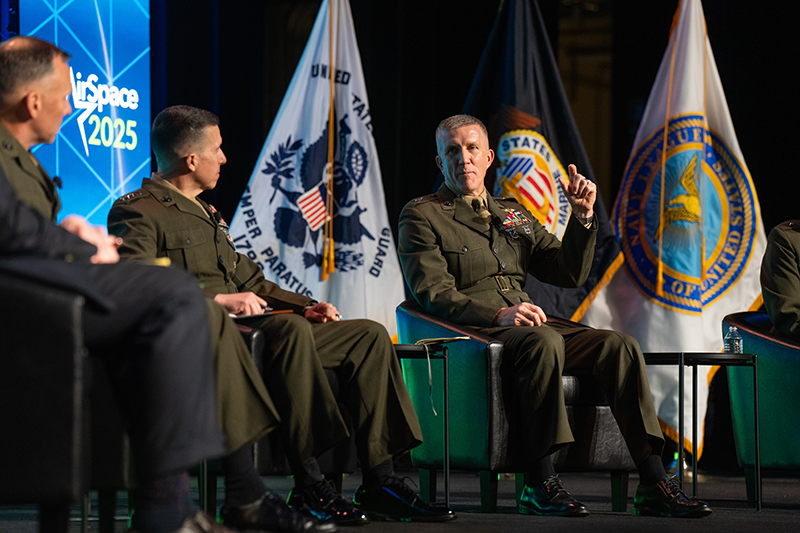


Sea-Air-Space: Looking Ahead to a Modern Marine Corps

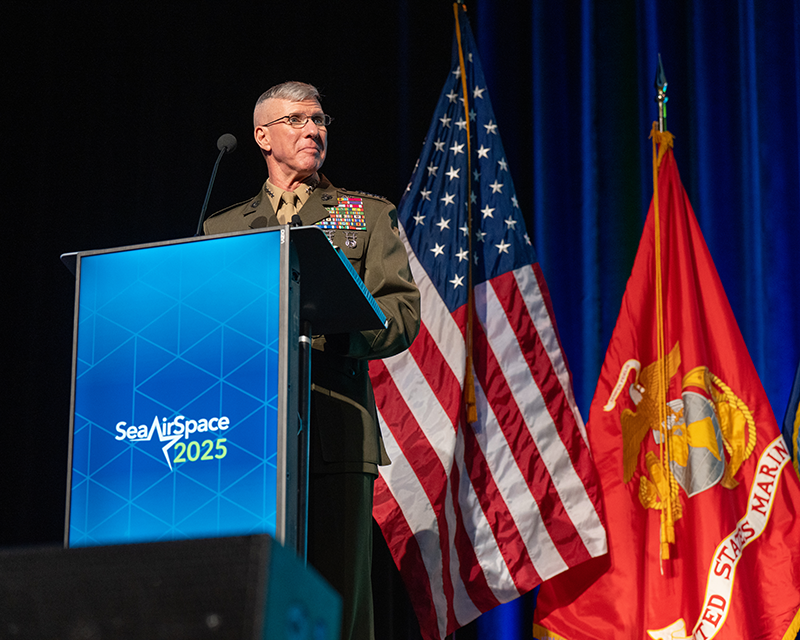
Major General Jason Woodworth makes a point during the panel on modernizing the Marine Corps. Photo credit: Dan Goodrich

Six years into its modernization initiative, the Marine Corps has a head start on some of its sister services. But there’s still more to be done, said panelists during the April 8 session “Modernizing the Marine Corps: Building an Agile, Lethal and Resilient Force.”

“It’s exciting and we need to go faster,” summed up Lieutenant General Eric Austin, deputy commandant for combat development and integration and commanding general of the Marine Corps Combat Development Command.

Austin emphasized the Marine campaign of learning and its influence on force design. “How we responsibly modernize the Marine Corps is how we execute force design,” he said.

Lieutenant General Benjamin Watson, commanding general, Training and Education Command, said the Corps has traditionally relied on brick-and-mortar training solutions, “but that’s not the world we’re in these days.”

He cited initiatives like Project Triumph’s emphasis on leveraging technology to be more efficient and effective, and Project Tripoli’s emphasis on a live, virtual and constructive training environment.

“We’re increasingly fielding more complicated and sophisticated systems that are tougher and more costly to train on. I think if you look at what we’re seeing in contemporary conflict, it’s not much of a stretch to say we will never fight again with what’s traditionally known as air superiority,” Watson said, citing the need for unmanned systems integration, data and artificial intelligence.

“It’s exciting, and we need to go faster,” said Lieutenant General Eric Austin. Photo credit: Dan Goodrich

“One of our mantras is the idea that any Marine using a precision weapon can kill someone who needs killing at 500 meters. But now that’s up to 15, 20 kilometers and beyond” through the use of technology like first-person view drones, he said.

Major General Jason Woodworth, commander, Marine Corps Installations Command, and assistant deputy commandant, Installations and Logistics, discussed the importance of Barracks 2030, noting that modernizing aging structures is one of the commandant’s top priorities.

“It’s where warrior and family readiness starts. If Marines are good at home, they’re better at work,” he said.

Brigadier General Robert Brodie, director, Expeditionary Warfare OPNAV N95, said he’s seeing good collaboration between the Marine Corps and industry on modernization initiatives. He said in terms of shipbuilding, the most successful companies have great relationships with other industry partners as well. 

Brodie and the other panelists said to further facilitate Marine-industry partnerships, members of the Corps need to do a better job of defining exactly what they’re looking for from industry — including opportunities for industry to help them understand a problem, define the problem and shape solutions.  


Sea-Air-Space: USMC is Ready to be Tip of the Spear, but Needs Steady Funding, Smith Says

Commandant of the Marine Corps Eric Smith was the luncheon keynote speaker on April 7 at
Sea-Air-Space. Photo credit: Dan Goodrich

The U.S. Marine Corps is expanding its expeditionary capability and investing heavily in neglected resources to improve its warfighting prowess and the lives and effectiveness of Marines, but unpredictable funding from Congress is making that difficult, the service’s leader said April. 7.

U.S. Marine Corps Commandant General Eric Smith was the luncheon keynote speaker at Sea-Air-Space and described the tools and constructs the service is using to project forces.

“I’ll begin with what makes the Navy and Marine Corps team the premier expeditionary fighting force on the planet,” he said. And that is the ARG/MEU, the Amphibious Ready Group/Marine Expeditionary Unit. An Amphibious Ready Group with an embarked Marine Expeditionary Unit is the coin of the realm,” he said. “It’s the Swiss Army Knife of the DoD inventory.”

His top priority, he said, is restoring a “3.0 MEU presence worldwide.” That means one ARG/MEU off the East Coast, handling the Mediterranean and the coast of Africa, one off the West Coast, handling the Indo-Pacific, and the “episodic deployment” of a MEU out of Okinawa, Japan. Three such ARG/MEUs is the minimum, he said, while the demand signal is for 5.5.

MEUs include light infantry, artillery, light armored reconnaissance, combat aviation, combat service support, medical support and command and control, and “operate as one. They blend themselves into a chainmail fist,” he said.

The Amphib Fleet

One challenge for the Marines is reconstituting its amphibious ship fleet, which he said the USMC allowed to atrophy as it turned its attention to combat in Iraq in recent years.

“We didn’t look back at our amphibs,” he said. They weren’t maintained because they hadn’t been used in a decade, but “without those ships, Marines can’t get to the fight.”

The Corps has also been investing in equipment such as the AN/TPS-80 Ground/Air Task-Oriented Radar, or G/ATOR radar, and the Navy/Marine Corps Expeditionary Ship Interdiction System (NMESIS), a remotely operated missile battery, as well as MADIS, the Marine Air Defense Integrated System, which provides the service’s first organic air defense system.

“We used to be armed with a Stinger [missile], and that is not enough to get it done against the PRC,” he said, referencing China.

Barracks Spending

The USMC is also moving to address longstanding issues with its infrastructure, namely rebuilding crumbling barracks as part of Barracks 2030, which Smith described as a “heavy lift” that will cost $5 billion over the five-year defense program.

It’s difficult to plan such long-term efforts — 11 barracks renovations were started last year with another dozen planned this year — without steady funding. Members of Congress are supportive of these and other efforts, Smith said, but the reliance on continuing resolutions instead of passing new funding bills causes problems.

“I’ll stay out of politics,” he said. “But I will say we need predictable, on-time funding that only Congress can provide. Meaning, continuing resolutions aren’t continuing anything, they stop our progress.”


Marines, Air Force Fight as Joint Force for First Time in Navy’s Joint Simulation Environment

From Naval Air Warfare Center Aircraft Division, Apr. 1, 2025 

NAS PATUXENT RIVER, Md. — For the first time, U.S. Marine Corps F-35 and Air Force F-22 pilots trained as a joint fighting force in the Naval Air Warfare Center Aircraft Division‘s (NAWCAD) Joint Simulation Environment (JSE) at Naval Air Station Patuxent River, March 24-27. 

The training event brought eight U.S. Marine Corps F-35s to train alongside four Air Force F-22 Raptors in the DOD’s most advanced digital test and training range. 

“This milestone is a game-changer that ushers in a new era of interoperability for aviation’s combat community and served as a pivotal exercise getting NAWCAD ready to make this joint training standard for Navy and Air Force fighters starting this spring,” said NAWCAD Commander Rear Adm. John Dougherty IV. 

During the event, F-35B and F-35C pilots from Marine Fighter Attack Squadrons (VMFA) VMFA-122, VMFA-225, and VMFA-311 trained with several F-22 pilots from the Combat Air Forces and test community. Over two days, F-35 and F-22 pilots practiced fifth generation fighting together in 17 simulated combat missions against advanced enemy threats only available at JSE. After each mission, the pilots reviewed their performance using cockpit video and audio recordings. 

“The cross talk [while training in the JSE] is unparalleled in terms of being able to talk tactics [and] actually get in the same room with people,” said F-22 pilot Capt. Brett Myer. “It helps iron out a lot of the small details that really matter when it comes down to it.”   

Real world training on open-air ranges at this scale is expensive, difficult to coordinate, and lacks a realistic threat environment. The JSE solves this problem by providing defense aviation a secure simulated range that puts pilots in threat environments not replicable in real life. 

“At the end of the day, it’s going to be the people that win our nation’s wars,” said VMFA-225 pilot Maj. Patrick Hoffer. “Having those person-to-person connections between the Air Force, the Navy and the Marine Corps [in the JSE] is the most important part and biggest objective that we’re able to achieve.” 

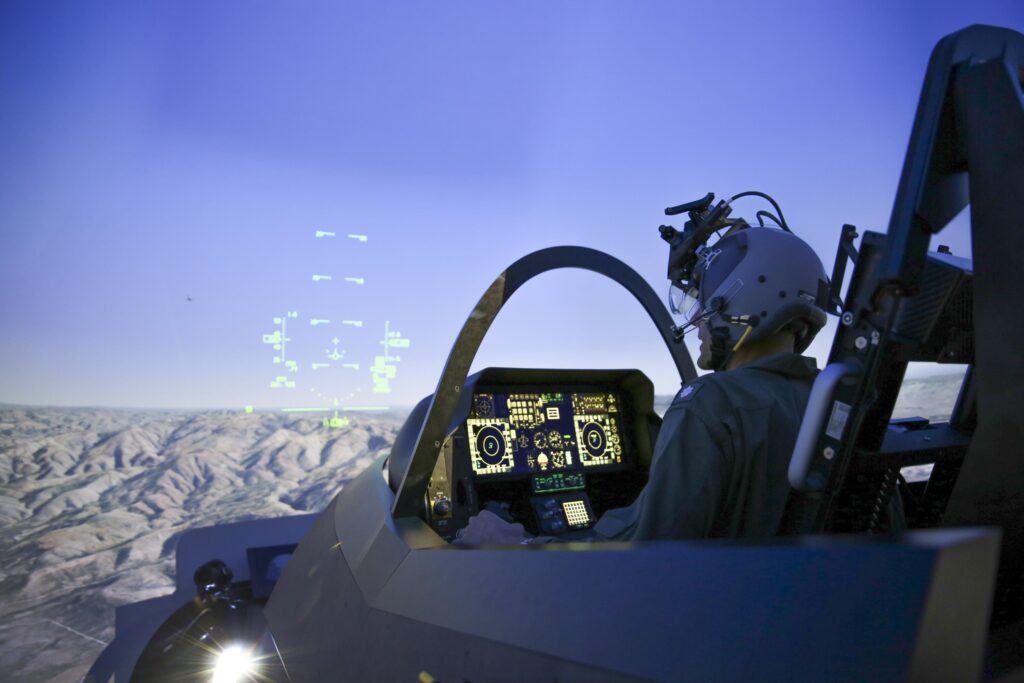
Developed by NAWCAD engineers and industry partners, the JSE is a digital training and test facility that features realistic domed simulators with actual defense hardware, software, and adversary aircraft. The immersive environment enables pilots flying F-35 and F-22 to practice complex combat scenarios and receive instant feedback, accelerating the learning process and honing their skills. Tactical groups training in the JSE fly more sorties in one week than they fly over a year on open-air ranges. 

NAWCAD’s JSE is formally integrated into the Navy’s Strike Fighter Tactics Instructor Program —commonly known as TOPGUN — and efforts are underway to incorporate JSE training across additional warfighter programs. 

NAWCAD will expand JSE’s capabilities with the addition of a highly realistic E-2D Advanced Hawkeye this year, and the F/A-18 Super Hornet and EA-18G Growler next year. 

NAWCAD’s military, civilian, and contract personnel operate test ranges, laboratories, and aircraft in support of test, evaluation, research, development, and sustainment for all Navy and Marine Corps aviation platforms. Based in Patuxent River, Maryland, NAWCAD also has major sites in St. Inigoes, Maryland; Lakehurst, New Jersey; and Orlando, Florida. 


SECNAV Phelan to Keynote 2025 Sea-Air-Space Breakfast

Newly confirmed Secretary of the Navy John C. Phelan will deliver a keynote address at Sea-Air-Space 2025 on Wednesday, April 9, at 7:30 a.m., marking one of his first public appearances since taking office.

Phelan, who was confirmed by the U.S. Senate on March 24 to serve as the 79th Secretary of the Navy, is expected to outline his top priorities for the Department of the Navy during the largest maritime exposition in the United States. His remarks will provide insight into his vision for strengthening the Navy and Marine Corps at a time of increasing global competition and threats.

Among the topics Phelan is expected to address are revitalizing U.S. shipbuilding, reinforcing a warfighting-focused culture, and improving recruitment to bring in the next generation of naval leaders. He has also previously said he plans to push for greater investment in uncrewed systems and enabling technologies, including autonomy, mission systems, and advanced communications capabilities. 

Phelan’s keynote is expected to be one of the most anticipated sessions of the conference. Attendees will have a rare early opportunity to hear directly from the new SECNAV as he outlines his priorities for the Navy and Marine Corps. The April 9 Sea-Air-Space Breakfast is a ticketed event and requires an additional fee to attend. Tickets purchased in advance are available for $105, with onsite tickets priced at $115.

To register, please click here


Secretary of Defense Emphasizes Lethality, Deterrence on Guam

From Lt. Cmdr. Michelle Tucker, March 28, 2025 

ANDERSEN AIR FORCE BASE, Guam — Secretary of Defense Pete Hegseth arrived on Guam March 27 to meet with military and civilian leaders and speak with troops – his first visit to Guam since his January confirmation.

The visit was the second stop on Hegseth’s Pacific engagement tour, which began in Hawaii and will continue from Guam to the Philippines and Japan. Hegseth focused on strengthening alliances and bolstering warrior ethos among service members, further strengthening the United States’ deterrence posture in the region. 
 
More than 600 service members from military commands across Guam gathered for a troop call at Andersen Air Force Base to kick off the visit. Hegseth praised them for their mission contributions, noting Guam’s strategic location in the Indo-Pacific region, and charged them to increase lethality and readiness. 
 
“What unites us is who we are and our purpose as Americans,” Hegseth said. “We are in the business of warfighting. You are warfighters on behalf of our nation and we are [going to] make sure you have a military built and prepared for that fight … American leadership ensures the free world is protected – to advance American interests and the interests of our allies.” 
 
The visit fell one day after the 80th anniversary of end of the Battle of Iwo Jima that occurred just 750 miles north northwest of Guam. During the troop call, Hegseth recognized a group of seven Iwo Jima veterans who traveled to Guam to attend commemoration events. He thanked them for their courage and fortitude, and for paving the way for Americans in the Pacific. 
 
Commander, Joint Region Marianas Navy Rear Adm. Brent DeVore greeted Hegseth upon arrival along with other senior military leaders on island. 
 
“The Secretary’s visit underscored the Department of Defense’s commitment to the security of Guam and the Commonwealth of the Northern Mariana Islands, as well as the entire Micronesia region’s strategic importance to the Pacific,” DeVore said. “We highlighted our efforts and contributions to strategic deterrence, demonstrating U.S. strength and daily preparedness – and tangible examples of ongoing work in cyber security, missile defense, our construction projects throughout Guam, CNMI, and the COFA states, and infrastructure resilience.” 
 
“We all emphasized the interconnectedness between the Department of Defense efforts and our local communities, in all we do,” he added. 
 
During a military roundtable, Hegseth received briefs from installation commanders and key leaders throughout the region detailing capabilities and future growth on Guam. Commander, 36th Wing, Andersen Air Force Base Air Force Brig. Gen. Thomas Palenske stressed to Hegseth the importance of the work the team is doing on Guam. 
 
“Andersen Air Force Base is incredibly vital to the mission in the Indo-Pacific,” Palenske said. “Our strategic location and the exceptional readiness of our personnel reinforce our commitment to deterrence and combat readiness in the region. The capabilities showcased and discussed during this visit not only empower our forces but also strengthen our alliances and ensure we stand ready to respond to any challenge.” 
 
The “Island Knights” of Helicopter Sea Combat Squadron (HSC) 25 flew Hegseth in an MH-60S Sea Hawk helicopter for an aerial tour of the island. During the tour, Naval Facilities Engineering Command Marianas Commanding Officer Navy Capt. Troy Brown briefed Hegseth on current and future construction and resiliency improvements on Guam including the Glass Breakwater, which was damaged during Typhoon Mawar. The breakwater is critical to harbor protection and the supply chain for the entire island. 
 
Finally, Guam Gov. Lou Leon Guerrero, Commonwealth of the Northern Mariana Islands (CNMI) Gov. Arnold Palacios, and Guam Rep. James Moylan met with Hegseth to discuss military-civilian partnership from a local perspective. 
 
“Our goal is achieve peace through strength,” Hegseth said. “By putting America first, that means working with partners and allies throughout the region, reestablishing deterrence and building capabilities right here. These islands are the tip of America’s spear in the Pacific. 
 
“I want to be very clear to everyone in this room,” Hegseth continued. “… Any attack against these islands is an attack against the U.S. We recognize that, we understand that, and we are committed to that.” 


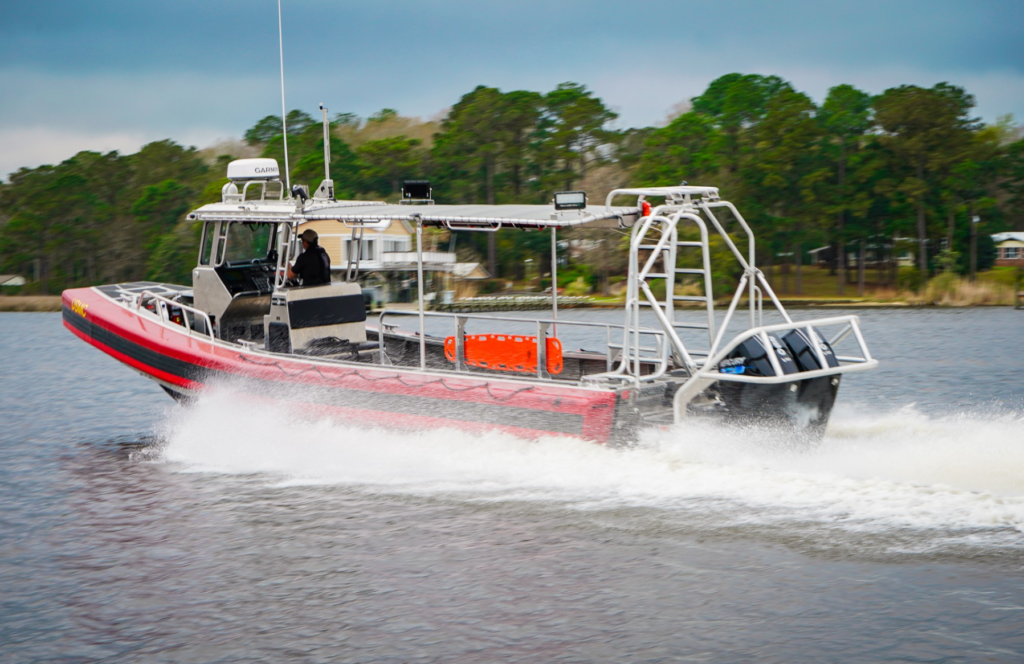
Silver Ships Delivers 25th Assault Amphibian Safety Boat to U.S. Marine Corps

From Silver Ships, March 24, 2025 

MOBILE, Ala. (March 24, 2025) – Silver Ships, a leading manufacturer of military aluminum workboats, has completed, tested and delivered a new Assault Amphibian Safety Boat (AASB) for the U.S. Marine Corps and the U.S. Navy. Silver Ships has now delivered 25 of 31 AASB on time since production has been in place. A noteworthy achievement of this project is that the first hull was built and tested less than nine months after the initial contract was awarded.   

The AASB is used for the U.S. Marine Corps amphibious training with Amphibious Assault Vehicles (AAV) and the follow-on Amphibious Combat Vehicles (ACVs) in the continental United States and overseas. The vessels can carry 28 passengers and have tailored communications, safety and rescue equipment to support offshore and nighttime operations. 

AASBs feature a 2-foot draft which allows the vessel to navigate through shallow waters quietly. The vessel’s full load weight is 16,195 pounds and it holds 250 gallons of fuel. The vessel features twin 250 HP Mercury SeaPro Outboard engines that allow it to reach its destination quickly and efficiently. The vessel is 39 feet long, with a 10-foot beam and 25-degree deadrise, allowing it to cut through harsh waters with ease.  

“The AASB project has been tremendously rewarding for Silver Ships due to the teamwork and cooperation we have fostered. We made this project a top priority for rapid production because our U.S. Marine Corps and U.S. Navy customers had an urgent operational need for the boats to be built quickly. We worked closely with our U.S. Marine Corps and U.S. Navy partners to deliver a reliable and very rugged boat that can stand up to continuous use in harsh marine environments,” said Shawn Lobree, Silver Ships Director of Federal Programs.  

For more than 35 years, Silver Ships has collaborated with the U.S. Military to design and build mission-specific boats. Silver Ships takes great pride in supporting the U.S. Military and are committed to fulfilling all operational requirements while ensuring the highest level of crew safety and exceptional performance.  


DON Authorizes Attendance at Sea-Air-Space 2025 for Military, Civilian Personnel

FOR IMMEDIATE RELEASE
March 25, 2025

ARLINGTON, Va. — Travel for the Navy League’s Sea-Air-Space Symposium has been authorized for all Department of Navy military speakers, moderators, and panelists, and attendance at the event has been approved for all National Capital Region (local) Navy federal civilian employees and uniformed military personnel.

A memo released by acting Under Secretary of the Navy Terrence Emmert, dated 20 March 2025, says, “I approve the Department of the Navy’s attendance at the Navy League’s Sea-Air-Space Symposium, 6-9 April 2025, at National Harbor, Maryland.”

Sea-Air-Space, the nation’s largest maritime national security symposium, is critical, as it “provides a platform for the professional development of Department of the Navy personnel on the latest developments in naval warfare, as well as an opportunity for Navy engagement with representatives from a broad cross-section of government, industry, academia, and the international community.” (GENADMIN released 24 MARCH 2025).

The Navy League of the United States, the host for Sea-Air-Space, is offering federal active-duty and civilian employees admission and transportation to the event, as well as one complimentary meal event. The Navy League also offers them discounted parking and meals for purchase at a discounted rate. Local bus services to and from the Gaylord National Harbor is also available for all federal civilian employees and uniformed military. Please see website, www.seaairspace.org for further details. Attendees not opting for these services are responsible for their own commuting costs to the event.

Newly confirmed 79th Secretary of the Navy, the Honorable John C. Phelan, will address Sea-Air-Space attendees on his priorities for the Department, including ways to revitalize U.S. shipbuilding, strengthen warfighting culture, and recruit America’s best and brightest. Top speakers also include acting Commandant of the United States Coast Guard Admiral Kevin Lunday, Acting Chief of Naval Operations Admiral Jim Kilby, and Commandant of the Marine Corps General Eric Smith.

To register for Sea-Air-Space, click here.


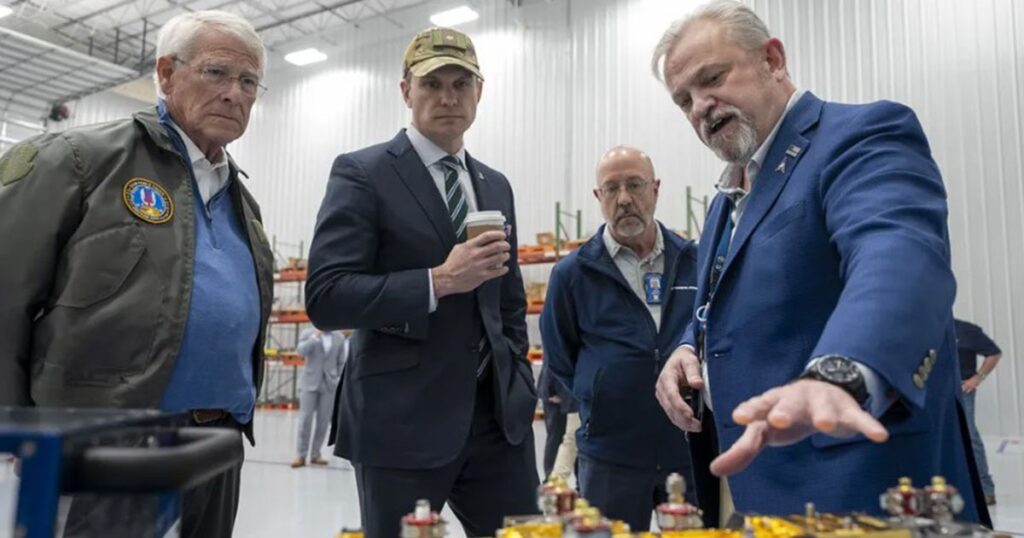
SECDEF Hegseth Tours General Atomics Manufacturing Facility

Pictured L to R: Senator Roger Wicker (R-Miss), Secretary of Defense Pete Hegseth, GA-EMS Vice President of Manufacturing Pete Rinaldi, GA-EMS President Scott Forney 

Visit Emphasizes Directive to Expand Domestic Defense Industrial Base 

From General Atomics Electromagnetic Systems 

SAN DIEGO – 24 Mar 2025 – General Atomics Electromagnetic Systems (GA-EMS) hosted U.S. Secretary of Defense Pete Hegseth at its Manufacturing Center of Excellence in Tupelo, MS at the invitation of U.S. Senator Roger Wicker (R-Miss), the Chairman of the Senate Armed Services Committee. The visit punctuates Secretary Hegseth’s commitment to re-invigorate and expand the nation’s defense industrial base to rapidly deploy weapons technologies to support an expanding range of national security initiatives.  

During his visit, Secretary Hegseth was briefed on GA-EMS’ manufacturing capabilities and expansive portfolio, with a focus on the company’s weapons systems including hypersonics, missiles and space-based tracking payloads; all of which facilitate a comprehensive, layered defense shield for early detection and rapid response in support of Golden Dome for America.  

“It was great to host Secretary Hegseth in Mississippi as we engaged with some of our state’s best-in-class defense capabilities, including at General Atomics,” Chairman Wicker said. “The General Atomics facility in Tupelo has a nationally competitive workforce that conducts cutting-edge work in advanced military technologies. As Chairman of the Senate Armed Services Committee, I will always showcase Mississippi’s leading contributions for the warfighter and work to expand our state’s growing role in the defense industrial base.” 

With over 750,000 square feet of manufacturing facilities located in Tupelo, Scott Forney, president of GA-EMS noted during the tour that the company’s commitment to and investment in research and development, its highly trained workforce, and its production capacity directly aligns with the Secretary of Defense’s stated goal of advancing “made in the U.S.” manufacturing capability to ensure the delivery of highly-capable, cost-effective weapons, specifically missile defense and hypersonics, to support the warfighter and advance America’s national interests.  GA-EMS also has manufacturing facilities in Iuka, MS with strategic access to the Tennessee – Tombigbee Waterway and Gulf of America to facilitate the expansion of shipyard capacity to meet shipbuilding demand. 

General Atomics was honored to host the Secretary of Defense and remains a committed partner to helping the Department of Defense deliver the most transformational and effective weapons to the warfighter at scale to support U.S. military operations.  


Saab Receives Order For Additional Live Training Equipment From U.S. Marine Corps

From Saab, March 14, 2025 

Saab has received a contract modification award from the U.S. Marine Corps for additional Marine Corps Training Instrumentation Systems (MCTIS) equipment. The order value for this award is USD $37 million (SEK 375 million) with deliveries taking place from 2025 to 2027.  

This award ensures the U.S. Marine Corps will continue implementing Saab’s deployable and expeditionary MCTIS capability. This advanced, interoperable live training solution helps Marines train in the most realistic environments, significantly improving their performance and survivability on the battlefield.  

The system focuses on developing and reinforcing effective tactics, techniques and procedures, while also facilitating joint training with NATO allies during multinational exercises. 

“We are honored that the U.S. Marine Corps continues to rely on us as their training partner for the next generation of Marine warfighters,” said Erik Smith, President and CEO of Saab in the U.S. “Our training capability enhances combat readiness by immersing Marines in realistic scenarios and rigorously analyzing their decision-making and actions, ultimately delivering on the objective of saving American lives. We take pride in providing the premier interoperable, land-based live training capability in the world.” 

Saab’s collaboration with the U.S. Marine Corps began with a contract awarded in June 2021, marking the transition from the previous Instrumentation and Tactical Engagement Simulation System II (ITESS – II) to the MCTIS training system.