Leidos Acquires Kudu Dynamics, Advancing AI Capabilities For Cyber Warfighters
RESTON, Va. (May 28, 2025) – Leidos (NYSE:LDOS) announced today that it has acquired Kudu Dynamics, accelerating Leidos’ rapid scaling of artificial intelligence (AI)-enabled cyber capabilities for defense, intelligence and homeland security customers.
Leidos’ extensive current AI-enabled cyber offerings arm users with the rapid capability and scale needed to automate vulnerability detection, enhance novel defenses, neutralize attacker advantages and evade adversary defenses. Acquiring Kudu Dynamics will accelerate Leidos’ strategy for AI-enabled offensive cyber, electromagnetic spectrum operations and vulnerability research.
Founded in 2013, Kudu Dynamics has rapidly grown its work across the Department of Defense, leading the industry in automated targeting, scalable hardware reverse engineering and the generation of other non-kinetic effects.
“Kudu’s ability to generate new cyber capabilities with AI perfectly complements our strategy to rapidly grow differentiated offensive cyber technology capabilities,” said Leidos Chief Executive Officer Tom Bell. “This acquisition underlines Leidos’s commitment to continue to build smarter full-spectrum cyber capabilities, so that the U.S. and its allies dominate the cyber warfighting domain.”
“We’re excited to deliver the next level of capabilities to our customers as we bring together the highly innovative cyber professionals and disruptive technologies of Kudu with the scale, resources and experience of Leidos,” said Kudu Dynamics’ Founder and CEO Mike Frantzen. “In Leidos, we’ve found a partner who shares our ethic of purposeful innovation in support of our nation’s most critical missions.”
The Kudu Dynamics purchase marks Leidos’ first acquisition in two-and-a-half years. Increasing investment in the company’s already formidable cyber capabilities is among the five strategic growth pillars of its new NorthStar 2030 strategy, developed through a year of deep strategic thinking in 2024.
The approximately $300 million all-cash acquisition closed May 23.
Advisors
Baird served as exclusive financial advisor to Kudu Dynamics on this transaction.
Airbus Completes Second Aerial Logistics Connector Demo
From Airbus U.S. Space & Defense, May 20, 2025
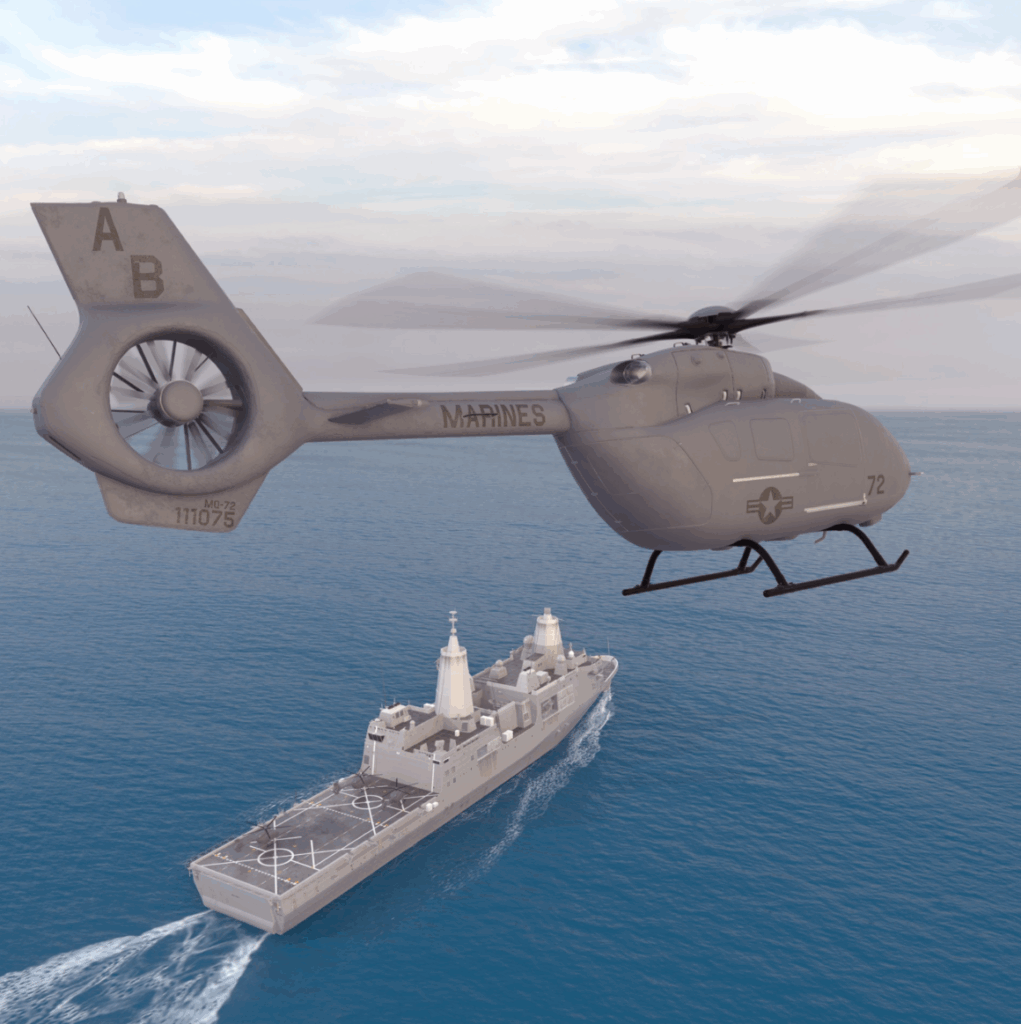
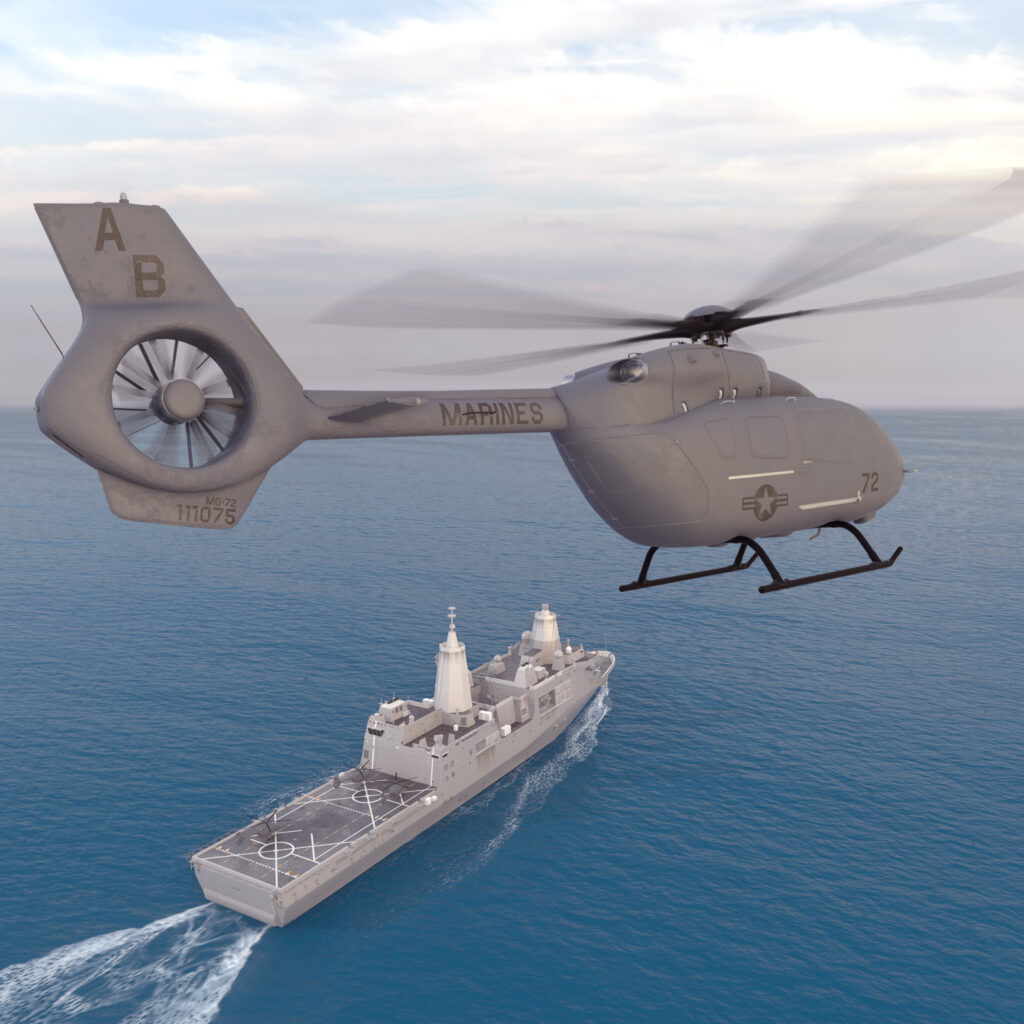
Airbus U.S. Space and Defense recently completed its second program demonstration in support of the U.S. Marine Corps Aerial Logistics Connector contract at Marine Corps Air Station Yuma.
The demonstration evaluated the performance characteristics of the UH-72B Lakota platform, validated the aircraft’s ability to load and carry specialized cargo, and showcased how the aircraft can be modified to meet Marine Corps requirements for an Aerial Logistics Connector system that supports expeditionary advanced base operations.
“This demonstration was another illustration of how our MQ-72C system can support a range of missions and payloads that Marines will need to perform operations in austere environments,” said Rob Geckle, Jr., Chairman and CEO of Airbus U.S. Space and Defense. “We believe this aircraft will redefine the future of Marine Corps aviation.”
Airbus U.S. is entering the second year of the Aerial Logistics Connector Middle Tier of Acquisition (MTA) Rapid Prototyping Program, which aims to provide the service with aircraft prototypes to demonstrate capabilities to the warfighter through a series of operational demonstrations and experiments.
Additional demonstrations will continue throughout the rest of 2025 that inform future acquisition decisions for the opportunity to build a prototype aircraft.
In May 2024, Naval Air Systems Command (NAVAIR) awarded Airbus U.S. Space & Defense a Phase I Other Transactional Authority Agreement, through Naval Aviation Systems Consortium, based on its unmanned UH-72 Logistics Connector concept, a variant of the proven UH-72 Lakota platform.
The Aerial Logistics Connector effort is one of several efforts across the Department of Defense to deliver logistical support in distributed environments during peer or near-peer conflicts.
With over 1.7 million flight hours and over 490 aircraft delivered across the U.S. Army, U.S. Navy and foreign allies, the UH-72 Lakota provides unmatched range and versatility in support of missions that include search and rescue, disaster response, homeland security, drug interdiction, firefighting and MEDEVAC.
GA Integrates OPTIX Software for USMC Common Intelligence Picture WTI Course
From General Atomics Aeronautical Systems, Inc.
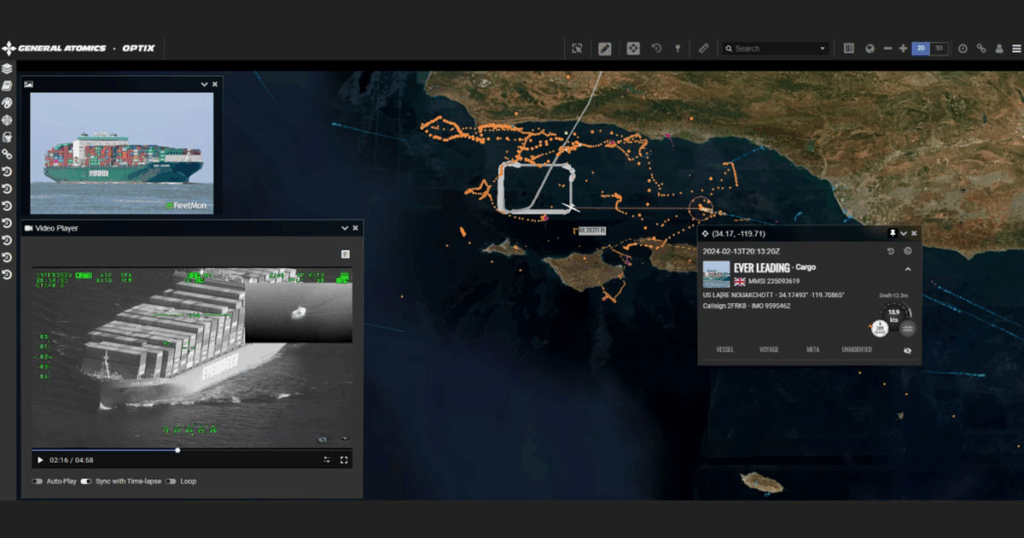
SAN DIEGO – 19 May 2025 – General Atomics Aeronautical Systems, Inc. (GA-ASI) has successfully integrated the advanced Optix software—developed by General Atomics Integrated Intelligence, Inc. (GA-i3)—into the U.S. Marine Corps (USMC) Common Intelligence Picture (CIP) for a multi-service Weapons and Tactics Instructor (WTI) course.
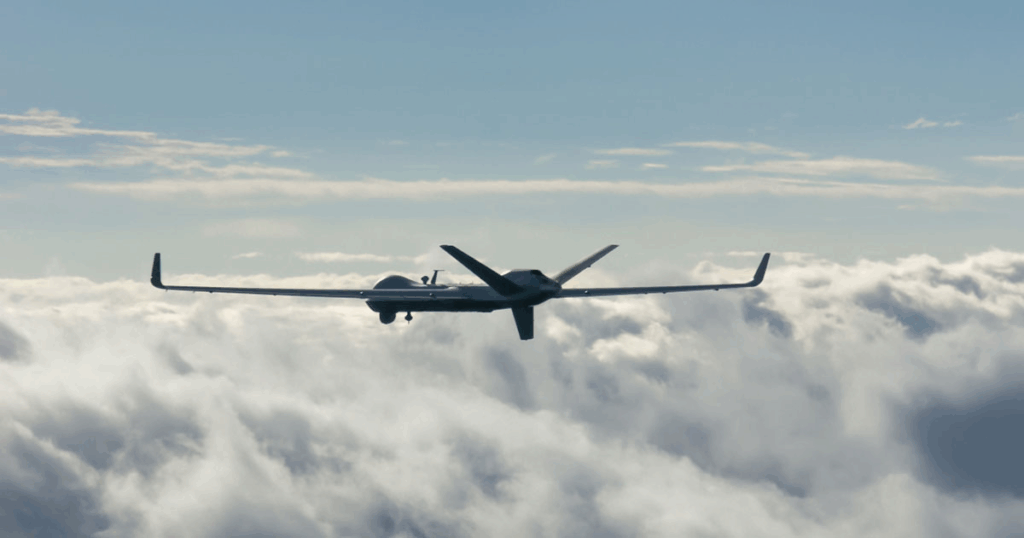
This milestone marks a significant enhancement in the USMC’s Intelligence, Surveillance, and Reconnaissance (ISR) capabilities, delivering a unified operational view critical to the training of future aviation leaders. For the USMC, this integration directly supports the deployment and effectiveness of the GA-ASI-supplied MQ-9A Medium-Altitude, Long-Endurance (MALE) Unmanned Aircraft System within the Marine Air-Ground Task Force (MAGTF).
Achieved through close collaboration with Marine Aviation Weapons and Tactics Squadron One (MAWTS-1) and Marine Operational Test and Evaluation Squadron One (VMX-1), the integration brought together engineers from GA-ASI and GA-i3 alongside USMC unmanned aviation operations experts. Their combined efforts enabled the seamless deployment of the Optix software during the rigorous WTI 2-25 training cycle.
USMC MQ-9A operations during the exercise took place at Yuma, Arizona, and the Strategic Expeditionary Landing Field (SELF) at Twenty-Nine Palms, California—the Marine Corps’ only expeditionary runway in the U.S. The live-fire training environment provided an invaluable opportunity to evaluate the MQ-9A’s role in complex combat scenarios.
By introducing Optix into this high-demand setting, Marines gained access to real-time data fusion, a shared operational picture, and enhanced collaborative decision-making—tools critical for modern battlefield success.
“The integration of Optix software represents a key step toward the effective deployment of the MQ-9A MUX MALE platform within the MAGTF and joint operations,” said Doug Brouwer, Senior Director for USMC Programs at GA-ASI. “It enables near real-time situational awareness and improves the decision-making process across the battlespace.”
Andrew Majchrowicz, Project Manager for Department of Defense Programs at GA-i3, added: “Equipping Marines with advanced ISR tools like Optix enhances the common intelligence picture and operational readiness in live-fire environments. This is a critical milestone in our shared goal of enabling joint-force effectiveness and full operational integration of the MQ-9A.”
The successful deployment of Optix within the WTI course underscores General Atomics’ continued commitment to delivering cutting-edge solutions that empower the U.S. military with unmatched intelligence and operational capabilities for future multi-domain operations.
FRCE inducts first CH-53K King Stallion for maintenance
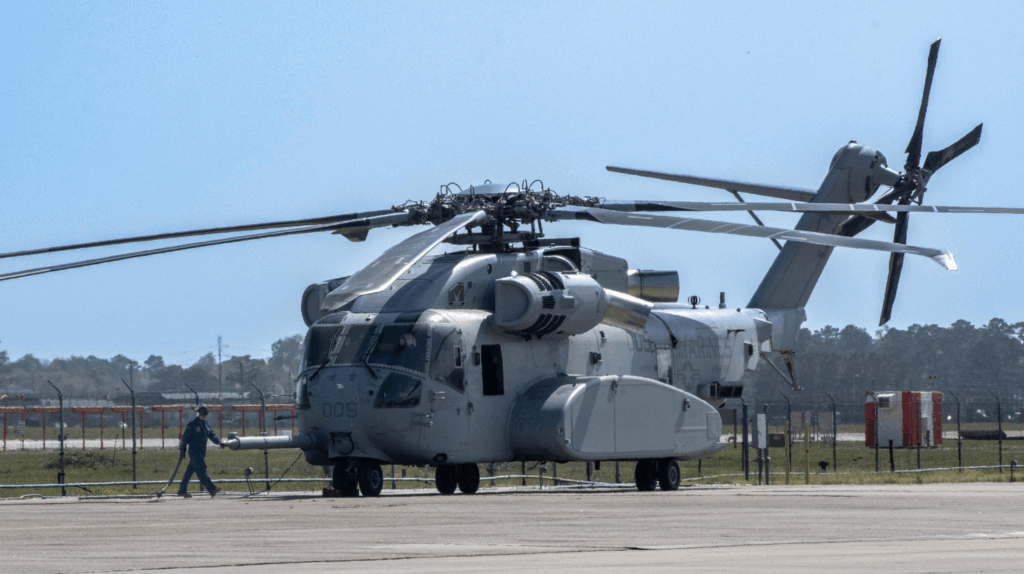
Marine Master Sgt. Richard Hughes, maintenance chief at Fleet Readiness Center East (FRCE), prepares to secure the rotor blades of a CH-53K King Stallion helicopter that arrived at the depot April 4 for routine maintenance. FRCE inducted the aircraft April 17 as the first of 14 planned for induction as part of the Age Exploration Program, Depot (AEPD); it is the first King Stallion ever inducted for depot-level maintenance. (U.S. Navy photo)
From FRCE, May 15, 2025
MARINE CORPS AIR STATION CHERRY POINT, N.C. — Fleet Readiness Center East (FRCE) opened a new chapter in its support of naval aviation’s heavy lift mission with the induction of a CH-53K King Stallion April 17, marking the first time the platform has ever been inducted for depot-level maintenance.
The aircraft arrived April 4 from Marine Heavy Helicopter Squadron 461 (HMH-461) onboard Marine Corps Air Station New River, and is the first of 14 CH-53K helicopters that will undergo routine maintenance at FRCE as part of the Age Exploration Program, Depot (AEPD). AEPD collects information regarding the aircraft’s condition through controlled testing and analysis and assists in the development of effective and efficient maintenance schedule for new aircraft.
FRCE Commanding Officer Capt. Randy J. Berti said the induction of the CH-53K – also known as the “Kilo” – allows the command to continue its long history of supporting the H-53 community while expanding its role in sustaining the new heavy lift platform.
“For many years, FRC East has provided the heavy lift community with world-class service in support of sustainment,” Berti said. “As aviation technology continues to evolve, we’re excited to add the CH-53K King Stallion to our portfolio. This first induction as part of the Age Exploration Program will allow us to learn more about the aircraft and refine the processes and procedures that will help us continue our critical role in driving flight line readiness for our nation’s warfighters.”
The CH-53K King Stallion is the U.S. Marine Corps’ heavy-lift replacement for the venerated CH-53E Super Stallion. The King Stallion is the largest and most powerful helicopter in the U.S. Department of Defense and will expand the fleet’s ability to move more material, faster throughout the area of responsibility. The CH-53K is designed to carry 27,000 pounds at a mission radius of 110 nautical miles in U.S. Navy high/hot environments, which is almost triple the baseline of the CH-53E. Its maximum external lift capability is 36,000 pounds. It is also designed to have a smaller shipboard footprint, lower operating costs per aircraft, and fewer direct maintenance man hours per flight hour.
The AEPD induction arrives following years of coordination between FRCE, the Fleet Support Team, the Naval Air Systems Command H-53 Heavy Lift Helicopters Program Office (PMA-261) and the Marines who fly the Kilo.
“This first CH-53K induction into depot maintenance signifies the maturation of the platform and the readiness of our sustainment enterprise,” said PMA-261 Assistant Program Manager for Logistics Lt. Col. Matthew Russell. “The exceptional collaboration between PMA-261, FRC East, Marine Aircraft Group 29, and the Fleet Support Team, which began over three years ago, has established a foundation for long-term support of the King Stallion’s heavy-lift capability.”
FRCE H-53 Branch Head Michael Paul said the arrival of the CH-53K, in many ways, represents a new horizon – both for the rotary-wing program at the depot and for the fleet.
“Simply put, it’s our future. The legacy platform, the CH-53E, has been there for 40-plus years and it’s slowly being phased out,” he explained. “The MH-53E, the last few are in the plant right now – we have four left – and then that will be the end of our planned maintenance for the MH community, the Navy version of the aircraft. The CH variant flown by the Marine Corps is shrinking its footprint here, with just about five inductions per year.
“And so the future, not only for FRC East but also for the fleet, is the K model program. It’s the newest generation helicopter out there, and so that means that this is the future for the next 20, 30 or 40 years, for the product team here.”
Jeff Warren, CH-53K capability establishment lead at FRCE, said the Kilo’s arrival at the depot also represents the future of the platform’s sustainment schedule. The 14 inductions under AEPD will help determine the aircraft’s planned maintenance interval (PMI) schedule. A planned maintenance interval is a period of time prescribed for the execution of a maintenance event.
“This aircraft’s induction corresponds with a specific number of flight hours, which has been set as a mark on the wall,” he said. “It will be inspected to see if there’s any major structural damage, along with the 13 more behind it. Their condition is going to dictate whether future aircraft PMI events need to happen at this number of flight hours or, if we’re not seeing any major structural issues or overall fatigue of the aircraft, whether the PMI event can be bumped out by an additional number of flight hours. It’s setting a precedent of what the future schedule will look like for depot-level maintenance.”
Warren said the depot’s findings during AEPD will have implications that stretch down to all levels of maintenance, from the heavy maintenance, repair and overhaul at the depot level (D-level) to the maintenance performed at the organizational level (O-level) by the squadrons flying the aircraft, and the intermediate level (I-level) performed by the maintenance and logistics squadrons in between.
“The squadron’s already doing those O-level maintenance actions, but during AEPD, we’re performing O-level and I-level maintenance in conjunction with the depot level. We’re verifying processes and procedures,” Warren said. “This allows us to critique and refine the O- and I-level technical data, to red-line it, effectively, and then develop the depot-level tech data to assist with future depot requirements, because FRC East is the first-ever to conduct depot-level maintenance on the CH-53K.”
Paul said his team on the H-53 line will perform around 800 inspections on the aircraft in order to properly assess its condition, a process that will take almost half of the planned AEPD cycle time.
“We developed a generic template for the inspect and repair phase using the CH-53E and MH-53 as a starting point, assuming the work on the Kilo will be like and similar,” Paul explained. “However, this is the first time any K model aircraft will be disassembled and inspected at this level, and there are differences. It’s computer-based, sensor-based, fly-by-wire, with more composite.
“We have some ideas of what we’re going to find, but there are going to be some areas we’re looking into that nobody has inspected before. We are physically putting our eyes on everything: framing, composite, flight controls, every wiring harness, all the wiring … everything has to be looked at,” Paul continued. “We’re going to conduct these 800-plus inspections, gather the details of any discrepancies we find, correct those we know how to correct, and refer to engineering for solutions the ones we don’t have any knowledge of. Based on their solutions, we will implement those changes to correct those discrepancies, as well. There are a lot of unknowns going in, but it’s an exciting time for the group here.”
Current labor estimates for the AEPD process are based on the PMI process for the CH-53E and MH-53E, and only include work on the airframe itself and not on components that will eventually get routed to back shops, once those capabilities are established. Until then, components will be removed from the aircraft, visually assessed, and exchanged for new components if replacement is required.
According to Warren, the depot should stand up its first batch of CH-53K component capabilities this summer, with the first engines capability established in early fall. All told, FRCE plans to establish capability on about 150 components and dynamic components for the Kilo. The second CH-53K scheduled for AEPD induction should arrive at FRCE in late 2026, with the next two following within fiscal year 2027. FRCE will remain the only depot source of repair for the CH-53K until FRC Southwest, located on Naval Air Station North Island, California, establishes its King Stallion airframes capabilities, which should take place sometime in the early 2030s, he said.
FRCE is North Carolina’s largest maintenance, repair, overhaul and technical services provider, with more than 4,000 civilian, military and contract workers. Its annual revenue exceeds $1 billion. The depot provides service to the fleet while functioning as an integral part of the greater U.S. Navy; Naval Air Systems Command; and Commander, Fleet Readiness Centers.
BAE Systems Awarded Additional $172M Full-Rate ACV Production Contract
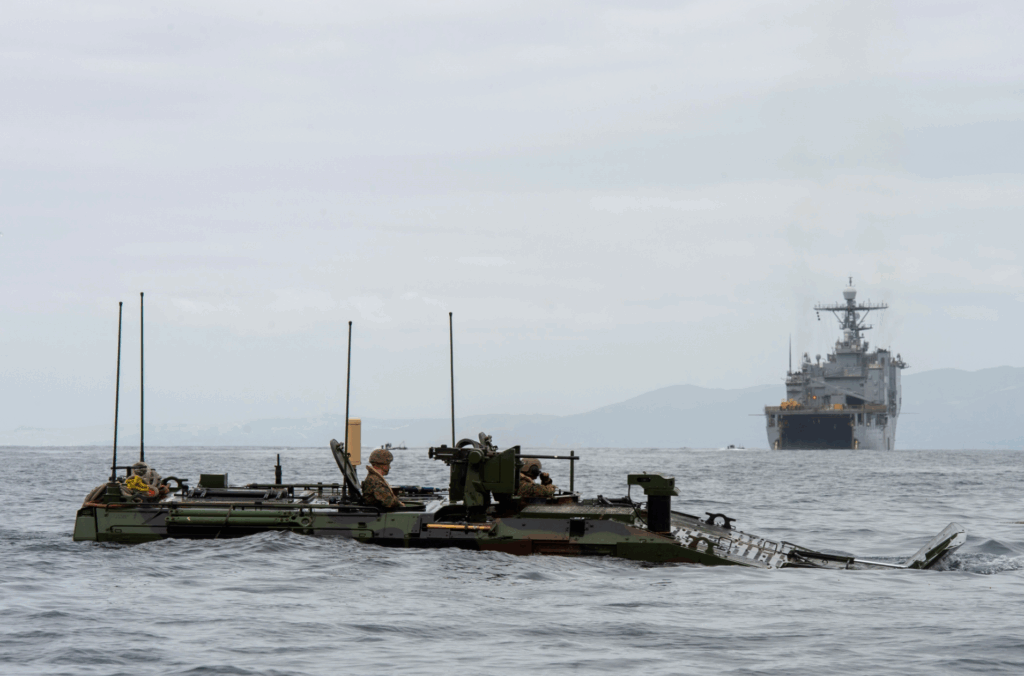
PACIFIC OCEAN (Nov. 30, 2022) U.S. Marines assigned to 3rd Assault Amphibian Battalion, 1st Marine Division conduct amphibious assault exercises in Amphibious Combat Vehicles (ACVs) launched from dock landing ship USS Harpers Ferry (LSD 49) during exercise Steel Knight 23 (SK23), Nov. 30, 2022. (U.S. Navy Photo by MC2 Zachariah Issa)
From BAE Systems
May 1, 2025 – BAE Systems received a $172 million full-rate production (FRP) contract to produce 30 additional Amphibious Combat Vehicles (ACVs) as part of the recently awarded FRP 5/6 contract.
The FRP 5/6 contract includes a series of options to produce up to 150 vehicles. The U.S. Marine Corps exercised the initial option last month for 30 vehicles, valued at $188.5 million.
BAE Systems is also currently under contract for the ACV-Personnel and ACV-Command variants. Work on the ACV-30mm will take place in York, Pennsylvania; Johnstown, Pennsylvania; and Charleston, South Carolina through the fourth quarter of 2026.
Airbus, Shield AI Partner to Integrate Autonomy on Unmanned Aerial Logistics Connector
From Airbus U.S. Space & Defense and Shield AI
WASHINGTON (April 30, 2025) — Airbus U.S. Space & Defense and Shield AI announced a teaming agreement to integrate Shield AI’s Hivemind autonomy software on the Airbus MQ-72C Logistics Connector, an unmanned variant of the UH-72 Lakota. The collaboration will expand the platform’s mission capabilities through autonomy-enabled operations across a wide range of logistics and operational scenarios—including those under the U.S. Marine Corps’ Aerial Logistics Connector (ALC) program.
Under the agreement, Airbus U.S. Space & Defense and Shield AI will test Hivemind autonomy in collaboration with Airbus’ Helionix, advancing the future autonomous mission capabilities of the Marine Corps. The level of autonomy will be scaled during future test activities and demonstrations, ultimately leading to unmanned operations in contested logistics environments.
“The Lakota is a proven multi-mission platform that is ready to support unmanned operations in austere environments,” said Robert Geckle, Chairman and CEO of Airbus U.S. Space & Defense. “Pairing our aircraft with next-generation autonomy software opens new mission possibilities for the warfighter and allied forces worldwide.”
The effort will continue to evolve missionization over the next several years, ultimately enabling more advanced levels of autonomous flight across the Marine Corps and broader Joint Force.
“Airbus is a world-class partner with a strong track record of delivering reliable systems for the warfighter,” said Ryan Tseng, CEO of Shield AI. “The Lakota has been a mainstay of military aviation for years—a widely-fielded, trusted platform used across a range of missions. Integrating Hivemind onto this aircraft shows how autonomy can rapidly enhance proven systems to meet the demands of today’s missions, and it’s a key step toward fully autonomous, uncrewed logistics operations that are scalable, resilient, and built for the future fight.”
The Airbus U.S. team is entering the second year of the Aerial Logistics Connector Middle Tier of Acquisition (MTA) Rapid Prototyping Program, which aims to provide the service with aircraft prototypes to demonstrate capabilities to the warfighter through a series of operational demonstrations and experiments.
The Aerial Logistics Connector effort is one of several efforts across the Department of Defense to deliver logistical support in distributed environments during peer or near peer conflicts.
BAE Systems Receives $188M USMC Contract for Amphibious Combat Vehicle 30mm
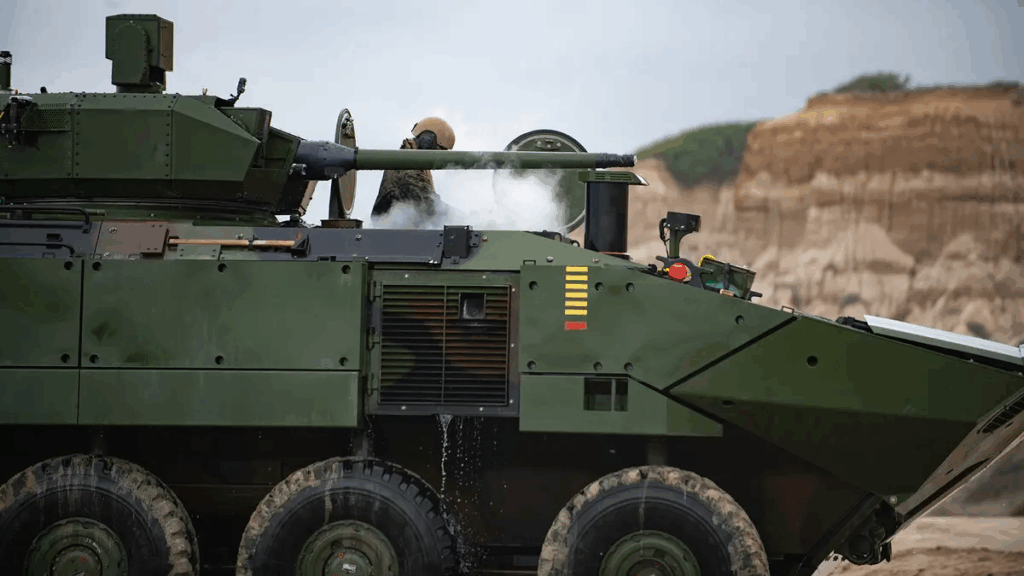
YORK, Penn. — April 29, 2025 — BAE Systems has been awarded a $188 million full-rate production contract from the U.S. Marine Corps for 30 ACV-30mm vehicles, which includes fielding support, spares and test equipment. This is the first award as part of the FRP Lot 5/6 contract.
The ACV-30 includes an integrated medium caliber Remote Turret System which the government is procuring separately and integrating at Naval Information Warfare Integration Center Atlantic. The ACV-30 enables transport of troops, mission essential equipment, and other payloads, while providing the lethality and protection Marines need. The lightweight turret system also ensures platform mobility is preserved.
“The ACV is tested and proven to be incredibly adaptable – it not only swims, but it’s also optimized for ship-to-shore, island-hopping, and advanced land operations,” said Rebecca McGrane, vice president of Amphibious programs at BAE Systems. “With enhanced direct-fire lethality via the 30mm fully stabilized weapon system, the ACV-30 helps to ensure Marines are ready for any mission, land or sea.”
In addition, BAE Systems is currently under contract for the ACV-Personnel (ACV-P) and ACV-Command (ACV-C). The ACV-P variant has the ability to transport 13 combat-loaded Marines plus three crew, while the ACV-C variant provides multiple workstations for Marines to maintain and manage situational awareness in the battle space.
The company is also building three ACV-Recovery (ACV-R) variant Production Representative Test vehicles which will provide field maintenance, recovery, and repair capabilities to the Assault Amphibian companies in support of the Marine division.
Work for the ACV-30mm will take place in York, Pennsylvania, Johnstown, Pennsylvania and Charleston, South Carolina through the third quarter of 2026.
Robotic Blasting Facility to Be Upgraded for Amphibious Assault Vehicles
From BlastOne International
BlastOne International and US Marines Base Partner to upgrade Surface Preparation Facility with Robotic Blasting to Skyrocket Efficiency, Safety, and Performance for Amphibious Assault Vehicle Repair
COLUMBUS, Ohio, April 29, 2025 /PRNewswire-PRWeb/ — BlastOne International is proud to announce its latest partnership with the US Marine Corp base in Albany Georgia to upgrade their existing blast facility with a state-of-the-art robotic blasting system. This groundbreaking initiative is designed to revolutionize the surface preparation of armored amphibious assault vehicles prior to being re-coated. This investment will bring cutting-edge automation, efficiency, and safety to the coating facility at the US Marine’s base, reinforcing BlastOne’s commitment to innovation and excellence in industrial surface treatment.
By integrating robotics into their blasting process, the US Marine Corp are eliminating inefficiencies, enhancing safety, and dramatically improving quality—all while reducing operational costs for Amphibious Assault Vehicle Repair
Project Overview
The Albany, Georgia, project will feature a fully integrated robotic blasting system, leveraging the latest in automation and abrasive recovery technology to streamline operations while reducing costs and environmental impact. The project includes:
B20S7 Gantry-Mounted Blast Robot – An 8-axis robotic system capable of processing up to 2,150 square feet per hour, ensuring precision and consistency in surface treatment.
BP1400 Robotic Blast Pots – A dual-chamber design allowing for continuous blasting without downtime for refilling.
Advanced Abrasive Recovery System – Including a robot-rated bucket elevator, airwash system, and storage hopper, optimizing abrasive recycling and reducing material waste.
150HP Abrasive Vacuum System – A heavy-duty industrial vacuum designed specifically for harsh blasting environments, ensuring a clean and efficient workspace.
Turnkey Installation & Engineering Support – BlastOne will provide comprehensive project management, engineering, and installation services, ensuring seamless integration and long-term success.
Driving Industry Innovation
“This partnership with the US Marines is a testament to BlastOne’s mission of providing superior performance in surface preparation,” said Brad Gooden, Director at BlastOne International. “By integrating robotics into their blasting process, we are eliminating inefficiencies, enhancing safety, and dramatically improving quality—all while reducing operational costs.”
We Fight Tonight: Corps Capabilities for a Contested Indo-Pacific
Photo credit: U.S. Marine Corps
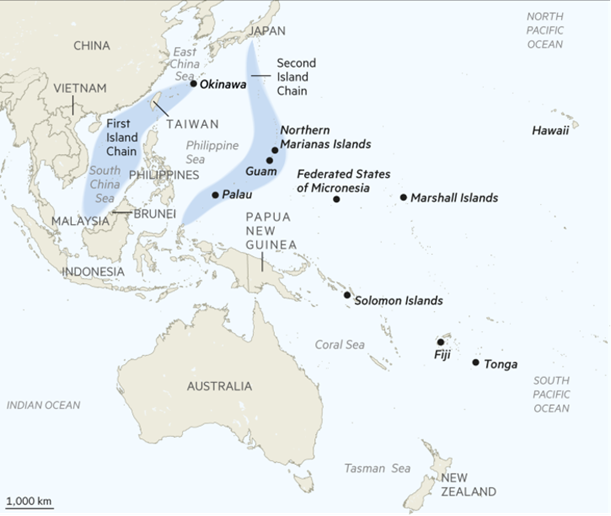
Since the 2018 National Defense Strategy reoriented the Joint Force toward great power competition, China — our primary pacing threat — has accelerated its military modernization and ramped up coercive behavior across every domain. Nowhere is this more evident than in the First Island Chain, where Beijing’s revisionist ambitions collide head-on with our strategic interests. In this contested space, logistics is no longer a rear-area task — it’s a frontline risk. If a capability can’t be produced or pre-positioned inside the theater, there’s a real chance it won’t reach the warfighter at all.
The vast distance between the First Island Chain and the U.S. power base, combined with China’s expanding anti-access/area denial arsenal, or A2/AD, has turned the supply chain from a guaranteed support function into the modern battlespace’s Achilles’ heel.
Mitigation of this new reality demands a shift in power projection, deliberate global pre-positioning to set the theater and a sustainment strategy that keeps our platforms and support systems agile, resilient and ready for a fight over thousands of miles of unforgiving waters, from the U.S. homeland to dispersed Pacific archipelagos. A recent article in the Wall Street Journal outlined one plausible scenario, a strategic naval blockade of Taiwan, which makes the need for agile logistics and forward-positioned capabilities even more urgent.
When imagining the future fight, the battlespace transforms into a clash across a sprawling maritime theater with dispersed stand-in forces using interior lines and an intricate web of logistical support. The battlespace will be persistently monitored — defined by constant intelligence, surveillance and reconnaissance; autonomous systems; electronic warfare; degraded communications and navigation; and a menu of A2/AD capabilities that limit freedom of maneuver. These conditions fundamentally alter how Marines must think about and execute logistics.
Russia and Hamas targeted their enemies’ homelands. China has also targeted the U.S. homeland, sending a signal that the United States and other vital points will not be off-limits from cyberattacks on critical infrastructure, strategic lines of communication, mobilization assets and weapon system vendors to disrupt forces and supply flows. Perhaps unsurprisingly, a recent Wall Street Journal report revealed that Chinese officials privately acknowledged their role in cyberattacks against U.S. infrastructure, admitting to years of intrusions into the computer networks of American ports, water utilities, airports and other critical targets.
In the vast expanse of the First Island Chain, Marines — along with the joint force and partner nation forces — operate today as dispersed, agile nodes, deliberately scattered to complicate enemy targeting and reduce signature detection.
Marine Corps Systems Command’s Program Manager Combat Support Systems is actively developing and fielding a suite of capabilities that redefine logistics support in a contested landscape. Guided by the modernizing principles behind the force restructuring plan Force Design, we’re building integrated systems where every innovation meshes and enables the Marine Air-Ground Task Force commander to counter threats and disruptions in real time.
The First Island Chain forms the forward edge of U.S. power projection — placing the front line of great power competition just miles from China and thousands from the continental United States. Image credit: Hudson Institute
To understand the task at hand, picture a system where every logistics capability supports the kill web. Deployable Logistics IT is a powerful enabler, ensuring asset visibility of medical supplies both in the continental United States and with forward units. Condition-Based Maintenance Plus applies machine learning to enhance decision-making by alerting commanders to maintenance issues and enabling timely resolution to prevent degradation in operational readiness. The Electronic Maintenance Support System equips Marines with diagnostic and networked tools to isolate and troubleshoot faults. Once a fault is diagnosed, Marine fabricators can use advanced manufacturing (3D printing) to produce replacement parts at the point of need in theater — mitigating potential disruptions to the supply web. Signature management capabilities cloak emissions of individual warfighters while the use of netting veils command and control nodes and larger equipment sets.
Meanwhile, an overhauled, more deployable medical support system extends care well beyond the traditional golden hour, ready to stabilize and treat casualties for longer durations, and provides surgical capability in smaller and more adaptive packages. Together, these interlocking capabilities transform potential disruptions into rapid recovery opportunities, sustaining warfighter survivability deep inside the weapons engagement zone and ensuring our forces remain agile and resilient — even when the logistics web itself is under stress.
The sections that follow highlight a few key elements of our integrated logistics capabilities that keep our dispersed Marines one step ahead in the contested Indo-Pacific battlespace.
Advanced Manufacturing
As aggression and the likelihood of kinetic operations increase, we can expect China to shape operations to affect stand-in forces, disrupt reinforcements deploying from the continental United States to the Pacific, and target the supply chain and commercial vendors once considered protected within the bastion of the homeland. With every link in the supply chain vulnerable, rapid field repairs are essential to sustain operations. The PM CSS is reimagining advanced manufacturing to enable on-demand repairs and critical parts production directly in the field. This technology was tested in real-world scenarios: During Rim of the Pacific 2024, a combined team of Sailors and Marines used metal and polymer 3D printers to print critical components like reverse osmosis pump parts and lot-pressure air fittings aboard ship, keeping the amphibious transport dock USS Somerset (LPD 25) in the fight.
Today, our advanced manufacturing units are forging bonds with partner nation forces by fabricating parts to support Indo-Pacific Command hosts such as Australia, the Philippines, South Korea and Japan. By integrating advanced hybrid-metal and liquid metal jetting technologies into containerized, expeditionary fabrication units, Marines are reshaping the traditional supply chain model — one that often begins in or flows through CONUS and may prove untenable in the opening phases of conflict. This capability pushes manufacturing to the edge, enabling rapid, theater-level production and reducing reliance on vulnerable long-haul logistics.
Complementing this capability, the Digital Manufacturing Data Vault prototype serves as a secure repository to store, process and share technical data packages and digital drawings, ensuring that military and allied industrial partners can rapidly produce required components on demand. This comprehensive approach not only shortens supply chains but also helps keep forces mission-capable, even in the most austere and contested environments.
EOD and Combat Engineering
Explosive threats are one of many A2/AD tools China could throw at us to reduce freedom of maneuver. Explosive ordnance disposal and combat engineering capabilities are being overhauled to meet the demands of a high-threat A2/AD environment. The Littoral Explosive Ordnance Neutralization capability is tailored for coastal environments and littoral transition points, ensuring effective neutralization of explosive threats from very shallow water, from surf zones and on to the beach. For EOD, the LEON capability consists of five increments of equipment: remotely operated vehicle, personal dive equipment, uncrewed underwater vehicle, uncrewed surface vehicle and amphibious underwater ground vehicle.
The Stand-off Defeat of Explosive Hazards family of systems seeks to deploy advanced sensors and ground-penetrating radar for standoff detection via uncrewed air and ground vehicles, keeping Marines out of harm’s way. The integrated sensors and auto-target recognition will identify threats and communicate across the tactical network. Together, these integrated solutions empower our EOD and combat engineer teams to swiftly and safely counter explosive threats, ensuring Marines remain protected and mission-capable in the most contested environments. The LEON and SDEH capabilities are a toolkit to increase mobility for commanders and ensure a path for maneuver into theater and intra-theater for forces and supplies.
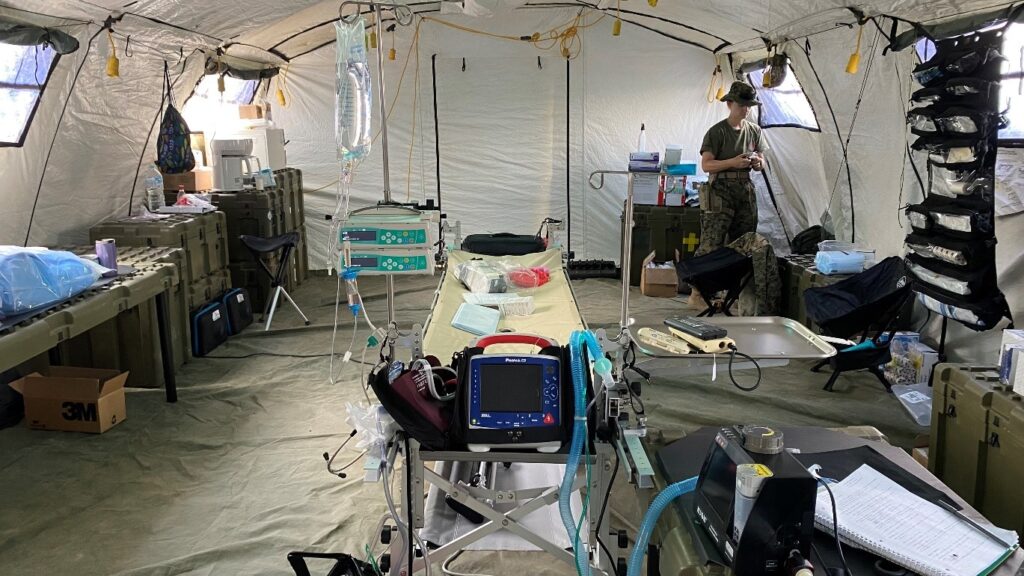
Expeditionary medical capabilities like those shown in this field surgical suite enable damage control resuscitation and surgery close to the point of injury, extending patient hold times to support the Expeditionary Advanced Base Operations concept. Photo credit: Program Manager Combat Support Systems
Expeditionary Medical Systems
As kinetic threats escalate, expeditionary medical capabilities become essential to sustaining Marine forces. Credible medical care gives Marines confidence to go into harm’s way. The Expeditionary Advanced Base Operations concept created a new paradigm in many log functions, and medical is at the front of the line for modernization. The “golden hour,” a term coined during the Global War on Terror to describe the decisive period following an injury and casualty evacuation, is no longer the mantra. Now the focus is on sustaining 96-hour patient care hold times due to the distance between units and the overall contested environment. The PM CSS is facilitating that strategy shift by fielding modular, lightweight systems such as damage control resuscitation and damage control surgery. Distributed Marine units are equipped to deliver life-saving trauma interventions directly in austere environments where traditional evacuation routes and timelines could be unsupportable.
Complementing these innovations, advanced medical devices like the Expeditionary Portable Oxygen Generation System and Expeditionary Medical Refrigeration Unit ensure reliable access to medical-grade oxygen and blood products, even when power is reduced or unsupportable. Concurrently, a pilot modernization effort is underway within the 1st Marine Logistics Group Medical Logistics Company Warehouse. The goals are to provide a garrison and deployable capability with radio-frequency identification scanning, a dashboard for medical asset visibility and a decision support tool that can aid in deployment and ordering optimization — saving taxpayer dollars on wasted supplies and reducing labor requirements. These integrated solutions ensure Marines receive uninterrupted, advanced medical support, dramatically enhancing survivability and sustaining lethality deep within contested zones.
Uniforms and Signature Management
Operating in the contested Indo-Pacific — especially within the First Island Chain — requires our Marines to obscure sophisticated enemy sensors across multiple spectrums. Our Ultra-Lightweight Camouflage Net System sets a new standard in electromagnetic battlefield concealment by reducing signature in the visual, infrared and radar bands. Designed for rapid deployment by a small team, ULCANS effectively masks vehicles, artillery and personnel, ensuring operational stealth in dynamic environments. Building on this breakthrough, next-generation clothing articles are in development that incorporate advanced technology to mitigate near- to long-wave infrared signature. These innovations and enhancements elevate traditional uniform products from an era of visual concealment using standard textile industry practices to advanced production capabilities that provide Marines with tools to enhance survivability and lethality on an increasingly multidomain transparent battlespace, ensuring tactical superiority.
Beyond these core innovations, the PM CSS is advancing a suite of complementary capabilities that enhance a resilient logistics web. Our power modernization initiatives reduce fuel demands and streamline mobile energy solutions. Meanwhile, digital tools like CBM+ and automated test systems ensure commanders maintain real-time situational awareness, enable diagnostics and rapid maintenance, and support circuit card repair in theater — keeping equipment in the First Island Chain and reducing wasteful efforts to return gear to higher echelons of maintenance in CONUS or to rely on today’s overstressed supply chain.
Uncrewed aircraft systems with computer vision for airfield recon, deployable ICD-705-compliant shelters, augmented-reality-aided navigation, bridging, polymer ammunition and lighter, integrated personal protective equipment further ease logistical burdens and increase lethality. Together, these building blocks — designed to support the EABO concept — strengthen the distributed, logistics network needed for a future fight in the contested Indo-Pacific region.
While these capabilities do not regularly make headlines, they are the critical elements to enabling the EABO concept and strategy in general. Each innovation, whether in rapid field repairs, extended medical care or next-generation stealth textiles, forms an integral link in our resilient kill and logistics webs, ensuring dispersed Marines remain agile and ready for any threat or challenge.
Colonel Paul Gillikin, an infantry and special operations officer, is the program manager for Combat Support Systems at Marine Corps Systems Command in Quantico, Virginia.
Marines Surpass 1,000 MQ-9A Flight Hours as Capabilities Expand
From General Atomics Aeronautical Systems Inc.
SAN DIEGO – 23 April 2025 – General Atomics Aeronautical Systems, Inc. is proud to announce that the U.S. Marine Corps has passed more than 1,000 flight hours with MQ-9A unmanned aircraft in support of service-level training exercises and weapons and tactics instructor courses. This accomplishment involved a combined aircrew of dedicated Marines and GA-ASI personnel, highlighting the seamless integration and operational effectiveness of the MQ-9A platform within the Marine Air-Ground Task Force (MAGTF) and the MAGTF Unmanned Expeditionary (MUX) Program.
These demanding exercises showcased the advanced capabilities of the MQ-9A by integrating cutting-edge technologies such as the SkyTower networking support pod, Automatic Identification System, latest-generation Lynx® multi-mode radar and various other tactical networks and capabilities. The joint teams successfully conducted satellite launch and recovery activities operating out of a strategic expeditionary landing field near Marine Corps Air Ground Combat Center Twentynine Palms, Calif., further demonstrating the platform’s precision targeting and reconnaissance abilities in realistic training scenarios.
Previously, an uncrewed aircraft required a crew positioned at the airfield where it was operating to fly it for takeoff via direct line-of-site radio link. Then a mission crew could take over the aircraft from anywhere via satellite. Today, satellite launch and recovery means the main Marine mission crew, which can be sited anywhere, flies the aircraft from takeoff via the satellite link. This capability, validated in the Marine Corps operations, enables huge flexibility and expands the locations from which units can operate.
A key element of these exercises also included not only live-fire training but also comprehensive mission planning, networked communications, and multi-domain coordination. These events provided invaluable experience in integrating the MQ-9A into complex, distributed combat scenarios across the full range of Marine Air-Ground Task Force operations. From supporting maneuver elements with real-time intelligence, surveillance and reconnaissance to validating command and control networks, the MQ-9A consistently demonstrated its adaptability and operational value. This milestone underscores the platform’s critical role in enhancing situational awareness, mission execution, and overall effectiveness across the battlespace.
“Reaching 1,000 flight hours for these rigorous training exercises alongside our Marine Corps and Air Force partners is a testament to the reliability and adaptability of the MQ-9A platform,” said GA-ASI President David R. Alexander. “This achievement highlights the power of collaboration and the critical role the MQ-9A can play in supporting the MAGTF’s mission readiness.”
The successful integration of the MQ-9A platform across recent operations represents a major milestone in aligning capability with the MAGTF construct. These events showcased the MQ-9A’s ability to support distributed operations, extend sensor coverage, and provide persistent intelligence, surveillance and reconnaissance in support of dynamic mission sets. The coordinated efforts of Marines and GA-ASI personnel underscored the platform’s high degree of interoperability and its growing role in enabling expeditionary operations in contested environments.
To date, GA-ASI has delivered 17 MQ-9A UAS to USMC. The USMC awaits delivery of three additional aircraft by the end of this year.