Allied Constructive Kills Reinforce Philippine Archipelagic Coastal Defense Concept
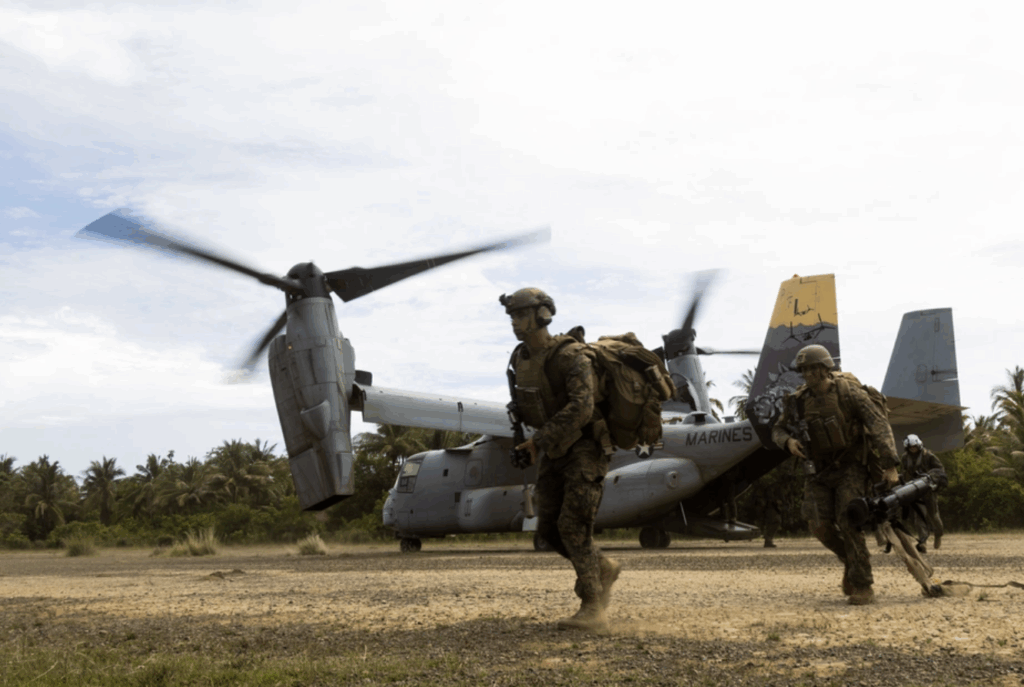
From Marine Rotational Force – Darwin, June 27, 2025  

MANILA, Philippines — In a demonstration of allied resolve, interoperability, and command agility, U.S. Marines with Marine Rotational Force – Darwin (MRF-D) 25.3, serving as I Marine Expeditionary Force (MEF) Forward, coordinated a simulated maritime strike operation in support of real-world movements and training across the Philippine archipelago during Exercise KAMANDAG 9, June 1, 2025. In a show of multinational capability, the regimental level headquarters of the forward deployed MRF-D 25.3 Marine Air-Ground Task Force (MAGTF) planned, coordinated and executed a true Combined Joint All Domain Operation (CJADO).  

The CJADO, centered around multi-phased “constructive kill” (CK) scenarios in support of real-world maneuver, showcased how a purpose-built and forward-deployed MAGTF synchronized fires and effects from joint and combined forces across multiple echelons and domains. A CK involves vectoring simulated fires onto notional targets to enhance training value for the combined forces in the Philippines. Spanning hundreds of nautical miles and integrating Philippine, U.S., Japanese and Republic of Korea maneuver forces, the training validated how precision fires, intelligence, communications, littoral maneuver, and distributed command and control can defend key maritime terrain in response to crisis or contingency. 

“This is what combined operations looks like at the highest level — forward-postured, allied-enabled, and terrain-informed,” said U.S. Marine Corps Col. Jason C. Armas, commanding officer of Marine Rotational Force – Darwin 25.3 MAGTF. “What we achieved here wasn’t just a constructive kill. It was a deliberate act of allied integration, command agility, and maritime dominance. We showed unambiguously that the Marine Corps can apply precision fires and maneuver at scale, across vast distances, and in lockstep with our partners. This sets the precedent. This is how we fight.” 

Adjacent to the MRF-D MAGTF, 3rd Marine Littoral Regiment (MLR) utilized the Navy Marine Expeditionary Ship Interdiction System (NMESIS) to conduct simulated maritime strikes in support of combined 3rd MLR and Philippine Marine maneuver forces in Batanes. To the South, the MRF-D MAGTF directly coordinated with the U.S. Army’s 1st Multi-Domain Task Force (MDTF) to execute simulated simultaneous strikes in support of real-world training with U.S., Philippine, Japanese, and Korean maneuver forces on Palawan. 1st MDTF’s simulated long-range precision fires neutralized notional maritime threats in the waters to the west of Palawan and north of Luzon, creating maneuver corridors for the joint and combined force during KAMANDAG 9. 

1st MDTF’s simulated strikes set conditions for the coordinated insertion of a rifle company with 2nd Battalion, 1st Marine Regiment, MRF-D 25.3, and the Philippine Marine Corps’ 3rd Marine Brigade, including subordinate Marine Brigade Landing Teams (MBLTs), along the western coastline of Palawan and near the port of Berong. Enabled by the successful second simulated strike, Soldiers with the Amphibious Rapid Deployment Brigade (ARDB), Japanese Ground Self-Defense Force (JGSDF), and Philippine Marines with 3rd Marine Brigade launched a bilateral ship-to-shore movement via Combat Rubber Raiding Crafts (CRRC) simulating a humanitarian disaster relief (HADR) insertion. Once ashore, forces began identification, triage and movement of simulated casualties to a Japanese Role I medical center and then a Role II medical center with MRF-D’s Combat Logistics Battalion 1 (CLB-1).  

Adjacent to the HADR, the combined infantry force from MRF-D and the PMC established fortified positions on the Berong beachhead in preparation for a defense against simulated amphibious adversary landing forces following the successful joint MDTF strike. A few days later, that bilateral force conducted a counter-landing live-fire against that same simulated adversary force from fortified positions along the beach near Quezon, marking the culmination of the full kill chain — from sensing, to striking, to defending. 

“The Philippine Marine Corps integrates joint and combined sensors to enhance its kill chain, enabling precision engagement and control of key maritime terrain and sea lines of communication,” said Maj. Sivel Sarmiento, an operations officer with the PMC. “This training under KAMANDAG’s constructive kill framework sharpens situational awareness and accelerates target acquisition in support of maritime denial operations.” 

The success of the CJADO wasn’t just about fires or maneuver — it was made possible by the MAGTF enablers operating behind the scenes. Joint and combined ISR assets, including maritime surveillance platforms and unmanned systems, provided the data needed to find, fix, and track targets throughout the archipelago. MRF-D’s intelligence and communications teams, supported by defensive cyber operators, ensured that targeting data, movement coordination, and effects synchronization continued uninterrupted. The joint fires timeline was stitched together digitally in real time. 

“The MRF-D MAGTF Defensive Cyberspace Operations-Internal Defensive Measures (DCO-IDM) element, organically embedded within the MAGTF’s Fires and Effects Coordination Center (FECC),” said 1st Lt. Jared Haynie, officer in charge of the DCO-IDM team with MRF-D 25.3. “As an integrated, organic MAGTF asset, the team’s focused defensive operations enabled uninterrupted execution of critical events during the CJADO and provided a postured incident response surge capability for the greater cyber community in the event of exploitation or compromise.” 

All phases of the CJADO were enabled by MRF-D’s FECC, serving as the central node for timing, integration, and synchronization of MAGTF effects from command-and-control nodes in the Philippines and Australia. The FECC coordinated seamlessly with 1st MDTF planners and the Philippine Navy and Marine Corps personnel to deliver multi-axis, cross-domain effects across more than 1,000 kilometers of archipelagic terrain. Philippine Navy and Coast Guard vessels observed operations in key Philippine maritime corridors, integrating Philippine naval assets in building maritime domain awareness and completing the combined observation picture. 

What took place during KAMANDAG 9 was a strategic demonstration of how the United States, the Philippines, and their allies support continued peace and stability within the Indo-Pacific. It showed how a regimental-sized Marine headquarters — when enabled by supporting elements and allies and partners — can synchronize multi-domain fires, work with allied formations, and maneuver inside key maritime terrain in support of Archipelagic Coastal Defense Concept objectives and Philippine sovereignty. 

“This CJADO proves that deterrence is not abstract,” said Col. Armas. “It’s observable. It’s measurable. And it’s executable in terrain that matters, alongside allies who can see, decide, and act faster than any adversary. Was this a rehearsal? No. It was a real-time demonstration of how we, as allied and partner forces, outpace, outmaneuver, and outthink those who would threaten peace and security in the Indo-Pacific.” 



Airbus and Parry Labs Partner on U.S. Marine Corps’ Unmanned Aerial Logistics Connector 

WASHINGTON (June 26, 2025) — Airbus U.S. Space & Defense and Parry Labs, a leading provider of edge software platforms have announced a multi-year partnership for the Airbus MQ-72C Aerial Logistics Connector (ALC), an unmanned variant of the UH-72 Lakota.  

This collaboration demonstrates the combined capability Parry Labs and Airbus provide in rapidly delivering autonomy, command and control, and mission capabilities using modern digital and hardware solutions. The initial effort with ALC will establish an immediate foundation for accelerated capability delivery for U.S., Coalition, and commercial aircraft.  

Under the terms of the agreement, Parry Labs will deliver a commercial off-the-shelf (COTS) Edge Software Platform, Stratia, which aligns commercial aviation standards with modern autonomy and mission system capabilities. Parry will also provide edge computer hardware and proven ground control station that scales to multiple form factors to include integration with the Marine Air Ground Tablet (MAGTAB).  

“We are excited to partner with Parry Labs as part of our Aerial Logistics Connector team,” said Robert Geckle, Chairman and CEO of Airbus U.S. Space & Defense. “Parry’s proven digital system integration expertise – specifically UAS command and control interfaces – will help ensure the MQ-72C will be able to conduct unmanned operations in austere environments and redefine how the Marine Corps counters the threats of tomorrow.”  

The Airbus U.S. and Parry Labs partnership will continue to evolve missionization capabilities over the next several years, ultimately enabling more advanced levels of autonomous flight across the Marine Corps and broader Joint Force.   

“We are able to bring modern mission system capabilities in a simple unified data and systems environment to programs like ALC,” said JD Parkes, Parry Labs’ Chief Executive Officer.  

The Airbus team is entering the second year of the Aerial Logistics Connector program, which is using the Middle Tier of Acquisition – Rapid Prototyping pathway. The program aims to provide the service with aircraft prototypes to demonstrate capabilities to the warfighter through a series of operational demonstrations and experiments.  

The Aerial Logistics Connector effort is one of several across the Department of Defense to deliver logistical support in distributed environments during peer or near-peer conflicts.  


Marine Corps General Tapped for JAG of the Navy 

From U.S. Department of Defense, June 24, 2025 

ARLINGTON, Va.–Secretary of Defense Pete Hegseth announced today that the president has made the following nomination: 

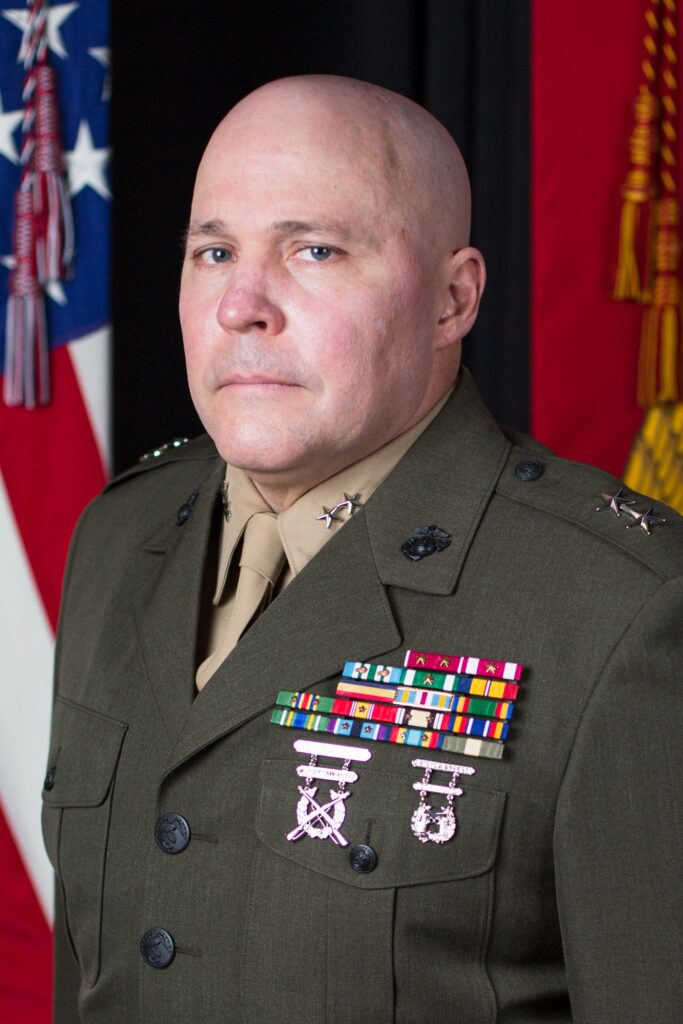
Marine Corps Maj. Gen. David J. Bligh for appointment as judge advocate general of the Navy. Bligh is currently serving as the staff judge advocate to the Commandant of the Marine Corps, Headquarters, Marine Corps, Pentagon, Washington, D.C. 

Below is the official biography of Major General Bligh: 

Major General Bligh was raised in Athens, Pennsylvania.  He is a 1988 graduate of Indiana University of Pennsylvania and a 1997 graduate of the University of Georgia School of Law. 

Major General Bligh was commissioned through the Platoon Leaders Course program in 1988.  He initially served as a Platoon Commander and Company Commander at 2nd Assault Amphibian Battalion, Camp Lejeune, North Carolina.  He later served as a Series Commander at Marine Corps Recruit Depot, Parris Island, South Carolina. 

Upon completion of the Naval Justice School, Major General Bligh served as a civil law officer, trial counsel, and officer-in-charge of legal assistance at Camp Lejeune.  He was then assigned as Director, Joint Law Center, Marine Corps Air Station New River, North Carolina. During this assignment, Major General Bligh deployed for OIF-I with Task Force Tarawa. 

Major General Bligh has served as the Staff Judge Advocate for 3rd Marine Division and III Marine Expeditionary Force in Okinawa, Japan, and Marine Corps Forces Command in Norfolk, Virginia.  Prior to assuming his current duties, Major General Bligh served as the Deputy Staff Judge Advocate to the Commandant of the Marine Corps, and later as the Assistant Judge Advocate General of the Navy (Military Law). 


SECDEF Announces Marine Corps General Officer Nominations 

From the U.S. Department of Defense, June 20, 2025 

ARLINGTON, Va. — Secretary of Defense Pete Hegseth announced today that the President has made the following nominations: 

Marine Corps Gen. Christopher J. Mahoney for reappointment to the grade of general, with assignment as vice chairman of the Joint Chiefs of Staff, Pentagon, Washington, D.C. Mahoney is currently serving as assistant commandant of the Marine Corps, Headquarters, U.S. Marine Corps, Pentagon, Washington, D.C. 

Marine Corps Lt. Gen. Gregory L. Masiello for reappointment to the grade of lieutenant general, with assignment as director, Joint Strike Fighter Program, Office of the Secretary of Defense, Pentagon, Washington, D.C. Masiello is currently serving as director, Defense Contract Management Agency, Fort Lee, Virginia. 

Marine Corps Lt. Gen. Benjamin T. Watson for reappointment to the grade of lieutenant general, with assignment as deputy commandant, Training and Education and commanding general, Training and Education Command, Quantico, Virginia. Watson is currently serving as commanding general, Training and Education Command, Quantico, Virginia. 

Marine Corps Maj. Gen. Jay M. Bargeron for appointment to the grade of lieutenant general, with assignment as deputy commandant for Plans, Policies, and Operations, Headquarters, U.S. Marine Corps, Pentagon, Washington, D.C. Bargeron is currently serving as director, J-5, U.S. Indo-Pacific Command, Hawaii. 

Marine Corps Maj. Gen. William J. Bowers for appointment to the grade of lieutenant general, with assignment as deputy commandant for Manpower and Reserve Affairs, Quantico, Virginia.  Bowers is currently serving as commanding general, Marine Corps Recruiting Command, Quantico, Virginia. 

Marine Corps Maj. Gen. Stephen E. Liszewski for appointment to the grade of lieutenant general, with assignment as director, Joint Force Development, J-7, Joint Staff, Pentagon, Washington, D.C. Liszewski is currently serving as vice director, Joint Staff, Pentagon, Washington, D.C. 

Marine Corps Maj. Gen. David L. Odom for appointment to the grade of lieutenant general, with assignment as director for operations, J-3, Joint Staff, Pentagon, Washington, D.C. Odom is currently serving as director, Joint Capabilities Integration Directorate, Headquarters, U.S. Marine Corps, Quantico, Virginia. 


Near Earth Autonomy Achieves First Autonomous Flight of Leonardo AW139 Helo

From Near Earth Autonomy, June 17, 2025 

PITTSBURGH, Pa. – June 17, 2025: Near Earth Autonomy (Near Earth), a prime performer for the U.S. Marine Corps Aerial Logistics Connector (ALC) program, has successfully completed the first autonomous test flight of a Leonardo AW139 helicopter. This milestone demonstrates the real-world viability of scalable, uncrewed rotorcraft operating in contested environments without pilot or remote operator input, accelerating the path toward operational deployment. 

Conducted in May in Phoenix, the flight marked the first time that the AW139 was 

autonomously controlled by Near Earth’s onboard autonomy stack. The demonstration validated critical capabilities such as precise flight control, autonomous decision-making, and seamless integration with existing aircraft systems. 

“This flight showcases Near Earth Autonomy’s leadership in developing trusted autonomy for real-world operations,” said Dr. Sanjiv Singh, CEO of Near Earth Autonomy. “By directly controlling the AW139’s flight modes with our autonomy system, we’ve shown that scalable autonomous logistics using existing platforms is not just possible, it’s happening now. This capability is essential for reducing risk to military personnel and ensuring resilient supply chains in the field.” 

The ALC program, managed under a Naval Aviation Systems Consortium Other Transaction Agreement (OTA), is designed to field an autonomous aerial logistics system that enhances operational readiness and mission responsiveness. As the program progresses, future testing will expand on key autonomy features such as automated obstacle avoidance, route planning, and logistics system integration. 

This achievement was made possible through Near Earth’s collaboration with Honeywell Aerospace Technologies and Leonardo. Honeywell’s AW139 served as the flight test platform and was equipped with mission-critical avionics that interfaced with Near Earth’s autonomy system. Leonardo, the aircraft manufacturer, provided vital engineering support to facilitate integration. 

“This successful demonstration is a major step in creating brand new possibilities for not only the USMC, but potentially other helicopter operators as well,” said Bob Buddecke, President, Electronic Solutions, Honeywell Aerospace Technologies. “Together with Near Earth Autonomy and Leonardo, we’re showing how existing aircraft can be adapted with trusted avionics to support the next generation of defense logistics. Uncrewed aircraft will be vital in keeping service men and women safe in contested environments, and we are one step closer to realizing that vision.” 

Near Earth Autonomy is developing an autonomy solution that is affordable, scalable, and certifiable, enabling rapid adaptation of crewed aircraft to uncrewed logistics roles. These capabilities are essential for meeting both current and future operational demands across the Department of Defense and beyond. 


Marines for Los Angeles Trained in Crowd Control, Commandant Said 

By Richard R. Burgess, Senior Editor 

ARLINGTON, Va. — The Marines in the regiment being surged to protect federal buildings and personnel in Los Angeles are trained in crowd control, the commandant of the Marine Corps told Congress. 

“All Marines are trained in crowd control, embassy reinforcement, etc., so this is part of their training, sir,” said General Eric M. Smith, commandant of the Marine Corps, testifying June 10 on Capitol Hill before the Senate Armed Services Committee. “The standard Marine expeditionary unit — before they deploy — is trained, and this battalion is ready for that.” 

Smith was responding to questions from Sen. Richard Blumenthal, D-Connecticut, about the imminent deployment of Marines to Los Angeles in response to recent rioting from people protesting the enforcement actions of Immigration and Customs Enforcement (ICE) personnel in the city.  

The 700 Marines assigned to Los Angeles are from the 2nd Battalion, 7th Marine Regiment, 1st Marine Division, based at the Marine Air-Ground Combat Training Center at Twentynine Palms, California. 

The Marines were activated on June 9 by U.S. Northern Command. 

“The activation of the Marines is intended to provide Task Force 51 with adequate numbers of forces to provide continuous coverage of the area in support of the lead federal agency,” NORTHCOM said in a June 9 release. “Task Force 51 is U.S. Army North’s Contingency Command Post, which provides a rapidly deployable capability to partner with civil authorities and DoD entities in response to a Homeland Defense and Homeland Security Operations. It is commanded by Maj. Gen. Scott M. Sherman.”  

Task Force 51, which includes up to 2,100 personnel from the California National Guard, is has been trained “in de-escalation, crowd control, and standing rules for the use of force,” the NORTHCOM release said.  

“They are there at the SECEDEF’s [Secretary of Defense’s] direction to NORTHCOM [U.S. Northern Command],” Smith of the Marines in response to a question from Sen. Mike Rounds, R-South Dakota. “It’s one of our most ready battalions. They’re prepared to respond to lawful orders from the chain of command. They’re there to protect federal property and federal officers. 

Blumenthal asked about the equipment the Marines would have in Los Angeles and if the Marines would have arrest authority. 

“Sir, they have shields and batons,” Smith said. “They need not have arrest authority. They are there to protect federal property and federal personnel.” 

When Blumenthal expressed concern for the reputation of the Marines thrust into a civil disturbance, Smith replied, “I am not concerned. I have great faith in my Marines and their junior leaders and their more senior leaders to execute the lawful tasks that they are given.” 


Michael Duffey Assumes Role as New Acquisition, Sustainment Chief

June 5, 2025 | By Army Maj. Wes Shinego, DoD News  

Michael P. Duffey was sworn in today as undersecretary of defense for acquisition and sustainment following a swift Senate confirmation that places him in charge of the Defense Department’s vast procurement, sustainment and industrial base enterprise. 

After Duffey received Senate confirmation yesterday, Deputy Defense Secretary Steve Feinberg administered the oath of office during a brief Pentagon ceremony.  

Duffey now oversees more than $300 billion in annual procurements and policies related to contracting, logistics, installations, energy resilience and the nuclear enterprise. He also leads an acquisition workforce of roughly 190,000 civilian and military professionals.   

In a statement released after the ceremony, Defense Secretary Pete Hegseth called Duffey “a proven reformer who knows how to translate strategy into the tools our forces need in the field.”  

Although Duffey limited today’s remarks to thanking family and colleagues, he outlined his priorities during a March 27, 2025, Senate Armed Services Committee hearing.   

“America’s ability to protect our interests requires a military force structure with the capability and capacity to deter and, if necessary, to defeat our adversaries,” Duffey told lawmakers.   

He also emphasized the need to modernize “how the department integrates requirements, budgeting and acquisition processes — aligning incentives to deliver results.”  

Duffey said future wars may hinge as much on industrial production as battlefield performance.   

“Future conflicts will be won on the factory floor as much as on the field of battle,” he said, warning that the side able to replace lost equipment fastest will hold the upper hand.   

He said the United States must “outpace our adversaries in our ability to supply the joint force with decisive advantage while building an industrial base agile enough to replenish those forces as needed.”  

Among his first tasks, Duffey plans to better align service requirements with congressional resources, expand rapid-fielding pathways for emerging technologies and apply data-driven metrics to keep programs on budget and schedule.   

He also pledged a comprehensive review of the Cybersecurity Maturity Model Certification 2.0 framework, aiming to balance security needs with regulatory burdens — particularly for small businesses.  

Duffey brings two decades of experience in the Pentagon and White House. Inside the department, he served as the deputy chief of staff to the defense secretary and chief of staff to the undersecretary for research and engineering, among other senior positions. Outside the building, he guided national security budgets as associate director at the Office of Management and Budget, giving him what colleagues describe as “a 360-degree view” of the policy-to-production pipeline.  

A native of Wisconsin, Duffey is a graduate of the University of Wisconsin–Madison and holds executive certificates from the Massachusetts Institute of Technology and the Wharton School at the University of Pennsylvania.  

In the weeks ahead, Duffey plans to tour depots, shipyards and suppliers to assess production bottlenecks and meet with service acquisition executives to discuss modernization priorities.  

He will also chair the Nuclear Weapons Council, linking strategic-deterrent recapitalization to its broader acquisition agenda.   

“Our charge,” he told senators, “is to convert American ingenuity into ready combat power at a pace that preserves the nation’s decisive edge.” 


Marine Corps Receives Final MQ-9A Reaper, Concluding Rapid Delivery Effort 

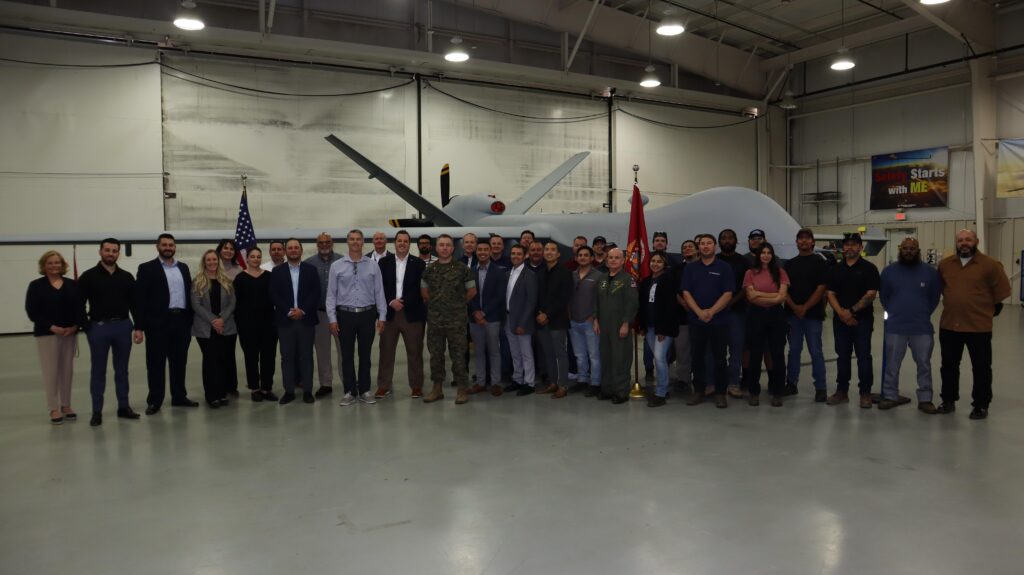
The Marine Corps received its final MQ-9A Reaper Block 5 Extended Range (ER) Uncrewed Aircraft System (UAS) from General Atomics Aeronautical Systems, Inc. (GA-ASI) Gray Butte flight operations facility in California in June 2025. (Photo courtesy of GA-ASI) 

From Naval Air Systems Command, June 5, 2925 

NAS PATUXENT RIVER, Md. — The U.S. Marine Corps received its final MQ-9A Reaper Block 5 Extended Range (ER) Uncrewed Aircraft System (UAS) from General Atomics Aeronautical Systems, Inc. (GA-ASI) Gray Butte flight operations facility in California in June 2025, marking the successful completion of a three-year acquisition campaign. 

With 18 MQ-9As field to date, and now two more on the way, this final delivery represents a major milestone for Marine Corps aviation and reflects the effective collaboration between industry partners and the U.S. Air Force. 

“This program has been a model of how to do things right,” said Capt. Dennis Monagle, program manager for Multi-Mission Tactical UAS (PMA-266), whose office managed the acquisition effort. “We leveraged a strong relationship with industry and the Air Force to move quickly, stay on schedule, and deliver advanced capability to the fleet with minimal friction. It’s been a very smooth process, proof that when the right teams align, we can move at the speed the Marines need.” 

The program team continues to integrate advanced capabilities onto the platform with the upgraded MQ-9A with the SkyTower II airborne network extension pod on track to achieve Initial Operational Capability (IOC) later this year. The system will expand the Corps’ long-range mission in support of Force Design 2030 priorities and distributed maritime operations. 

The MQ-9A is a multi-role, medium-altitude, long-endurance UAS designed to support a variety of missions including ISR and maritime domain awareness. The Marine Corps’ adaptation of the system represents a leap in expeditionary capability, enabling operations across contested and distributed environments. 

PMA-266 oversees the MQ-9 Marine Air-Ground Task Force UAS, Expeditionary Family of Systems and is also responsible for emerging group 4 an 5 vertical lift platforms. 


Marine Attack Squadron 231 completes its final Harrier flight at Cherry Point 

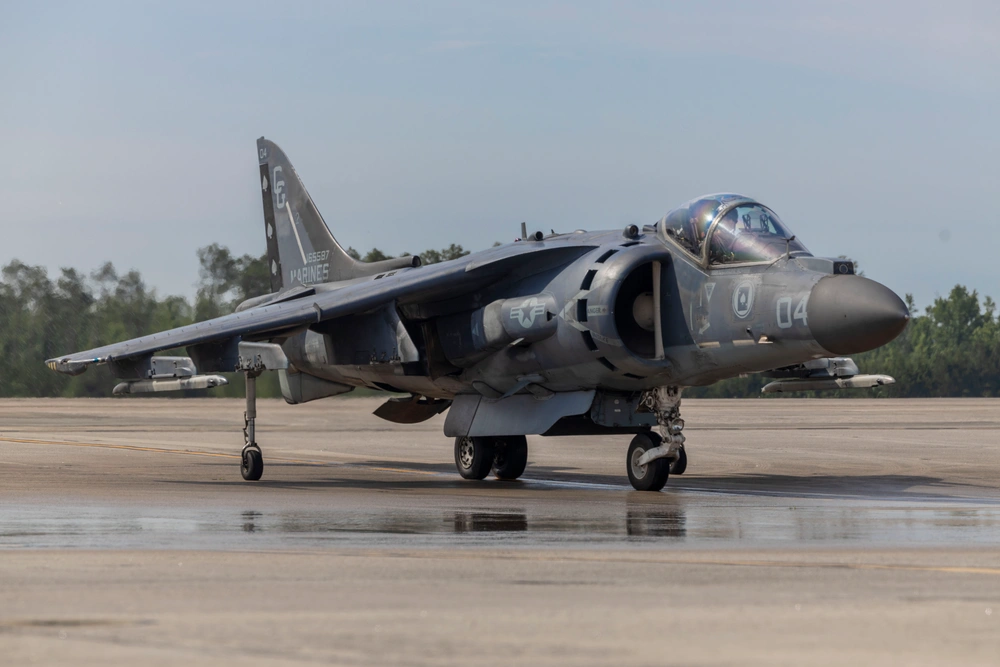
U.S. Marines Corps AV-8B Harrier II with Marine Attack Squadron (VMA) 231 taxis during the squadron’s final flight ceremony at Marine Corps Air Station Cherry Point, North Carolina, May 29, 2025. VMA-231 conducted a ceremony to celebrate its last Harrier flight before its deactivation in September. In 2026, the squadron will reactivate as Marine Fighter Attack Squadron 231 and prepare to operate the F-35B Lightning II Joint Strike Fighter. (U.S. Marine Corps photo by Lance Cpl. Bryan Giraldo) 

From 2d Marine Aircraft Wing Strategic Communications 

MARINE CORPS AIR STATION CHERRY POINT, N.C. – Marine Attack Squadron (VMA) 231, known as the “Ace of Spades,” marked the end of an era with its final AV-8B Harrier II flight on Thursday, culminating decades of rich history and distinguished service with the iconic vertical takeoff and landing aircraft. 

First commissioned in 1919, VMA-231 is the Marine Corps’ oldest flying squadron and has served with distinction in multiple conflicts worldwide over the last century. After adopting the Harrier II in 1985, VMA-231 supported major overseas operations to include Operations Desert Shield, Desert Storm, Allied Force, Odyssey Dawn, Inherent Resolve, and most recently, Prosperity Guardian.    

The squadron’s final flight and colors casing ceremony took place at Marine Corps Air Station Cherry Point and represented a significant milestone in the Marine Corps’ ongoing fifth-generation tactical aircraft transition. Attendees of the ceremony included active-duty Marines and Sailors with VMA-231, their families, and veterans who had previously served with the squadron. Maj. Gen. William Swan, commanding general of 2nd Marine Aircraft Wing (MAW), and Maj. Gen. James Wellons, commanding general of 3rd MAW, as well as several distinguished guests, community leaders and former commanding officers of the squadron were also in attendance.  

“Today is not a sad day,” stated Lt. Col. Paul Truog, current commanding officer of VMA-231, during the ceremony, “This is a momentous day for Marine aviation. It’s a day that we’re going to celebrate.” 

Truog, alongside Sgt. Maj. Christianna Wolford, will oversee VMA-231’s official deactivation in September 2025. The squadron will then reactivate as Marine Fighter Attack Squadron (VMFA) 231 in fiscal year 2026. As VMFA-231, the squadron will continue the unit’s storied legacy with fifth-generation capabilities as an F-35B Lightning II Joint Strike Fighter squadron. 

“Everybody knows that VMA-231 is transitioning to F-35s. The Wing, the [Marine Aircraft Group], and the squadron are going to be more capable of responding to any crisis. But that capability is not just because it’s our most technically advanced weapons system,” Truog said in his remarks. “That capability is because of the Marines and the pilots that, in record amounts, raise their hands saying, ‘I want to continue on, I want to keep moving forward.’”   

Truog’s comments referred to the many Marines who will continue the squadron’s earned legacy as future members of VMFA-231 and who will continue their service by piloting, maintaining and supporting F-35 aircraft in squadrons across the Marine Corps. 

“They’re going to take that, they’re going to go forward in Marine aviation, and they’re going to make Marine aviation better,” he added. 

The squadron’s transition from the legacy AV-8B Harrier II to the F-35B Lightning II Joint Strike Fighter is representative of 2nd MAW’s ongoing modernization efforts to meet the needs of the future fight. As the aviation combat element for the service-retained Marine Expeditionary Force, 2nd MAW continues to balance modernization efforts with providing combat-ready aviation forces to the Marine Corps and joint force. 


MSPF Conducts Maritime Interception Operations During ARMEUEX 

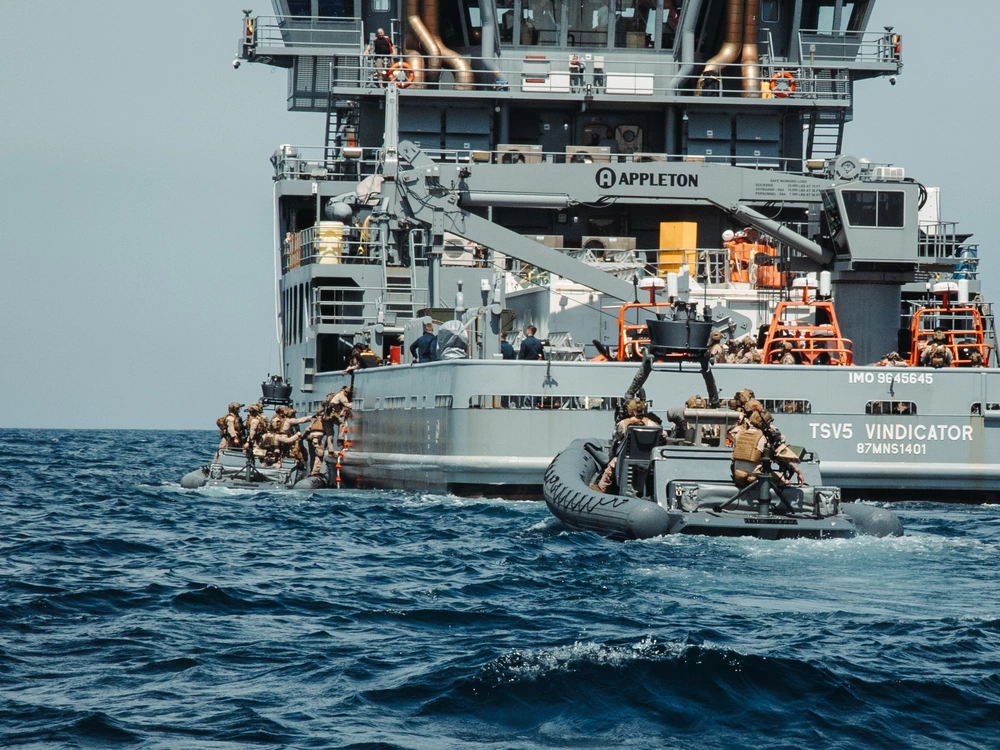
Photo by Sgt. Tanner Bernat, 22nd Marine Expeditionary Unit, May 18, 2025   

ATLANTIC OCEAN — U.S. Marines with Maritime Special Purpose Force, 22nd Marine Expeditionary Unit, board a vessel in rigid-hull inflatable boats while conducting maritime interception operations aboard U.S. Navy training support vessel USNS Vindicator (TSV 5) in support of Iwo Jima Amphibious Ready Group Marine Expeditionary Unit Exercise (ARGMEUEX) while underway in the Atlantic Ocean, May 18, 2025. During ARGMEUEX, the 22nd MEU, aboard IWO ARG shipping, conducts various mission essential tasks that enhance operational readiness and lethality as a unified IWOARG/22 MEU team. (U.S. Marine Corps photo by Sgt. Tanner Bernat)