American Waterways Operators Issues Statement on 60-day Jones Act Waiver Announcement
ARLINGTON, Va., March 18, 2026 /PRNewswire/ — The American Waterways Operators, the national trade association of the American tugboat, towboat and barge industry, today released the following statement on the Trump Administration’s announcement of its decision to issue a 60-day waiver of the Jones Act:
“The Jones Act is fundamental to America’s supply chain reliability and national security, and this broad 60-day waiver of this vital law puts both at risk. The breadth of this waiver is especially concerning, as it will unnecessarily impact transportation markets where domestic vessel capacity is not lacking. Allowing foreign vessels to transport cargo on U.S. waterways will introduce the price volatility of today’s international market into our domestic commerce, creating instability in our thriving domestic supply chain and undermining American jobs while having no appreciable effect on the price of gasoline.
At a time of heightened concern about terrorist threats on American soil, the Jones Act also serves as a security bulwark against foreignflag vessels with foreign crews transporting critical cargo between America’s inland and coastal ports, and ensures that American mariners remain the indispensable eyes and ears supporting the U.S. Coast Guard’s homeland security mission.
Our nation counts on the Jones Act mariners of the American tugboat, towboat and barge industry to power the American economy and help keep our communities and waterways safe. Waiving the Jones Act does not serve those interests.”
About the American Waterways Operators
The American Waterways Operators is the tugboat, towboat and barge industry’s advocate, resource and united voice for safe, sustainable and efficient transportation on America’s waterways, oceans and coasts. Industry vessels serve as a vital part of America’s supply chain and national security, moving the nation’s commerce on U.S. inland and intracoastal waterways, the Atlantic, Pacific and Gulf Coasts, and the Great Lakes.
Maritime Theater Missile Defense Forum Advances Interoperability, Relevance at Critical Time
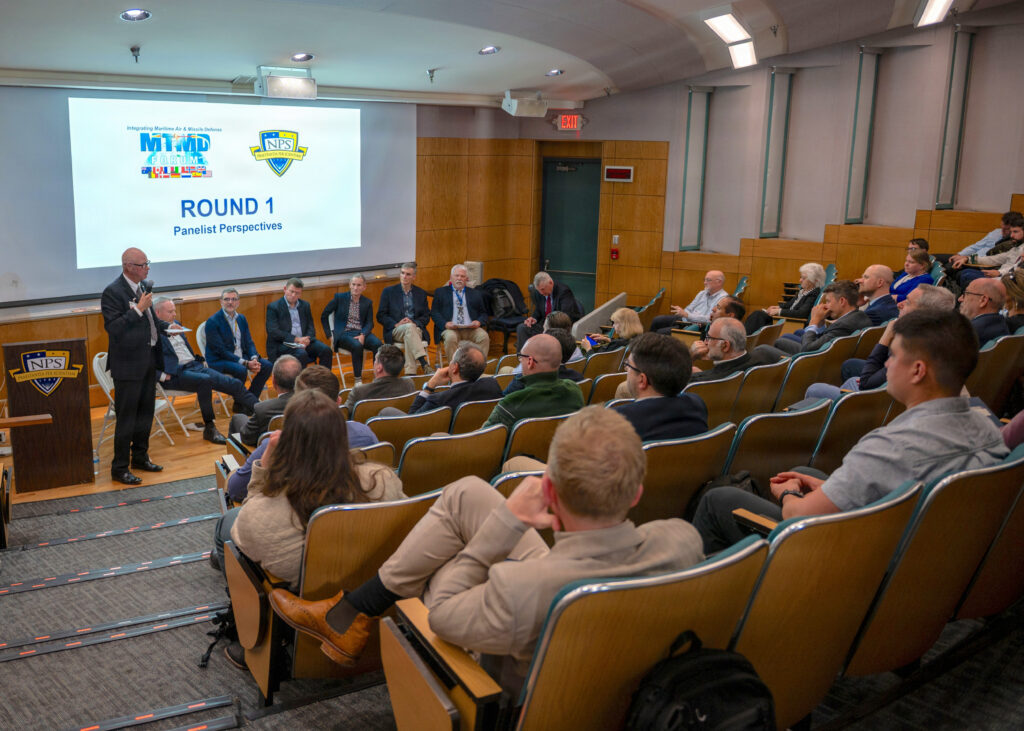
Experts across varied aspects of integrated air and missile defense engage in a panel discussion during the Maritime Theater Missile Defense Forum (MTMD-F) at the Naval Postgraduate School (NPS), March 4, 2026. The MTMD-F returned to NPS for a series of engineering and program management meetings essential to advancing their critical mission. (U.S. Navy photo by Mass Communication Specialist Seaman Apprentice Zadi Watkins)
From Naval Postgraduate School Public Affairs, March 19, 2026
Effective integrated air and missile defense (IAMD) requires an unparalleled level of international cooperation and interoperability, concepts on full display in current operations. The system of systems necessary to be effective, however, requires much more than just collaborative coalition operations.
Effective IAMD also takes a persistent collaborative effort of interdisciplinary research and development with many partners, and exhaustive analyses across a broad swath of highly technical disciplines. It also demands the agility to work through stovepipes and unforeseen challenges, in addition to anticipating strategic futures.
Meeting this challenge is the Maritime Theater Missile Defense Forum (MTMD-F), an international cooperative of 12 allied nations’ navies charged with achieving interoperability in all aspects of maritime theater air and missile defense. Building upon previous meetings in Monterey in 2006, 2013, 2017 and 2020, the forum and its team of engineers, technicians and National Points of Contact returned to Naval Postgraduate School (NPS) campus in February and March 2026 for a series of engineering and program management meetings essential to advancing their critical mission.
The importance of that mission, and its relevance to Chief of Naval Operations Adm. Daryl Caudle’s recently released Fighting Instructions, is why NPS placed a high priority on supporting the multi-week forum of both classified and unclassified program management and technical interchanges, said NPS president retired U.S. Navy Vice Adm. Ann Rondeau.
“The conversations you will have this week — about integrated air and missile defense, sensor fusion, battle management, hypersonic threats, and coalition interoperability — are no longer just about future force design concepts. They reflect present operational reality,” Rondeau said in welcoming the MTMD-F to campus.
“IAMD capability development must begin years before the commencement of operations,” added retired U.S. Navy Capt. John Hammerer, IAMD warfare chair at NPS. “Essential developmental efforts spanning the disciplines of systems engineering, modeling and simulation, acquisition, interoperability testing, and operational testing begin years before real world operations.”
NPS, and the technical leaders the institution graduates, are critical to this development, Hammerer says.
“Take U.S. Navy efforts to use directed energy for terminal defense, highlighted in the CNO’s Fighting Instructions,” he continued. “NPS graduate Cmdr. Brian Curran, a Meyer Scholar who earned his PhD in laser physics, is now using that acquired expertise to lead [Program Executive Office Integrated Warfare Systems] (PEO IWS) to accelerate fielding of shipboard lasers.”
The MTMD-F keeps essential development on track across multiple technical teams and lines of effort. Leading each navy’s efforts is the MTMD-F’s National Point of Contact (NPOC) forum. Belgian Navy Capt. Philippe De Cock, the current NPOC chair, says the forum’s focus on innovation, analysis and expertise in maritime IAMD — qualities shared at NPS — are critical enablers to its mission.
“The forum was born from a shared appreciation that only a small, agile partnership of nations with subject matter expertise could move quickly enough to anticipate trends and solve the critical problems of maritime missile defense interoperability facing allied nations,” De Cock said. “The concentration of subject matter expertise for data analysis and maritime IAMD operations makes the forum-NPS partnership mutually beneficial.”
“NPS is an ideal venue for forum collaboration,” echoed U.S. Navy Capt. John Mastriani, U.S. NPOC. “The combination of secure facilities, adaptive layout and combat systems engineering expertise make this a highly productive place for the forum’s technical projects, working groups and leadership to meet.”
Current NPS students and faculty were able to engage with MTMD-F representatives, gaining a deeper perspective on the technical, procedural and operational challenges that enable interoperability in maritime missile defense. NPS’ popular Meyer Scholar program, initiated by Hammerer, prepares officers to contribute to this essential capability by advancing their technical understanding of naval combat systems, from concept to employment.
“Meyer Scholars take on this work in addition to their normal coursework,” Rondeau said. The program combines NPS’ rigorous graduate education with a focused combat systems curriculum, operationally relevant seminars, industry visits and research tied to real-world warfare system challenges.
“Meyer Scholars are trained to lead interoperability rather than chase it, by understanding the technical, tactical, and programmatic dimensions of integrated air and missile defense, and to translate emerging technologies into fleet-ready capabilities,” she said.
Looking ahead, student and faculty participation in MTMD-F discussions identified potential pathways for further NPS contributions to IAMD interoperability and collaboration. The forum highlighted promising opportunities for IAMD-related research at NPS in areas such as:
Support for the post-mission analysis of combat systems performance following At Sea Demonstration/Formidable Shield (ASD/FS), Pacific Dragon (PD), and Hardware in the Loop (HWIL) test events.
The Ballistic Missile Defense Integration (BMDi) Project, which accelerates the development of BMD support, sensor and weapon capabilities.
The Interoperability and Common Tactical Picture (IaCTP) Project, which promotes the development of a common operating picture across an international task group by analyzing and promoting standardization in datalink systems implementation.
The Force Level Operational Architecture Technical Standard (FLOATS) Project, a platform-agnostic standard for combat-systems data exchange.
The Force Threat Evaluation and Effects Coordination (FTE2C) Project, an effort to develop and compare decision support systems and coordinate kinetic and non-kinetic effects across the Coalition Task Group.
As Rondeau stressed to the group, the importance of these developments could not be a more evident call to action.
“The missile defense mission is active, consequential, and demanding of your excellence in both technology and leadership,” she said. “That reality sharpens the purpose of this essential forum and follow-on actions for national security and homeland defense.”
Saronic Announces New Downtown New Orleans Office to Accelerate Autonomous Shipbuilding
From Saronic, March 18, 2026
Saronic today announced it is opening a nearly 15,000 square foot office in downtown New Orleans. The new space will serve as a key engineering and technical hub to support the company’s expanding shipbuilding operations in Louisiana. By establishing a strong presence in the city, Saronic is deepening its roots in one of the nation’s most historic and capable maritime regions – one with a strong, highly skilled maritime workforce.
The new office will house hardware engineers, naval architects, marine engineers, and experts in system testing to support the design and development of Marauder, Saronic’s 180-foot autonomous ship. These vessels are produced at scale at the company’s shipyard in Franklin, Louisiana, which is undergoing a substantial expansion to further strengthen the state’s role in helping drive next-generation maritime manufacturing. The office will provide vital technical connectivity across Saronic’s Louisiana operations, linking advanced engineering and design functions with production and manufacturing capabilities in Franklin.
The company expects to hire more than 350 skilled workers across its operations in Louisiana this year. To help build a strong talent pipeline, Saronic is partnering with universities and technical institutions, offering internships and early-career opportunities for students pursuing jobs in engineering, naval architecture, and other marine disciplines. The company is also working with Louisiana Economic Development to build and integrate training programs into the workforce development process across the region.
“Louisiana has been at the center of American shipbuilding for generations, and New Orleans gives us direct access to the people and technical skills that make that possible,” said Dino Mavrookas, Co-Founder and CEO of Saronic. “This facility builds on our growing investment in the state and strengthens the connection between our teams and Gulf Coast operations, allowing us to move faster as we field and deploy autonomous surface vessels and ships for both defense and commercial partners.”
“This is a strong win for New Orleans and for our growing maritime and engineering economy. Saronic’s decision to open their facilities in downtown New Orleans shows that companies see our city as a place where innovation, maritime expertise, and world-class talent come together,” said Deputy Mayor Jenny Mains. “This investment brings high-quality technical and engineering opportunities for our workforce and aligns with Mayor Helena Moreno’s 100-day plan to attract the next generation of industries and jobs to our city.”
Hiring for Key Roles in Louisiana
Across all of Saronic’s operations, the company is united by a culture of ownership, accountability, and mission-driven innovation. Full-time employees share in the company’s success through equity participation and receive a comprehensive benefits package designed to support both personal and professional growth. Team members are offered comprehensive health coverage, a 401(k) plan with company matching, generous paid time off and holidays, and fully paid parental leave. Saronic also provides supplemental benefits that support family building, overall wellness, and long-term financial security.
Master Boat Builders Signs Contract with Austal USA to Fabricate Modules for T-ATS Program
Photo from Master Boat Builders
Agreement marks the first formal production contract under the companies’ strategic outsourcing partnership
From Master Boat Builders Inc.
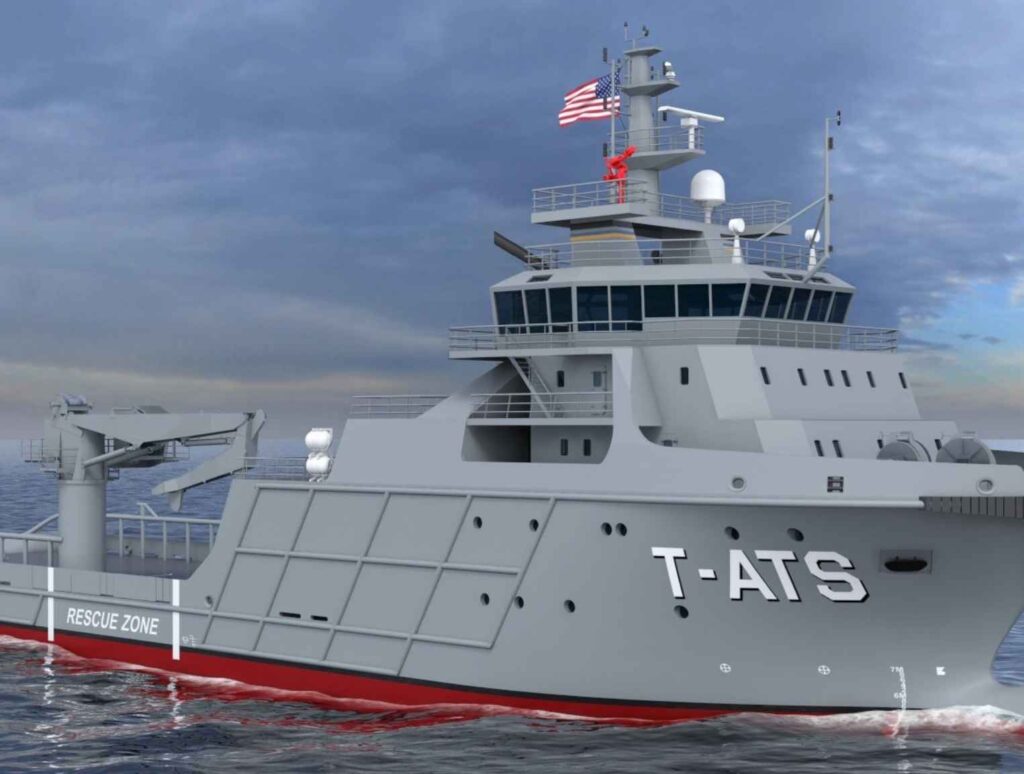
CODEN, Ala. - Master Boat Builders, Inc. (“Master Boat”) announced it has signed a contract with Austal USA to fabricate modules for the U.S. Navy’s Navajo-class Towing, Salvage, and Rescue Ship (T-ATS) program. The contract establishes Master Boat as a key subcontractor contributing to the construction and delivery of critical vessels that enhance the Navy’s and the Trump Administration’s push to diversify and strengthen the domestic shipbuilding industrial base through distributed production.
The partnership between the two Alabama-based shipyards reflects a significant milestone for Master Boat as it expands its participation in government defense shipbuilding programs. Under the agreement, Master Boat will provide specialized shipbuilding support and fabrication services that will contribute to the construction of advanced naval vessels designed to perform a range of missions including open-ocean towing, salvage operations, humanitarian assistance, and environmental response.
“This contract is a direct result of the partnership we built with Austal USA last year, and it validates what we’ve been saying all along – regional shipyards like ours can take on complex defense work and deliver,” said Garrett Rice, President of Master Boat Builders. “We’re not competing with the major yards. We’re adding capacity that the Navy needs right now. Our proximity to Austal USA, our experienced workforce, and our new investment in dedicated defense infrastructure all position us to support this program and others that follow.”
Under the contract, Master Boat will fabricate two T-ATS hull modules at its Coden, Alabama, shipyard, located approximately 30 minutes from Austal USA’s Mobile facility. The modules will be constructed to Austal USA’s production design and specifications, and through the collaboration, Master Boat will gain valuable experience working within U.S. Navy technical standards and production requirements of large-scale programs. The partnership also supports workforce development and strengthens regional shipbuilding capacity along the Gulf Coast. Upon completion, the modules will be transported to Austal USA’s Mobile shipyard for final erection and outfitting.
“Master Boat has proven itself as a capable and reliable partner, and this contract is a natural next step in our collaboration,” said Gene Miller, Interim President of Austal USA. “By distributing module fabrication to a qualified yard right here on the Gulf Coast, we’re expanding throughput, reducing schedule risk, and strengthening the industrial base that supports our warfighters. This is the model the Navy has asked the industry to pursue, and we’re delivering on it.”
The contract follows Master Boat’s announcement to construct a new $60 million, 150,000-square-foot manufacturing facility dedicated exclusively to government and defense shipbuilding programs. Located directly across Bayou Coden from the company’s existing yard, the 20-acre site will feature a state-of-the-art assembly building optimized for serial production of steel and aluminum ships and modules for Navy and Coast Guard programs. Prior to the new facility’s completion, T-ATS module fabrication will take place at Master Boat’s existing facility. Master Boat currently employs more than 400 people at its Coden shipyard and expects the new defense facility to support approximately 200 additional jobs upon completion. The companies also continue to co-invest in workforce development initiatives to train and equip the next generation of Gulf Coast shipbuilders.
The T-ATS program is designed to replace aging fleet ocean tugs and rescue and salvage ships with a modern, multi-mission platform capable of towing disabled vessels, conducting salvage and recovery operations, supporting diving missions, and assisting with humanitarian and disaster response. Austal USA has already launched the first two 263-foot ships in the program, demonstrating continued progress in delivering these important capabilities to the Navy. Master Boat’s role in the program contributes to the broader maritime industrial base that supports naval shipbuilding across the United States. The collaboration between regional shipyards and suppliers strengthens domestic manufacturing capacity and ensures the timely delivery of mission-critical vessels to the fleet.
Hegseth Draws Distinction Between Epic Fury, Previous Conflicts
March 19, 2026 | By Matthew Olay, DoW News
During a Pentagon briefing today on Operation Epic Fury, Secretary of War Pete Hegseth said the current conflict with Iran differs from the long wars in Iraq and Afghanistan.
“[Some people] want you [the American people] to think, just 19 days into this conflict, that we’re somehow spinning toward an endless abyss, or a ‘forever war,’ or a quagmire. Nothing could be further from the truth,” Hegseth said.
“Hear it from me, one of hundreds of thousands who fought in Iraq and Afghanistan, who watched previous [administrations] squander American credibility — this is not those wars,” he continued.
The secretary went on to say the current campaign in Iran is laser-focused and decisive, and the U.S. objectives of destroying Iran’s missiles and missile launchers, eradicating the country’s navy and ensuring Iran never gets a nuclear weapon remain unchanged.
As evidence of the progress being made over close to three weeks, Hegseth said all Iranian ballistic missile and one-way drone attacks are down 90% since combat operations began Feb. 28.
Additionally, he said U.S. Central Command forces have damaged or sunk more than 120 Iranian naval vessels, including all 11 of the regime’s submarines.
Air Force Gen. Dan Caine, chairman of the Joint Chiefs of Staff, joined Hegseth at the briefing and provided an update on battle damage.
“Centcom remains on plan to achieve our military objectives, and [we] remain unrelenting in our pursuit of Iranian missile capabilities, [drone] capabilities … [Iran’s] navy and … their industrial base,” Caine said.
In the air, Caine said the U.S. military yesterday dropped 5,000-pound penetrator bombs into underground Iranian storage facilities housing coastal defense cruise missiles and other additional support equipment.
He also said that Centcom forces are flying further to the east and penetrating deeper into Iranian airspace to hunt and kill one-way attack aircraft, limiting Iran’s ability to project power outside its borders.
Additionally, Caine said A-10 Thunderbolt II attack aircraft are hunting and killing fast attack watercraft in the Strait of Hormuz, and AH-64 Apache helicopters have joined the fight on the battlespace’s southern flank.
During the briefing, both Hegseth and Caine paid tribute to the U.S. airmen who lost their lives in a KC-135 Stratotanker crash in Iraq, March 12.
Both leaders were at Dover Air Force Base in Delaware yesterday for the return of the six fallen service members’ remains.
Hegseth said the overwhelming sentiment he and Caine heard from the family members of the fallen was that the campaign in Iran must be completed to honor the ultimate sacrifice those airmen made.
“My response, along with that of [President Donald J. Trump], was simple: Of course, we will finish this. We will honor their sacrifice. Their sacrifice only [hardens] our commitment,” Hegseth said.
From the Navy Office of Information, March 16, 2026
Washington, DC – The Department of the Navy (DON) today announced the establishment of five Portfolio Acquisition Executive organizations: PAE Industrial Operations, PAE Marine Corps, PAE Maritime, PAE Strategic Systems Programs and PAE Undersea. With these directives, the Navy is fully engaged in making the PAE model the new operational standard for the acquisition enterprise, injecting urgency and a ruthless focus on accelerated delivery.
The organizational changes are key initiatives of Secretary Hegseth’s directive to transform to a warfighting acquisition system and a key tenet of Secretary Phelan’s Golden Fleet initiative to change how the Navy is doing business to drive accountability and performance.
“In a time where our warfighters are on the frontline and the nature of warfare is changing at a rapid pace, the Department of the Navy needs a warfighting acquisition system that better responds to those at the tip of the spear,” said Secretary of the Navy John C. Phelan. “Every acquisition decision ties directly to deterrence, and if deterrence fails, decisive victory. With the establishment of PAEs, we are instilling a war-fighting mindset to accelerate delivery to the fight.”
Under the PAE model, leaders are empowered —and expected— to make disciplined, data-driven trade-offs across cost, schedule, and performance, with a clear priority on time to field. Additionally, each PAE is responsible for understanding and actively managing the industrial base supporting their portfolio, including production capacity, supply chain risk, and opportunities to expand or diversify suppliers.
The Department of the Navy has empowered five senior acquisition leaders as the interim Portfolio Acquisition Executives, making them the single accountable official for key portfolios:
PAE Industrial Operations: Vice Adm. James P. Downey
PAE Marine Corps: Lt. Gen. Eric Austin
PAE Maritime: Mr. Christopher Miller
PAE / DPRM Strategic Systems Programs: Vice Adm. Johnny Wolfe
PAE Undersea / DRPM Submarines: Vice Adm. Robert Gaucher
These reforms will create a warfighting acquisition system that aligns authority with responsibility, reduces unnecessary bureaucracy, empowers program managers, and delivers capability to the Navy and Marine Corps at speed and scale.
“PAEs will have direct authority not only for program offices but also over associated technical, contracting, and sustainment functions, providing true cradle-to-grave control to deliver fully integrated capability,” said Mr. Jason Potter, Performing the Duties of Assistant Secretary of the Navy for Research, Development and Acquisition (ASN RDA). “We are moving from a compliance-based bureaucracy to having outcome-focused organizations, fundamentally changing how we do business.”
Department of the Navy acquisition reform efforts have progressed aggressively since the establishment of the DON Rapid Capabilities Office (DON-RCO) and establishment of PAE Robotics and Autonomous Systems in December 2025, which Vice Adm. Seiko Okano, Principal Military Deputy to ASN(RDA), says is helping to establish a culture of speed and measured risk across the warfighting acquisition system.
“Our acquisition workforce is critical to our warfighting capability, and not being deployed does not excuse us from having a warfighting ethos,” said Vice Adm. Seiko Okano. “Each PAE will operate with a digital first mind-set – we will align on data and eliminate non-value-added layers of program reviews and bureaucracy to identify risks earlier and enable faster and more informed decision making.”
Additionally, each PAE will operate with a dedicated Rapid Capability Cell, closely linked to the Department of the Navy’s Rapid Capabilities Office. These cells will focus on rapidly identifying opportunities to adopt commercial technology, conduct rapid prototyping, and accelerate fielding when urgent operational needs arise.
Transition study efforts continue across the aviation, industrial infrastructure, mission systems, and munitions programs. These efforts are progressing and will be announced as they are formally established.
Coast Guard interdicts 11 aliens near Imperial Beach
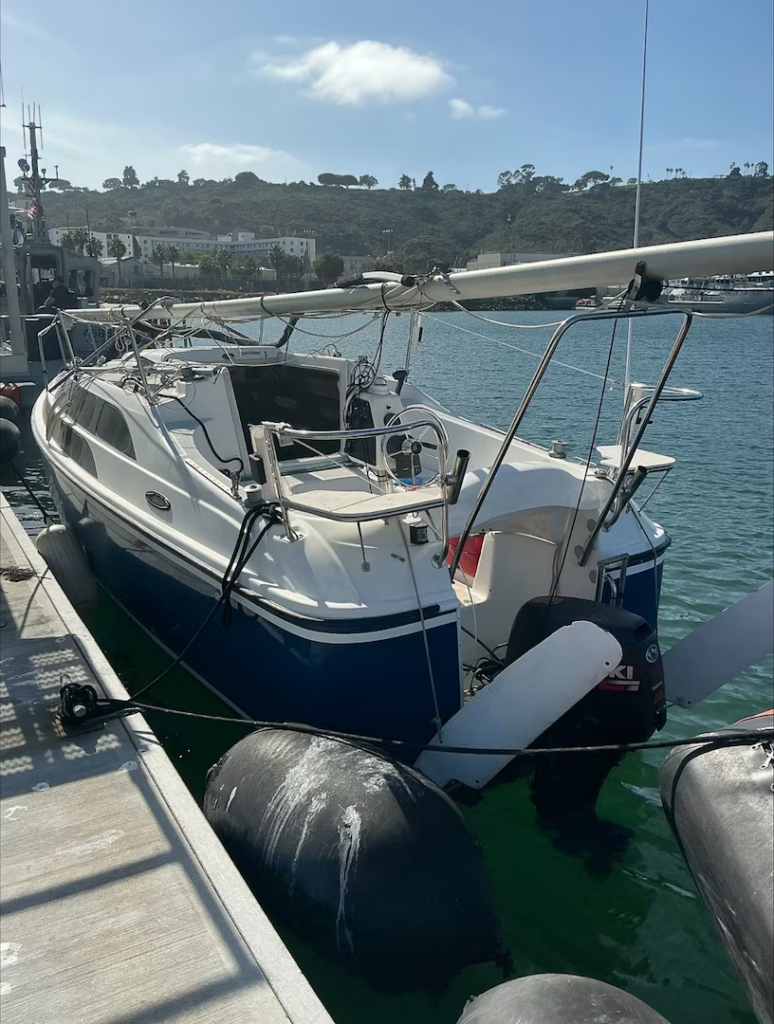
The Coast Guard interdicted 11 suspected aliens approximately 7 miles west of Imperial Beach, Sunday. At approximately 12:57 p.m., crew members aboard the Coast Guard Cutter Sea Otter (WPB-87362) observed a vessel transiting into U.S. waters and dispatched a boarding team to intercept.
U.S. Coast Guard Southwest District, March 16, 2026
SAN DIEGO — The Coast Guard interdicted 11 suspected aliens approximately 7 miles west of Imperial Beach, Sunday.
At approximately 12:57 p.m., crew members aboard the Coast Guard Cutter Sea Otter (WPB-87362) observed a vessel transiting into U.S. waters and dispatched a boarding team to intercept.
The Sea Otter’s boarding team interdicted the vessel and identified 11 suspected aliens aboard, all claiming Mexican nationality.
A Coast Guard Station San Diego boat crew assisted by transporting the vessel and all 11 suspected aliens to Border Patrol at Ballast Point.
USS Gonzalez Departs Norfolk for Deployment
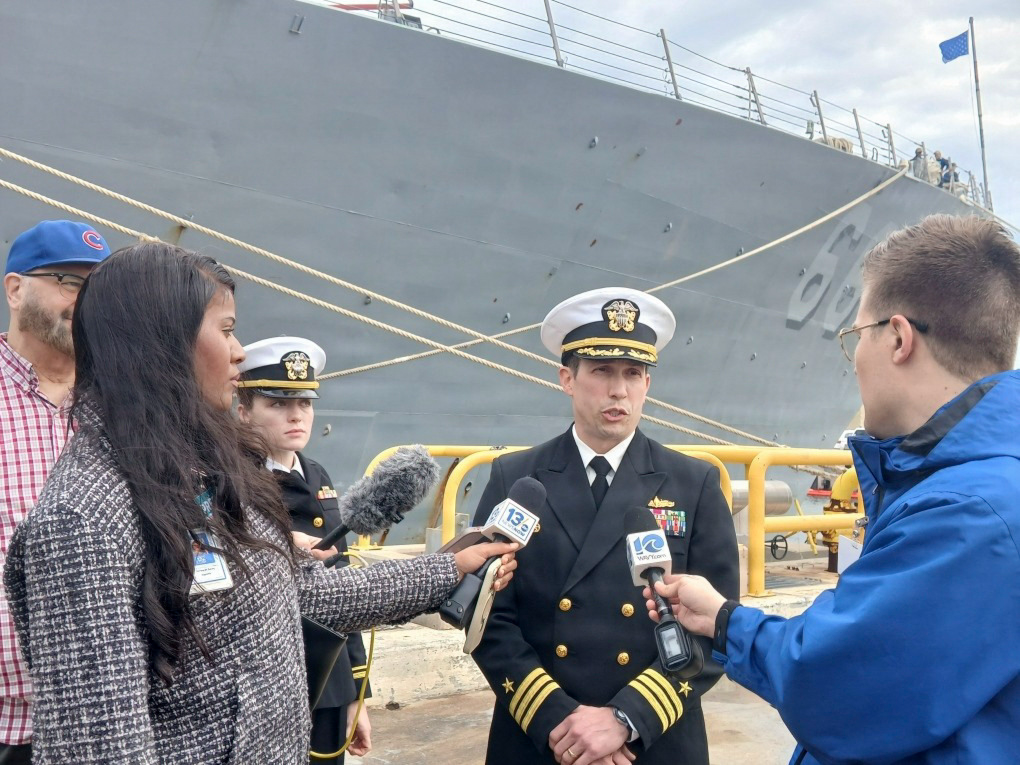
NAVAL STATION NORFOLK, Va. (March 16, 2026) – Cmdr. Michael Shenk, commanding officer of the Arleigh Burke-class guided-missile destroyer USS Gonzalez (DDG 66), speaks to local news media outlets prior to the ship’s departure from Naval Station Norfolk to begin operations in support of its scheduled deployment. The ship’s departure comes after months of training, maintenance, and certification events. (U.S. Navy photo by Chief Mass Communication Specialist Matthew Jackson)
From U.S. 2nd Fleet, 17 March 2026
NORFOLK, Va. – Arleigh Burke-class guided missile destroyer USS Gonzalez (DDG 66) got underway from Naval Station Norfolk March 16, 2026, to begin operations in support of its scheduled deployment.
The ship’s departure comes after months of training, maintenance, and certification events.
“The crew is ready and this ship brings significant combat capabilities to the fight,” emphasized Capt. John Benfield, commodore of Destroyer Squadron 22. “They are prepared to act at a moment’s notice to deter or defeat any threat as necessary.”
Gonzalez, stationed in Norfolk, Va, with a crew of approximately 300 Sailors, is a multi-mission guided-missile destroyer with air warfare, anti-submarine warfare, naval surface fire support, and surface warfare capability.
“A truly incredible amount of training and energy went into ensuring our crew was prepared for this deployment,” said Cmdr. Michael Schenk, commanding officer, USS Gonzalez. “Additionally, the guidance and assistance provided by Surface Force Atlantic, Carrier Strike Groups Four and Ten, Surface Group Mid-Atlantic, Destroyer Squadron Twenty-Two, and the Mid-Atlantic Regional Maintenance Center exemplified the full team support behind this ship being ready for any challenge we may face. Thank you to our families and the Norfolk community for your continued support as we head out to sea.”
Gonzalez is the U.S. Navy’s 16th Arleigh Burke-class destroyer. The ship was named for Marine Sgt. Alfredo Cantu Gonzalez, a Medal of Honor recipient in the Vietnam War. The keel was laid down on Feb. 3, 1994, at Bath Iron Works in Bath, Maine, and christened on Feb. 18, 1995.
U.S. 2nd Fleet, reestablished in 2018 in response to the changing global security environment, develops and employs maritime ready forces to fight across multiple domains in the Atlantic and Arctic in order to ensure access, deter aggression and defend U.S., allied, and partner interests.
For more U.S. 2nd Fleet news and photos, visit facebook.com/US2ndFleet, https://www.c2f.usff.navy.mil/, X – @US2ndFleet, and https://www.linkedin.com/company/commander-u-s-2nd-fleet.
Bell Completes SPINE Upgrades on First Two H-1 Aircraft
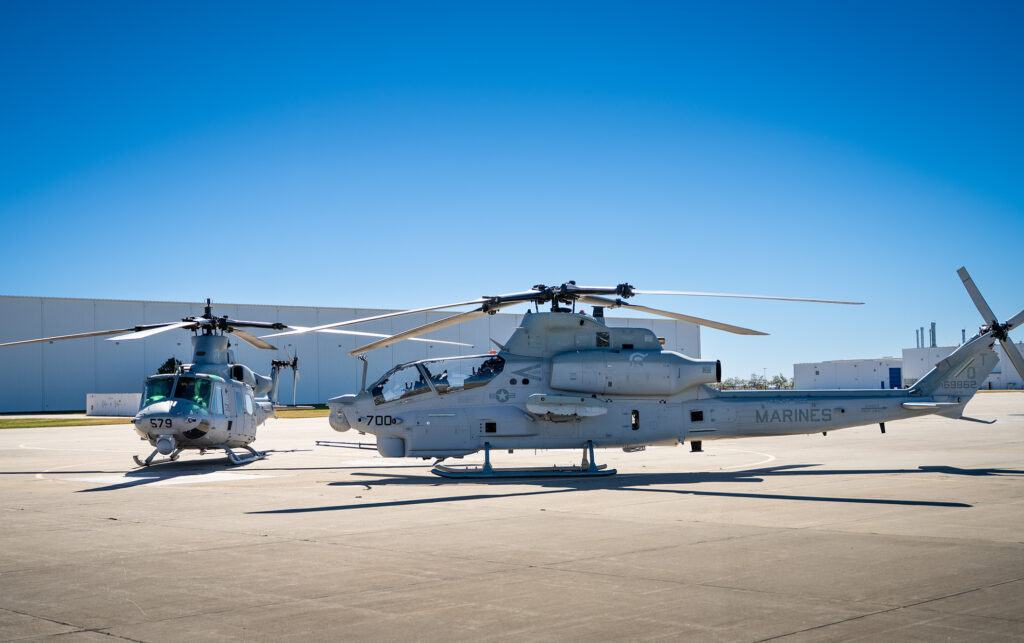
The first AH-1Z and UH-1Y to be completed under the Structural and Power Improvements for NextGen Effects (SPINE) program, formerly SIEPU, have left the Amarillo Assembly Center
From Bell Textron
AMARILLO, Texas. (March, 17 2026) – Bell Textron Inc., a Textron Inc. (NYSE: TXT) company, has announced the completion of the first AH-1Z and UH-1Y aircraft to receive full upgrades to their structure and power delivery mechanisms under the US Marine Corps’ SPINE program. The program was recently renamed from Structural Improvement and Electrical Power Upgrade (SIEPU) to the Structural and Power Improvements for NextGen Effects (SPINE) program to emphasize the importance of this essential modernization effort and to highlight the increased survivability and lethality SPINE will enable throughout the lifetime of the H-1 fleet.
The completed aircraft departed the Amarillo Assembly Center and are now at Naval Air Station (NAS) Patuxent River for continued flight testing. These tests will determine the final SPINE configuration to be modified in Amarillo and fielded to the USMC in future contracted efforts.
The SPINE program will enable the H-1 fleet to utilize enhanced weapons systems and other future capabilities and is part of the H-1 program’s modernization plan to increase lethality and enhance survivability by improving modern warfighting capabilities.
“To have these first two aircraft completed under the SPINE program is a huge moment for us,” said Scott Sims, H-1 program director, Bell. “At Bell, crew safety and aircraft effectiveness remain the number one priority on everything we do. These upgrades will ensure that our H-1 aircraft remain the most capable aircraft available, while operating at the forefront of modern missions. They will continue to excel at the job they were designed to do for many years to come.”
Bell’s effort to modify these first two aircraft began at the company’s Drives System Center (DSC) and Repair and Overhaul Center (ROC) and culminated in the aircraft electrical and structural modifications that took place over the last 19 months at the Amarillo Assembly Center. Successful execution has been a result of years of work between U.S. Government, Bell, and industry partners. The completion of the first modification effort at the Amarillo Assembly Center sets the stage for future growth as Bell looks to support modification of the Marine H-1 fleet over the next decade.
“In the competitive world that the H-1 lives and thrives in, it’s vital to remain competitive with current and future capabilities and to excel in every environment where these aircraft are deployed,” said Danielle Markham, program manager, Bell.
“The SPINE program represents the next step in the H-1 evolution, ensuring the platform has structural strength, electrical capacity, and digital foundation needed to operate as a fully interoperable member of the modern joint force.”
13th MEU Forms Complete Marine Air-Ground Task Force with Full F-35 Squadron
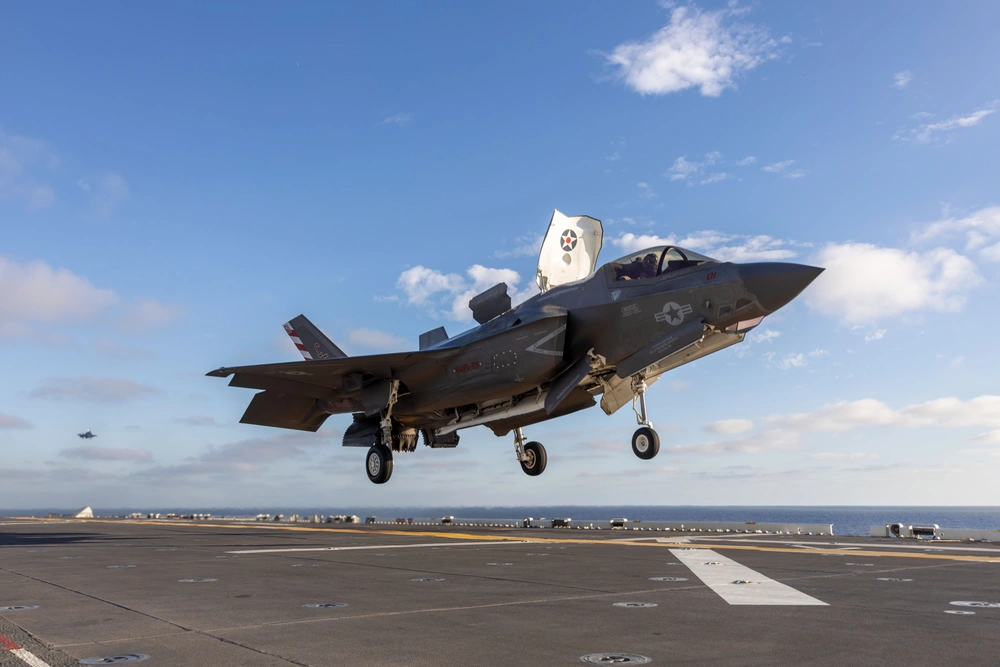
A U.S. Marine Corps F-35B Lightning II aircraft assigned to Marine Fighter Attack Squadron (VMFA) 211, Marine Aircraft Group 13, 3rd Marine Aircraft Wing, conducts a vertical landing on the flight deck of the amphibious assault ship USS Tripoli (LHA 7) as part of Steel Knight 24 while underway in the Pacific Ocean, Dec. 3, 2024. (U.S. Marine Corps photo by Sgt. Luc Boatman)
From the 13th Marine Expeditionary Unit, March 16, 2026
CAMP PENDLETON, Calif. – The 13th Marine Expeditionary Unit (MEU) has officially formed as a complete Marine Air-Ground Task Force with the addition of its major subordinate elements, bringing the MEU’s full capability together under one command.
The 13th MEU Command Element welcomed Battalion Landing Team (BLT) 2/4, which will serve as the Ground Combat Element; Combat Logistics Battalion (CLB) 13, which will serve as the Logistics Combat Element; and Marine Medium Tiltrotor Squadron (VMM) 364 (Reinforced) and Marine Fighter Attack Squadron (VMFA) 211, which together form the Aviation Combat Element. VMFA-211 will provide a full squadron of F-35B Lightning II aircraft, significantly expanding the aviation capabilities of the unit.
Together, these units form a Marine Air-Ground Task Force (MAGTF), enabling command and control of ground, aviation, and logistics capabilities and forming a single, rapidly deployable force capable of executing a wide range of missions from the sea.
“Compositing the 13th MEU brings together the full capabilities of a Marine Air-Ground Task Force,” said Col. Richard Alvarez, commanding officer of the 13th MEU. “That integration gives national leaders another flexible, lethal, sea-based force ready to respond when needed.”
As the Ground Combat Element, BLT 2/4, provides the infantry forces of the MEU and serves as the principal ground maneuver element of the MAGTF.
The Aviation Combat Element, comprised of VMM-364 (Rein.) and VMFA-211, provides the MEU with a full spectrum of Marine Corps aviation capabilities in support of MAGTF operations.
CLB-13, the Logistics Combat Element, provides a broad range of sustainment capabilities that allow the MEU to operate and sustain itself in any environment.
“The strength of The Fighting 13th has always been its Marines and Sailors,” said Sgt. Maj. Gerald Furnari, the senior enlisted advisor of the 13th MEU. “Every generation that serves in this unit adds to its legacy, and today’s team stands ready to answer the nation’s call.”
The composite of the MEU marks the beginning of an intensive training cycle during which the command, ground, aviation, and logistics elements will train together before deploying aboard U.S. Navy amphibious ships as part of an Amphibious Ready Group.
The 13th MEU was established at Camp Pendleton on Feb. 1, 1985, as the 13th Marine Amphibious Unit, and was redesignated as the 13th Marine Expeditionary Unit on Feb. 5, 1988. Known as “The Fighting 13th,” the unit has deployed around the world in support of combat operations, crisis response missions, and humanitarian assistance efforts.