NAVAIR Selects Near Earth Autonomy to Enable Uncrewed Ship-to-Shore Operations in Contested Maritime Environments
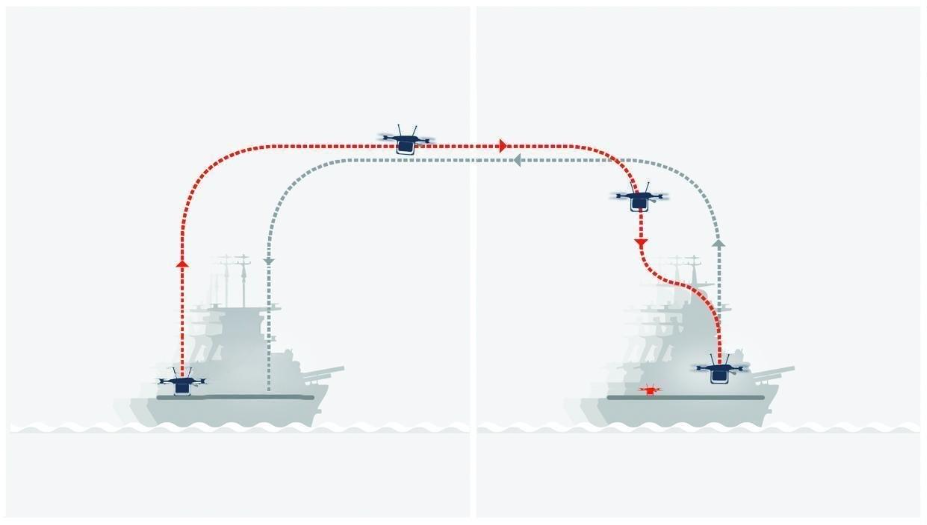
Illustration of UAS with Near Earth’s Compact Firefly System Conducting Maritime Logistics
Resilient Uncrewed Logistics in GPS-Denied Maritime Environments
PITTSBURGH, Pa. – March 27, 2026 / The Naval Air Systems Command has awarded Near Earth Autonomy (Near Earth) a contract to develop an aircraft-agnostic autonomy solution for ship-to-shore and shore-to-ship operations through an Other Transaction Agreement (OTA) under the Naval Aviation Systems Consortium (NASC). The work will advance the U.S. Marine Corps’ capabilities for uncrewed logistics missions in contested maritime environments.
Most uncrewed aircraft systems (UAS) operations rely on infrastructure, including GPS and continuous data. When these are unavailable or denied, it becomes more difficult, or outright impossible, to complete missions. Near Earth directly addresses these challenges by enabling UAS to conduct complex maritime logistics, in shore-to-ship, ship-to-ship, and ship-to-shore transfers, without reliance on external infrastructure. This capability significantly increases operational resilience for naval forces.
Near Earth’s Firefly compact autonomy system is designed for integration with a wide variety of aircraft. Weighing just 2 pounds, Firefly is light enough to be incorporated into a broad range of Class 3 and Class 4 aircraft, greatly expanding its applicability across the uncrewed aviation ecosystem. It has been successfully integrated on platforms including BAE, L3 Harris, and Pterodynamics. Multiple capabilities will be matured under the contract, including autonomous confined area operations, ship recovery in emissions-controlled (EMCON) environments, and GPS-free navigation.
This contract with the Navy is a key next step, maturing our autonomous systems performance for maritime missions,” said Sanjiv Singh, CEO of Near Earth Autonomy. “We will build upon our past work on compact systems for uncrewed aerial logistics. This effort supports the Navy’s ability to perform resilient, reliable maritime operations across aircraft.”
This contract will be validated through a series of test events to validate requirements, refine operational procedures, and systematically verify system performance. These tests will culminate in a final demonstration with the Naval Air Systems Command at Patuxent River in September 2026, showcasing a full range of capabilities, including ship searching, deck tracking, night operations, and autonomous flights between moving vessels.
U.S. Coast Guard, CNMI partners strengthen maritime security presence in Saipan’s waters
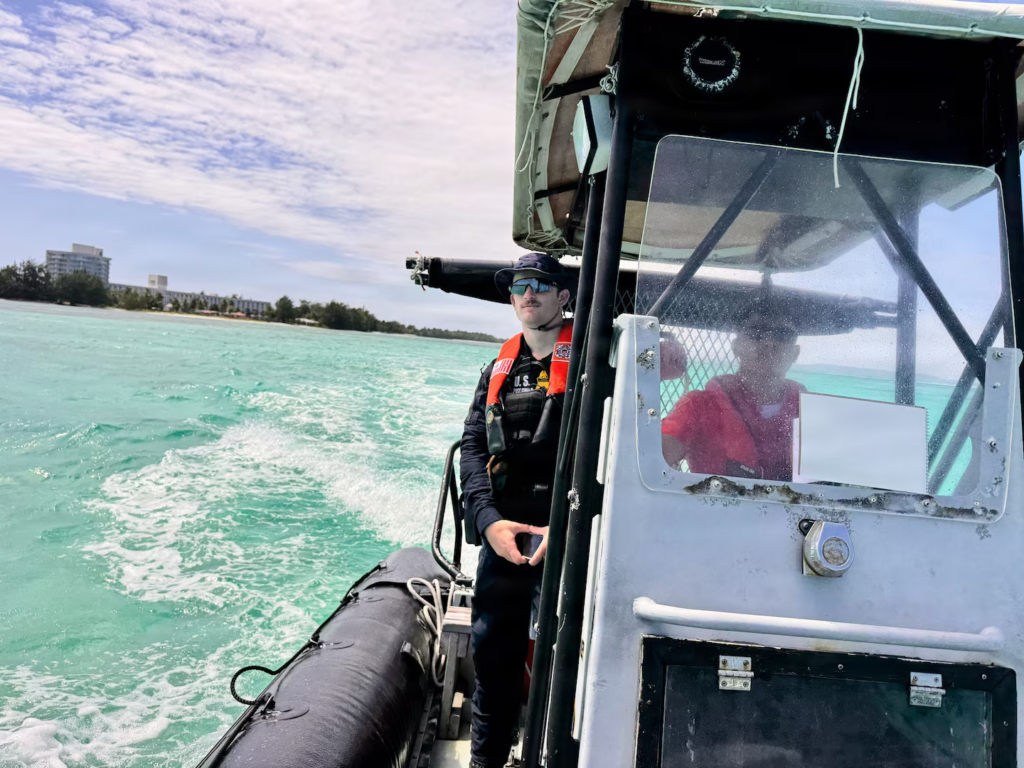
Members of the U.S. Coast Guard Sector Boarding Team conduct a joint patrol with the CNMI Department of Public Safety – Marine Unit personnel on March 20, 2026, in Saipan. From March 18-22, conducted joint underway and shoreside operations alongside the CNMI Department of Public Safety, Saipan Marine Unit, and Saipan Customs and Biosecurity, reinforcing direct lines of communication and cooperation that strengthen maritime domain awareness across the CNMI’s waters and surrounding exclusive economic zone. (U.S. Coast Guard photo by Petty Officer 1st Class Chris Farrell)
From U.S. Coast Guard Forces Micronesia, March 26, 2026
SAIPAN, CNMI — Federal and local maritime law enforcement agencies patrolled Saipan’s waters and port together in mid-March, boarding six small vessels and launching new coordination channels that expand the CNMI’s ability to monitor and respond to threats in its surrounding waters.
From March 18-22, the U.S. Coast Guard Sector Boarding Team conducted joint underway and shoreside operations alongside the CNMI Department of Public Safety Saipan Marine Unit and CNMI Customs and Biosecurity. Teams engaged 12 vessel contacts and completed six small vessel security boardings, while a joint patrol of the Port of Saipan marked the first combined shoreside operation between the U.S. Coast Guard and Customs and Biosecurity.
The operation also brought together key agency leaders for the first time. SBT members met with an ICE Homeland Security Investigations representative, the assistant director of the CNMI Department of Fish and Wildlife, and the newly appointed chief of the DPS’s Saipan Marine Unit — reinforcing direct lines of communication and cooperation that strengthen maritime domain awareness across the CNMI’s waters and surrounding exclusive economic zone.
“The Marianas sit at the center of Western Pacific maritime activity: commercial traffic, fishing, small vessels moving between islands,” said Lt. j.g. Thomas Forames-Su, supervisor of the SBT. “These operations are about more than boardings. We’re strengthening the relationships and shared awareness that let us and our partners act faster and more cohesively.”
Maritime domain awareness is a shared responsibility across federal, local, and community stakeholders. The CNMI’s economy depends heavily on the free flow of maritime commerce, fishing, and tourism, all of which require safe and well-monitored waters. Joint operations, like this one, strengthen the network of agencies and protect those interests every day.
Building on the momentum from this week’s operations, the U.S. Coast Guard and CNMI partners are planning additional joint patrols, dockside security boardings, and coordinated cutter operations, like the USCGC Frederick Hatch’s recent patrol, in the waters around Saipan and to the north. Agencies are also working to deepen communication protocols and formalize interagency coordination agreements to expand joint response capabilities across the region.
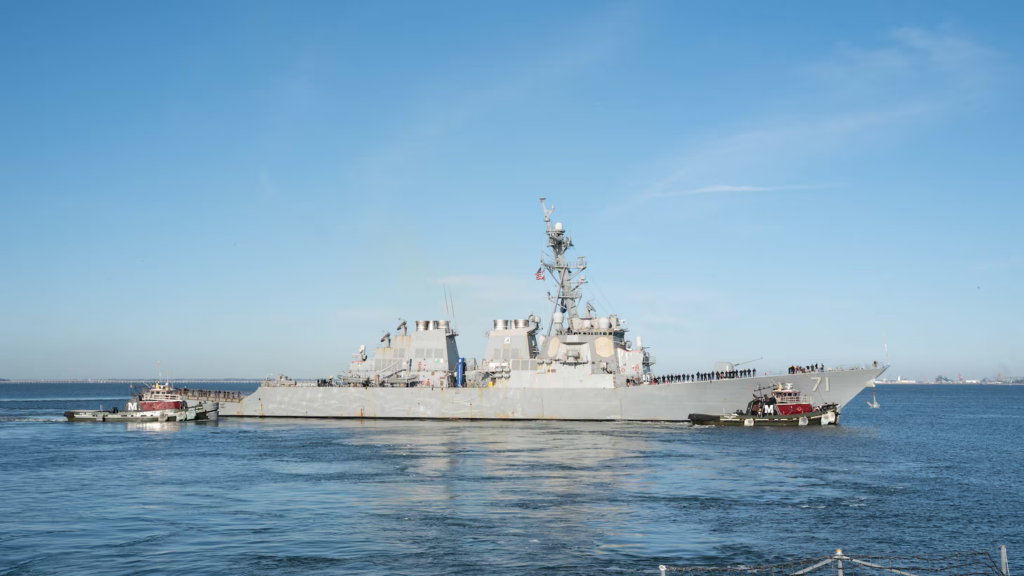
NORFOLK, Va. — Arleigh Burke-class guided missile destroyer USS Ross (DDG 71) got underway from Naval Station Norfolk March 25, 2026, to begin operations in support of its scheduled deployment.
The ship’s anticipated departure comes after months of training, maintenance, and certification events as part of the George H. W. Bush Carrier Strike Group.
“The Ross crew is ready in all respects to deter aggression, protect freedom of the seas, and respond to any challenge,” emphasized Capt. John Benfield, commodore of Destroyer Squadron 22. “They are part of the readiness engine of our great Navy, and they know that fortune favors valor.”
Ross, stationed in Norfolk, Va, with a crew of approximately 300 Sailors, is a multi-mission guided-missile destroyer with air warfare, anti-submarine warfare, naval surface fire support, and surface warfare capability.
“Thank you to our families for all the continued support as we head out to sea. Because of them, the Sailors of USS Ross can fully embody our ship motto “Fortune Favors Valor” in every way,” said Cmdr. Pia M. Chapman, commanding officer, USS Ross. “We’ve conducted extensive training, maintenance, and certification events as part of the George H. W. Bush Carrier Strike Group, and we are trained and ready for national tasking.”
Ross is named for Medal of Honor recipient and retired Navy Captain Donald Kirby Ross, recognized for his bravery and refusal to abandon his duty during the December 1941 Pearl Harbor attacks. The ship’s keel was laid on April 10, 1995, in Pascagoula, Mississippi, and her christening was held one year later.
U.S. 2nd Fleet, reestablished in 2018 in response to the changing global security environment, develops and employs maritime ready forces to fight across multiple domains in the Atlantic and Arctic in order to ensure access, deter aggression and defend U.S., allied, and partner interests.
Naval Postgraduate School Alumni Lead NASA’s Artemis II Moon Mission
From Dan Linehan, March 24, 2026
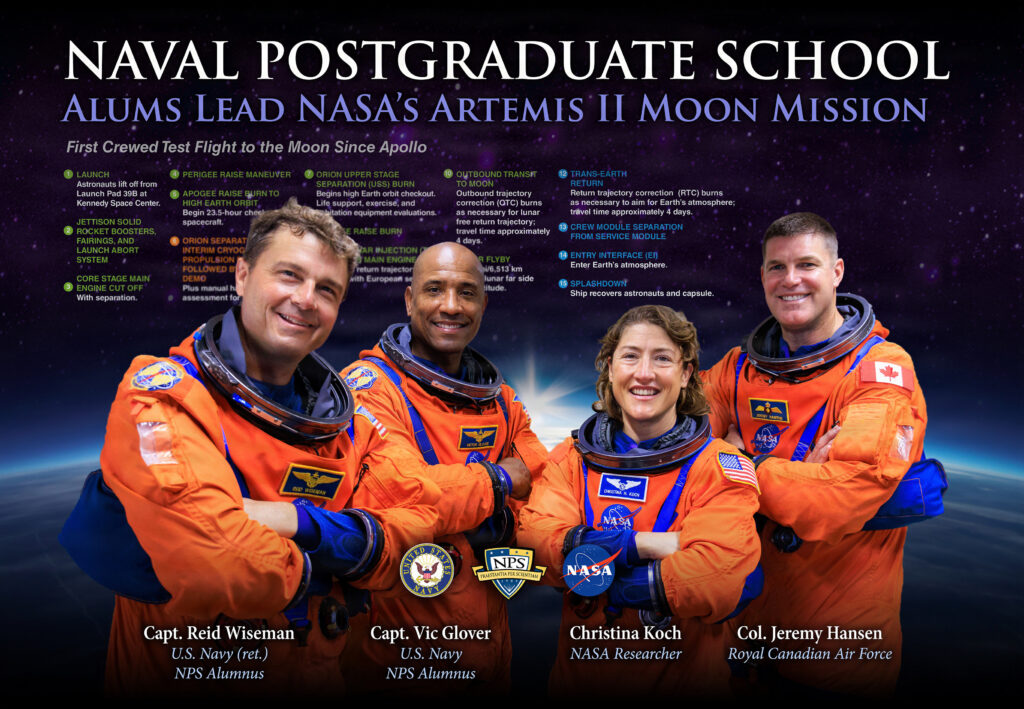
Two Naval Postgraduate School (NPS) alumni will lead the historic Artemis II mission on a 10-day space flight around the Moon — mission commander retired U.S. Navy Capt. Reid Wiseman and spacecraft pilot U.S. Navy Capt. Victor Glover. The target launch window opens on April 1, 2026, the first of seven possible launch days in April. Artemis II will be the first crewed lunar fly-by in more than 50 years.
Americans first orbited the Moon during the Apollo 8 mission in 1968, which was piloted by James Lovell, also a U.S. Navy captain, naval aviator, and test pilot, in preparation for the Apollo 11 lunar landing. Now, 58 years later, this modern mission will similarly take the four-person crew around the Moon to test their modern spacecraft at a maximum distance of nearly 250,000 miles away from Earth. The Artemis II mission “will carry astronauts farther from Earth and closer to the Moon than any human has been in over half a century,” according to NASA’s website.
“U.S. Navy Capt. Gene Cernan was the last astronaut to set foot on the Moon. He commanded the Apollo 17 mission in 1972 and was also an NPS alumnus. So, it’s exciting to see us headed back,” said retired U.S. Navy Vice Adm. Ann Rondeau, NPS president. “Since NASA’s inception, NPS and our Navy have had a very strong history in space, from educating future astronauts to record-setting efforts and cutting-edge research. We continue to break boundaries today.”
Both naval aviators and test pilots, Wiseman and Glover received NPS certificates in Space Systems Fundamentals. And Glover also earned a Master of Science in Systems Engineering from NPS. These programs and others are offered by NPS’ Space Systems Academic Group (SSAG).
Jim Newman, former SSAG chair and NPS provost, flew aboard four Space Shuttle missions as a mission specialist to the International Space Station (ISS) and made six spacewalks. He understands the magnitude of returning to the Moon and believes extensive education is fundamental to preparing astronauts for the out-of-this-world challenges faced during spaceflight.
“It’s very exciting for NPS alumni to be so involved in NASA’s return to the Moon,” said Newman. “Not only on this upcoming Artemis II spaceflight but on others as well, continuing a long tradition of exceptional service and contribution to our country.”
Having a graduate degree is a requirement for becoming a NASA astronaut. Back in 2013 after Glover’s selection, he reflected on the importance of having an advanced education that integrated real-world problems and solutions.
“I was a test pilot, working in the systems engineering field, actually doing test and evaluation under the umbrella of weapons systems acquisition,” Glover said of his Navy duties back while concurrently studying for his master’s from NPS. “My work product bolstered my school product, and, likewise, my school product improved my work quality.”
Two mission specialists make up the remaining Artemis II crew. Researcher Christina Koch specializes in space science instrument development and remote scientific field engineering, and Canadian Space Agency’s Jeremy Hansen is a Royal Canadian Air Force colonel and fighter pilot with NASA and European Space Agency mission operations experience.
Wiseman, Glover, and Koch have each previously completed one spaceflight mission. For Hansen, it will be his first trip into space.
The astronauts will blast off aboard the crew capsule of an Orion spacecraft that’s mounted atop a NASA Space Launch System (SLS) super heavy-lift rocket. Like the Space Shuttle, SLS uses liquid oxygen and liquid hydrogen propellants for its main engines and has two solid rocket boosters at opposite sides.
After liftoff from Kennedy Space Center’s Launch Complex 39B, Orion will orbit Earth twice as it conducts thorough tests that ensure the spacecraft is ready to safely trek across the vacuum of space to the Moon and back. While still in Earth’s orbit, CubeSats from international space agencies are planned for deployment. Though none are from NPS this time around, the institution has a long history of developing CubeSats—and other types of satellites—and putting them into space.
Interest in NPS’ CubeSats helped draw former director of the science directorate at NASA’s Ames Research Center Michael Hesse to his new position of Vice Provost of Research and Innovation at NPS. Hesse is a physicist, specializing in space science and space weather.
“Particularly as someone who has worked at NASA for so many years, it’s wonderful to see this mission led by two NPS alumni,” said Hesse. “For a school that has educated so many astronauts and so many others who are involved in the science, technology, and applications of space programs across the globe, it’s a tremendous honor to have this connection as humankind finally returns to the Moon.”
Blasts from rocket thrusters will break Orion free of Earth’s orbit and put the spacecraft on trajectories to the Moon, around it, and back to Earth. The roundtrip mission will cover approximately 500,000 miles. During this time, astronauts will test equipment and procedures required for future long duration and Moon landing missions and use the Deep Space Network to stay in communication with Earth.
The Artemis space program started exploration spaceflights in 2022 with Artemis 1, which was a successful uncrewed mission that orbited the Moon. Future Artemis missions will be Moon landings with astronauts and lunar surface exploration.
NPS’ tradition of graduating astronauts stretches back to Project Mercury, which was NASA’s very first human spaceflight program. U.S. Navy Cmdr. Scott Carpenter was one of the Mercury Seven and, in 1962, the second American to orbit Earth. And a decade later, Cernan’s Apollo 17 made the last lunar landing.
Including Carpenter, Cernan, Wiseman, and Glover, NPS has 44 NASA astronaut alumni. And this figure doesn’t even include its non-alumni astronauts, such as current NPS student U.S. Army CW3 Ben Bailey, who was selected to the most recent NASA astronaut class in 2025, and faculty like Space Shuttle astronaut Newman.
Mercury, Gemini, Apollo, Skylab, Soyuz, Space Shuttle, SpaceX, ISS, and now Artemis are all missions and spacecraft that NPS astronauts have flown. Even former naval aviator and test pilot retired Cmdr. Brian Binnie, who helped usher in the era of commercial space travel when he captured the X-Prize in SpaceShipOne, was an NPS alum.
It’s hard to escape the gravity of the moment as these 21st century space voyagers head back to the Moon. And as they do, Rondeau gives her wishes, “Godspeed Reid, Victor, Christina, and Jeremy!”
Naval Postgraduate School (NPS) is located in Monterey, California, provides defense-focused graduate education, including classified studies and interdisciplinary research, to advance the operational effectiveness, technological leadership, and warfighting advantage of the naval service. Established in 1909, NPS offers master’s and doctorate programs to Department of War military and civilians, along with international partners, to deliver transformative solutions and innovative leaders through advanced education and research.
Seabed 2030, Greenroom Robotics Announce Partnership to Support Global Ocean Mapping
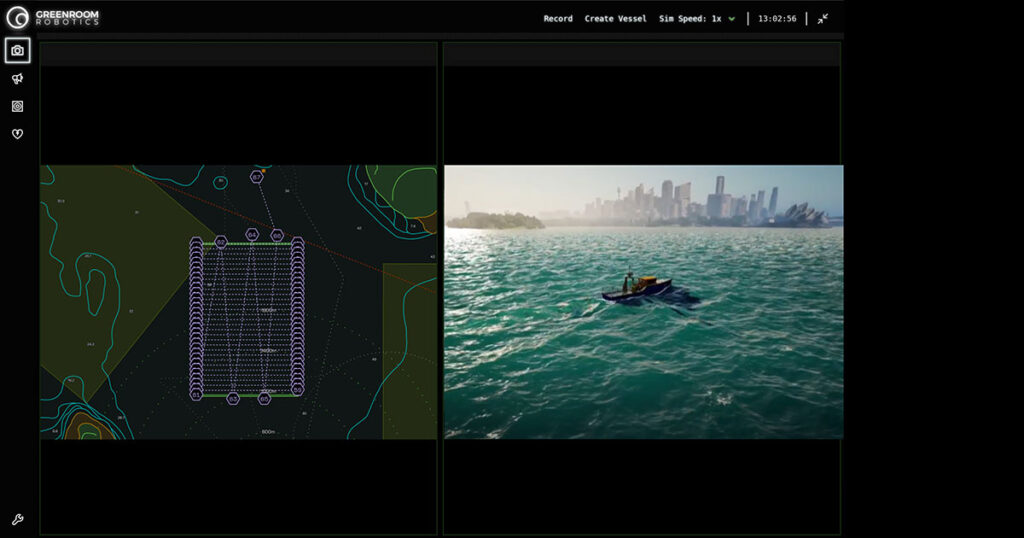
Autonomous survey mission planning in Greenroom Robotics’ MIS-SIM simulation environment, enabling efficient, scalable ocean data collection.
LONDON, 24 March 2026 –The Nippon Foundation-GEBCO Seabed 2030 Project is pleased to announce a new partnership with Australian maritime AI and autonomy innovator, Greenroom Robotics. Greenroom Robotics specialises in artificial intelligence-enabled perception and autonomy software that support safer, more efficient and environmentally responsible maritime operations.
Through this collaboration, Seabed 2030 and Greenroom Robotics will explore opportunities to support the efficient collection, processing and sharing of bathymetric data, contributing to the mission of delivering a complete map of the world’s ocean floor.
Greenroom Robotics software modernises maritime operations through enhanced autonomy, situational awareness and digital workflows. Its hardware-agnostic solutions support uncrewed and optimally crewed vessel operations, helping to enable more persistent and scalable ocean data collection.
Seabed 2030 is a collaborative project between The Nippon Foundation and the General Bathymetric Chart of the Oceans (GEBCO), which seeks to inspire the complete mapping of the world’s ocean, and to compile all the data into the freely available GEBCO Ocean Map.
The Project is formally endorsed as a Decade Action of the UN Ocean Decade. GEBCO is a joint programme of the International Hydrographic Organization (IHO) and the Intergovernmental Oceanographic Commission (IOC), and is the only organisation with a mandate to map the entire ocean floor.
Advances in autonomous and digitally integrated maritime systems are increasingly supporting hydrographic surveying and ocean mapping activities. By enabling vessels to operate more efficiently and collect high-quality data at scale, such technologies can help expand and expedite mapping coverage in both coastal and remote ocean regions.
For example, advanced autonomy systems can enable survey operations using smaller vessels and reduced crew while maintaining data quality. In real world operations this approach has delivered a 94% reduction in diesel consumption compared to the same crewed survey task, demonstrating the potential for more environmentally efficient ocean mapping operations.
Commenting on the new partnership, Seabed 2030 Director Jamie McMichael-Phillips said: “Achieving the ambitious goal of mapping the entire ocean floor requires continued innovation in the technologies used to collect and process bathymetric data. Partnerships with organisations such as Greenroom Robotics help advance the capabilities needed to make ocean mapping more efficient, scalable and accessible.”
James Keane, Chief Executive Officer of Greenroom Robotics, commented: “We are proud to partner with Seabed 2030 in support of the global effort to map the ocean floor. By modernising maritime operations with autonomous and digitally integrated technologies, we can help make ocean mapping safer, cleaner and more efficient. We’re looking forward to supporting the collection of high-quality data that contributes to this important global initiative and helps safeguard our oceans for the future.”
All data collected and shared with the Seabed 2030 project is included in the free and publicly available GEBCO global grid.
Honeywell Aerospace, DoW, Sign Agreement to Accelerate Production of Defense Technologies
Honeywell to commit $500 million for production capacity upgrades
PHOENIX, March 25, 2026 – Honeywell (NASDAQ: HON) today announced it has signed a groundbreaking supplier framework agreement with the U.S. Department of War (DoW) to rapidly increase the production of critical defense technologies. This agreement includes a $500 million multi-year investment to upgrade the company’s production capacity.
Honeywell Aerospace is among the first Tier 1 suppliers to sign a framework agreement of this nature with the DoW. This underscores Honeywell Aerospace’s focus on delivering critical capabilities to American and allied forces at the speed and scale national defense requires.
“Honeywell Aerospace is proud to embrace the challenge and meet this urgent need,” said Jim Currier, president and CEO of Honeywell Aerospace. “Our commercial operating system enables us to invest in advanced technologies and manufacture at scale and speed, delivering a substantial and enduring benefit to the customer and taxpayers.”
Under this agreement, Honeywell Aerospace will ramp production of the following:
Navigation systems: Honeywell is a global leader in resilient navigation technology, particularly in challenging environments. The company’s wide range of inertial navigators can be found in diverse industries across the aerospace, defense and industrial markets. Honeywell Aerospace navigation systems are critical enablers on most precision munition platforms globally.
Assure™ actuators: Honeywell Assure missile maneuverability actuation and electronic control systems are the most precise and speed-responsive systems available. These actuators are used for interceptor, tactical and other strategic high-performance missiles.
Electronic Warfare solutions: Electronic Warfare solutions from Honeywell Aerospace provide critical functionality on U.S. military platforms from fighter jets to the Surface Electronic Warfare Improvement Program and on AMRAAM missiles. Advanced technologies also support Signals Intelligence and Electronic Intelligence domains.
SAN DIEGO — A Coast Guard boarding team interdicted 12 suspected aliens Monday offshore San Diego.
At 6:09 a.m., watchstanders detected a panga-style vessel transiting north into U.S. waters. A boarding team from a Coast Guard Maritime Safety and Security Team deployed to intercept.
The boarding team issued commands for the vessel to stop, but the operator failed to comply and attempted to flee. The crew employed graduated use of force, which resulted in disabling fire.
Boarding team members identified 12 suspected aliens aboard, all claiming Mexican nationality.
All 12 aliens were transferred to U.S. Border Patrol personnel at Ballast Point in Imperial Beach.
USS Gettysburg Returns to Naval Station Norfolk from U.S. Southern Command Missions
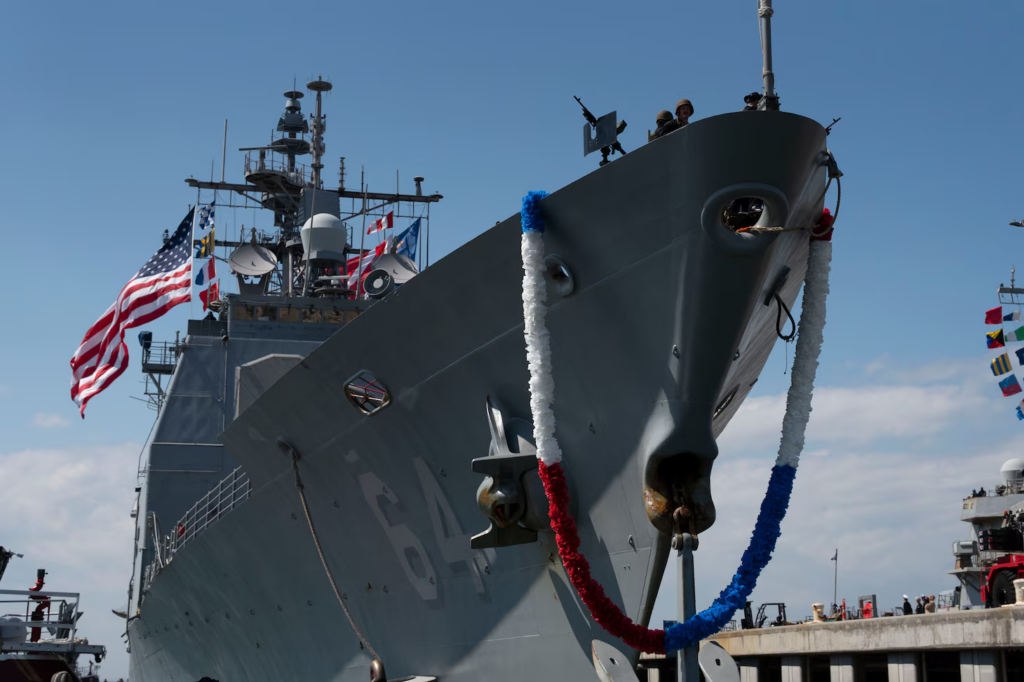
NORFOLK, Va. — The Ticonderoga-class guided-missile cruiser USS Gettysburg (CG 64) returned to Naval Station Norfolk March 23, concluding a five-month deployment supporting U.S. Southern Command (USSOUTHCOM) missions.
“The ‘War Horses’ of USS Gettysburg conducted themselves honorably and professionally, supporting our nation by deterring narcoterrorism, maintaining security and stability in the Western Hemisphere, and enforcing U.S. sanctions,” shared Capt. John Lucas, commanding officer, USS Gettysburg. “We stand ‘GETTY ready’ to support our American warfighting team wherever and whenever we are called.”
Gettysburg brought maritime capabilities in response to Presidential executive orders and a national emergency declaration. The ship’s performance provided clarification of the military’s role in protecting the territorial integrity of the United States. Gettysburg was among U.S. military forces deployed to the Caribbean in support of the USSOUTHCOM mission, Department of War-directed operations, and the president’s priorities to disrupt illicit drug trafficking and protect the homeland.
Gettysburg worked alongside both the Iwo Jima Amphibious Readiness Group and the Gerald R. Ford Carrier Strike Group while supporting USSOUTHCOM missions.
Gettysburg is a multi-mission guided-missile cruiser capable of air warfare, undersea warfare, naval surface fire support and surface warfare, supporting carrier battle groups, amphibious forces or operating independently and as flagships of surface action groups. The ship carries approximately 350 Sailors. Commissioned on June 22, 1991, USS Gettysburg is the namesake of the Battle of Gettysburg.
U.S. 2nd Fleet, reestablished in 2018 in response to the changing global security environment, develops and employs maritime ready forces to fight across multiple domains in the Atlantic and Arctic in order to ensure access, deter aggression and defend U.S., allied, and partner interests.
For more U.S. 2nd Fleet news and photos, visit facebook.com/US2ndFleet, https://www.c2f.usff.navy.mil/, X – @US2ndFleet, and https://www.linkedin.com/company/commander-u-s-2nd-fleet.
RIMPAC 2026 Commanders Conference Concludes in Australia
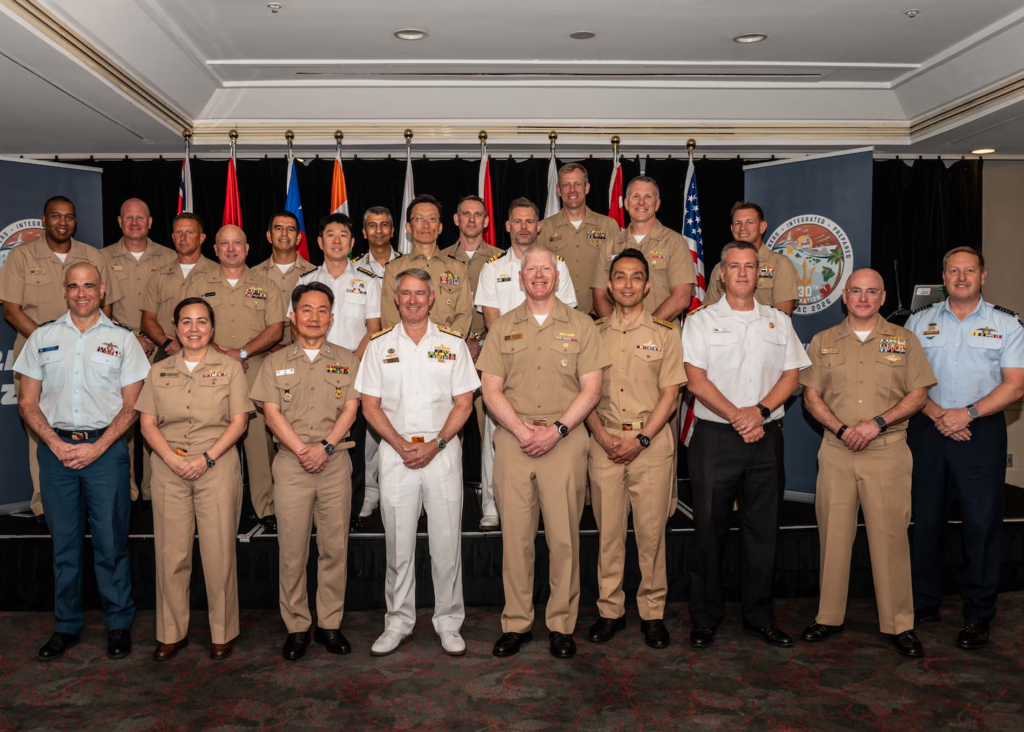
Exercise Rim of the Pacific (RIMPAC) 2026 senior leadership and staff pose for a group photo at the RIMPAC 2026 Commander’s Conference in Sydney, Mar. 17, 2026. (U.S. Navy photo by MC1 Class Sarah Eaton)
By Commander, U.S. Third Fleet, March 20, 2026
SYDNEY – Commander, U.S. 3rd Fleet concluded the Commanders Conference for Exercise Rim of the Pacific (RIMPAC) 2026, March 20, 2026, marking a key milestone in planning for the world’s largest international maritime exercise.
Senior leaders and planners, representing more than 30 allied and partner nations, gathered for the five-day conference to review major elements of the upcoming exercise and build on progress achieved during the Mid-Planning Conference held in December. The in-person engagement enabled participants to strengthen professional relationships and advance coordination ahead of integrated operations during RIMPAC 2026.
U.S. Navy Capt. Brian Jamison, RIMPAC 2026 exercise director, delivered opening remarks on the first day of the conference, formally commencing the event.
“This is a very important planning milestone for execution later this summer,” said Jamison. “This is our opportunity to come together in person, to work on some of the key deliverables, and get into the teamwork that it’s going to take to make this very successful.”
U.S. Navy Vice Adm. John Wade, commander, U.S. 3rd Fleet, welcomed attendees and emphasized the importance of multinational cooperation and shared commitment among participating nations.
“I want to make sure that everyone from the most senior to the most junior is thanked for your hard work that allowed us to come to beautiful Sydney, Australia, to align and synchronize with each other,” said Wade. “This exercise is an opportunity for the young men and women who have volunteered to serve to get better, to get stronger, to become more proficient and capable.”
Wade also underscored the conference’s role in ensuring RIMPAC builds successful international maritime partnerships built on trust and cooperation.
“This conference allows us to purposefully and methodically go through the plan and make sure that we’ve done our homework to ensure that we do this safely and professionally, obtain objectives strategically, operationally, and tactically, not only collectively as a team, but each of our nations and our services,” added Wade.
RIMPAC 2026 will mark the 30th iteration of the biennial exercise and will coincide with the United States’ 250th anniversary of the signing of the Declaration of Independence. The exercise is designed to bring allied and partner nations together to enhance interoperability, strengthen collective maritime security and reinforce enduring cooperation across the Indo-Pacific.
First conducted in 1971, RIMPAC was initially held annually before transitioning to a biennial schedule in 1974, due to its growing scale and scope. The founding participants were the United States, Australia and Canada.
U.S. Navy Opens New Expeditionary Maintenance Facility at Camp Mitchell, Rota Spain
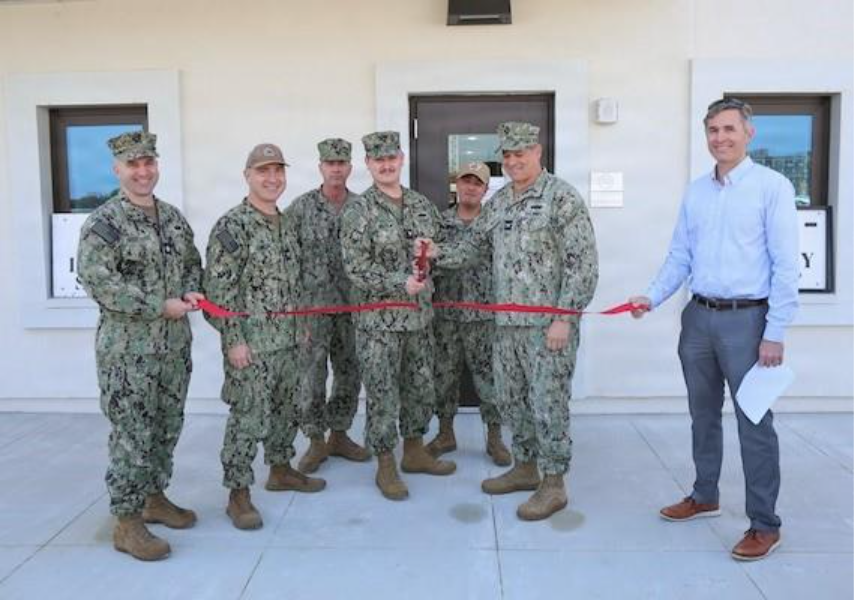
Naval Station (NAVSTA) Rota Commanding Officer Capt. Charles Chmielak, second from left, and 22nd Naval Construction Regiment (22NCR) Commodore Capt. Allen Willey, second from right, join Sailors assigned to 22NCR and NAVSTA Rota Public Works Department to cut a ribbon during the opening of a new expeditionary maintenance facility at Camp Mitchell onboard NAVSTA Rota, Spain, March 23, 2026. (U.S. Navy photo by MCC Justin Stumberg)
From Chief Mass Communication Specialist Justin Stumberg, March 24, 2026
U.S. Navy leaders, Sailors, and civilian partners marked the completion of a new expeditionary maintenance facility (EMF) during a ribbon-cutting ceremony at Camp Mitchell aboard Naval Station (NAVSTA) Rota, Spain, March 23, 2026.
This project, led by NAVSTA Rota’s Resident Officer in Charge of Construction (ROICC) in coordination with the 22nd Naval Construction Regiment (NCR), delivers modern vehicle, boat, and equipment maintenance capabilities in direct support of Naval Mobile Construction Battalion and Underwater Construction Team assets operating across Europe and Africa.
“This facility is about readiness at the deckplate level,” said Capt. Allen Willey, 22NCR commodore. “By providing our Seabees and divers with a purpose-built maintenance space, we’re directly improving their ability to sustain equipment, respond faster, and remain mission-ready in support of fleet and combatant commander requirements.”
The $25.9 million military construction project was awarded in December 2021 and reached beneficial occupancy in December 2025. The facility replaces several aging, end-of-life buildings and consolidates maintenance and administrative functions into a single, modern structure designed specifically for expeditionary engineering forces.
“This was a complex, multi-year effort that required close coordination between installation leadership, engineers, and operational stakeholders,” said Lt. Cmdr. Joshua Owens, assigned to the NAVSTA Rota ROICC. “The end result is a facility that will support the mission and our Sailors for decades to come.”
The new EMF includes vehicle and boat maintenance bays, administrative spaces, and support areas tailored to the operational needs of forward-deployed Seabees and Navy divers. The project also involved demolition of obsolete facilities and renovations to nearby buildings to accommodate displaced operations.
“Today’s ceremony marks a direct investment in the people that comprise our fleet and win our nation’s wars,” said Naval Station Rota Commanding Officer Capt. Charles Chmielak, addressing the assembled NAVSTA Rota Public Works Seabees in attendance. “By delivering this facility, you are ensuring our expeditionary warfighters have the quality of service and operational support they need to remain the most lethal and globally dominant maritime force.”
Naval Station Rota’s strategic position at the gateway to the Mediterranean Sea makes it a critical hub for U.S. and NATO maritime operations. Infrastructure investments such as the Expeditionary Maintenance Facility enhance the installation’s ability to support maritime security, logistics, and power projection in support of U.S. Naval Forces Europe-Africa and U.S. 6th Fleet.
22NCR commands naval construction forces for Navy Expeditionary Forces Europe-Africa/Task Force 68 across the U.S. 6th Fleet area of operations to defend U.S., Allied, and partner interests.