Coast Guard Repatriates 60 Aliens to Dominican Republic Following Voyage Interdiction
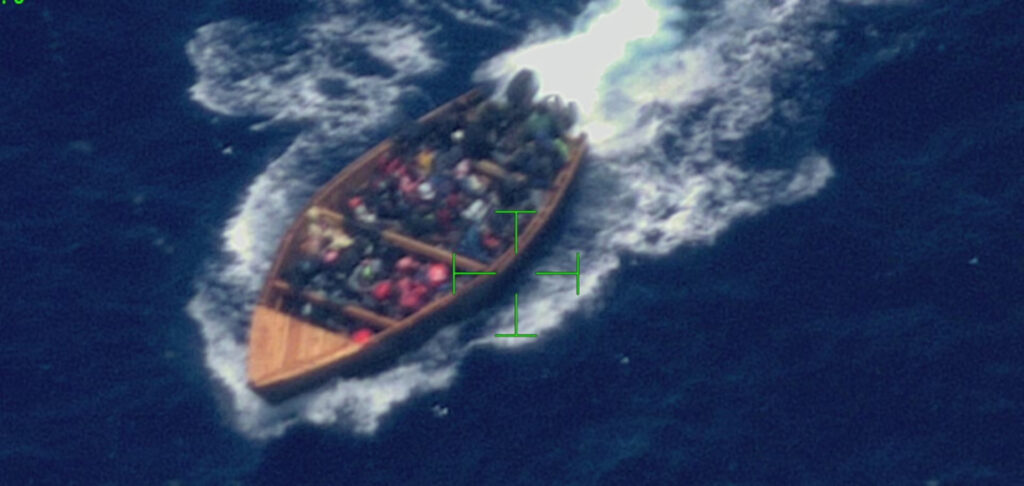
Coast Guard Cutter Thetis and a Customs and Border Protection multi-role enforcement aircraft crew interdict an unlawful migration voyage vessel in Mona Passage waters off Puerto Rico, March 27, 2026. Thetis crewmembers repatriated 60 migrants and transferred them to Dominican Republic Navy authorities in Santo Domingo, Dominican Republic, March 30, 2026. (U.S. Coast Guard photo)
From U.S. Coast Guard Southeast District, March 30, 2026
SAN JUAN, Puerto Rico — The crew of Coast Guard Cutter Thetis repatriated 60 aliens to Santo Domingo, Dominican Republic, Monday, following the interdiction of an unlawful migration vessel voyage in Mona Passage waters northwest of Aguadilla, Puerto Rico.
The repatriated aliens were transferred to Dominican Republic Navy authorities including 43 men and 11 women who claimed Haitian nationality and five other men and one woman who claimed Dominican Republic nationality. No minors were identified in this case.
The interdiction occurred Friday afternoon after a Customs and Border Protection Caribbean Air and Marine Branch Multi-Role Enforcement aircraft crew on a routine patrol detected a makeshift vessel, approximately 50 nautical miles from Aguadilla, Puerto Rico. Sector San Juan watchstanders diverted the Coast Guard Cutter Thetis and launched an Air Station Borinquen MH-60T Jayhawk helicopter to respond. Once on-scene, Thetis deployed the cutter’s Over the Horizon small boat whose crew took positive control of the suspect vessel. Following the interdiction, the Thetis crew safely embarked all the migrants.
“The swift response, effective communications and seamless coordination between Coast Guard Thetis, Sector San Juan personnel and our CBP partners led to a successful interdiction and resulted in sixty lives saved,” said Cmdr. Matthew Romano, Sector San Juan chief of response. “The resolve of the Coast Guard, our Homeland Security Task Force – San Juan and of our Dominican Republic Navy partners to detect and stop these potentially deadly voyages is unwavering. To those thinking of taking part in an unlawful migration voyage, don’t take to the sea! These voyages most often involve unseaworthy and grossly overloaded makeshift vessels with no lifesaving equipment. They are highly unstable and could capsize without warning killing everyone onboard. Individuals taking part in these voyages should also realize they may be subject to criminal prosecution and or repatriated to their country of origin or departure.”
Once aboard a Coast Guard cutter, aliens are processed to determine their identity and are provided with food, water, shelter and basic medical attention.
The United States Coast Guard, along with its Operation Vigilant Sentry partners, maintains a continued presence with air, land, and sea assets in the Florida Straits, the Windward Passage, the Mona Passage, and the Caribbean Sea. Operation Vigilant Sentry’s multi-layered approach is designed to protect the safety of life at sea while preventing unlawful maritime entry to the United States and its territories.
U.S. Strengthens Maritime Security Cooperation with Kenya During NAVAF Commander’s Visit
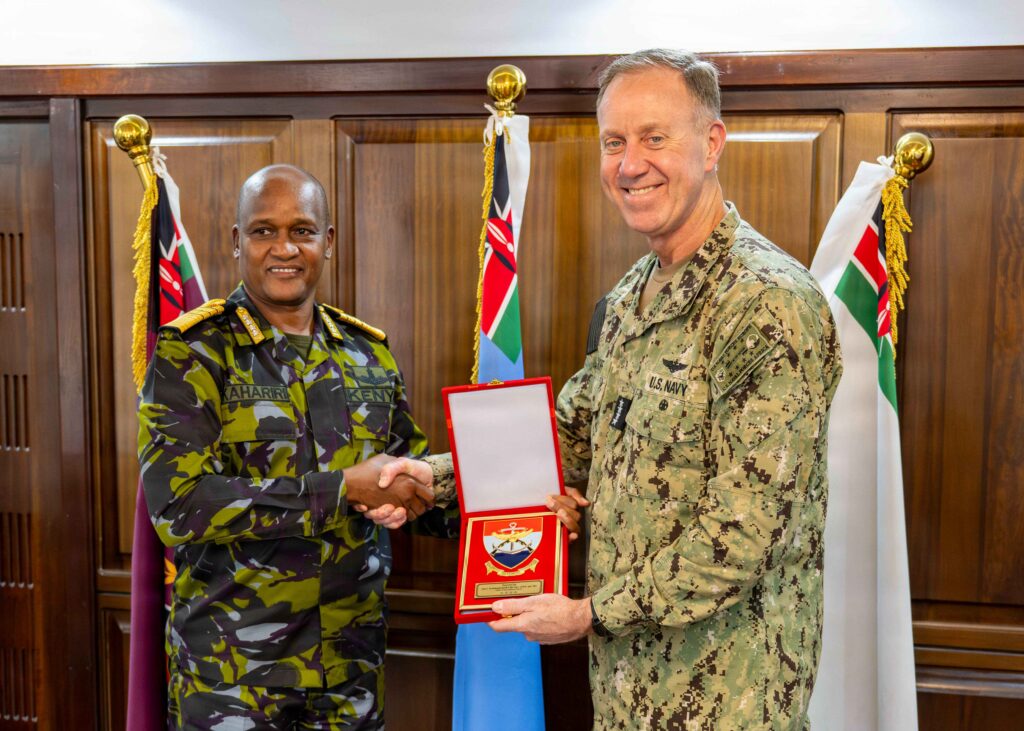
Adm. George Wikoff, commander, U.S. Naval Forces Europe and Africa, and Major General Paul Otieno, commander, Kenya Navy, take part in the Close Quarters Battle (CQB) Facility Inauguration ceremony, on Kenya Navy Base Mtongwe in Mombasa. (U.S. Navy Photo by MC1Robert J. Baldock)
From By U.S. Naval Force Europe, U.S. Naval Forces Africa, March 31, 2026
U.S. Naval Forces Africa (NAVAF) strengthened its longstanding security partnership with Kenya during Adm. George Wikoff’s visit to Nairobi and Mombasa, March 24–25.
The visit, Wikoff’s first to Africa as the NAVAF commander, highlighted the United States Navy’s ongoing support to Kenya’s maritime operations, counterterrorism efforts, and regional security leadership along the Western Indian Ocean and the Somali border.
Throughout his engagements, Wikoff underscored the shared U.S.–Kenya commitment to enhancing interoperability, expanding partner capacity, and investing in infrastructure and training that enable Kenyan forces to deter and respond to emerging threats.
“Kenya is a critical maritime and security partner in East Africa and the Western Indian Ocean,” said Wikoff. “Our cooperation is built on shared interests and shared sacrifices, and together we are working to promote stability, protect vital sea lanes, and counter those who threaten regional security.”
In Nairobi, Wikoff met with the Chief of the Kenya Defence Forces (KDF), General Charles Muriu Kahariri, to discuss ongoing collaboration in counterterrorism, maritime security, regional stability, and long-term defense modernization and innovation.
The discussion focused on aligning defense cooperation with broader U.S. diplomatic and economic goals, reinforcing strategic coordination at the senior level, and advancing Kenya’s role as a security anchor in the region.
“General Kahariri and I reaffirmed that our defense cooperation is not just a one-time effort — it is strategic, ongoing, and aligned with our broader diplomatic and economic partnerships,” Wikoff said. “Together, we are focused on countering terrorism, strengthening maritime security, and modernizing our forces so we are ready for current and future challenges.”
In Mombasa, Wikoff met with Major General Paul Owuor Otieno, commander of the Kenya Navy, to review ongoing maritime initiatives, including joint training, information sharing, and efforts to improve maritime domain awareness across the Western Indian Ocean. The leaders discussed ways to bolster Kenya’s ability to secure its maritime approaches, counter illicit maritime activities, and further integrate Kenyan naval forces into regional and international security efforts.
Wikoff and Otieno then attended the after-action review for Cooperation Afloat Readiness and Training (CARAT) 2026, a series of naval exercises with African partners, including Kenya, to bolster maritime security, improve interoperability, and address regional security challenges in the Western Indian Ocean. The review assessed operational effectiveness and interoperability gains and identified lessons to guide future joint exercises and operations.
“CARAT 2026 shows what we can achieve when we train and operate together,” Wikoff said. “By integrating our capabilities and sharing information, we are better prepared to secure the maritime domain, disrupt illicit networks, and respond swiftly when threats emerge.”
Wikoff and Otieno concluded their visit by commissioning the Kenya Navy Marine Range and Close Quarters Battle (CQB) Complex at Kenya Navy Base Mtongwe in Mombasa County. The new facility will provide a modern, specialized training environment to significantly enhance the operational readiness of the Kenya Navy Marine Commandos, supporting advanced training in close-quarters combat, marksmanship, tactical movement, and integrated maritime operations.
“The Marine Range and CQB Complex is a tangible demonstration of our commitment to Kenya’s security and regional leadership,” said Wikoff. “By investing in infrastructure and training, we are empowering Kenyan forces with the tools and skills they need to lead in securing their coastlines and maritime approaches.”
The KNAV Marine CQB Complex is a $750,000 Section 333 Building Partnership Capacity (BPC) design-build contract managed by Naval Facilities Engineering Systems Command (NAVFAC) Europe, Africa, Central (EURAFCENT). This specialized facility is designed to enhance the maritime and coastal interdiction capabilities of the newly established KNAV Marine Commandos, who are playing an increasingly prominent role in regional counterinsurgency operations along the coast and littorals. The scope includes a 100-meter small-arms range, a live-fire shoot house, and a dry-run rehearsal facility.
Wikoff’s visit reaffirmed NAVAF’s role as a trusted, long-term partner to Kenya amid increasing competition from external actors.
Through senior leader engagements, joint exercises, and targeted investments in training and infrastructure, the United States and Kenya are working together to strengthen counterterrorism cooperation, enhance maritime security, and promote stability across East Africa and the Western Indian Ocean.
“Our partnership with Kenya is enduring and future-focused,” Wikoff said. “Together, we are building the capabilities, relationships, and trust that underpin regional security and create the conditions for lasting peace and prosperity.”
For more than 80 years, NAVEUR-NAVAF has forged strategic relationships with Allies and partners, leveraging a foundation of shared values to preserve security and stability. Headquartered in Naples, Italy, NAVEUR-NAVAF operates U.S. naval forces in the U.S. European Command and U.S. Africa Command areas of responsibility.
I MEF launches Operation Clean Sweep IV to improve barracks habitability
From I Marine Expeditionary Force Communication Strategy and Operations
March 30, 2026
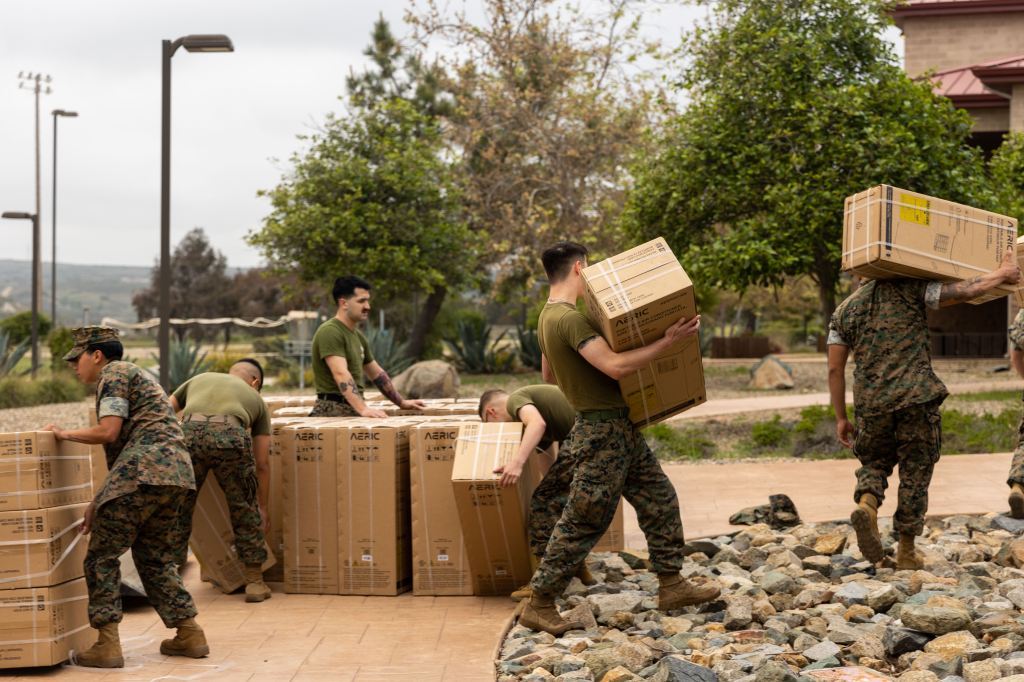
MARINE CORPS BASE CAMP PENDLETON, Calif. – I Marine Expeditionary Force and Marine Corps Installations West-Marine Corps Base Camp Pendleton launched Operation Clean Sweep IV today, continuing a focused effort to improve barracks conditions and strengthen operational readiness.
OCS IV is part of the I MEF / MCI-West Barracks 360 Reset initiative and supports the Commandant of the Marine Corps’ broader Barracks 2030 effort to improve unaccompanied housing across the force. The operation focuses on resident empowerment, leadership engagement and measurable, proactive maintenance.
Barracks 360 Reset began in 2024 with recurring standdowns to surge maintenance and self-help support. The first iteration at Camp Pendleton ran Oct. 16-30, 2024, addressing deferred work through both self-help and contracted support. OCS II followed March 24-April 11, 2025, expanding training while broadening resources to additional bases. OCS III ran Sept. 15-26, 2025, and continued expanding these efforts to Marine Corps Logistics Base Barstow, Marine Corps Air Ground Combat Center Twentynine Palms and Marine Corps air stations Miramar and Yuma.
I MEF and MCI-West continue Barracks 360 Reset efforts to improve living conditions and operational readiness through enhanced command oversight, maintenance backlog reduction and resident engagement.
U.S. and Colombian Navies Reinforce Partnership at Maritime Staff Talks
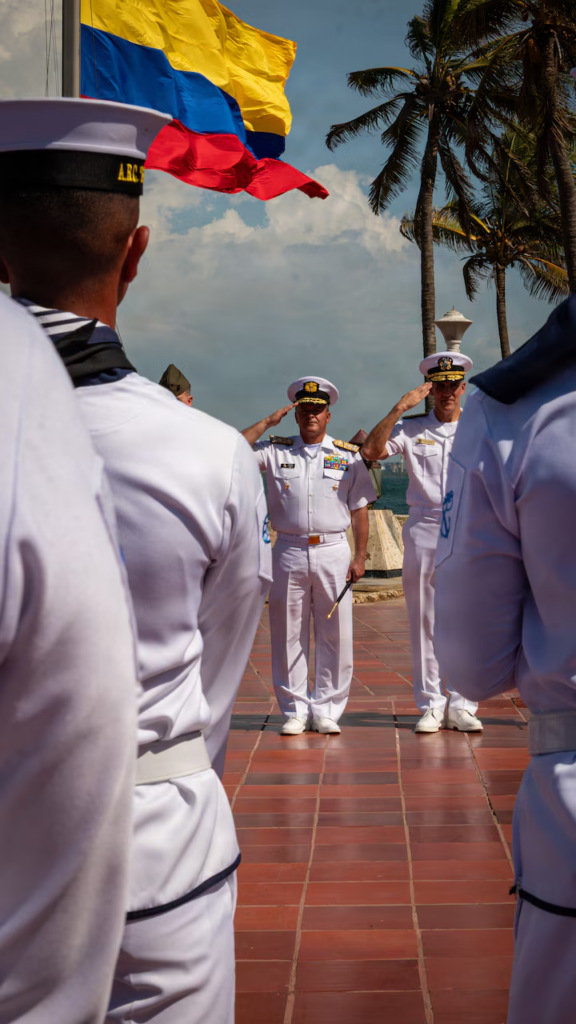
Rear Adm. Carlos Sardiello, commander of U.S. Naval Forces Southern Command/U.S. 4th Fleet, participates in an opening ceremony March 24, 2026 in Cartagena, Colombia. Sardiello, led the U.S. delegation for the annual Maritime Staff Talks, reaffirming the enduring partnership between the two nations and outlining a path for future collaboration in the maritime domain.
By Ensign Paul Archer, March 30, 2026
CARTAGENA, Colombia – Senior naval leaders from the United States and Colombia convened in Cartagena from April 24-27, 2026 for the annual Maritime Staff Talks (MST), reaffirming the enduring partnership between the two nations and outlining a path for future collaboration in the maritime domain.
The U.S. delegation, led by Rear Adm. Carlos Sardiello, commander of U.S. Naval Forces Southern Command/U.S. 4th Fleet, was hosted by the Chief of Naval Operations of the Colombian Navy, Vice Adm. Carlos Serrano. The tri-service U.S. contingent also included Maj. Gen. Douglas Clark, Deputy Commander of U.S. Marine Corps Forces, South, along with representatives from the Joint Interagency Task Force South and the U.S. Coast Guard.
The talks focused on enhancing interoperability, deepening commitment to mutual security, and advancing a bilateral strategy to address shared challenges across the maritime environment. Key areas of discussion included leveraging upcoming multinational exercises such as PANAMAX and UNITAS to ensure seamless teamwork against common threats.
“The challenges we face in the maritime domain, stemming from illicit trafficking demand a unified response to ensure regional stability,” said Rear Adm. Sardiello. “Through these annual maritime staff talks, we continue to strengthen our partnership and expand operational commitments that increase our combined readiness and effectiveness across the maritime domain.”
As part of the MST, both the U.S. and Colombian delegations delivered presentations on their respective mission objectives and ongoing maritime operations. The agenda also included tours of the COTECMAR Shipyard, the Almirante Padilla Naval Academy, and other key naval facilities in Cartagena, providing the U.S. delegation with firsthand insight into Colombia’s naval capabilities and strategic infrastructure.
The event concluded with the signing of minutes by Rear Adm. Sardiello and Vice Adm. Serrano, formally documenting the key agreements reached and solidifying a collaborative path forward. Both leaders reiterated their shared commitment to the robust and lasting partnership between the United States and Colombia.
U.S. Naval Forces Southern Command/U.S. 4th Fleet serves as a trusted maritime partner for Caribbean, Central, and South American maritime forces, working to promote unity, security, and stability throughout the region.
Australia, India, Japan, New Zealand, U.S. complete exercise Sea Dragon 2026
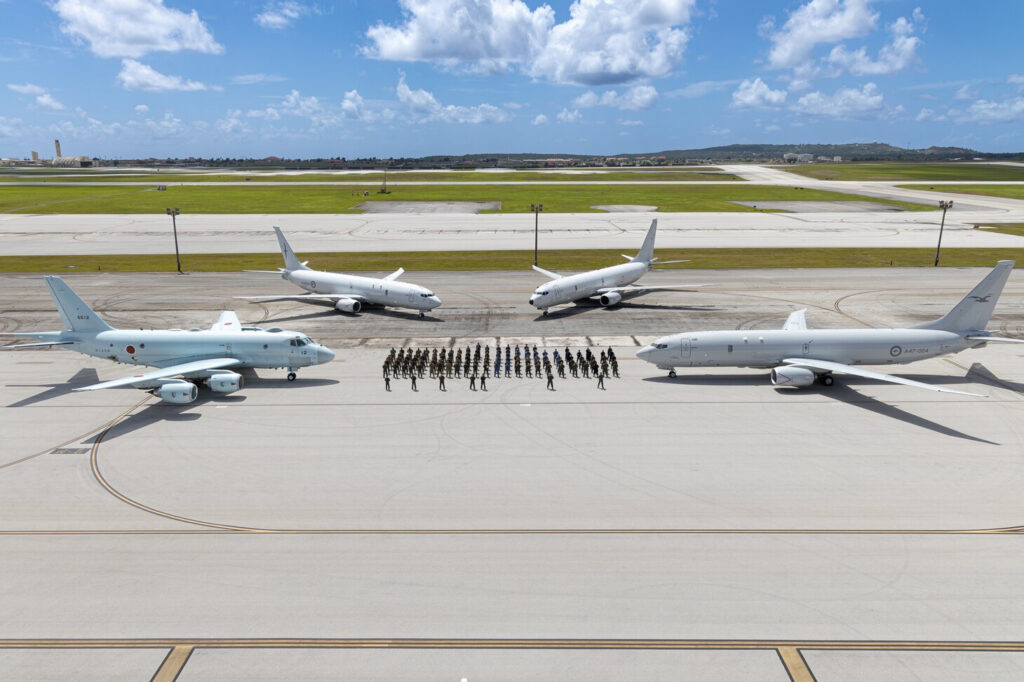
Sea Dragon anti-submarine warfare (ASW) competition participants pose for a group photo at Andersen Air Force Base, Guam, March 18, 2026. Participating nations include Royal Australian Air Force, Royal New Zealand Air Force, Indian Navy, Japan Maritime Self Defense Force, and the United States Navy. Sea Dragon is a U.S.-led, multinational exercise designed to train anti-submarine warfare tactics and to operate together in response to maritime security challenges in the Indo-Pacific region. (U.S. Navy Photo by Mass Communication Specialist First Class Ryan A. LeCompte)
ANDERSEN AIR FORCE BASE, Guam — Exercise Sea Dragon 2026 successfully concluded at Andersen Air Force Base, marking the completion of 20 days of intensive multinational anti-submarine warfare (ASW) training, March 28.
Hosted by U.S. Navy Commander, Task Force (CTF) 72, two U.S. Navy P-8A Poseidon aircraft from Patrol and Reconnaissance Squadron (VP) 4 and VP-45, joined a multilateral force of P-8A aircraft from the Indian Navy (IN), Japan Maritime Self-Defense Force (JMSDF), Royal Australian Air Force (RAAF), and Royal New Zealand Air Force (RNZAF).
Sea Dragon 2026 continues to enhance the shared maritime domain awareness interoperability developed during previous iterations. This iteration improved on participating nations’ ability to conduct multinational ASW operations inside a complex and dynamic exercise environment.
“What we do in Sea Dragon builds more than skill—it establishes a ASW team across nations. The shared experience empowers us to fight together more effectively,” said Lt. Paolo Aguilar, assigned to VP-4.
VP-45 naval aviator Lt. Caitlin Tucker stated, “Exercises like Sea Dragon highlight the strength of our partnerships and alliances. They show that together, we’re stronger, more capable, and ready to deter any aggressor in the Indo-Pacific.”
Sea Dragon 2026 featured a structured training format to include a mobile ASW training target, referred to as the MK-30 “Sled”, for tracking drills. The exercise also featured a U.S. Navy anti-submarine warfare exercise (ASWEX), where exercise participants engaged in a hunt to locate an active U.S. Navy submarine in the area. This year, forces operated in the vicinity of Saipan to employ recoverable exercise torpedoes, and demonstrate expansion of capabilities trained among the five nations.
As with previous years, Sea Dragon 2026 included a competitive component in which each nation’s performance was assessed and graded to earn the Dragon Belt award, testing each nation’s ASW tactics and response effectiveness in a realistic scenario.
This year, VP-3 of the JMSDF emerged victoriously, securing the Dragon Belt for 2026. The Dragon Belt was previously held by the RAAF since their victory in 2025.
Exercises like Sea Dragon 2026 demonstrate the U.S. Navy’s commitment to regional security and strengthening maritime partnerships with allied and partner nations. Exercise Sea Dragon has been held annually since 2019.
VP-4, part of CTF-72, is stationed in Whidbey Island, Washington, and is currently deployed to Kadena Air Base in Okinawa, Japan. VP-45, also part of CTF-72, is stationed in Jacksonville, Florida, and is currently deployed to Misawa Air Base in Misawa, Japan. Throughout the deployments, both squadrons will be conducting maritime patrol and reconnaissance and theater outreach operations within the U.S. 7th Fleet area of operations.
U.S. 7th Fleet, the U.S. Navy’s largest forward-deployed numbered fleet, routinely interacts and operates with allies and partners in preserving a free and open Indo-Pacific region.
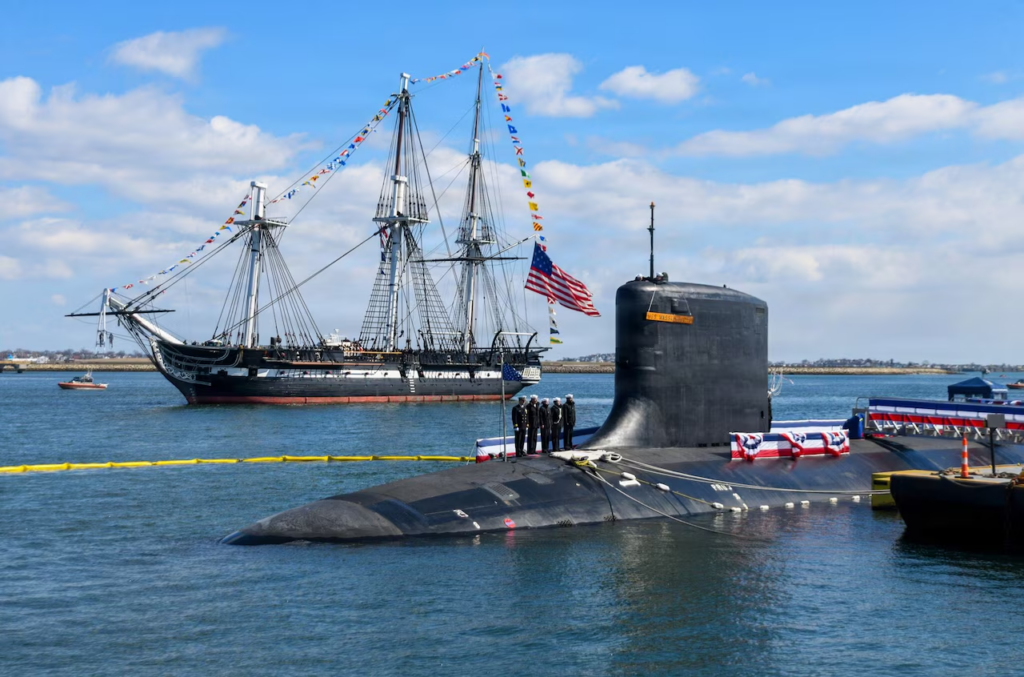
The Navy commissioned the submarine USS Massachusetts in a traditional ceremony held March 28 at Boston Harbor.
The ceremony culminated a yearslong process to bring the Massachusetts into service. It is the fifth Navy vessel named after the commonwealth of Massachusetts, following the most recent, USS Massachusetts, a battleship that participated in nearly every major Pacific campaign from 1943 to 1945 and earned 11 battle stars for its World War II service.
Navy Cmdr. Michael Siedsma, the Massachusetts’ commanding officer, spoke proudly of his crew’s efforts.
“To the crew, the plank owners, the ‘Iron Patriots’ of the USS Massachusetts, we did it,” he said. “Your hard work and unshakable dedication [are] evident. I am amazed and humbled by what we have accomplished.”
Sheryl Sandberg, the ship’s sponsor, gave the traditional order to “man our ship and bring her to life.” The crew responded, “Aye, aye, ma’am,” before ceremonially running aboard the submarine.
Sandberg spoke about the Navy’s enduring legacy.
“In three months, our nation will celebrate the 250th anniversary of the signing of the Declaration of Independence. But as many of you here know, the Navy already celebrated this milestone last October. What does that tell us? It tells us: We don’t have a Navy because we have a country; we have a country because we had a Navy!”
Following the hoisting of the colors and commissioning pennant, Navy Adm. William Houston, director of the Naval Nuclear Propulsion Program, highlighted the crew’s hard work and the unit’s role in national defense.
“[The] Massachusetts is playing an incredible role in our security,” he said. “Your crew represents the best that our Navy and our nation [have to offer]. You train relentlessly to bring this warship to life and earned the trust placed on you.”
The Massachusetts is the 12th Virginia-class submarine and was christened at the Newport News Shipbuilding yard in Newport News, Virginia, May 6, 2023.
As it joins the fleet, the Massachusetts brings significant warfighting capability, underscoring the nation’s asymmetrical advantage at sea. Virginia-class submarines have enhanced stealth, sophisticated surveillance capabilities and special warfare enhancements that enable them to meet the Navy’s multimission requirements.
Each Virginia-class submarine is 7,800 tons, 377 feet in length and has a beam of 34 feet. It is designed with a reactor plant that does not require refueling during the planned life of the ship, reducing life-cycle costs while increasing underway time.
Coast Guard Cutter Stratton returns to California following 3-month deployment
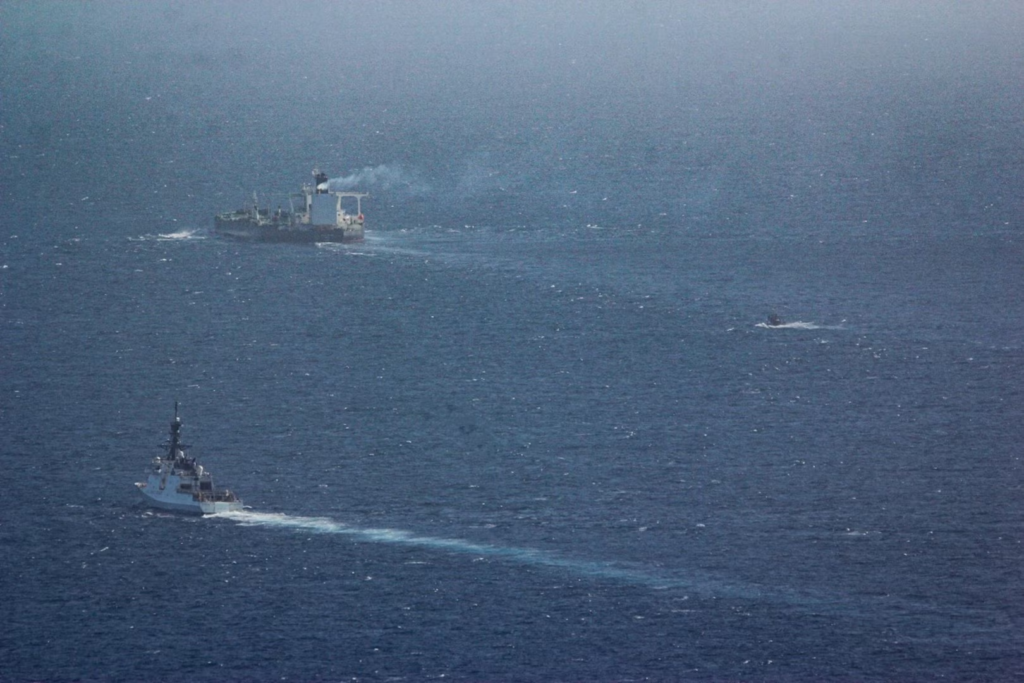
The Legend-class USCGC Stratton (WMSL 752) assumed escort duties of motor tanker Sophia and escorted the vessel from an anchorage south of Puerto Rico to an at-sea transfer with Venezuela for further disposition, Jan. 27, 2026. (U.S. Coast Guard courtesy photo.)
From U.S. Coast Guard Pacific Area, March 29, 2026
ALAMEDA, Calif. – The U.S. Coast Guard Cutter Stratton (WMSL 752) returned to their home port in Alameda, Monday after sailing more than 16,000 nautical miles and completing a 79-day patrol in the Caribbean.
Stratton departed Alameda Jan. 4 and transited through the Panama Canal to support ongoing operations in the Caribbean, preventing the illicit trade of crude oil in violation of international sanctions. On Jan. 25, Stratton assumed escort duties of motor tanker Sophia and escorted the vessel from anchorage south of Puerto Rico to an at-sea transfer with Venezuela for further disposition.
Additionally, while transiting in the Eastern Pacific, Stratton’s crew operated in support of Joint Interagency Task Force-South to detect, monitor, and intercept illicit narcotics. Stratton’s crew interdicted one fishing vessel at sea, exercising the North American Maritime Security Initiative (NAMSI) standard operating procedures. Enacting NAMSI and boarding the vessel at sea allowed for the transfer of the vessel to the Mexican Navy for further disposition.
During the patrol, Stratton conducted a fueling-at-sea evolution with USNS Supply (T-AOE 6) and helicopter vertical replenishments with Coast Guard Air Station Borinquen crews to resupply the cutter while deployed in the Caribbean. Additionally, the crew exercised helicopter deck landing operations with an MH-60 aircrew from the USS Lake Erie (CG 70) and Coast Guard Air Station Ventura, displaying Stratton’s interoperability across different agencies and platforms.
“The Strattoncrew looks forward to returning to Alameda to reunite with our friends and family,” said Capt. Dorothy Hernaez, Stratton’s commanding officer. “This was a demanding and dynamic patrol that tested our resilience and capabilities across a wide spectrum of operations. This patrol demonstrated Stratton’s essential role as a multi-mission platform capable of adapting to an evolving operational environment.”
Commissioned in 2012, Stratton is one of ten Legend-class national security cutters, and one of four homeported in Alameda. National security cutters are 418-feet long, 54-feet wide, and have a 4,600 long-ton displacement. They have a top speed of 28 knots, a range of 12,000 nautical miles, and can hold a crew of up to 170. National security cutters routinely conduct operations throughout the world, where their unmatched combination of range, speed, and ability to operate in extreme weather provides the mission flexibility necessary to conduct vital strategic missions.
The namesake of the U.S. Coast Guard Cutter Stratton is Capt. Dorothy Stratton, who led the service’s all-female reserve force during World War II. Dorothy Stratton was the first female commissioned officer in the Coast Guard and commanded more than 10,000 personnel. The ship’s motto is “We Can’t Afford Not To.”
Portsmouth Naval Shipyard Undocks USS Albany Ahead of Schedule at Naval Submarine Base New London
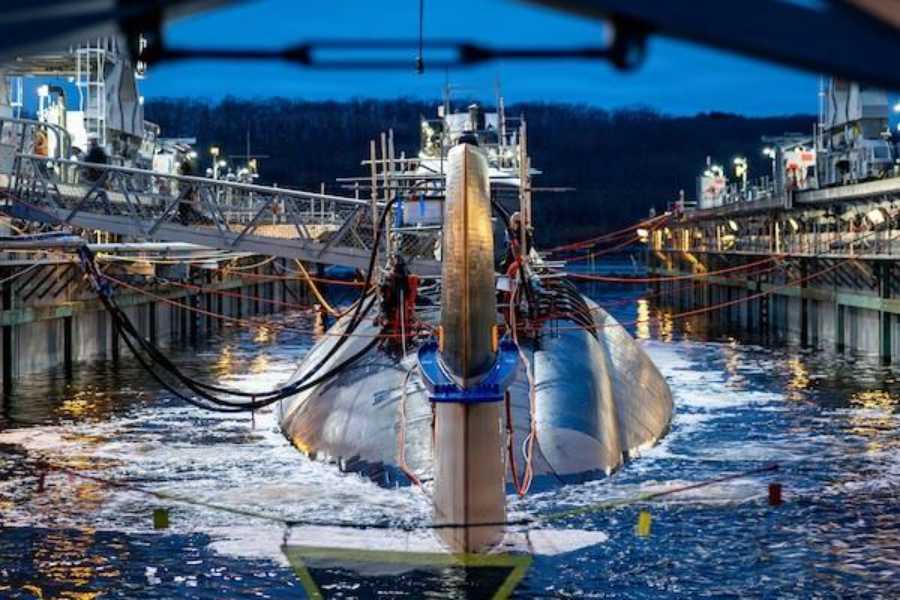
GROTON, Conn. (March 26, 2026) – The Los Angeles-class attack submarine USS Albany (SSN 753) undocks from the floating dry dock, Auxiliary Repair Dry Dock (RDM 4), on Wednesday, March 26, 2065 at Submarine Base New London in Groton, Conn. (U.S. Navy photo by Neil Boorjian)
From Hanna Lanoie, March 30, 2026
GROTON, Conn. – Portsmouth Naval Shipyard safely undocked Los Angeles-class attack submarine USS Albany (SSN 753) March 26 at Naval Submarine Base (SUBASE) New London, marking a significant milestone in its maintenance and modernization availability.
Albany arrived at SUBASE New London in summer 2025, and has since undergone repairs, structural inspections, and replacements of mechanical and electrical systems. This extensive work enhances the submarine’s capabilities, modernizes critical systems and equips Sailors — the engine that powers the fleet — with the most advanced undersea platform possible, ready to meet operational demands.
To support the availability, an advanced team of Portsmouth Naval Shipyard personnel spent much of 2025 coordinating with SUBASE New London to prepare facilities and support a large temporary duty workforce. At peak manning, more than 400 PNSY personnel were deployed to New London to execute the effort.
“Despite the inherent challenges of executing an off-yard availability, compounded by multiple winter storms, the teaming demonstrated by the crew of Albany and the shipyard workforce drove through every obstacle, completing Albany’s docking period ahead of schedule,” said Capt. Jesse Nice, shipyard commander. “This speaks to the resilience of the Portsmouth Naval Shipyard team and the impact that a focused team of experts can have to safely accomplish great things at the pace the nation needs.”
Completion of a submarine’s docking period is a critical first step in its return to the fleet and directly supports the Navy’s focus on combat-ready platforms, increasing operational availability and contributing to credible, sustained deterrence.
“The early undocking of Albany is a significant accomplishment and a direct result of the one team, one fight mentality of my crew and our Portsmouth teammates,” said Cmdr. Adam Nebenzahl, commanding officer. “This milestone puts us one step closer to rejoining the fleet. We are eager to get back to sea and contribute to our nation’s defense.”
As America’s leader in attack submarine maintenance, repair, and modernization, Portsmouth Naval Shipyard delivers the decisive edge required to master an era of evolving threats. It stands at the forefront of America’s commitment to peace through strength, delivering combat-ready submarines that are lethal, resilient, and prepared to win. Through a focus on innovation, accountability, and fostering a culture of warfighting excellence, PNSY strengthens the maritime industrial base and invests in its highly-skilled workforce. The work done at the shipyard is a direct contribution to national security. Submarines leave the shipyard more capable than ever before, ensuring the U.S. Navy remains the most dominant maritime force and that the nation’s warfighters are prepared for any mission, anywhere in the world.
MARAD Invests Over $13 to Bolster U.S. Marine Highway Infrastructure Across America
From the U.S. Maritime Administration, Friday, March 27, 2026
WASHINGTON, D.C. – The U.S. Department of Transportation’s Maritime Administration (MARAD) today invested $13,280,351 million in 11 marine highway projects across seven states through the U.S. Marine Highway Program.
The funding will support public and private partners in developing supply chains on marine highway routes—including the transportation of waste in Oregon and the improvement of barge docks in Pennsylvania—to ensure resiliency.
“Investing in marine highways will strengthen the Great Lakes economy and other regional communities,” said U.S. Transportation Secretary Sean P. Duffy. “We’ll deliver jobs, boost provide a boost for local industries, and strengthen infrastructure our economy relies on.”
“The marine highway program is a vital opportunity to expand the nation’s freight capacity,” said MARAD Administrator Steve Carmel. “By fully integrating our navigable waterways into the national transportation system, we keep the American economy moving forward.”
Additional Information:
U.S. Marine Highways are a vital component of America’s transportation infrastructure, offering a reliable way to move goods while easing congestion on our nation’s busy road and rail systems. The network spans 27,139 miles across 41 states, Washington, D.C., and all five U.S. territories. The 35 designated routes underpin U.S. supply chains, critical infrastructure, and maritime workforce development.
Under the Trump Administration’s America First agenda, all Marine Highway Grants award recipients must apply, comply with, and implement all requirements of the “Buy America, Build America” provisions.
CNO completes multi-stop Indo-Pacific engagement, reinforcing partnerships and forward presence
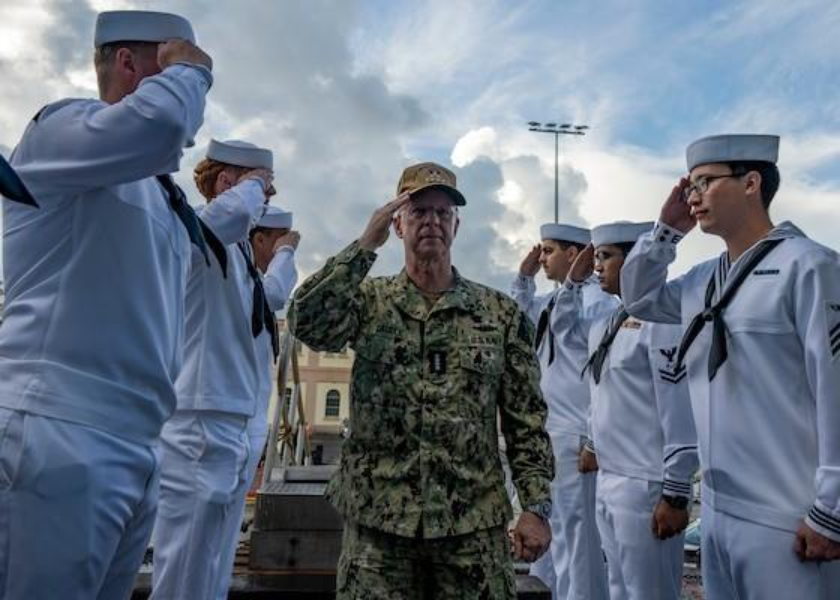
Chief of Naval Operations Adm. Daryl Caudle visited the USS Fitzgerald (DDG-62) while the ship was in port in Sydney, Australia, March 21, 2026. (U.S. Navy photo by MC1 Joe Cardona Gonzalez)
Chief of Naval Operations Adm. Daryl Caudle traveled more than 18,000 miles across the U.S. Indo-Pacific Command area of responsibility during a multi-stop visit to Australia and Singapore, underscoring the U.S. Navy’s enduring commitment to allies, partners and forward-deployed forces in the region.
The trip began in Sydney, Australia, on March 19, where Caudle joined dozens of naval leaders from around the world in celebrating the 125th birthday of the Royal Australian Navy.
During the visit, he met with Australia’s chief of navy, Vice Adm. Mark Hammond, to discuss deepening maritime cooperation and enhancing interoperability between the two navies.
“Our alliance with Australia is built on more than shared interests, it’s built on shared values, trust and decades of operating side by side,” Caudle said. “As we look to the future, our ability to integrate seamlessly across domains ensures we remain ready to meet any challenge together.”
In Singapore, Caudle attended a senior leader engagement with the Republic of Singapore’s chief of navy, Rear Adm. Sean Wat, reinforcing the importance of regional partnerships in maintaining stability and security in the Indo-Pacific.
“Singapore is a vital maritime partner at the crossroads of global commerce,” Caudle said. “Our partnership reflects a shared commitment to a free and open Indo-Pacific, where the rule of law prevails and all nations can prosper.”
While in Perth, Australia, Caudle met with U.S. Consul General Colleen Altstock, highlighting the critical role of diplomatic and military coordination in advancing U.S. interests abroad.
During his travels, Caudle also engaged directly with Sailors assigned to USS Fitzgerald (DDG-62) and USS Tulsa (LCS-16), recognizing their professionalism and the essential role they play in maintaining a forward presence.
“Our forward-deployed Sailors are the backbone of our Navy’s ability to operate where it matters, when it matters,” Caudle said. “Their dedication, resilience and warfighting readiness send a clear message of commitment to our allies and deterrence to potential adversaries.”
Caudle also toured HMAS Stirling, where he received updates on infrastructure upgrades, quality-of-service improvements and maintenance enhancements designed to support continued port visits by U.S. Navy submarines. The changes observed since Caudle’s last visit in 2024 were impressive and represent a significant step forward in achieving the milestones of the AUKUS agreement.
“The investments being made at HMAS Stirling demonstrate our shared resolve to ensure maritime security and stability across the Indo-Pacific,” Caudle said. “Together, we are building a more integrated and capable force that can respond to evolving challenges and meet emerging threats head on.”
Production facilities operated by Anduril Industries and Saronic Technologies were also on Caudle’s itinerary, where he was briefed on ongoing development in autonomous surface and subsurface platforms.
The engagements highlighted the growing interest in advanced technologies in enhancing maritime awareness, expanding operational reach and accelerating the ability to integrate unmanned systems into the future fleet.
“Autonomous systems are rapidly changing the character of naval warfare,” Caudle said. “Our partnerships with innovative industry partners help us move faster, think differently and deliver the capabilities our Sailors need to maintain a decisive advantage at sea.” These technologies are examples of the tailored offsets described in Caudle’s recently released U.S. Navy Fighting Instructions.
The 10-day trip highlighted the U.S. Navy’s differentiated value to the Joint Force and the nation through ongoing efforts to strengthen alliances and partnerships, enhance interoperability and maintain a credible forward presence across the Indo-Pacific region.
The U.S. Navy, forward-deployed and globally integrated, operates alongside allies and partners to ensure security, deter aggression and uphold the free flow of commerce that underpins global prosperity.