Coast Guard Academy Think Tank Puts Polar Issues Front and Center
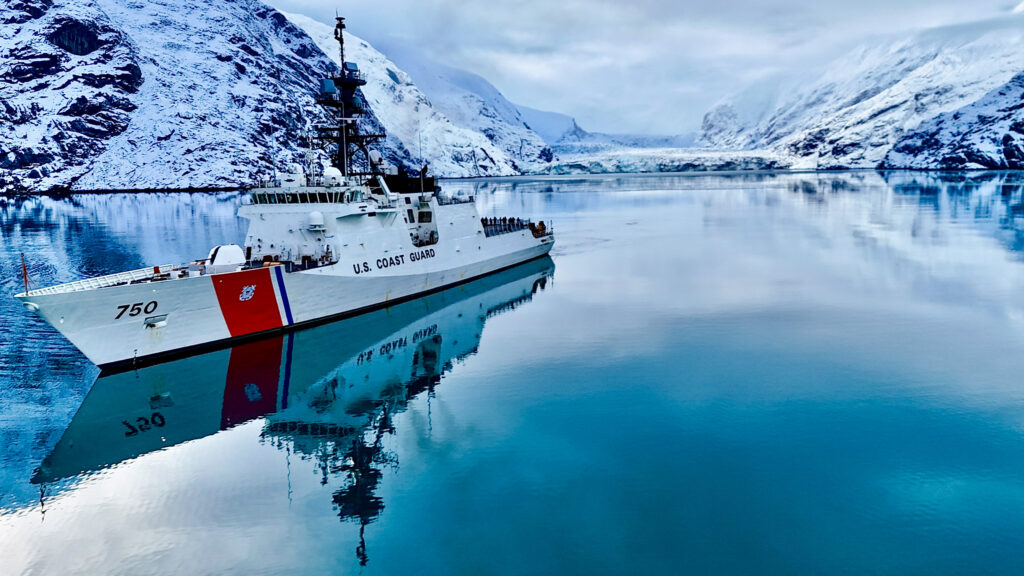
Coast Guard Cutter Bertholf (WMSL 750) transits through Glacier Bay, Alaska, Oct. 24, 2024. During the patrol, Bertholf’s crew operated as far north as the Arctic Circle, patrolling along the maritime boundary line between the United States and Russia and supporting U.S. strategic interests in the North Pacific Ocean. Photo credit: U.S. Coast Guard | Troy Spence

The Arctic is a hot topic these days. As sea ice melts, many questions surface: How should Arctic nations manage more shipping traffic while preserving the delicate environment? Can countries maintain a history of regional cooperation in this increasingly contested space?

As these and other concerns come to the fore, there’s one entity keeping all things polar on the front burner: the Center for Arctic Study and Policy, or CASP.

This tiny U.S. Coast Guard Academy office — with an annual operating budget of just $150,000 and two salaried positions — plays an outsized role in promoting knowledge of the north and south polar regions, a growing area of human interest as the environment rapidly changes.

The Arctic polar region is primarily ocean, surrounded on its edges by the eight member states of the Arctic Council: Canada; the Kingdom of Denmark, which includes Greenland and the Faroe Islands; Finland; Iceland; Norway; the Russian Federation; Sweden; and the United States, where Alaska includes a 1.5-million-square-mile exclusive economic zone in its surrounding waters.

Council decisions are achieved in agreement with six “permanent participants” that represent Aleut, Arctic Athabaskan, Gwich’in, Inuit, Saami and Russian Indigenous people, who have inhabited the Artic for millennia. About 10% of the 4 million Arctic residents are native peoples, according to the “Arctic Review,” an online publication covering polar issues.

There is a long history of international cooperation regarding Arctic scientific research and discovery and access to the region’s abundant fisheries, oil and gas assets, minerals, tourist sites and other resources. But rapid changes to the area’s physical, economic, geopolitical and technological characteristics have altered the future of polar affairs. As a result, many nations, including the United States, have intensified their focus on the region.

The U.S. Coast Guard, part of the Department of Homeland Security, underscored the region’s strategic importance in its 2023 Arctic Strategic Outlook Implementation Plan: “Global geopolitical trends combined with changes to the Arctic’s physical environment are increasing the region’s economic opportunities and strategic importance while hastening the impacts and risks to U.S. Arctic residents, commercial activity, and U.S. national security.”

In the middle of the action is CASP, the U.S. Coast Guard’s only scholarly center and internal think tank. It focuses only on the polar regions — mostly the Arctic but also Antarctica.

Widening Interest, Changing Arctic

Tony Russell, CASP’s executive director since 2022, said his personal interest in the Arctic started in 2007. He was serving as an active-duty officer in the Coast Guard and completing a master’s degree at the Marine Corps University. The Arctic, Russell thought, would be a unique thesis topic.

“That was when folks were just beginning to understand how access — physical access — was increasing via the sea ice reducing [and asking] what does that mean?” said Russell, who retired from the Coast Guard as a captain in 2020. Global attention to the region also coalesced around a 2008 U.S. Geological Survey report predicting the Arctic Circle had massive stores of undiscovered oil and gas reserves.

Then, as now, the drastic environmental changes were hard to ignore: According to the National Snow and Ice Data Center, scientists have observed a consistent decline in Arctic sea ice cover in nearly 50 years of continuous satellite monitoring — a rate of decline of more than 2% per decade. In 2025, sea ice cover is at its lowest level since recording began in 1979.

The Arctic in the past four decades has warmed three times faster than the worldwide average, according to “Arctic Climate Change Update 2024: Key Trends and Impacts — Summary for Policymakers,” a report by the Arctic Council’s Arctic Monitoring and Assessment Programme.

The evolving situation sparked new areas of concern, collaboration and potential conflict among nation-states, residents, the scientific community and industry players.

The area’s residents, land, waterways and wildlife face new threats from erosion, flooding, wildfires and greater human activity. The Arctic is at risk from more air crashes, vessel collisions and groundings. It’s also exposed to threats to subsea cables, unsafe shipping through the Russian maritime Arctic and friction from regional military exercises (involving the U.S. and its allies but also Russia and China).

“That all speaks to rising interest for U.S. national security,” Russell said.
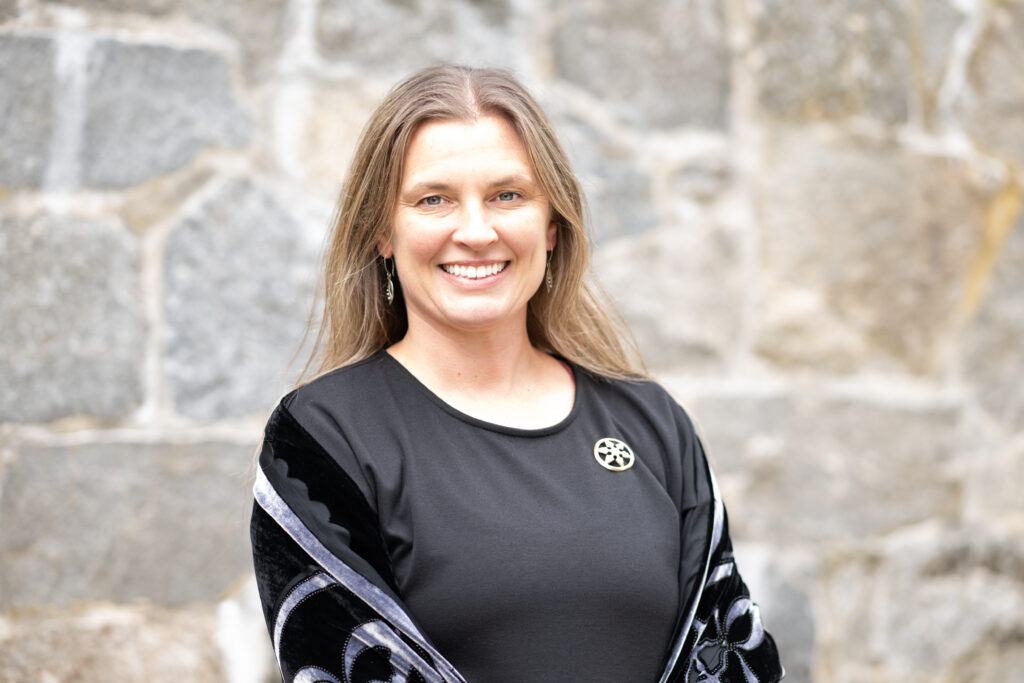
Dr. Abbie Tingstad poses for a photo at the U.S. Coast Guard Academy, Sept. 25, 2024. Tingstad is a renowned Arctic analyst, a trusted voice on the challenges posed by the changing environment in the region and also the first Visiting Research Professor at the Center for Arctic Study and Policy (CASP) at the U.S. Coast Guard Academy. Photo credit: U.S. Coast Guard | Petty Officer 2nd Class Janessa-Reyanna Warschkow

Renewing the Center’s Mission

Although CASP was founded in 2014, Russell’s tenure began as the Coast Guard Academy was relaunching and revitalizing the center, complete with new offices at the academy’s New London, Connecticut, headquarters. The center is now housed within the academy’s Office of Scholarship, Research and Innovation. Its renewed mission is focused on educating cadets, conducting research and analysis, and broadening partnerships.

At the reborn CASP, a federally funded rotating research professor position was first filled in 2023 by Arctic analyst Abbie H. Tingstad, who holds a Ph.D. and the title of visiting arctic research professor. Tingstad’s predecessors, Drs. Rebecca Pincus and Barry Zellen, were funded by Coast Guard Academy alumni donations.

In addition to overseeing a two-year research agenda, Tingstad is a sought-after expert on Arctic affairs and widely published author of Arctic peer-reviewed research, policy papers and presentations, and media commentaries. Her work has touched on topics such as the role of icebreakers in diplomacy and the effects of a poleward shift in fish stocks in the Northern Bering Sea.

Tingstad also directs CASP’s participation in international policy development for the Arctic.
“For example,” Tingstad said, “we are part of a multinational network of research and educational institutions that are shaping the conversation about all the facets of Arctic security and what that means, and how it’s changing, and what it implies for governance and cooperation in the Arctic region.”

CASP is also educating the next generation of Coast Guard officers. It accepts some 18 to 20 cadets every other semester into its polar studies course, focused on U.S. and international strategies and policies in the region. In addition to studying Arctic history and policy, cadets attend expert lectures involving academia, the military, business, Indigenous communities and political spheres.

They also benefit from CASP’s reorganization, which “al­lowed us to increase our access to all of the academic dis­ciplines at the academy,” Russell said. That’s important because “the challenges that the Arctic faces are definitely multidisciplinary,” he said, involving infrastructure, sci­ence, policy, business and more. “All of those things factor into what’s going on in the Arctic region.”

Each year, CASP encourages six to eight cadets to delve deeper into polar issues as Arctic scholars. Russell highlighted two cadets, among others, making important contributions to Arctic policy.

Elise Beauchemin, an Arctic scholar studying marine environmental science, completed CASP-sponsored internships last year with the University of Alaska Anchorage and at CASP. She worked with the Coast Guard Research and Development Center, the Massachusetts Institute of Technology’s Lincoln Labs, and the Navy’s Undersea Warfare Development Center. She also completed a course supporting Tingstad’s research. Beauchemin was accepted into the prestigious Fulbright U.S. Student Program and recognized by DHS Secretary Kristi Noem at the Coast Guard Academy commencement in May.

And, after completing the Arctic studies course, Emelia Campbell was one of three team members invited to partner with the Coast Guard’s Maritime Law Enforcement Fisheries Division to research implementation options for the Central Arctic Ocean Fisheries Agreement. This 10-party pact bans commercial fishing in the central Arctic Ocean for 16 years while scientists study the ecological impact. With CASP, Campbell participated in the Fridtjof Nansen Institute’s Arctic Security Conference in Oslo, Norway. In January 2025, she presented research findings at the Arctic Frontiers conference in Tromsø, Norway, and later briefed Coast Guard executives.

CASP has also sponsored cadets to attend and present at industry conferences, such as the Navy League’s Sea-Air-Space, American Society of Naval Engineers symposia and International Marine Design Conference.

The center supports summer internships for roughly eight cadets each year. “We have two cadets right now on an exchange with the Icelandic Coast Guard,” Russell said, where they’re “getting some great exposure” working with another Arctic nation partner.

Other cadets have interned at the Marine Exchange of Alaska, a nonprofit focused on preventing maritime disasters; the Arctic Domain Awareness Center, a DHS research center at the University of Alaska Anchorage; and the Defense Department’s Ted Stevens Center for Arctic Security Studies.

Promoting International Partnerships

In addition to maintaining a spirit of cooperation, CASP’s ongoing outreach and engagement with most Arctic nations and dozens of U.S. and international organizations — through cadet exchanges, tabletop exercises, policy and research development, and other areas — is yielding Arctic insights for potential action by U.S. and allied militaries, policymakers, industry groups and affected populations.

For the Coast Guard decision-makers, Russell said, CASP “helps flatten the learning curve and it helps maintain consistency and quality of information we’re using for those decisions.” And for external partners who need or want to share information with the Coast Guard, “we know who the subject matter experts are within the service that do that.”

Through its extensive partner network, CASP can foster international dialogue on issues such as illegal fishing, homeland defense, Arctic-capable shipping design, transportation safety, biodiversity preservation, ecosystem management and emergency preparedness.

For instance, CASP helps nations better prepare for Arctic emergencies, which now occur with relative frequency. That includes this year’s Bering Air Flight 445 that crashed on the sea ice on the way to Nome, Alaska, killing 10 people on board; and the 2023 grounding of a 206-person cruise ship stranded for days on Greenland’s remote East Coast.

A recent CASP-hosted tabletop exercise convened emergency response and aviation representatives from four nations and several U.S. military and federal organizations to wargame crises in remote areas of the Arctic. The exercise revealed potential gaps in training, infrastructure, communication and hardware. CASP also moderated a panel discussion on cruise ship search and rescue with the Association of Arctic Expedition Cruise Operators and maritime rescue organizations.

“At the end of the day,” Russell said, “the process is as important as the answer, and we strive to provide the kind of analytical research and defendable background knowledge that best informs polar policy choices and answers.”

Erika Fitzpatrick is an award-winning writer living in Washington, D.C. With more than 20 years of experience in public policy journalism and communications, she specializes in covering issues affecting service members, veterans and military families. This article originally appeared in the July-August issue of Seapower.

Securing the Backbone: The Defense Industrial Base

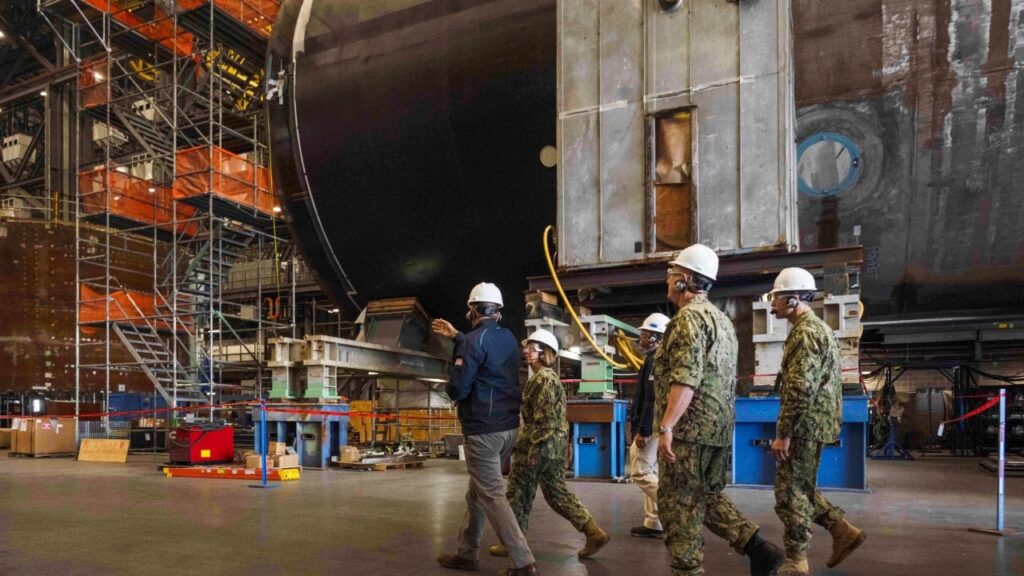
PHOTO BY: Air Force Staff Sgt. Marco Gomez

By Ryan Caughill, President, Western New York Council, Navy League of the United States.

In the summer of 2018, I completed my internship at Moog Inc., one of the United States’ premier defense contractors. My role was in Environmental Health & Safety, but my mission went deeper: I was tasked with modernizing and guiding emergency management planning across an organization that was deeply integrated into the Defense Industrial Base (DIB), and yet, lacked a dedicated emergency management function.

Like my time later at M&T Bank, this experience left a lasting impression. It showed me that even companies at the forefront of defense technology can have blind spots when it comes to continuity, resilience, and crisis preparedness.

[While this article isn’t just about my singular experience, but a holistic and general overview,] that’s what makes the Defense Industrial Base one of the most paradoxical critical infrastructure sectors in America: incredibly advanced, but dangerously lacking.

The Backbone Behind the Uniform
The Defense Industrial Base is more than just tanks, missiles, or aircraft. It’s an expansive network of over 100,000 private companies that provide products, services, logistics, and technologies to support the U.S. military.

This includes:

  • Weapons systems and munitions
  • Aerospace components and military-grade software
  • Advanced electronics and cyber capabilities
  • Research and development institutions
  • Transportation and supply chain networks
  • Small manufacturers producing critical, often irreplaceable, parts

Some of these are Fortune 500 giants. Many are small, family-owned machine shops in rural communities. All are vital.

But here’s the problem: there is no unified resilience standard across the DIB. And that’s a problem hiding in plain sight.

The Vulnerabilities No One Wants to Talk About
During my time at Moog, I saw firsthand how emergency management often sits outside the core of DIB corporate culture. Not out of apathy, but due to the sheer scale and complexity of operations. Many companies have excellent safety and security programs, but few have comprehensive crisis management systems. Fewer still have trained emergency managers or business continuity professionals guiding cross-functional coordination across cyber, physical, and operational risks. This isn’t to say they don’t exist, I’ve met some, and they do a really great job.

That makes this sector vulnerable in ways most people don’t understand.

The DIB is:

  • Extremely decentralized: A single failed supplier can halt delivery of critical weapons platforms.
  • Highly classified: Cyber breaches can compromise national defense secrets, yet many companies, especially smaller ones, lack mature cyber defenses.
  • Logistically fragile: Long-lead items, global supply chains, and just-in-time manufacturing leave little room for error.
  • Resource-limited: Many smaller firms simply don’t have the bandwidth or expertise to build robust resilience programs.

Worse yet, we take it for granted that these companies – because of what they do – are already hardened. That’s not always true.

Why This Sector Isn’t Taken Seriously — Until It’s Too Late
The Defense Industrial Base occupies an odd place in the national consciousness. We respect the military. We fund the military. But we rarely consider who makes the military work.

The supply chains, R&D labs, fabrication shops, and logistics hubs that build and sustain America’s warfighting capability are not invincible. And yet, the DIB isn’t regularly treated like critical infrastructure in the traditional emergency management sense , even though it underpins our strategic deterrence, military readiness, and wartime surge capacity.

That disconnect has consequences. If a natural disaster, ransomware attack, insider threat, or geopolitical disruption strikes a key node in this ecosystem, the effects won’t be immediate headlines. They’ll show up months or years later when a military platform is delayed or compromised.

In an age of strategic competition with China and resurgent threats in Europe and the Middle East, that delay could mean the difference between deterrence and disaster.

Strengthening the Arsenal of the Republic
If we want the DIB to remain viable, competitive, and secure, we must elevate resilience as a strategic imperative, not an afterthought.

At the Federal Level:

  • The DoD must go beyond cybersecurity compliance and require holistic emergency management, business continuity, and crisis communications programs for Tier 1 and Tier 2 contractors
  • Congress should fund regional DIB resilience initiatives and technical assistance hubs to help small firms build preparedness capacity
  • DIB firms must be integrated into DHS-FEMA and CISA exercises, not treated as isolated contractors

In the Private Sector:

Contractors should invest in full-time emergency managers or resilience officers, especially at multi-site operations
Continuity of Operations plans (COOP) must be tested regularly and integrated across functions – especially cyber, facilities, HR, and production
Leadership should prioritize exercises and scenario planning, particularly for cyber-physical convergence threats

Across the Supply Chain:

Vendors must be mapped and tiered by criticality, with redundancy plans in place for sole-source dependencies.
Smaller manufacturers should be given access to resilience toolkits and grant-supported planning assistance.

For the Defense Community:

Collaboration must improve across DoD, DHS, and the intelligence community to identify emerging threats to the DIB
Emergency management professionals should be embedded, or a partner, in acquisition planning and supplier vetting
The public and political class must recognize that defense readiness includes domestic resilience

Resilience is Readiness
The Defense Industrial Base is one of the quietest, but most consequential, sectors in the nation’s infrastructure portfolio. You don’t see it in parades. But it’s there in every missile defense test, every jet engine, every encrypted radio, and every armored vehicle.

If we allow it to weaken, structurally, logistically, or digitally, we erode not just our defense capability, but our credibility.

We cannot afford to wait for crisis to realize that the arsenal of our Republic isn’t just built on innovation or budgets.

It’s built on resilience.

These challenges aren’t theoretical, they’re unfolding in real time. Delays in the F-35 rollout, the Navy’s struggles and eventual cancellation with the Littoral Combat Ship (LCS) program, and schedule slippages in the next-generation aircraft carriers, guided missile frigates, and Columbia-class ballistic missile submarines all point to a sector under immense strain. While these issues stem from a mix of design complexity, funding cycles, and industrial bottlenecks, one thing is clear: the Defense Industrial Base cannot afford additional disruption.

A well-funded, well-placed crisis management function, integrated at both the facility and enterprise level, won’t solve design flaws or procurement hurdles, but it can absorb shock, accelerate recovery, and ensure continuity when disaster strikes. In a sector already grappling with compounding risks, crisis management isn’t a luxury, it’s a strategic buffer against the unpredictable threats of 21st century warfare.


Airspace around Coast Guard Cutters Now Restricted for Drones

By Richard R. Burgess, Senior Editor 

ARLINGTON, Va. — The Federal Aviation Administration has declared the airspace in the vicinity of U.S. Coast Guard cutters to be restricted airspace to unmanned aerial systems (UAS). 

In a June 16 directive from Coast Guard Headquarters, the commandant of the Coast Guard announced the new policy that “explicit approval is required to fly UAS in the immediate vicinity of a Cutter.”  

All UAS are prohibited from flying “within a stand-off distance of 3,000 feet laterally and 1,000 feet above all Cutters operating, transiting, or at port within U.S. territorial waters,” the directive said. 

The directive applies to all Coast Guard cutters greater or equal to 65 feet in length, which is the length that distinguishes a cutter from a boat. 


‘All of Our Programs Are a Mess,’ SECNAV Said of Shipbuilding 

By Richard R. Burgess, Senior Editor 

ARLINGTON, Va. — The Secretary of the Navy (SECNAV) told Congress that many major shipbuilding and other programs are behind schedule and above planned cost, and he is looking for possible long-term solutions to correct the situation and rebuild readiness for the challenges of the future. 

“All of our programs are a mess, to be honest,” said Navy Secretary John C. Phelan, who was testifying June 11 on Capitol Hill before the House Armed Services Committee along with Chief of Naval Operations James W. Philby and General Eric M. Smith, commandant of the Marine Corps.  

“We are behind schedule, over budget,” Phelan said. “Our best-performing one [program] is six months late and 57% over budget. … So, we are working very hard to get these fixed. The Navy has begun to make some rapid changes at the public shipyards, and we’ve been talking with Electric Boat and Huntington Ingalls [HII].” 

Of particular concern to the SECNAV are the Columbia-class ballistic-missile submarines and Virginia-class submarines, both classes of which are behind schedule. 

Schedule and cost issues also plague the Constellation-class frigate program, and some Arleigh Burke-class guided-missile destroyers are behind schedule. Many amphibious warfare ships are in poor condition, Navy officials said. 

“The United States Navy and Marine Corps are prepared and ready to fight and win, anytime and anywhere,” Phelan said. “However, our naval superiority is under threat. For too long we have allowed our shipbuilding industry to erode, hollowing out the very capacity we need to maintain credible naval deterrence. That must change.” 

Phelan said he has had conversations with shipbuilders in South Korea, noting that a modern guided-missile destroyer built in South Korea — “10 5 bigger than ours” — cost one third that of its U.S. counterpart.    

He said that rebuilding the maritime industrial base is a “national security imperative.” 


Marines for Los Angeles Trained in Crowd Control, Commandant Said 

By Richard R. Burgess, Senior Editor 

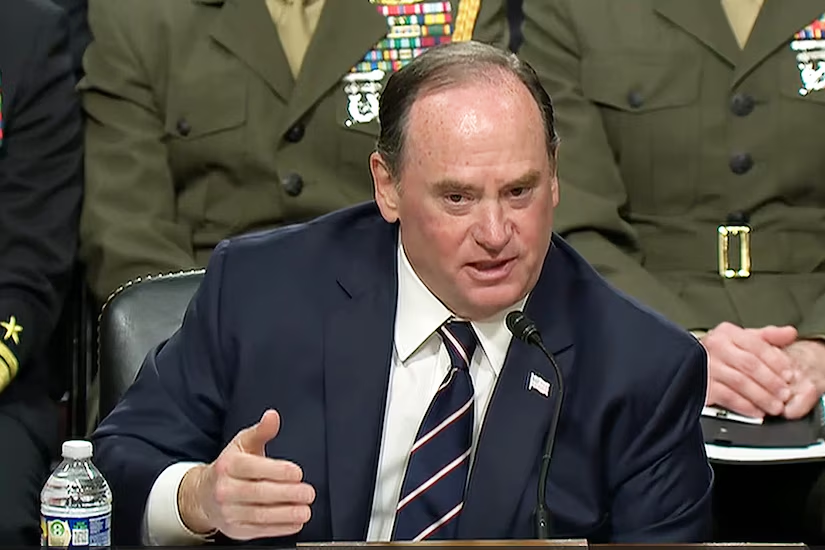
ARLINGTON, Va. — The Marines in the regiment being surged to protect federal buildings and personnel in Los Angeles are trained in crowd control, the commandant of the Marine Corps told Congress. 

“All Marines are trained in crowd control, embassy reinforcement, etc., so this is part of their training, sir,” said General Eric M. Smith, commandant of the Marine Corps, testifying June 10 on Capitol Hill before the Senate Armed Services Committee. “The standard Marine expeditionary unit — before they deploy — is trained, and this battalion is ready for that.” 

Smith was responding to questions from Sen. Richard Blumenthal, D-Connecticut, about the imminent deployment of Marines to Los Angeles in response to recent rioting from people protesting the enforcement actions of Immigration and Customs Enforcement (ICE) personnel in the city.  

The 700 Marines assigned to Los Angeles are from the 2nd Battalion, 7th Marine Regiment, 1st Marine Division, based at the Marine Air-Ground Combat Training Center at Twentynine Palms, California. 

The Marines were activated on June 9 by U.S. Northern Command. 

“The activation of the Marines is intended to provide Task Force 51 with adequate numbers of forces to provide continuous coverage of the area in support of the lead federal agency,” NORTHCOM said in a June 9 release. “Task Force 51 is U.S. Army North’s Contingency Command Post, which provides a rapidly deployable capability to partner with civil authorities and DoD entities in response to a Homeland Defense and Homeland Security Operations. It is commanded by Maj. Gen. Scott M. Sherman.”  

Task Force 51, which includes up to 2,100 personnel from the California National Guard, is has been trained “in de-escalation, crowd control, and standing rules for the use of force,” the NORTHCOM release said.  

“They are there at the SECEDEF’s [Secretary of Defense’s] direction to NORTHCOM [U.S. Northern Command],” Smith of the Marines in response to a question from Sen. Mike Rounds, R-South Dakota. “It’s one of our most ready battalions. They’re prepared to respond to lawful orders from the chain of command. They’re there to protect federal property and federal officers. 

Blumenthal asked about the equipment the Marines would have in Los Angeles and if the Marines would have arrest authority. 

“Sir, they have shields and batons,” Smith said. “They need not have arrest authority. They are there to protect federal property and federal personnel.” 

When Blumenthal expressed concern for the reputation of the Marines thrust into a civil disturbance, Smith replied, “I am not concerned. I have great faith in my Marines and their junior leaders and their more senior leaders to execute the lawful tasks that they are given.” 


Navy Selects Mobile, Ala., Company to Scrap World’s First Nuclear-Powered Aircraft Carrier

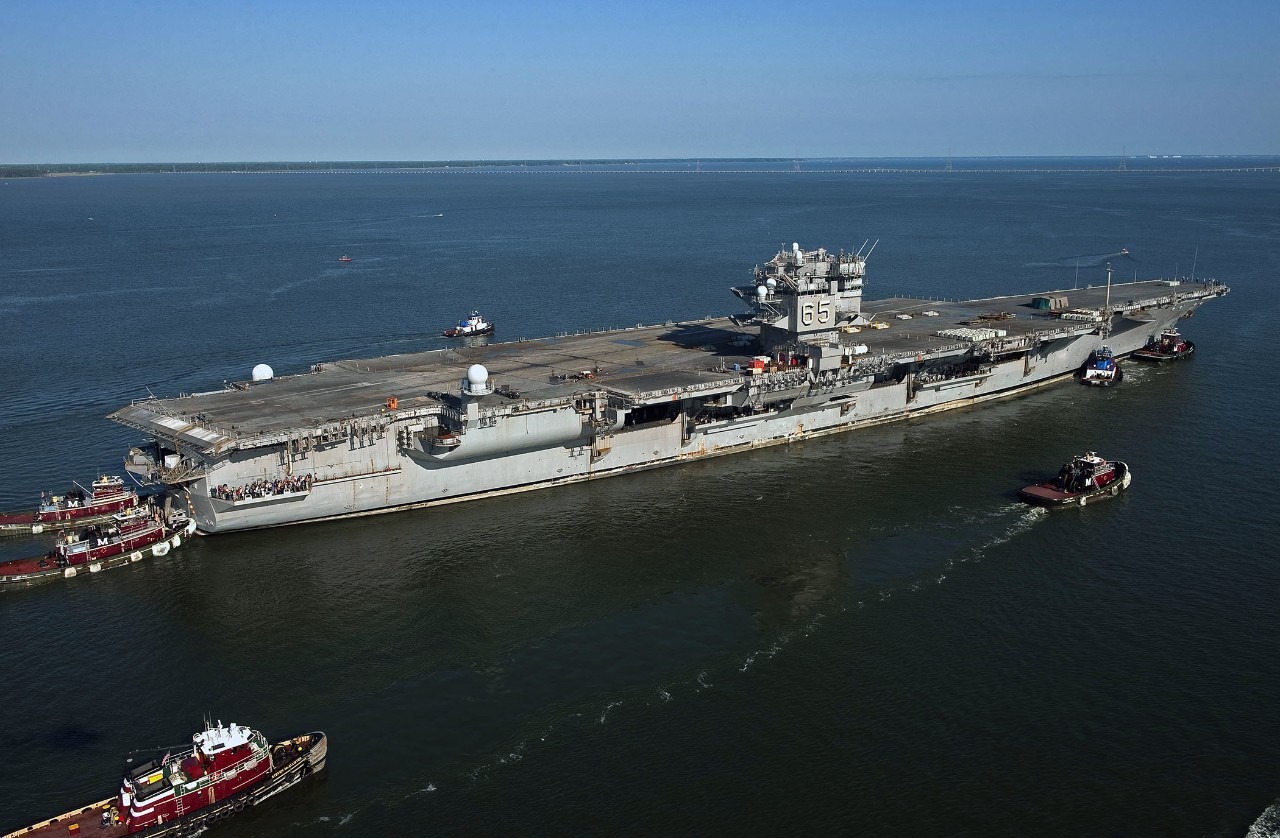
The nuclear-powered aircraft carrier ex-USS Enterprise is shown being moved to Newport News Shipbuilding in 2013 following its decommissioning in 2012. (NHHC) 

By Richard R. Burgess, Senior Editor 

ARLINGTON, Va. — The U.S. Navy has selected NorthStar Maritime Dismantlement Services LLC, a company with facilities in Mobile, Alabama, to scrap the former USS Enterprise (CVN 65), the Navy’s — and the world’s — first nuclear-powered aircraft carrier. 

The Defense Department said in a May 30 contract announcement that NorthStar, headquartered in Vernon, Vermont, was being awarded a $536.7 million firm-fixed-price contract from the Naval Sea Systems Command for “the dismantling, recycling, and disposal of Ex-Enterprise (CVN 65). 

“Under this contract CVN 65 will be dismantled in its entirety, and all resulting materials will be properly recycled or disposed of. Specifically, hazardous materials, including low-level radioactive waste, will be packaged and safely transported for disposal at authorized licensed sites,” the announcement said. “Work will be performed in Mobile, Alabama, and is expected to be completed by November 2029.” 

The Ex-Enterprise, commissioned in 1961, served the nation in numerous crises and conflicts, including the Cuban Missile Crisis, Vietnam War, and Operations Frequent Wind, Earnest Will, Desert Fox, Southern Watch, Enduring Freedom, and Iraqi Freedom.  

The carrier was deactivated in December 2012 and, when its nuclear reactors were defueled, it was decommissioned in February 2017. The hull remained at Newport News Shipbuilding at Newport News, Virginia, awaiting the Navy’s plans for disposal. 

“NorthStar is partnered with Modern American Recycling and Radiological Services, LLC (MARRS) in Mobile, Alabama, where the dismantlement work will take place,” the Naval Sea Systems Command said in a June 2 release posted on linkedin.com. “Waste Control Specialists LLC, of Andrews, Texas, will serve as the licensed facility for disposal of low-level radiological and mixed hazardous waste. Non-hazardous materials will be recycled or disposed of in accordance with all applicable federal, state, and local regulations.” 

The Navy’s selection of a commercial company to dismantle nuclear-powered ship is a change from its normal practice of scrapping nuclear-powered ships, which heretofore included nuclear-powered submarines and cruisers. In recent years, the Navy’s Puget Sound Naval Shipyard in Bremerton, Washington, has been the facility that has handled the tasks. 

“By leveraging private-sector expertise in commercial nuclear power plant decommissioning, the Navy is achieving an estimated $1 billion in cost savings compared to conducting the effort in public shipyards, the Navy release said. “This approach enables the Navy to prioritize public yard resources toward fleet readiness and modernization – while upholding its longstanding commitment to environmental stewardship and nuclear safety.” 


Navy Reserve Chief Looks Forward to KC-130J Aircraft 

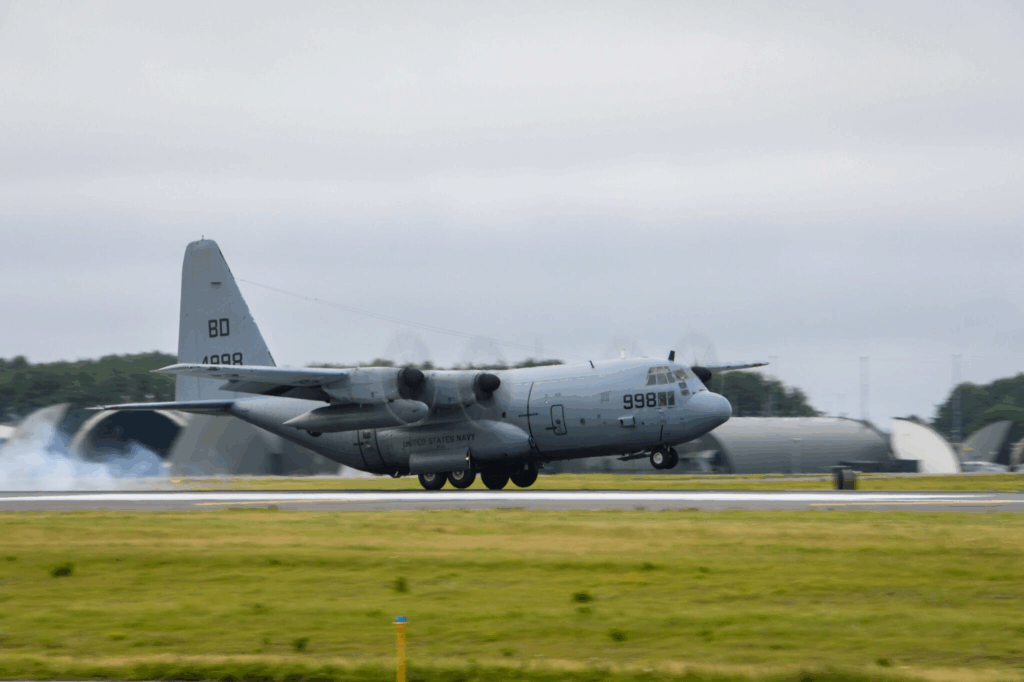
MISAWA, Japan (July 12, 2021) A C-130T Hercules, assigned to the Condors of Fleet Logistics Support Squadron (VR) 64, recovers at Naval Air Facility (NAF) Misawa. (U.S. Navy photo by Mass Communication Specialist 3rd Class Benjamin Ringers)

By Richard R. Burgess, Senior Editor 

ARLINGTON, Va. — The admiral in charge of the U.S. Navy Reserve Force expressed appreciation for congressional support in procuring KC-130J Super Hercules tanker/transport aircraft to modernize the force’s organic airlift fleet. 

“We are grateful for the strong bi-partisan alignment on this priority,” said Rear Admiral Nancy S. Lacore, chief of Navy Reserve, testifying May 20 before the House Appropriations Committee’s defense subcommittee. “We are grateful for the adds we got in 2024 [and] 2025 for the C-130. The C-130 is our number one equipment priority, and we are behind in that re-capitalization effort.” 

The Navy Reserve operates 27 C-130T/KC-130T Hercules aircraft with an average age of 34 years and a mission-capable rate of 40%. Lacore anticipates a mission-capable rate of 75% with a fleet of KC-130Js. 

We’re also anticipating a 75% mission-capable rate, which will go a long way,” Lacore said. “The plan was to be at 32 aircraft by 2030. We got one in 2024, two in 2025 and we’re super-grateful for them. Right now, in the out years, we need to be looking at six per year in order to get us to where we need to go.”  

Lacore said the C-130T Hercules “operates exclusively by the Reserve is the Navy’s only long-range, inter-theater airlift for oversize cargo. Its capability is in high demand from fleet commanders, particularly in the Indo-Pacific, playing a critical role in the contested logistics necessary to sustain a maritime fight. 

“For the past few months, Reserve C-130 crews have transported thousands of pounds of ordnance into the Red Sea fight, keeping our ships on station intercepting Houthi missiles, conduction precision strikes, and safeguarding global commerce,” she said. “When the fleet needs logistics, whether to deliver firepower or staying power, Navy Reserve answers the call.” 

She pointed out that the C-130T fleet “lacks the survivability necessary to operating in a contested environment. Recapitalizing with the KC-130J is critical to ensuring that we effectively and safely carry out the critical inter-theater logistics mission for the fleet in 2027 and well beyond that.” 

Lacore also noted the need for improved aerial refueling capability in the Pacific theater. 

“The PACFLT [U.S. Pacific Fleet] commander has already asked us to work on organic aerial refueling and we are doing that with the Tangos [KC-130Ts],” she said. “It’s a long haul; they’re not all plumbed for that, whereas the Juliets [KC-130Js] will come with that plumbing already established. We anticipate that at least two times the aerial refueling rate. And if we include ground refueling as well, we’re looking at probably eight times our refueling capability in theater, which is a huge win for us in the Pacific. 


Coast Guard to Reduce Flag Officer Positions by 25%

By Richard R. Burgess, Senior Editor 

ARLINGTON, Va. — The U.S. Coast Guard has been ordered to reduce the number of admirals by at least 25% before next year, the service announced. 

In a May 25 directive from Acting Commandant Adm. Kevin Lunday, the service announced that the reductions were part of its Force Design 2028 initiative.  

“As part of Force Design 2028, the Secretary of the Department of Homeland Security has determined that there is redundant executive oversight in our force structure which hinders efficient decision making and Service effectiveness,” The opening statement of the announcement said. 

“As a result, and consistent with similar efforts within the Department of Defense, the Secretary has ordered a reduction of no less than 25% of flag officer positions by 1 January 2026,” the announcement said. “The positions to be eliminated and the plan to reorganize the flag corps will be announced in separate correspondence.” 
 

The Coast Guard currently has approximately 45 flag officers. 

The service also has negated the results of its fiscal 2025 promotion board for the rank of rear admiral (lower Half) while folding opportunity in next year’s selection board. 
 

“The Secretary also disapproved the Promotion Year (PY) 2025 rear admiral (lower half) (RDML) selection board report after determining that the guidance to that board did not align with this Administration’s policies,” the announcement said. “The Secretary’s action also supports planning to reorganize the leadership structure. Officers who were considered by the PY25 RDML selection board and who are otherwise eligible, including those previously selected, will be considered by the PY26 RDML selection board that will convene under new guidance.” 


Virtual Tools Help Real-World Suicide Prevention Efforts

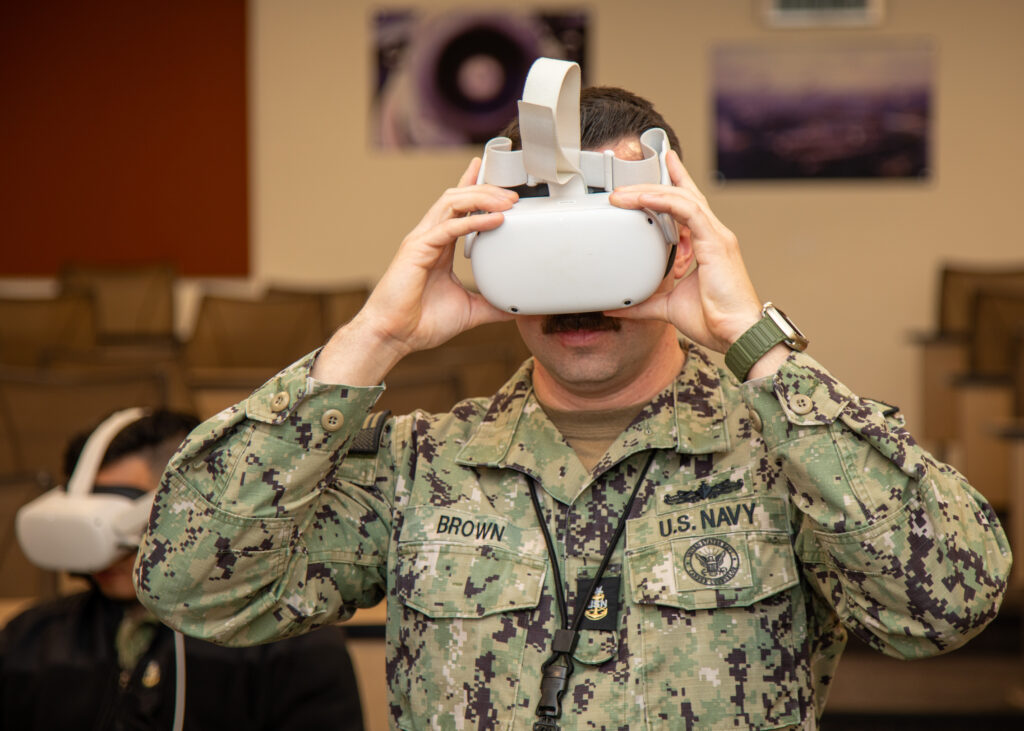
A Sailor assigned to Mid-Atlantic Regional Maintenance Center tests the Oculus headset utilized for sexual assault prevention and suicide prevention virtual reality training onboard Naval Station Norfolk, November 14, 2024. Photo credit: U.S. Navy | Harrison Cox

Veterans, service members and military family members have significantly higher rates of suicide than the general population. The demands of military life can cause anxiety, depression, interpersonal conflicts and emotional distress. Exposure to combat and traumatic experiences can lead to post-traumatic stress disorder and other mental health issues; chronic pain and disability from service-related injuries can worsen these challenges. Access to and familiarity with weapons increases the risk.

Reducing the risk of suicide among service members and their families is the chief mission of the Defense Suicide Prevention Office, a division of the U.S. Department of Defense. It works with military branches, veterans’ organizations and mental health professionals to enhance suicide prevention resources. As part of its mission, it is constantly exploring new technology to support or expand existing programs.

Emerging technologies show great promise in the mission to reduce suicides among active-duty forces and veterans. Artificial intelligence, machine learning and advanced algorithms can help identify high-risk individuals and connect them with early intervention resources. Virtual reality technology is enhancing suicide prevention training, while VR-based therapy and online gaming provide veterans with tools to cope with PTSD and foster community engagement.

Early intervention aims to identify service members and veterans who are experiencing an elevated risk of suicide and proactively connect them with prevention resources. AI-powered algorithms can help improve early intervention efforts. These programs can analyze an individual’s speech patterns, social media activity and biometric data to detect warning signs of suicidal thoughts.

One example is the Recovery Engagement and Coordination for Health — Veterans Enhanced Treatment, or REACH VET, program used by the Department of Veterans Affairs. It uses predictive analytics to identify at-risk veterans and offer early intervention before a crisis occurs.

REACH VET uses sophisticated AI and machine learning techniques to review and assess a veteran’s medical history, psychiatric records and prescriptions. It also considers nontraditional indicators such as chronic pain diagnoses, sleep disorders and major life stressors. The system then runs complex statistical models, evaluating each individual’s data and flagging those whose health patterns resemble others who have attempted or died by suicide.

If the system identifies an individual as high-risk, a VA healthcare provider contacts them for a wellness check and assessment. To mitigate risk, the provider offers personalized care plans, therapy sessions, medication adjustments and peer support programs. Studies show veterans enrolled in REACH VET experience lower hospitalization rates and improved mental health engagement, a point in favor of proactive, data-driven intervention.

Programs like REACH VET may see additional improvement by integrating data from wearable devices like smartwatches and fitness trackers. These devices monitor sleep patterns, heart rate variability and stress levels. Incorporating this data could offer another layer of early detection and support, alerting caregivers or medical professionals if a veteran’s vitals indicate distress or elevated risk.

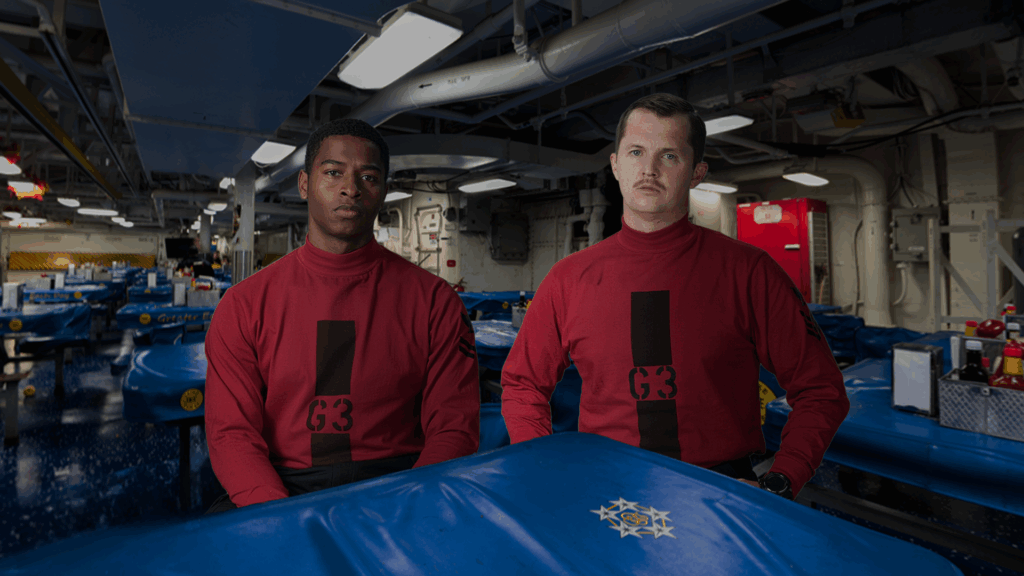
Real actors portray Sailors in realistic environments to allow trainees to have significant conversations. Image credit: Moth + Flame

VR Tech and Suicide Prevention Training

Traditional suicide prevention training is derisively and ironically referred to as “death by PowerPoint.” These boring presentations convey information about available resources but do little to help service members learn what to actually do to help a friend, comrade or family member in crisis.

New York City-based Moth+Flame, a leading developer of immersive VR training solutions, partners with the U.S. Navy and other military branches to provide state-of-the-art training programs. Although it offers many types of interactive simulations, one area of focus is suicide prevention. It provides customized training modules for each branch of service, addressing their specific environmental stressors.

Its VR training encompasses many suicide prevention strategies, including leadership development, crisis response and mental resilience. Officers can improve their ability to foster a better atmosphere for everyone’s mental well-being as well as learn how to support individuals in crisis.

Unlike traditional classroom-based training, VR immerses service members in lifelike conversations where they must recognize distress signals, respond to struggling comrades and practice de-escalation techniques. Participants engage with AI-driven, emotionally responsive avatars in realistic, high-pressure scenarios. The avatars are based on real actors, which the Navy helps select to make sure they look, sound and interact as authentically and realistically as possible.

These scenarios simulate interactions with colleagues, subordinates and family members. Using VR technology, participants can rehearse difficult conversations, building their empathy and confidence in handling real-life crisis situations. As the participant responds, the program provides real-time feedback and suggestions. It also provides post-session feedback and analysis.

“So, in this goggle is a character that is a peer in crisis that the shipmate has to talk to using his or her own voice. … They will have a practical application that they guide hopefully to a successful outcome,” said Matt Frost, an account executive for Moth+Flame, speaking at the Surface Navy Association meeting in January. “We’re not making a video game. This is a real actor in a real environment.”

The biggest users of the technology in the Navy are OPNAV N-17, the Navy Culture and Force Resilience Office; Naval Surface Force, U.S. Pacific Fleet; Naval Surface Force Atlantic; and Naval Special Warfare Command, Frost said.

Studies show that VR-based training improves knowledge retention and engagement compared to PowerPoint-based instruction. Trainees must actively interact with avatars, ensuring a hands-on learning experience. Early reports suggest that VR enhances readiness and significantly boosts confidence in suicide prevention efforts among active-duty service members.

Improving Mental, Physical Wellness

Virtual reality therapy is also transforming mental health care for service members and veterans. It is especially beneficial because it offers a customizable, controlled environment to help process PTSD, anxiety and depression.

A leading program is Bravemind, which was developed in collaboration with the VA Innovation Center and the SoldierStrong charitable organization. It uses VR to facilitate prolonged exposure therapy, a treatment that helps individuals confront and reprocess traumatic memories in a safe setting.

Bravemind creates virtual environments based on real-world combat settings, allowing therapists to guide individuals through difficult memories while helping them develop coping mechanisms. Though exposure therapy is challenging, it has been proven effective in reducing PTSD symptoms and improving emotional resilience.

In addition to structured therapeutic uses, VR can help service members manage stress during long deployments or offshore missions. VR relaxation programs can transport users to peaceful, calming environments, such as beaches, forests or familiar cities to help manage anxiety and promote well-being. Providing these tools to active-duty service members can help improve their overall health and wellness, another building block in fostering readiness and reducing psychological distress.

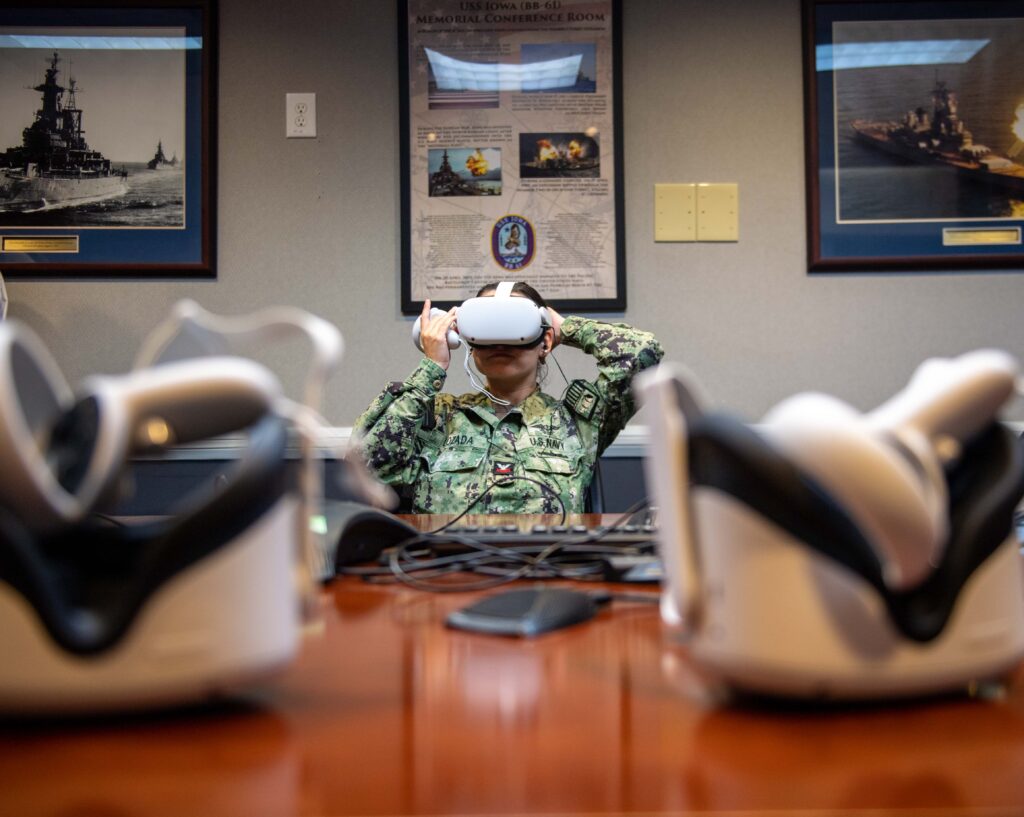
Legalman1st Class Alejandra Lozada, assigned to Commander, Naval Surface Force Atlantic, dons virtual reality equipment to complete training at SURFLANT, Aug. 6, 2024. U.S. Navy | Mass Communication Specialist 1st Class Sophie A. Pinkham

Gaming the (Mental Health) System

First-person shooter video games can be unexpectedly helpful for individuals coping with PTSD. Hyperrealistic games like Call of Duty, Battlefield and Escape from Tarkov allow combat veterans to experience combat-like scenarios in a safe, controlled manner, which can help them process trauma and manage stress.

These games can help players regain a sense of control and desensitization to triggers. They can also induce an adrenaline rush similar to real-life combat, allowing players to practice self-regulation in high-stress situations without real-world consequences.

However, there is another surprising benefit to FPS games, one that has nothing to do with their technological wizardry but is likely far more powerful. Service members and veterans often struggle with isolation and loneliness, feelings that sharply increase suicide risk. They may be reluctant to seek therapy or discuss their issues with their command, family members or real-world friends. Online gaming communities can provide crucial support in ways traditional resources can’t, reaching individuals who slip through the cracks of conventional support systems.

Multiplayer gaming fosters teamwork, communication and camaraderie, mirroring the bond of military units. Organizations like MilitaryGamers.com, Stack Up and Warfighter Engaged provide gaming communities centered around service members and veterans. Twitch streamer GrndPa Gamer, a veteran himself, has built a supportive online community where service members and fellow veterans can share experiences, find camaraderie and use gaming as a mental health tool.

As technology advances, VR therapy, AI-powered analytics and other developments will continue to change the landscape of suicide prevention efforts. The integration of biometric tracking, real-time clinical feedback and AI-driven therapy solutions has the potential to make suicide prevention efforts even more effective. By combining cutting-edge technology with compassionate care and community involvement, the military and veteran support organizations can provide life-saving resources and a path toward better mental health.

Jamie L. Pfeiffer was a lawyer in Illinois, Oregon and Washington states before retiring. She is currently based in Chicago. This story first appeared in the May issue of Seapower magazine.


DIU Is Vehicle for Boosting Navy Technology

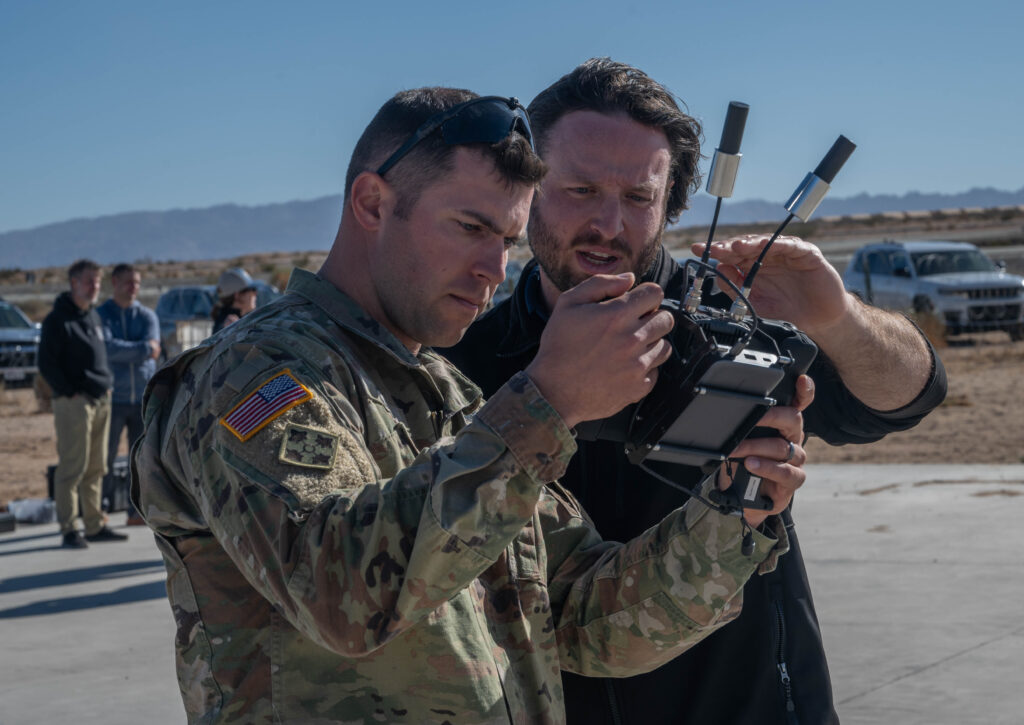
A team of Department of Defense drone operators and experts test the technical capabilities of various uncrewed aerial systems during a Defense Innovation Unit led prize challenge to identify platforms, components, and capabilities for Blue UAS, which clears and validates flying platforms are safe to fly, cyber-secure, and meet DOD requirements, at Marine Corps Air Ground Combat Center, Twentynine Palms, California, on Nov. 2-6, 2024. Photo credit: DIU | Devon Bistarkey

As the U.S. Navy and Department of Defense race to develop more innovative offensive and defensive capabilities to deter China and other adversaries, most agree that greater engagement with the private technology sector is needed.

That’s in part the impetus behind the Replicator initiative, a DoD effort started in 2023 to speed adoption of commercial military and national security technology, particularly lower-cost uncrewed capabilities. This is also key to realizing the goals of the new 2024 Navigation Plan, released in September by Admiral Lisa M. Franchetti, then the 33rd chief of naval operations. The plan focuses on faster integration of robotics and autonomous resources.

Enter the Defense Innovation Unit, a once “experimental” DoD office that in 10 years has become a central player in the Pentagon’s push to adopt and scale commercial technology for military applications.

Since its start in 2015, the office has pioneered deep relationships with Silicon Valley and the tech sector nationwide and a process for quickly prototyping military applications of commercial technologies. This has led to 450 prototype contracts and $68 billion in private investment, according to DIU’s fiscal 2023 annual report. These investments translated into 62 contracts for commercial solution transitions to the warfighter, the DIU report says.

Although DIU is a small office, with a fiscal 2024 budget of $983 million (compared to the nearly $875 billion in annual authorized defense spending), its influence is growing and getting attention. In 2023, the Pentagon elevated DIU in the organization chart to report directly to the office of the defense secretary. Now, DIU Director Douglas A. Beck serves on or provides leadership and staff support to various entities driving Pentagon innovation, including the Deputy’s Innovation Steering Group and Defense Innovation Working Group, both of which have oversight roles in implementing Replicator.

This puts “DIU at the forefront to deliver future capabilities at speed and scale,” Beck said in Feb. 15, 2024, testimony before the House Armed Services Committee.

DIU-Navy Collaboration

To learn more about how DIU works with the Navy to bring about innovation, Seapower spoke late last year with Alex Campbell, a highly decorated Navy captain who is director of the Maritime portfolio at DIU. Campbell, who has a master’s degree in business administration from Georgetown University, is a designated officer in explosive ordnance disposal, diving and salvage, and surface warfare and a naval parachutist. He supported the conflicts in Iraq, Afghanistan and others around the globe and, throughout his career, earned multiple service and campaign awards.

Campbell is also experienced in defense procurement. He ran the counter weapons of mass destruction portfolio for Special Operations Command and programs to build uncrewed, underwater systems and software. At DIU, Campbell connects Navy and combatant commanders with commercial firms to address complex military maritime needs.

The condensed and edited discussion follows.

How does DIU leverage relationships with the tech sec­tor to develop solutions for the military?

DIU has this really unique, within the DoD, understanding of the commercial technology space. A really important part of DIU is our commercial operations team, and they essentially live, eat and breath where investment is happening in the commercial tech space and the defense tech space and also live, eat and breathe where these early and midstage startup companies are and [where] even more mature companies [are]. They have what I would call a real-time market survey, so that when we work through these problems of a service or combatant command, we’re able to then pair them with certain parts of the commercial tech sector or the defense tech sector [to develop needed capabilities].

What’s one example of a Navy-DIU partnership?

Project Overmatch is an important partner with DIU and has been for the last two or three years. And they have a remit to build basically a modernized tactical communications grid across ships and aircraft and in the joint world … to bring forth the best in [artificial intelligence] and autonomy capabilities for these tactical use cases, which makes them a great partner for DIU. [This is essentially to] do digital transformation for ships, submarines and aircraft, [which is] really, really, really difficult.

Why is this transformation so challenging?

Because you have all of these weapons systems [on a destroyer] — whether it’s radars or missile systems or torpedoes or electronic warfare systems — and they all generate just terabytes and terabytes of data in any given day. And there’s a lot of room to improve essentially saving that data and finding a way to get that data into a cloud repository so that both government engineers and commercial companies can access that data so that they can build software capabilities that improve a warfighter’s ability to do their job. You really can’t create AI capability if you can’t find a meaningful way to bring in all of the data that these Navy platforms generate on the day to day.

What is the fundamental importance of data in build­ing naval autonomy, whether on a drone boat or on a destroyer?

If I have a drone boat and it’s driving through the ocean and it encounters some big tanker on the ocean, it needs to be able to ingest data from a camera or from a radar system. It needs to know where that tanker is out in front of it, and it needs to know, “Hey, I have to turn left or I’m going to crash into the tanker.”

It may sound like a very simple example, but you have to collect data over hundreds and hundreds of hours of running these drone boats out in the ocean in order to essentially have examples to train algorithms so that they know … whatever it is they need to do. This must all be in accordance with Coast Guard regulations for how a boat would behave if a human were driving it. And so, on the autonomous-system side, you have to collect all of that data to help inform how that drone boat will behave on the ocean. In that regard, data is fundamental.

And how is data functioning to render a destroyer more autonomous?

On a destroyer, you have these radar systems that do a whole range of things. But if you want to, for example, train a machine-learning capability to automatically sense specific targets, you need to collect a whole lot of data from those radar systems. And then you have to have a human being basically watch the playback from those radar systems and say, “OK, this particular signal in my radar data, that’s a commercial airliner. This particular signal on my radar data is a seagull. This particular piece of data is a military aircraft.”

And then you train an algorithm to automatically detect those things based on all the different data signatures …. and so, in that regard, data is just as fundamental to the drone boat as it is to the destroyer.

But humans still make the critical decision in the field?

You’re not removing the human being from a lethal decision-making process; you’re creating tools so that they can make better decisions faster.

What are the even steeper challenges in operational­izing autonomous capabilities for maritime military missions?

On the [more] difficult end of that spectrum [from navigation of a single drone boat], you have to figure out how to get hundreds or thousands of those craft to not only turn left, turn right, speed up and slow down — to avoid a tanker or an island or whatever — now you have to have all of those platforms doing it in concert with one another. And communicating in concert with one another, and creating effectively what I’ll call a model of the world around them.

So, if I have hundreds of these platforms on the surface of the ocean, or in the air, or under the sea, I need all of those platforms to understand where all of their partners are in the world. And then I need them to sense the world around them such that they can accomplish very specific missions. And that mission autonomy is very complex.

I think those are the areas we’re looking to push into. That’s sort of the next frontier of employing autonomous systems at scale. And that’s something the commercial world hasn’t even really figured out.

Then-Deputy Secretary of Defense Kathleen H. Hicks and staff members participate in interactive demonstrations during a DIU capabilities brief at the DIU, Mountain View, California, Dec. 12, 2023. Photo credit: Department of Defense | U.S. Navy Petty Officer 1st Class Alexander Kubitza

How does DIU work with the Navy and the larger mili­tary community to address these complicated issues?

DIU spends time understanding a problem set from both the military’s and the commercial technology sector’s perspective. By understanding both sides of the coin, we are able to say, “OK, we’ve identified this problem, we’ve spent time with you to understand the left and right limit of these problems.” Regardless of where the problem starts from — whether it’s a program office or from a fleet — we like to get that entire team of stakeholders together. Because what we’ve found is that if we don’t do that, we can probably go run a really fun prototype, but the likelihood that that prototype is going to turn into a production contract and actually get fielded to a Sailor in a way that is integrated with other capabilities around it is very low.

How does the “commercial solutions opening” process work to develop those capabilities?

The central value proposition of DIU is this thing called a commercial solutions opening, which is a business and an acquisition process. We take a really thorough understanding of the problem, and we take a really thorough understanding of the tech and commercial space, and we forge that into a plan to go execute a project [in collaboration with government technology, warfighting and program management offices in the Navy or other services]. And in this commercial solutions opening, we put a solicitation or a request for proposal on our website. And then companies can bid on that proposal or bid on that request and provide a proposal for how they would go about solving for this problem.

How is DIU’s process different from the traditional acquisition process?

In the traditional defense acquisition process, when you put a request for proposal or a solicitation out, it’s usually this 10-, 20-, 30-page, very detailed document that really specifies solutions in many cases. When we put a solution or an RFP out it’s usually one-and-a-half to three pages [that’s] just a problem statement. It very rarely specifies a specific solution. And what we find is we really open the door to compelling solutions that you might not otherwise get when you specify a solution in your RFP.

And this process is faster. We do this pretty quickly. We post these solicitations for 10 days at a time, sometimes up to 15 days at a time, and then we move really quickly. Let’s say we get 100 proposals, we move really quickly to … pick the best paper proposals, and then bring those teams in to do a live pitch and live Q and A, and sometimes we actually do live demonstrations depending on what the problem is and what the intended capability is.

How does the other transaction authority funding mechanism speed things up?

The other transaction authority is a contracting authority and nothing more. There’s no financial authority tied to it. It is a mechanism to do contracting that is outside of the federal acquisition regulation, which is what most contracts in the DoD are done through.

But in the context of the Navy, almost every contracting shop in the Navy could choose to write and conduct more OTA-based contracts. So, it’s not an authority issue, it’s an adoption issue. We usually award one to five OTAs within 120 days of that solicitation going out. Which is three to five times faster than a traditional prototype contract … using the FAR as their guidebook and as their authority. And so that speed really makes a big difference in terms of getting companies to start solving warfighter problems faster and also keeping pace with technology … and then getting those prototypes out there as quickly as possible.

What happens in the prototype process?

Our protypes usually last 12 to 24 months. At the end of that 12- to 24-month period, we’re going to try and field some viable product of that capability and ideally transition it to that traditional program office. [And Congress has in recent years given DoD more authority to quickly produce successful prototypes developed via competitively awarded OTAs.] So, I can take a successful prototype capability awarded through a competitively sourced OTA, and I can use that to do a sole-source production award immediately thereafter.

Is DIU willing to work with the prime defense contrac­tors (e.g., Boeing, Lockheed Martin and Raytheon)?

We’re not anti-prime in any way, shape or form. But, at the same time, DIU exists with a specific remit to expand the industrial base for commercial dual-use tech companies, for new defense performers and for nontraditional defense performers. Part of the reason that DIU was stood up originally, around 10 years ago, was to essentially rebuild a bridge that had atrophied with commercial tech and Silicon Valley to create opportunities [and] to create space for that tech to be applied and leveraged by the DoD in ways that [weren’t] happening.

Why wasn’t that happening?

Part of the reason [is that a] 50-person startup can’t afford to hire five people just to do military business development and to navigate the somewhat complex maze and pathway of a FAR-based contract. Or [know] how to leverage Congress to put an earmark in for the defense budget. All of these things that the defense primes have hundreds and hundreds of people doing every day.

DIU exists to really simplify the process so that a 50-person startup … can essentially provide the same
sort of proposal for any customer. OTA contracts are much simpler and much more like a commercial contract than what you’re going to see through the FAR.

Do you expect the Navy to conduct more projects with DIU in the future?

We have been seeing an absolute increase in demand signal from the Navy, both for software and for hardware applications. So, I feel like that’s a growth area. And I think the Navy is increasingly aware of DIU’s ability to move quickly and to bring in commercial companies and commercial performers that may not have otherwise bid in the traditional FAR-based contracting process on SAM.gov.

Erika Fitzpatrick is an award-winning writer living in Washington, D.C. With more than 20 years of experience in public policy journalism and communications, she specializes in covering issues affecting service members, veterans and military families. This story originally appeared in the April edition of Seapower magazine.