Coast Guard Recapitalizes Command and Control Aircraft 

From Headquarters, U.S. Coast Guard, Oct. 18, 2025 

WASHINGTON — The U.S. Coast Guard executed a planned and critical recapitalization of its long-range command and control aircraft Oct. 17. 

These aircraft are required to provide official travel for the secretary of homeland security, deputy secretary homeland security, commandant of the Coast Guard, vice commandant and Atlantic and Pacific commanders as specified by the Office of Management and Budget (OMB) and Department of Homeland Security policy.   

“The timing of this investment underscores the Coast Guard’s vital need to modernize its command and control capabilities to meet today’s rapidly evolving operational demands. As maritime activity increases and national security challenges grow more complex, maintaining reliable air mobility is essential to ensuring continuity of operations and mission success,” said Adm. Kevin Lunday, acting commandant.  

This purchase replaces planes that were as much as 20 years old and experiencing several unplanned maintenance issues. Since January 2025, U.S. Coast Guard long-range command and control aircraft experienced 30 days of unplanned maintenance, with six missions requiring unplanned cancellation.  

“Modernizing the Coast Guard’s aging and obsolete aviation fleet is essential to ensuring our ability to successfully conduct national security missions. The purchase of these aircraft will meet our operational requirements for safe, reliable, on-demand military transport with integrated and secure command and control capabilities,” said Lunday. 

The Service has been operating command and control aircraft for over 65 years, reflecting a long-standing commitment to maintaining airborne command capability as a cornerstone of national maritime safety and security. Robust command and control capabilities, including top secret/secure compartmented information communications, are required for senior leaders to coordinate multi-agency operations across a vast international area of responsibility. The unique command and control capabilities provided by the long-range command and control aircraft enable real-time communication, situational awareness, operational continuity and the ability to direct assets to where they are needed.   

In accordance with guidance from the White House and OMB, including OMB Circular A-126, all travel by agency heads qualifies as required use travel. As with the secretaries of state and war, the attorney general and directors of the Federal Bureau of Investigation and Central Intelligence Agency, the White House determined in March 2004 the duties of the secretary of homeland security were such that they require instantaneous secure communications with the White House, the Department of Homeland Security and other agencies. This guidance also determined that in an emergency, the secretary of homeland security must be able to return to Washington, D.C., or proceed to other destinations on an expedited basis.  

“It’s incredibly disappointing that politicians and the media are playing politics with the funding of the Coast Guard,” said Mr. Sean Plankey, senior advisor to the secretary for the Coast Guard. “This is a matter of safety and mission readiness. It’s well known that senior military officials and cabinet members need secure command and control and rapid long-range mobility. Flippant comments are great for clicks and fundraising emails, but don’t reflect the reality of protecting the American people 24 hours a day, seven days a week and 365 days a year.”  

President Donald Trump has provided the U.S. Coast Guard unprecedented support through the One Big Beautiful Bill Act to enable the Coast Guard to be the finest maritime fighting force in service to the nation. The Coast Guard remains committed to investing in the most capable and cost-effective equipment for our service men and women. These acquisitions are in line with the policies and requirements for all military combatant commanders, department and service secretaries.   
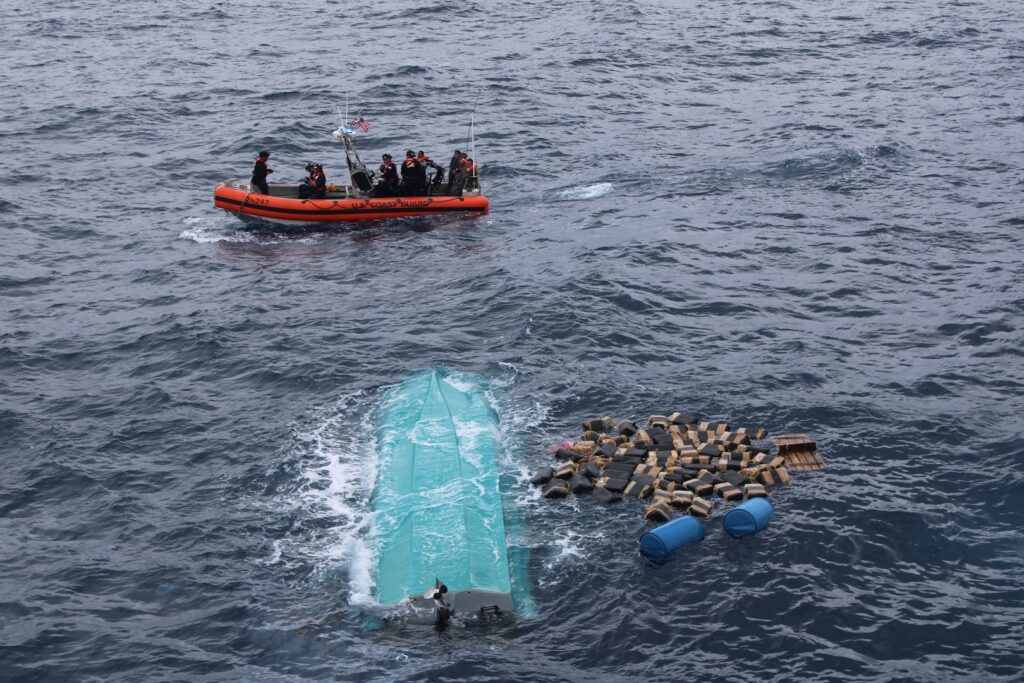


Coast Guard Seizes 100,000 Pounds of Cocaine Through Operation Pacific Viper

The crew of the U.S. Coast Guard Cutter Seneca (WMEC 906) recovers bales of cocaine after a suspected drug smuggling vessel capsized in the Pacific Ocean, Sept. 17, 2025. Seneca’s crew worked alongside interagency partners to interdict illicit narcotics in the international waters in the Eastern Pacific Ocean. (U.S. Coast Guard photo) 

Release From Headquarters, U.S. Coast Guard

WASHINGTON – The U.S. Coast Guard announced Tuesday it has seized more than 100,000 pounds of cocaine in the Eastern Pacific Ocean since launching Operation Pacific Viper in early August, averaging over 1,600 pounds interdicted daily.  

These drug seizures, and the apprehension of 86 individuals suspected of narco-trafficking, were the result of 34 interdictions since early August.   

Through Operation Pacific Viper, the Coast Guard is accelerating counter-drug operations in the Eastern Pacific Ocean, where significant transport of illicit narcotics continues from Central and South America. In coordination with international and interagency partners, the Coast Guard is surging additional assets — cutters, aircraft and tactical teams — to interdict, seize and disrupt transshipments of cocaine and other bulk illicit drugs. Operation Pacific Viper continues the Coast Guard’s efforts to protect the Homeland, counter narco-terrorism and disrupt Foreign Terrorist Organizations and Transnational Criminal Organizations and cartels seeking to produce and traffic illicit drugs into the United States.    

“The Coast Guard’s seizure of over 100,000 pounds of cocaine, in such a short timeframe, is a remarkable achievement,” said Rear Adm. Jeffrey Novak, deputy commander of U.S. Coast Guard Pacific Area. “When we say the Coast Guard is accelerating counter-narcotics operations, we mean it. Alongside our partners and allies, our maritime fighting force is scouring drug smuggling routes in the Eastern Pacific and dismantling narco-terrorist networks. We are complementing the Coast Guard’s unique law enforcement authorities with cutting-edge capabilities to stop the flow of deadly drugs that threaten U.S. communities. As we mark our interdiction of 100,000 pounds, we are already working towards the next milestone.”   

Detecting and interdicting narco-terrorism on the high seas involves significant interagency and international coordination. U.S. Southern Command’s Joint Interagency Task Force-South, based in Key West, Florida, detects and monitors both aerial and maritime transit of illegal drugs. Once interdiction becomes imminent, the law enforcement phase of the operation begins, and control of the operation shifts to the U.S. Coast Guard throughout the interdiction and apprehension. Interdictions in the Eastern Pacific Ocean are performed by members of the U.S. Coast Guard under the authority and control of the Coast Guard’s Southwest District, headquartered in Alameda, California.      

The Coast Guard is the United States’ lead federal agency for maritime drug interdiction. We are part of the Department of Homeland Security team protecting our nation and are at all times a military service and part of the joint force defending it.   


Coast Guard Supports State Response, Conducts Mass Rescue Operations in Alaska 

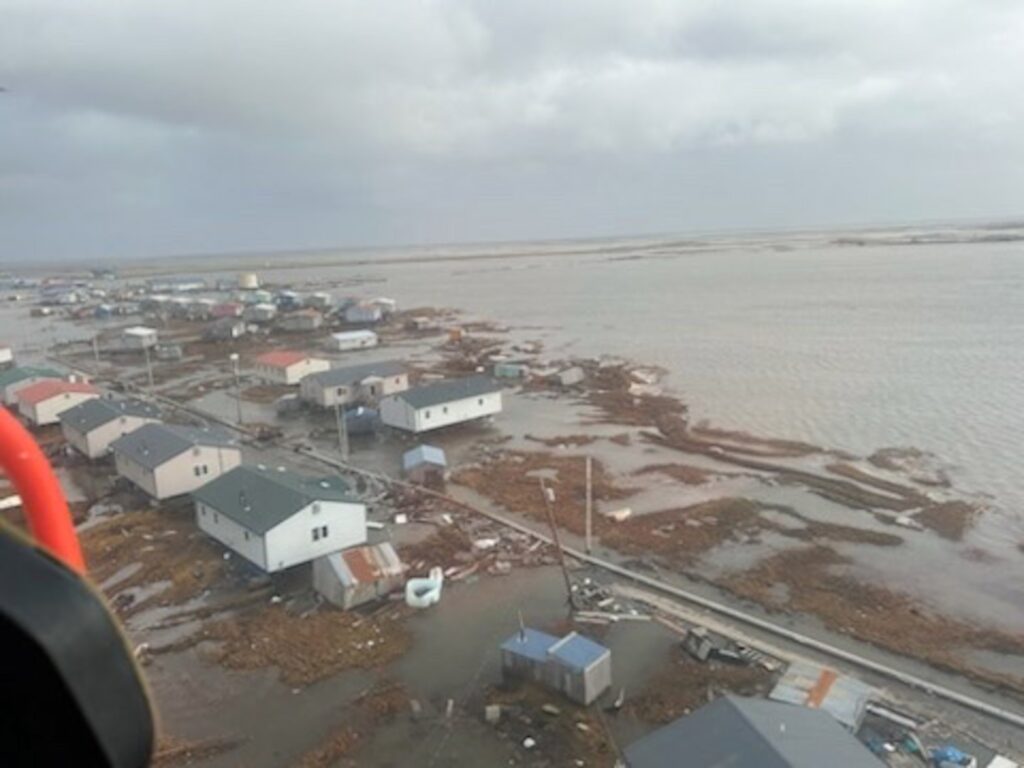
U.S. Coast Guard MH-60 Jayhawk helicopter aircrews conduct overflights of Kipnuk, Alaska, after coastal flooding impacted several western Alaska communities, Oct. 12, 2025. The Coast Guard continues to support the state of Alaska’s response efforts in impacted communities. (U.S. Coast Guard photo courtesy of Air Station Kodiak)  

Release From U.S. Coast Guard Arctic District

ANCHORAGE, Alaska — The Coast Guard is conducting search and rescue operations Monday in Kipnuk and Kwigillingok, Alaska, where communities have been impacted by severe flooding.   

In support of the state of Alaska’s response, Coast Guard crews from Air Station Kodiak successfully rescued 18 people in Kwigillingok and 16 people in Kipnuk. All were transferred to safety in stable condition.    

Search efforts are ongoing for three residents of Kwigillingok who remain unaccounted for. A Coast Guard MH-60 Jayhawk helicopter aircrew searched 76 square miles for the missing individuals Sunday and resumed first light searches this morning. Search efforts are currently underway.     

The crew of Coast Guard Cutter Kimball (WMSL 756) aided in search and rescue efforts using unmanned aerial surveillance, providing logistics support for aviation assets participating in rescue operations. Relief crews and supplies are being staged in Bethel to support a multi-day response.    

The Coast Guard is working closely with partner agencies, including the Alaska State Troopers, the Alaska Rescue Coordination Center, the Alaska Division of Homeland Security and Emergency Management, and the Alaska Air and Army National Guard to coordinate ongoing rescue operations in impacted communities.   

“Preservation of life is our top priority,” said Capt. Christopher Culpepper, commander of U.S. Coast Guard Sector Western Alaska and U.S. Arctic. “The Coast Guard remains closely connected to the State Emergency Operations Center in full support of combined rescue and response operations alongside State Troopers, National Guard, and various additional agencies.”    

The situation is ongoing, and more information will be released as it becomes available.    


White House Selects Bollinger-Led International Team to Build Six U.S. Coast Guard Arctic Security Cutters 

Production-ready Multi-Purpose Icebreaker design

Construction to begin immediately in both Finland and the United States with eventual transition to full production in the United State 

From Bollinger Shipyards, Oct. 9, 2025 

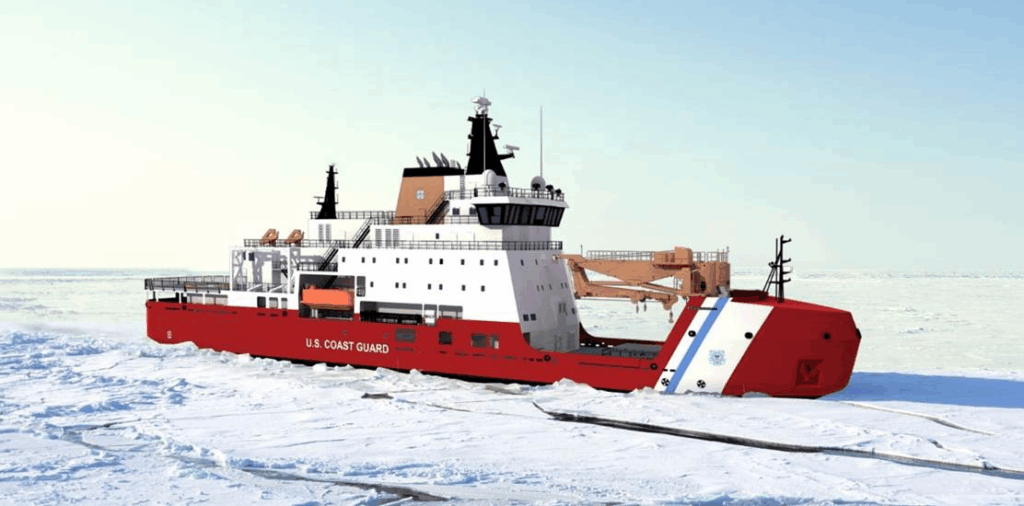
LOCKPORT, La. — [October 9, 2025] — At a White House event today, U.S. President Donald J. Trump announced that Bollinger Shipyards, in partnership with Rauma Marine Constructions (Rauma), Seaspan Shipyards (Seaspan), and Aker Arctic Technology Inc. (Aker Arctic), has been selected for the design and construction of six Arctic Security Cutters (ASC). The Bollinger-led team will leverage the mature and production-ready Multi-Purpose Icebreaker (MPI) design, developed by Seaspan and Aker Arctic for allied missions in extreme polar environments. 

“Today’s award is a testament to President Trump’s leadership and his historic investment in America’s maritime industrial base,” said Ben Bordelon, President and CEO of Bollinger Shipyards. “We appreciate the trust President Trump has placed in the skilled men and women of Bollinger Shipyards and stand ready to begin construction on these critical vessels on day one. The Arctic Security Cutter will enable the United States to rapidly project American power, enforce our sovereignty, and reassert American dominance in the arctic.” 

Bollinger and its partners will be responsible for the construction of six state-of-the-art icebreakers. The first three vessels will be built simultaneously by Rauma in Finland and Bollinger in the United States, with production of the remaining three vessels to be built in the United States. Delivery of the first three vessels is expected within 36 months of the contract award. 

“The United States Coast Guard is placing its trust in Rauma Marine Constructions’ proven shipbuilding capability. With a hot production line and our ice-class experience, we are ready to deliver the Arctic Security Cutters on an accelerated timeline in close cooperation with our U.S. partner and allied industry. Together, we will provide the Coast Guard with the world’s most capable Arctic security vessels,” said Mika Nieminen, CEO of Rauma Marine Constructions. 

The award delivers on President Trump’s and Secretary of Homeland Security Kristi Noem’s calls to rebuild U.S. polar capacity, strengthen the industrial base, and secure long-term American presence in the Arctic. 

“Thanks to President Trump, this historic Memorandum of Understanding is a great win for our state that further cements Southeast Louisiana as a leader in America’s domestic shipbuilding industry,” said House Majority Leader Steve Scalise (R-LA). “I am proud to represent the only shipbuilder in the United States in Bollinger Shipyards that has the capability, capacity and expertise to begin construction on these critical vessels on day one that will project American power and dominance in the Arctic.” 

The Seaspan-Aker MPI design has already undergone significant engineering, testing, and integration work, enabling the team to proceed immediately to production. The partnership structure ensures speed to delivery, cost certainty, and seamless interoperability with the Canadian Coast Guard. 

 “Seaspan is extremely proud to work hand in hand with our American and Finnish partners, Bollinger, Aker and Rauma, to provide the U.S. Coast Guard with a state-of-the-art icebreaker design that is mission ready for extreme ice conditions and will fortify and strengthen Arctic security” says John McCarthy, CEO Seaspan Shipyards. “This contract award demonstrates the Seaspan’s world-class marine engineering and design capabilities on the global stage, and further expands North America’s capacity to design, build, and export Arctic-going vessels.”   

 “Aker Arctic is honored to bring our proven icebreaker expertise to this partnership. The ASC program is a milestone for allied Arctic collaboration, and we are proud to help deliver world-class capability for the U.S. Coast Guard” said Mika Hovilainen, CEO of Aker Arctic. Under the ICE Pact trilateral framework between the 

Under the ICE Pact trilateral framework between the United States, Canada, and Finland, this program represents a model for allied industrial collaboration. The parallel construction of the first three vessels at Rauma and Bollinger will rapidly accelerate early delivery while ensuring a stable foundation for full domestic production in the United States. Bollinger will assume full program leadership for U.S.-based construction and long-term sustainment. 

With the ability to break four feet of ice, travel 12,000 nautical miles, and operate for over 60 days, the ASC is purpose-built to support the evolving mission needs of the U.S. Coast Guard in the harshest conditions. Additionally, its shared multi-mission design with the Canadian Coast Guard fleet will create the largest class of icebreaking capability in the world, optimizing interoperability and maintenance support. The ASC fleet will enable year-round access to polar regions for national defense, maritime sovereignty, scientific research, and search and rescue operations. With this new class of vessels, the United States takes a major step forward in asserting leadership in the Arctic. 

In addition to the Bollinger-led team, Canada’s Davie Shipyards will also contribute to the ASC program by building a separate class of vessels on their fourth-generation Multi-Purpose Polar Support Ship (MPPS) design. 


Coast Guard Marks 250th Birthday of the U.S. Navy 

WASHINGTON – The acting commandant of the U.S. Coast Guard sent the below message to the Coast Guard in honor of the U.S. Navy. 
 

1. Congratulations to the United States Navy on your 250th Birthday!  
 

2. Since 1775, America’s Navy has stood as a global beacon of strength, freedom, and security. More than just marking another year, this anniversary celebrates the Navy’s legacy  
of strategic dominance of the sea, enduring commitment to preserving peace through strength, and readiness to fight and win that defines every Sailor.  
 

3. The Navy’s ability to project power and control the sea has been vital to safeguarding our nation and our values. Just as the Coast Guard controls, secures, and defends the  
U.S. border and maritime approaches, the Navy’s mastery of the seas preserves freedom of navigation around the world and ensures our strategic advantage across domains. 

  
4. Today, we honor the Navy trailblazers who advanced maritime power, the dedicated Sailors who stand watch around the world, and the innovative leaders who continue to secure our warfighting edge. Your commitment to protecting our nation’s interests at sea ensures we will prevail.  

 
5. On behalf of the United States Coast Guard, I extend our best wishes to the United States Navy on this momentous occasion. We are proud to serve with you as part of the  
Joint Force.  

 
6. ADM Kevin Lunday, Acting Commandant (CCG), sends. 


Coast Guard, Navy interdict 14 aliens 18 miles southeast of Catalina Island, Calif. 

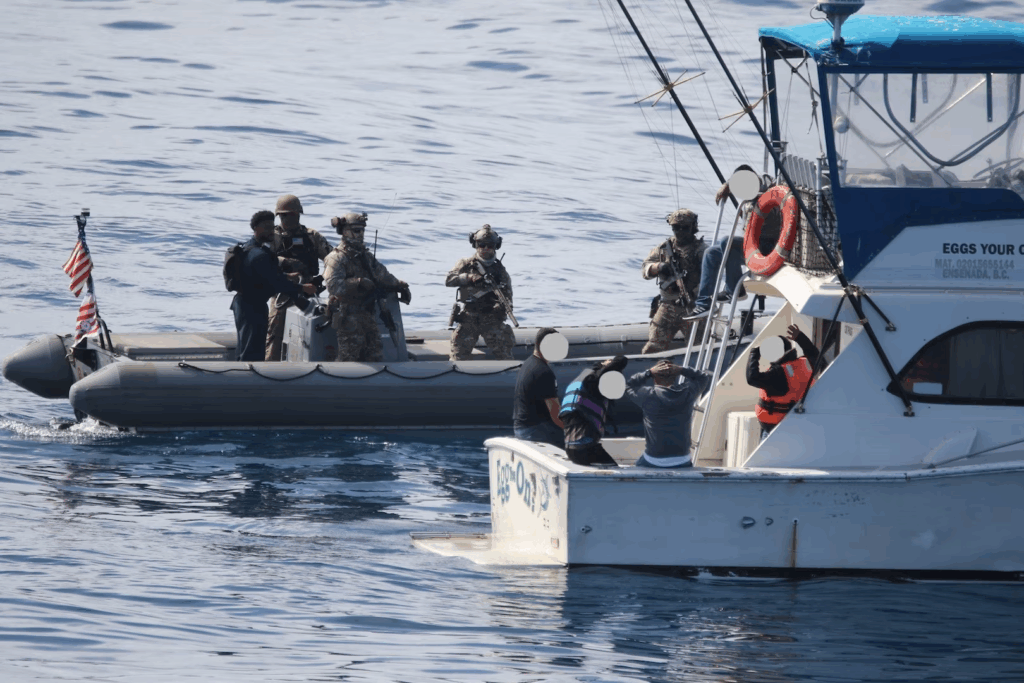
A U.S. Coast Guard Law Enforcement Detachment (LEDET) embarked aboard the Arleigh Burke-class guided-missile destroyer USS Sampson (DDG 102), interdicted 14 aliens aboard a 33-foot sport fishing vessel approximately 18 miles southeast of Catalina Island, California, Sunday morning.

From U.S. Coast Guard Southwest District, Oct. 8, 2025 

PACIFIC OCEAN — A U.S. Coast Guard Law Enforcement Detachment (LEDET) embarked aboard the Arleigh Burke-class guided-missile destroyer USS Sampson (DDG 102), interdicted 14 aliens aboard a 33-foot sport fishing vessel approximately 18 miles southeast of Catalina Island, California, Sunday morning. 

Watchstanders at the Sector San Diego Joint Harbor Operation Center (JHOC) received notification of a vessel crossing north of the maritime boundary line operating with no navigation lights. Sampson approached the vessel as it loitered in the contiguous zone off San Clemente Island and San Diego and observed two persons aboard the vessel giving the appearance of fishing. When Sampson distanced itself from the vessel, it stopped loitering and continued transiting on a northerly course. Watchstanders at the JHOC then directed Sampson to board the vessel using its attached LEDET.  

13 adults aboard the vessel claimed Mexican nationality and one adult claimed Ecuadorian nationality.  The 14 aliens and the vessel were brought to Oceanside, CA, and custody of the people was transferred to another Department of Homeland Security (DHS) agency. 

Upon mission completion, tactical control of Sampson returned to U.S. 3rd Fleet. 

This operation reflects ongoing cooperation between the U.S. Navy, U.S. Coast Guard, and interagency partners to disrupt transnational criminal networks operating in the maritime domain. 

Sampson is employed under U.S. Northern Command’s maritime homeland defense authorities with a Coast Guard Law Enforcement Detachment embarked to enable maritime interdiction missions to prevent the flow of illegal drugs and other illegal activity. U.S. Northern Command is working together with the Department of Homeland Security to provide additional military forces and capabilities at the southern border. 


Coast Guard Cutter Midgett Returns to Hawaii Following 79-day Counterdrug Patrol

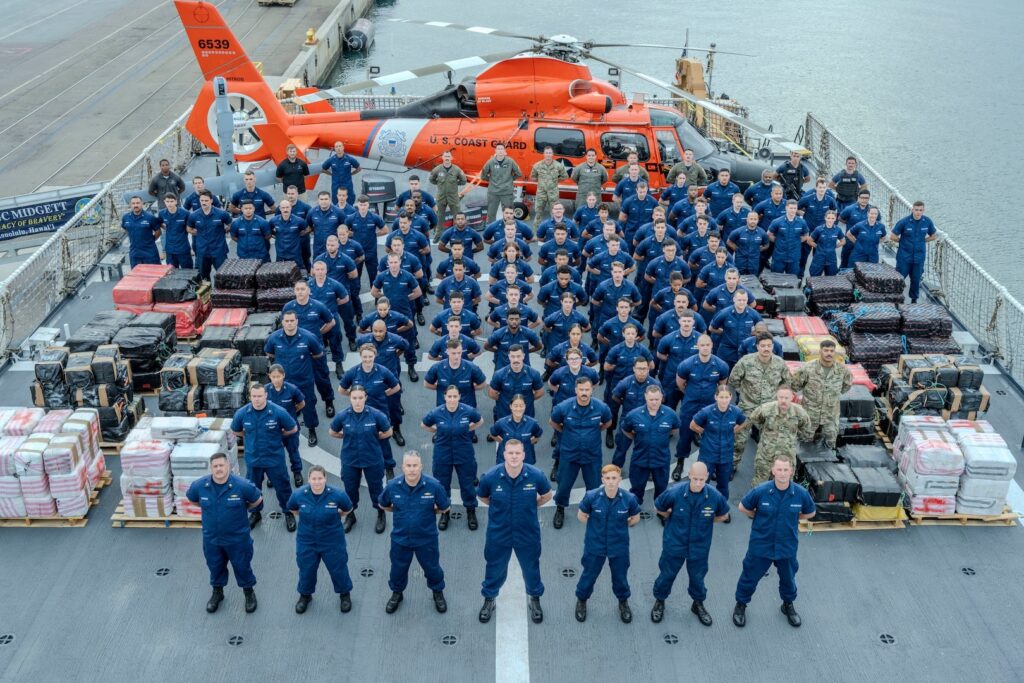
Crew members of the U.S. Coast Guard Cutter Midgett (WMSL 757) stand at parade rest on the flight deck of the cutter in San Diego, Sept. 25, 2025. The Midgett’s crew prepared to offload drugs interdicted in the Eastern Pacific during counter-narcotic patrols, eliminating 21,126 pounds of cocaine worth an estimated $156 million in value. (U.S. Coast Guard photo by Petty Officer 3rd Class Roberto A. Nieves Felix) 

Release From U.S. Coast Guard Oceania District

HONOLULU – The Coast Guard Cutter Midgett (WMSL 757) crew returned to their Honolulu home port Friday after a 79-day deployment to the Eastern Pacific Ocean in support of the counterdrug mission “Operation Pacific Viper.” 

While patrolling international waters off the Pacific coasts of Mexico and Central America, Midgett’s crew apprehended 19 suspected drug smugglers and interdicted four suspected drug smuggling vessels, preventing 21,126 pounds of cocaine, with an estimated value of more than $156.4 million, from reaching U.S. shores. 

The drugs were offloaded in San Diego on September 25 by the Midgett crew and multiagency partners. The Midgett deployed to the region under the tasking of Joint Interagency Task Force – South (JIATF-S) in support of the Coast Guard’s Operation Pacific Viper. 

During the deployment, Midgett’s crew conducted counterdrug missions in the Coast Guard’s Southwest District area of responsibility countering transnational criminal organizations and preventing illegal narcotics from reaching the United States. The trafficking of illegal drugs poses an urgent threat to the American people, and the men and women of the U.S. Coast Guard do everything in their power to interdict drugs before they reach our shores and our citizens. 

Detecting and interdicting narco-terrorism on the high seas involves significant interagency and international coordination. Joint Interagency Task Force-South based in Key West conducts the detection and monitoring of aerial and maritime transit of illegal drugs. Once interdiction becomes imminent, the law enforcement phase of the operation begins, and control of the operation shifts to the U.S. Coast Guard throughout the interdiction and apprehension. Interdictions in the Eastern Pacific Ocean are performed by members of the U.S. Coast Guard under the authority and control of the Coast Guard’s Southwest District, headquartered in Alameda, California. 

Midgett’s crew worked alongside other Coast Guard units including law enforcement personnel from Tactical Law Enforcement Team South (TACLET SOUTH), Helicopter Interdiction Tactical Squadron (HITRON) crews, contractors operating V-BAT Unmanned Aerial Systems (UAS), and Department of War assets. Notably, the ship achieved a significant milestone with HITRON—accomplishing their 1,000th interdiction of suspected drug smuggling vessels. 

“This deployment showcased the power of partnerships in combating transnational crime,” said Capt. Brian Whisler, Midgett’s commanding officer. “From HITRON and TACLET SOUTH to the entire JIATF-S team, the Midgett crew worked seamlessly with our partners to achieve significant results. I am deeply impressed by the dedication and skill of every member of this crew, who consistently exceeded expectations during challenging circumstances. We are incredibly proud of our contribution to Operation Pacific Viper and remain steadfast in our commitment to control, secure, and defend our borders and maritime approaches.” 

Midgett, commissioned in 2019, is the eighth Legend-class national security cutter and is one of two homeported in Honolulu. The cutter’s primary missions are counter-drug operations and defense readiness. 


Coast Guard orders additional waterways commerce cutters 

From Headquarters, U.S. Coast Guard, Sept. 30, 2025 

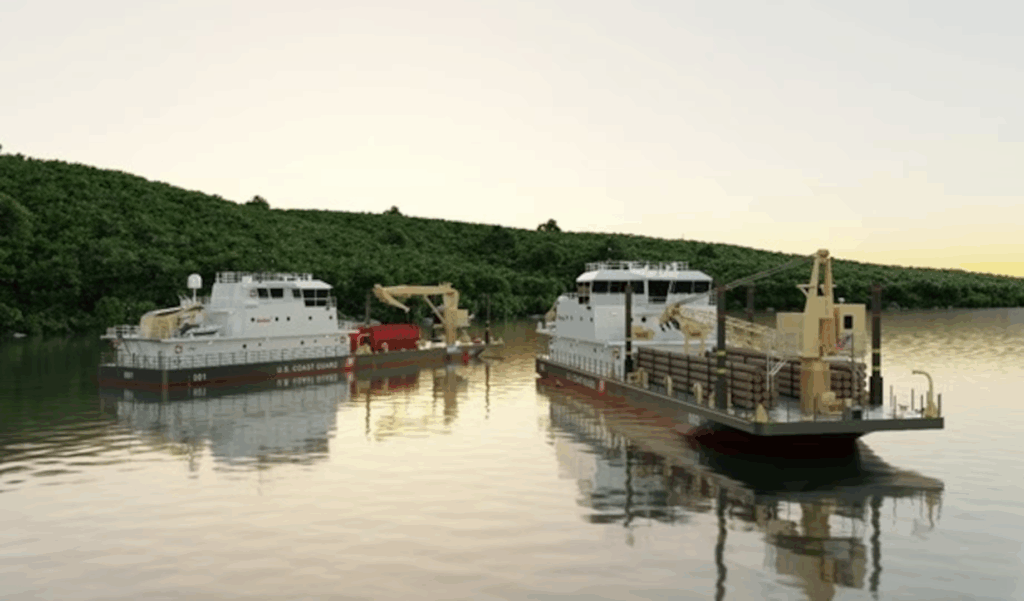
WASHINGTONThe Coast Guard is moving forward with the acquisition of the new Waterways Commerce Cutter (WCC) class, designed to replace the legacy fleet of inland tenders and facilitate commerce vital to the nation’s economic security and strategic mobility. 

The service has ordered production of the first river buoy tender (WLR) and long lead time material (LLTM) for the second inland construction tender (WLIC), with construction to take place at Birdon America, Inc.’s shipyard in Bayou La Batre, Alabama. 

In addition, the Coast Guard has placed an order for three sets of LLTM to support future production. The total value of the production and LLTM orders is approximately $110 million. 

Funding includes $51 million provided by Public Law 119-21, the One Big Beautiful Bill Act, which covers production of the second WLIC and two sets of LLTM. The balance of the order is funded through regular appropriations. 

“Our nation’s marine transportation system facilitates over $5.4 trillion in economic activity every year and supports millions of jobs throughout the United States,” said Rear Adm. Mike Campbell, the Coast Guard’s Director of Systems Integration and Chief Acquisition Officer. “Putting new waterways commerce cutters on contract ensures we have the capabilities needed to support the safe and efficient flow of commerce in our inland waterways systems.” 

Inland construction tenders play a critical role in constructing, repairing, and maintaining fixed aids to navigation (ATON) along the Eastern Seaboard and Gulf Coast. These cutters are uniquely equipped to drive and remove piles, erect towers, and perform major structural modifications. Construction of the first WLIC, ordered in June 2025, is expected to be completed in 2027. 

River buoy tenders service short-range ATON on the Western Rivers, setting, relocating, and recovering buoys to mark navigable channels as water levels fluctuate. They also establish and maintain fixed aids, lights, and daybeacons. Construction of the first WLR is expected to be completed in 2027. Both WLICs and WLRs are being acquired under the same contract due to their substantial design similarities. 

The WCCs will replace the legacy inland tender fleet, which has an average vessel age of nearly 60 years, including ships still in service at 81 years old. The Coast Guard inland fleet maintains more than 28,200 marine aids across 12,000 miles of inland waterways, facilitating the movement of approximately 630 million tons of cargo annually. 

Modernizing this fleet will bolster the Coast Guard’s capacity to control, secure and defend U.S. ports and waterways, ensuring the safe and efficient flow of commerce vital to the nation’s economic and strategic interests. This modernization is aligned with Force Design 2028, a blueprint introduced by Secretary of Homeland Security Kristi Noem to transform the Coast Guard into a more agile, capable and responsive fighting force.    


Coast Guard Offloads Nearly $94.5M in Illegal Narcotics from Operation Pacific Viper 

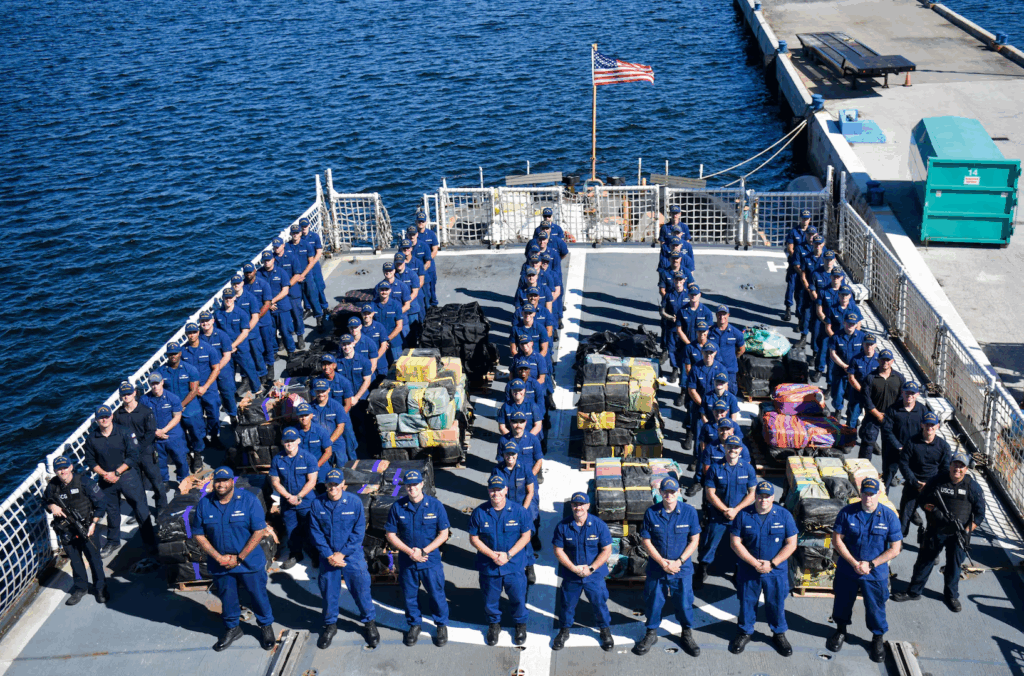
The crew of USCGC Seneca (WMEC 906) stand for a photo during a drug offload at Port Everglades in Fort Lauderdale, Florida, Sept. 30, 2025. The crew offloaded more than 12,750 pounds of cocaine and marijuana with an approximate street value of $94.5 million. (U.S. Coast Guard photo by Petty Officer 1st Class Diana Sherbs) 

From U.S. Coast Guard Southeast District, Sept. 30, 2025 

MIAMI – Coast Guard Cutter Seneca’s crew offloaded more than 12,750 pounds of cocaine and marijuana with an approximate street value of $94.5 million in Port Everglades, Tuesday.    

Seneca was deployed in support of Operation Pacific Viper. Coast Guard crews worked alongside interagency partners to interdict illicit narcotics in the international waters in the Eastern Pacific Ocean.  

Through Operation Pacific Viper, the Coast Guard is accelerating counter-drug operations in the Eastern Pacific Ocean, where significant transport of illicit narcotics continues from Central and South America. In coordination with international and interagency partners, the Coast Guard is surging additional assets—cutters, aircraft and tactical teams—to interdict, seize and disrupt transshipments of cocaine and other bulk illicit drugs. Operation Pacific Viper continues the Coast Guard’s efforts to protect the Homeland, counter narco-terrorism, disrupt foreign terrorist organizations, transnational criminal organizations and cartels seeking to produce and traffic illicit drugs into the United States. Since launching this operation in early August, the Coast Guard interdicted over 80,000 pounds of cocaine.      

“I’m incredibly proud of the teamwork and adaptability displayed by my crew and our partners during this patrol to stop illicit drug flow from entering the United States,” said Capt. Lee Jones, commander, Coast Guard Cutter Seneca. “Our crews sacrifice time away from their families, and when necessary, put themselves in harm’s way to secure our borders and protect the American people.”  

The following assets and crews were involved in the interdictions:  

  • Coast Guard Cutter Venturous   

  • Coast Guard Cutter Hamilton   

  • Coast Guard Cutter Midgett   

  • Coast Guard Cutter Stone   

  • Joint Interagency Task Force-South   

  • Coast Guard Southwest District  

  • Coast Guard Southeast District  

29 suspected smugglers were transferred to federal custody.  

Detecting and interdicting narco-terrorism on the high seas involves significant interagency and international coordination. Joint Interagency Task Force-South based in Key West conducts the detection and monitoring of aerial and maritime transit of illegal drugs. Once interdiction becomes imminent, the law enforcement phase of the operation begins, and control of the operation shifts to the U.S. Coast Guard throughout the interdiction and apprehension. Interdictions in the Eastern Pacific Ocean are performed by members of the U.S. Coast Guard under the authority and control of the Coast Guard’s Southwest District, headquartered in Alameda, California.    

The Coast Guard is the United States’ lead federal maritime law enforcement agency with authority to enforce national and international laws on the high seas and waters within U.S. jurisdiction. 80 percent of all U.S.-bound narcotics seizures occur at sea, underscoring the impact of Coast Guard maritime interdiction efforts.  

Coast Guard Cutter Seneca is a 270-foot Famous-class medium-endurance cutter with a crew of 100 homeported in Portsmouth, Virginia.  

Editor’s note: See related U.S. Coast Guard Cutter Seneca interdicts suspected drug smuggling vessel in the Pacific Ocean 


Coast Guard Awards Contract for New Heavy Weather Surf Boats 

Release From Headquarters, U.S. Coast Guard

SEATTLE — The Coast Guard awarded an indefinite delivery, indefinite quantity (IDIQ) contract on Sept. 29 to Rozema Boat Works, Inc. of Mount Vernon, Washington to acquire up to six second-generation special-purpose craft – heavy weather (SPC-HWX II) boats. 

The total potential value of the contract is $70.9 million and the first SPC-HWX II is anticipated to be completed in fiscal year 2027. The SPC-HWX II will replace the 52-foot first generation of special-purpose craft – heavy weather boats, which entered service in the 1950s and 1960s. 

These vessels were retired in 2021 due to increasing maintenance challenges. Like their predecessors, the SPC-HWX IIs will serve in the Pacific Northwest. 

These next-generation vessels are designed to perform a wide range of Coast Guard missions in extreme weather and challenging surf conditions that exceed the capabilities of other boats, such as search and rescue; disabled vessel towing; and law enforcement and ports, waterways and coastal security missions. 

Measuring 64 feet in length, the SPC-HWX II will feature self-righting capability and be capable of operating in 35-foot seas, 25-foot surf, and winds up to 60 knots. Powered by twin 1,200-horsepower diesel engines, it will reach speeds of 20 knots, tow up to 300 tons, and operate up to 150 miles offshore. With accommodation for a relief crew, the SPC-HWX II will have an endurance up to 48 hours, a critical feature for long-range heavy-weather operations.