Coast Guard launches commercial vessel program to deliver faster, more effective fleet support 
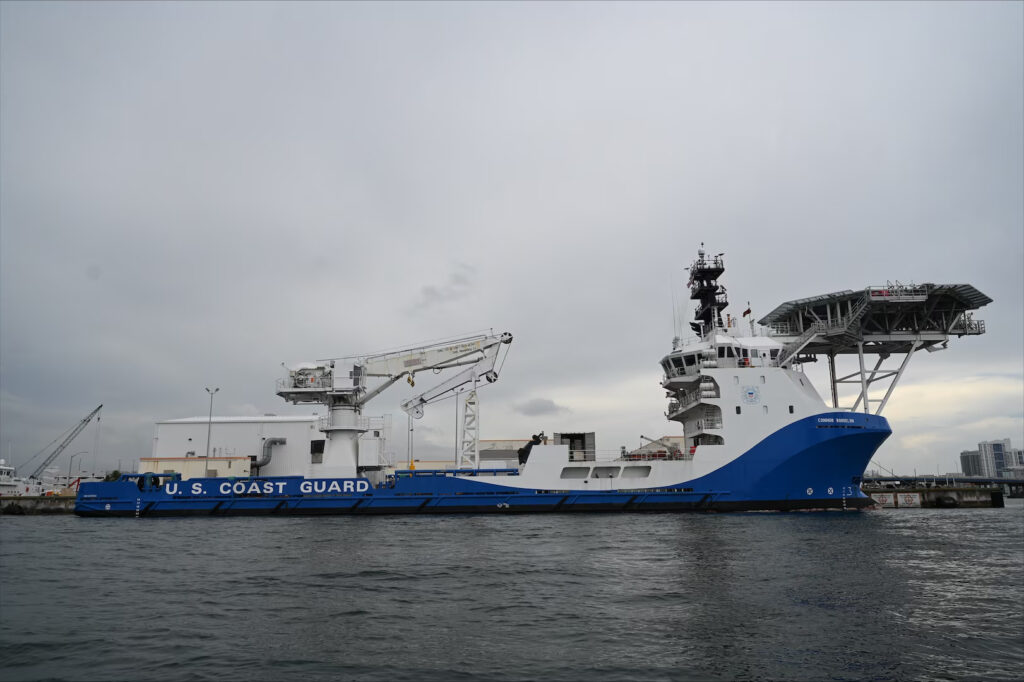
Homeland Security Cutter-Ocean is moored at U.S. Coast Guard Base Miami Beach, Florida, June 26, 2026. Cutter Ocean will serve as the first vessel contracted in a new initiative using commercial vessels to transport supplies, equipment and personnel to Coast Guard cutters operating in the Caribbean, Gulf of America, and other maritime areas in the Western Hemisphere. (U.S. Coast Guard photo by Petty Officer 3rd Class Reese Hindmarsh)

From U.S. Coast Guard Headquarters, June 26, 2026 

WASHINGTON — The U.S. Coast Guard has awarded a contract to Bordelon Marine to provide a commercial support vessel that will transport supplies, equipment and personnel to Coast Guard cutters operating in the Caribbean, Gulf of America, and other maritime areas in the Western Hemisphere. 

The contract supports the Coast Guard’s Homeland Security Cutter-Ocean (HSC-Ocean) initiative, a new effort to strengthen fleet readiness by using commercially operated vessels to provide logistics support to cutters while they remain at sea on mission. 

The HSC-Ocean initiative will rapidly deploy this leased commercial asset to augment the Coast Guard’s existing fleet, enhancing the Service’s ability to control, secure and defend U.S. borders and maritime approaches. The initiative is designed to provide a rapid, adaptable and effective way to deliver logistics support to high-demand, multi-mission cutters, such as the Fast Response Cutter fleet. By delivering supplies and personnel directly to cutters underway, the vessel will help keep Coast Guard assets on station longer and focused on mission execution. 

“As demands on the Coast Guard continue to grow, we must find innovative ways to sustain our fleet and keep our crews focused on the mission,” said Vice Adm. Nate Moore, Deputy Commandant for Operations. “Homeland Security Cutter-Ocean will help us deliver critical supplies and personnel more efficiently while increasing the endurance and effectiveness of our operational forces.” 

Under the contract, Bordelon Marine will provide a fully crewed commercial vessel operated by civilian mariners, under the direction of a Coast Guard crew. The vessel will transport supplies, equipment and mission-essential personnel in support of Coast Guard operations. The contractor will be responsible for vessel operations and maintenance, while embarked Coast Guard personnel will coordinate logistics and support mission execution. 

The initiative will inform future Coast Guard logistics and sustainment efforts while helping the Service evaluate new approaches to support cutters operating far from homeport. 


Allies Come Together in the Indo-Pacific: Valiant Shield 26

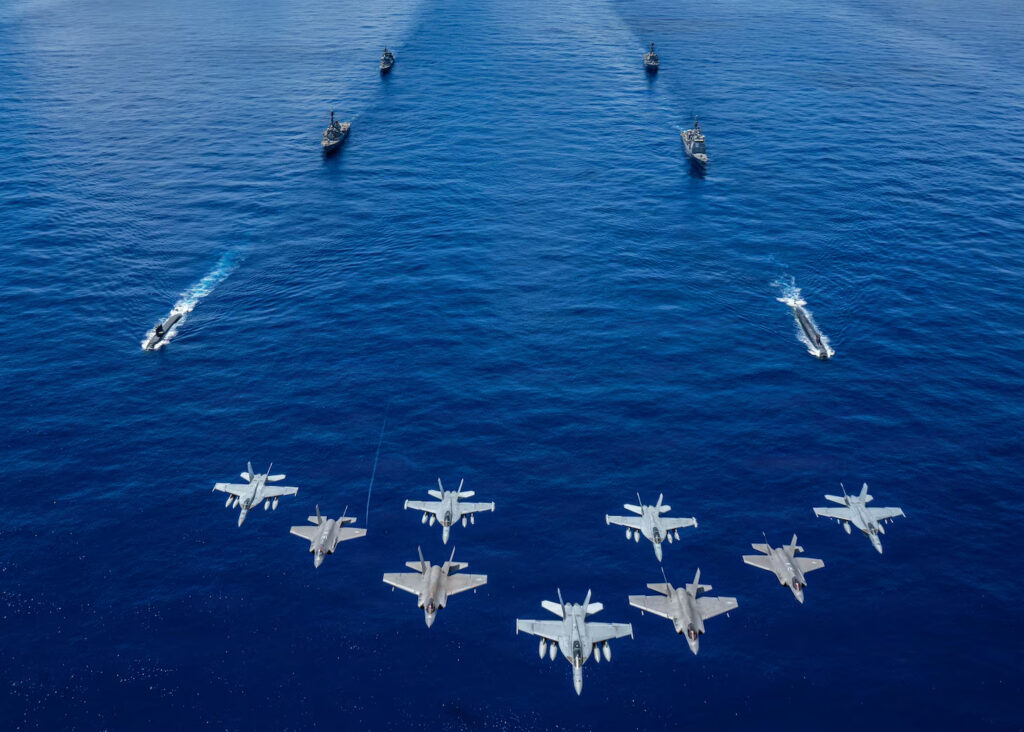
U.S. Navy aircraft, attached to Carrier Air Wing (CVW) 5, and U.S. Air Force F-35A Lightning IIs fly over U.S. Navy George Washington Carrier Strike Group as it sails in formation with Japan Maritime Self- Defense Force as part of Valiant Shield 2026 while underway in the Philippine Sea, June 21, 2026. (U.S. Navy photo by Mass Communication Specialist 2nd Class Tyler Crowley) 

From U.S. Pacific Command, June 22, 2026 

PEARL HARBOR, Hawaii – U.S. Pacific Command joint forces, along with allied and partner forces, are scheduled to participate in exercise Valiant Shield (VS26) 2026, June 22–July 1, in the Commonwealth of the Northern Mariana Islands, Guam, Japan, and at sea around the Mariana Islands Range Complex. 

VS26 is a multinational, biennial field training exercise focused on integrating interoperability training in a multi-domain environment. This training builds real-world proficiency in sustaining joint forces through detecting, locating, tracking, and engaging units at sea, in the air, in space, on land, and in cyberspace. 

Exercises such as VS26 allow forces across the Indo-Pacific the opportunity to integrate Navy, Marine Corps, Army, Air Force, Coast Guard, Space Force, and allies to train in precise, lethal, and overwhelming multi-axis, multi-domain effects that demonstrate the strength and versatility of the joint and combined force. With the involvement of U.S. Space Command and U.S. Transportation Command, VS26 is expanding the multi-domain cross-combatant command collaboration that is required for any large-scale exercise or operation. 

VS26 prepares the joint and combined force to rapidly respond to crises and contingencies across the spectrum of operations from humanitarian assistance and disaster response to armed conflict. 

“Valiant Shield demonstrates our enduring commitment to a free and open Indo-Pacific,” said Adm. Steve Koehler, Commander, U.S. Pacific Fleet. “Exercising advanced multidomain capabilities with our allies ensures we continue to seamlessly innovate and operate together, project combat power together, and prevail over any challenge — together.” 
 

VS26 assists U.S., allied, and partner forces in developing regional and global power projection capabilities. Integrated training provides a full range of options to succeed in defense of U.S. interests and those of like-minded nations around the world. 

This is the 11th iteration of Exercise Valiant Shield, which first began in 2006. While it began as a unilateral U.S. exercise, Valiant Shield has evolved with demands of the security environment, incorporating new technology and strategies to further enhance the lethality of the joint fighting force. Since 2024, Valiant Shield has become a multilateral joint field training exercise to further integrate allies and partners in the multi-domain environment. This iteration of Valiant Shield marks the second time the Japan Self-Defense Forces has heavily integrated in Valiant Shield planning and execution. 


Coast Guard Helicopter Crashes in Sitka, Alaska 

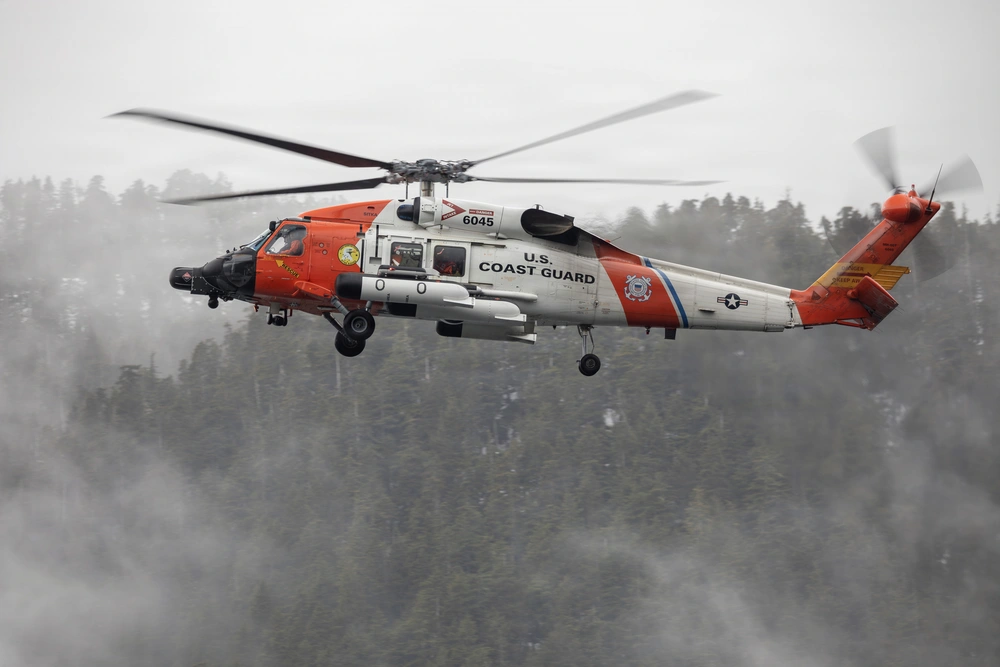
U.S. Coast Guard MH-60T Jayhawk (Alaska National Guard photo by Alejandro Peña)

From Coast Guard Arctic District Public Affairs, June 22, 2026 

JUNEAU, Alaska — A Coast Guard MH-60 Jayhawk helicopter aircrew from Coast Guard Air Station Sitka crashed during a training flight with four people aboard near Harbor Mountain in Sitka, Alaska, Monday. 

Rescue crews from Sitka Fire and Rescue arrived on scene at approximately 11:00 a.m. and transported all four crew members to Mt. Edgecumbe Medical Center. 

No deaths have been reported. 

Watch standers at the Arctic District command center received the report of the crash at approximately 10:07 a.m. 

The cause of the crash is currently under investigation. 

UPDATE: Coast Guard responds to Coast Guard helicopter crash in Sitka, Alaska 

JUNEAU, Alaska — The four Coast Guard crew members involved in a helicopter crash in Sitka, Alaska, Monday, are reported safe with non-serious injuries. 

Watch standers at the Arctic District command center received the initial report of the crash through the activation of the aircrew’s personal locator beacon at approximately 10:07 a.m. 

Sitka Fire and Rescue arrived on scene at approximately 11:00 a.m. and transported the crew members to Mt. Edgecumbe Medical Center. 

“We are incredibly relieved our crew members survived with only minor injuries,” said Rear Adm. Bob Little, commander of the Coast Guard’s Arctic District. “We are grateful for the swift response by the Sitka Fire and Rescue who assisted us during this critical time.” 

Coast Guard Air Station Kodiak is repositioning a helicopter and crews to Coast Guard Air Station Sitka to augment and maintain operational readiness in the Southeast Alaska region. 

The cause of the crash is currently under investigation.


U.S. Coast Guard Clarifies Industry Engagement Opportunities for TRACEN Birmingham-Southern Contractors 

From U.S. Coast Guard Heartland District, June 22, 2026 

BIRMINGHAM, Ala. — The U.S. Coast Guard is providing additional information regarding contractor engagement opportunities associated with the new TRACEN Birmingham-Southern training center.  

The Industry Open House scheduled for June 24-25, 2026, is intended for businesses that are already registered and validated in the System for Award Management (SAM.gov). While creating a SAM.gov account can often be completed in a few hours with the appropriate documentation, the federal validation process may take up to 30 days before a business is eligible to submit information through the system.  

The Coast Guard recognizes that many local businesses may not yet be registered in SAM.gov and remains committed to ensuring they have an opportunity to compete for future contract opportunities.  

To support those vendors, the Coast Guard plans to disseminate information focused on the federal contracting process, including SAM.gov registration for any vendors not already enrolled in SAM.gov.   

Businesses that are unable to attend the June Industry Open House will not be disadvantaged. Participation in the open house is voluntary, and all future proposals will be evaluated equally in accordance with federal acquisition regulations.  

To ensure transparency, all questions asked during the June Industry Open House, along with the Coast Guard’s responses, will be posted publicly on SAM.gov. This will provide businesses that are not yet registered or validated with access to the same information shared during the event.  


U.S., Philippine Coast Guards Complete Guam Engagements Ahead of RIMPAC

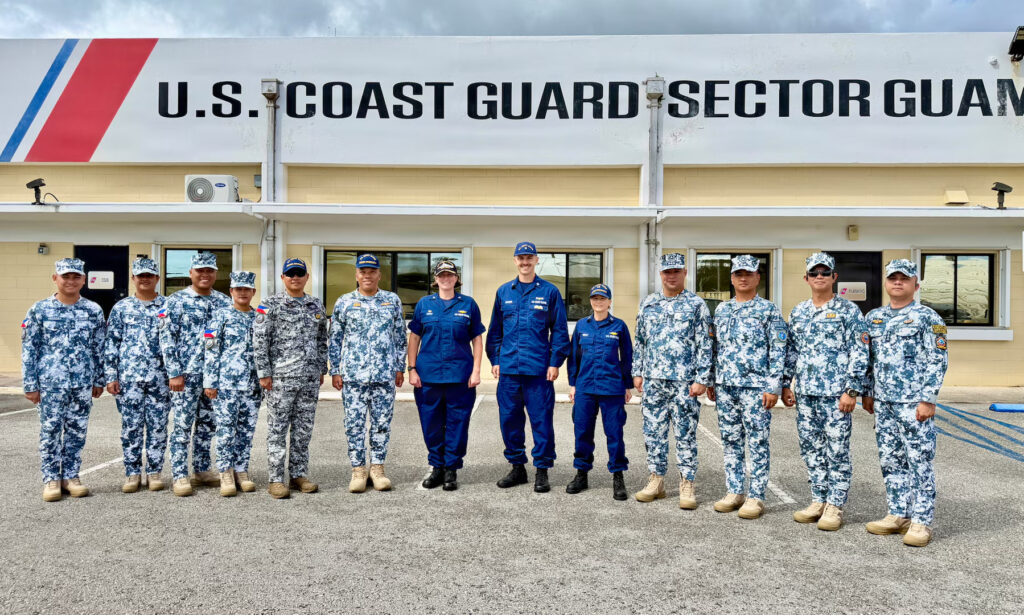
Members of the Philippine Coast Guard’s BRP Gabriela Silang conduct a passenger exchange with the USCGC Frederick Hatch (WPC 1143) crew during a joint sail offshore of Guam on June 12, 2026, during a mutual exchange. The U.S. Coast Guard and the Philippine Coast Guard completed a series of joint pre-exercise engagements in and around Guam from June 8–13, 2026, as the Philippine Coast Guard offshore patrol vessel BRP Gabriela Silang transited toward Hawai’i for its first-ever participation in the Rim of the Pacific exercise. (U.S. Coast Guard photo by Seaman Anson Burgdorf)

From U.S. Coast Guard Forces Micronesia, June 16, 2026 

SANTA RITA, Guam — The U.S. Coast Guard and the Philippine Coast Guard completed a series of joint pre-exercise engagements in and around Guam from June 9–13 as the Philippine Coast Guard offshore patrol vessel BRP Gabriela Silang transited toward Hawai’i for its first-ever participation in the Rim of the Pacific exercise. 

“Hosting the crew of BRP Gabriela Silang here in Guam was a privilege,” said Cmdr. Grant Johnson, response department head, U.S. Coast Guard Forces Micronesia/Sector Guam. “Whether we were training side by side on the water or sharing a basketball court and a karaoke mic, our crews built the kind of trust and friendship that lasts long after the lines are cast off. That human connection is the heart of partnership, and it’s what makes our cooperation at sea so strong.” 

BRP Gabriela Silang and crew arrived at Apra Harbor on June 9 and departed on June 12, conducting a pre-exercise joint sail with USCGC Frederick Hatch (WPC 1143) through the U.S. exclusive economic zone on June 13. The port call marked the end of the first leg of the Philippine Coast Guard’s journey to RIMPAC 2026, the world’s largest international naval exercise, hosted every two years by the U.S. Navy in and around the main Hawaiian Islands. 

During the visit, crews from both services trained side by side. Engagements included tours of the fast-response cutter USCGC Myrtle Hazard (WPC 1139), a law-enforcement static display and a mock security boarding aboard USCGC Oliver Henry (WPC 1140), and a small-boat demonstration in Outer Apra Harbor by Station Apra Harbor. Crews also competed in a basketball game and shared an evening of karaoke aboard Gabriela Silang, building the personal relationships that underpin operations at sea. 

The engagements reflect a deepening partnership between two longtime allies. The United States and the Philippines are bound by a Mutual Defense Treaty, a relationship forged through decades of shared service, including fighting side by side in World War II. The cooperation also advances shared interests in maritime domain awareness and security through frameworks such as the Enhanced Defense Cooperation Agreement. 

“The pre-exercise engagements in Guam were invaluable in preparing our crew for RIMPAC 2026. Training alongside our U.S. Coast Guard partners — on the water, on the deck, and in the field — sharpened our readiness and deepened the interoperability that defines a true alliance. We are proud to carry the Philippine flag into the world’s largest maritime exercise, and we carry with us the spirit of partnership that began long before we reached Pearl Harbor,” said Capt. Jomark Angue, commanding officer, BRP Gabriela Silang. 

BRP Gabriela Silang is a 274-foot offshore patrol vessel scheduled to take part in RIMPAC activities near Pearl Harbor from June 22 to Aug. 2 before returning to the Philippines. 


Coast Guard to build 30 additional housing units, child development center at Base Kodiak 

A computer-generated image shows Coast Guard housing units delivered through the Nemetz Park housing project at Base Kodiak, Alaska. In May 2026, the Coast Guard ordered construction of 30 additional housing units and a child development center to support families assigned to base units. (U.S. Coast Guard image) 

From U.S. Coast Guard Arctic District, June 12, 2026 

WASHINGTON – The Coast Guard awarded two task orders in May 2026 to the Tutor Perini Corporation to construct 30 additional housing units, a child development center and other infrastructure improvements at Base Kodiak. 

Both task orders were issued under the National Multiple Award Construction Contract III. The first task order, valued at $81.8 million, constructs 15 family housing duplexes, featuring 20 three-bedroom and 10 four-bedroom units. The second task order, valued at $61.6 million, supports construction of a 22,000-square-foot child development center and an 11,000-square-foot outdoor play area. Construction of both task order projects is expected to finish in 2028. 

These projects mark the final phase of the Nemetz Park housing initiative, which has already delivered 50 new housing units for Coast Guard families at Base Kodiak. 

The task orders also include site development, demolition, utility infrastructure, road and sidewalk pavement, landscaping, child play areas, a new water tank and soil and water remediation. The new child development center will provide childcare services for more than 200 children. 

Base Kodiak is the Coast Guard’s largest operational facility and a critical provider of U.S. presence and capability in the Arctic region, supporting both surface and aviation operations. 

The Coast Guard is leveraging the historic investments provided through the Fiscal Year 2025 Budget Reconciliation and prior year appropriations to deliver shore facilities and infrastructure that support the full scope of Coast Guard missions. Using the historic $25 billion investment provided by the FY25 budget reconciliation, the Coast Guard has already ordered over $13 billion in new fleet assets and capabilities, demonstrating the Service’s commitment to modernizing acquisition, enhancing infrastructure, and delivering next-generation technology. 

“These new housing units and child development center represent a significant investment in the well-being of Coast Guard families stationed at Base Kodiak,” said Capt. John Barresi, deputy assistant commandant, Program Executive Office Shore. “By expanding access to quality housing, modern facilities, and essential services, we are ensuring our personnel – and their families – have the support they need to thrive, allowing our workforce to remain focused on fulfilling the Coast Guard’s vital mission in this region.” 

The completed cutter support facilities and family housing units were planned and executed by the Coast Guard’s Program Executive Office-Shore, Facilities Design and Construction Center and Shore Infrastructure Logistics Center. 


USS Augusta Returns to San Diego 

From Lt. Brinn Hefron, June 12, 2026 

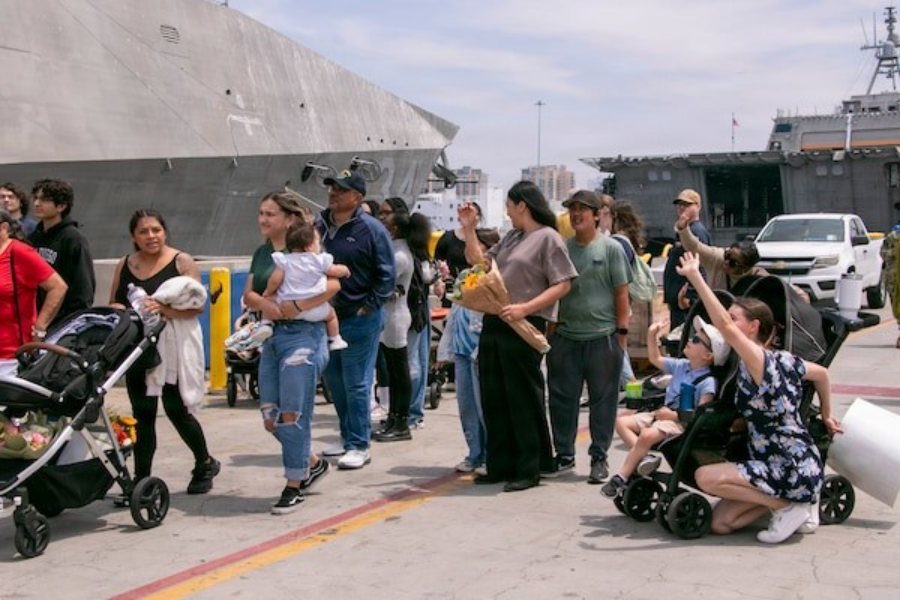
SAN DIEGO –Independence-variant littoral combat ship USS Augusta (LCS 34) arrived at its San Diego homeport June 11, following six months of operations in the U.S. 3rd Fleet in support of U.S. Northern Command (NORTHCOM)-led Operation Ardent Vanguard to protect the southern border. 

“Congratulations to Augusta for completing this underway in support of national tasking with flying colors,” said U.S. Navy Cmdr. Zachary Smith, commanding officer of Augusta. “The crew achieved more than 500 hours of flight operations with an MH-60S LCS detachment and 12 small boat operations with the 11-meter rigid-hull inflatable boat.” 

Augusta and embarked U.S. Coast Guard Law Enforcement Detachments, under NORTHCOM’s maritime homeland defense authorities, was responsible for six interdictions of suspected smuggling vessels, preventing the flow of illegal drugs and other illegal activity. 

While underway, Augusta successfully integrated three separate teams of U.S. Navy aviation, Aerosonde UAS and U.S. Coast Guard Law Enforcement Detachments to enable multi-domain operations. Augusta conducted the most helicopter flight hours ever for an embarked aviation detachment on an operational Independence-variant LCS. 

“The team integrated with embarked U.S. Coast Guard Law Enforcement and Helicopter Sea Combat detachments, showcasing the capabilities of an LCS operating in the littorals,” said Smith. “I am proud to be the CO of this team of teams. Augusta carried out the ship’s motto: ‘protecting the frontier!’” 

Augusta is a fast, optimally manned, mission-tailored surface combatant that operates in near-shore and open-ocean environments, winning against 21st-century coastal threats. LCS, like Augusta, integrate with joint, combined, manned and unmanned teams to support forward presence, maritime security, sea control, and deterrence missions around the globe. 


U.S. Coast Guard advances Arctic security with Kodiak and Seward homeports 

From U.S. Coast Guard Headquarters, June 11, 2026 

WASHINGTON — The U.S. Coast Guard announced it would homeport its first two Arctic Security Cutters in Kodiak, Alaska with a third Alaska Arctic Security Cutter homeported in Seward when the infrastructure is ready. This follows April’s announcement that the Service would homeport its first two Arctic Security Cutters in Alaska. With the first delivery expected in 2028, the Coast Guard is accelerating preparations to ensure each location is ready to support sustained Arctic operations including advancing critical infrastructure and housing required to support the trained and ready crews who will bring these cutters to life.   

“America’s future in the Arctic demands strength, capability and resolve,” said Secretary of Homeland Security Markwayne Mullin. “I want to thank President Trump for his bold leadership and vision in directing this critical investment and Alaska’s congressional delegation for championing the funding that made these icebreakers possible. These cutters will deliver the enduring operational capability our Nation needs to defend our sovereignty, deter adversaries, and safeguard vital resources for the American people. 

Selecting these homeports marks a major step in expanding U.S. Arctic capabilities and strengthening the Nation’s icebreaker fleet. Supported by $3.5 billion in Fiscal Year 2025 Reconciliation funding and international collaboration, including a landmark agreement with Finland, the Arctic Security Cutter program represents the most significant U.S. investment in icebreaker technology in decades – revitalizing American shipbuilding and reinforcing the industrial base essential to national defense. 

“Homeporting Arctic Security Cutters in Kodiak and Seward will strategically position these state-of-the-art icebreakers to reinforce America’s maritime dominance in the Arctic,” said Adm. Kevin E. Lunday, commandant of the Coast Guard. “This positioning is critical to national security, enabling the Coast Guard to defend our northern border and meet evolving threats with speed and strength.” 

Arctic Security Cutters will anchor a modernized icebreaker fleet built for the most demanding conditions, ensuring the United States is equipped to defend its interests and meet emerging challenging in the Arctic for decades to come.   


Coast Guard Repatriates 32 Aliens to Dominican Republic Navy Following Vessel Interdiction 

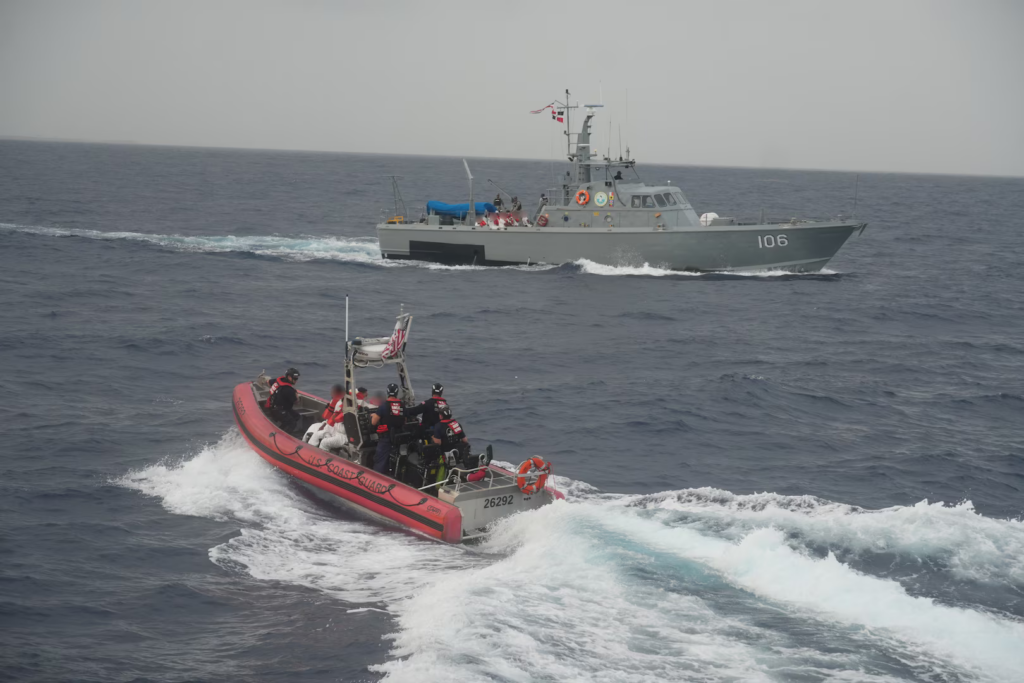
Coast Guard Cutter Heriberto Hernandez’s small boat transfers a group of people during the repatriation of 32 aliens to a Dominican Republic Navy vessel, June 7, 2026. The aliens were interdicted a day earlier off Desecheo, Puerto Rico, as part of Homeland Security Task Force – San Juan Region efforts to combat human smuggling and deter unlawful maritime migration.(U.S. Coast Guard photo)

From U.S. Coast Guard Southeast District, June 9, 2026 

SAN JUAN, Puerto Rico — The crew of Coast Guard Cutter Heriberto Hernandez repatriated 32 aliens to a Dominican Republic Navy vessel at sea, Sunday, following the interdiction of a makeshift vessel near Desecheo, Puerto Rico.    

This interdiction is part of the efforts of the Homeland Security Task Force – San Juan Region to combat human smuggling and deter unlawful maritime migration. 

Sector San Juan watchstanders received a report from the aircrew of a Customs and Border Protection aircraft of a grossly overloaded 20 to 30-foot makeshift vessel off Desecheo, Puerto Rico. With assistance from the Customs and Border Protection aircrew, the U.S. Coast Guard Cutter Heriberto Hernandez interdicted the suspect vessel. 

Following the interdiction, the crew safely embarked 36 Dominican Republic, three Haitian and one Uzbek nationals. 

“This successful outcome is due to the professionalism and unwavering resolve of our Coast Guard crews and Homeland Security Task Force partners stopping unlawful migration voyages at sea,” said Cmdr. Matthew Romano, Sector San Juan chief of response. “To anyone thinking of taking part in an unlawful maritime migration voyage, don’t take to the sea! These voyages are extremely dangerous and most often involve grossly overloaded and unseaworthy vessels that take on water and have no lifesaving equipment. Those caught taking part in an unlawful voyage could face possible prosecution or be repatriated to their country of origin or country from where the voyage originated.” 

This interdiction is part of the Homeland Security Task Force (HSTF) initiative established by Executive Order 14159, Protecting the American People Against Invasion. The HSTF is a whole-of-government partnership dedicated to eliminating criminal cartels, foreign gangs, transnational criminal organizations, and human smuggling and trafficking rings operating in the United States and abroad. Through historic interagency collaboration, the HSTF directs the full might of United States law enforcement towards identifying, investigating, and prosecuting the full spectrum of crimes committed by these organizations, which have long fueled violence and instability within our borders. In performing this work, the HSTF places special emphasis on investigating and prosecuting those engaged in child trafficking or other crimes involving children. The HSTF further utilizes all available tools to prosecute and remove the most violent criminal aliens from the United States. 

HSTF San Juan comprises agents and officers from the following federal partners: FBI, ICE-HSI, CBP (OFO, AMO and Border Patrol), the U.S. Marshals Service for Puerto Rico and the U.S. Virgin Islands, DEA, ATF, IRS, U.S. Coast Guard, U.S. Coast Guard Investigative Service, U.S. Postal Inspection Service, the Department of State, and the U.S. Secret Service, the Puerto Rico/U.S. Virgin Islands HIDTA, TSA, FAA, and the U.S. Attorney’s Offices for the Districts of Puerto Rico and the U.S. Virgin Islands. 

The HSTF also has the following state and local law enforcement partners as participating agencies: the Puerto Rico Police Department; the San Juan, Carolina, Guaynabo, Barceloneta, and Ponce Municipal Police Departments, the Puerto Rico National Guard – Counter Drug Program; the Puerto Rico Department of Corrections and Rehabilitation; the Puerto Rico Internal Revenue Service (Hacienda); the Puerto Rico Port Authority; and the Virgin Islands Police Department. 


Coast Guard Cutter Hollyhock Returns to Honolulu After First Operation Blue Pacific Patrol

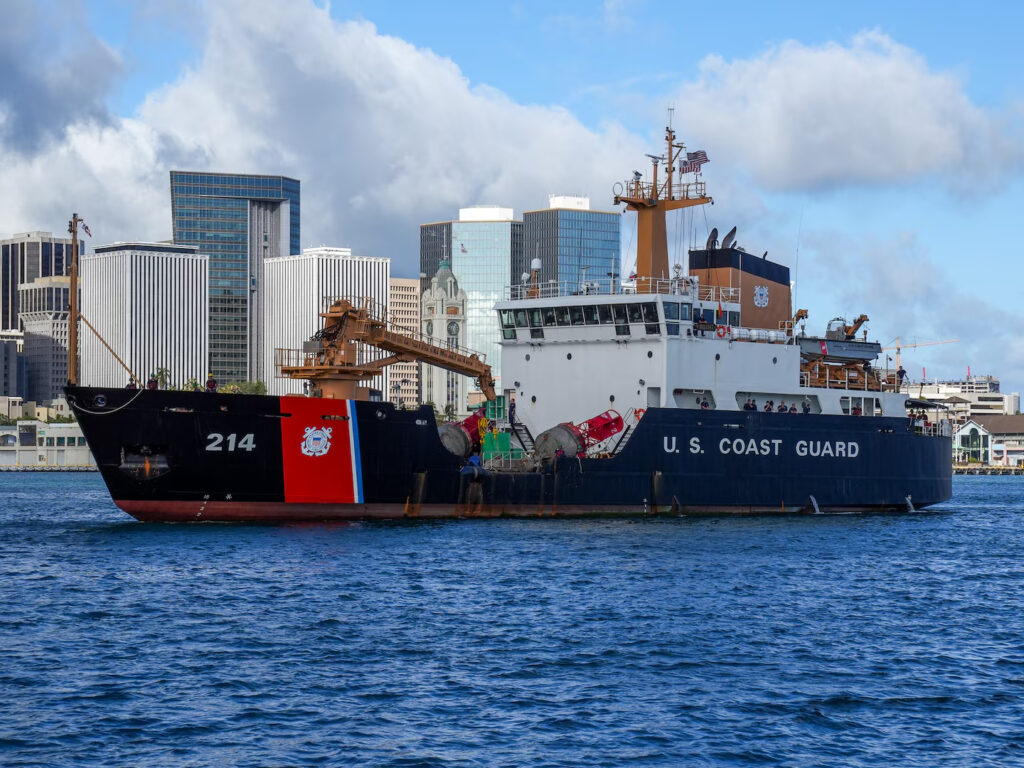
 USCGC Hollyhock (WLB 214) returns after completing their first Operation Blue Pacific patrol at Coast Guard Base Honolulu, Hawaii, June 7, 2026. The Hollyhock crew departed Honolulu in April and traveled more than 7,500 nautical miles over 42 days. (U.S. Coast Guard photo by Petty Officer 3rd Class Jennifer Nilson) 

From U.S. Coast Guard Oceania District External Affairs, June 8, 2026 

HONOLULU – The crew of USCGC Hollyhock (WLB 214) returned to Honolulu Sunday after completing their first Operation Blue Pacific patrol.  

The Hollyhock crew departed Honolulu in April and traveled more than 7,500 nautical miles over 42 days, making port calls in Pago Pago, American Samoa, Nuku’alofa, Tonga, Vava’u, Tonga, and Kiritimati, Kiribati.  

From May 15-18, the crew exercised a bilateral maritime law enforcement agreement by assisting Tongan Royal Navy officers with law enforcement operations in Tonga’s exclusive economic zone. During two commercial fishing vessel boardings, Hollyhock crew members assisted Tongan Royal Navy officers with conducting safety checks, reviewing documentation, inspecting gear and verifying catch.  

While visiting Nuku’alofa, the crew hosted public tours aboard the cutter for over 170 students and community members, participated in a beach clean-up at American Wharf, and conducted law enforcement tabletop exercises with the Tongan Royal Navy. During their port call in Vava’u, Tonga, the crew hosted an engagement with Penisimani Vainikolo, acting governor of Vava’u, and representatives from the Ministry of Internal Affairs, Ministry of Revenue & Customs, Tonga Tourism Authority, Tonga Police, and His Majesty’s Armed Forces.  

The crew serviced 16 navigational aids in Pago Pago, American Samoa, and harbors on the islands of Ta’u and Ofu, performing maintenance and repairs on six buoys, three lights, one day beacon, and three navigation ranges. During their port call in Pago Pago, the crew also volunteered at a beach clean-up at Lions Park in Tafuna, American Samoa, and toured the National Oceanic and Atmospheric Administration Baseline Observatory in Tula, American Samoa.  

In addition, the Hollyhock crew transported National Oceanic and Atmospheric Administration and U.S. Geological Survey personnel to Kanton Island in Kiribati and assisted with the repair of a tsunami warning station, the first such maintenance performed on the station in over 10 years.  

“Throughout this patrol, the Hollyhock crew demonstrated versatility and professionalism while carrying out a diverse set of missions,” said Cmdr. Jessica McCollum, commanding officer of the Hollyhock. “From maintaining crucial navigational aids in American Samoa to conducting bilateral operations with our Tongan partners, our crew strengthened maritime safety, security and U.S. presence in the region.”   

Operation Blue Pacific is an overarching multi-mission Coast Guard endeavor to promote security, safety, sovereignty and economic prosperity in Oceania. Coast Guard cutters, aircrew and personnel deploy throughout Oceania to maintain unrestricted, lawful access to the maritime domain for all nations, improve regional stability, and solidify the Coast Guard as a reliable partner for maritime safety, security and stewardship in the Pacific.   

The Hollyhock, a 225-foot seagoing buoy tender with a 50-person crew, was the fourteenth of 16 vessels built in the Juniper Class series. Originally homeported in Port Huron, Michigan, the cutter shifted homeport to Honolulu in October 2025. The Hollyhock is responsible for maintaining vital navigation aids throughout the Hawaiian Islands, Midway, American Samoa, and broader Oceania region. When deployed in support of Operation Blue Pacific, the Hollyhock’s presence and unique authorities reinforce security and stability in Oceania and along the U.S. maritime border of American Samoa.