Navy Accepts Delivery of Ship-to-Shore Connector, LCAC 113 

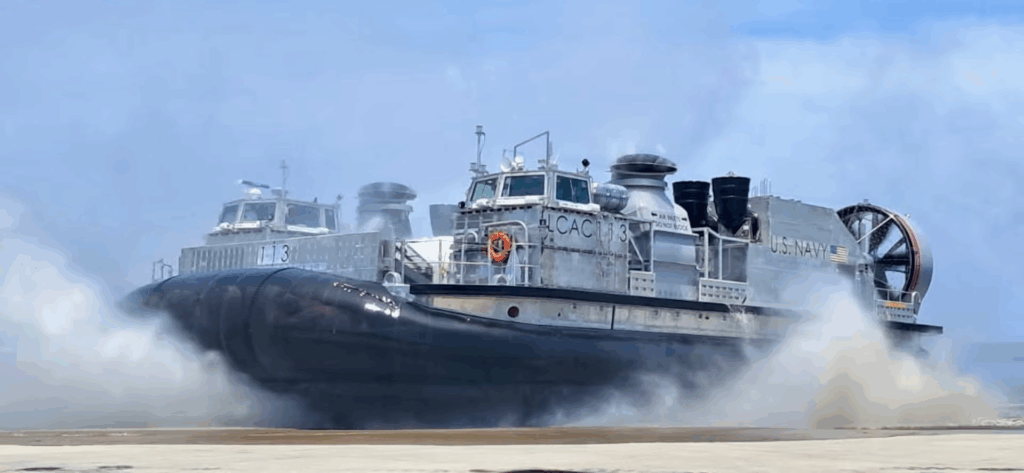
The United States Navy accepted delivery of Ship to Shore Connector (SSC), LCAC 113, from Textron Systems, June 12. The delivery of LCAC 113 comes after completion of Acceptance Trials conducted by the Navy’s Board of Inspection and Survey, which tested the readiness and capability of the craft to effectively meet its requirements.

By Team Ships Public Affairs, June 17, 2025 

NEW ORLEANS– The United States Navy accepted delivery of Ship-to-Shore Connector (SSC), LCAC 113, from Textron Systems, June 12. 

The delivery of LCAC 113 comes after completion of Acceptance Trials conducted by the Navy’s Board of Inspection and Survey, which tested the readiness and capability of the craft to effectively meet its requirements. 

This new addition to the fleet signifies a substantial enhancement in the Navy’s amphibious capabilities, providing a vital asset for rapid deployment and logistical support. 

“The successful delivery of LCAC 113 will provide the Navy and Marine Corps team with an advanced craft to increase our operational capability in amphibious warfare and maintain our operational readiness against global challenges.” said Angela Bonner, acting program manager for Amphibious Assault and Connectors Programs, Program Executive Office (PEO) Ships 

LCACs are built with configurations, dimensions, and clearances similar to the legacy LCACs they replace – ensuring that this latest air cushion vehicle is fully compatible with existing, well deck-equipped amphibious ships, the Expeditionary Sea Base and the Expeditionary Transfer Dock. LCACs can carry a 60 to 75-ton payload. They primarily transport weapon systems, equipment, cargo, and assault element personnel through a wide range of conditions, including over-the-beach. 

Textron Systems is currently in serial production on LCACs 114-126. 

PEO Ships, one of the Department of Defense’s largest acquisition organizations, is responsible for executing the development and procurement of all destroyers, amphibious ships and craft, and auxiliary ships, including special mission ships, sealift ships and support ships. 

For more on Ship to Shore Connectors visit:  Navy Fact Files/Ship to Shore Connectors 


Task Force 66 Applies Lessons Learned From Black Sea Battle Lab to Exercise BALTOPS 25

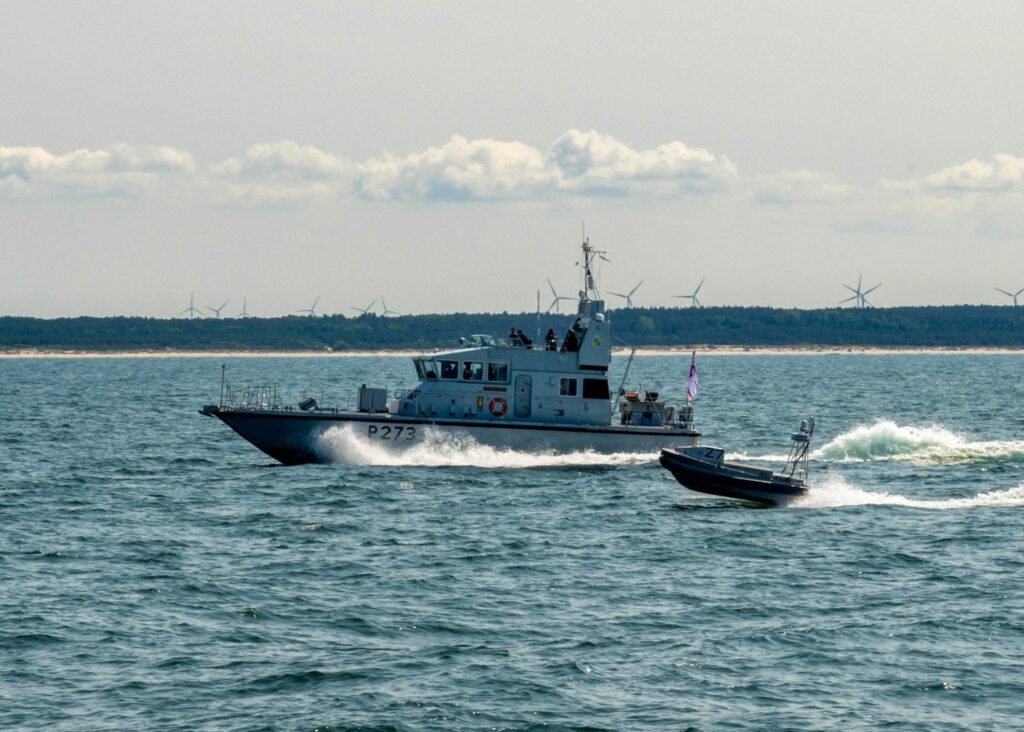
Royal Navy Archer Class P2000 patrol vessels HMS Pursuer (P273) conducts counter unmanned surface vessel operations with global autonomous reconnaissance crafts (GARC) attached to Commander, Task Force 66 during Baltic Operations (BALTOPS) 2025, June 12, 2025. (U.S. Navy photo by Mass Communication Specialist 2nd Class Christine Montgomery) 

By U.S. 6th Fleet Public Affairs, June 17, 2025 

UTSKA, Poland – Commander, Task Force (CTF) 66, U.S. 6th Fleet’s purpose-built all-domain task force with the mission of integrating Robotic and Autonomous Systems (RAS) into fleet operations, is participating in Baltic Operations 2025 (BALTOPS) June 5-20, 2025. 

Established in 2024 to deploy and employ RAS with Navy, joint, and NATO partners, CTF 66 utilizes RAS in conjunction with conventional manned platforms and spaced-based capabilities to expand Maritime Domain Awareness (MDA), develop defense measures against adversarial use of RAS, innovate asymmetric fighting, and in the future, deliver lethal effects, if necessary. 

“Task Force 66 operates through strong collaboration with U.S. Navy programs, NATO Allies, and partner nations, fostering the development and integration of cutting-edge robotic and autonomous systems,” said Rear Adm. Michael Mattis, Commander, Task Force 66. “By leveraging our collective expertise and technology, we aim to demonstrate strength and bolster maritime security not just here in the Baltic Sea, but in other maritime environments, to include the shores near the U.S. and in the Pacific Ocean.” 

During BALTOPS 25, CTF 66 has employed unmanned surface vessels to simulate fast attack craft engagement on both Blue Ridge-class command and control ship USS Mount Whitney (LCC 20) and Arleigh Burke-class guided-missile destroyer USS Paul Ignatius (DDG 117) with Global Autonomous Reconnaissance Craft (GARC) and other unmanned systems. These simulations allowed the ships to practice and develop tactics, techniques, and procedures to defend against unmanned attacks in close coordination with Allied forces. 

“The thing is, ‘unmanned’ isn’t completely unmanned,” added Lt. Jay Faylo, unmanned systems director for CTF 66. “There’s a lot of manpower that goes into making these systems work–maintaining the platforms, developing  the software, and providing the right amount of oversight and direction during operations. Building that familiarity and those skill sets with our RAS operators is critical to ensure we can continue to evolve and adapt at the speed of the technology.” 

BALTOPS 25 provides the U.S. Navy and its NATO Allies and partners an opportunity to test and refine joint warfighting capabilities in a dynamic environment. CTF 66 is also conducting training to enhance MDA in the Baltic Sea in order to counter grey zone activities in tandem with NATO’s Task Force X and leverage RAS and commercial space-based sensors to support tracking and targeting for at-sea interdictions and joint fires. 

“CTF 66’s success hinges on strong collaboration with our partners to share tactics, operate together, and develop lessons learned,” said Faylo. “During this exercise, we are operating with the U.S. Marine Corps, Polish Special Operations Forces and the United Kingdom’s Royal Navy to develop procedures for resupplying land-based forces with our unmanned surface vessels, just to give one example.” 

Additionally, CTF 66’s close collaboration with Ukraine provides insight into the employment of RAS in the challenging Black Sea environment against a capable and adaptive enemy. Known by its nickname the “Black Sea Battle Lab” CTF 66 has observed Ukraine employ RAS in order to secure crucial sea lanes for continued economic activity and deny the Russian Federation Navy’s use of the Black Sea to launch offensive attacks. 

“The opportunity to closely observe the cycle of action-reaction-counteraction in the Black Sea is a unique advantage that allows CTF 66 to learn from real world conflict and adapt to the changing character of war,” said Mattis. “In order to keep up with these changes, we must seek out creative solutions to rapidly field and develop new technology, with a focus on software and low-cost platforms, to inform our approach to future maritime security operations.” 

BALTOPS 25 is an annual maritime-focused exercise designed to enhance flexibility and interoperability among allied and partner nations. Now in its 54th iteration, the exercise strengthens regional security and demonstrates NATO’s commitment to collective defense. 

For imagery, video and updates, visit https://www.c6f.navy.mil


Near Earth Autonomy Achieves First Autonomous Flight of Leonardo AW139 Helo

From Near Earth Autonomy, June 17, 2025 

PITTSBURGH, Pa. – June 17, 2025: Near Earth Autonomy (Near Earth), a prime performer for the U.S. Marine Corps Aerial Logistics Connector (ALC) program, has successfully completed the first autonomous test flight of a Leonardo AW139 helicopter. This milestone demonstrates the real-world viability of scalable, uncrewed rotorcraft operating in contested environments without pilot or remote operator input, accelerating the path toward operational deployment. 

Conducted in May in Phoenix, the flight marked the first time that the AW139 was 

autonomously controlled by Near Earth’s onboard autonomy stack. The demonstration validated critical capabilities such as precise flight control, autonomous decision-making, and seamless integration with existing aircraft systems. 

“This flight showcases Near Earth Autonomy’s leadership in developing trusted autonomy for real-world operations,” said Dr. Sanjiv Singh, CEO of Near Earth Autonomy. “By directly controlling the AW139’s flight modes with our autonomy system, we’ve shown that scalable autonomous logistics using existing platforms is not just possible, it’s happening now. This capability is essential for reducing risk to military personnel and ensuring resilient supply chains in the field.” 

The ALC program, managed under a Naval Aviation Systems Consortium Other Transaction Agreement (OTA), is designed to field an autonomous aerial logistics system that enhances operational readiness and mission responsiveness. As the program progresses, future testing will expand on key autonomy features such as automated obstacle avoidance, route planning, and logistics system integration. 

This achievement was made possible through Near Earth’s collaboration with Honeywell Aerospace Technologies and Leonardo. Honeywell’s AW139 served as the flight test platform and was equipped with mission-critical avionics that interfaced with Near Earth’s autonomy system. Leonardo, the aircraft manufacturer, provided vital engineering support to facilitate integration. 

“This successful demonstration is a major step in creating brand new possibilities for not only the USMC, but potentially other helicopter operators as well,” said Bob Buddecke, President, Electronic Solutions, Honeywell Aerospace Technologies. “Together with Near Earth Autonomy and Leonardo, we’re showing how existing aircraft can be adapted with trusted avionics to support the next generation of defense logistics. Uncrewed aircraft will be vital in keeping service men and women safe in contested environments, and we are one step closer to realizing that vision.” 

Near Earth Autonomy is developing an autonomy solution that is affordable, scalable, and certifiable, enabling rapid adaptation of crewed aircraft to uncrewed logistics roles. These capabilities are essential for meeting both current and future operational demands across the Department of Defense and beyond. 


USCGC Harriet Lane Conducts Law Enforcement Operations with Cook Islands Partners 

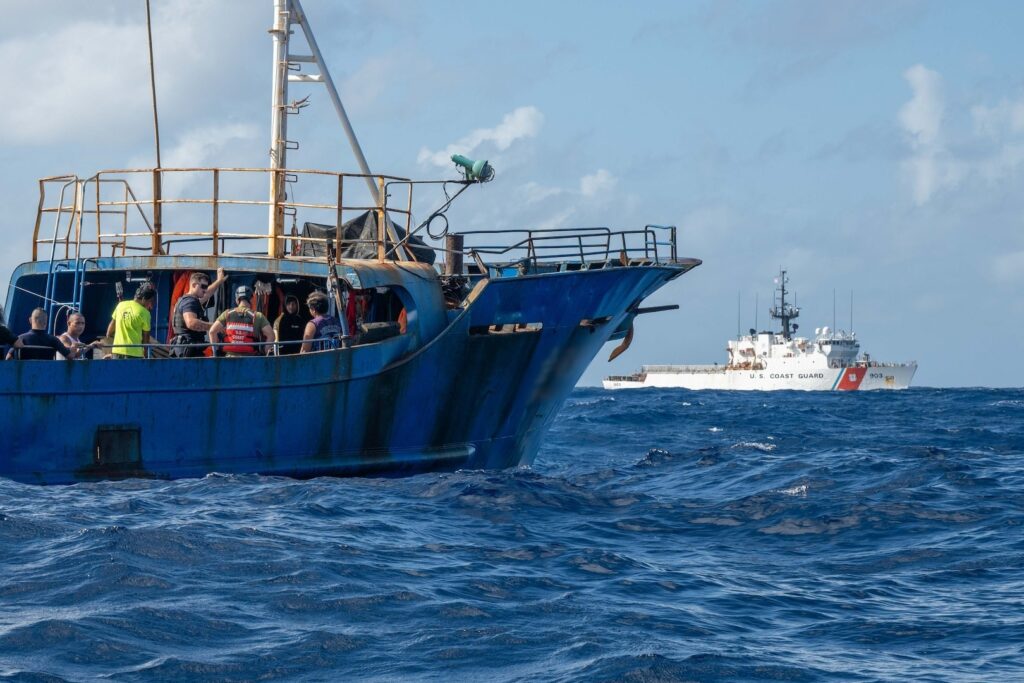
Crew members from U.S. Coast Guard Cutter Harriet Lane (WMEC 903) and Fishery Officers from the Cook Island Ministry of Marine Resources converse with crew members of a fishing vessel during an fishery inspection of the vessel June 7, 2025, in the Pacific Ocean. (U.S. Coast Guard photo by Petty Officer 3rd Class Austin Wiley) 

From Coast Guard 14th District External Affairs, June 16, 2025  

RAROTONGA, Cook Islands – The U.S. Coast Guard concluded bilateral maritime law enforcement operations alongside Cook Islands law enforcement partners offshore Rarotonga Friday.  

The crew of Coast Guard Cutter Harriet Lane (WMEC 903) worked alongside the Cook Islands’ Ministry of Marine Resources to conduct fisheries law enforcement patrols. These mutually beneficial patrols focused on detecting and deterring illegal fishing activities while ensuring the sustainable management of marine resources within the Cook Islands’ exclusive economic zone (EEZ), which borders the EEZ of American Samoa.  

“Working with the Cook Islands’ Ministry of Marine Resources has been an incredible opportunity,” said Cmdr. Nicole Tesoniero, commanding officer of the Harriet Lane. “Seeing firsthand our combined dedication to protecting marine resources and upholding laws and regulations reinforces the importance of these partnerships. We’re proud to support their efforts in ensuring a sustainable future for their waters and the wider Pacific.”  

During this nine-day operation, the Harriet Lane crew and two Ministry of Marine Resources officers conducted six boardings of fishing vessels operating within the Cook Islands’ EEZ, resulting in one suspected violation. These boardings focused on verifying compliance with Cook Island fisheries regulations, including proper licensing, gear restrictions and reporting requirements. The increased presence of law enforcement activity serves as a deterrent to potential illegal fishing activities. Additionally, the Harriet Lane crew’s presence deters increasing trends of drug smuggling in the Pacific.   

“As a small island and developing state like the Cook Islands, our biggest advantage and our strength is through cooperation with our partners in the Pacific when conducting fisheries boardings,” said Sai Sarau, a Cook Islands Ministry of Marine Resources Fisheries officer. “Together, we will weave a stronger Pacific community ready to face future challenges.”  

These bilateral operations are conducted under the existing maritime law enforcement agreement between the U.S. and Cook Islands. These agreements allow U.S. Coast Guard personnel to work with partner nations to enforce their sovereign laws and protect shared maritime interests, contributing to a joint objective in countering malign and illegal behaviors in the Oceania region.   

“This operation is an example of the enduring partnership between the United States and the Cook Islands,” said Cmdr. Nicholas Gilmore, U.S. Coast Guard Attaché to U.S. Embassy Wellington, New Zealand. “We are committed to working alongside our Cook Islands partners to promote maritime security, protect valuable marine ecosystems, and ensure a prosperous and sustainable future for the region.”  

About the U.S. Coast Guard in the Pacific:  

Based in Honolulu, the U.S. Coast Guard Fourteenth District continues to foster enduring partnerships with regional allies through Operation Blue Pacific, an overarching multi-mission endeavor promoting security, safety, sovereignty, and economic prosperity in Oceania. The U.S. Coast Guard remains committed to maritime security, safety and stewardship, solidifying its longstanding reputation in the Pacific as a trusted partner.  

About U.S. Coast Guard Cutter Harriet Lane: 

Commissioned in 1984, Harriet Lane is a 270-foot medium-endurance cutter homeported in Pearl Harbor, Hawaii, to support Coast Guard missions in the Pacific region. The service’s medium endurance cutter fleet supports a variety of Coast Guard missions including search and rescue, law enforcement, maritime defense, and protection of the marine environment.  


Curtiss-Wright Awarded $31 Million IDIQ Contract by the U.S. Navy

Curtiss-Wright to provide rugged Modular Open Systems Approach (MOSA)-based mission processing system to support Navy Minotaur software platform  

INTERNATIONAL PARIS AIR SHOW 2025, Le Bourget, Paris, France (Hall 3-D28) – June 16, 2025 – Curtiss-Wright Corporation today announced that it will provide Airborne Mission Processors (AMP) and AMP spare parts in support of PMA-262 Persistent Maritime Unmanned Aircraft Systems’ MQ-4C Triton aircraft and PMA-290 Maritime Patrol and Reconnaissance Aircraft under a $31 million firm-fixed-price indefinite delivery, indefinite quantity (IDIQ) contract awarded by the Naval Surface Warfare Center (NSWC). The contract also includes Total Lifecycle Management™, training, and engineering services in support of the AMP. Work on the contract will be performed by Curtiss-Wright’s Defense Solutions Division and is scheduled to run through September 2029. 

“We are very proud to have been selected by the Naval Surface Warfare Center to provide our rugged airborne mission processor technology, total lifecycle management and support services for Naval manned and unmanned aircraft programs,” said Brian Perry, Senior Vice President and General Manager, Curtiss-Wright Defense Solutions Division. “The AMP system was derived from the legacy Airborne Mission Management System previously qualified and deployed on the Triton UAV platform. Through only minor enhancements, Curtiss-Wright was able to significantly increase processing capability in the aircraft, enabling enhanced ISR features, and the ability to host Navy Minotaur software platforms.” 

The AMP features Curtiss-Wright’s industry-leading MOSA modules, including the VPX6-1959 single board computer, CHAMP-XD2M High Memory Capacity Multi-Core HPEC Module, VPX6-684 Network Switch, and VPX6-4943 GPGPU board, as well as the front panels, fan control board, and chassis. 

Curtiss-Wright previously announced that it is providing and servicing MOSA-based Keyed Broad Area Maritime Surveillance Airborne Recorder (K-BAR) Network Attached Storage (NAS) solutions supporting MQ-4C Triton and future PMA-290 aircraft, including chassis, docking stations, removable storage modules and lab cable sets. 


First Increment 3 Block 2 modifications complete for P-8A Poseidon aircraft 

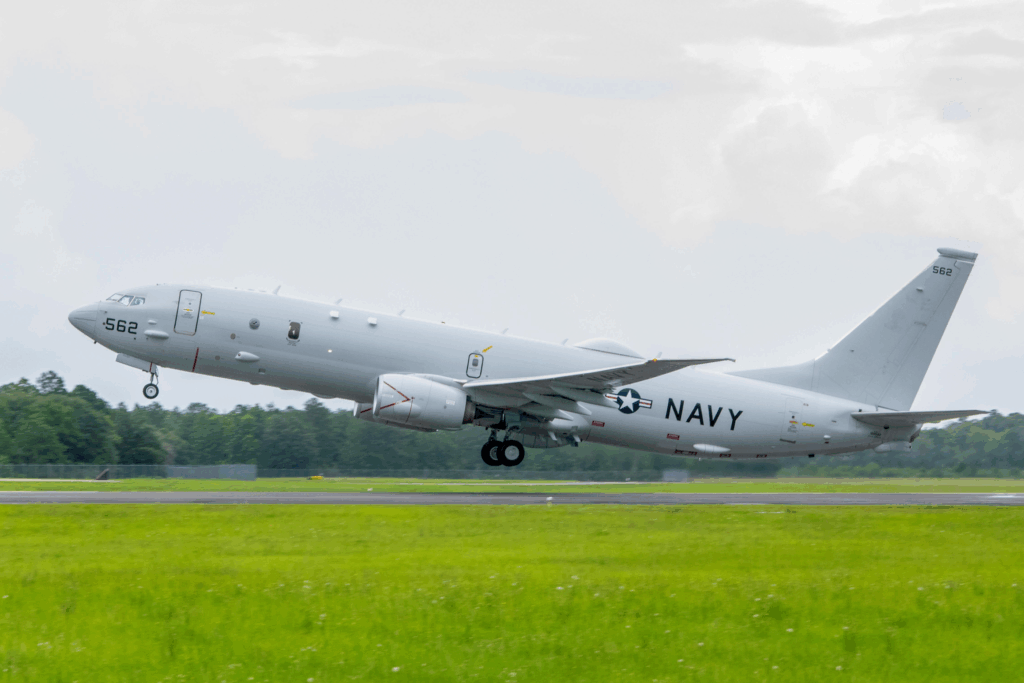
P-8A takes off with Increment 3 Block 2 in June 2025.

From Naval Air Systems Command, June 13, 2025 

PATUXENT RIVER, Md. — Increment 3 Block 2 modifications are complete for the first P-8A Poseidon aircraft. The modifications outfit the P-8A with the full anti-submarine warfare (ASW), anti-surface warfare (ASuW), and intelligence, surveillance and reconnaissance (ISR) capabilities outlined in the P-8A program’s evolutionary acquisition strategy. The modifications began at Boeing’s Maintenance, Repair and Overhaul hangar at Cecil Airport in Jacksonville, Florida in March 2024. 

“In today’s ever changing global environment, it is important to pace the threat in terms of lethality and survivability.  The Increment 3 Block 2 modifications to the P-8A Poseidon will ensure they remain the most sophisticated and capable maritime patrol and reconnaissance aircraft in the world,” said Capt. Erik Thomas, Maritime Patrol and Reconnaissance Aircraft Program Office (PMA-290) program manager.  

The P-8A is the Department of Defense’s only long-range full-spectrum ASW, cue-to-kill platform, with substantial armed ASuW and networked ISR capabilities.  Increment 3 Block 2 provides a significant upgrade to the P-8A airframe and avionics systems, and includes new airframe racks, radome, antennas, sensors, and wiring. The modification incorporates a new combat systems suite with improved computer processing, higher security architecture, a wide band satellite communication system, an ASW signals intelligence capability, a track management system, and additional communications and acoustics systems to enhance search, detection and targeting capabilities. 

In response to evolving threats around the world, future P-8A modifications will be made via a sequence of rapid capability insertion efforts that build upon this new Increment 3 Block 2 baseline. 

PMA-290 manages the acquisition, development, support and delivery of the U.S. Navy’s maritime patrol and reconnaissance aircraft.  


GDIT Awarded Mission-Enhancing Enterprise Contract to Support Special Operations Forces 

Company will leverage AI, cloud and cyber capabilities to enhance operational effectiveness  

From GDIT, June 13, 2025 

FALLS CHURCH, Va. – General Dynamics Information Technology (GDIT), a business unit of General Dynamics, announced today that it was awarded a foundational Information Technology Enterprise contract to support components of the U.S. Special Operations Command (SOCOM). The $396 million contract, awarded in April, has a one-year base period and four option years. 

SOCOM components require modernized IT networks to enable Special Operations Forces (SOF) to rapidly transfer, communicate and share operational and intelligence information, especially in contested and remote environments where speed and agility are crucial. Under this contract, GDIT will provide a full gamut of enterprise IT services that are well-integrated, flexible and adaptable to support SOF’s dynamic and complex missions around the world. The company will leverage its AI capabilities to enhance operational effectiveness and improve decision making, migrate SOF to a multi-cloud environment, and implement advanced zero trust solutions to bolster cybersecurity. 

“Modern warfare is constantly evolving and enhancing SOF’s digital capabilities is critical to mission success,” said Brian Sheridan, GDIT’s senior vice president for Defense. “We look forward to delivering a cutting-edge IT network that ensures our elite military units are connected to the intelligence they need to stay ahead in every mission.” 

The contract builds on GDIT’s history of delivering mission-critical IT capabilities for combatant commands. Last year, the company won a technical and mission services contract to support SOCOM and its partners. GDIT also provides digital modernization services for the U.S. Central Command and cyber services for the U.S. Southern Command. 


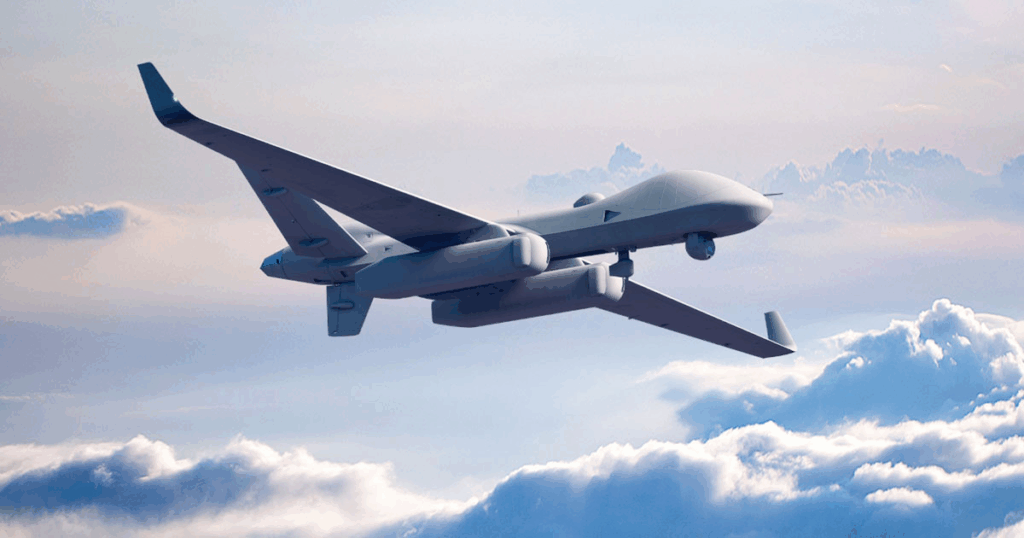
GA-ASI Adds SAAB Airborne Early warning Capability to MQ-9B

New Capability Will Transform Airborne Early Warning Access and Affordability for MQ-9B Customers 

From GA-ASI, June 15, 2025 

SAN DIEGO – 15 June 2025 – General Atomics Aeronautical Systems, Inc. (GA-ASI) is partnering with Saab to develop Airborne Early Warning and Control (AEW&C) capability for its line of MQ-9B Remotely Piloted Aircraft, which includes the SkyGuardian and SeaGuardian models, the United Kingdom’s Protector, and the new MQ-9B STOL (Short Takeoff and Landing) model currently in development. GA-ASI plans to fly AEW on MQ-9B in 2026.  

“High and low-tech air threats both pose major challenges to global air forces,” said GA-ASI President David R. Alexander. “We’re developing an affordable AEW solution in cooperation with Saab, the leading provider of AEW&C systems, that will transform our customers’ operations against both sophisticated cruise missiles and simple but dangerous drone swarms. We’re also making AEW capability possible in areas it doesn’t exist today, such as from some navy warships at sea.” 

GA-ASI will pair Saab’s AEW sensors with the world’s longest-range, highest-endurance unmanned aircraft system (UAS), the MQ-9B. At sea or over land, the AEW mission package on MQ-9B will put air dominance within reach at a lower cost than legacy platforms. 

The MQ-9B AEW solution will offer critical aloft sensing to defend against tactical air, guided missiles, drones, and other threats at a fraction of the cost of manned platforms. Operational availability for medium-altitude long-endurance UAS is the highest of any military aircraft, and as an unmanned platform, its aircrew are not put into harm’s way. AEW for MQ-9B will augment existing AEW fleets by extending their effective ranges. It also gives air forces that need AEW, but lack legacy platforms, a powerful and affordable means to counter threats.   

GA-ASI and Saab’s AEW offering will span a wide range of applications, including early detection and warning; long-range detection and tracking; simultaneous target tracking and flexible combat system integration, all over line-of-sight and SATCOM connectivity.  

MQ-9B is the world’s most advanced medium-altitude, long-endurance UAS. GA-ASI has MQ-9B orders from the United Kingdom, Belgium, Canada, Poland, Japan, Taiwan, India, and the U.S. Air Force in support of the Special Operations Command. MQ-9B has also supported various U.S. Navy exercises, including Northern Edge, Integrated Battle Problem, RIMPAC, and Group Sail. 


USS Cole Assists Royal Canadian Navy, U.S. Coast Guard, Transfer Intercepted Contraband 

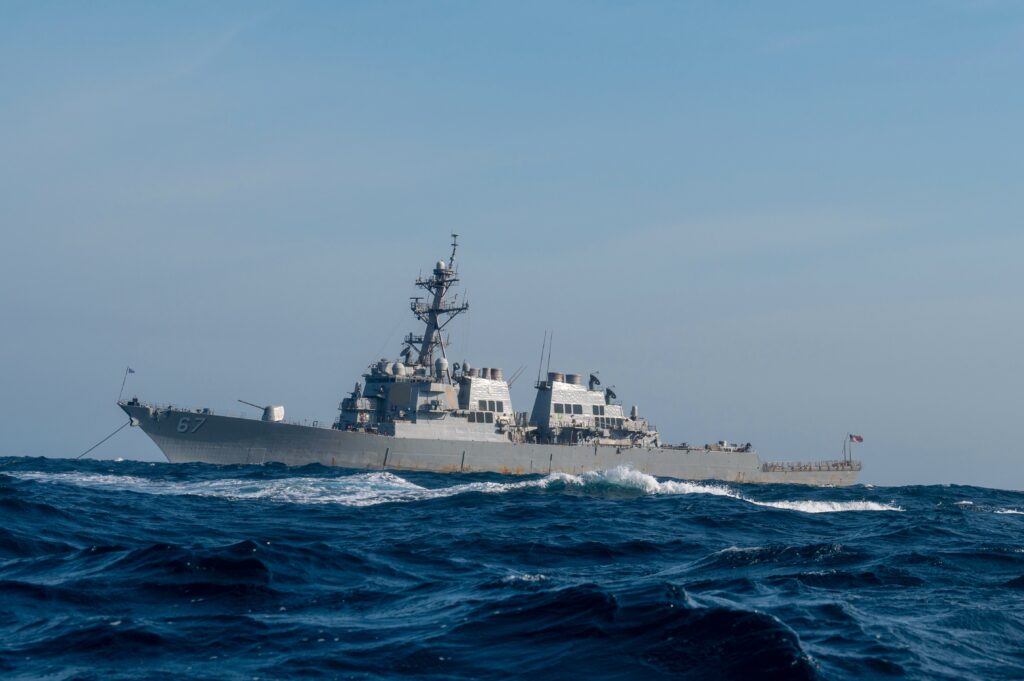
Arleigh Burke-class guided missile destroyer USS Cole (DDG-67) moors off the coast of Charleston, South Carolina, April 15, 2025, during Exercise Southern Lightning. (U.S. Air Force photo by Staff Sgt. Emily Farnsworth) [Stock Photo] 
 

13 June 2025 

From U.S. Northern Command, U.S. Naval Forces Southern Command Public Affairs 

CARIBBEAN SEA – The Arleigh Burke-class guided missile destroyer USS Cole (DDG 67), supporting maritime southern border operations, conducted a hold-and-transfer of 245 kilograms of contraband recovered by the Royal Canadian Navy Harry DeWolf-class offshore patrol vessel HMCS William Hall (AOPV 433) in the Caribbean Sea June 9. The Reliance-class U.S. Coast Guard (USCG) Cutter Vigorous (WMEC 627) accepted the contraband from the Cole’s embarked USCG Law Enforcement Detachment (LEDET) June 11 during a rendezvous at sea in the Caribbean. 

The Cole, with the embarked LEDET, provides a combination of U.S. Navy endurance, range, and capability with USCG law enforcement authorities, increasing protection to the U.S. southern border’s maritime approach. 
 
The contraband’s transit was detected by Joint Interagency Task Force (JIATF) South, which collaborates with partner nations and leverages all-domain capabilities to detect and monitor illicit drug trafficking in the region. 
 
The contraband and surrounding circumstances are considered under investigation and are subject to review and disposition through the U.S. Department of Justice. 
 
The U.S. Coast Guard LEDET has unique legal authority to conduct U.S. law enforcement operations in support of border security missions under U.S. Northern Command. Utilizing the Coast Guard’s jurisdiction, the Cole will employ LEDET personnel to perform vessel boardings, searches, and seizures in U.S. and international waters, targeting drug trafficking, illegal immigration, and transnational crime with a nexus to the U.S. southern border. With LEDET’s tactical expertise guiding interdiction efforts, the Cole will harness its advanced surveillance systems and mobility to locate and intercept suspect vessels, effectively extending Coast Guard authority through naval power to enhance maritime security operations. This collaboration ensures a robust, legally empowered response to maritime threats, strengthening U.S. border protection efforts. 
 
U.S. Naval Forces Southern Command/U.S. 4th Fleet serves as a trusted maritime partner for Caribbean, Central and South American maritime forces and promotes unity, security, and stability in the region. 
 
For more USNAVSOUTH/4th Fleet news and photos, visit facebook.com/NAVSOUS4THFLT, https://www.fourthfleet.navy.mil/, X – @ NAVSOUS4THFLT, and https://www.linkedin.com/company/u-s-naval-forces-southern-command-u-s-4th-fleet 


SECDEF Announces Flag and General Officer Nominations

From the Department of Defense, June 13, 2025 

ARLINGTON, Va. — Secretary of Defense Pete Hegseth announced today that the president has made the following nominations: 

Marine Corps Col. Christopher G. Tolar for appointment to the grade of major general, with assignment as staff judge advocate to the Commandant of the Marine Corps, Pentagon, Washington, D.C. Tolar is currently serving as command judge advocate, U.S. Africa Command, Stuttgart, Germany. 

Navy Rear Adm. (lower half) Kristin Acquavella for appointment to the grade of rear admiral. Acquavella most recently served as commander, Naval Supply Systems Command Weapons Systems Support, Philadelphia, Pennsylvania. 
 
Navy Rear Adm. (lower half) David M. Buzzetti for appointment to the grade of rear admiral. Buzzetti is currently serving as deputy joint staff surgeon/director, Reserve Medical Readiness Operations and Affairs, Joint Staff, Pentagon, Washington, D.C. 
 
Navy Rear Adm. (lower half) Matthew Case for appointment to the grade of rear admiral. Case is currently serving as deputy to the Assistant Director Health Care, Defense Health Agency/chief, Medical Service Corps, Falls Church, Virginia. 
 
Navy Rear Adm. (lower half) David J. Faehnle for appointment to the grade of rear admiral. Faehnle is currently serving as commandant, Naval District Washington, Washington Navy Yard, Washington, D.C. 
 
Navy Rear Adm. (lower half) Joaquin J. Martinez de Pinillos for appointment to the grade of rear admiral. Martinez de Pinillos is currently serving as reserve director, Maritime Operations, U.S. Pacific Fleet, Pearl Harbor, Hawaii. 
 
Navy Rear Adm. (lower half) Donald M. Plummer for appointment to the grade of rear admiral. Plummer is currently serving as reserve vice director, Joint Force Development, Joint Staff (J-7), Pentagon, Washington, D.C. 
 
Navy Rear Adm. (lower half) Christopher D. Stone for appointment to the grade of rear admiral. Stone is currently serving as director, Strategy, Policy, Programs, and Logistics, J-5/4, U.S. Transportation Command, Scott Air Force Base, Illinois. 
 
Navy Capt. Frank J. Brajevic for appointment to the grade of rear admiral (lower half). Brajevic is currently serving as chief of staff, Naval Medical Forces Pacific Navy Reserve, San Diego, California. 
 
Navy Capt. Sharif H. Calfee for appointment to the grade of rear admiral (lower half). Calfee most recently served as senior military advisor to the Secretary of the Navy, Office of the Secretary of the Navy, Pentagon, Washington, D.C. 
 
Navy Capt. Christopher A. Carter for appointment to the grade of rear admiral (lower half). Carter is currently serving as commander, Navy Reserve Naval Special Warfare Task Force Eighteen, San Diego, California. 
 
Navy Capt. Kevin M. Corcoran has for appointment to the grade of rear admiral (lower half). Corcoran is currently serving as deputy commander, Navy Expeditionary Logistics Support Group, Williamsburg, Virginia. 
 
Navy Capt. Matthew A. Hawkins for appointment to the grade of rear admiral (lower half). Hawkins is currently serving as chief of staff, Navy Reserve U.S. Naval Forces Europe/Africa, Naples, Italy. 
 
Navy Capt. Jonathan J. Jettparmer for appointment to the grade of rear admiral (lower half). Jettparmer is currently serving as director, Navy Reserve Program Office, Naval Sea Systems Command, Washington Navy Yard, Washington, D.C. 
 
Navy Capt. Suzanne J.M. Krauss for appointment to the grade of rear admiral (lower half). Krauss is currently serving as commanding officer, Navy Reserve Commander Sixth Fleet Headquarters, Naples, Italy. 
 
Navy Capt. Anthony L. Lacourse for appointment to the grade of rear admiral (lower half). Lacourse is currently serving as force surgeon, Navy Reserve U.S. Marine Corps Forces, Central Command, MacDill Air Force Base, Florida. 
 
Navy Capt. Kristin L. McCarthy for appointment to the grade of rear admiral (lower half). McCarthy is currently serving as director, Legal Services, Navy Reserve Office of the Judge Advocate General Headquarters, Washington Navy Yard, Washington, D.C. 
 
Navy Capt. Lester Ortiz for appointment to the grade of rear admiral (lower half). Ortiz is currently serving as commodore, Navy Reserve Seventh Naval Construction Regiment, Gulfport, Mississippi. 
 
Navy Capt. Quinton S. Packard for appointment to the grade of rear admiral (lower half). Packard is currently serving as a military fellow at the Center for Strategic and International Studies, Washington, D.C. 
 
Navy Capt. Rigel D. Pirrone for appointment to the grade of rear admiral (lower half). Pirrone is currently serving as commanding officer, Navy Reserve N5/N7, U.S. Naval Forces Europe/Africa, Naples, Italy. 
 
Navy Capt. Kimberly M. Sandberg for appointment to the grade of rear admiral (lower half). Sandberg is currently serving as chief of staff, Navy Reserve Naval Medical Forces Support Command, Houston, Texas. 
 
Navy Capt. Michael J. Thornton for appointment to the grade of rear admiral (lower half). Thornton is currently serving as force surgeon, Navy Reserve Naval Forces Korea, Busan, Korea. 
 
Navy Capt. Jonathan R. Townsend for appointment to the grade of rear admiral (lower half). Townsend is currently serving as commanding officer, Naval Support Activity South Potomac, Washington, D.C. 
 
Navy Capt. Kelly C. Ward for appointment to the grade of rear admiral (lower half). Ward is currently serving as Reserve chief staff officer to commander, Navy Expeditionary Combat Command, Virginia Beach, Virginia.