SEA Deliver KraitArray ASW Sensing Technology for Liquid Robotics Wave Glider

Release From SEA

SEA has been awarded a multi-million-pound contract to supply its advanced KraitArray undersea sensing technology to Liquid Robotics, a Boeing Company, for integration into the company’s Wave Glider uncrewed surface vehicle (USV). The agreement will see SEA provide 22 KraitArrays to support uncrewed autonomous maritime surveillance and undersea detection capabilities. 

Building on more than a decade of collaboration between SEA and Liquid Robotics, the project marks an important milestone in the global scaling of anti-submarine warfare (ASW), intelligence, surveillance and reconnaissance (ISR) and maritime domain awareness (MDA) payloads for uncrewed platforms, with both companies able to innovate with agility and deliver at scale. 

Richard Flitton, Managing Director of SEA said, “As global navies respond to rapidly expanding subsurface and autonomous threats, platforms like the Wave Glider equipped with KraitArray technology will offer a proven, highly scalable solution for persistent littoral surveillance. Our longstanding partnership with Liquid Robotics has been fundamental in shaping a capability that is ready to meet operational demands now and into the future.” 

Renowned for its exceptionally low size, weight, and power (SWaP) and drag characteristics, the KraitArray delivers high-end passive acoustic detection performance in a compact, modular form, purpose-built for uncrewed platforms such as the Wave Glider. KraitArray technology has been continuously developed and refined over 15 years, with the latest variant released four years ago to meet the specific demands of long-endurance autonomous systems. The continuous investment in product innovation, facilities and manufacturing capacity keeps KraitArray technology at the forefront to meet growing market demand.  

Paulie McCartan, Head of Undersea Products at SEA said “KraitArray was engineered from the outset to unlock the full potential of agile and uncrewed platforms. This latest contract signals growing global adoption of this technology and reflects confidence in SEA’s ability to deliver a lightweight, high-performance sonar solutions that are cost-effective, flexible, and operationally reliable.” 

Jimmy Board, Head of Business Development at Liquid Robotics said, “Our partnership with SEA is central to enhancing Wave Glider capabilities. KraitArray’s high-performance passive detection allows us to expand autonomous ASW and ISR operations, delivering scalable and reliable undersea sensing solutions for the next generation of uncrewed maritime missions.” 

With more than 50 systems already deployed across the UK, Europe, the Americas, Asia and Australia, KraitArray has rapidly established itself as the preferred choice for uncrewed towed array autonomous undersea sensing and ASW operations across the globe. 


Insitu Upgrades Integrator VTOL Launch and Recovery System

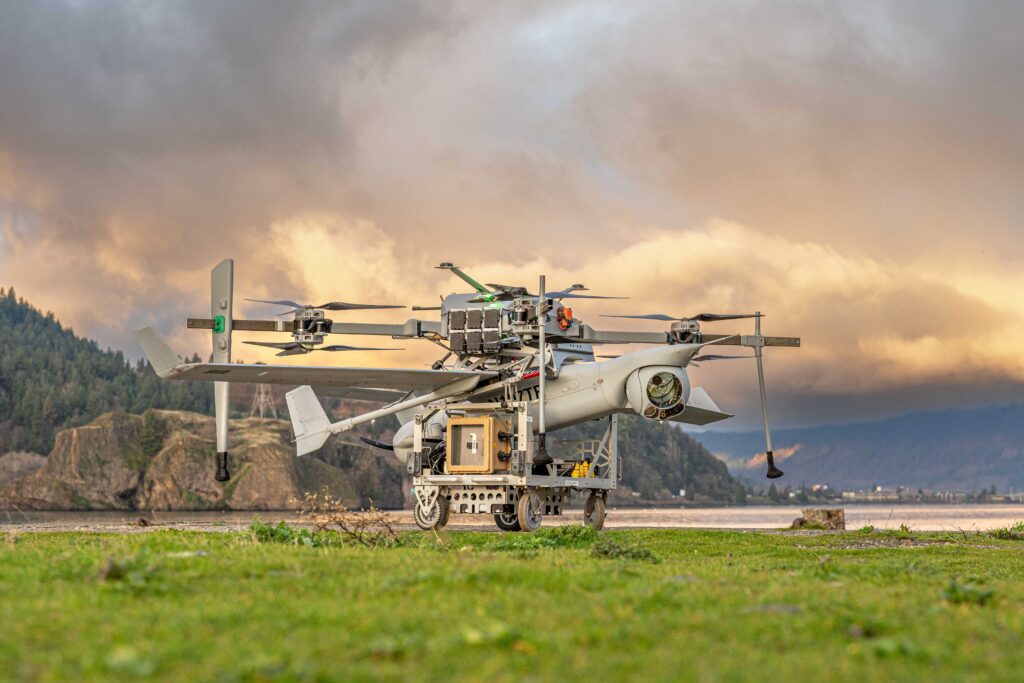
FLARES VTOL kit paired with Integrator UAS at Insitu headquarters in Bingen, Washington. 

BINGEN, Wash., December 17, 2025 – Insitu, A Boeing Company, in collaboration with Hood Tech, releases the latest capability upgrades for the revolutionary Flying Launch and Recovery System (FLARES) for long-endurance Integrator UAS. These updates further enhance the resilience of the system to withstand the demands of the harshest environments on long deployments, with greater communications capability, solidifying Insitu’s place as the leader in US uncrewed aerial systems.   

“Our updated, resilient VTOL kit for multi-mission Integrator is a game-changer for customers that need truly expeditionary capability in challenging electronic and climatic environments,” said Diane Rose, Insitu CEO. “This enhanced resilience paired with battle-proven Integrator’s long endurance and multi-intelligence payload capacity enables our customers to fly expanded mission sets with confidence anytime, anywhere, even in the most contested environments.”    

This latest FLARES update introduces a suite of relevant resilience and performance enhancements that elevate the system’s operational effectiveness, safety and reliability in even the most demanding environments, making it ideal for diverse maritime and land-based missions. The updates include:  

  • Improved Environmental Resilience: Engineered to withstand challenging climatic and operational conditions, including heavy seas, high winds, adverse weather, and complex terrain.  

  • Encrypted GPS Options and Jam-Resistant Datalinks: Enhanced security and communication reliability, ensuring mission success even in contested and denied environments.  

  • Updated Navigation Solutions for GNSS-Contested Operations: Optimized flight performance when operating in electronically contested environments, ensuring mission-critical autonomy.  

  • Improved Supportability: Rapidly replaceable components such as propellers reduce downtime and simplify in-field maintenance. With redundancies built into its inherently robust design, FLARES remains easy to operate and remarkably durable.  

  • Increased Launch Weights: Enables enhanced payload flexibility while maintaining endurance and range.   

“Throughout qualification testing together with Insitu, we find ourselves continuing to fly FLARES in more wind, more precipitation and more deck motion than our competitors,” said Hood Tech Mechanical’s Lead Engineer, Cory Roeseler, “We have the test range to ourselves in adverse weather, and we’re pleased to see opportunities arise as customers gravitate towards our safe, robust and very capable system”.  

FLARES enables operators to launch and recover Integrator in confined areas as small as a 10×10 meter footprint without sacrificing endurance (up to 27.5 hours), range (up to 2,000 nmi, point-to-point), or payload capacity (up to 50 lbs across 10 bays).   

Integrator is also equipped with multiple SATCOM BLOS control options, including support for Proliferated Low Earth Orbit (PLEO) SATCOM, allowing for remote-split operations and missions conducted at unprecedented distances with ease.  

FLARES is available for current and future Integrator customers with no aircraft modifications required. Setup remains quick and easy, enabling rapid packing, deployment, and transport down range in challenging environments.   

When paired with Insitu’s modular Common Ground Control System and INEXA Control, FLARES delivers a truly expeditionary VTOL Group 3 UAS capability, enabling operations in contested electronic environments and harsh climates around the world.  

Integrator VTOL continues to be optimized for both maritime and land applications, delivering dependable performance in extreme conditions. This system provides versatile solutions to meet multi-domain intelligence, surveillance, and reconnaissance (ISR) needs for government and commercial operators worldwide.  

With the release of these FLARES upgrades, Insitu and Hood Tech build on their combined mission to provide cutting-edge unmanned systems that meet the multi-intelligence, multi-domain, long-endurance demands of modern operations.  


Future USS Idaho Delivered to U.S. Navy 

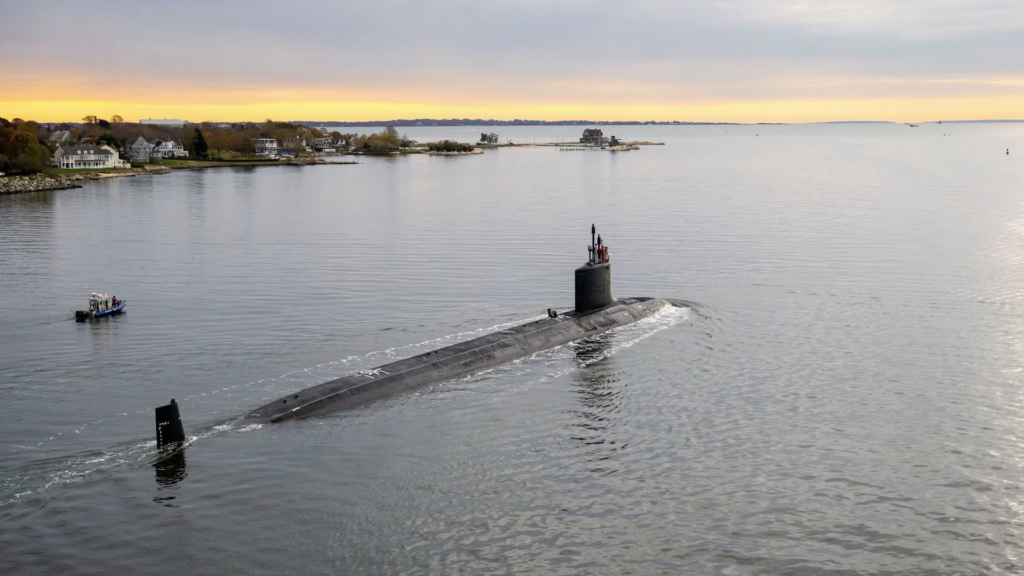
PCU Idaho successfully completed Alpha and Bravo sea trials, bringing the 26th submarine of the Virginia class one step closer to joining the fleet. Here she is departing the Groton, Conn., shipyard on two picturesque mornings to showcase the expert craftmanship of General Dynamics Electric boat shipbuilders. 

By Team Submarine Public Affairs, Dec. 15, 2025 

GROTON, Conn. – The U.S. Navy accepted delivery of the Submarine Force’s newest fast attack submarine, the future USS Idaho (SSN 799), from General Dynamics Electric Boat (GDEB) Dec. 15, marking the second delivery of a Virginia-class fast attack submarine this year. 

The delivery represents the official transfer of the submarine from the shipbuilder to the Navy. The submarine and crew will continue to undergo a series of tests and trials before being commissioned into active service, which is expected to take place in the spring.   

“Idaho represents the hard work and tenacity of shipbuilders, industry partners and Navy personnel to deliver the best undersea warfighting platform to the fleet,” said Capt. Mike Hollenbach, Virginia-class submarine program manager. “With each delivery, the Navy reinforces our Nation’s superiority in the maritime domain.” 

Idaho is the 26th Virginia-class submarine co-produced by GDEB and HII-Newport News Shipbuilding through a long-standing teaming arrangement. It is the 14th delivered by GDEB and is the eighth of 10 Block IV configured attack submarines.     

When it joins the fleet, Idaho will bring significant warfighting capability to the fleet, underscoring the Nation’s asymmetrical advantage at sea. Virginia-class fast-attack submarines have enhanced stealth, sophisticated surveillance capabilities and special warfare enhancements that enable them to meet the Navy’s multi-mission requirements.   

The future USS Idaho is the fifth Navy ship to be named for the state of Idaho. The first was a wooden-hulled storeship commissioned in 1866. The last was battleship BB 42, which was commissioned in 1919 and received seven battle stars for service in World War II.  

The delivery of USS Idaho symbolizes the Navy’s 250-year commitment to innovation and maritime dominance. From seabed to space, the Navy delivers power for peace – always ready to fight and win. This milestone marks the Navy’s enduring legacy and commitment to shaping the future of maritime power. 


Rite-Solutions Included in First Missile Defense Agency SHIELD Contract Award 

From Rite-Solutions 

MIDDLETOWN, R.I. (December 12, 2025)—Rite-Solutions was awarded the Missile Defense Agency (MDA) Scalable Homeland Innovative Enterprise Layered Defense (SHIELD) contract on December 5th. 

The 10-year, $151 billion MDA SHIELD contract is a multiple-award, Indefinite Delivery Indefinite Quantity (IDIQ) contract aimed at developing an advanced, multi-domain defense system capable of detecting, tracking, intercepting, and neutralizing threats to the United States and its forces across the air, missile, space, cyber, and hybrid domains. 

“This marks the first time Rite-Solutions was awarded a contract with the Missile Defense Agency,” says Laurie Carter, Executive Vice President of Business Development. “We are excited to expand the agencies we serve and are thrilled to be a part of the reputable pool of SHIELD awardees.” 

Rite-Solutions will support MDA’s goal of improving the speed and agility with which innovative capabilities are rapidly delivered to the warfighter. The scope of work encompasses four primary work areas (Research & Development, Engineering & Production, Operations & Support, and Analysis & IT Services) and includes early science, disruptive technology, production, sustainment, modernization, and facilities work. 

“This new vehicle allows us to develop systems that help the MDA counter ballistic, hypersonic, and cruise missile threats,” adds Rite-Solutions CEO and Co-Founder, Joe Marino. “It’s a perfect opportunity to apply our innovative capabilities in areas such as AI, digital and model-based systems engineering, agile processes, and open systems architecture.” 


HII Marks Oklahoma Construction Milestone at Newport News Shipbuilding 

From HII 
 

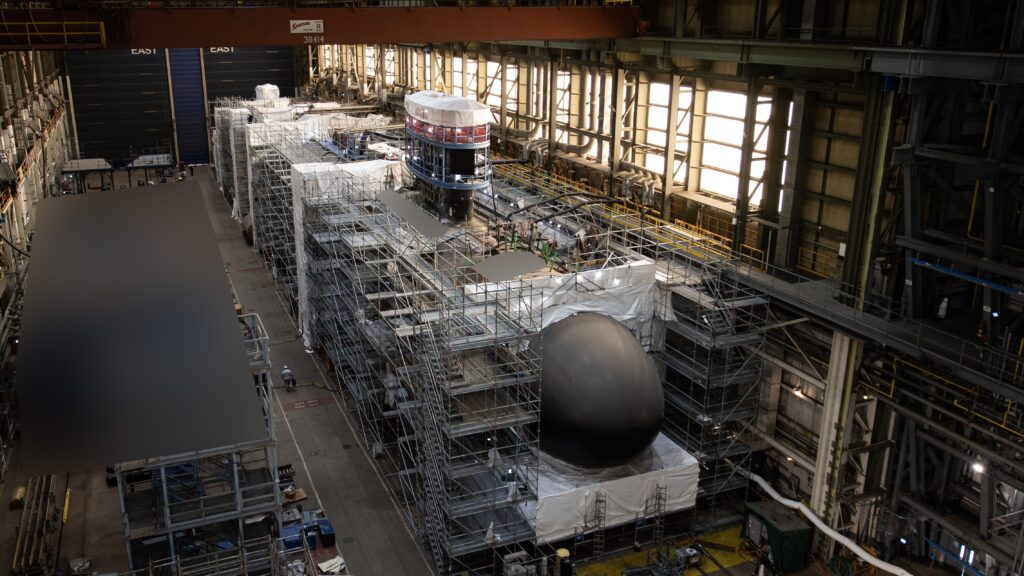
NEWPORT NEWS, Va., Dec. 16, 2025 (GLOBE NEWSWIRE) — HII (NYSE: HII) announced today that its Newport News Shipbuilding division has reached a significant construction milestone for Virginia-class submarine Oklahoma (SSN 802). 

Oklahoma is now “pressure hull complete,” which signifies all of the hull sections have joined to form a single, watertight unit. 

“Achieving pressure hull complete on Oklahoma highlights our commitment to accelerating production and delivering unmatched capability to our Navy customer,” said Jason Ward, NNS vice president of new construction submarine programs. “Our dedicated shipbuilders, Navy teammates and suppliers from across the country, are working hand-in-hand to bring Oklahoma to life.” 

Oklahoma is the 29th Virginia-class fast attack submarine, the first of Block V and the 14th to be delivered by NNS. 

The ship’s sponsor is Mary “Molly” Slavonic, an Oklahoma native. Slavonic has long supported both the state of Oklahoma and the Navy. She worked alongside her husband, former acting Under Secretary of the Navy Greg Slavonic, in building the USS Oklahoma (BB 37) Memorial in Pearl Harbor, Hawaii, to honor the 429 sailors and Marines who died aboard the battleship during the Dec. 7, 1941 attack on Pearl Harbor. 

NNS designs and builds nuclear-powered submarines for the U.S. Navy. The advanced capabilities of Virginia-class submarines increase firepower, maneuverability and stealth. 


Navy Renews HawkEye 360 Contract to Advance Indo-Pacific Maritime Domain Awareness 

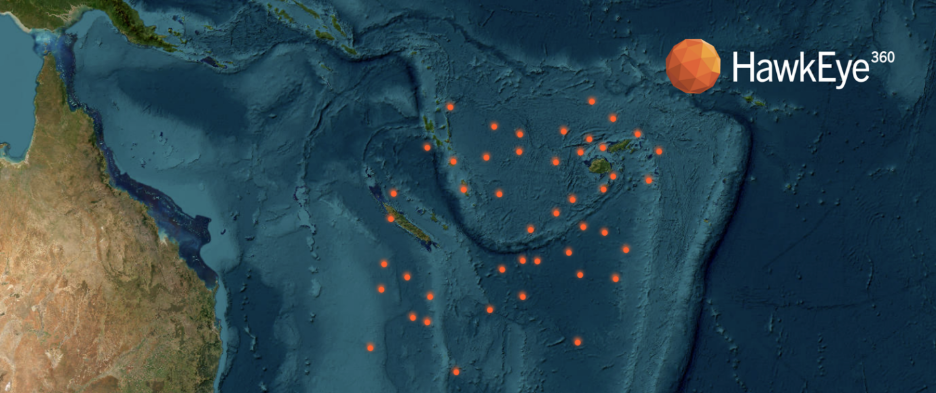
Herndon, VA, (December 9, 2025) – HawkEye 360, the global leader in signals intelligence data and analytics, today announced that the US Navy has renewed its contract with the company for a fourth consecutive year under the Indo-Pacific Partnership for Maritime Domain Awareness (IPMDA) initiative. The $98.8 million firm-fixed-price, indefinite-delivery/indefinite-quantity (IDIQ) contract extends the U.S. Navy’s access to HawkEye 360’s commercial radio frequency (RF) data and analytics for vessel detection and monitoring over key areas of interest throughout the Pacific. 

“This renewal represents a vote of confidence in the partnership between the U.S. Navy and HawkEye 360 and an investment in future innovative solutions,“ affirms Andy Charles, General Manager for the Department of War, HawkEye 360. “With the pace at which commercial companies can move, especially one so mission-focused as HawkEye 360, this action welcomes a host of technological advancements through IPMDA to drive information sharing and Coalition command and control to the speed of modern warfare.” 

HawkEye 360’s RF signals intelligence supports the Department of Defense’s efforts to identify and characterize vessel behavior, detect illicit maritime activity, and share insights with allied partners to promote regional stability. The company’s data is integrated into operational tools that help users gain a more complete picture of vessel movement and maritime dynamics over vast ocean areas. 

“Our ongoing partnership with the US Navy represents a shared commitment to advancing maritime domain awareness and supporting the missions of our partners across the Indo-Pacific,” said James G. McAden, General Manager, Asia Pacific, HawkEye 360. “We’re proud to be entering our fourth year of collaboration, delivering advanced RF data and analytics that strengthen situational awareness and decision-making for maritime security operations.” 

HawkEye 360’s constellation detects, characterizes, and geolocates RF signals from ships and other emitters worldwide, creating a powerful data layer that complements existing maritime information sources. When combined with other data streams, HawkEye 360’s signals intelligence helps defense and intel users identify potential “dark vessels,” uncover patterns of activity, and build a consistent, shared operating picture across the region. 


Coast Guard Cutter Active Crew Offloads $203M in Cocaine in San Diego 

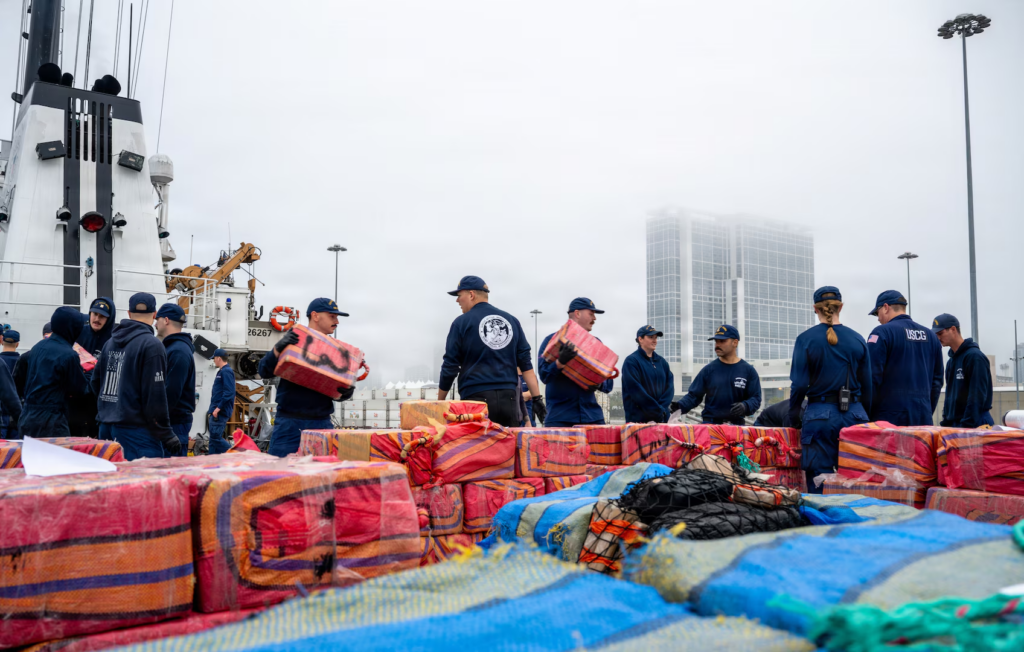
Crew members of the U.S. Coast Guard Cutter Active (WMEC 618) stand at parade rest on the flight deck of the cutter in San Diego, Dec. 15, 2025. The Active’s crew offloaded drugs interdicted in the Eastern Pacific Ocean during counter-narcotic patrols, seizing 27,551 pounds of cocaine worth $203.9 million in value. (U.S. Coast Guard photo by Petty Officer 3rd Class Chris Sappey)

From U.S. Coast Guard Southwest District Public Affairs, Dec. 15, 2025 

SAN DIEGO — The crew of USCGC Active (WMEC 618) offloaded approximately 27,551 pounds of cocaine, with an estimated value of $203.9 million, in San Diego, Monday.  

This offload resulted from three separate interdictions of suspected drug-smuggling vessels in international waters off the coasts of Mexico, Central America, and South America. Two of the three interdictions were conducted by Active crew members and one by the U.S. Coast Guard Cutter Munro crew members.   

“I could not be prouder of this crew,” said Cmdr. Earl Potter, commanding officer of the Coast Guard Cutter Active. “Their determination, resilience, and professionalism make it possible to complete these dynamic and dangerous missions at sea. The conditions are tough, hours are long, and demands are high, but this team always maintains focus. The crew’s commitment to protecting our nation and keeping drugs off our streets is what defines the Active’s legacy.”  

The interdictions were conducted as part of Operation Pacific Viper, a Coast Guard surge effort aimed at disrupting transnational criminal organizations and reducing the flow of illegal narcotics into the United States. These operations play a key role in protecting U.S. communities from the effects of cocaine and synthetic drugs, such as fentanyl.  

“The Coast Guard is escalating the fight against narco-terrorism and trans-national criminal organizations flooding our nation with deadly drugs,” said Rear Adm. Jeffrey Novak, deputy commander, Coast Guard Pacific Area and commander, Coast Guard Southwest District. “By continuing to surge resources to the Eastern Pacific Ocean in coordination with international and interagency partners and allies, our maritime fighting force is making historic strides toward dismantling the smuggling networks that threaten the safety and security of the American people.”    

Active is a 210-foot medium-endurance cutter homeported in Port Angeles, Washington. Equipped with two small boats, the cutter supports missions across the Eastern Pacific, including search and rescue, counter-narcotics operations, living marine resources, and homeland defense.  


Northrop Grumman Demonstrates AN/AQS-24 Minehunting System for U.S. Navy

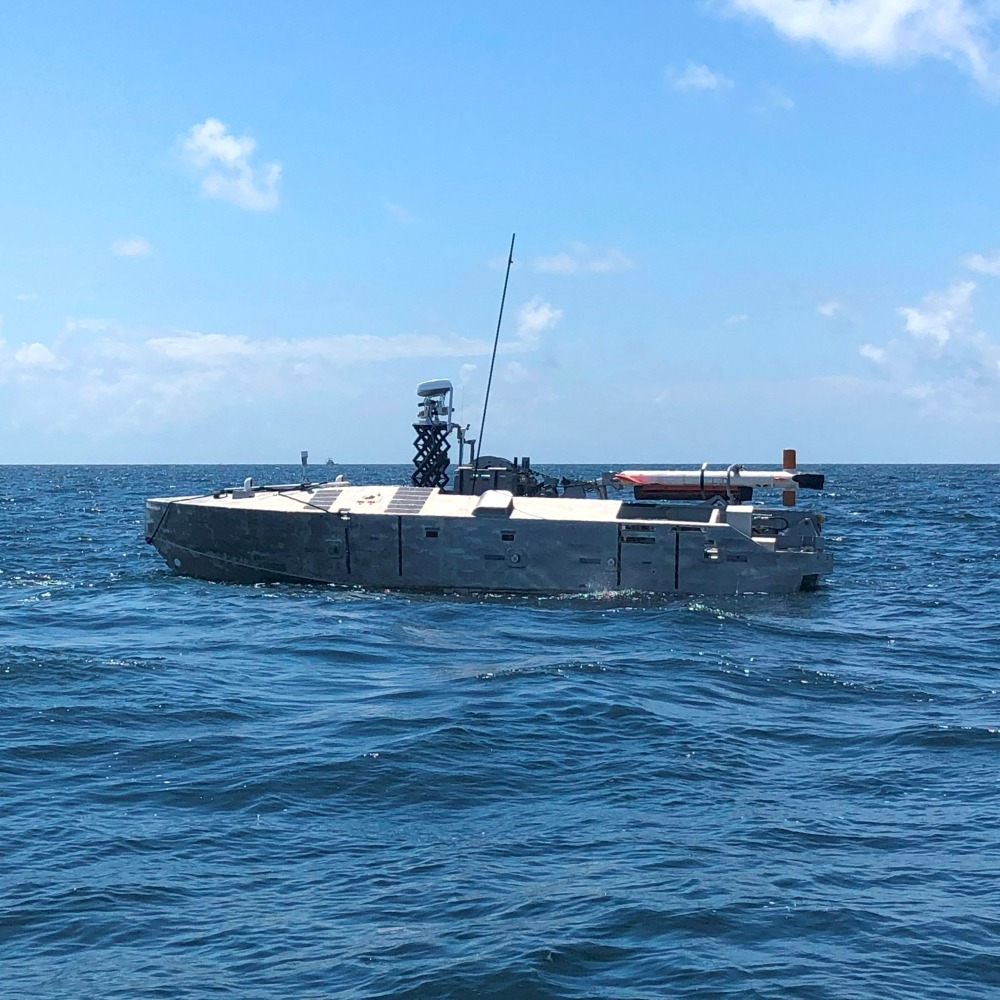
Northrop Grumman’s AN/AQS-24 minehunting system, paired with a Mine Countermeasures Unmanned Surface Vehicle, successfully demonstrated a critically needed towed mine countermeasure capability. (Photo Credit: Northrop Grumman) 

Release from Northrop Grumman

In just 45 days, Northrop Grumman paired the AN/AQS-24 minehunting system withan unmanned surface vehicle 

PANAMA CITY, Fla. – Dec. 15, 2025 – (PHOTO RELEASE) Northrop Grumman Corporation (NYSE: NOC) successfully demonstrated the integration of its proven AN/AQS-24 minehunting system with a Mine Countermeasures Unmanned Surface Vehicle (MCM USV), addressing the U.S. Navy’s growing need for an uncrewed, towed MCM solution. Just 45 days after signing a contract with the Navy, Northrop Grumman began open-water testing in Panama City to demonstrate the high-performing, helicopter-towed AN/AQS-24 can effectively pair with a MCM USV. The U.S. Navy confirmed that the AN/AQS-24 meets all primary government objectives for a safer and more efficient mine-hunting capability. 


Coast Guard Cutter Harriet Lane Returns Home Following 81-day Patrol in Oceania

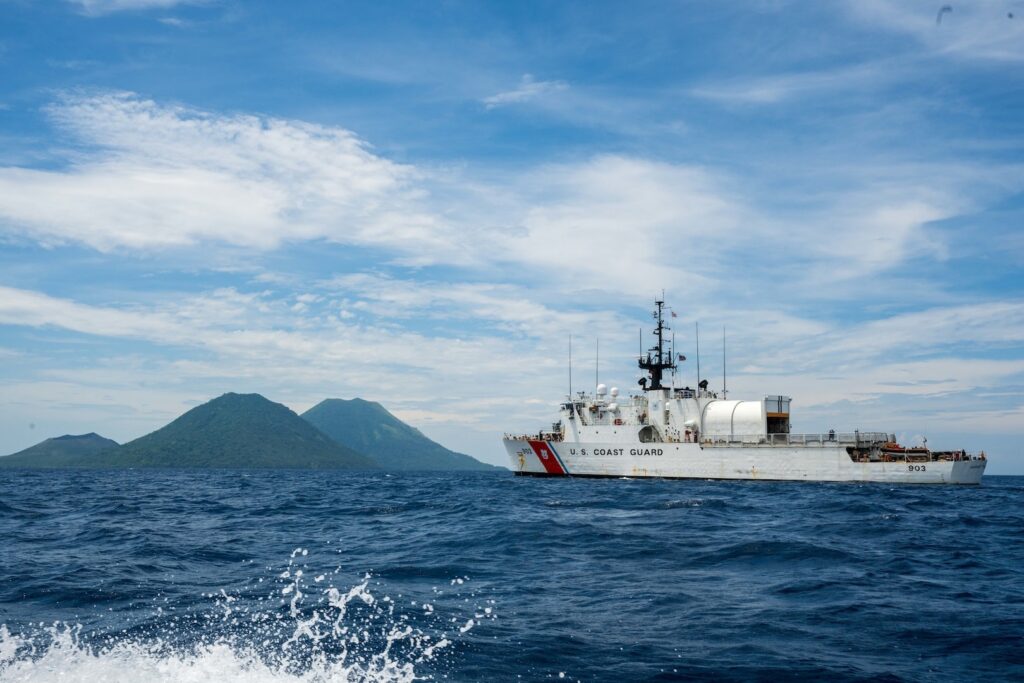
The medium endurance cutter USCGC Harriet Lane (WMEC 903) transits offshore Rabaul, Papua New Guinea, Oct. 26, 2025. Commissioned in 1984, the Harriet Lane is a 270-foot cutter homeported in Honolulu to support Coast Guard missions in the Pacific region. (U.S. Coast Guard Photo by Petty Officer 3rd Class Austin Wiley) 

Release From U.S. Coast Guard Oceania District External Affairs, Dec. 12, 2025

Download video here and here. 

HONOLULU – The crew of USCGC Harriet Lane (WMEC 903) returned to Honolulu Saturday following an 81-day patrol in support of Coast Guard Oceania District’s Operation Blue Pacific. 

The Harriet Lane crew departed Joint Base Pearl Harbor-Hickam in September to conduct joint operations and territorial integrity missions across Oceania. Patrolling more than 16,000 nautical miles throughout Oceania to include the Republic of the Marshall Islands, Papua New Guinea, Vanuatu, Tonga, and American Samoa, the cutter’s crew worked alongside interagency and Pacific Island partners to deter transnational criminal organization activities, facilitate the flow of commerce, and protect critical ocean resources. 

“This patrol was a resounding success for the crew of Harriet Lane and reinforced the Coast Guard’s commitment as a trusted partner across Oceania,” said Cmdr. Justin Matejka, commanding officer, Harriet Lane. “It was a pleasure to partner with the many professional officers from multiple Pacific Island Countries to combat illegal, unreported, and unregulated fishing and transnational criminal organization activity. I am proud of the crew’s incredible commitment to operational success and look forward to being a part of Harriet Lane’s growing impact across the region.” 

The Harriet Lane crew exercised partnerships with the Marshall Islands, Papua New Guinea, Vanuatu, and Tonga through bilateral maritime law enforcement agreements, professional exchanges, and domestic federal maritime law enforcement operations. In total, the Harriet Lane crew and Pacific Island enforcement officers conducted 31 boardings of fishing vessels, resulting in 20 potential violations. 

The crew conducted 15 additional high seas boarding and inspections on commercial fishing vessels, resulting in 2 potential violations of conservation and management measures under the Western and Central Fisheries Commission. 

Enhancing diplomatic relationships within the Pacific Quadrilateral Defence Coordinating Group, the Harriet Lane crew also integrated Royal New Zealand Navy sea riders for a portion of the patrol. 

Harriet Lane’s visit to Tonga included strategic discussions with Defense and Foreign Minister, Crown Prince Tupouto’a ‘Ulukalala, focusing on enhancing bilateral cooperation to address maritime security threats and counter illegal, unreported, and unregulated fishing activity in the region. 

Commissioned in 1984, Harriet Lane is a 270-foot medium endurance cutter homeported in Honolulu to support Coast Guard missions in the Pacific region. The service’s medium endurance cutter fleet supports a variety of Coast Guard missions including search and rescue, law enforcement, maritime defense, and protection of the marine environment. 


AeroVironment Awarded $4.8M Contract for U.S. Coast Guard ROVs

Release From AeroVironment

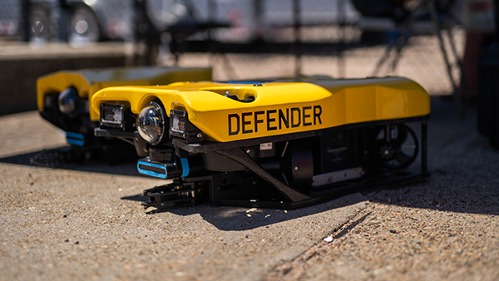
POTTSTOWN, Pa. – December 11, 2025— AeroVironment, Inc. (“AV”) (NASDAQ: AVAV), a leading provider of underwater robotic systems, today announced it has been awarded a $4.8 million United States Coast Guard contract through its wholly owned subsidiary, VideoRay, to deliver Mission Specialist Defender remotely operated vehicles (ROVs) as part of the Service’s Force Design 2028 modernization initiative.  

The Defender will enhance the Coast Guard’s maritime response capabilities by enabling rapid underwater inspections, pier inspections, hull assessments, subsurface infrastructure surveys, disaster response and search and rescue operations in challenging environments—reducing diver risk while increasing mission safety, operational efficiency, and fleet readiness.  

“The selection of the Mission Specialist Defender reinforces our ability to deliver proven technology to address the most demanding defense and security missions,” said Chris Gibson, Chief Executive Officer at VideoRay. “Customers have come to depend on VideoRay when failure is not an option. As AV’s maritime pillar, we’re proud to contribute to the organization’s all-domain uncrewed systems strategy to ensure the safety and security of our forces.”  

As part of Force Design 2028, the Coast Guard established the Robotics and Autonomous Systems (RAS) Program Executive Office to rapidly integrate unmanned and robotic technologies across all missions, including investments in robotics and autonomous systems designed to build a more agile, technology-enabled, and globally ready force for the evolving maritime domain.  

AV’s $4.8 million award—the largest award of the $11 million executed in fiscal year 2025 for rapid autonomous fleet upgrades—will strengthen Coast Guard operations with proven, advanced maritime robotics. The selection of the Mission Specialist Defender builds on the company’s expanding track record with U.S. and allied defense customers, including the Navy’s Maritime Expeditionary Standoff Response (MESR) program.  

“These unmanned systems provide increased domain awareness, mitigating risk and enhancing mission success as the Coast Guard continues to operate in hazardous environments,” said Anthony Antognoli, the Coast Guard’s first RAS program executive officer, in a separate release issued by the U.S. Coast Guard in September 2025. “The Coast Guard’s mission demands agility, awareness and adaptability. Robotics and autonomous systems deliver all three, enabling us to respond faster, operate smarter and extend our reach where it matters most. We are not waiting for the future to arrive. We are delivering it to the fleet today.”  

Built on a modular, open-architecture design, the Mission Specialist Defender allows operators to easily integrate advanced sensors, manipulators, and specialized payloads. This flexibility ensures adaptability to evolving mission requirements, while field-swappable modules enable on-site maintenance and repairs—minimizing downtime and maintaining operational tempo.  

Details regarding the Mission Specialist Defender can be found at: https://videoray.com/products/mission-specialist-defender