Dismantling Iran Threat, Protecting Homeland, Sharpening Arctic Readiness 

March 13, 2026 |  By David Vergun, DoW News 

More than 50,000 service members are supporting Operation Epic Fury, which started Feb. 28, said Pentagon Press Secretary Kingsley Wilson today in the War Department’s Weekly Sitrep video.  

Those forces have established control over air and sea domains and struck thousands of identified Iranian targets, demonstrating operational dominance, she said.  

This is what we did this week at the WAR DEPARTMENT: pic.twitter.com/hRyK3iUWmC 

— DOW Rapid Response (@DOWResponse) March 13, 2026  

“We continue to deliver devastating combat power. Every day our resolve increases and the regime’s ability to threaten our forces, our partners and the American people, is being systematically dismantled,” Wilson said.  

Yesterday, U.S. Central Command reported about 6,000 targets struck, with more than 60 ships and 30 minelayers damaged or destroyed to date, reflecting substantial progress in diminishing hostile capabilities.  

Weapons employed in the operation, per the fact sheet, include a wide range of bombers, fighter jets, electronic warfare and reconnaissance aircraft, unmanned aerial systems, missile defense platforms, artillery systems, warships, counter-drone equipment, refueling assets and cargo aircraft.  
 
On March 11, Centcom issued a warning to civilians that the Iranian regime is using civilian ports along the Strait of Hormuz to conduct military operations that threaten international shipping.  

“This dangerous action risks the lives of innocent people. Civilian ports used for military purposes lose protected status and become legitimate military targets under international law,” the warning reads.  

The War Department honors the American heroes who made the ultimate sacrifice in support of Operation Epic Fury, Wilson said, adding, “These patriots paid the price in full, and the Department of War will deliver total victory in their name.”   

Shifting to homeland security, the District of Columbia National Guard activated the 260th Special Purpose Brigade at the D.C. National Guard Armory, March 7, Wilson said. It is the only brigade in the Army specifically designed to coordinate military support to civil authorities and protect critical infrastructure in the nation’s capital.  

The brigade was created in response to President Donald J. Trump’s Executive Order 14339 and a subsequent directive from Secretary of War Pete Hegseth, calling for the immediate establishment, training and equipping of a dedicated National Guard unit to support public safety operations.  

“The brigade will coordinate military support to civil authorities and enable National Guard forces to rapidly integrate with federal and local agencies responsible for safeguarding our capital,” Wilson said.  

“Partnerships like this are essential in Washington,” said U.S. Marshal Jurgen Soekhoe at the brigade’s activation ceremony. “The 260th Special Purpose Brigade brings a level of coordination and readiness that allows federal law enforcement and the National Guard to operate as a unified team when security demands it.”   

This week, the North American Aerospace Defense Command and U.S. Northern Command concluded Arctic Edge 2026, a three-week, multidomain field training exercise conducted across Alaska and Greenland, Wilson said.  

U.S., allied and interagency partners trained together to sharpen Arctic operations, improve interoperability and strengthen homeland defense capabilities in the high north, she said.  

Key objectives of the exercise, according to a Northcom press release, were:  

  • Cruise missile defense;  

  • Coordination with interagency partners on the protection of critical infrastructure such as power grids in Alaska;  

  • Counter-small UAS defense;  

  • Joint and service-level experimentation and technology demonstrations; 

  • Arctic survival and mobility training in Greenland.  

 
On March 8, at the direction of U.S. Southern Command commander, Marine Corps Gen. Francis L. Donovan, Joint Task Force Southern Spear conducted a lethal kinetic strike on a vessel operated by a designated terrorist organization, achieving its objective without U.S. casualties, Wilson said.   

Intelligence confirmed the vessel was transiting along known narco-trafficking routes in the eastern Pacific, and the operation resulted in the elimination of six male narco-terrorists, she said. 
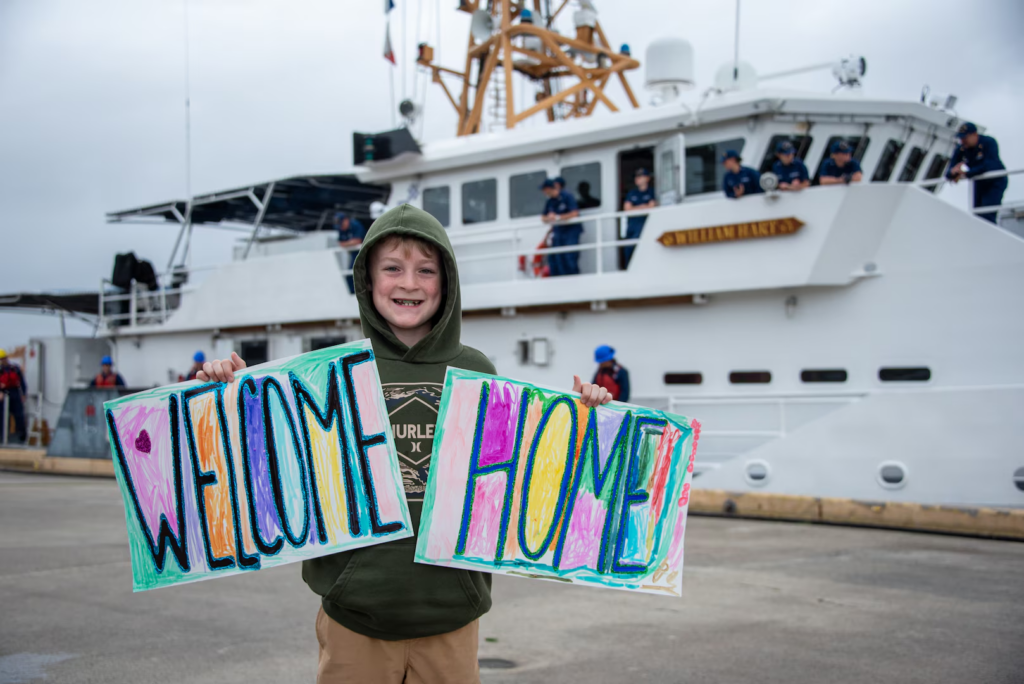


USCGC William Hart Returns Home After 48-Day Operation Blue Pacific Patrol in Oceania 

Henry Helsabeck, son of U.S. Coast Guard Lt. Cmdr. Jason Helsabeck, awaits the return of fast response cutter USCGC William Hart (WPC 1134) on Coast Guard Base Honolulu March 15, 2026. Helsabeck, the cutter’s commanding officer, led his crew on a 48-day patrol throughout Oceania, visiting Samoa, Cook Islands, American Samoa, Tonga and Kiribati. (U.S. Coast Guard photo by Chief Petty Officer Corinne Zilnicki) 

Coast Guard Oceania District External Affairs, March 15, 2026 

Editor’s Note: Click here to download high-resolution video. 

HONOLULU – The crew of Coast Guard Cutter William Hart (WPC 1134) returned to Honolulu Sunday following a 48-day patrol in support of Coast Guard Oceania District’s Operation Blue Pacific in Oceania. 

The William Hart crew departed Coast Guard Base Honolulu in January and traveled more than 7,000 nautical miles, making port calls in Apia, Samoa, Rarotonga, Cook Islands, Pago Pago, American Samoa, Nuku’alofa, Tonga, and Kiritimati, Kiribati. 

Patrolling in support of Operation Blue Pacific, the cutter’s crew worked alongside Pacific Island partners to bolster maritime security and sovereignty, counter illicit maritime activities and transnational criminal organizations, and protect vital marine resources. 

The William Hart crew exercised partnerships with Samoa and Cook Islands through bilateral maritime law enforcement agreements, professional exchanges and community engagements. In total, the William Hart crew and Pacific Island enforcement officers conducted eight boardings of fishing vessels. 

The crew conducted one additional boarding of a foreign fishing vessel on the high seas supporting the Western and Central Pacific Fisheries Commission as part of a multinational effort to deter illegal fishing practices throughout Oceania.While on patrol to control, secure and defend the U.S. maritime border and its approaches in American Samoa, the crew worked alongside Coast Guard Sector Honolulu boarding team personnel and conducted a total of six boardings, including a cargo vessel, recreational boats and three passenger vessels in the vicinity of Pago Pago. 

In Tonga, the crew hosted U.S. Deputy Secretary of State Christopher Landau and Prime Minister Fatafehi Fakafānua to facilitate the signing of the new annex to the 2009 bilateral maritime law enforcement agreement between the U.S. and Kingdom of Tonga. This addition significantly strengthened the security partnership between both nations by enhancing the ability to combat illegal fishing, illicit maritime activities, and transnational crime in Tonga’s exclusive economic zone through expanded enforcement authority and technical cooperation. 

“This historic patrol advanced critical partnerships with Pacific Island nations, protecting valuable marine resources and strengthening U.S. Coast Guard presence throughout Oceania,” said Lt. Cmdr. Jason Helsabeck, commanding officer of the William Hart. “Our crew’s dedication to these partnerships ensures a more secure and prosperous future for the region. I am deeply proud of the crew’s unsurpassed professionalism, relentless commitment to securing our maritime borders, and the positive impact we’ve made alongside our trusted partners. We look forward to future deployments in Oceania.” 

Operation Blue Pacific is an overarching multi-mission Coast Guard endeavor to promote security, safety, sovereignty and economic prosperity in Oceania. Coast Guard cutters, aircrew and personnel deploy throughout Oceania to maintain unrestricted, lawful access to the maritime domain for all nations, improve regional stability, and solidify the Coast Guard as a reliable partner for maritime safety, security and stewardship in the Pacific. 

The William Hart is the third 154-foot Sentinel-class fast response cutter homeported in Honolulu. The cutter’s primary missions are maritime law enforcement, search and rescue, and national defense. 


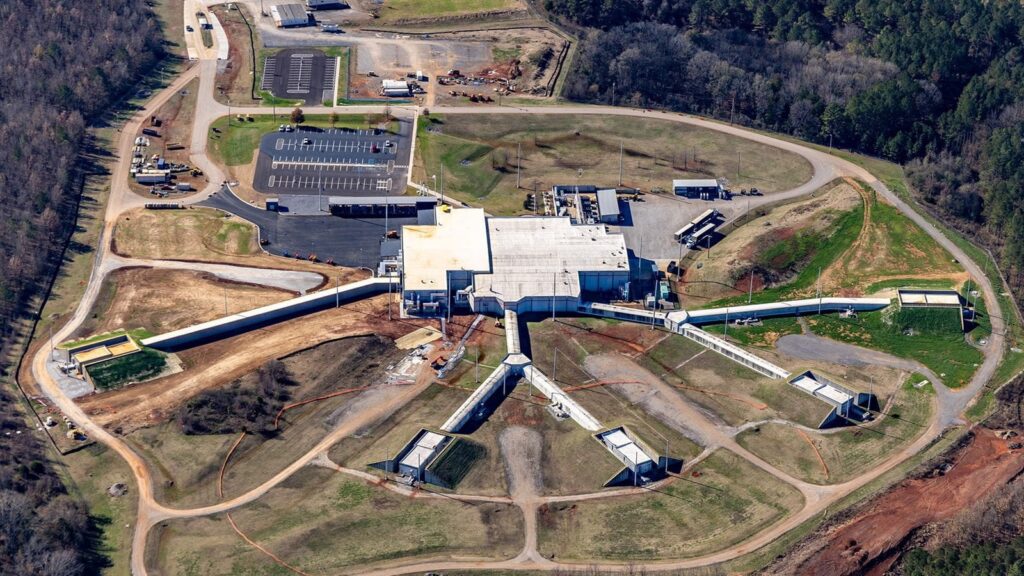
RTX’s Raytheon Completes $115 Million Expansion of Alabama Missile Integration Facility

Expansion to increase facility’s integration and delivery capacity by more than 50% 

HUNTSVILLE, Ala., (March 13, 2026) — Raytheon, an RTX (NYSE: RTX) business, has completed a 26,000 square-foot expansion of its Redstone Raytheon Missile Integration Facility, backed by a $115 million capital investment that will increase the facility’s integration and delivery capacity by over 50% and grow the company’s footprint in the state to more than 2,200 employees. 

“This expansion marks an important step in our ability to deliver more missiles to our customers faster, and our investment here demonstrates our commitment to making that a reality,” said Barbara Borgonovi, president of Naval Power at Raytheon. “With this significant expansion complete, we are well-positioned to help our customers stay ahead of emerging threats and strengthen the nation’s defense posture.” 

Since its opening in 2012, the Redstone Raytheon facility has become a cornerstone of the company’s missile production and integration capabilities, including nine variants of the Standard Missile family and other advanced weapon systems. The latest expansion highlights the company’s ongoing investment in capacity growth and production acceleration to meet both urgent and long-term demands for critical munitions. 

“Raytheon’s continued investment in North Alabama strengthens both our local economy and our nation’s defense. This expansion will ensure our men and women in uniform have the advanced missile capabilities they need, when they need them, while supporting high-quality jobs in our community,” said U.S. Representative Dale Strong (AL-5). “This milestone reflects the critical role the Huntsville region plays in America’s defense industrial base and demonstrates what can be achieved when we work together to keep our nation safe and prepared for the challenges ahead.” 

Last month, Raytheon announced five landmark framework agreements with the U.S. Department of War to significantly increase production capacity and speed deliveries of critical munitions. Production under these agreements will be completed at Raytheon facilities in Tucson, Ariz., Huntsville, Ala., and Andover, Mass. 


Blue Angels Mark 80 Years, Certified for 2026 Airshow Season

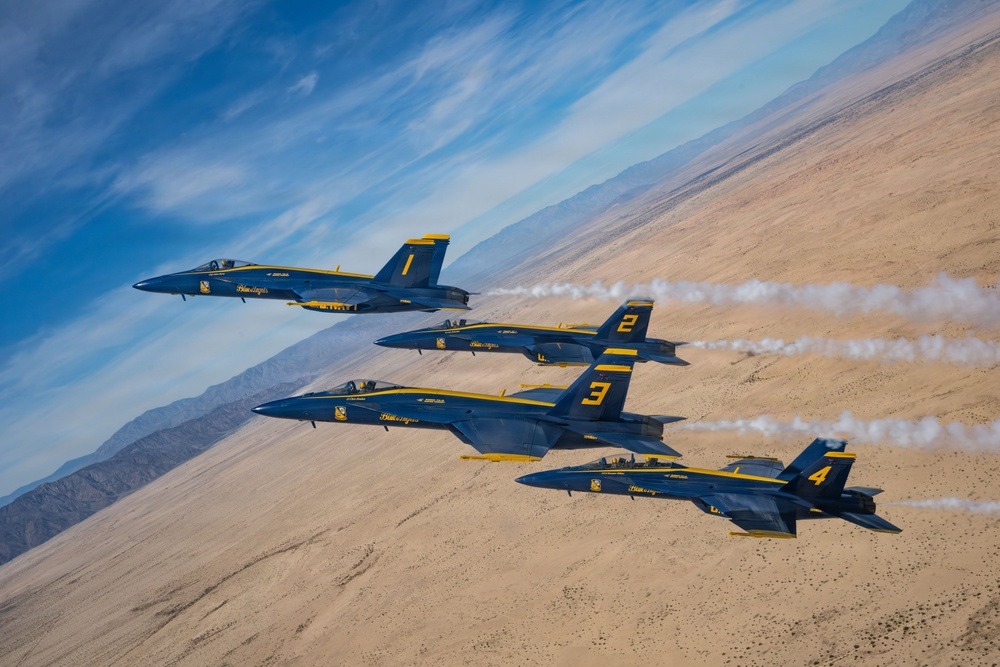
The Blue Angels fly in formation during winter training in El Centro, California, Feb. 24, 2026. After rigorous training and evaluations, Rear Adm. Max McCoy, Chief of Naval Air Training, officially certified the team “airshow ready.” (U.S. Navy photo by MC2 Maxwell Orlosky)

By Morgan Galvinof Chief of Naval Air Training. March 10,2026 

EL CENTRO, Calif. — The U.S. Navy Blue Angels successfully completed their annual certification for the 2026 airshow season on Feb. 23, marking the squadron’s 80th anniversary. The “airshow ready” designation was granted after the team completed its demanding winter training, ensuring they meet the highest standards of safety and performance before embarking for their 2026 season. 

Since their founding in 1946, the Blue Angels have served as ambassadors of naval aviation. Rear Admiral Max McCoy, Chief of Naval Air Training (CNATRA), gave final approval for the team’s 80th season after observing their last practice demonstration in El Centro. 

“Earning this certification is always an honor, but it carries special weight this year as we prepare to celebrate the squadron’s 80th anniversary,” said Capt. Adam Bryan, Blue Angels’ commanding officer. “This team has worked incredibly hard to be ready to honor that legacy and represent the men and women of the U.S. Navy and Marine Corps. We are eager to get the season started.” 

This year’s certification was overseen by CNATRA with a unique understanding of the squadron’s mission, as McCoy is the first former Blue Angel to oversee the Naval Flight Demonstration Squadron as CNATRA. McCoy was assigned to Naval Flight Demonstration Squadron in 2001 and 2005. 

“For 80 years, the Blue Angels have represented the absolute pinnacle of naval aviation and this anniversary is a testament to a legacy of excellence that few organizations ever achieve,” said McCoy. “Certification for this historic season was exceptionally rigorous because the standard must be met. This squadron demonstrated unwavering precision and commitment, proving they are not only ready to fly, but ready to continue the Blue Angel legacy with the honor it deserves.” 

With their certification complete, the Blue Angels will now begin their season tour across the United States. The Blue Angels team consists of 158 active-duty Sailors and Marines, including pilots, aircrew, maintainers, and many other support personnel. 

The Blue Angels will host the last show of the season, the Blue Angels Homecoming Air Show at Naval Air Station (NAS) Pensacola on November 6. 

Pensacola, Florida is where the Blue Angels call home during the show season and conduct practices in preparation for events across the country. 

Headquartered at Naval Air Station Corpus Christi, Texas, the Chief of Naval Air Training (CNATRA) oversees five training air wings and 17 training squadrons across Florida, Mississippi, and Texas. These squadrons conduct primary, intermediate, and advanced flight training for student naval aviators, naval flight officers, and air vehicle pilots. CNATRA remains steadfast in its mission to train, mentor, and deliver the highest quality naval aviators prepared to win in competition, crisis, and conflict.


Hegseth Says Iran’s Defense Industrial Base Nearing Complete Destruction

March 13, 2026 |  By Matthew Olay, DoW News 

Secretary of War Pete Hegseth told reporters today that, in addition to the extensive damage the U.S. and Israeli militaries have been inflicting upon the Iranian terrorist regime’s active combat forces, the country’s defense industrial base is now nearing complete destruction as well.   

“Soon and very soon, all of Iran’s defense companies will be destroyed,” Hegseth said while providing an update on Operation Epic Fury from the Pentagon’s press briefing room.    

“For example, as of two days ago, Iran’s entire ballistic missile production capacity — every company that builds every component of those missiles — [has] been functionally defeated [and] destroyed,” Hegseth said, also noting that assessment includes buildings, complexes and factory lines all across the country.  

“We’re shooting down and destroying what missiles [the enemy] still have in stock; but more importantly, we’re ensuring that they have no ability to make more. Their production lines, their military plants [and] their defense innovation centers [are] defeated,” Hegseth said.  

The secretary added that today marks the highest number of strikes the U.S. has conducted against targets in Iran and its capital city, Tehran, since U.S. Central Command and Israeli forces launched Operation Epic Fury on Feb. 28.  

“As we continue to ramp up every tool [of warfare], we’re employing [them], blinding, confusing and deceiving our enemy; because we know who the good guys are here, and the American people do, too,” Hegseth said. 

In the 10 days since the conflict started, Hegseth said the U.S. and Israeli air forces have struck over 15,000 enemy targets.  

“Looking up, the [Islamic Revolutionary Guard Corps] and Iranian regime [see] only two things on the side of aircraft: the Stars and Stripes and the Star of David — the evil regime’s worst nightmare,” Hegseth said. 

He also noted that both Iran’s missile launch volume is down 90% and one-way drone attacks are down 95% since Day 1 of the operation.   

Chairman of the Joint Chiefs of Staff Air Force Gen. Dan Caine, who joined Hegseth at today’s briefing, concurred with Hegseth that this is the heaviest day of anti-regime kinetic strikes in the region.  

Of note, Caine discussed the damage U.S. and Israeli forces have inflicted on Iran’s navy.  

“In less than two weeks, we’ve rendered the Iranian navy combat ineffective; and [we] continue to attack all naval vessels, including all of their Soleimani-class warships, which were armed with anti-ship missiles and antiaircraft weapons,” Caine said.  

He also noted that, while significant damage has been done to Iran’s navy, the regime still has the capability to harm friendly forces and commercial shipping — particularly in the Strait of Hormuz.  

“The only thing preventing commercial traffic and flow through the strait right now … is Iran. They are the belligerents here, holding the strait closed,” Caine said.  

To remedy that situation, Caine said U.S. Central Command has made it a priority to target Iran’s mine-laying capabilities, as well as targeting nearby naval bases and depots.  

Both Hegseth and Caine took time during the briefing to remember and pay tribute to the service members who were confirmed killed yesterday when a U.S. Air Force KC-135 refueling tanker crashed in western Iraq.  

Four of the six crew members have been confirmed deceased, with rescue efforts continuing as of this morning.  

“I ask that we remember our fallen and those participating in the recovery operations … Those are very, very, very tough days when that [casualty-notification] knock comes on the door — for people on both sides of the door,” Caine said.  

“American heroes, all of them,” Hegseth said of the KC-135 crew, adding that he and other members of the current administration will be on hand to greet the fallen service members at Dover Air Force Base, Delaware, once they are returned stateside.  

“And their sacrifice will only recommit us to resolve this mission,” Hegseth said.


CGC Forward interdicts suspected drug smugglers in Eastern Pacific Ocean 

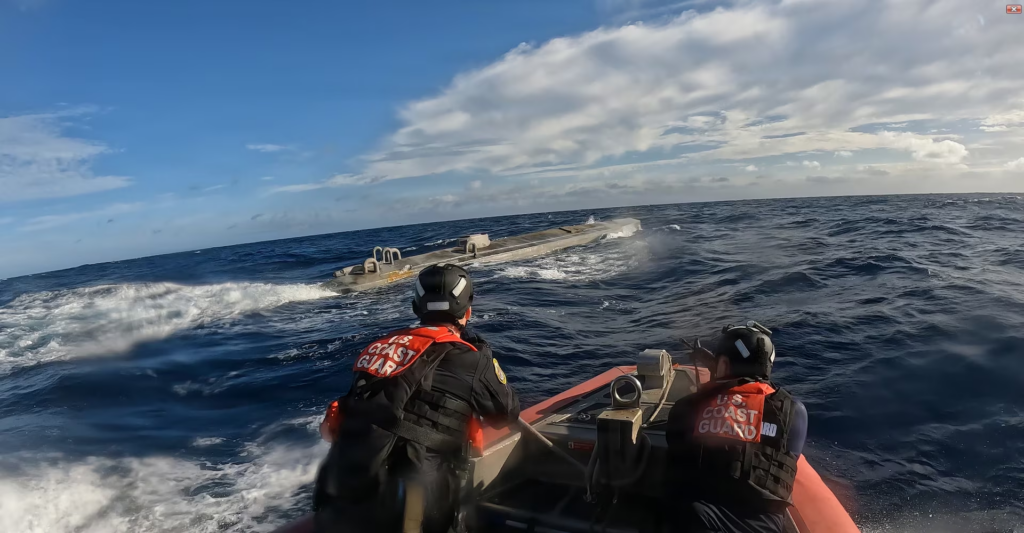
The U.S. Coast Guard Cutter Forward’s Over-the-Horizon cutter boat approaches a Self-Propelled Semi-Submersible in the Eastern Pacific Ocean, February 24, 2026. (U.S. Coast Guard courtesy photo) 

From U.S. Coast Guard Southwest District, March 11, 2026 

PORTSMOUTH, Va. – Coast Guard Cutter Forward (WMEC 911) delivered a decisive blow to maritime criminal networks by intercepting a self-propelled semi-submersible (SPSS) vessel during a routine patrol on February 24 in the Eastern Pacific Ocean. 

A maritime patrol aircraft detected the vessel and reported the location to Forward watchstanders. Forward’s crew rapidly deployed its over-the-horizon cutter pursuit boat and an embarked MH-65 aircraft from the Helicopter Interdiction Tactical Squadron (HITRON) to intercept the suspicious vessel. 

Despite repeated verbal commands issued by the boarding team, the SPSS failed to comply or stop their vessel. The boarding team successfully gained access to the vessel, secured positive control, and apprehended four suspected narco-terrorists. All personnel were safely evacuated to the cutter as the SPSS experienced flooding and subsequently sank. 

SPSS vessels are commonly used by maritime criminal networks to transport large quantities of drugs in the Eastern Pacific. The Coast Guard routinely interdicts these vessels as part of ongoing counterdrug operations in the region. 

“SPSS vessels are purpose-built to move large quantities of illicit, dangerous cargo,” said Cmdr. Andrew Grantham, commanding officer of the Forward. “This interdiction of an SPSS of over 70 feet, prevented a potential 17,600 lbs of cocaine—more than 6 million lethal doses—from reaching U.S. shores. Stopping this vessel demonstrates the exceptional skill and dedication of the Forward crew, the HITRON, Joint Interagency Task Force South, and Coast Guard District Southwest at imposing significant costs on transnational crime organizations.” 

The Coast Guard is committed to deterring criminal activity and enhancing maritime security through disrupting illicit smuggling activity at sea before it can reach U.S. shores. 

Coast Guard Cutter Forward is a 270-foot Famous-class medium-endurance cutter that conducts counterdrug, migrant interdictions and search and rescue missions throughout the Western Hemisphere. Link to provide more information on the Forward: History 


U.S. Coast Guard Cutter Polar Star completes Operation Deep Freeze 2026 mission, departs Antarctica 

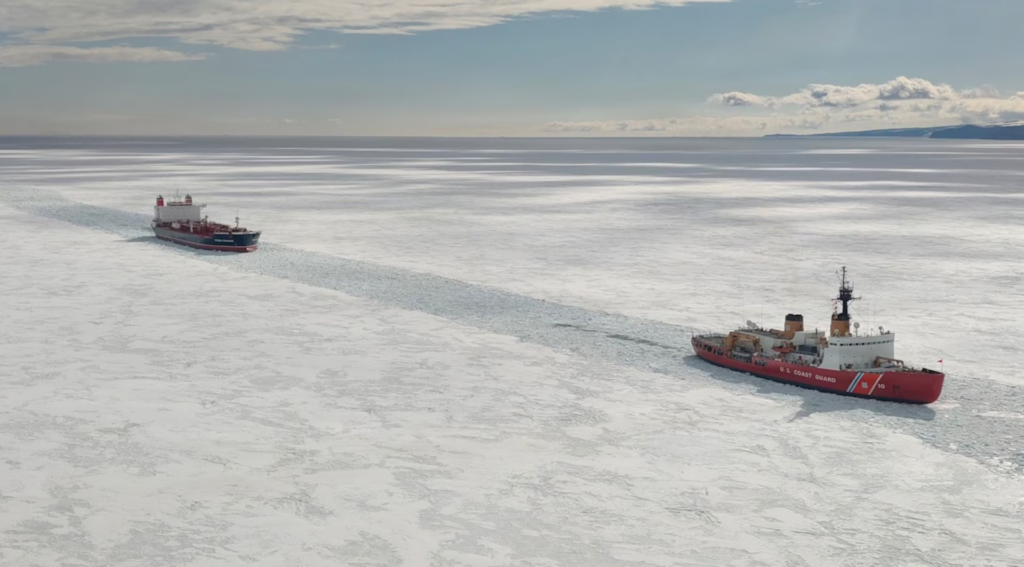
USCGC Polar Star escorts the motor vessel Stena Polaris, the largest fuel tanker ever to reach McMurdo Station, through the ice-covered Ross Sea during Operation Deep Freeze 2026, Jan. 21, 2026. Pacific Air Forces operates on a 24-hour basis to provide the U.S. National Science Foundation complete joint operational and logistic support for Operation Deep Freeze. (U.S. Coast Guard photo by Ensign Madelyn Greene)

From U.S. Coast Guard Northwest District, March 11, 2026 

SOUTHERN OCEAN  — The U.S. Coast Guard Cutter Polar Star (WAGB 10) departed McMurdo Sound, Antarctica, on March 1, after operating for 55 days below the Antarctic Circle and traveling 14,000 miles in support of Operation Deep Freeze 2026. 

The cutter marked its 50th year of commissioned service on Jan. 17 while breaking free a cruise ship trapped in pack ice during a six-hour evolution. The Australian-owned cruise ship Scenic Eclipse II contacted the Polar Star for assistance after encountering denser ice than expected, roughly eight nautical miles from McMurdo Station. The Polar Star’s crew conducted two close passes to break the vessel free, then escorted it approximately four nautical miles to open water. 

A few days later, the Polar Star and its crew finished establishing a seven-mile channel through fast ice, creating a navigable route for vessels to reach McMurdo Station. Shortly after its establishment, the Polar Star escorted the 600-foot fuel tanker Stena Polaris into and out of Winter Quarter’s Bay through the brash ice-filled channel to deliver more than 6 million gallons of fuel to McMurdo Station. 

“I am so proud of how this crew, once again brought their best energy and worked together through every single challenge this year’s mission presented,” said Capt. Jeff Rasnake, commanding officer of the Polar Star. “Despite the heavy toll Operation Deep Freeze exacts on each individual, mentally and physically, our spirits remain high as we point our compass north and start our journey home.” 

In late January, the cutter spent five days moored at McMurdo Station, where crew members helped onload 300,000 gallons of fuel. 

After departing, the Polar Star removed the 4,200-ton floating ice pier from Winter Quarters Bay into McMurdo Sound during a joint operation with the National Science Foundation. This cleared the bay for the arriving vessel Plantijngracht to conduct cargo operations via a U.S. Army Modular Causeway System. Shifting ice floes necessitated the Plantijngracht requiring an escort from the Polar Star to reach the protected waters in Winter Quarters Bay. 

After cargo operations were complete and the Plantijngracht departed, the Polar Star conducted its fifth and final escort of the season to bring the tug Rachel through lingering late-season pack ice to deliver the new NSF Discovery Pier to McMurdo Station. 

“The delivery of the new NSF Discovery Pier is a landmark achievement that will significantly enhance the logistical support for the U.S. Antarctic Program for years to come,” said Cmdr. Samuel Blase, the Polar Star’s executive officer. “This multi-year effort culminated this year with the remarkable trek of the pier from Oregon to the McMurdo Sound, and teamwork between the Coast Guard, National Science Foundation, U.S. Navy Seabees, U.S. Army Corps of Engineers, the New Zealand Antarctic Program, and Tug Rachel for its installation.” 

The Polar Star departed Seattle in November for its 29th deployment to Antarctica in support of Operation Deep Freeze. 

Operation Deep Freeze provides logistical support for the U.S. Antarctic Program, which is managed by the National Science Foundation. The mission includes strategic and tactical airlift, airdrop, aeromedical evacuation, search and rescue, sealift, seaport access, bulk fuel supply, cargo handling, and other transportation requirements. These efforts enable continuous critical scientific research in one of the most remote regions on Earth. 

The Polar Star and its crew also demonstrated its continued support to the Convention on the Conservation of Antarctic Marine Living Resources (CCAMLR) efforts by safeguarding resources and U.S. national interests through monitoring activity on the high seas in the Antarctic region. 

The Polar Star is the United States’ only surface asset capable of providing year-round access to both Polar Regions. It is a 399-foot heavy polar icebreaker commissioned in 1976, weighing 13,500 tons and is 84 feet wide with a 34-foot draft. The six diesel and three gas turbine engines produce up to 75,000 horsepower. 


Navy Accepts Delivery of Ship to Shore Connector, LCAC 115 

By Team Ships Public Affairs, March 11, 2026 

NEW ORLEANS – The U.S. Navy accepted delivery of Ship to Shore Connector (SSC), Landing Craft Air Cushion (LCAC) 115 from Textron Systems on March 10. 

The delivery of LCAC 115 comes after completion of Acceptance Trials conducted by the Navy’s Board of Inspection and Survey, which tested the readiness and capability of the craft to effectively meet its requirements. 

With delivery complete, the craft will transition for fleet integration, crew training, and certification in preparation for operational employment. 

LCAC 115 increases the Navy’s capacity to move personnel, vehicles, and equipment across contested littoral environments, directly supporting distributed maritime operations and global crisis response. 

“LCAC 115 represents the continuation of Amphibious capability being delivered to the Fleet,” said Capt. Chris Causee, program manager, Amphibious Assault and Connectors Programs, Program Executive Office (PEO) Ships. “Our focus is accelerating the transition from delivery to readiness for operational employment. Each additional connector strengthens the Navy-Marine Corps team’s ability to maneuver, sustain, and respond decisively in complex environments.” 

The SSC program restores critical over the beach maneuver capability essential to amphibious operations. Textron Systems is in serial production for LCACs 116-129. 

SSC retains the dimensions and well deck compatibility of the legacy LCAC while delivering capabilities with designs for improved reliability and maintainability. Fully compatible with well deck equipped amphibious ships, the craft carries a 60-to-75-ton payload and transports weapon systems, vehicles, cargo, and assault personnel across open ocean and over the beach. 

As a Department of War acquisition program, PEO Ships is responsible for executing the development and procurement of destroyers, amphibious ships and craft, and auxiliary ships, including special mission ships, sealift ships, and support ships. 


Statement of USS Gerald R. Ford on Shipboard Fire 

By Commander U.S. Naval Forces Central Command Public Affairs | March 12, 2026 

MANAMA, Bahrain — On March 12, USS Gerald R. Ford (CVN 78) experienced a fire that originated in the ship’s main laundry spaces. The cause of the fire was not combat-related and is contained. 
 
There is no damage to the ship’s propulsion plant, and the aircraft carrier remains fully operational. 
 
Two Sailors are currently receiving medical treatment for non-life-threatening injuries and are in stable condition. Additional information will be provided when available. 
 
The Gerald R. Ford Carrier Strike Group is currently operating in the Red Sea in support of Operation Epic Fury. 


USS Mustin to forward-deploy to Japan 

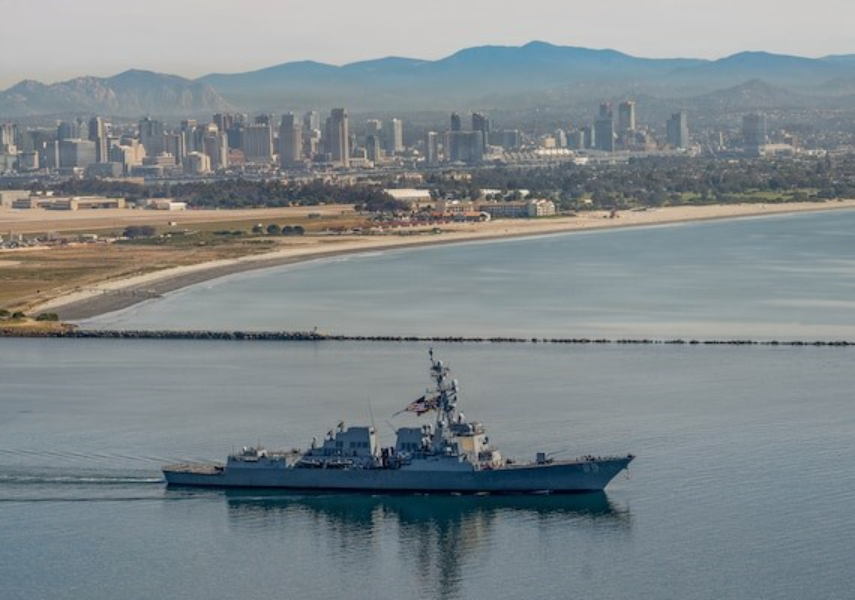
The Arleigh Burke-class guided-missile destroyer USS Mustin (DDG 89) transits San Diego Bay past Point Loma, Feb. 23, 2026. The ship departed Naval Base San Diego and will forward deploy to Yokosuka, Japan, as part of a scheduled rotation of forces in the Pacific. (U.S. Navy photo by Mark D. Faram)

From Courtesy Story, March 11, 2026 

Arleigh Burke-class guided-missile destroyer USS Mustin (DDG 89) will forward deploy to Yokosuka, Japan, as part of a scheduled rotation of forces in the Pacific. This move will be a permanent change of station for the crew and family members. 

Mustin will replace Ticonderoga-class guided-missile cruiser USS Robert Smalls (CG 62), which will depart Yokosuka and shift to San Diego. 

The forward presence of Mustin supports the United States’ commitment to the defense of Japan, enhances regional deterrence and ensures we maintain combat credible force ready to operate in a contested environment. Mustin will directly support the Defense Strategic Guidance to posture the most capable units forward in the Indo-Pacific Region. 

The United States values Japan’s efforts to strengthen its defense capabilities and its hospitality in hosting U.S. forces forward deployed there. The U.S.-Japan alliance is important to upholding deterrence and preserving peace in the Indo-Pacific region. These forward deployed forces, along with their counterparts in the Japan Self-Defense Forces, make up the core capabilities needed to improve coordination and upgrade the alliance for effective denial defense and joint warfighting. 

The Department’s peace through strength approach is rooted in credible military power, forward-postured forces, and sustainable alliances deter aggression and preserve peace. By positioning the most capable ships forward, this posture rapidly brings our most capable ships with the greatest operational capability to bear in the event of a crisis. 

Maintaining a forward deployed naval force capability with the most advanced ships supports the Department’s priority of preserving combat credible forces forward to deter aggression and ensure peace through strength in the Indo-Pacific region.