HII Begins Fabrication of Amphibious Transport Dock Philadelphia 
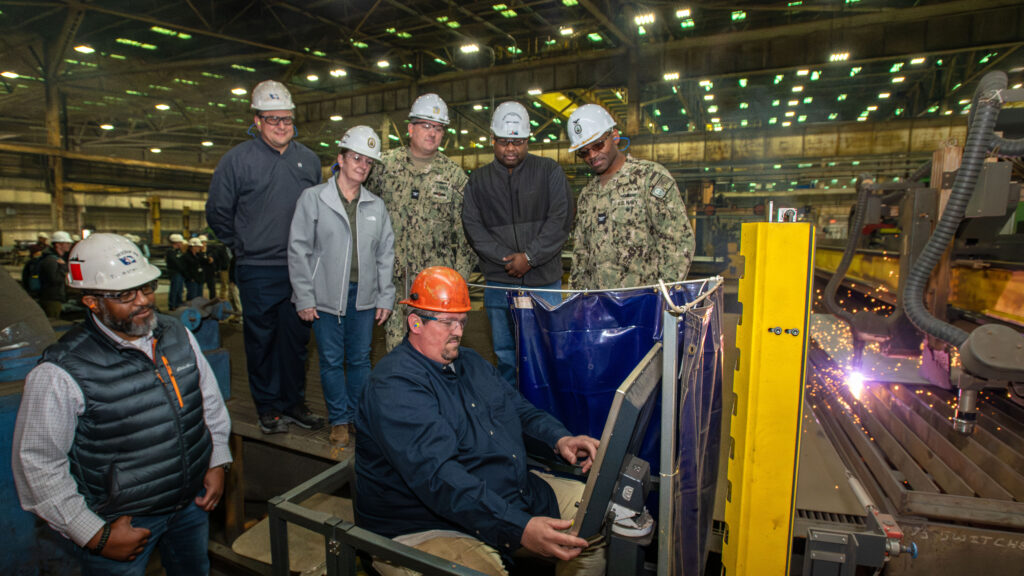
PASCAGOULA, Miss., Jan. 29, 2025 (GLOBE NEWSWIRE) — HII (NYSE: HII) Ingalls Shipbuilding division began fabrication of the U.S. Navy’s newest San Antonio-class amphibious transport dock Philadelphia (LPD 32) Monday. The start of fabrication signifies that the first 100 tons of steel have been cut for the ship. 

“From the earliest planning stages to the first cut of steel, every step of construction so far has been focused on building a capable ship for our Navy and Marine Corps partners,” said Stephen Janowski, Ingalls Shipbuilding amphibious ship program manager. “Our team is committed to continuous improvement and seeing Philadelphia built with the quality craftsmanship needed to support our nation well into the future.” 

Ingalls is the sole provider of LPD 17 San Antonio-class ships and has delivered LPDs 17 through 29 to date. Currently, Ingalls has three Flight II LPDs under construction including Harrisburg (LPD 30), Pittsburgh (LPD 31) and Philadelphia (LPD 32). Additionally, in September 2024, the Navy awarded Ingalls a contract for the construction of three San Antonio Class Amphibious Transport Dock (LPD) ships (LPD 33, LPD 34, and LPD 35). 

LPD Flight II is the next generation amphibious ship to replace the Whidbey Island (LSD 41) and Harpers Ferry (LSD 49) classes of dock landing ships. Amphibious transport docks are a major part of the Navy’s 21st century expeditionary force, deployed with a U.S. Marine Corps Air-Ground Task Force for amphibious and expeditionary crisis response operations that range from deterrence and joint-force enablement to humanitarian assistance and disaster relief. 

Photos accompanying this release are available at: http://hii.com/news/hii-begins-fabrication-of-amphibious-transport-dock-philadelphia-lpd-32/


First of 3 New Coast Guard Cutters Arrives to Homeport in Kodiak, Alaska 

From U.S. Coast Guard 17th District, Jan. 29, 2025 

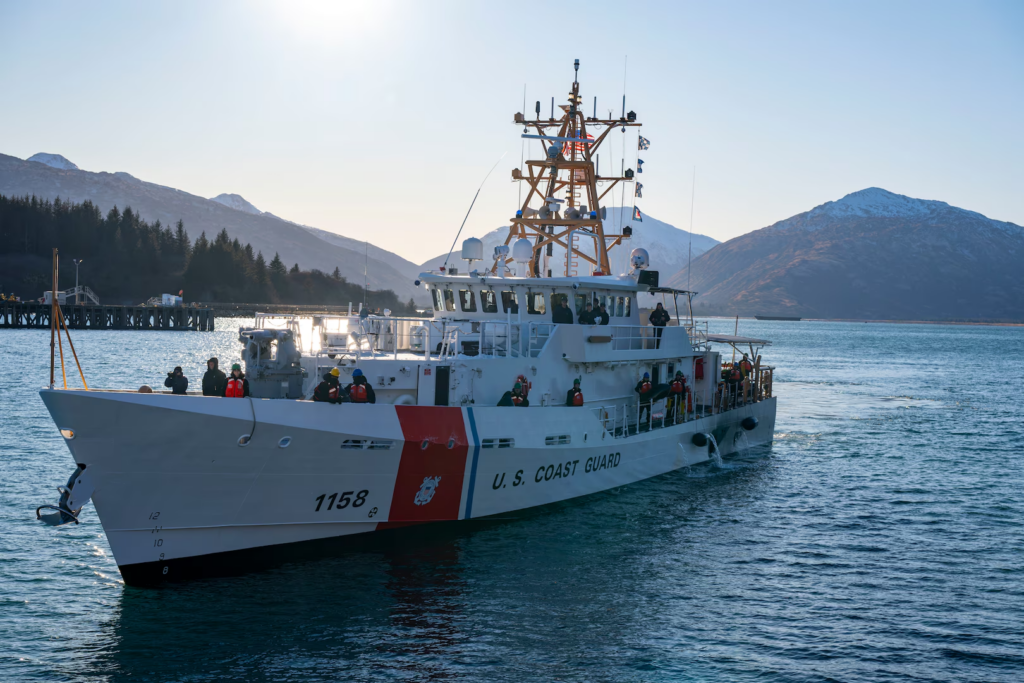
KODIAK, Alaska — The crew of Coast Guard Cutter John Witherspoon (WPC 1158) arrived at the cutter’s new homeport in Kodiak, Tuesday.  The cutter is scheduled to be commissioned during a ceremony in April.   

The Witherspoon is the first of three Fast Response Cutters (FRCs) scheduled to be homeported at Coast Guard Base Kodiak and is now the fourth FRC currently based in Alaska. While these ships will be homeported in Kodiak, they will operate throughout the 17th Coast Guard District to include the U.S. Arctic, Gulf of Alaska, and Bering Sea.    

The crew of the Witherspoon will carry out integral Coast Guard missions such as maritime law enforcement and security, living marine resources, and search and rescue. They will provide security for Alaskan coastal communities as they continue to utilize the ocean for their livelihoods while preserving Alaska’s living marine resources in conjunction with our partner agencies.    

“The crew is humbled to be associated to a namesake honoring Capt. John G. Witherspoon, a trailblazer who found enjoyment and purpose in leading and mentoring others,” said Lt. Cmdr. Adam Young, commanding officer of the Witherspoon. “It is fitting that the cutter’s first sail was no tall order, stretching more than 7,000 nautical miles from Key West to Kodiak. Throughout the last five months, the crew displayed remarkable teamwork and resilience, a true testament to the core values Capt. Witherspoon epitomized throughout his illustrious career. I couldn’t be prouder of the team we have onboard, and I look forward to experiencing the beauty of Alaska once again.”   

The new FRCs arriving in Alaska are designed to replace the service’s fleet of 110-foot cutters that are projected to be decommissioned this year. The Coast Guard is currently scheduled to have six FRCs operating throughout Alaska by the end of 2025 to reinforce our maritime boundaries and shorten on-scene response times to support search and rescue efforts and better serve the people of Alaska.   

FRCs feature advanced command, control, communications, computers, intelligence, surveillance and reconnaissance equipment as well as over-the-horizon response boat deployment capability and improved habitability for the crew. The ships can reach speeds of 28 knots and are equipped to coordinate operations with partner agencies and long-range Coast Guard assets such as the Coast Guard’s National Security Cutters.  

FRCs are 154-foot multi-mission ships designed to conduct drug and migrant interdictions; ports, waterways and coastal security operations; fisheries and environmental protection patrols; national defense missions; and search and rescue. Each cutter is designed for a crew of 24, has a range of 2,500 miles and is equipped for patrols up to five days. The FRCs are part of the Coast Guard’s overall fleet modernization initiative. 


Coast Guard, Multiple Partner Agencies, Responding to Plane Crash in Potomac River 

From U.S. Coast Guard Headquarters, Jan. 30, 2025 

WASHINGTON — The Coast Guard is coordinating with local, state and federal agencies in response to the aircraft collision which occurred Wednesday evening over the Potomac River in Washington.  

Coast Guard Sector Maryland – National Capital Region command center watchstanders received a report at approximately 8:55 p.m. reporting a helicopter and a commercial passenger aircraft collided in the vicinity of Ronald Reagan Airport.  

Response boat crews from Coast Guard stations Washington, Curtis Bay, Annapolis, St. Inigoes, Oxford and Crisfield have deployed to the incident to conduct searches in coordination with local partners and enforce a safety zone. Cutters Sailfish, Bruckenthal, Kennebec and Frank Drew are enroute to assist. 

An Urgent Marine Information Broadcast was issued regarding the incident and a safety zone has been established, securing all vessel traffic from the Woodrow Willson Bridge heading north along the Potomac River. Mariners are urged to avoid the area.  

Coast Guard pollution crews have mobilized and are pre-staged to respond to any pollution caused by the incident.    

The Coast Guard is working with the Army Corps of Engineers and Navy’s Supervisor of Salvage and Diving to coordinate removing the wreckage and restoring the waterways once able to do so. 


Collins Aerospace Awarded Cooperative Engagement Capability Design Agent Contract

From RTX 

Company to further advance critical warfighting capabilities 

CEDAR RAPIDS, Iowa, Jan. 29, 2025 /PRNewswire/ — Collins Aerospace, an RTX (NYSE: RTX) business, was awarded a follow-on contract with a potential for up to $904 million over five years to continue development of the U.S. Navy’s Cooperative Engagement Capability, a system that integrates sensors across surface, land, and air platforms to enable Integrated Fire Controls. RTX has been the sole provider of the Cooperative Engagement Capability (CEC) since 1985. The new sole source contract follows an existing five-year Design Agent contract. 

The CEC is a critical network for the U.S. Navy that connects multiple platforms and associated sensors together and provides composite tracking to combat and weapons systems. Collins will add new capabilities to the system including increased interoperability, expanded weapon and sensor coordination and integration of new data sources. 

“The Cooperative Engagement Capability is a key enabler to support the Navy’s expanding Distributed Maritime Operations,” said Ryan Bunge, vice president and general manager, C4I & Autonomy Solutions, Collins Aerospace. “The capabilities we’ve been developing for years are time-tested solutions that enable integrated fire controls across the Joint Services.” 

Collins has successfully deployed and maintained CEC on more than 174 U.S. Navy, U.S. Marine Corps and international platforms. 

The contract provides significant opportunity and flexibility to affect the CEC mission through future task orders for engineering activities. 


BAE Systems to upgrade additional Mk 45 Naval Guns for U.S. Navy 

From BAE Systems, Jan. 27, 2025 

Advanced firepower will continue to play a critical role at sea as Sailors face advanced threats 

The U.S. Navy has awarded BAE Systems over $70 million to upgrade Mk 45 5-inch naval gun systems and ancillary equipment. On Sept. 30, BAE Systems received a $23.5 million modification to a $47 million contract awarded at the end of July, bringing the total value to over $70 million. Under the contract, BAE Systems will upgrade and overhaul existing systems to the Mk 45 Mod 4 configuration. 

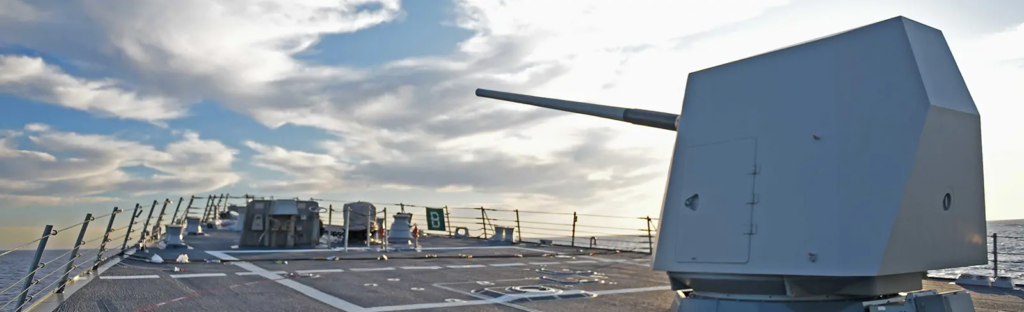
The upgrade to the Mk 45 Mod 4 configuration includes a 62-caliber barrel and a mechanically strengthened gun mount. It also features a fully digital control system that easily integrates targeting and fire control data. Together, these upgrades allow the use of modernized munitions with 50% greater firing energy and prepare for future precision-guided munitions with unprecedented ranges. 

“Events in the Red Sea this year have underscored the importance of firepower aboard U.S. Navy ships,” said Brent Butcher, vice president of Weapon Systems at BAE Systems. “Equipped with the latest configuration of the Mk45 gun system, the men and women in the Navy have the capabilities to protect themselves at sea. We continue our commitment to providing the latest naval gun technology, including advanced munitions, to U.S. Sailors and their allies.” 

Upgrades and overhauls to the Mk 45 are a cost-effective solution to ensure that U.S. Navy Sailors have the modern long-range strike and air defense capability that they require, ensuring peak performance from a deep magazine of advanced 5-inch projectiles that are easily replenished at-sea. By upgrading these platforms, Sailors will receive the latest innovative technology that will support advanced munitions and future mission capabilities at a lower cost than a new gun system. 

Work on the contract will take place at the BAE Systems production facility in Louisville, Kentucky, and will be completed by the end of 2028. 


Coast Guard Continues Alien Expulsion Flight Operations Between California and Texas 

A U.S. Coast Guard C-130 takes-off in support of alien expulsion flight operations between California and Texas.

From U.S. Coast Guard Headquarters, Jan. 28, 2025 

SAN DIEGO – Jan. 28, 2025, the Coast Guard conducted Alien Expulsion Flight Operations between California and Texas, in coordination with U.S. Customs and Border Protection.  

In accordance with the President’s Executive Orders, these flights continue the Coast Guard’s actions to enforce the immigration laws of our country. Through these ongoing operations, and in close cooperation with our Department of Homeland Security and Department of Defense teammates, the Coast Guard is detecting, deterring, and interdicting aliens, drug smugglers, and individuals intent on terrorism or other hostile activity before they reach our border.  

Led by the Eleventh Coast Guard District in California, the Coast Guard is coordinating the actions of multiple units in support of this operation. The Coast Guard is surging assets and personnel from around the nation – including Air Stations Elizabeth City, Kodiak, Sacramento, San Diego, and Hawaii – to support this Department of Homeland Security-led operation.  

The Coast Guard’s current role is to assist with the national transport of aliens to designated locations in Texas and California, where the Department of Defense will transport the aliens internationally. 


Maxim Watermakers Completes Testing of First U.S. Navy Closed Loop Cooling System 

From Fairbanks Morse Defense, Jan. 28, 2025 

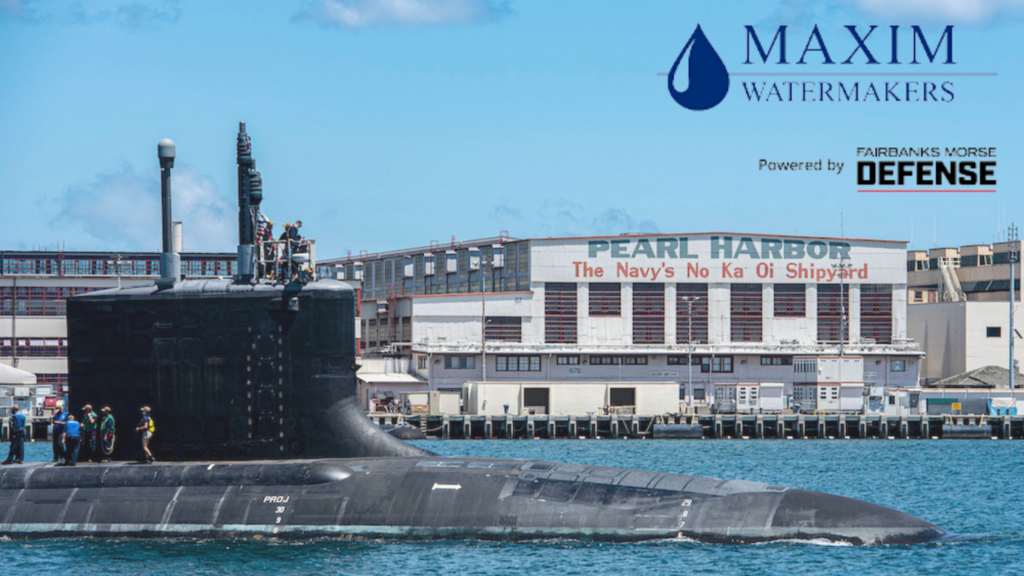
Maxim Watermakers, a business unit of Fairbanks Morse Defense, has successfully completed qualification testing for a first-of-its-kind submarine maintenance Closed Loop Cooling System (CLCS) for Pearl Harbor Naval Shipyard and Intermediate Maintenance Facility (PHNS and IMF). This qualification is the first CLCS implementation for the U.S. Navy and Maxim’s initial application of this groundbreaking technology at naval facilities. 

The testing, funded by the Maritime Sustainment Technology and Innovation Consortium (MSTIC), highlights Maxim’s engineering expertise and commitment to advancing U.S. Navy operations. 

The innovative CLCS is designed to support submarines during dry dock maintenance by enhancing operational efficiency, reducing corrosion, optimizing maintenance schedules, and ensuring long-term system reliability. These advantages are particularly critical for naval vessels operating in environmentally sensitive regions or areas with stringent water resource management regulations. 

The system features a ship service skid to circulate cooling water through the submarine and a chilled water skid to circulate water through high-capacity air-cooled chillers. 

Maxim’s full-scale testing flawlessly executed 14 separate evaluations, proving the system meets U.S. Navy requirements. The rigorous, four-day testing process verified normal operations, emergency responses, test modes, and essential filling and draining functionalities. 

“This milestone reflects the engineering excellence of Maxim Watermakers and Fairbanks Morse Defense’s dedication to innovation in naval systems,” said Monica Rogers of Maxim Watermakers.“By leveraging MSTIC’s support alongside our technical capabilities, we deliver state-of-the-art solutions that address evolving client needs and enhance critical naval operations worldwide.” 

Fairbanks Morse Defense and Maxim Watermakers continue to lead the development of advanced water treatment technologies. Through ongoing innovation, the companies aim to deliver reliable, high-performance water systems that address critical challenges and support their customers’ operational needs. 


U.S. Coast Guard Awards Verizon Business $66M Enterprise Infrastructure Solutions Task Order 

From Verizon, Jan. 29, 2025 

WASHINGTON, D.C. – The U.S. Coast Guard has awarded Verizon Business an 8-year Enterprise Infrastructure Solutions (EIS) task order worth up to $66 million over the life of the contract. Under this agreement, Verizon will provide Wi-Fi, phone, data, and other services to the U.S. Coast Guard’s C5I (Command, Control, Communication, Computer, Cyber, and Intelligence) office. 

Verizon will be partnering with the Coast Guard to phase out end-of-life TDM services, implementing solutions like a cellular-based POTS replacement for essential voice communications. This includes offering Contact Center as a Service (CCaaS), delivering secure IL-4 (Impact Level 4) software-based solutions for Coast Guard call centers. 

“The U.S. Coast Guard task order is yet another example of the strong relationship Verizon enjoys with a number of federal agencies, to include the Department of Homeland Security (DHS), the Department of Defense (DoD), the Department of Veterans Affairs and more” said Michael Adams, associate vice president for federal civilian services at Verizon. “The trust placed in Verizon by the federal government is indicative of the reliability and security of our enterprise solutions.” 

While the base task order spans 12 months, it may extend up to an eight-year period of performance. Verizon will deliver EIS services, including internet protocol service (IPS), broadband internet service (BIS), internet protocol voice service (IPVS), toll-free service, managed network services, managed security services, contact center services, and related equipment. 

Verizon has earned the trust of the U.S. Armed Forces through a number of contract wins, including a 10-year, $2.67 billion multiple award contract with the U.S. Navy, a $1 billion DoD engagement to overhaul the Pentagon’s network, and a $78 million digital modernization contract with Naval District Washington. 


Airbus and U.S. Coast Guard Sign Support Agreement for MH-65 Fleet 

From Airbus Helicopters 

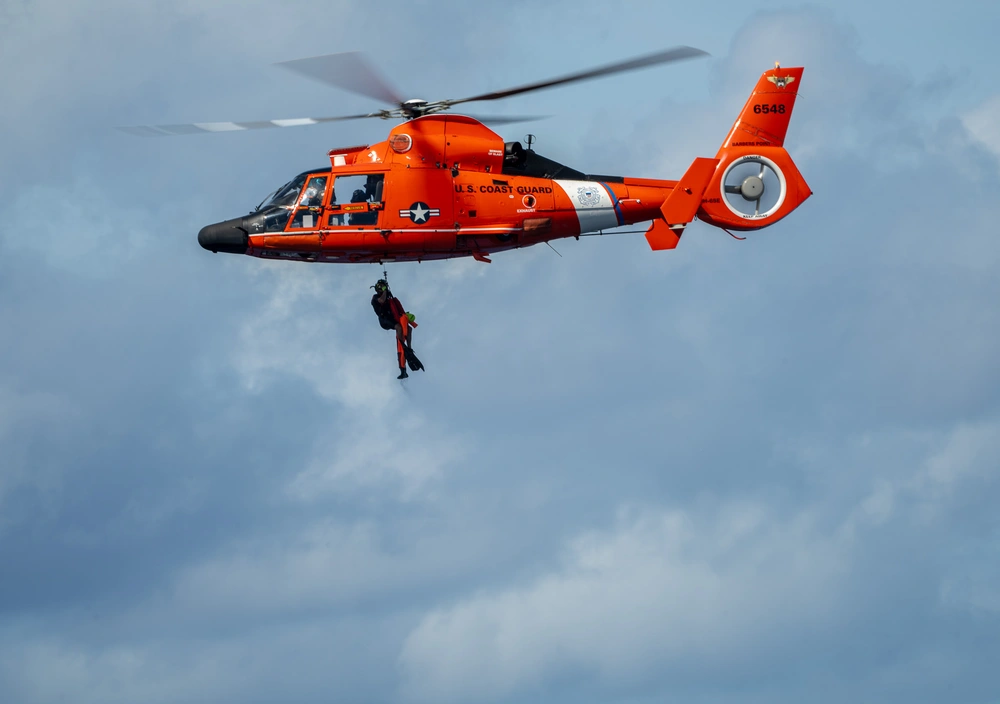
GRAND PRAIRIE, Texas, 29 January 2025 – Airbus Helicopters has signed a Memorandum of Understanding (MOU) with the United States Coast Guard (USCG) to continue providing support for the service’s fleet of MH-65 Dolphin helicopters through 2037. The agreement reaffirms Airbus Helicopters’ commitment to ensuring the mission readiness of the USCG’s fleet as it performs critical search and rescue, law enforcement, and disaster response missions. 
 
Under the terms of the MOU, Airbus Helicopters will deliver enhanced maintenance, spare parts, and technical support to optimize the performance and availability of the MH-65 fleet. The agreement also includes provisions for fleet modernization and engineering services to extend the operational life of the aircraft. 
 
“The U.S. Coast Guard’s MH-65 helicopters are at the forefront of safeguarding our nation’s coastlines and saving lives,” said Bart Reijnen, President of Airbus Helicopters in the U.S. and Head of the North America region. “We are honored to continue working with the Coast Guard to ensure their fleet remains mission-ready for years to come. This agreement demonstrates our shared commitment to safety, reliability, and operational excellence.” 
 
The MH-65 Dolphin has been the backbone of the Coast Guard’s aviation fleet for more than four decades. With this new MOU, Airbus Helicopters and the USCG aim to maintain the fleet’s high level of operational capability, enabling continued support for critical missions across the country. 
 
Airbus Helicopters has a long-standing partnership with the USCG, providing tailored solutions to meet the service’s dynamic operational demands. The extended collaboration will build on this history, leveraging Airbus’ global support network and industry-leading expertise.


Operation Southern Spear: Latest Development in Operationalizing Robotic and Autonomous Systems 

Operation Southern Spear will deploy unmanned air and surface vessels to help determine combinations of unmanned vehicles and manned forces to provide coordinated maritime domain awareness and conduct counternarcotics operations. 

From U.S. 4th Fleet, Jan. 28, 2025

MAYPORT, Fla.  –  U.S. Naval Forces Southern Command/U.S. 4th Fleet is advancing the Navy’s Hybrid Fleet Campaign through Operation Southern Spear, which will start later this month in U.S. Southern Command Area of Responsibility (USSOUTHCOM AOR) and at U.S. 4th Fleet Headquarters at Naval Station Mayport. 
  
“Southern Spear will operationalize a heterogeneous mix of Robotic and Autonomous Systems (RAS) to support the detection and monitoring of illicit trafficking while learning lessons for other theaters,” said Cmdr. Foster Edwards, 4th Fleet’s Hybrid Fleet Director. “Southern Spear will continue our (4th Fleet’s) move away from short-duration experimentation into long-duration operations that will help develop critical techniques and procedures in integrating RAS into the maritime environment.” 
  
Specifically, Operation Southern Spear will deploy long-dwell robotic surface vessels, small robotic interceptor boats, and vertical take-off and landing robotic air vessels to the USSOUTHCOM AOR. 4th Fleet will operationalize these unmanned systems through integration with U.S. Coast Guard cutters at sea and operations centers at 4th Fleet and Joint Interagency Task Force South. Southern Spear’s results will help determine combinations of unmanned vehicles and manned forces needed to provide coordinated maritime domain awareness and conduct counternarcotics operations. 
  
U.S. 4th Fleet is conducting Operation Southern Spear in support of our Navy’s Project 33 targets to operationalize RAS. Using RAS to increase presence in, and awareness of, strategically and economically important maritime regions will help decision-making, strengthen sovereignty, and facilitate regional cooperation. 
  
“Operation Southern Spear is the next step in our Hybrid Fleet Campaign,” said Rear Adm. Carlos Sardiello, Commander, U.S. Naval Forces Southern Command/U.S. Fourth Fleet. “We look forward to the results of Southern Spear. Hybrid Fleet operations increase our collaboration with partners in the region while furthering the Navy’s tactics, techniques, procedures, and processes.” 
  
U.S. Naval Forces Southern Command/U.S. 4th Fleet is the trusted maritime partner for Caribbean, Central and South America maritime forces leading to improved unity, security and stability.