RIMPAC 2026 kicks off in Hawaii
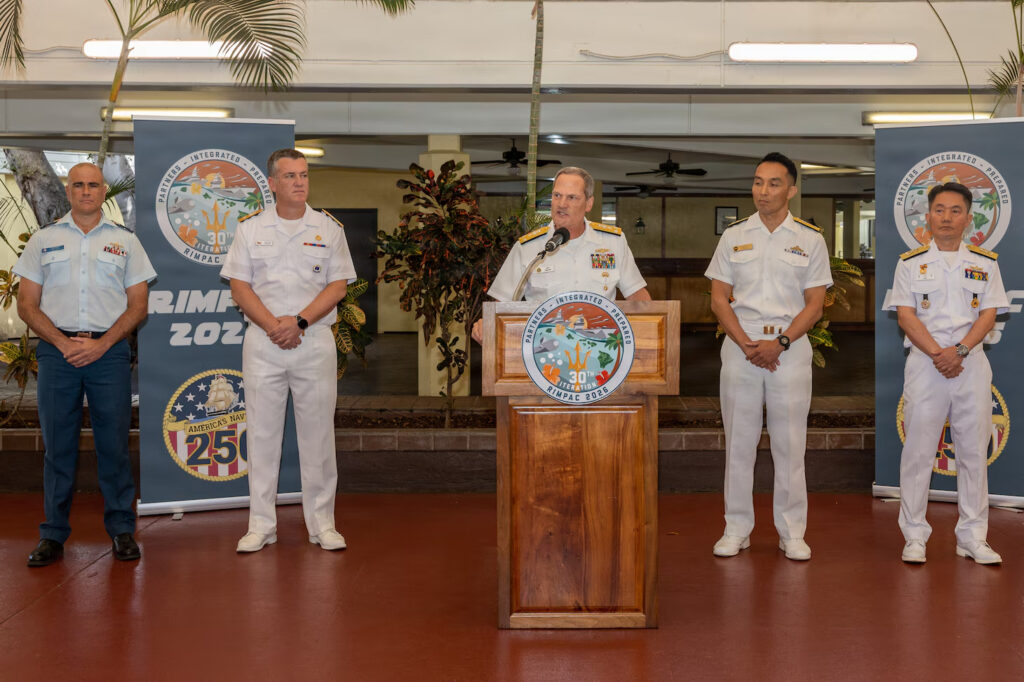
U.S. Navy Vice Adm. Jeffrey T. Jablon, center, commander, Combined Task Force, and deputy commander, U. S. Pacific Fleet, speaks during the opening press conference for Exercise Rim of the Pacific (RIMPAC) 2026 held at Joint Base Pearl Harbor-Hickam, Hawaii, June 24. Thirty nations, over 30 surface ships, five submarines, 15 national land forces, more than 206 aircraft and 30,000 personnel are participating in RIMPAC in and around the Hawaiian Islands, June 24 to July 31. The world’s largest international maritime exercise, RIMPAC provides a unique training opportunity while fostering and sustaining cooperative relationships among participants critical to ensuring the safety of sea lanes and security on the world’s oceans. RIMPAC 2026 is the 30th exercise in the series that began in 1971. (U.S. Marine Corps photo by Lance Cpl. Jose Villasenor) 

From U.S. Pacific Fleet, June 25, 2026 

HONOLULU — On June 24, the opening ceremony and press conference marked the start of Rim of the Pacific (RIMPAC) 2026, the 30th iteration of the world’s largest international maritime exercise. 

Thirty nations, over 30 surface ships, five submarines, 15 national land forces, more than 206 aircraft and 30,000 personnel will train and operate in and around the Hawaiian Islands during the exercise, which runs through July 31. RIMPAC provides a unique training opportunity while fostering and sustaining cooperative relationships among participants that are critical to ensuring the security of sea lanes and stability across the region. 

“The Rim of the Pacific exercise continues to be the world’s premier multinational maritime training event, bringing together allies and partners committed to strengthening security and stability across the region,” said Vice Adm. Jeff Jablon, RIMPAC 2026 commander, Combined Task Forces (CCTF), “By training together in complex, realistic scenarios, participating nations improve readiness, sharpen warfighting skills, and strengthen the interoperability required to operate effectively alongside one another whenever and wherever needed.” 

RIMPAC 2026 marks a significant milestone as the 30th exercise in a series that began in 1971. As the world’s largest joint and combined exercise in the maritime domain, RIMPAC combines force capabilities in a dynamic maritime environment to demonstrate enduring interoperability across the full spectrum of military operations. 

The theme of RIMPAC 2026 is “Partners: Integrated and Prepared,” underscoring the multinational commitment to collective readiness and interoperability in support of a free and open Indo-Pacific. Through realistic, high-end training, participating nations strengthen partnerships, enhance tactical proficiency, and improve their ability to operate together in support of regional security and stability. 

Hosted by Commander, U.S. Pacific Fleet, RIMPAC 2026’s multi-national leadership is comprised of Chilean Navy Commodore Andres Howard, as Deputy Commander, Combined Task Force; Rear Adm. Takuo Kobayashi, Japan Maritime Self-Defense Force, as Vice Commander, Combined Task Force; Rear Adm. In-Ho Kim, Republic of Korea Navy, as Combined Forces Maritime Component Commander; and Brig. Gen. J.S. Davis, Royal Canadian Air Force, as Combined Forces Air Component Commander. 

RIMPAC 2026 builds on the success of previous exercises by bringing together a coalition of allies and partners to demonstrate the flexibility and capability of maritime forces. The exercise includes a wide range of training events, including amphibious operations, gunnery and missile exercises, anti-submarine warfare, air defense operations, military medicine, humanitarian assistance and disaster response, counter-piracy operations, mine countermeasures, explosive ordnance disposal, and diving and salvage operations. 

Throughout the exercise, participants will train and operate together to strengthen collective readiness, reinforce international partnerships, and promote a free and open Indo-Pacific. 

For more information and updates on RIMPAC 2026, visit http://www.cpf.navy.mil/rimpac and http://www.dvidshub.net/feature/RIMPAC2026. 

Media inquiries should be directed to mailto:[email protected]


RTX’s Raytheon awarded $515 million contract for SPY-6 family of radars

Contract accelerates integration and test support for the U.S. Navy’s most advanced maritime radar 

From RTX, June 3, 2026 

ANDOVER, Mass., June 3, 2026 /PRNewswire/ — Raytheon, an RTX (NYSE: RTX) business, has been awarded a $515 million contract from the U.S. Navy for the SPY-6 family of radars. The contract is a follow-on to the Integration and Production Support contract, which was awarded in June 2025, and includes upgrading Flight IIA destroyers with the SPY-6(V)4 variant. 

Under the sole source award, Raytheon will provide continued support for the SPY-6 family of radars to the U.S. Navy, including the government of Germany with the potential for other countries to be added under the Foreign Military Sales program. 

“With over a decade of demonstrated success at sea, SPY-6 remains the U.S. Navy’s most advanced maritime radar, providing the fleet with unmatched sensing power and multi-mission readiness to counter evolving threats,” said Barbara Borgonovi, president of Naval Power at Raytheon. “Backed by an $800 million investment to modernize our radar manufacturing facilities, we’re accelerating production and are expecting to double SPY‑6 output by 2028.” 

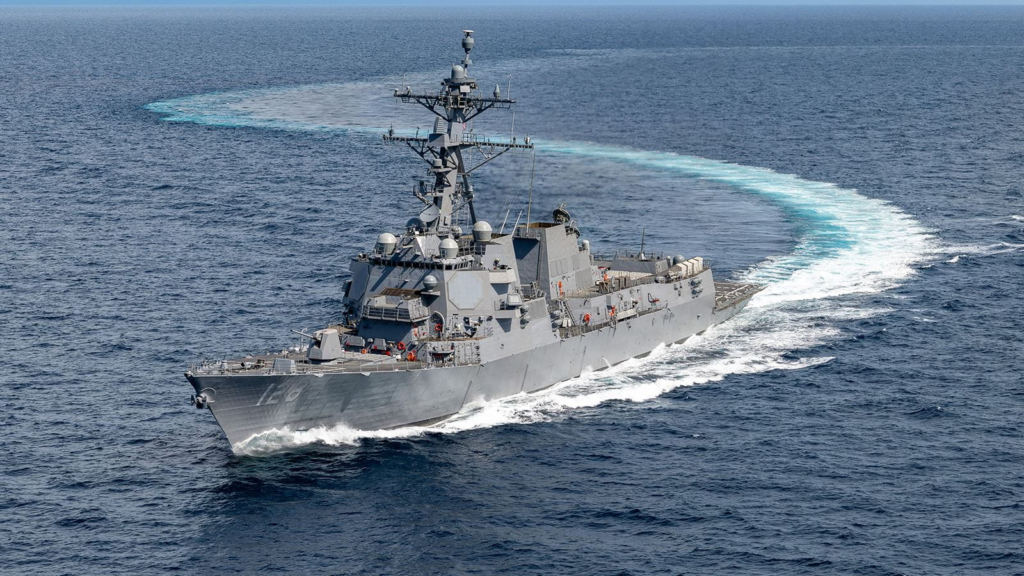
SPY-6 is now aboard two commissioned U.S. Navy ships and is installed on 11 others, all of which are undergoing various stages of testing. Over the next decade, SPY-6 is expected to be deployed on more than 50 U.S. Navy ships, enhancing defense against air, surface, ballistic and electronic warfare threats. 

SPY-6 is one of several radar programs designed and manufactured at Raytheon’s Radar Development Facility in Andover, Massachusetts, a 30,000-square foot site supporting the production of diverse types of radars for U.S. and allied forces. This vertically integrated and highly automated site is one of the most advanced in the world, complete with a gallium nitride (GaN) foundry to produce the semiconductors essential for SPY-6 and other Raytheon radars. 

Raytheon is actively hiring engineers across multiple disciplines to support this critical program. Interested candidates can learn more by visiting our website


HII and U.S. Navy Celebrate Opening of Carrier Refueling Overhaul Workcenter at Newport News Shipbuilding

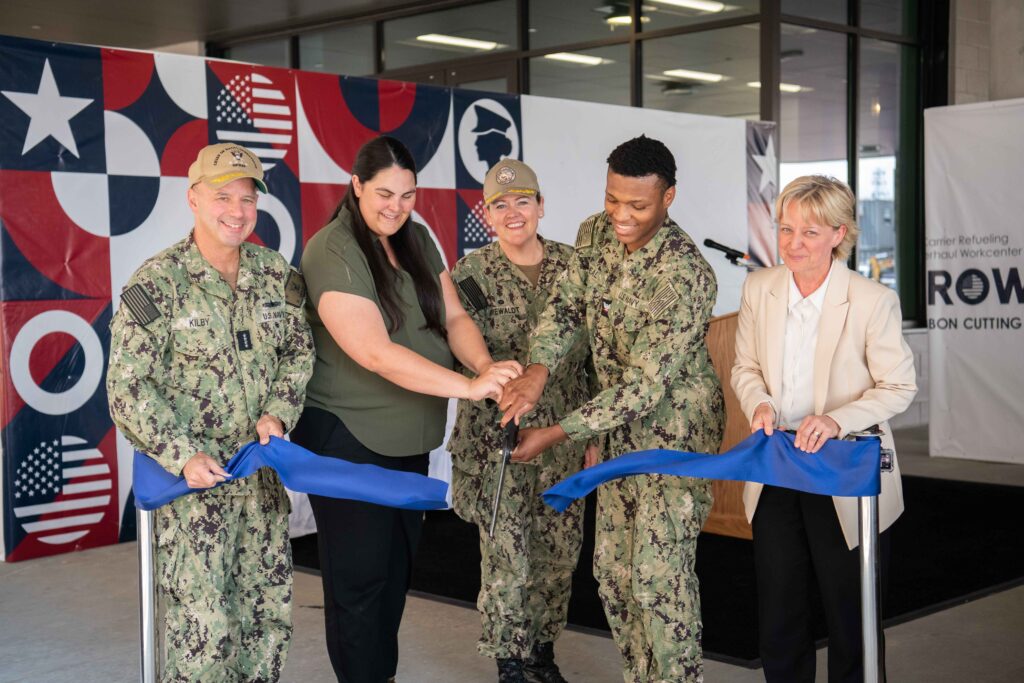
NEWPORT NEWS, Va., June 26, 2026 (GLOBE NEWSWIRE) — HII (NYSE: HII) and the U.S. Navy celebrated the opening of a new facility at Newport News Shipbuilding Thursday that will enhance the work environment for sailors and shipbuilders during refueling and complex overhaul (RCOH) of nuclear-powered aircraft carriers. 

The Carrier Refueling Overhaul Workcenter (CROW) provides approximately 80,000 square feet of dedicated space near aircraft carriers undergoing RCOH. The facility includes office spaces for sailors and shipbuilders, as well as quality of service areas sailors can utilize while executing RCOH. 

“This new facility, designed to serve sailors — and benefit shipbuilders as well — is a shining example of what teamwork can do,” NNS President Kari Wilkinson said. “We are grateful for the tenacity with which this project was envisioned, pursued and executed, and we are honored to celebrate its opening.” 

“The RCOH facility directly supports Admiral Caudle’s ‘Sailors First’ vision for the Navy,” Vice Chief of Naval Operations Adm. James Kilby said. “It is our obligation to our sailors and the employees at this shipyard to keep improving and striving to deliver the best quality of service. This facility provides our sailors and shipyard partners with a dedicated, modern space outside of the heavy industrial environment to build sailors’ well-being and warfighting readiness.” 

The new CROW facility is located mid-yard at NNS, conveniently between the dry dock and the outfitting pier that support RCOH work. 


Coast Guard launches commercial vessel program to deliver faster, more effective fleet support 

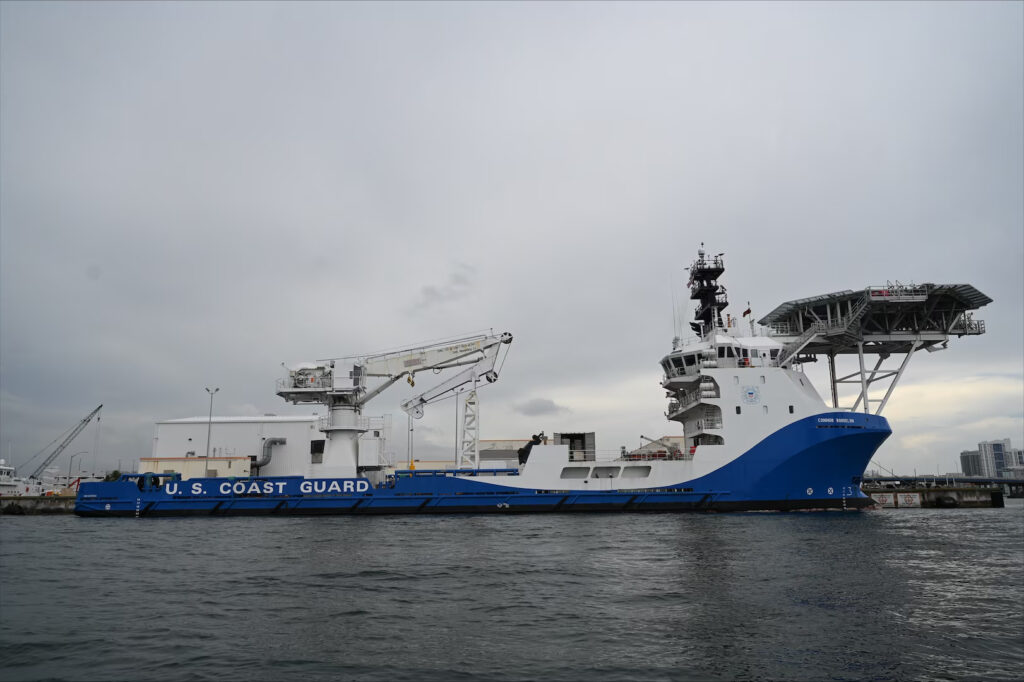
Homeland Security Cutter-Ocean is moored at U.S. Coast Guard Base Miami Beach, Florida, June 26, 2026. Cutter Ocean will serve as the first vessel contracted in a new initiative using commercial vessels to transport supplies, equipment and personnel to Coast Guard cutters operating in the Caribbean, Gulf of America, and other maritime areas in the Western Hemisphere. (U.S. Coast Guard photo by Petty Officer 3rd Class Reese Hindmarsh)

From U.S. Coast Guard Headquarters, June 26, 2026 

WASHINGTON — The U.S. Coast Guard has awarded a contract to Bordelon Marine to provide a commercial support vessel that will transport supplies, equipment and personnel to Coast Guard cutters operating in the Caribbean, Gulf of America, and other maritime areas in the Western Hemisphere. 

The contract supports the Coast Guard’s Homeland Security Cutter-Ocean (HSC-Ocean) initiative, a new effort to strengthen fleet readiness by using commercially operated vessels to provide logistics support to cutters while they remain at sea on mission. 

The HSC-Ocean initiative will rapidly deploy this leased commercial asset to augment the Coast Guard’s existing fleet, enhancing the Service’s ability to control, secure and defend U.S. borders and maritime approaches. The initiative is designed to provide a rapid, adaptable and effective way to deliver logistics support to high-demand, multi-mission cutters, such as the Fast Response Cutter fleet. By delivering supplies and personnel directly to cutters underway, the vessel will help keep Coast Guard assets on station longer and focused on mission execution. 

“As demands on the Coast Guard continue to grow, we must find innovative ways to sustain our fleet and keep our crews focused on the mission,” said Vice Adm. Nate Moore, Deputy Commandant for Operations. “Homeland Security Cutter-Ocean will help us deliver critical supplies and personnel more efficiently while increasing the endurance and effectiveness of our operational forces.” 

Under the contract, Bordelon Marine will provide a fully crewed commercial vessel operated by civilian mariners, under the direction of a Coast Guard crew. The vessel will transport supplies, equipment and mission-essential personnel in support of Coast Guard operations. The contractor will be responsible for vessel operations and maintenance, while embarked Coast Guard personnel will coordinate logistics and support mission execution. 

The initiative will inform future Coast Guard logistics and sustainment efforts while helping the Service evaluate new approaches to support cutters operating far from homeport. 


RTX’s Raytheon awarded $1.1 billion U.S. Navy contract to produce AIM-9X Block II missiles

Over the next decade, SPY-6 is expected to be deployed on more than 50 U.S. Navy ships, enhancing defense against air, surface, ballistic and electronic warfare threats. (Photo credit: Huntington Ingalls Industries)

Award continues program expansion capacity to meet rising domestic and international demand 

From RTX

TUCSON, Ariz. (June 26, 2026) — Raytheon, an RTX (NYSE: RTX) business, was awarded a $1.1 billion contract from the U.S. Navy to produce AIM-9X Block II missiles to bolster U.S. military inventory and meet increased demand from allied nations. 

Under the contract, Raytheon will produce AIM-9X missiles along with associated hardware and software for U.S. and Foreign Military Sales customers.   

“Our teams have streamlined production, shortened lead times and ramped up deliveries of AIM-9X missiles to keep pace with growing demand,” said Barbara Borgonovi, president of Naval Power at Raytheon. “This contract, along with our close partnership with the U.S. Navy, allows us to sustain that momentum and ensure U.S. and allied forces have this advanced, combat-proven capability they depend on in high threat environments.” 

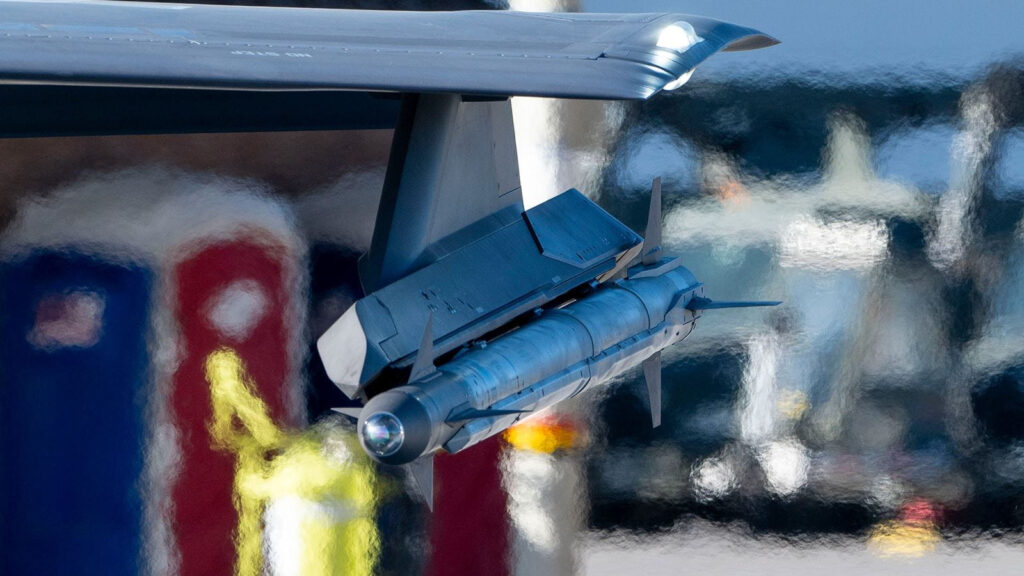
AIM-9X is the most advanced infrared tracking, short-range air-to-air and surface-to-air missile, and it is combat-proven in multiple theaters around the world. The system is configured for easy installation on a wide range of modern aircraft and provides layered defense options with ground launched capabilities, including the National Advanced Surface to Air Missile System (NASAMS). 

Trusted by the U.S. and more than 35 allied and partner nations, AIM-9X is a critical asset for ensuring strategic deterrence and operational advantage worldwide. To meet growing demand, Raytheon is increasing its production capacity to 2,500 missiles per year.  

A majority of the work under this contract will take place in Tucson, Arizona. Raytheon is significantly expanding its engineering workforce in Tucson to support critical military programs across domains. Engineers with active security clearances and relevant technical experience ready to make a difference helping connect and protect our world can learn more by visiting our website


USS Nimitz to Join International Naval Review 250 in New York City 

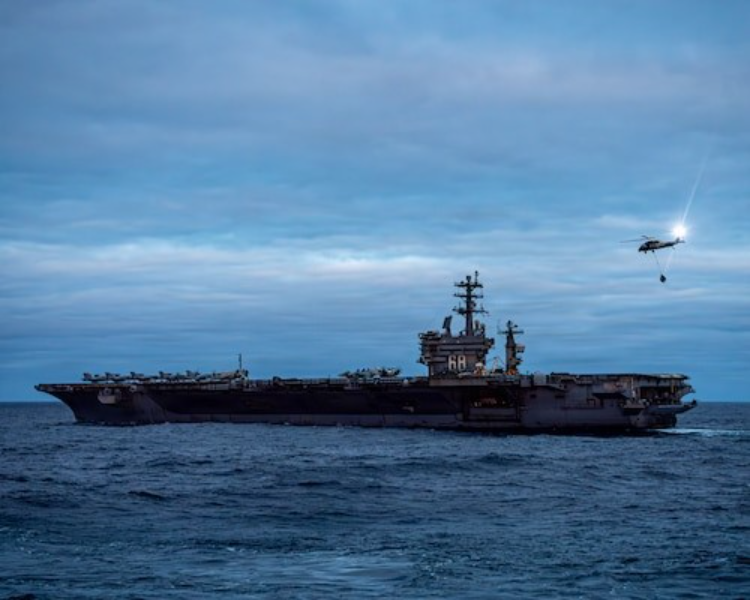
An MH-60S Sea Hawk, attached to Helicopter Sea Combat Squadron 6, conducts a vertical replenishment with the Nimitz-class aircraft carrier USS Nimitz (CVN 68) in the Pacific Ocean, April 23, 2026. (U.S. Navy photo by Mass Communication Specialist 2nd Class Timothy Meyer)

From the Navy office of Information, June 25, 2026 

NEW YORK CITY (June 25, 2026) – The U.S. Navy announced today the aircraft carrier USS Nimitz (CVN 68) will participate in the International Naval Review (INR) 250 in New York City, July 3-8, 2026. 

Nimitz joins a robust, previously announced lineup of U.S. Navy and Coast Guard vessels, as well as participation from more than 50 allied and partner nations, converging on New York Harbor to celebrate the 250th anniversary of the United States. 

As the most iconic serving aircraft carrier in the U.S. fleet and the lead ship of her class, Nimitz brings unparalleled historical significance to what will be the largest international maritime spectacle in U.S. history. Named for World War II Fleet Admiral Chester W. Nimitz, the carrier represents more than 50 years of active global defense, having played pivotal roles in missions ranging from Operation Desert Storm to Operation Inherent Resolve. 

“Adding USS Nimitz to the International Naval Review 250 roster brings a legendary piece of American naval history and maritime dominance directly to the heart of this celebration,” said Vice Adm. Doug Perry, commander, U.S. 2nd Fleet. “For five decades, the Sailors aboard Nimitz have stood the watch, defending freedom and ensuring global maritime security. Having this iconic warship anchor in New York Harbor alongside our international partners will be a breathtaking tribute to our nation’s 250th anniversary and a powerful demonstration of American resolve.” 

The arrival of Nimitz underscores the core themes of INR 250: celebrating the strength of international partnerships, showcasing the professionalism of the Sailors who make up the fleet, and honoring the deep, historical naval ties of New York City. 

During the week-long event, Nimitz will be a centerpiece of the fleet following the monumental Parade of Sail July 4. While anchored, the ship expects to host distinguished visitors, and her crew of thousands of Sailors will engage with the citizens of New York and New Jersey through community relations projects, public events, and memorial ceremonies. 

“The Sailors of USS Nimitz are honored to represent the Navy and our nation at INR 250,” said Capt. Joseph Furco, Nimitz’s commanding officer. “This is a once-in-a-generation opportunity to showcase the dedication, pride, and professionalism of ‘Team Nimitz’ as well as the enduring capability of this incredible ship on a global stage. We are humbled to be the iconic symbol of America’s unparalleled sea power.” 

Additional details regarding ship locations, aerial reviews, and media availabilities surrounding Nimitz’s arrival will be released soon. 

For more information about the INR 250, participating ships, and a schedule of public events, please visit International Naval Review 250 website. 


U.S. Marine Corps Places First Polaris MRZR Alpha Order on New ULTV Contract 

From Polaris Government and Defense 

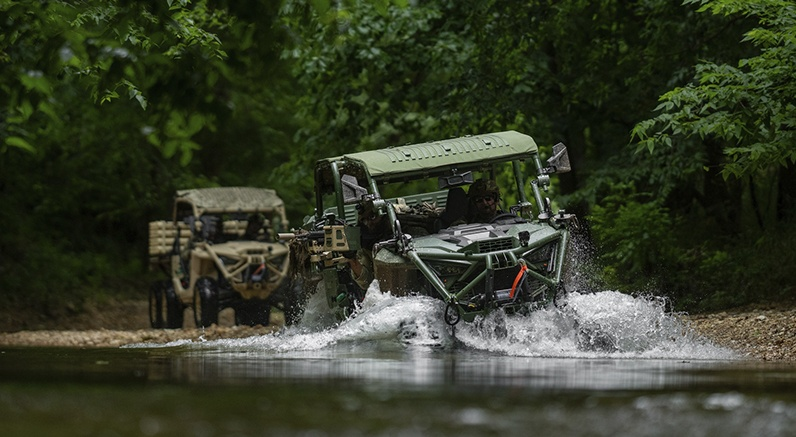
MINNEAPOLIS – June 24, Polaris Government and Defense 2026 – The United States Marine Corps (USMC) has placed its first delivery order to on the new Ultra-Light Tactical Vehicle (ULTV) contract, ordering more than 70 MRZR Alphas and numerous accessories vital to mission success. More than half the vehicles ordered were the new 5kW export power variant and the remaining were the standard, 1kW version – all are green, four-seat vehicles. 

Polaris accessories included in the order have been commonly incorporated on MRZR Alpha ULTVs for the Marines and include: 

  • Roof Kit – reversible roof kit with multicam-patterned camouflage on one side and olive drab on the other for mission planning flexibility while protecting occupants from exposure to the elements. 

  • Road March Kit – turn signals, horn, rear view and side mirrors to provide operators enhanced auditory and visual situation awareness during off-road administrative movements. 

  • Modular Cargo System – siderails and tailgate enclose the rear deck to contain cargo and provide many attachment points for securing gear and other vehicle accessories. The heavy-duty tailgate can also drop down for additional cargo space in the down position. Aircraft rails are built in for optional accessories, like integration of litter mounts. 

  • Fire Extinguisher – Class 5-BC fire extinguisher can be mounted to the roll cage in various spots, using a vinyl mount secured by two heavy duty Velcro straps with special rubber attached to ensure mount is securely fastened. 

  • Towbar Mount – specifically designed clamps mount a towbar provision for storage during non-use. 

“Polaris engineering and development efforts resulted in expanded accessories developed specifically for MRZR Alpha customers, like the Marines,” said Erin Telander, Defense program manager, Polaris Government and Defense. “That includes the ability to export 5kW of power directly from the vehicle itself, which the Marines will be able to leverage with their latest order.” 

The MRZR Alpha is Polaris’ most advanced light tactical vehicle, engineered to meet the evolving demands of expeditionary forces. Designed for enhanced payload capacity, tactical air transport and off-road performance, the MRZR Alpha enables rapid unit deployment and exceptional maneuverability across difficult terrain while reducing logistical demand due to the vehicle’s superior durability. 

The indefinite delivery, indefinite quantity (IDIQ) contract was awarded May 22, 2026, through Program Acquisition Executive Marine Corps (PAE-MC) and has a ceiling of up to $98M, with an order period of up to five years. This contract reinforces the value that Polaris brings to the warfighter – a responsive and engaged team with off-road engineering expertise, world-class manufacturing and a built-in global support network. 

Commercial platforms like the Polaris MRZR Alpha have been instrumental in accelerating delivery of highly mobile systems to the field. Polaris provides global parts availability through its existing worldwide network of dealers and distributors, empowering greater self-sufficiency for distributed forces. 


ThayerMahan’s Outpost® Acoustic Intelligence Payloads Selected for Large-Scale Deployment  

ThayerMahan to deliver dozens of Outpost acoustic intelligence payloads to international defense customer.

From ThayerMahan Inc. 

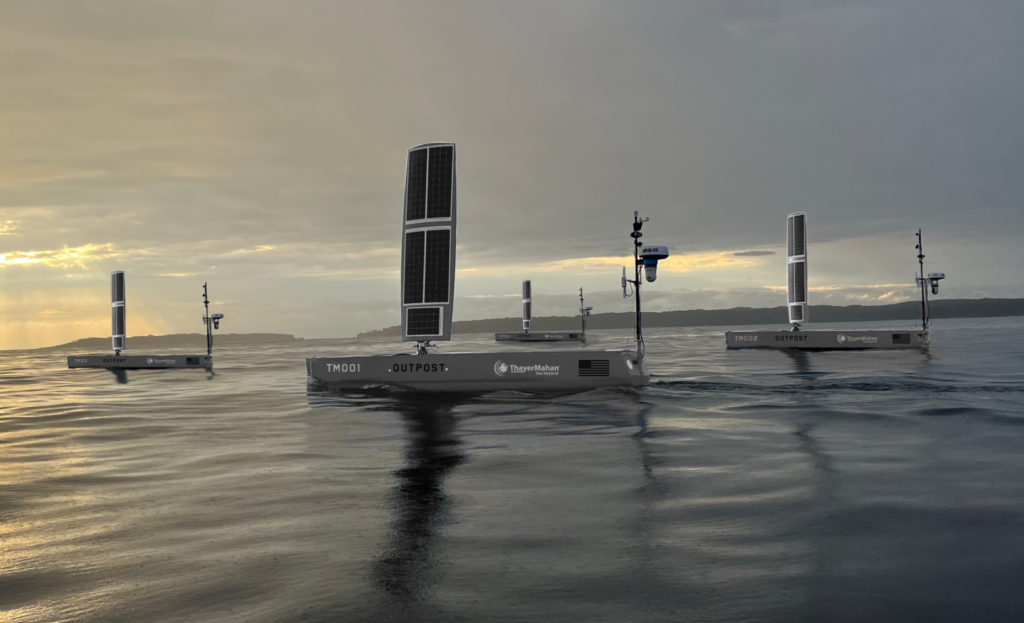
GROTON, Conn., June 25, 2026 /PRNewswire/ — ThayerMahan, Inc. has been awarded a contract to deliver dozens of Outpost® acoustic intelligence payloads, along with TransparenSea® processing software, to an international defense customer. The award represents one of the largest fielded deployments of unmanned acoustic sensing systems supporting persistent undersea surveillance and USW (Undersea Warfare) missions. 

The selection followed a rigorous, multi-phase evaluation that included controlled validation, extended at-sea deployments, and head-to-head comparative trials against multiple payloads under representative mission conditions. Testing focused on detection performance, tracking reliability, system endurance, power efficiency, and integration with unmanned platforms. 

During multi-month deployments, Outpost® and TransparenSea® demonstrated continuous wide-area acoustic surveillance, detecting, classifying, and tracking targets of interest at operationally relevant ranges, with near-real-time delivery of actionable acoustic intelligence to shore-based Maritime Operations Centers. The systems met or exceeded performance expectations for both surveillance and USW missions while operating within constrained power and size profiles typical of small, unmanned platforms. 

Key factors supporting selection included: 

  • Persistent coverage: Continuous operation over extended deployment periods 

  • Detection and tracking performance: Reliable target hold and classification at range 

  • Low power consumption: Enabling long-duration unmanned operations 

  • Ease of integration: Minimal platform modification required 

  • Near-real-time data delivery: Actionable data landed in shore-based Maritime Operations Centers for rapid decision making 

  • Analyst usability: Intuitive interface reducing operator workload and training burden 

“Persistent, wide area acoustic sensing requires consistent performance over time, which is why we spent the last decade perfecting our capability,” said Mike Varney, President Products & Engineering, ThayerMahan. “ThayerMahan sets the global benchmark for unmanned acoustic intelligence. Outpost and TransparenSea have been repeatedly validated under operational conditions, which was a key factor in this selection.” 

The contract reflects increasing demand for scalable, unmanned acoustic sensing solutions that can rapidly be deployed to extend maritime domain awareness without reliance on traditional crewed assets. 

“This award aligns with the need for operationally relevant, fielded capability that delivers consistent surveillance and USW performance,” said Mike Connor, Chairman and CEO. “The focus is on systems that work as deployed – reliably, at scale, and with immediate mission impact.” 

The awarded systems are exportable and production-ready, supporting rapid fielding timelines and broader adoption of distributed, unmanned sensing architectures for undersea domain awareness.


Allies Come Together in the Indo-Pacific: Valiant Shield 26

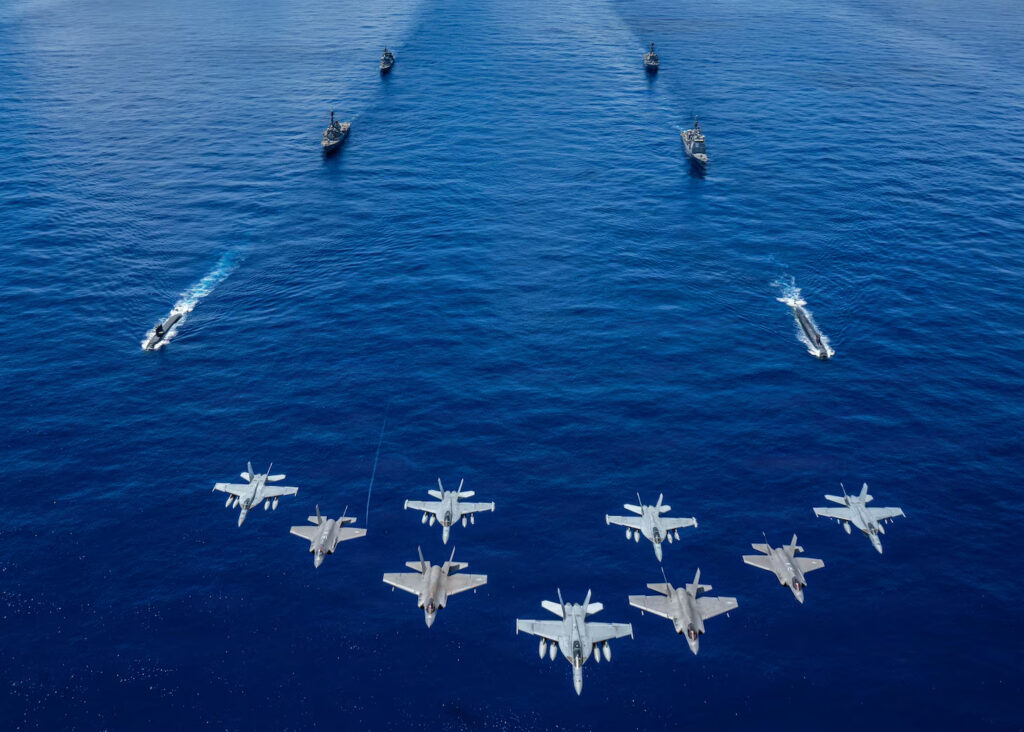
U.S. Navy aircraft, attached to Carrier Air Wing (CVW) 5, and U.S. Air Force F-35A Lightning IIs fly over U.S. Navy George Washington Carrier Strike Group as it sails in formation with Japan Maritime Self- Defense Force as part of Valiant Shield 2026 while underway in the Philippine Sea, June 21, 2026. (U.S. Navy photo by Mass Communication Specialist 2nd Class Tyler Crowley) 

From U.S. Pacific Command, June 22, 2026 

PEARL HARBOR, Hawaii – U.S. Pacific Command joint forces, along with allied and partner forces, are scheduled to participate in exercise Valiant Shield (VS26) 2026, June 22–July 1, in the Commonwealth of the Northern Mariana Islands, Guam, Japan, and at sea around the Mariana Islands Range Complex. 

VS26 is a multinational, biennial field training exercise focused on integrating interoperability training in a multi-domain environment. This training builds real-world proficiency in sustaining joint forces through detecting, locating, tracking, and engaging units at sea, in the air, in space, on land, and in cyberspace. 

Exercises such as VS26 allow forces across the Indo-Pacific the opportunity to integrate Navy, Marine Corps, Army, Air Force, Coast Guard, Space Force, and allies to train in precise, lethal, and overwhelming multi-axis, multi-domain effects that demonstrate the strength and versatility of the joint and combined force. With the involvement of U.S. Space Command and U.S. Transportation Command, VS26 is expanding the multi-domain cross-combatant command collaboration that is required for any large-scale exercise or operation. 

VS26 prepares the joint and combined force to rapidly respond to crises and contingencies across the spectrum of operations from humanitarian assistance and disaster response to armed conflict. 

“Valiant Shield demonstrates our enduring commitment to a free and open Indo-Pacific,” said Adm. Steve Koehler, Commander, U.S. Pacific Fleet. “Exercising advanced multidomain capabilities with our allies ensures we continue to seamlessly innovate and operate together, project combat power together, and prevail over any challenge — together.” 
 

VS26 assists U.S., allied, and partner forces in developing regional and global power projection capabilities. Integrated training provides a full range of options to succeed in defense of U.S. interests and those of like-minded nations around the world. 

This is the 11th iteration of Exercise Valiant Shield, which first began in 2006. While it began as a unilateral U.S. exercise, Valiant Shield has evolved with demands of the security environment, incorporating new technology and strategies to further enhance the lethality of the joint fighting force. Since 2024, Valiant Shield has become a multilateral joint field training exercise to further integrate allies and partners in the multi-domain environment. This iteration of Valiant Shield marks the second time the Japan Self-Defense Forces has heavily integrated in Valiant Shield planning and execution. 


Marine Corps Releases 2026 Installations and Logistics Enterprise Plan

From Headquarters, U.S. Marine Corps, June 24, 2026 

HEADQUARTERS, MARINE CORPS – The U.S. Marine Corps released the Marine Corps Installations and Logistics Enterprise (MCILE) 2026 plan, a comprehensive document that outlines the strategic vision for posturing and sustaining the force in an era of persistent global competition. Titled “The Reference A for Marine Corps Installations and Logistics,” the plan details how the Corps will generate, deploy, and sustain combat-credible forces to meet the challenges of a rapidly evolving security environment. 

MCILE 2026 serves as a “Reference A” for installations and logistics – a single, authoritative description of the current state, ongoing modernization efforts, and capability gaps across the MCILE.  

“We have a fundamental responsibility to deliver Marine forces that optimize the effectiveness and capabilities of the combatant commands. This plan is our commitment to ensuring the Marine Corps can fight and win tonight, while preparing for the demands of tomorrow,” said Lt. Gen. Stephen D. Sklenka, deputy commandant for Installations and Logistics. “A force is not combat credible if it cannot get to the fight and endure. MCILE 26 describes how we are building the installations and logistics enterprise required to project and sustain our forces against any threat.” 

The MCILE 2026 introduces its central strategy in the “3-1-5 Framework,” a combat-credibility model centered on the three principal moves of force projection – force mobilization and deployment, force closure, and force sustainment, – the one operational necessity of littoral mobility, and the five sustainment imperatives for a protracted fight: munitions, fuel, blood, water, and food.  

The plan identifies four focus areas: multidomain positional advantage, network resilience, resource discipline, and MCILE integration. Major initiatives include the Global Positioning Network (GPN) – a three-pronged approach to forward prepositioning afloat, ashore, and via contracted solutions; integrating with the Regional Sustainment Framework, which leverages allies, partners, and the defense industrial base for distributed maintenance and repair; improved integration with the Joint Logistics Enterprise; and continued investment in autonomous logistics systems such as the Autonomous Low-Profile Vessel and the Unmanned Logistics System-Air family of aerial resupply platforms. 

MCILE 2026 highlights modernization across advanced manufacturing, littoral mobility, medical support, the GPN, and logistics information technology, including the Maven Smart System, Visual Integrated Tactical Logistics-Battle Management Aid, and the Logistics Chain Management System. 

MCILE 2026 also describes the network of installations that serve as hubs of support for training, mobilization, sustainment, and the well-being of Marines, Sailors, and their families. The plan highlights installations portfolios and Barracks 2030, a service-level priority to improve living conditions for unaccompanied junior Marines, alongside other quality-of-life initiatives for service members and their families. MCILE 2026 also describes how installation protection is adapting to counter unmanned aerial systems, offensive cyber operations, and foreign collection efforts. 

The document is candid about where work remains. MCILE 2026 identifies capability gaps in force deployment and closure, forward sustainment, littoral mobility, and calls for continued investment to close them.  

MCILE 26 serves as a foundational and recurring reference document, updated annually to track the enterprise’s progress sustaining the force today while modernizing for the future fight. 

To read MCILE 26, please click here.