Coast Guard Gearing Up to Absorb Massive Investment, Commandant Says
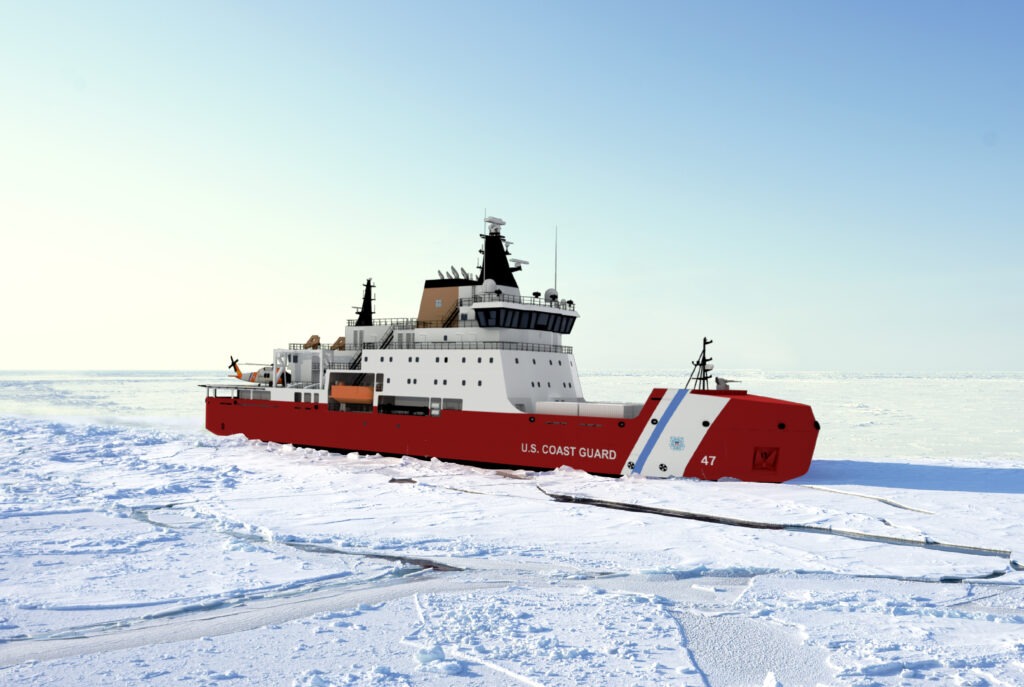
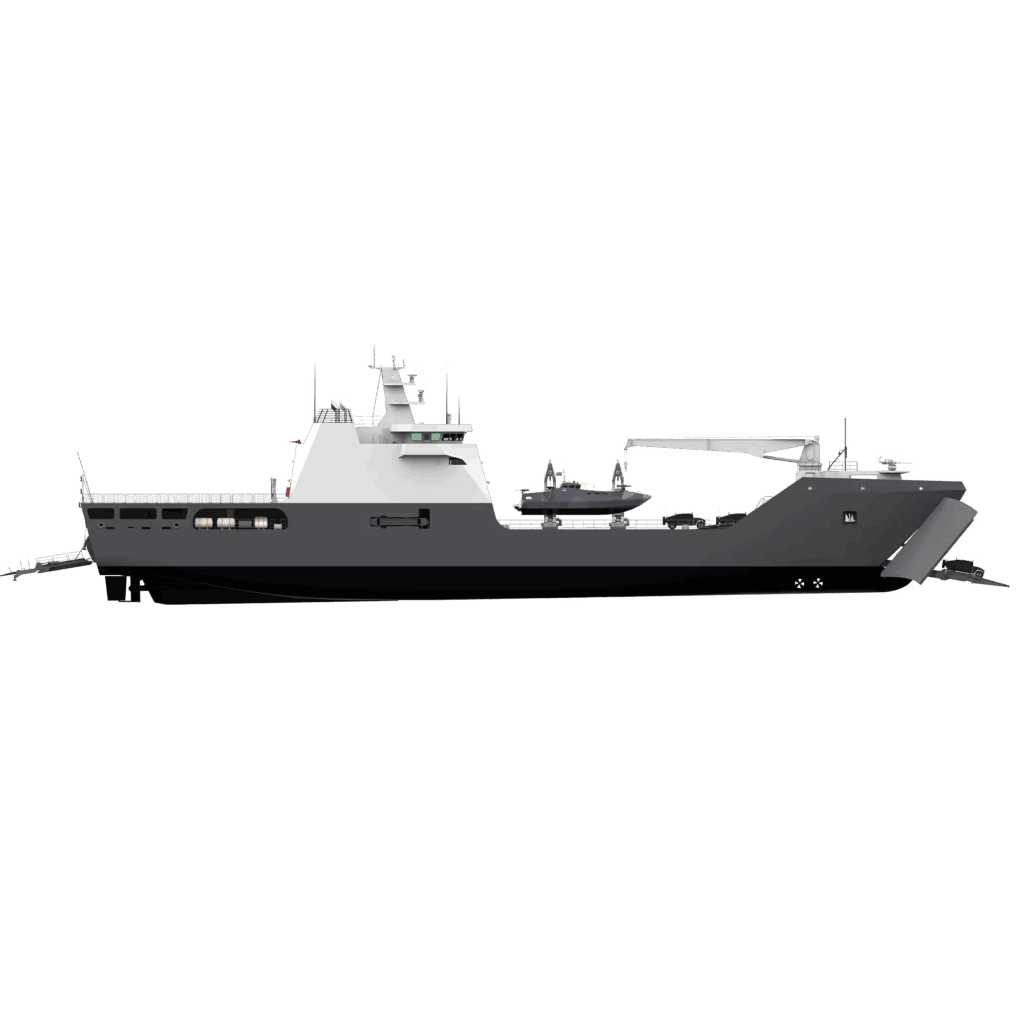
Artist rendering of the Arctic Security Cutter (Bollinger)

By Richard R. Burgess, Senior Editor 

ARLINGTON, Va. — With nearly $25 billion in reconciliation funding from Congress, the U.S. Coast Guard is moving out on some new programs and adding to others as it prepares for an expansion in numbers of cutters, aircraft, bases, and personnel, the Coast Guard’s commandant told Congress.  

Adm. Kevin Lunday, commandant of the Coast Guard, testifying Jan. 29, 2026, before the Senate Committee on Commerce, Science, and Transportation, said the reconciliation law passed in 2025 was the “most significant investment in Coast Guard history.” 

Lunday told the committee that with the expanded force bought with the reconciliation law, the service would need congressional support for consistent, sustained funding to operate it. 

The Coast Guard recently has awarded contracts to build six Arctic Security Cutters (ASCs) with plans to build a total of 11. Lunday said that — of the first six — four will be built in the United States by Bollinger Shipyards and two in Finland by Rauma Marine Construction Oy. The new icebreakers are based on the Multi-Purpose Icebreaker design by Seaspan Shipyards of Vancouver, Canada, developed with Aker Arctic Technology Inc of Helsinki, Finland. In service, the ASCs would greatly expand the Arctic capabilities of the Coast Guard.  

The reconciliation law also funds 22 cutters, including three of the six contracted ASCs, nine new Offshore Patrol Cutters and 10 additional fast response cutters (FRCs), bringing the FRC program total to 77 cutters. 

Lunday said the Coast Guard gas requested information from the defense industry regarding a new class of light and medium icebreakers to replace old icebreaking tugs. These cutters would be built in the United States, he said.  

The commandant also said that a second Great Lakes Icebreaker was one of his top priorities. 

He affirmed that the first Polar Security Cutter is on track for delivery in 2030. 

The Coast Guard also is procuring six additional HC-130J Super Hercules maritime patrol aircraft and 40 additional MH-60 Jayhawk helicopters. The additional MH-60s will enable the service to replace MH-65 Dolphin helicopters and to have more MH-60s to deploy on the expanding force of cutters including Polar Security Cutters. 

Lunday said the reconciliation law will enable the Coast Guard to accelerate phaseout of its MH-65 helicopter fleet before the originally planned retirement year of 2037.  

The law also added procurement of some MQ-9 Reaper unmanned aerial vehicles. 

Under the Force Design 2028, the Coast Guard is expanding its force by 15,000 personnel. Lunday pointed out that 13,000 personnel will be needed to crew the 11 Arctic Security Cutters. 


Singapore, Denmark Plan to Join the P-8 Poseidon Club

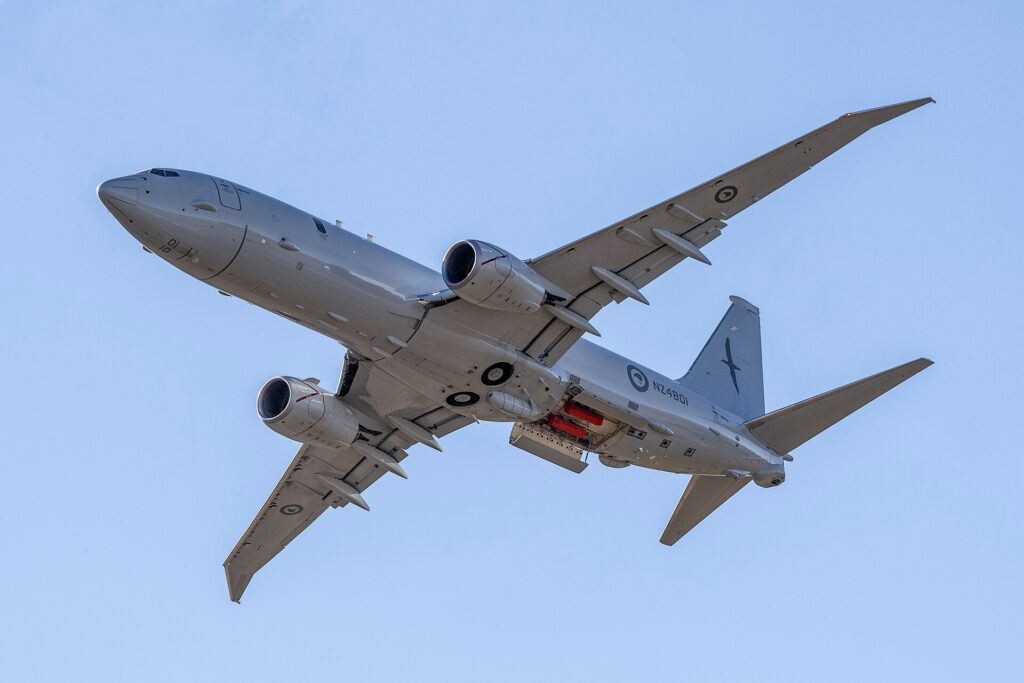
A New Zealand Defence Force P-8A Poseidon maritime patrol aircraft. (Photo credit: Defence Public Affairs, Corporal Naomi James)

By Richard R. Burgess, Senior Editor 

ARLINGTON, Va. — In recent weeks two more nations have been approved by the U.S. State Department for possible procurement of Boeing-built P-8 Poseidon maritime patrol aircraft (MPA).  

The Defense Security Cooperation Agency (DSCA) has announced that Denmark and Singapore each have been approved by the U.S. State Department for possible Foreign Military Sales of three and four P-8A aircraft, respectively. 

The procurement of the four P-8As and associated systems and support services for Singapore is estimated to total $2.316 billion. The sale also would include MK54 lightweight tordedoes  drawn from existing U.S. Navy stocks, the DSCA announced on Jan. 20, 2026.  

Earlier, the DSCA announced on Dec. 29, 2025, the State Department approved the possible sale of three P-8As and associated systems and support to Denmark. The value of the sale is estimated at $1.8 billion.  

The Defense Security Cooperation Agency delivered the required certification notifying Congress, the agency said. 

Interestingly, the two nations have not traditionally operated long-range MPA. The acquisitions will strengthen the anti-submarine and surface warfare capabilities of allies of the United States and NATO allies. 

The P-8A is operated by seven armed forces including the U.S. Navy, Royal Australian Air Force, Royal Air Force, Royal Norwegian Air Force, New Zealand Defence Force, Republic of Korea Navy, and German Navy. The Royal Canadian Air Force also has P-8As on order. All of these except the Royal Air Force previously operated versions or derivatives of the P-3 Orion. India also operates a similar version of the Poseidon purchased by direct commercial sale, the P-8I Neptune. 


Navy Selects Damen to Build New Medium Landing Ship 

By Richard R. Burgess, Senior Editor 

ARLINGTON, Va. — The U.S. Navy has selected Damen to build the new medium landing ship (LSM) for the service. The ship will be a version of Damen’s LST 100 class.  

Damen is a shipbuilder headquartered in The Netherlands. Its LST 100 class is in production for Australia and other customers.   

The selection was announced on Dec. 5 on X in a video of Navy Secretary John C. Phelan, who said that the move was the second initiative is support of re-designing the U.S. fleet. The first was the truncation of the Constellation-class guided-missile frigate program to only the two ships currently under construction. The truncation, announced a week earlier, was the result of delays in the program. Phelan announced that a new class of frigates will be designed to give the Navy the small surface combatants that it needs.  

The Navy plans to build 35 LSMs to transport Marines and their equipment within theaters of war with an “organic, littoral mobility capability in the Indo-Pacific and around the world and provides with a critical intra-theater maneuver asset that is able to embark, transport, and land Marines, weapons supplies and equipment around the theater without requiring access to a pier,” said General Eric Smith, commandant of the Marine Corps, in the same X video. “The medium landing ships will enable our Marines to be more agile and flexible in austere where there are no ports … within the adversary’s engagement zone.” 

The LST 100 resembles in concept the LSTs of World War II, equipped with bow doors and a ramp to discharge vehicles onto a beach. Damen’s design is an intra-theater transport that displaces approximately 4,000 tons. According to Damen’s website, the ship is 100 meters long and has a beam of 16 meters and a draft of 3.5 to 3.9 meters. The ship is designed with berthing for a landing force, cargo space of 1,020 square meters of roll-on/roll-off cargo space and to be operated by a crew of 18. The ship features a large crane and a helicopter landing pad. Phelan said the LSM would have a range of more than 3,400 nautical miles. 

The selection of an “off-the-shelf” design came as the Navy determined that other proposals with new designs were too costly and would take too long to join the fleet. In the same video, Admiral Daryl Caudle, chief of naval operations, stressed producibility and maintainability after an era of shipbuilding in which the delivery of new ships took too long. 


Future Attack Submarine Utah Christened at Electric Boat

By Richard R. Burgess, Senior Editor 

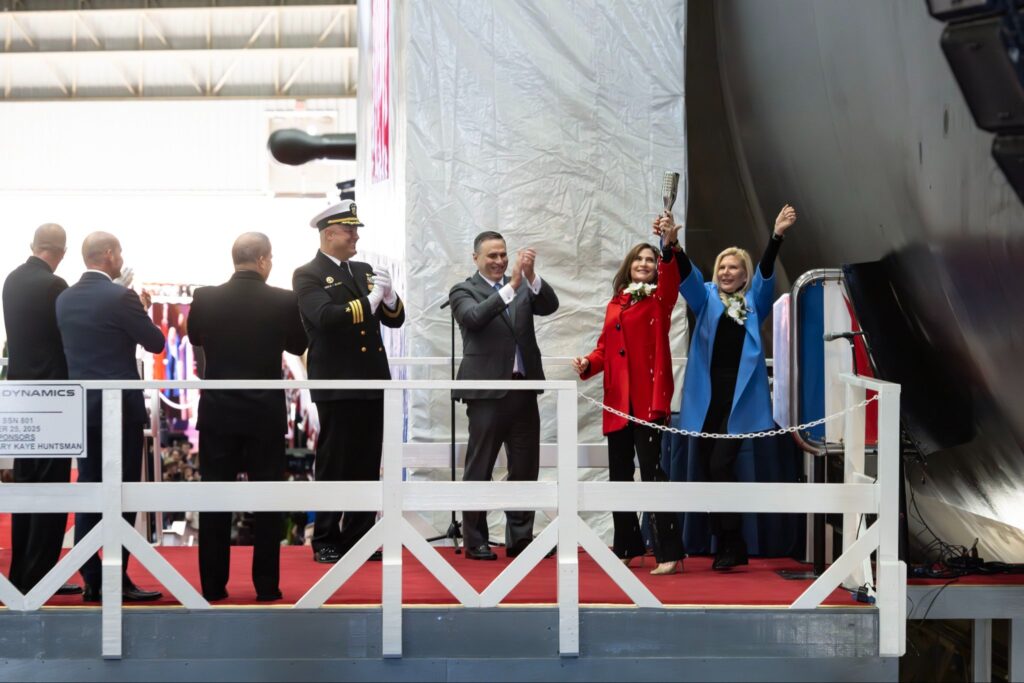
ARLINGTON, Va. — The future Virginia-class nuclear-powered attack submarine Utah (SSN 801) was christened during ceremonies at the General Dynamics Electric Boat shipyard in Groton, Connecticut, on October 25, 2025. 

According to a posting on X @GDElectricBoat “The Virginia-class assembly building at shipyard was all decked out on October 25 for the christening of PCU Utah (SSN 801). EB shipbuilders, the ship’s crew, U.S. Navy personnel and government officials joined both live and virtually to celebrate this significant milestone commemorated by a joint swing. Mrs. Sharon Lee (left) and Mrs. Mary Kaye Huntsman, co-sponsors of Utah, broke a bottle of sparkling cyser — a honey and apple cider wine from Utah — on the ship’s hull to commemorate the christening.” 

When commissioned, the USS Utah will be the 10th and final Block 4 version of the Virginia-class submarines to be built by General Dynamics Electric Boat and HII’s Newport News Shipbuilding. 


Navy Concludes Helicopter Aviator Training in TH-57 SeaRanger

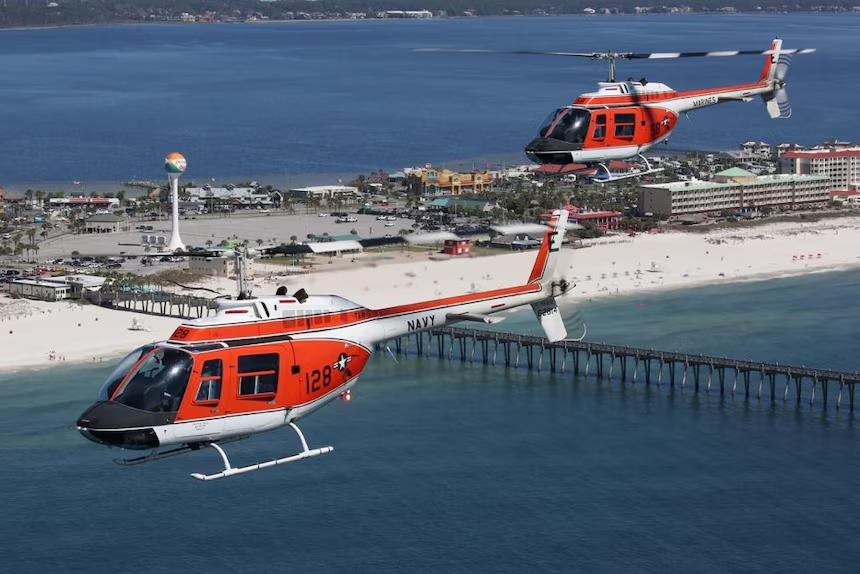
PENSACOLA, Fla. (Feb. 23, 2017) Two U.S. Navy TH-57C Sea Ranger helicopters conduct a formation training flight over Pensacola Beach, Fla. (U.S. Navy photo by Ensign Antonio More) 

By Richard R. Burgess, Senior Editor 

ARLINGTON, Va. — The. U.S. Navy has retired the Bell TH-57 Sea Ranger helicopter from training naval aviators after 57 years of training Navy, Marine Corps, Coast Guard, and foreign naval aviators to fly helicopters. 

The last Sea Ranger in Training Air Wing Five, TH-57C Bureau Number 162668, side number E-106, based at Naval Air Station (NAS) Whiting Field, Florida, made its last flight on Sept. 19, 2025, and was delivered to the National Naval Aviation Museum at NAS Pensacola, Florida. The helicopter was presented that day to museum director Sterling Gillum by the pilot, Commander James Gelsinon. 

Another of the wing’s TH-57Cs was delivered to the USS Lexington Museum in Corpus Christi, Texas. 

The TH-57 in its three versions — A, B, and C — provided flight training over the years to student rotary wing aviators by Training Air Wing Five’s Helicopter Training Squadrons HT-8, HT-18, and HT-28. The Navy procured a total of 40 TH-57As, 51 TH-57Bs, and 89 TH-57Cs. 

The TH-57 is not quite gone, however, being used at NAS Patuxent River, Maryland, by an air test and evaluation squadron, HX-21.  

“HX-21 still flies TH-57 for readiness flights, not testing,” said Connie Briggs, a spokeswoman for the Naval Air Systems Command. “Right now, there are no immediate plans to retire the aircraft.” 

The TH-57 has been succeeded by the TH-73A Thrasher for training naval helicopter pilots at Whiting Field. The Thrasher is built by AgustaWestland Philadelphia, a Leonardo company. 


Navy Determines Planned Ship Inactivations for Fiscal 2026 

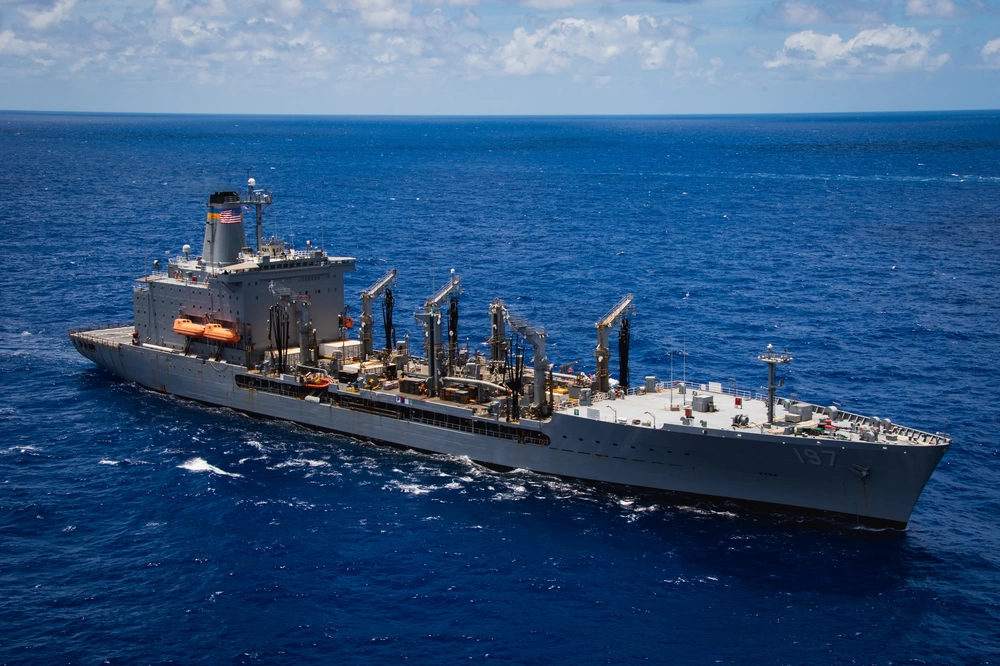
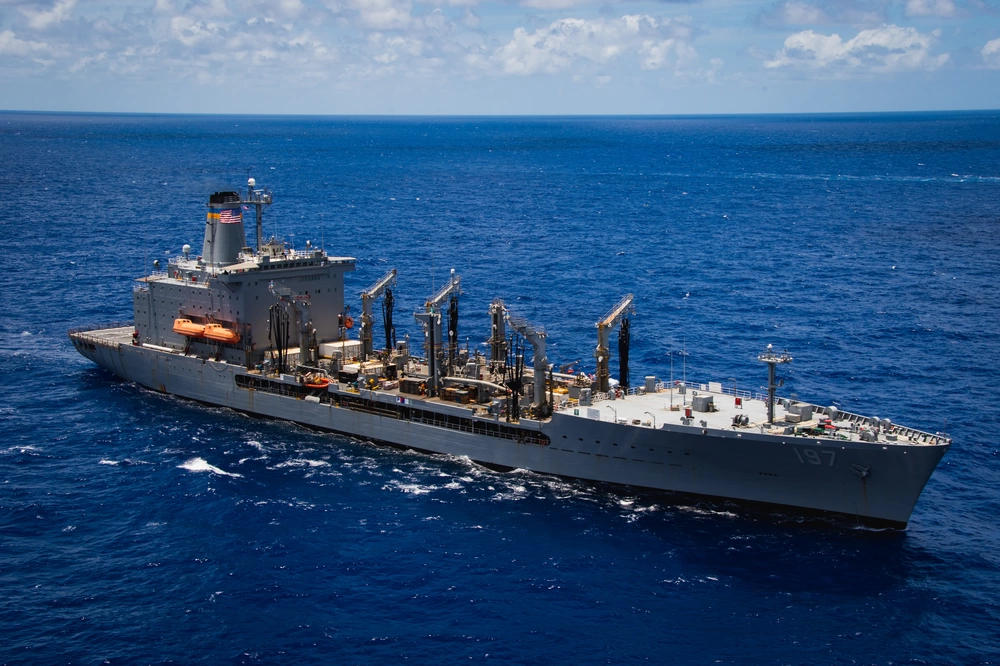
Henry J. Kaiser-class underway replenishment oiler USNS Pecos (T-AO-197) sails during the at-sea phase of Exercise Rim of the Pacific (RIMPAC) 2024.  (U.S. Navy photo by MC2 Terrin Hartman)

By Richard R. Burgess, Senior Editor 

ARLINGTON, Va. — The U.S. Navy plans to inactivate or transfer eight ships during fiscal 2026, including two warships and six auxiliary ships, the service said in a Sept. 12 internal message to the force. 

The navy plans to inactivate two Los Angeles-class attack submarines, USS Newport News (SSN 750) on Jan. 31, 2026, and USS Alexandria (SSN 757) on Aug. 4, 2026. The two submarines will be scrapped in Puget Sound Naval Shipyard, Washington. 

Two Henry J. Kaiser-class fleet replenishment oilers will be withdrawn from service with Military Sealift Command by July 31, 2026. USNS John Ericsson (T-AO 194) will be retired but retained as a logistics support asset as a parts source for remaining ships of its class. USS Pecos (T-AO 197 will be transferred to the Maritime Administration (MARAD). 

Three Watson-class large, medium-speed roll-on/roll off ships will be transferred from the Military Sealift Command’s Prepositioning Force: USNS Pomeroy (T-AKR 316) by Apr. 1, 2026; USNS Watkins (T-AKR 315) by July 1, 2026; and USNS Red Cloud (T-AKR-313) by Sept. 30, 2026. 

Also being transferred to MARAD on July 1, 2026, is the USNS VADM K.R. Wheeler (T-AG 5001), a ship which uses an offshore petroleum distribution system to pump fuel ashore from a distance of eight miles to U.S. forces ashore.    


Navy Determines Planned Ship Inactivations for Fiscal 2026 

Henry J. Kaiser-class underway replenishment oiler USNS Pecos (T-AO-197) sails during the at-sea phase of Exercise Rim of the Pacific (RIMPAC) 2024.  (U.S. Navy photo by MC2 Terrin Hartman) 

By Richard R. Burgess, Senior Editor 

ARLINGTON, Va. — The U.S. Navy plans to inactivate or transfer eight ships during fiscal 2026, including two warships and six auxiliary ships, the service said in a Sept. 12 internal message to the force. 

The navy plans to inactivate two Los Angeles-class attack submarines, USS Newport News (SSN 750) on Jan. 31, 2026, and USS Alexandria (SSN 757) on Aug. 4, 2026. The two submarines will be scrapped in Puget Sound Naval Shipyard, Washington. 

Two Henry J. Kaiser-class fleet replenishment oilers will be withdrawn from service with Military Sealift Command by July 31, 2026. USNS John Ericsson (T-AO 194) will be retired but retained as a logistics support asset as a parts source for remaining ships of its class. USS Pecos (T-AO 197 will be transferred to the Maritime Administration (MARAD). 

Three Watson-class large, medium-speed roll-on/roll off ships will be transferred from the Military Sealift Command’s Prepositioning Force: USNS Pomeroy (T-AKR 316) by Apr. 1, 2026; USNS Watkins (T-AKR 315) by July 1, 2026; and USNS Red Cloud (T-AKR-313) by Sept. 30, 2026. 

Also being transferred to MARAD on July 1, 2026, is the USNS VADM K.R. Wheeler (T-AG 5001), a ship which uses an offshore petroleum distribution system to pump fuel ashore from a distance of eight miles to U.S. forces ashore.    


Naval Aviation at Highest Readiness in Years, ‘Air Boss’ Said

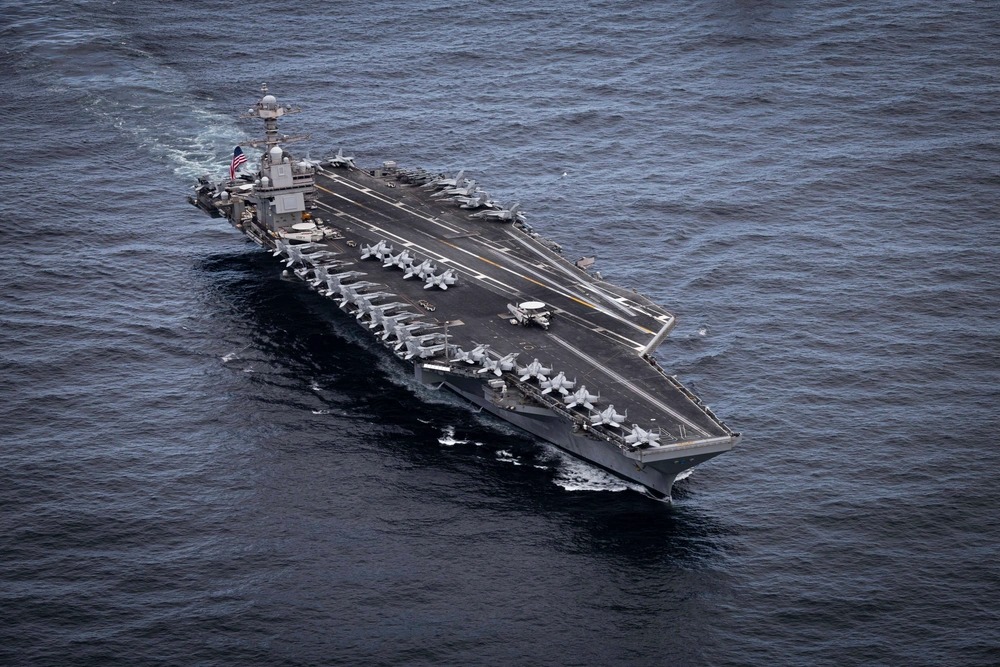
The world’s largest aircraft carrier, USS Gerald R. Ford (CVN 78), transits the North Sea, Aug. 23, 2025. (U.S. Navy photo by MC2 Tajh Payne) 

By Richard R. Burgess, Senior Editor 

ARLINGTON, Virginia — U.S. naval aviation is at its highest readiness in years, a senior naval aviation admiral said to an audience in Washington and online. 

Speaking Aug. 26 in an event of the U.S. Naval Institute and the Center for Strategic and International Studies sponsored by HII, Vice Admiral Daniel L. Cheever, commander Naval Air Forces and commander, Naval Air Force, U.S. Pacific Fleet — the Navy’s Air Boss’ — said the Naval Air Forces are “sustaining the readiness increases that we enjoyed” and “we’re at the “highest state of readiness we’ve had in at least 10 to 15 years back. And so, both carriers and the air wings with the carriers and our expeditionary forces are all at that heightened readiness.” 

Cheever said that small pockets of challenges to readiness remained, particularly with the management of the supply chain and sustainment,  

“We have a good playbook,” he said. “When there is a challenge, we get after it, and we have a perform-to-plan that re-energizes and gets us back to where we should be for readiness, and that’s across the board. And it’s pretty exciting to be part of that. It’s a lot of hard work but it is totally worth it. The return on investment from all of that parts supply is in the readiness of the force.” 

Cheever praised the F-35 Lightning II strike fighter as “a game changer, a difference maker in the fleet,” while noting that there are some supply-chain challenges that are being addressed. 

He said that a mixture of 4th-, 5th-, and 6th-generation mix of carrier-based strike fighters with manned-unmanned teaming is the “right blend.” 

The 6th-generation strike fighter is being designed to replace the F/A-18E/F Super Hornet strike fighter and the EA-18G Growler electronic attack aircraft. 

Cheever offered no details of the concept for the 6th-generation strike fighter but said that “I see a maritime version of the aircraft that starts at the carrier, is made for the carrier, and is a complete carrier version … I’m looking forward to the down-select… because that 6th generation means air superiority in that timeframe in the future, which means sea control.” 

He affirmed that aircraft carriers will be central to air superiority in the future for the Navy and America as a maritime nation. 

He noted that the MQ-25 Stingray unmanned refueling aircraft will fly this year and be integrated with the aircraft carrier next year. 

The air boss praised the design of the USS Gerald R. Ford, lead ship of the Navy’s newest class of aircraft carriers. The position of the island superstructure is farther aft than on the Nimitz class produces less of an air burble for approaching aircraft. The increase of aircraft parking space forward of the island eases aircraft handling and enables an aircraft to park directly over a weapons elevator for weapons download.  

He also noted that, unlike the Nimitz class carriers, the Gerald R. Ford is completely air conditioned. 


Navy F-35C Jet Crashes Near NAS Lemoore 

By Richard R. Burgess, Senior Editor 

ARLINGTON, Va. — A U.S. Navy F-35C Lightning II strike fighter crashed on July 30 near Naval Air Station Lemoore, California, the air station said in a Facebook post.  

“NAS Lemoore can confirm an aviation incident on the Operations side of the installation,” the announcement said. “At 1830, an F-35C attached to the VFA-125 Rough Raiders went down not far from NAS Lemoore. We can confirm the pilot successfully ejected and is safe. There are no additional affected personnel.” 

VFA-125 is the fleet replacement squadron for the F-35C, training aviators and maintenance personnel for Navy and Marine Corps squadrons that operate the F-35C. 

The jet is the fourth tactical jet that the Navy has lost this calendar year.


HASC Marks National Defense Authorization Bill

Edited by Richard R. Burgess, Senior Editor 

Arlington, Va. — The House Armed Services Committee (HASC) filed the bill for the 2026 National Defense Authorization Act, the bill’s leaders, Committee Chairman Sen. Roger Wicker (R-Miss.)  and Sen. Jack Reed (D- R.I.) announced in a July 16 release. 

Some announced naval-related provisions are listed below:  

  • Authorizes procurement for not more than five Columbia-class submarines.  

  • Authorizes a block buy of up to 15 Medium Landing Ships (LSM) to support testing and experimentation of the Marine Littoral Regiment formation.  

  • Limits funding for TAGOS Ship unless the Secretary of the Navy provides information on the Navy’s management of the program and an assessment of alternative solutions for the mission.  

  • Requires the Navy, in implementing the Medium Landing Ship and Light Replenishment Oiler programs, to utilize a Vessel Construction Manager (VCM) acquisition strategy, employing commercial design standards, construction practices, and an external entity to contract for construction.  

  • Exempts unmanned surface vessels and unmanned underwater vehicles from the Senior Technical Authority requirement and limits certain technical requirements from the Chief Engineer of the Naval Sea Systems Command without prior approval of the program manager.  

  • Modifies certification requirements of operational demonstrations for propulsion and electrical systems of large and medium unmanned surface vessels to increase industrial base participation.  

  • Limits funding to certain Navy-developed software for autonomy and command and control of unmanned surface vessels.  

  • Directs a briefing to the congressional defense committees to prioritize innovative, commercially driven solutions to deliver a scalable medium unmanned surface vessel (MUSV) capability that meets the urgent needs of the fleet while fostering a competitive industrial base.  

  • Requires the Navy to move leadership for conventional surface ship maintenance to the Type Commanders, delegates decision-making authority to project managers, port engineers, and ship commanding officers, and directs a new contracting strategy that emphasizes workload stability and collaborative planning.  

  • Requires the Navy to investigate, and where feasible qualify and fully integrate, 23 advanced technologies and processes into Navy surface ship readiness.  

  • Supports amphibious warship production and readiness by limiting funding of the Secretary of the Navy and the Secretary of Defense if the 30-year shipbuilding plan does not comply with the statutory requirement for 31 amphibious ships, 15 defines “temporarily unavailable” within the 31 amphibious ship requirements, and requires a plan to maintain and extend the service lives of amphibious ships 

  • Requires DOD to develop a comprehensive plan to establish a government-controlled open mission systems computing environment for all variants and blocks of the F–35 aircraft operated by the DOD.  

  • Directs the Navy and Air Force to conduct a comparative study, independent of the air vehicle manufacturer, on the two propeller systems on the C-130J platform.  

  • Accelerates development of the nuclear-armed sea-launched cruise missile and creates a supplementary parallel pathway for rapid fielding.  

  • Strongly encourages the Secretary of Defense to invite the naval forces of Taiwan to the Rim of the Pacific (RIMPAC) exercise, as appropriate, and requires a notification and justification if the Secretary chooses not to do so. 

  • Requires the Navy to develop options for two sources of domestic solid rocket motors in the Navy Modular Missile program. 

  • Directs a briefing on opportunities for the Irregular Warfare Technical Support Directorate to complement innovation efforts by Naval Special Warfare Command for research, experimentation, and prototyping of unmanned maritime vessels.  

  • Authorizes personnel end strength for the active component at 344,600 for the Navy; 172,300 for the Marine Corps; 57,500 for the Navy Reserve; 33,600 for the Marine Corps Reserve; and 7,000 for the Coast Guard Reserve. 

Read the FY26 NDAA Bill Language.  

Read the FY26 NDAA Executive Summary.