Navy’s CNIC Launches Wellness, Food Service Pilot Programs
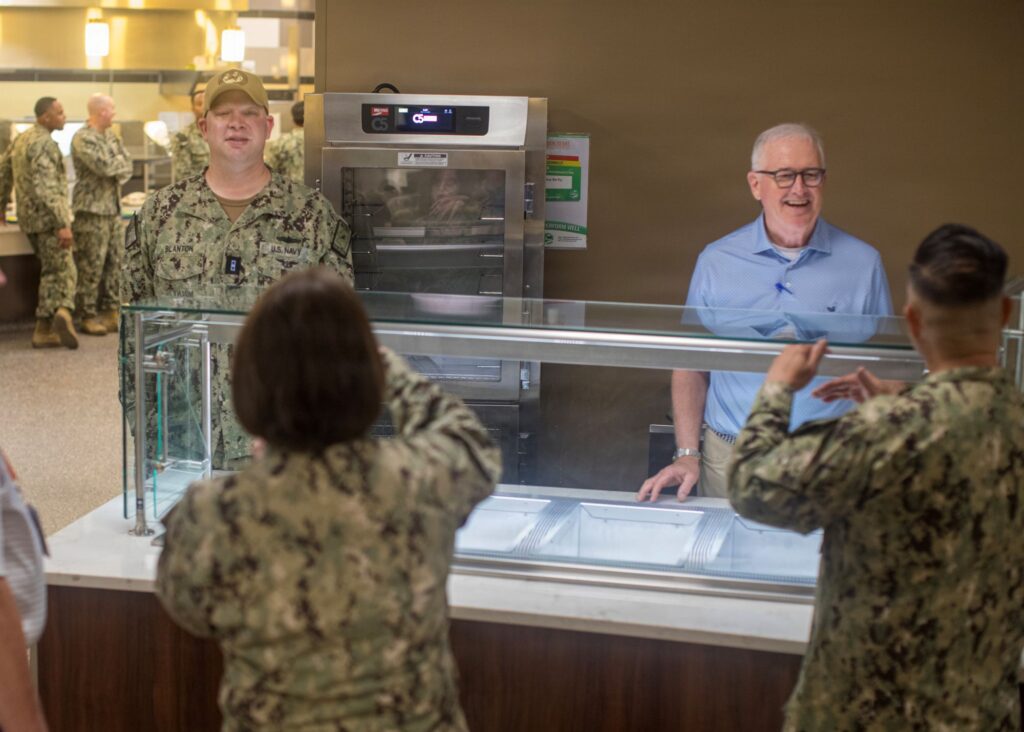
Naval Construction Battalion Center Gulfport Colmer Dining Facility underwent a multi-million dollar modernization project as part of the Commander, Navy Installations Command’s Shore Food Service Transformation pilot program, May 23. NCBC Gulfport was selected to implement the “campus style dining” initiative in support of the Navy’s commitment to warfighter readiness, wellness and performance through better nutrition. Photo credit: U.S. Navy | Jovi Prevot

The U.S. Navy’s Commander, Navy Installations Command (CNIC) has launched two related pilot programs aimed at expanding the quality and variety of food to which Sailors have access and improving their holistic wellness.

Those pilots are the Human Performance Optimization, or HPO program, and the Shore Food Service Transformation initiative.

The HPO launched Feb. 2 at Naval Base San Diego and provides Sailors with expert-led training across all aspects of physical, nutritional and mental wellness. Instead of the gym being just a place to work out, the HPO provides a “higher-end experience,” Vice Admiral Scott Gray, commander of Navy Installations Command, told reporters in an interview at the Washington Navy Yard.

Sailors at the Harborside Sports & Fitness Complex in San Diego now have access to a team of experts, including a dietician, cognitive specialist and human performance specialists to coach Sailors on proper nutrition, optimum sleep strategies, injury prevention and recovery, stress management and more.

“Everyone in that gym is going to be a fitness expert,” Gray said.

So far, 13,000 people have participated in the program and the Navy is monitoring the results.

“The whole point of the initiative is to learn from it,” Gray said.

Food Service Transformation

The food service transformation initiative has two pilot programs of its own, one that launched May 29 at Naval Construction Battalion Center Gulfport, Mississippi, and one launched June 3 at Naval Base Kitsap-Bangor in Washington state.

They have slightly different aims. The Gulfport pilot focuses on expanding and rotating ethnic food stations and refreshing and modernizing the interior of the galley. The Kitsap-Bangor pilot will allow Sailors to use their meal entitlements at Navy Morale, Welfare and Recreation (MWR) branded restaurants.

The galleys will continue to use “go for green” signage to help Sailors make healthy choices. Green is good, yellow means be cautious and red means food that should be an occasional treat.

“Everybody wants a burger now and then, but that shouldn’t be your only food source,” Gray said.

Galleys are also now providing healthy “grab and go” options for Sailors who might have missed galley mealtimes but still need to eat; that option should be rolled out to all installations by the end of this month, Gray said.

The Kitsap-Bangor pilot gives Sailors greater dining flexibility while still allowing them to use their meal allotments instead of paying out of pocket for meals outside of the galleys.

After spending nine months at sea eating in a ship’s galley, “the last thing they want to do is eat in another galley,” Gray said.

Galley gooks are also being trained by the Culinary Institute of America, which not only means better meals for Sailors but more skills training for the cooks.

As with the HPO, the Navy will be watching the results of the pilots. Will more Sailors eat in the galleys if they provide better options? Will they use their allotments at MWR-branded restaurants?

“We want to make our options and our expanded options attractive to our Sailors so that they use it, and that’s one of the things that we’re looking for is, as this plays out and as we roll it out, we’re looking to ensure that our utilization rate goes up and that the Sailors are taking better advantage of their entitlement, because it’s a significant portion of their compensation and when they’re not using it, they’re not helping themselves financially,” Gray said.

Eventually, CNIC plans to roll these two pilots together and offer them at all installations, although some will have more MWR-branded dining options than others and some installations may just have improved galleys.

“Ultimately, you will have expanded food options inside the galley and expanded food options outside the galley where we can provide it,” Gray said.

CNIC is assessing the first phase of rollout after the pilots, and anticipates rolling the transformation out to nine additional facilities between March and July of next year, with additional phases to follow after that.

The cost of all this is not insignificant — $1.4 million for the San Diego HPO site alone and $3.2 million for construction, renovation and training at the two food pilot sites — but needs to be done after years of budgetary neglect of Navy shore services, Gray said.

“We set that money aside before we started and come hell or high water we’re going to continue it and follow it through, and we will transform our food service, we will continue the expansion of Human Performance Optimization, even if I have to reshuffle things to make it happen,” Gray said. “I’m committed.”

CNIC oversees 10 Navy regions, 70 installations, and nearly 50,000 employees focused on warfighting and manning, training and equipping shore installations.

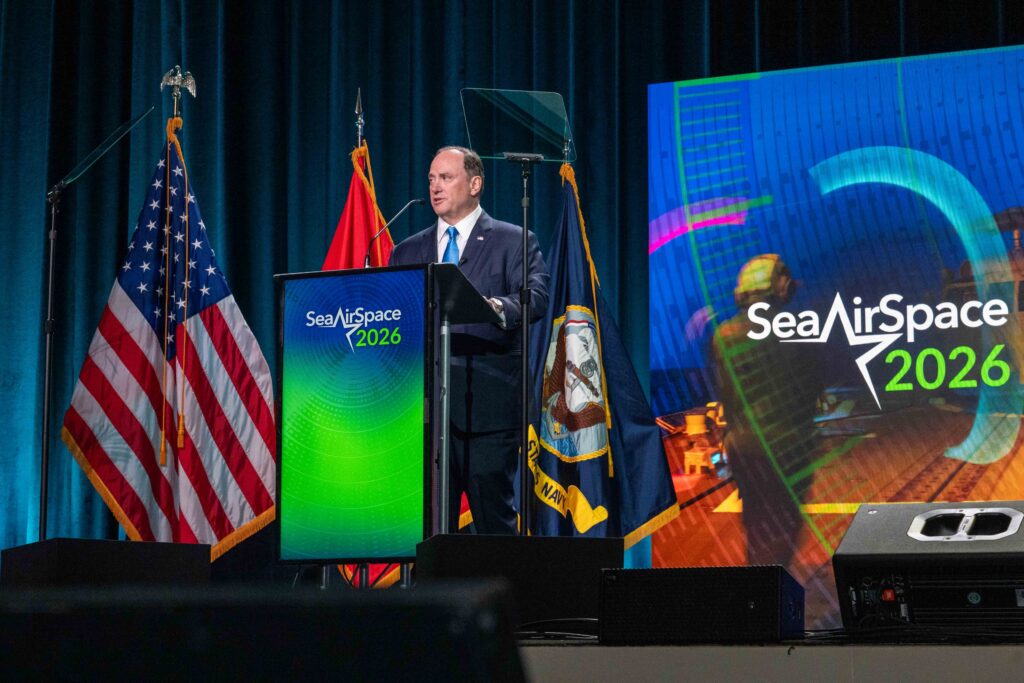
Annual Anchors Aweigh Fly-In Spreads Sea Services Knowledge Across Capitol Hill

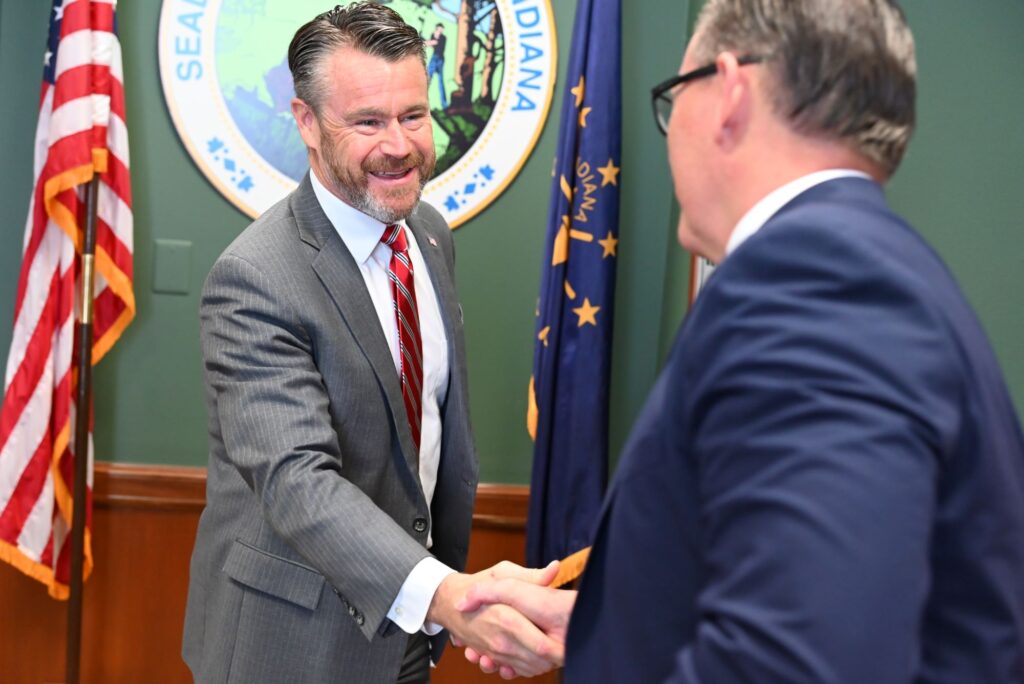
Sen. Todd Young of Indiana greets Navy League CEO Mike Stevens during the Anchors Aweigh Fly-In. Photo credit: James Peterson

Navy League members from across the country fanned out across Capitol Hill on June 2 as part of the annual Anchors Away Fly-In, where they educated lawmakers and their staff on the importance of sea service budgets and policy.

They presented congressional representatives with data about sea service budgets and requirements, and urged predictable spending levels, multi-year procurement programs and moving away from continuing resolutions, which have slowed down shipbuilding.

They also urged support for the Maritime Security Trust Fund, which would provide long-term mandatory funding outside of the annual appropriations cycle for merchant mariners and would help rebuild facilities and education for maritime academies.

The Navy Leaguers also urged members to cosponsor legislation including the SHIPs for America Act, the Pay Our Troops Act and the SERVE Act. Among budget issues, they urged support for a $50 billion annual shipbuilding budget and a $20 billion annual Coast Guard budget.

“The day was great. We saw three principals and three staffers, for a total of six, and most were friends of the Navy League,” National President Larry Salter said at a reception following the day of meetings.

Salter said his team emphasized support of the SHIPs for America Act, aimed at revitalizing the U.S. maritime industry, but most of the people they visited were supporters or even co-writers of the legislation.

“It was a friendly crew and it was great to emphasize what we are doing,” Salter said.

Navy League members fanned out across House and Senate office buildings to discuss the needs of the sea services. Photo credit: James Peterson

Ed Duffet of the Denver Council was on his second Fly-In visit, and this year was the sole representative of the Rocky Mountain region, doing his six meetings as a one-man band. He had high praise for the Navy League Legislative Affairs team.

“Everything’s set. They give you the briefing, they give you everything you might need to hand out to folks, they tell you tips and tricks,” he said, and members can leave knowing they made a difference.

“I’m coming back again. This was so much fun,” he said. “… This is a joy. If they had it twice a year I’d come twice a year.”

Taylor Smith came from the Portland-Blueback Council and attended nine meetings, including in-person sessions with Sen. Jeff Merkley (D-Oregon) and Rep. Cliff Bentz (R-District 2).

“Everybody was very receptive to all the information we presented, especially regarding the SHIPs for America Act, it seems like a lot of support for that across the board,” Smith said. “It all seemed very positive overall and was a great trip.”

“It was remarkably successful,” said Randall Myers of the Mobile Council.

His group met with five of the seven staffs from Alabama, and “we’re all in agreement that we need a state-level maritime security board, so we’re doing some things nobody else is doing, primarily to push forward and provide the support that the U.S. group needs at the state level, so we’re kind of working from the bottom up while they’re pushing these various acts,” he said.

The Fly In is a big part of one of the Navy League’s core missions, that of advocating for the sea services, Salter said.

“The members get to meet other members, meet some of their elected officials, and they get to discuss what’s important for them and the Navy League in supporting sea services,” he said.


Navy, Maryland Set Up New Energetics Innovation Hub to Speed Capability to the Warfighter

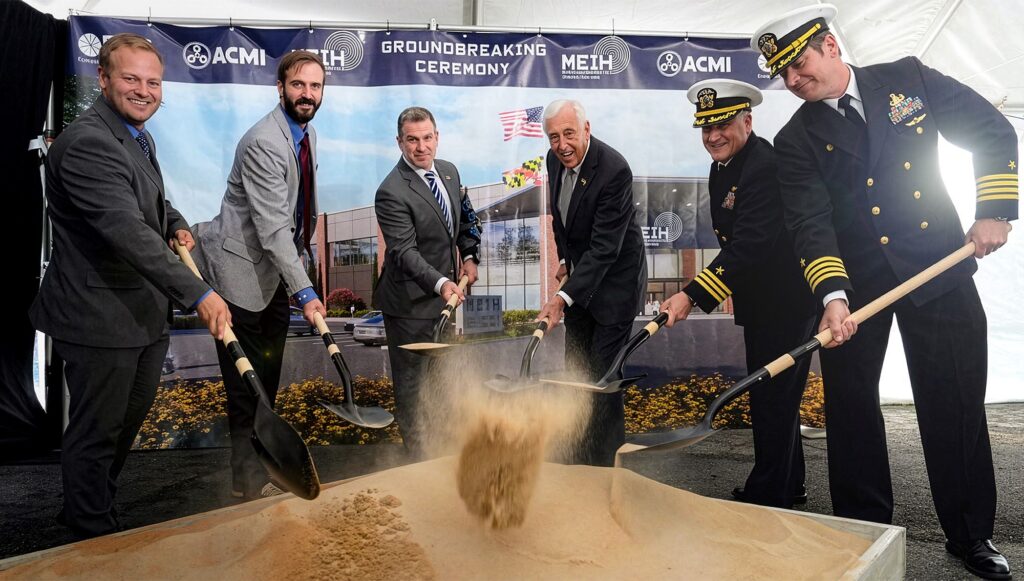
The symbolic groundbreaking ceremony for the new Maryland Energetics Innovation Hub. From left: Indian Head Mayor Brandon Paulin; Will Durant, President and CEO of Energetics Technology Center; David Dowell, CEO of ACMI Properties; U.S. Rep. Steny Hoyer; Commander Robert Lusk, Executive Officer, NSA South Potomac; and Captain Stephen Duba, Commanding Officer, NSWC Indian Head Division. Photo credit: ACMI Group

INDIAN HEAD, Maryland — Replenishing the U.S. military’s supply of weapons and speeding new systems to the field are hot topics these days, and on May 28 federal, state and local officials gathered near Naval Surface Warfare Center Indian Head to break ground on a new public-private partnership to do all that and more.

The American Center for Manufacturing & Innovation (ACMI), an industrial development group, co-hosted the groundbreaking with NSWC Indian Head for the Maryland Energetics Innovation Hub (MEIH), a defense manufacturing and innovation hub designed to modernize the developing and testing of energetics, the technologies and components that make up propulsion systems, warheads, flares, bombs and other explosive devices.

MEIH is intended to speed production of current weapons as well as the design of new ones and will consist of multiple new buildings just outside the gates of NSWC Indian Head. It will host companies and research institutions focused on eight priority areas, including energetics for uncrewed systems, next-generation propulsion systems, manufacturing automation and other capabilities.

“The United States is at a critical juncture right now, from the rapid expenditure of munitions in the Middle East to our ongoing commitments globally,” Captain Stephen Duba, commanding officer of NSWC Indian Head Division, said at the groundbreaking event. “The demand signal from our warfighter has never been louder than it is right now … to outpace our adversaries in the research development and production of cutting-edge energetic systems, we must scale and we must go faster for our nation.”

Rep. Steny Hoyer (D-Maryland), a member of the money-dispensing House Appropriations Committee, said MEIH is the result of “a team effort. It’s a team effort in the private sector, it’s a team effort at the federal, state and local levels as well,” one that includes some $16 million in appropriations funding from defense bills last year and one pending for fiscal 2027.

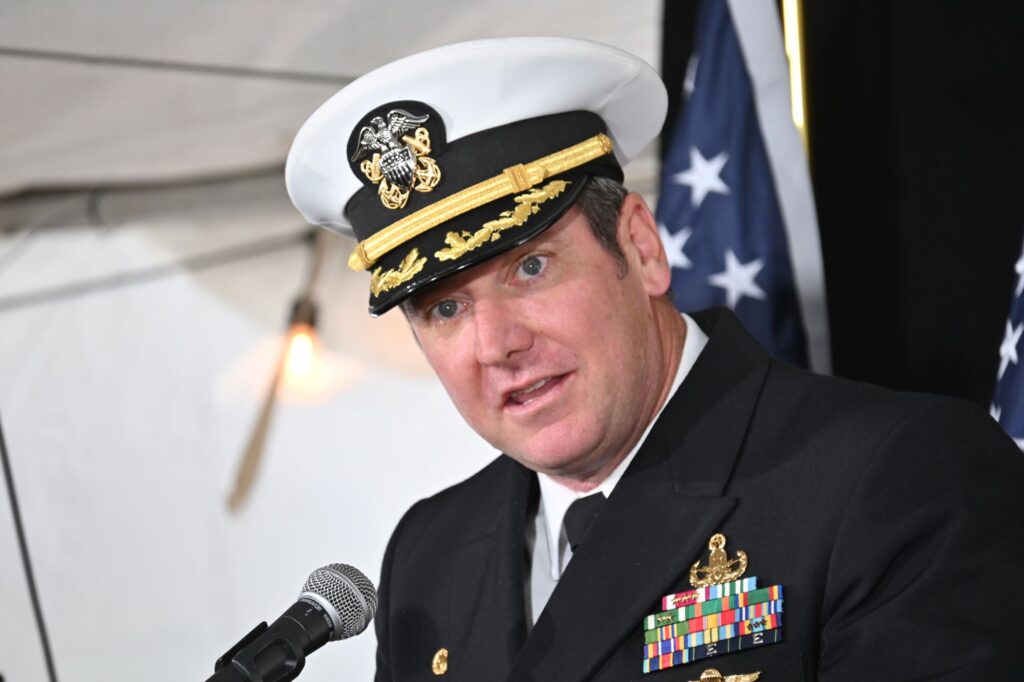
Captain Stephen Duba, Commanding Officer, NSWC Indian Head Division, speaks at the groundbreaking ceremony. Photo credit: Brett Davis

Speed to the Field

Setting up facilities such as MEIH rapidly is one of the goals of ACMI, which in February announced a National Security Industrial Hub in Indiana adjacent to Naval Surface Warfare Center – Crane Division and Crane Army Ammunition Activity.

MEIH is backed by an initial $50 million award from NSWC Indian Head and is expected to raise more than $200 million in additional private investment. As in the Indiana location, putting the facilities outside a military base, but not on it, is intended to make the development faster.

“We are doing all this in record time,” David Dowell, CEO of ACMI Properties, said of MEIH, as the contract from NSWC Indian Head was awarded just last month. The goal is to have the facility up and running in 18 to 24 months.

At the event, Dowell said the United States has often developed technologies that went elsewhere for production or were never produced at all.

“That gap, between innovation and production of innovative products, has become one of the greatest risks of both our economic edge and our common security. This project, the Maryland Energetics Innovation Hub, was conceived specifically to bridge this gap in the energetics space.”

And although the focus of the effort is energetics, that covers a lot of ground, said Will Durant, president and CEO of Energetics Technology Center, one of the two newly announced inaugural tenants of MEIH, along with Applied Research Associates.

“The goal of MEIH is there are eight stated capability areas and they are not only energetics, they are energetics adjacent,” Durant said.

That includes advanced energetics, uncrewed systems, autonomous systems, high-performance computing, even robotic arms for the safe handling of energetics, Durant said.

“We want to do the energetics innovation, and then anything that helps get greater capability to the warfighter faster is what we’re doing at MEIH.”


One Day Before Departure, Phelan Touted Need for New Budget, New Business Practices, New Battleship

Then-Secretary of the Navy John Phelan delivers a keynote address just hours before unexpectedly departing the job. Photo credit: Laura Hatcher.

Editor’s note: This story appeared April 21 in Seapower’s Show Daily at Sea-Air-Space. On April 22, Pentagon Spokesman Sean Parnell announced on X that John Phelan was leaving the administration; other media reports said he had been forced out. Undersecretary of the Navy Hung Cao is now acting secretary of the Navy. This article is about his keynote speech at Sea-Air-Space.

On the day the Pentagon released a $1.5 trillion fiscal 2027 defense budget, Navy Secretary John Phelan addressed Sea-Air-Space and said the Department of the Navy needs a budget, not a series of continuing resolutions from Congress.

Phelan also defended the controversial planned Trump-class battleship, saying it brings a needed capability and would anchor the new “high-low” Golden Fleet concept outlined the day before by Chief of Naval Operations Admiral Daryl Caudle, speaking from the same stage.

Phelan also echoed Caudle in saying doing business with the Navy must change, which is why the service recently announced a new portfolio acquisition executive (PAE) structure, appointing five senior leaders to act as single accountable officials for key domains to accelerate capability delivery and keep a lid on costs.

Phelan said he will soon testify on the budget on Capitol Hill and will tell lawmakers a continuing resolution — a budget carrying forward current levels of spending — “would have extremely negative consequences for the DoN. It’s like running a business and not being able to charge what your competitors do,” he said. “Continuing resolutions impose constrained short-term funding conditions that force legacy program tradeoffs and impact our ability to innovate and therefore our readiness over time.”

The Golden Fleet initiative “is about delivering the fleet of the future through three mutually reinforcing pillars. One, to maintain and enhance maritime dominance. Two, revitalize the maritime industrial base and three, change how the Department of the Navy does business,” Phelan said.

The initiative includes the proposed Trump-class battleship, or BBG(X), certain to be a target of some in Congress.

“I know the question many of you and the pundits are asking, why battleships, and why now? The answer is straightforward and grounded in the realities of high-end conflict in shaping the next large surface combatant,” he said.

Phelan said he has discussed the issue with top admirals and commanders and said they don’t want to have to choose between air defense, anti-ship warfare, anti-submarine warfare or long-range strikes.

“Battleship strike groups will offer commanders more options than what exists in today’s fleet,” he said. The ships would be “built to fight and stay in the fight by sustaining fires, maintaining pressure and outlasting any adversary … these are not capabilities you can fully distribute across smaller systems alone.”

Phelan said he has heard the critiques of the proposed battleship, that it would be too vulnerable, too expensive, too big. “We’ve heard that before about carriers and about submarines and yet when it matters most, those are the platforms that combatant commanders call for.”

However, he said the battleship would be just a “small part” of the Golden Fleet and would operate as part of a distributed network that would include smaller ships, crewed and uncrewed.

“This is not about replacing the fleet … the strategic reality is that manned platforms combined with unmanned systems, acting interchangeably, is the most powerful winning combination.”

Reviews from Carriers to Barracks

In a roundtable interview with reporters after the keynote speech, Phelan said the Navy is studying all aspects of how it does business, from planning the battleship to building barracks for Sailors more efficiently.

Phelan said the Navy is reviewing CVN 82 and 83, the next Ford-class carriers “to review the costs, the designs, the systems, to make sure that they make sense and they have all the systems and requirements that we want going forward,” a study he said should wrap up next month.

“I think one of the things we have to do a better job of in the Navy is kind of what I call total cost of ownership. So, what does it really cost to sustain and maintain these things? … To be honest, we’re reviewing every program, so the carrier’s just one of them.

“We’re doing the same thing in maintenance. We’re doing the same thing on infrastructure. We’re doing the same thing on milcon [military construction]. I’m still trying to understand why barracks cost, you know, on average more than $1,500 a foot, right? That’s insane.”

The budget proposal aims to improve the military industrial base to, among other things, improve submarine production rates. Phelan said that will be a challenge bigger than improving the production rate of surface ships.

“The submarines [are] a challenge because it’s one of the most complicated things I have seen, having been in there and looking at it, and I’ve been to a lot of places, including SpaceX, etc. This thing’s an underwater space station in effect, if you really look at it, particularly the Columbia.”

Phelan said he has walked a lot of shipyards and “I see a lot of machinery from the 1960s and I see 1980s practices. For example, when a welder runs out of materials, they’re not right next to ’em. They’re sometimes in another building a mile away. Bathrooms are not in the same building. These are things that slow down time on the deck plate.”

Phelan also said the Navy is looking at having some of its ships built by foreign partners, an idea President Trump has raised as a possibility.

“We are going to study that and take a hard look at it,” he said. It might make sense for foreign shipyards to build support ships, or to build modules for combatant ships. The United States will be looking at ships that are rapidly producible and could “hit the fleet fast, so that would tend to lead you more to the Koreas, Japans of the world,” he said. “I guess I would say everything’s on the table. We just need to look at it, understand it, understand the implications be


OMB’s Vought: Industry Must Share Blame for Shipbuilding Woes

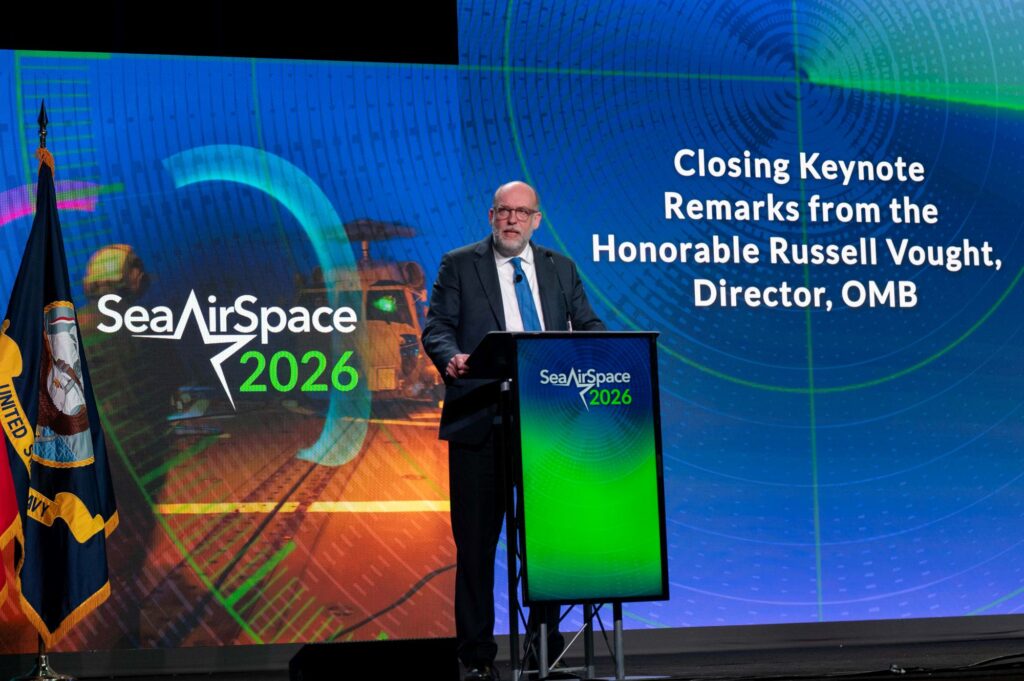
OMB Director Russell Vought discusses shipbuilding investment in the closing keynote of Sea-Air-Space. Photo credit: Laura Hatcher

The shipbuilding industry must share the blame for delays in shipbuilding and the Trump administration is willing to look beyond the traditional industry if it can’t produce products on time and within budget, OMB Director Russell Vought said at the closing keynote of Sea-Air-Space 2026.

Vought — who also served in his role in the first Trump administration — said, “during the first term, I came to believe that we had a demand signal problem. My view was that we, the government, we the customer, had failed to deliver a consistent demand signal to industry over successive appropriation cycles, and it was because of this inconsistency that production rates could not be more ambitious. I no longer believe that, because if you look back over the last administration, Congress provided sustained resources for shipbuilding but productivity went down, not up.”

Vought said the problem has been a long time coming and has two major sources.

“First was the now legendary ‘last supper’ meeting in which Bill Clinton’s secretary and deputy secretary of defense convened the CEOs of America’s largest defense companies and told them essentially to merge or die,” Vought said. “This decision, based on an end-of-history mindset, represents a strategic mistake of staggering proportions that it resulted in 105 large defense firm being reduced down to essentially seven major primes, with a resultant loss in capacity and competition.”

The second major influence that exerted what Vought called a major negative impact on the operations of large defense firms in the 1990s was the transition from “founder engineers” in the C suite, “men who understood the founding culture of their organizations,” with executives who were “heavily influenced by the philosophies coming out of consulting firms that placed an absolute priority upon ownership, interest in stock prices and dividends to the detriment of both the customer, which is to say the government, and the workforce.”

The latter reason is why President Trump signed an order prohibiting companies from paying dividends or conducting stock buybacks “until such time as they are able to provide a superior product on time and on budget.”

The administration is also willing to look overseas and to non-traditional shipbuilding yards for ships, Vought said, citing an agreement with Finland for 11 new icebreakers that would include four built in Finland and the rest built in U.S. shipyards after they modernize their facilities.

“This overall effort will not only produce ships for our Coast Guard but also result in American shipyards with more heavy industrial capacity into the future. These icebreakers will help to put the heavy back into America’s heavy industry, but they will also result in shipyards that can compete for other programs to include surface combatants into the future,” Vought said.

The new defense budget includes sizable investments for buying new ships — 18 battle force ships and 16 support ships for the Navy, more for the Coast Guard and Army and other agencies — but Vought warned traditional shipbuilders to step up or they may be procured elsewhere.

“Most of these ships can be built to commercial standards in a number of our nation’s shipyards that are not already tasked and behind schedule with Navy contracts,” Vought said.  “Some of these ships need to be bought in large numbers and could attract direct foreign investment that will meet the president’s goal of both adding capacity and competition to the U.S. shipbuilding sector.

“To be clear, we need more ships and we need them right now. We hope this year’s budget on top of the 82 ships we already received in [fiscal] ‘26 in the one Big Beautiful Bill convey that sense of urgency on the part of President Trump and his administration. If we cannot get the ships we need from traditional sources at cost and on time, we will get them from other shipyards.”


Defense Industry Needs Steady Budgets, Congressional Speakers Say

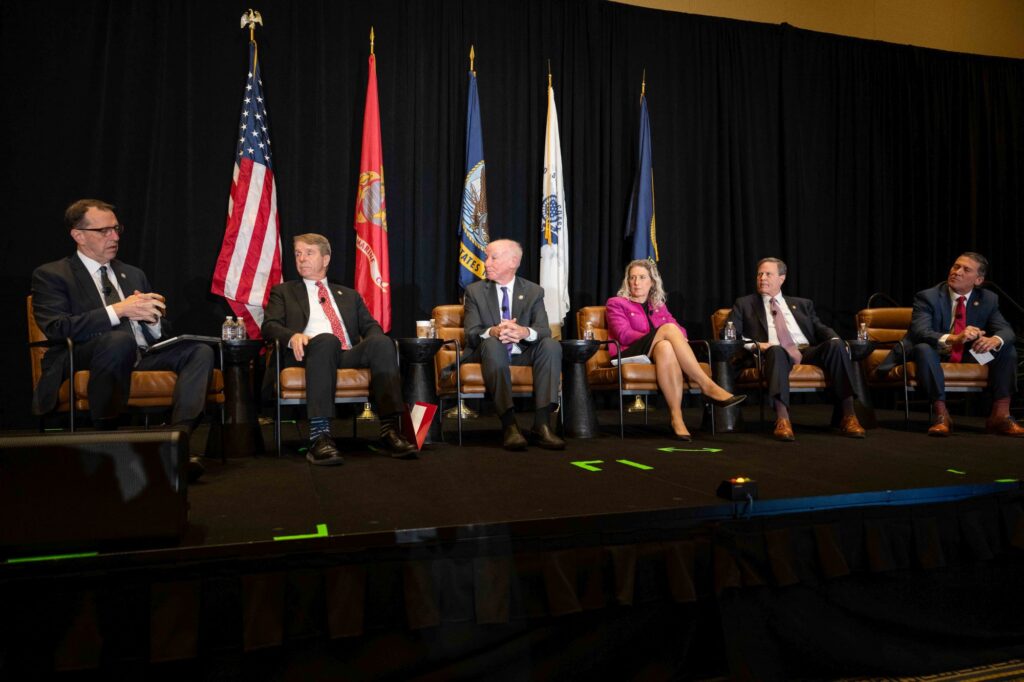
Speakers at the congressional breakfast on the last day of Sea-Air-Space. Photo credit: Laura Hatcher

Speaking at the annual congressional breakfast at Sea-Air-Space, members of Congress with defense oversight agreed that sustained funding to meet increased demand signal is the best way forward.

In recent years, Congress has resorted to continuing resolutions for government-wide funding instead of passing separate funding bills, which freezes spending at current levels and amounts to a cut in real dollars.

This occasionally results in supplemental spending bills, such as the “Big Beautiful Bill” that passed last year and added money for shipbuilding and other defense needs.

However, “reconciliation is not the way to do it,” said Rep. Donald Norcross (D-New Jersey). Defense spending is currently “going the right way,” he said, but “top line yes, reconciliation no.”

Rep. Ronny Jackson (R-Texas), agreed that reconciliation funding leads to difficult math, as subsequent budgets are based on previous spending, so a budget cut often follows a reconciliation boom.

“We have to take reconciliation numbers and budget numbers and add them together, or we will be going in the wrong direction,” Jackson said.

And while government speakers have Sea-Air-Space have made some requests of industry to build systems they need and have plans to maintain them, Rep. Joe Courtney (D-Connecticut) said government owes industry something as well: contracts to indicate demand signal.

“Four years ago we authorized the block VI contract for Virginia [the Virginia-class submarine],” he said. “We still do not have a contract as we’re sitting here this morning.”

Nothing sends a more powerful signal to the shipyards and the supply chain than a contract, he said. “I know it’s being worked on right now, but I can’t say it enough, we’ve got to get this thing wrapped up … if we’re serious about doing this, let’s get it signed, and for Columbia [class subs] too.”


Caudle: ‘Era of Platform-Centric Thinking is Over’ 

CNO Caudle met with reporters the morning of his luncheon keynote address. 
 

By Brett Davis, Editor-in-Chief 

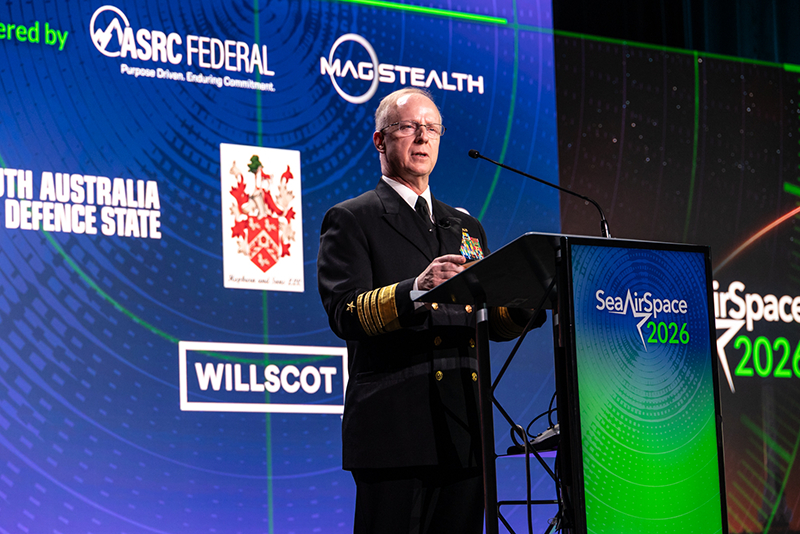
Ongoing operations against Iran are the “early expression of the Golden Fleet design” the Navy is pursuing, which will require a new way of doing business with the defense industry, Chief of Naval Operations Admiral Daryl Caudle said at the opening luncheon at Sea-Air-Space 2026 on Monday, April 20. 

The Golden Fleet Initiative “integrates a high-low mix of crewed and uncrewed platforms,” including uncrewed surface and underwater vehicles, into “tailored force packages” for combatant commanders, he said. 

All of these will be “enabled by advanced manufacturing, artificial intelligence, directed energy and containerized capabilities,” he said, “because the era of platform-centric thinking is over.” 

The low side would be attritable uncrewed systems that could be built and deployed rapidly, and the high side would be the main battle force, including submarines, destroyers and the new battleship, which would begin design work under the new Pentagon budget. 

“It creates a continuous engine that can produce, adapt and employ combat power faster than any adversary, levering the hedge strategy in order to optimize our Navy,” Caudle said. 

His message to the industry officials in the room was simple: “Build systems that integrate. Build systems that scale. Build systems that sustain in contact. And build them fast.” 

To that end, Caudle said he has introduced the Fleet Introduction Operating System, or FIOS.  

“Under FIOS, when the Navy receives a new capability, subsequent updates and upgrades should be as seamless as updating an app on your phone,” he said. “That means common interface standards. It means modularity. Open architecture. Virtualization with digital twins. Familiar look and feel. Modern training content that matches the style of what we are doing … FIOS is how we end the era where the fleet is the integration lab. If a capability shows up, it’s ready to fight, day one.” 

Sailor Concerns  

Earlier in the day, Caudle met with reporters to discuss his priorities and to push back on recent news reports about poor Sailor food during Operation Epic Fury. 

“Nutrition for Sailors has been one of my top priorities,” he said, as he wants to treat Sailors “like world-class athletes.” 

He said at least some of the photos sent to media reports appear to have been taken on shore facilities, not at sea, and all ships in the operation had at least 10 days’ worth of food, and most had more than 30. 

“But in no way, shape or form has there been a time, at least in this deployment, where they’ve not meant the nutritional requirements” of Sailors, Caudle said. 

Sailors occasionally might grumble about individual meals but otherwise he had heard no food complaints until the story broke. 

The food is just part of the Navy’s push to better the lives of its service members, which Caudle said will be reflected in the pending defense budget request. 

The Navy tries to get a quick jump on unsafe living conditions if there is a “tactical” issue, he said, but a recent unhealthy leak situation at the Red Hill facility in Hawaii led to a pilot program where responses to public works issues have been moved from Naval Facilities Command, a systems command, to a local captain and region commander to align solving those issues with the base command. 

“public work divisions is not only base operations stuff … but it’s also tied into NAVFAC, so it’s not that easy just to split that out, so we had to figure out how to do that, so we’re working that with the mid-South region now down in Norfolk and Hampton Roads.” 

The Navy has been pushing to improve unaccompanied housing for Sailors. “When the budget rolls out, that the administration and secretary of the Navy are certainly behind funding barracks and getting more and better quality situations there … you’re going to see that in the budget and you’re going to see that as a high priority for us,” he said. 


Greenroom Robotics Wants to Put its Brains on Your Boat

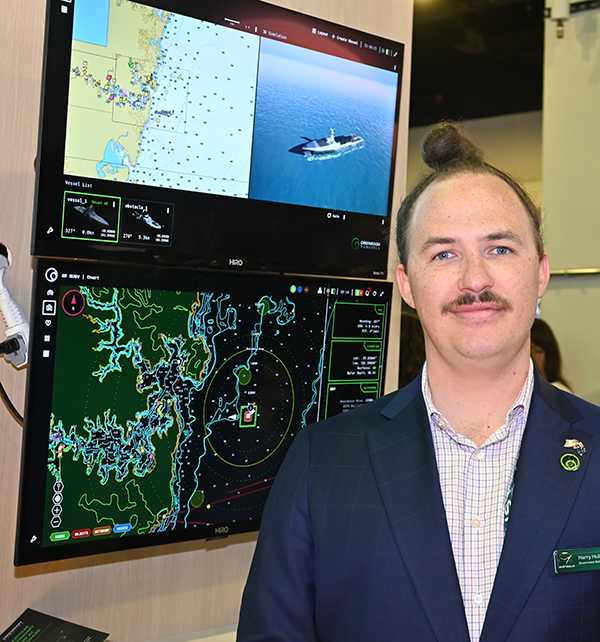
Harry Hubbert, COO for the relatively new Australian company Greenroom Robotics. Credit: Brett Davis 

By Brett Davis, Editior-in-Chief 

New small- and medium-sized uncrewed surface vessels are emerging from the waves everywhere at Sea-Air-Space, and one small Australian company is marketing its software to operate them. 

“We are a pure software company,” said Harry Hubbert, chief operating officer for Greenroom Robotics (Booth 1537 in the Australian pavilion), formed in 2017 when its founders met at the Australian Maritime College in Launceston, Tasmania, and bonded over a passion for ocean adventures and maritime robotics (the company’s name is a surfing term referring to the inside of a barrel produced by a wave). 

The company has four products: GAMA, a navigation and control system; Lookout +, an AI-powered optical radar that’s fully passive and can be used in contested environments, according to James Griffin, sales engineer at Greenroom; MIS-SIM, a mission simulator for training and planning; and MAROPS, a digitized mission management system. The products can work alone or together. 

The company’s software has been used on a retrofitted Aermidale-class patrol boat with Austal in Australia; a high-speed, agile uncrewed surface vessel from Subsea Craft in Australia, the United States and the United Kingdom; a EGS Survey USV in Australia and about 30 other vessels around the world, Hubbert said. 

“You can come to us with a boat that’s 25 or 30 years old, and we can make it into a fully autonomous boat,” Griffin said, or companies can bake the software into new USVs being developed. 

There are many USVs on display at the show this year and Greenroom Robotics has been talking to them, and the Navy push with the new Medium USV program and others is helping, Hubbert said. 

“The United States is a really big focus for us, given the scale of the operation over here but also the clear need,” Hubbert said. “The U.S. government’s been great at actually defining that they want this and this is what they want to do, and we happen to meet a lot of their requirements, so it’s been a good opportunity for us here.” 

The AUKUS agreement between the U.S., U.K. and Australia has eased the regulatory burden, “cracked the door open and allowed us to get moving a little bit faster,” Hubbert said, but the self-funded company is also setting up a shop in the U.S. and hiring Americans to help navigate the defense market. 


A Panoply of USVs Graces the Gaylord Pier

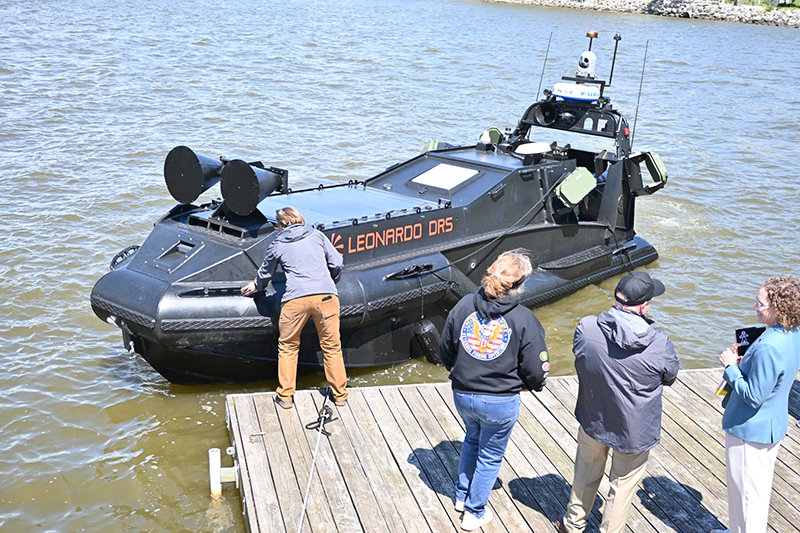
Leonardo DRS displayed its counter-UAS at sea system. (Credit: Brett Davis)

By Brett Davis, Editor-in-Chief 

In his keynote speech on Monday, Chief of Naval Operations Admiral Daryl Caudle said the future Golden Fleet will include a mix of main battle force ships and attritable, rapidly manufactured uncrewed systems. 

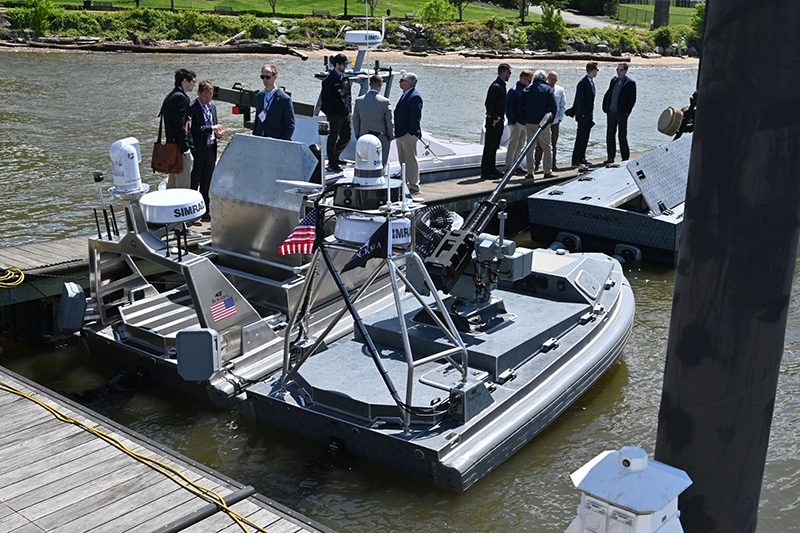
To get started on his shopping Caudle would only need to take a short walk to the Gaylord Pier, where 10 exhibitors featured a variety of small to medium boats, many of them autonomous and uncrewed. 

One was Leonardo DRS, which showcased its counter-UAS at sea system, which features a Ring counter-UAS system from partner Regulus mounted on a Sea Machines Stormrunner USV. 

As presented at Sea-Air-Space, the system uses a GPS spoofer to defeat UAS, including small ones that can be detected up to about a kilometer away, according to Jason Beaty, Leonardo DRS’ program director for unmanned systems. 

Further down the pier, California-based Navier made its show debut with two of its vessels, which can operate autonomously or with a crew. The company says its N30 Quanta-D system’s retractable hydrofoil design, based on the commercial N30 hydrofoil platform, enables superior speed, range and performance for the autonomous vessel. 

The company has systems already deployed with the U.S. Navy, said Navier founder and CEO Sampriti Bhattacharyya, although she could not discuss specifics. 

The N30 Quanta-D has a 2,000 nautical mile range, could be built quickly by a variety of shipyards and is cheap to operate, she said. 

“This boat costs 50 percent less to operate, or much less [than comparable vehicles],” she said. “You think of hundreds of these boats over 10 years, or even five years, or three years, the operational cost savings adds up massively. So, everybody is thinking attritable, but even beyond attritable, these are definitely low cost to build but the operational cost is also super, super low.” 

Another company on the pier is Michigan-based Ghostworks, which has a family of carbon fiber systems in use by Special Operations Forces and commercial users, said Britt Ward, the company’s chief naval architect. 

The company was formed four years ago and marked its third appearance at Sea-Air-Space, Ward said. Ghostworks’ MUT 3.5-meter composite USV, its smallest, aimed at attritable and intelligence, surveillance and reconnaissance missions, and Magic, an eight-meter foil-assisted catamaran which can carry electronic equipment, nonlethal payloads and autonomous controls. 

Further down the pier is BlackSea Technologies, which is displaying two small new USVs, Chaser and Comet. 

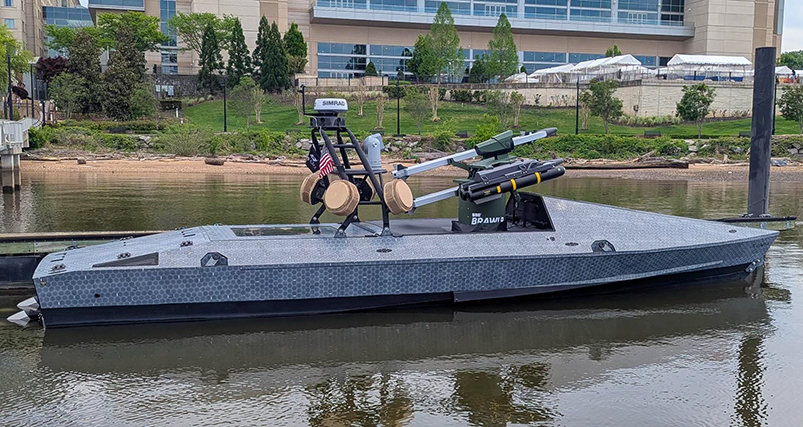
BlackSea Technologies unveiled two small new USVs, Chaser (above) and Comet. (Credit: Brett Davis (above), BlackSea Technologies (below))

“Chaser and Comet reflect our focus on giving operators scalable, mission ready platforms that can adapt quickly to evolving threats and mission demands,” BlackSea President Bob Pudney said in a press release. “We are proud to launch them alongside a group of industry partners whose technology helps make these vessels possible.” 

Chaser is a small USV designed to expand payload capacity, range and mission flexibility while maintaining rapid deployability and ease of use (meeting the Navy requirement to fit in a 20’ shipping container).  

Comet is BlackSea’s larger, high speed combat ready platform, designed to bridge the gap between small tactical USVs and larger unmanned combat craft. The 13.1 meter vessel can exceed 45 knots, carry a 10,000 pound payload including fuel, and support advanced payloads for missions including counter UAS, mine countermeasures, surface warfare, antisubmarine warfare, electronic warfare, maritime domain awareness and high value unit escort.   

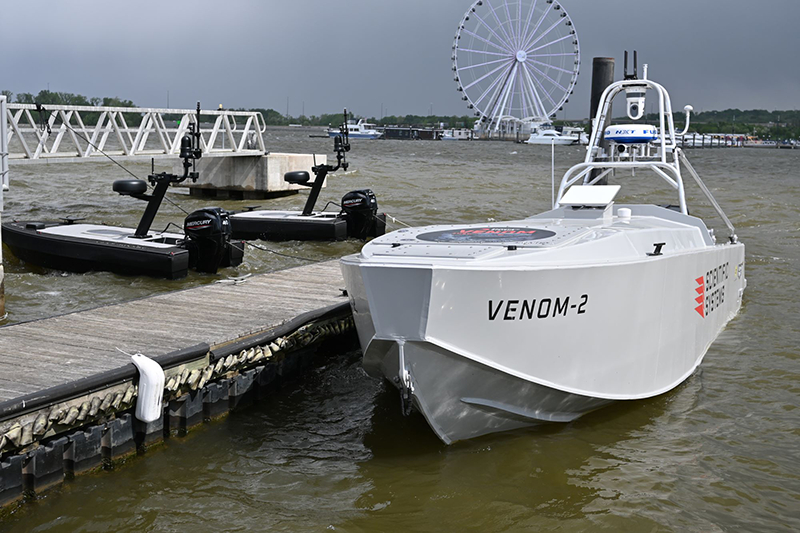
Other companies displaying on the pier include Scientific Systems with its Vehicle for Expeditionary Naval Over-the-Horizon Missions (VENOM), announced last year; Martec with its Mantas T38 Devil Ray autonomous USV, which has been used in various military exercises; Textron Systems with its Tsunami USV, which the company says is ready for mission-ready autonomy and is based on a commercial hull; Saronic with its Corsair USV, which debuted last year at Sea-Air-Space; HavocAI, whose software-defined hardware approach powers military and commercial autonomous systems; Maritime Robotics, which builds small “sea drones;” and Zodiac Milpro, one of the rare boats on the pier intended to carry people. 

Scientific Systems showcased its Vehicle for Expeditionary Naval Over-the-Horizon Missions (VENOM), announced last year. (Credit: Brett Davis)


HII Moves Further into Physical AI for Shipbuilding

 A GrayMatter Robotics technology performs autonomous grinding to an HII foundation project that used internal research and development funds.

By Brett Davis 

Shipbuilding giant HII (Booth 923) has added another artificial intelligence partner to its shipbuilding program, taking another step toward adding “physical AI” to the process of constructing Navy ships. 

In early April, the company announced it signed a memorandum of understanding with Carson, California-based GrayMatter Robotics to explore integrating GMR’s physical AI into shipbuilding operations, including for surface preparation, coating and inspection. 

The companies will identify and potentially pursue future opportunities in four areas that include autonomous shipbuilding capability development; integration of GMR technologies with other shipbuilding technology initiatives; workforce training to extend automation; and acceleration and scaling of unmanned system production.  

“Our shipbuilding throughput was up 14% in 2025 and we are looking for an additional 15% increase in 2026,” said Eric Chewning, HII’s executive vice president of maritime systems and corporate strategy. “By working with new partners like GMR we can further augment our workforce and speed up U.S. Navy shipbuilding production.” 

This follows on to a similar announcement from February, when HII signed an MOU with Ohio-based Path Robotics to incorporate physical AI for welding.  

HII said much of the work that would be pursued by these companies currently is “hands-on and highly skilled,” but AI-driven technologies “offer promising opportunities to support these critical processes by reducing repetitive work and improving consistency to help accelerate delivery timelines and meet the U.S. Navy’s growing demand.” 

Chewning said the introduction of physical AI is just one step of a series of actions HII is taking to improve shipbuilding, from increasing its supplier base to hiring and retaining new workers to making capital investments. 

“And finally, what brings us here today, we are investing in new industry 4.0 technologies like digital engineering, additive manufacturing, enterprise AI and physical AI to drive overall shipyard efficiency,” he told reporters in a call about the announcement. “By working with new physical AI partners like GrayMatter Robotics and integrating them into our high-yield production robotics initiative, or HYPR, we can further augment the AI workforce and speed up the shipbuilding process by bringing automation into more areas of production.” 

So far, shipyard automation remains limited to repeatable activities, where one robot might do a single task 100,000 times, but “there’s a broader set of industrial use cases where we need a single robot to do a hundred thousand tasks just once,” Chewning said. “And that’s where physical AI is a game changer and our partnership with GrayMatter Robotics is so important.” 

Ariyan Kabir, GrayMatter Robotics’ CEO and cofounder, said his company’s technology will help HII do the work it needs at a time when there aren’t enough skilled workers to do it. 

“These are physically brutal tasks,” he told reporters on the press call. “These require incredible precision and we don’t have enough people, skilled people anymore in the U.S. to do these jobs, who are capable of doing these jobs. And that is the problem we solve at GrayMatter Robotics. We build physical AI systems that learn how to perform these skilled manufacturing tasks autonomously — no pre-programmed robots — robots that understand complex material physics and environmental physics, the physics of force friction, contact tool wearing out, temperature and humidity affecting the material behavior, so on and so forth.” 

HII will discuss its physical AI efforts at 1:30 p.m. today at its booth, along with the CEOs of its new physical AI partners.