VX-31 conducts its final AV-8B Harrier II Flight 

From Naval Air Warfare Center Weapons Division, Sept. 30, 2025 

CHINA LAKE, Calif. — Air Test and Evaluation Squadron (VX) 31, the Dust Devils, concluded the AV-8B Harrier’s service with a sundown ceremony Sept. 23, when the squadron flew the jet for the final time and shut it down on the China Lake flight line.  

The final sortie, flown by Jim “Jimbo” Coppersmith, VX-31 technical director, brought veterans, Sailors, Marines, government civilians, industry partners and family members to the flight line to watch a traditional water salute and to say goodbye to a platform that served the fleet for more than four decades.  

U.S. Marine Corps Lt. Col. Timothy “Little Buddy” Burchett, VX-31 commanding officer, described the Harrier as one of the most challenging and rewarding aircraft to fly.  

“It’s the most fun airplane I’ve ever flown,” said Burchett. “There are no computers. It’s cables, pulleys and skill that keep that thing in the air.”   

He called the Harrier “a uniquely Marine Corps aircraft” and praised the China Lake test team for keeping the program safe and mission capable to the finish.   

“We did not coast into the finish line. It was a triumphant finish for the team partnership,” Burchett said.  

Coppersmith highlighted the squadron’s role in strengthening the aircraft’s combat effectiveness and safety record through decades of testing at China Lake.  

“It’s the most successful attack aircraft in Marine Corps history. No doubt about it,” he said. “We lost many great Marines along the way. Those treatments and those material fixes, the procedures we wrote, the engineering changes we made, saved lives and limbs.”  

Burchett pointed to VX-31’s testing culture as a model for the entire community.   

“You truly were the gold standard of testing,” he said.  

Coppersmith closed his remarks by reflecting on the Harrier’s history at China Lake and the teamwork that kept it flying until the end.  

“That jet right there flew its very first flight off the production line 33 years ago,” he said. “Today we completed AV-8B flight operations. We shut it down full mission capable, and it flew flawlessly. It’s a testament to what we’ve done to this aircraft as a team.”  


RTX’s Raytheon Delivers 500th ESSM Block 2 to U.S. Navy 

From RTX, Oct. 1, 2025 

Missile provides reliable ship self-defense against air and sea-surface threats 

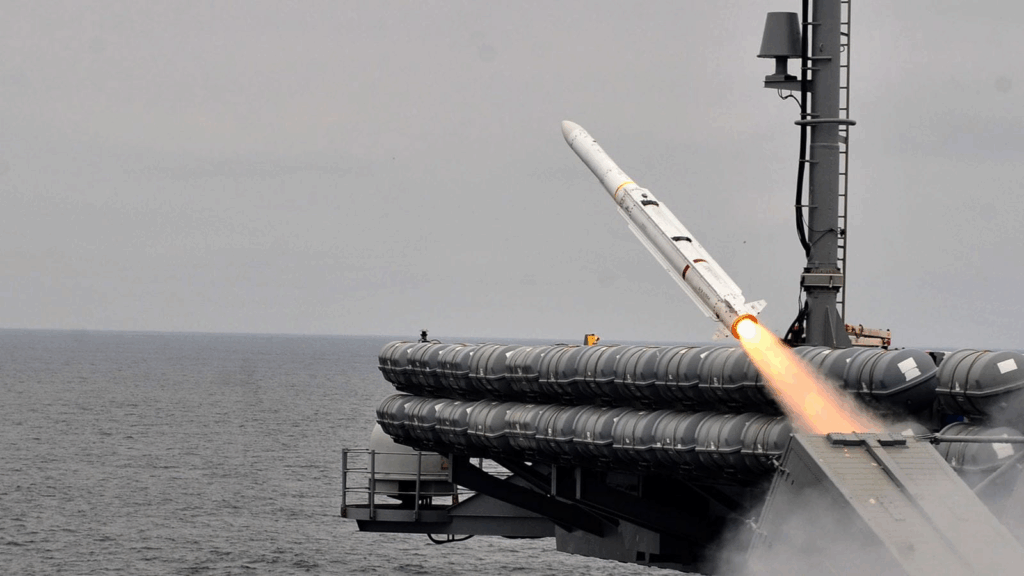
TUCSON, Ariz., Oct. 1, 2025 /PRNewswire/ – Raytheon, an RTX (NYSE: RTX) business, has delivered its 500th ESSM Block 2 missile to the U.S. Navy. The company is investing in infrastructure and material to continue deliveries, with plans to nearly double production rates by June 2026. 

ESSM Block 2 is an advanced surface-to-air missile that has proven effective against a variety of air and sea-surface threats. It features an upgraded guidance system with a dual-mode active and semi-active radar seeker, increased maneuverability, and improved performance over its Block 1 predecessor. 

“ESSM plays a crucial role in helping to ensure both ship self-defense and local area defense for U.S. and allied navies around the globe,” said Barbara Borgonovi, president of Naval Power at Raytheon. “The continued delivery of this capability is a testament to the strong partnerships and shared commitment among our team, our customers, and our allied nations to equip our servicemen and women with the best defense solutions.” 

ESSM is managed by the NATO SEASPARROW Consortium composed of 12 nations: Australia, Belgium, Canada, Denmark, Germany, Greece, the Netherlands, Norway, Portugal, Spain, Türkiye, and the United States. The consortium is NATO’s largest and most successful cooperative weapons project and represents over 50 years of international military-industrial cooperation. 


Ships Announced to Participate in Navy and Marine Corps 250th Birthday Celebration 

From U.S. Fleet Forces Command, Sept. 24, 2025 

NORFOLK, Va — The cities of Philadelphia and Camden will host the Navy Marine Corps 250 celebration October 9-16, 2025, with four U.S. Navy ships, two Coast Guard cutters, and four U.S. Navy Academy Yard Patrol boats (YPs) and sailboats. These vessels will participate in the Parade of Ships on Thursday, Oct 9. 
 
USS Arlington (LPD 24) – https://www.surflant.usff.navy.mil/LPD24/, USS Lassen (DDG 82) – https://www.surflant.usff.navy.mil/ddg82/, USS Cooperstown (LCS 23) – https://www.surflant.usff.navy.mil/lcs23/, USS Billings (LCS 15) – https://www.surflant.usff.navy.mil/lcs15/, USCGC Lawrence Lawson (WPC 1120), and USCGC James Rankin (WLM 555) will be available for public ship tours Oct 10-15. 
 
Ship and pier locations include: 
 
Philadelphia, Penn’s Landing: (Ship public tours Oct 10-14 from 10 a.m. to 4 p.m. and Oct 15 from 10 a.m. – 1 p.m.) 
• Freedom-class littoral combat ship, USS Cooperstown (LCS-23) from Mayport, Florida 
• USCGC Lawrence Lawson (WPC 1120) from Cape May, New Jersey and USCGC James Rankin (WLM 555) from Baltimore, Maryland 
• U.S. Naval Academy Yard Patrol boat and Sailboat from Annapolis, Maryland 
 
Philadelphia, Pier 4: (Ship public tours Oct 10 from 10 a.m. to 1 p.m., Oct 11-14 from 10 a.m. to 4 p.m. and Oct 15 from 10 a.m. to 1 p.m.) 
• San Antonio-class amphibious transport dock USS Arlington (LPD-24) from Norfolk, Virginia 
• U.S. Naval Academy Yard Patrol boat and Sailboat from Annapolis, Maryland 
 
Gloucester City, NJ, Gloucester Marine Terminal: (Ship public tours Oct 10-14, from 10 a.m. to 4 p.m. and Oct 15 from 10 a.m. to 1 p.m.) 
• Arleigh Burke-class Aegis guided missile destroyer USS Lassen (DDG-82) from Mayport, Florida 
 
Camden ex-Battleship New Jersey: (Ship public tours Oct 10-14 from 10 a.m. to 4 p.m. and Oct 15 from 10 a.m. to 1 p.m.) 
• Freedom-class littoral combat ship USS Billings (LCS-15) from Mayport, Florida 
 
Media interested in covering any NMC250 events can contact the Regional Public Affairs Office at (757) 322-2853 for more information. 
 
Vice Admiral John Gumbleton, Acting Commander, U.S. Fleet Forces Command – https://www.navy.mil/Leadership/Flag-Officer-Biographies/Search/Article/2236432/vice-admiral-john-gumbleton/ 
 
For up-to-date information on all NMC250 events, visit the official website: https://www.navy.mil/Navy-250/Events/ 
 
Join the conversation on social media by using the hashtags #NMC250, #NavyBirthday 


USS Benfold Departs U.S. 7th Fleet after 10 years of Forward-Deployed Service

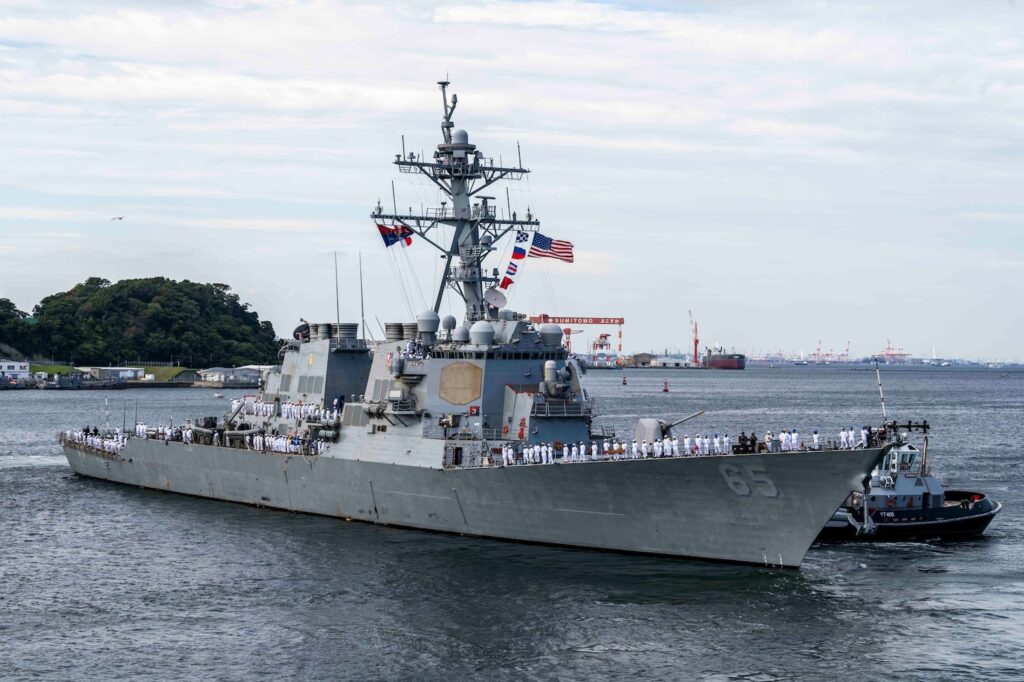
YOKOSUKA, Japan (Sept. 29, 2025) – Sailors assigned to the Arleigh Burke-class guided-missile destroyer USS Benfold (DDG 65) man the rails as the ship departs Commander, Fleet Activities Yokosuka, Japan, Sept. 29, following 10 consecutive years of forward-deployed service in the U.S. 7th Fleet area of operations. Benfold is forward deployed and assigned to Destroyer Squadron (DESRON) 15, the Navy’s Largest DESRON and U.S. 7th Fleet’s principal surface force. (U.S. Navy Photo by Chief Mass Communication Specialist Taylor DiMartino) 

By Lt. Victor Murkowski, Destroyer Squadron 15 Public Affairs

YOKOSUKA, Japan   –  The Arleigh Burke-class guided-missile destroyer USS Benfold (DDG 65) departed Commander, Fleet Activities Yokosuka, Japan, Sept. 29, following 10 years of forward-deployed service to U.S. 7th Fleet. 
 
Benfold’s decade of service was recognized by senior leadership at a farewell ceremony with Commander, Destroyer Squadron (DESRON) 15. “Benfold successfully stood the watch in the Western Pacific for 10 years,” said Capt. Dave Huljack, commodore, DESRON 15. “This ship leaves with an amazing legacy as a workhorse for the fleet and a stalwart friend to our allies and partners. Over the last decade, Benfold and her crew have executed our nation’s tasking with strength and excellence. We will miss Benfold’s grit and determination but look forward to her crew’s continued success in DESRON 31.” 
 
Benfold is scheduled to relocate to Everett, Washington, to support U.S. 3rd Fleet operations. Benfold will also shift from DESRON 15 to the “Ke Koa O Ke Kai” (The Warriors of the Sea) of DESRON 31 after its transit across the international date line. 
 
Benfold arrived in Yokosuka and joined Forward-Deployed Naval Forces – Japan (FDNF-J) in October 2015. During the ship’s decade-long tenure, it participated in numerous multilateral maritime exercises, such as: Malabar, Maritime Counter Special Operations Forces Exercise, Pacific Griffin, Valiant Shield, Keen Sword, Annual Exercise, and Resolute Dragon, working alongside allies and partners to ensure a free and open Indo-Pacific. 
 
“Through tenacity and teamwork, Benfold’s decade assigned to the Western Pacific has allowed our crew to build on the ship’s great accomplishments,” said Cmdr. Rich Mayer, commanding officer of Benfold. “Benfold is leaving the 7th Fleet family on a high note. Our families will miss Japan, and we will miss sailing alongside one of our nation’s strongest allies.” 
 
Throughout the tenure, Benfold maintained uncompromised combat readiness, conducting numerous patrols and demonstrating U.S. commitment to the region. 
 
While assigned to FDNF-J, Benfold earned three Battle Efficiency “Battle E” Awards, the Marjorie Sterrett Battleship Fund Award, the Arleigh Burke Fleet Trophy, the CNO Afloat Safety Award, multiple Retention Excellence Awards, and 10 consecutive Fleet Health Promotion and Wellness, or Green “H,” awards. While assigned to DESRON 15, Benfold sailed more than 4 million miles across the Indo-Pacific. 
 
“Operating alongside partners and allies in 7th Fleet has been a highlight for Benfold crewmembers over the past decade,” said Mayer. “Our Sailors have made lasting memories, and Benfold’s successes are a testament to the U.S. Navy’s long-term commitment to a free and open Indo-Pacific.” 
 
U.S. 7th Fleet, the U.S. Navy’s largest forward-deployed numbered fleet, routinely interacts and operates with allies and partners in preserving a free and open Indo-Pacific region. 


General Dynamics Electric Boat Awarded $642M for Virginia-Class Submarine Work

Release From General Dynamics Electric Boat

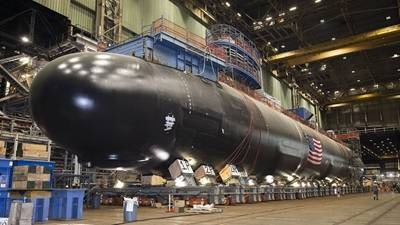
GROTON, Conn. (September 26, 2025) — General Dynamics Electric Boat, a business unit of General Dynamics (NYSE: GD), announced today it has been awarded a $642 million contract modification to a previously awarded contract supporting submarine production. This modification is for a cost-plus-fixed-fee modification to a previously awarded contract (N00024-20-C-2120) for Lead Yard Support and Development Studies and Design efforts related to Virginia-class submarines, as detailed in the U.S. Department of War contract award.  
 
“This contract modification supports our efforts to deliver the submarines our Navy needs as quickly as possible,” said Mark Rayha, president of General Dynamics Electric Boat. “This funding allows us to continue our design and development efforts in order to sustain and extend our nation’s operational overmatch against any potential adversaries. With the support of the administration, the Navy and Congress, we are prepared to deliver the advantage to protect our sailors, our families and our freedom.” 


CTF-66 Showcases RAS Capabilities With Partners in Unmanned Systems Demonstration

By Mass Communication Specialist 1st Class Cameron C. Edy

TROIA, Portugal  –  Commander, Task Force (CTF) 66 conducted a live robotic and autonomous systems (RAS) demonstration with Allies and partners during the experimentation exercise Robotic Experimentation and Prototyping with Maritime Unmanned Systems (REPMUS) / Dynamic Messenger 2025, in Troia, Portugal, Sept. 25, 2025. 

Nations that participated in the live RAS demonstration include Belgium, Denmark, Estonia, France, Germany, Norway, Portugal, Spain, Sweden, Ukraine, United Kingdom, and United States. 

“We continue to advance our robotic and autonomous systems through ongoing testing and combined training with partners and their unmanned systems,” said Adm. Stuart B. Munsch, commander, U.S. Naval Forces Europe and Africa (NAVEUR/NAVAF). “We deeply appreciate our Ally, Portugal, for their leadership in maritime experimentation and unmanned systems. Our collective capability is only getting stronger.” 

Taking place near the Portuguese Navy’s Operational Experimentation Centre (CEOM), the live RAS demonstration deployed two groups of unmanned surface vessels (USVs) simulating a swarming attack, with CTF-66 deploying three Global Autonomous Reconnaissance Crafts (GARC) in response to disrupt the attacking USVs and protect critical infrastructure from harm. 

This routine demonstration tests and validates U.S. and partner robotic and autonomous systems’ ability to protect critical infrastructure, and enhances interoperability within the NATO’s allied and partner nations in employing unmanned systems to execute national tasking. 

“CTF-66 is focused on adaptation, which enables a warfighting edge and warfighting advantage,” said Rear Adm. Michael S. Mattis, commander, CTF-66. “Sharpening that warfighting edge is pushing the capabilities and limits of our RAS with Allies and partners, and that’s exactly what we’re doing during REPMUS/Dynamic Messenger 2025.” 

REPMUS 2025 is a Portuguese-led experimentation exercise that focuses on maritime unmanned systems experimentation, capability development and interoperability, highlighting NATO’s ability to trial and integrate uncrewed systems into the operational environment. 

REPMUS 2025 is combined with exercise Dynamic Messenger (DYMS), an operational experimentation exercise led by NATO’s Allied Maritime Command to promote adaptation of capabilities, support agile modernization of Allied Maritime forces, and gain operational advantage across the Alliance. 

REPMUS / Dynamic Messenger 2025 integrates unmanned systems into NATO’s standing Naval Forces, resulting in both national maritime capability development and an exponential growth in RAS capability across the Alliance. The exercise also supports NATO’s broader Digital Transformation goals by improving information sharing, data management, and the integration of advanced technologies into command structures. 

Established in 2024 to deploy and employ RAS with Navy, joint, and NATO partners, CTF-66 utilizes RAS in conjunction with conventional manned platforms and spaced-based capabilities to expand Maritime Domain Awareness, develop defense measures against adversarial use of RAS, innovate asymmetric fighting, and in the future, deliver lethal effects, if necessary. 

Commander, U.S. 6th Fleet, headquartered in Naples, Italy, conducts the full spectrum of joint and naval operations, often in concert with allied and interagency partners to advance U.S. national interests, security and stability in Europe and Africa, and freedom of navigation in and around the Mediterranean. 

For over 80 years, NAVEUR/NAVAF has forged strategic relationships with Allies and partners, leveraging a foundation of shared values to preserve security and stability. Headquartered in Naples, Italy, NAVEUR/NAVAF operates U.S. naval forces in the U.S. European Command and U.S. Africa Command areas of responsibility. 


Lockheed Martin Begins Critical Testing on Aegis System Equipped Vessel Antennas

Release From Lockheed Martin

In partnership with the Japan Ministry of Defense (JMOD) and Missile Defense Agency, Lockheed Martin completed initial light off of the Aegis System Equipped Vessel (ASEV)’s shipset 1 radar system on schedule, including all four AN/SPY-7(V)1 antennas in Moorestown, New Jersey’s Production and Test Center (PTC). 

This initial light off marks the beginning of a comprehensive testing phase, crucial to supporting the ship construction and commissioning schedule. The testing will validate the full SPY-7(V)1 radar system’s performance, integrated with the Aegis, to ensure that it meets the highest standards of quality and capability. 

Dive Deeper Into Testing 

“By testing the complete SPY-7 radar system in a land-based facility, we’re able to verify the SPY-7 radar’s Ballistic Missile Defense and Integrated Air and Missile Defense capabilities meet warfighter needs ahead of shipboard installation, significantly reducing program deployment risk,” said Chandra Marshall, vice president and general manager at Lockheed Martin. 

Marshall added, “The complete SPY-7 radar system will be installed on Japan’s ASEV ships, serving as a critical component of Japan’s homeland defense.” 

What’s Next 

Following the completion of shipset 1 testing, Lockheed Martin, JMOD and the MDA will continue to drive progress on the program with milestones. 

  • Shipset 1 will perform further tracking exercises before being physically delivered to Japan next year. 

  • Shipset 2 will be sold off to the JMOD and begin testing and verification.  

In a significant milestone, Lockheed Martin officially handed over all four AN/SPY-7(V) radar antennas for the first ASEV shipset to the JMOD in June. Although the antennas remained at our facility for testing, that on-time delivery demonstrated the maturity and production capacity of the SPY-7 radar, highlighting our commitment to delivering on schedule. 

Across the globe, coming off the success of the first live track in December 2024, Navantia successfully integrated SCOMBA consoles end-to-end with Lockheed Martin’s SPY-7(V)2 radar at the Aegis SCOMBA Integration Center in Moorestown, New Jersey. The SCOMBA combat system is now fully integrated with Aegis and SPY-7 and performing simulated engagements of live tracks. 

On the domestic side, Lockheed Martin and the MDA successfully executed Flight Test Other-26a (FTX-26a). During FTX-26a, the Lockheed Martin-built Long Range Discrimination Radar successfully detected, tracked, and reported ballistic missile target data in a complex environment, demonstrating its ability to provide critical data to homeland defense systems. 

In December 2024, Lockheed Martin’s land-based version of the SPY-7 radar, known as TPY-6, successfully intercepted a mid-range ballistic missile as part of the Aegis Guam System during a flight experiment Flight Experiment Mission-02

The Big Picture 

SPY-7 is growing and capable. As a highly adaptable, and scalable radar, it’s being produced for multiple international partners, including Canada’s River-Class Destroyers, Spain’s F-110 Multi-Mission Frigates, and the US Missile Defense Agency’s transportable, land-based Aegis Guam System (TPY-6) and land-based Long-Range Discrimination Radar. 

The customer collaboration and successful milestones underscore the radar’s versatility and ready-now capability, solidifying its position as a cornerstone of modern missile defense. As the SPY-7 radar continues to demonstrate its capabilities, it’s clear that it will be providing 21st Century Security around the world to ensure our customers stay ahead of emerging threats. 


Coast Guard Awards Contract for New Heavy Weather Surf Boats 

Release From Headquarters, U.S. Coast Guard

SEATTLE — The Coast Guard awarded an indefinite delivery, indefinite quantity (IDIQ) contract on Sept. 29 to Rozema Boat Works, Inc. of Mount Vernon, Washington to acquire up to six second-generation special-purpose craft – heavy weather (SPC-HWX II) boats. 

The total potential value of the contract is $70.9 million and the first SPC-HWX II is anticipated to be completed in fiscal year 2027. The SPC-HWX II will replace the 52-foot first generation of special-purpose craft – heavy weather boats, which entered service in the 1950s and 1960s. 

These vessels were retired in 2021 due to increasing maintenance challenges. Like their predecessors, the SPC-HWX IIs will serve in the Pacific Northwest. 

These next-generation vessels are designed to perform a wide range of Coast Guard missions in extreme weather and challenging surf conditions that exceed the capabilities of other boats, such as search and rescue; disabled vessel towing; and law enforcement and ports, waterways and coastal security missions. 

Measuring 64 feet in length, the SPC-HWX II will feature self-righting capability and be capable of operating in 35-foot seas, 25-foot surf, and winds up to 60 knots. Powered by twin 1,200-horsepower diesel engines, it will reach speeds of 20 knots, tow up to 300 tons, and operate up to 150 miles offshore. With accommodation for a relief crew, the SPC-HWX II will have an endurance up to 48 hours, a critical feature for long-range heavy-weather operations.  


Lockheed Martin Sikorsky to Build Up to 99 CH-53K Heavy Lift Helicopters for U.S. Marine Corps 

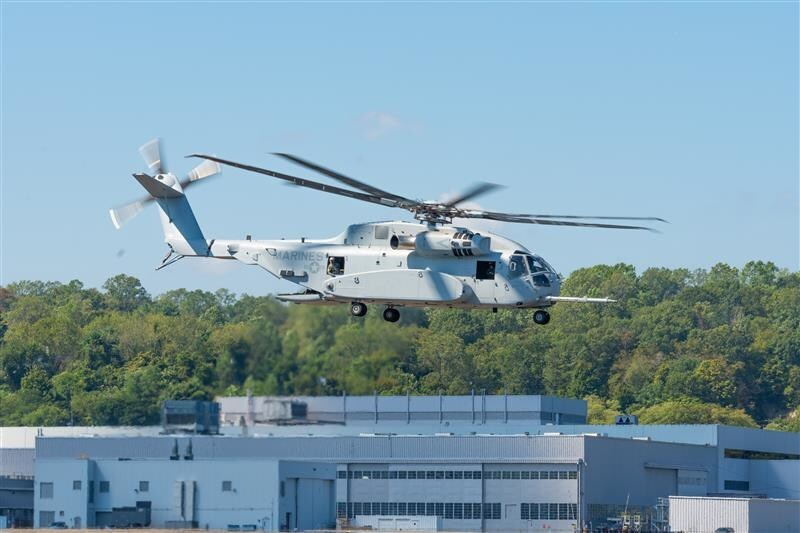
Sikorsky delivered a 20th CH-53K helicopter to the U.S. Marine Corps in September 2025. The heavy lift helicopter will be based at Marine Corps Air Station (MCAS) Yuma, Arizona. Photo courtesy Sikorsky, a Lockheed Martin company.

From Lockheed Martin Sikorsky 

Multi-year award will help stabilize U.S. industrial base, ensure consistent aircraft deliveries   

STRATFORD, Conn., Sept. 26, 2025 /PRNewswire/ – Sikorsky, a Lockheed Martin company (NYSE: LMT), received a $10.855 billion contract from the U.S. Navy to build up to a maximum of 99 CH-53K® King Stallion® helicopters for the U.S. Marine Corps over five years, the largest-quantity order to date for the aircraft. The award will ensure consistent deliveries of the United States’ most powerful heavy-lift helicopter between 2029 and 2034 and reinforce the U.S. industrial base by sustaining thousands of production roles at Sikorsky and across its nationwide supply chain.    

“This award reflects trust and confidence in Sikorsky to deliver these technologically advanced, heavy-lift helicopters that will revolutionize the Marine Corps’ operational capabilities by adding unrivaled power, performance, survivability and dependability to the fleet,” said Rich Benton, Sikorsky vice president and general manager. “The multi-year contract enables Sikorsky to partner with the Department of the Navy to drive long-term affordability, optimize production efficiencies and stabilize our supply chain and workforce, ensuring the Marines maintain the strategic advantage with the CH-53K in a rapidly evolving battlespace.”   

The contract combines five separate aircraft orders — defined as Lots 9-13 — into a five-year multi-year procurement, ensuring price predictability and consistent flow of materials from 267 CH-53K suppliers across 37 states, and 17 suppliers from eight countries. The contract allows the U.S. Government to buy up to 99 CH-53K aircraft for the Marine Corps or to fulfill orders from international military customers.   

Sikorsky has delivered 20 CH-53K aircraft to the Marine Corps. An additional 63 aircraft (Lots 4-8) are in various stages of production and assembly.   

“This contract represents a huge ‘win’ for the entire CH-53K team,” said Col. Kate Fleeger, Program Manager, H-53 Heavy Lift Helicopter Program Office (PMA-261). “The contract allows Sikorsky to bundle purchase orders from suppliers to achieve better pricing and pass the savings on to the government, giving us the ability to provide dependable delivery to the fleet and a consistent and predictable timeline for the transition from the CH-53E to the CH-53K.”   

To date, the U.S. Marine Corps has transitioned one CH-53K fleet squadron, and has CH-53K aircraft flying at one developmental test squadron, one operational test squadron and one training squadron to support operational requirements.   

Sikorsky designed the CH-53K helicopter to meet the Marine Corps’ lift requirements for today’s battlefield — to transport troops, supplies and heavy equipment forces across a contested environment — and survive.     

The Department of the Navy declared Full Rate Production for the CH-53K program in December 2022. The U.S. Marine Corps’ Program of Record remains at 200 CH-53K aircraft.  


U.S. Navy to Christen Future USS Louis H. Wilson Jr. 

From the U.S. Department of War, Sept. 26, 2025 

The U.S. Navy will christen the future USS Louis H. Wilson Jr. (DDG 126), during a ceremony at General Dynamics Bath Iron Works (BIW) on Saturday, September 27, at 10:30 a.m. (EST). 

The principal address will be delivered by Commandant of the Marine Corps, Gen. Eric Smith; Additional speakers include Governor of Maine, Janet Mills; U.S. Senator of Maine Angus King; Assistant Secretary of the Navy for Research, Development, and Acquisition, Jason Potter; Deputy Chief of Naval Operations for Integration of Capabilities and Resources, Vice Adm. Brad Skillman; Medal of Honor Recipient, Col. Harvey C. Barnum, Jr.; and President of General Dynamics Bath Iron Works, Chuck Krugh. 

In a time-honored tradition, ship sponsors Janet Wilson Taylor, daughter of the namesake and Susan J. Rabern, former Assistant Secretary of the Navy for Financial Management and Comptroller, will christen the ship by breaking a bottle of sparkling wine across the bow. 

The ship is named after Gen. Louis Hugh Wilson Jr., a World War II and Vietnam War veteran who was awarded the Medal of Honor for his heroism during the Battle of Guam. Following his service in Vietnam, he served as the 26th Commandant of the Marine Corps from 1975 to 1979. 

The christening of DDG 126 symbolizes the Navy’s 250-year commitment to innovation and maritime dominance. From seabed to space, the Navy delivers power for peace – always ready to fight and win. This milestone marks the Navy’s enduring legacy and commitment to shaping the future of maritime power. 

Arleigh Burke-class Flight III destroyers feature the AN/SPY-6(V)1 Air and Missile Defense Radar and incorporate upgrades to the electrical power and cooling capacity plus additional associated changes to provide enhanced warfighting capability to the fleet. Future destroyers Harvey C. Barnum Jr. (DDG 124), Patrick Gallagher (DDG 127), William Charette (DDG 130), Quentin Walsh (DDG 132), John E. Kilmer (DDG 134), Richard G. Lugar (DDG 136), and J. William Middendorf (DDG 138) are also in production at BIW.