Naval Research Lab Sharpens Navy’s Sights with a Domain-Centric Path for Smarter Sensing

The U.S. Naval Research Laboratory (NRL) launched a groundbreaking remote sensing experiment, Coastal Hyperspectral Reflectance Object Material Analysis (CHROMA), Sept. 4-19, 2025, designed to accelerate the application of artificial intelligence (AI) in hyperspectral imaging and strengthen environmental intelligence and resource management capabilities across the Department of War and the wider scientific community. CHROMA participants are seen in a thermal infrared image during the second week of the Rochester Institute of Technology’s (RIT) Open Community eXperiment (ROCX). (Photo by Nathan Stein of Matter Intelligence)

From Nicholas E. M. Pasquini, U.S. Naval Research Laboratory Corporate Communications

Jan. 7, 2026

The U.S. Naval Research Laboratory (NRL) launched a remote sensing experiment to sharpen artificial intelligence (AI) applications in hyperspectral imaging across the Department of the Navy and broader scientific community.

The U.S. Naval Research Laboratory (NRL) launched a remote sensing experiment to sharpen artificial intelligence (AI) applications in hyperspectral imaging across the Department of the Navy and broader scientific community.

Hyperspectral imaging, often described as capturing “the color of color,” provides a unique spectral fingerprint for each pixel. Combined with AI, these fingerprints support powerful tools for detecting subtle material differences and observing environmental change.

In coastal and aquatic environments, such AI tools could help identify hazardous materials, monitor infrastructure degradation, and assess natural resources with unprecedented accuracy.

The initiative, known as the Coastal Hyperspectral Reflectance Object Material Analysis (CHROMA) experiment, ran Sept. 4–19 as part of the Rochester Institute of Technology’s (RIT) Open Community eXperiment (ROCX).

“NRL was a key partner in the success of ROCX,” said RIT Research Professor John Kerekes, Ph.D. “The variety of material deployments on water and land enriched the overall value of the experiment and the professionalism of their staff was a great example for participating students and collaborators.”

Led by Kerekes, the multi-agency effort brought together federal, academic, and industry partners to collect detailed imaging data and match it with real-world measurements taken on the ground.

“The Navy has always depended on its ability to sense, interpret, and respond to the environment,” said NRL’s Information Operations Branch Head Gautam Trivedi, Ph.D. “With CHROMA, we’re building the foundation for the next generation of environmental intelligence, where AI and advanced sensing work hand-in-hand.”

The laboratory is leveraging multi-scale data collected from airborne platforms, unmanned aerial vehicles, and satellites over engineered and natural targets at the Tait Preserve in Penfield, New York – an environment chosen for its coastal and aquatic-adjacent features.

“This experiment moves hyperspectral technology out of the lab and into a realistic operational setting,” said NRL Information Technology Division Superintendent Joey Mathews. “It represents a critical step in elevating the Technology Readiness Level of AI-enhanced sensing applications, moving us toward demonstrations that directly support naval missions.”

A Multi-Platform, Domain-Centric Approach The NRL team synchronized flights and different types of sensors to capture observations at nearly the same time. This approach ensures data from satellites, airplanes, drones, and ground sensors can be accurately compared, offering researchers a richer dataset to build better AI. CHROMA’s design centers on generating detailed, multi-modal datasets of known material spectral responses. Researchers collected measurements from custom-fabricated metal panels with painted coatings, as well as from natural rock and mineral samples. These targets serve as known reference points – like the bullseye on a target – for improving AI algorithms that solve a longstanding remote sensing challenge called hyperspectral unmixing. Hyperspectral unmixing is the process of separating mixed spectral signatures within a single pixel. When unresolved, mixed pixels can obscure object detection and reduce identification accuracy – especially in complex, cluttered coastal environments. “We are enhancing the efficacy of AI-driven approaches in resolving sub-pixel material compositions,” said NRL CHROMA Project Lead Katarina Doctor, Ph.D. “By methodically changing the targets and viewing them with different sensors, we can learn how an object’s signature changes based on its material, the weather, and the type of sensor used to view it.” Doctor emphasized the data’s direct application to naval missions, stating it will significantly improve our ability to detect and identify objects in crowded littoral zones. She

noted that this improved hyperspectral detection is key to assessing threats, monitoring critical infrastructure, and ensuring the U.S. Navy can maintain a clear operational advantage in any coastal environment.

Elevating Naval Survivability The NRL Signature Technology Office contributed coated panels for the experiment, supporting research on how artificial surfaces appear in natural maritime settings. “This project, enhanced by Doctor’s work with advanced AI, uses the collected data to develop more effective camouflage coatings that will make naval platforms harder to detect by advanced surveillance systems,” said Scott Ramsey, Head of the NRL Signature Technology Office. “This research is key to improving naval asset survivability by making them harder to spot against natural backgrounds.” The resulting AI systems will be better able to distinguish between natural environments, like ocean surface, and coated, fabricated objects, like a ship’s hull. The approach provides reference points for evaluating how AI-based unmixing performs across varying environmental and spectral conditions.

Data for the Global Research Community

Doctor said ROCX will produce comprehensive hyperspectral datasets, encompassing engineered surfaces, geological samples, and a range of environmental conditions. The dataset will be shared openly with the remote sensing community, supporting defense and civilian research in coastal resource management, environmental intelligence, and infrastructure monitoring. ROCX’s multi-platform framework ensures experiment data is broadly applicable and scientifically rigorous. The combined dataset also enables researchers to study how an object’s spectral signature is affected by its material properties, the atmosphere, and other environmental factors. “The integration of diverse data types is what makes CHROMA unique,” Mathews said. “It’s not just about building better algorithms – it’s about understanding how they perform in the complexity of the real world.”

AI’s Domain-Centric Future

CHROMA also reflects a shift in AI development from traditional, model-centric approaches toward what researchers call Domain-Centric AI. This approach embeds expert scientific knowledge into the AI development process from the start, ensuring the final system understands the real-world context of its mission, which makes the AI more reliable.

“This paradigm addresses the ‘why’ behind the data. Real-world applicability and trustworthiness depend heavily on understanding the problem’s context and leveraging specialized human expertise,” Doctor said. “The ROCX experiment is a prime example of Domain-Centric AI. We are not just gathering raw information – we are creating a dataset informed by deep understanding of the target materials, their environment, and the sensors collecting them – which makes the resulting AI models more effective.”

About the U.S. Naval Research Laboratory

NRL is a scientific and engineering command dedicated to research that drives innovative advances for the U.S. Navy and Marine Corps from the seafloor to space and in the information domain. NRL, located in Washington, D.C. with major field sites in Stennis Space Center, Mississippi; Key West, Florida; Monterey, California, and employs approximately 3,000 civilian scientists, engineers and support personnel. NRL offers several mechanisms for collaborating with the broader scientific community, within and outside of the Federal government. These include Cooperative Research and Development Agreements (CRADAs), LP-CRADAs, Educational Partnership Agreements, agreements under the authority of 10 USC 4892, licensing agreements, FAR contracts, and other applicable agreements. For more information, contact NRL Corporate Communications at [email protected].


USS Fitzgerald Returns to San Diego Following Seven-Month Underway 

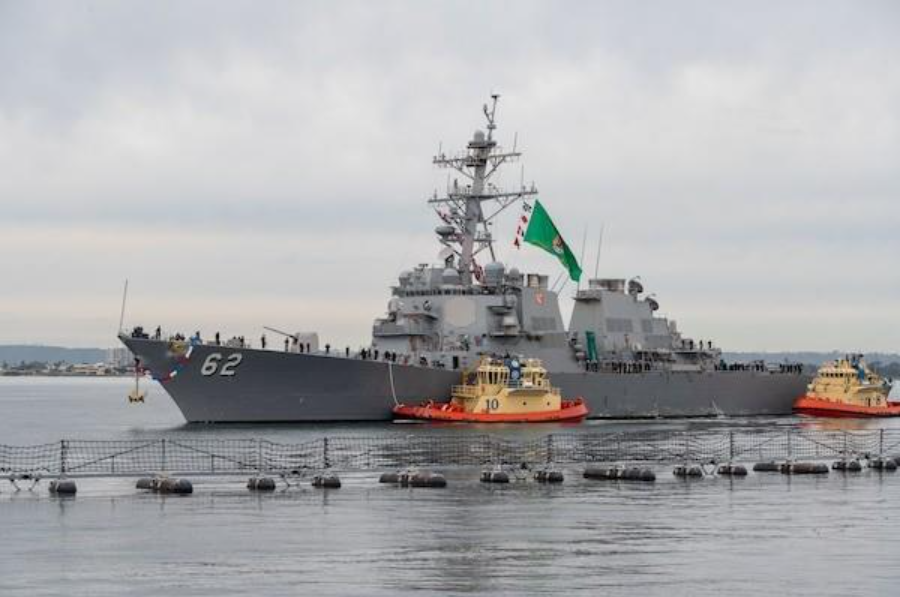
The Arleigh Burke-class guided-missile destroyer USS Fitzgerald (DDG 62) returns to its homeport of Naval Base San Diego following operations in the U.S. 3rd, 5th and 7th Fleets, Jan. 6, 2025 (U.S. Navy photo by MC2 Lordin Kelly)

From U.S. 3rd Fleet Public Affairs, Jan. 6 2026 

Arleigh Burke-class guided-missile destroyer USS Fitzgerald (DDG 62) returned to its homeport of Naval Base San Diego following a seven-month underway to the U.S. 3rd, 5th, and 7th Fleet areas of operation, Jan. 6, 2026. 

While underway, Fitzgerald conducted a wide range of operations, including routine presence patrols and maritime security operations. 

The ship participated in several multinational exercises, enhancing interoperability and strengthening partnerships with key allies, including the Japan Maritime Self-Defense Force and the Republic of Korea Navy. 

Fitzgerald executed six transits of the Strait of Hormuz, ensuring freedom of navigation in the Arabian Gulf, and participated in major multinational exercises including MALABAR 2025 and SWARMEX 2025, enhancing interoperability and strengthened partnerships with the navies of Australia, Bangladesh, Germany, India, Japan, Pakistan, the Philippines, and the United Arab Emirates, all contributing to a free and open Indo-Pacific. 

As a lethal, agile force, the Sailors aboard Fitzgerald exemplified the warrior ethos and readiness required to defend the United States and its interests at a moment’s notice. 

“I am truly proud of the hard work and dedication this crew has displayed daily throughout this seven month deployment,” said Cmdr. Paul F. Richardson III, commanding officer of Fitzgerald. “Their resilience and professionalism enabled us to successfully execute every mission we were tasked with in multiple areas of operation. We are all excited to be home and reunited with our families and loved ones, whose unwavering support made this possible.” 

The professionalism and resilience displayed by the crew throughout their deployment directly honored the legacy of their ship’s namesake. 

Fitzgerald is named in honor of Lt. William Charles Fitzgerald, a U.S. Navy officer who was posthumously awarded the Navy Cross for his extraordinary heroism in the Vietnam War. The ship’s motto, “Protect Your People,” is a direct tribute to his sacrifice, when he was mortally wounded while providing covering fire for his evacuating men during an attack by Viet Cong forces. 

As a multi-mission surface combatant, Fitzgerald is capable of conducting Anti-Air Warfare (AAW), Anti-Submarine Warfare (ASW), and Anti-Surface Warfare (ASuW) operations. 

As an integral part of the U.S. Pacific Fleet, U.S. 3rd Fleet leads naval forces in the Indo-Pacific and provides the realistic, relevant training necessary to execute the U.S. Navy’s role across the full spectrum of military operations. U.S. 3rd Fleet works together with allies and partners to advance freedom of navigation and overflight, the rule of law and other principles that underpin security for the Indo-Pacific region. 


Navy Reservists Support Operation Deep Freeze 2026 

Jan. 6, 2026 |  By Sarah Cannon, Military Sealift Command Pacific  

Navy reservists from a Military Sealift Command Pacific expeditionary port unit are currently supporting cargo operations in Port Hueneme, California, in preparation for Operation Deep Freeze 2026, a resupply mission.  

The team is overseeing the loadout of supplies and equipment onto the Military Sealift Command chartered heavy lift ship Plantijngracht, which will deliver the cargo to the remote Antarctica outpost of McMurdo Station.  

Serving as liaisons between the ship’s crew and Military Sealift Command, the reservists are overseeing the loadout of 302 pieces of cargo consisting of containers filled with construction materials, construction equipment, parts for the ongoing barge project at McMurdo Station, as well as dry goods and supplies needed for survival on Antarctica.   

“This mission gives us a broader experience of what goes on [for] the logistics side of the Navy; most specifically with MSC and the way they do business,” explained Navy Cmdr. Allan Phillips, expeditionary port unit commanding officer. “For us as reservists, it takes us away from the warship aspect of the Navy and focuses us on working with civilians and MSC.”  

In addition to cargo containers, materials for a 65-ton floating causeway system will also be loaded. The causeway will replace the ice pier at McMurdo Station.  

Previously, an ice pier made up of rebar and frozen seawater was used for cargo offloads. Because of the size and weight of the cargo this year, the ice pier is unusable.  

Once in Antarctica, the causeway will be assembled into sections on the ship’s deck and placed into the water. The sections will be attached to one another to form the final pier.  
  
The four-person unit began operations Dec. 21, 2025, with a brief holiday break. As the “eyes on the pier,” the team is providing on-site observations for the onload of cargo, including staying engaged with the ship’s crew, the pier crews and serving as a reporting team to the Military Sealift Command operation team in San Diego.  
  
While most people would think working away from home during the holidays would be a hardship, members of the team welcomed the opportunity to be part of the unique operation made up of different military branches and government organizations working together, something outside their normal routine.  
  
“For the enlisted members of the team, we get to see how this type of mission plays into the big picture of an operation,” said Navy Petty Officer 1st Class Marilyn Lazar, a hospital corpsman assigned to the expeditionary port unit.  
  
Plantijngracht is scheduled to depart Port Hueneme Jan. 8. Following a stop in Christchurch, New Zealand, where the ship will load additional cargo, it will travel to McMurdo Station, traveling approximately 8,040 nautical miles over nearly a month.   

Once in Antarctica, members of Navy Cargo Handling Battalion 1 will conduct the offload. Before departing McMurdo Station, the ship will be loaded with retrograde cargo for transportation off the continent. This includes trash and recyclable materials for disposal and equipment no longer required at the station.  


Maritime Administration Will Take Over and Streamline Deepwater Port Licensing 

Release From the U.S. Department of Transportation 

Accelerating deepwater port licensing will unleash American energy dominance, lower energy costs for families 

WASHINGTON, D.C. — U.S. Secretary of Transportation Sean P. Duffy today announced the Maritime Administration (MARAD) will take on oversight of deepwater port licensing from the U.S. Coast Guard (USCG). This change will streamline environmental reviews, accelerate license approvals, and lower domestic energy costs. 

“The Deepwater Port Program is a key pillar of President Trump’s energy dominance strategy. With this change, we’ll soon accelerate project approvals so the nation can safely utilize more of its abundant natural resources, create more high paying jobs, and lower energy costs for American families,” said U.S. Transportation Secretary Sean P. Duffy. 

“MARAD is excited and proud to lead the Deepwater Port Program. We look forward to continuing to collaborate with our partners at the U.S. Coast Guard to make this process more efficient and fuel our energy economy for years to come,” said MARAD Administrator Steve M. Carmel. 

While Joe Biden and Pete Buttigieg sat on deepwater port approvals for years to appease Green New Scam radicals, the Trump Administration is in the process of approving multiple licenses in the Gulf of America. These projects will substantially increase our energy revenue and allow America to dominate the global energy market.     

Additional Information: 

In overseeing the licensing process, MARAD will assume National Environmental Protection Act (NEPA) and environmental compliance review duties. USCG will instead support as a Cooperating Agency and will remain responsible for overseeing safety, design, construction, and operations of deepwater port facilities. This transition advances President Trump’s Executive Order on Unleashing American Energy.  

The Deepwater Port Act of 1974 (DWPA) establishes a licensing system for ownership, construction, operation, and decommissioning of deepwater port structures located beyond the U.S. territorial sea for the import and export of oil and natural gas. The DWPA sets out conditions that deepwater port license applicants must meet, including minimization of adverse impacts on the marine environment and submission of detailed plans for construction, operation, and decommissioning of deepwater ports.  

Thirty (31) Deepwater Port License Applications have been filed for approval since 1975.  

Eighteen (18) applications were filed for licenses to import liquefied natural gas (LNG);  

Five (5) applications were filed to export LNG;  

Six (6) applications were filed to export oil; and  

Two (2) applications were filed for licenses to import oil.  


HII Hosts Secretary of War Pete Hegseth at Newport News Shipbuilding

Release From HII

NEWPORT NEWS, Va., Jan. 05, 2026 (GLOBE NEWSWIRE) — HII (NYSE: HII) hosted Secretary of War Pete Hegseth at its Newport News Shipbuilding division today. The visit is part of Hegseth’s “Arsenal of Freedom” industry tour. 

During his visit to the shipyard, Hegseth met with HII and shipyard leadership and spent significant time interacting directly with shipbuilders and sailors. 

“Our warfighters cannot win without you,” Hegseth told shipbuilders. “We are in this fight together, shoulder to shoulder.” 

“There is an unbreakable line tying the wrench in your hand to the safety and survival of a 22-year-old American sailor patrolling the depths of the Pacific. The quality of your work, your unwavering commitment to excellence, your speed, your patriotism itself. You give our warrior the decisive edge.” 

“I want to thank Secretary Hegseth for his visit today, and for reinforcing to shipbuilders directly the critical importance of the work they do for the Navy and the nation,” HII CEO and President Chris Kastner said. “Speed matters. Over the past year, in partnership with our government customers, we’ve taken steps to measurably increase our hiring, grow our retention, and most importantly, improve proficiency levels within our workforce. These actions are yielding a meaningful increase in shipbuilding throughput. With more than 40 ships at Ingalls and NNS in active construction or modernization, our focus in 2026 is on building on this momentum. Every improvement in our operations, every efficiency we unlock, every day we reduce from a schedule translates directly into capability the Navy can deploy to the front line of deterrence and defense, to protect American interests.” 

Hegseth saw firsthand how NNS is leveraging technology and state-of-the-art facilities to execute serial-module-production for both Columbia– and Virginia-class submarines and toured these submarines in various stages of construction, from early construction to final assembly and test. He also toured construction progress and met with sailors on aircraft carrier John F. Kennedy (CVN 79), undergoing final outfitting and testing at NNS. The ship will be the world’s most lethal aircraft carrier upon delivery to the U.S. Navy. 

To increase shipbuilding throughput and meet the increased demand for ships, HII recently embarked on a distributed shipbuilding initiative to improve schedule adherence by partnering with 23 shipyards and fabricators beyond the company’s traditional labor market. HII also forged partnerships with international manufacturers to explore meaningful ways to expand capacity including evaluation of adding an additional shipyard in the U.S. At NNS in 2025, shipbuilders also modified shifts to support a 56-hour standard work week in order to finish the year strong. 

At 44,000 employees, HII is the largest industrial employer in Virginia and Mississippi. It is also the largest producer of unmanned underwater vehicles for the U.S. Navy, and the world. 


Magnet Defense Acquires Metal Shark to Accelerate Autonomous Capabilities

Release From Magnet Defense 

MIAMI, Jan. 6, 2026 /PRNewswire/ — Today, Magnet Defense LLC (“Magnet Defense” or the “Company”), a developer of fully autonomous national security maritime platforms for fleet operations and missile defense missions, announces that it has officially completed its acquisition of Metal Shark, a leading designer and shipbuilder of highly-capable maritime platforms for defense and law enforcement missions. The combination of Magnet Defense and Metal Shark offers U.S. and allied militaries a leading supplier of AI-enabled unmanned surface vessels (USVs). Metal Shark’s shipyards are the hubs from which Magnet Defense will deliver critical capabilities for the U.S. Golden Fleet initiative. 

The acquisition represents a critical step in Magnet Defense’s strategy to pair advanced robotics and AI-enabled software-defined systems with domestic industrial-scale production. By integrating Metal Shark’s established shipbuilding operations, workforce, and facilities, Magnet Defense moves from prototype development to sustained delivery of autonomous maritime platforms at speed and scale. 

Global maritime security demands are increasing rapidly, while U.S. shipbuilding capacity has lagged behind its peer competitors. Magnet Defense addresses this gap by combining artificial intelligence, modular vessel design, and modern manufacturing approaches to rebuild domestic maritime capability and deliver next-generation platforms faster and more efficiently. 

Metal Shark brings more than 20 years of experience designing and constructing mission-specific vessels, with over 2,000 vessels delivered to customers worldwide, including over 500 vessels for the U.S. Navy, 600 vessels for the U.S. Coast Guard, and hundreds more for allied nation military forces around the globe.   

The company’s two Louisiana manufacturing facilities encompass more than 125,000 square feet of manufacturing space across 40 acres and are supported by a seasoned workforce and a strong engineering organization. These assets provide Magnet Defense with immediate production depth and execution capacity. 


F-35 pilots, Navy Collaborative Combat Aircraft Hone Tactics in Joint Simulation Environment 

An F-35 Lightning II is shown operating alongside Collaborative Combat Aircraft in a conceptual graphic illustrating their integration. The unmanned systems serve as wingmen, enhancing mission effectiveness by supporting manned aircraft pilots with critical tasks. (U.S. Navy graphic)

From Naval Air Warfare Center Aircraft Division, Jan. 5, 2026 

NAS PATUXENT RIVER, Md.– The Naval Air Warfare Center Aircraft Division (NAWCAD) achieved a milestone in advancing F-35 Lightning II aircraft integration with the Navy’s Collaborative Combat Aircraft (CCA) during a recent tactical demonstration in its Joint Simulation Environment (JSE). 

The event demonstrated how advanced modeling and simulation can develop tactics and strategies for fifth-generation aircraft like the F-35 operating with uncrewed combat systems. 

“Modern warfare is demanding more from our aviators,” said NAWCAD Commander Rear Adm. Todd Evans. “This milestone shows the Joint Simulation Environment’s impact on equipping them with the advanced tactics they need to win future battles.” 

During the demonstration, F-35 pilots used touch-screen tablets to control multiple CCA during simulated missions. Using advanced operational communication systems and precision-guided missiles, pilots engaged complex threats in the JSE’s highly realistic virtual environment

The JSE is the Department of War’s state-of-the-art digital test and training range that replicates real-world combat scenarios in a virtual environment. Built by NAWCAD engineers, the JSE combines cockpit simulators, advanced software, and domed visual displays to allow pilots to train and test systems in a safe, controlled setting. The JSE enables pilots to fly more sorties in one week than they can on open-air ranges in a year, sharpening their skills and improving readiness. 

The Navy’s CCA are multi-role uncrewed combat vehicles that will operate with crewed fighters enhancing the mission effectiveness of crewed platforms in highly contested environments. They are central to the Department’s future strategy, enabling pilots to focus on high-level decision-making while expanding operational capabilities. The JSE is playing a key role in developing tactics and operational concepts for integrating these systems with fifth-generation platforms like the F-35. 

NAWCAD’S JSE continues to integrate additional platforms and enhance the fidelity of its simulated environment with planned additions of the E-2D Advanced Hawkeye, F/A-18E/F Super Hornet, and EA-18G Growler to enable integrated test and training in fiscal year 2026. 

NAWCAD hosts dozens of squadrons and hundreds of pilots annually, fostering joint and international collaboration in advanced air combat training. The JSE is expanding with additional Navy and Air Force facilities under development at Naval Air Station Fallon, Nellis Air Force Base, and Edwards Air Force Base, to train tactical pilots. 

NAWCAD employs military, civilian, and contract personnel. It operates test ranges, laboratories, and aircraft in support of test, evaluation, research, development, and sustainment for all Navy and Marine Corps aviation platforms. Based in Patuxent River, Maryland, NAWCAD also has major sites in St. Inigoes, Maryland; Lakehurst, New Jersey; and Orlando, Florida. 


Marine Corps Launches New Drone Training Program 

By Marine Corps Staff Sgt. Claudia Nix, U.S. Marine Corps Training and Education Command, Dec. 31, 2025 | 

The Marine Corps has launched a training program to rapidly increase the number of small unmanned aircraft system operators for commercial off-the-shelf attack drones.  

The program, announced in Marine Corps administrative message 624/25, addresses a critical need for standardized training as the service integrates new systems, including the Neros Archer first-person-view attack drone and prepares for this significant investment in various drone technologies.   

This initiative builds on the service’s success over the past few months scaling FPV attack drones across the Fleet Marine Force. It also aligns directly with War Department plans to field tens of thousands, and then hundreds of thousands, of attack drones across service components starting in March 2026 and continuing over the next several years.  

The new framework, created by Training and Education Command, establishes six pilot courses and eight certifications to create a standard for drone operators across the force. These initiatives are designed to provide foundational skills for a variety of small unmanned aircraft systems.  

“We are fielding these courses as pilot programs to move quickly while maintaining our commitment to quality training and safety,” said Marine Corps Lt. Gen. Benjamin T. Watson, commanding general, Training and Education Command. “This allows us to validate all aspects of the training, from prerequisites and instructional methods to resourcing needs and certification standards, ensuring that we refine and perfect the curriculum before it becomes part of our long-term training framework.”  

Six approved pilot courses will certify Marines while testing instructional methods and curriculum. These courses include training for drone operators, payload specialists and instructors, with specific prerequisites such as simulator experience on Training and Education Command-approved systems. The courses aim to ensure proper integration and supervision of new drone capabilities. The Training and Education Command has also established a process to grant certifications to Marines who have existing qualifications and experience through an exception to policy.  

Seven organizations are designated as regional training hubs with the authority to immediately begin conducting the pilot courses, including schools within Training and Education Command, 1st Marine Division, 2nd Marine Division, III Marine Expeditionary Force, and Marine Forces Special Operations Command.  

Weapons Training Battalion at Marine Corps Base Quantico, Virginia, will serve as the interim central hub, responsible for standardizing training, certification and safety across the force. It will consolidate lessons learned and function as the Marine Corps’ focal point for adapting training to emerging platforms, payloads and evolving operational requirements.  

This effort to scale standardized FPV attack drone training was shaped by lessons from recent certifications, including two Marine Corps attack drone competitions, one in the National Capitol Region and the other in Okinawa, Japan. These efforts certified 19 attack drone operators, five attack drone instructors, seven payload specialists, and two payload specialist instructors.  

In mid-November, the Marine Corps Attack Drone Team also supported the certification of 22nd Marine Expeditionary Unit Marines, resulting in 14 attack drone operators and 11 payload specialists fully trained, equipped and ready for contingency operations.  

Over the next few months, the Marine Corps Attack Drone Team, alongside Weapons Training Battalion and regional hubs, will certify hundreds more Marines. By May 2026, all infantry, reconnaissance battalions and littoral combat teams across the Corps will be equipped to employ FPV attack drone capabilities.  


John Baylouny Takes Reins as CEO of Leonardo DRS  

Says company is uniquely positioned to rapidly deliver disruptive, trusted defense technologies to match the speed of today’s warfare.  

ARLINGTON, VA, January 5, 2026  ̶  Leonardo DRS, Inc. (NASDAQ: DRS) announced today that John Baylouny has officially assumed the role of President and Chief Executive Officer, effective January 1, 2026. 

Baylouny is deeply rooted in the organization, bringing more than 35 years of experience across senior leadership, engineering, design, operations, and P&L leadership roles. As COO, he oversaw the company’s workforce across both operating segments and drove enterprise strategy for next-generation capability development. Backed by his deep experience relentless drive for excellence and unwavering commitment to our warfighters. Baylouny’s leadership marks a bold new chapter for Leonardo DRS, one which he believes will be defined by speed and innovation. 

“This is a defining moment for our industry, and we intend to lead from the front,” Baylouny said. “Leonardo DRS is uniquely positioned to deliver disruptive, trusted technologies at the speed the mission demands. We will strive to innovate and perform faster, and broaden our impact across defense, intelligence, and international customers — while staying anchored in the technical expertise and customer focus that have earned us our reputation for delivering when it matters most.” 

Baylouny stated that his primary focus will be leading the company’s next phase of growth, expanding into high-opportunity markets aligned with its core strengths, accelerating next-generation R&D, and strengthening Leonardo DRS’s role as a trusted partner delivering high-performance, mission-critical systems across all warfighting domains. 

As previously announced, the Leonardo DRS Board of Directors on October 27, 2025, named Baylouny as President and Chief Executive Officer and a member of the Board when Bill Lynn, the company’s prior Chairman and Chief Executive Officer, announced his retirement after leading the company for fourteen years. 


CENTCOM Forces Remove ISIS Operatives in Syria After Large-Scale Strike 

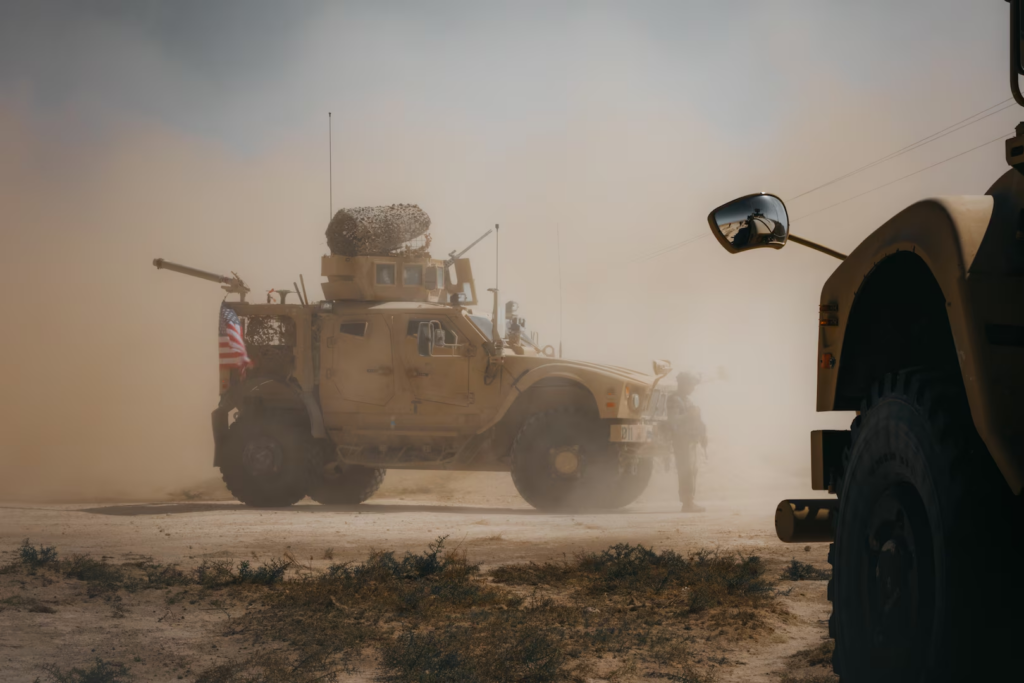
U.S. Army Staff Sgt. William Essman, assigned to Delta Company, 1st Battalion, 133rd Infantry Regiment, 2nd Brigade Combat Team, 34th Infantry Division, Iowa National Guard, provides security within the U.S. Central Command area of responsibility, Sept. 21, 2025. The unit, operating in support of Combined Joint Task Force – Operation Inherent Resolve, secured a landing zone to ensure the safe arrival of incoming personnel and visitors. (U.S. Army photo by Sgt. Zachary Ta) 

From U.S. Central Command, Dec. 30, 2025 

TAMPA, Fla. – U.S. and partner forces killed or captured nearly 25 ISIS operatives during the days that followed a Dec. 19 large-scale strike in Syria. 

U.S. Central Command (CENTCOM) and partners across Syria killed at least seven ISIS members and captured the remainder during 11 missions conducted Dec. 20-29. The operations also led to the elimination of four ISIS weapons caches. 

These recent missions followed the launch of Operation Hawkeye Strike on Dec. 19 when U.S. and Jordanian forces struck over 70 targets with more than 100 precision munitions. The massive strike executed by dozens of fighter aircraft, attack helicopters and artillery destroyed ISIS infrastructure and weapons sites across central Syria. 

“We will not relent,” said Adm. Brad Cooper, commander of CENTCOM. “We are steadfast in commitment to working with regional partners to root out the ISIS threat posed to U.S. and regional security.” 

In 2025, ISIS inspired at least 11 plots or attacks against targets in the United States. In response, U.S. and partner forces in Syria have conducted operations during the last 12 months that resulted in more than 300 terrorists being detained and over 20 killed. 

“Continuing to hunt down terrorist operatives, eliminate ISIS networks, and work with partners to prevent an ISIS resurgence makes America, the region, and the world safer,” said Cooper.