Submarine Rescue Diving and Recompression System Completes Certification 
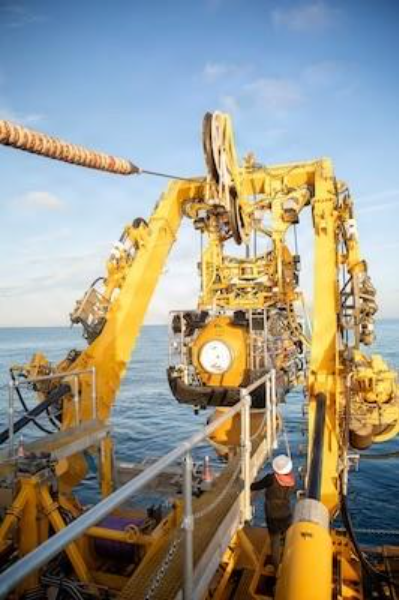
PACIFIC OCEAN (March 4, 2026) The specialized Launch and Recovery System (LARS) returns the pressurized rescue module (PRM-1) Falcon aboard Hornbeck Offshore Services (HOS) ship Mauser following the completion of a controlled manned dive evolution off the coast of San Diego, March 4, 2026. URC is composed of active duty and Reserve Component Sailors and operations and maintenance contractor located in San Diego, Calif., and is home to the U.S. Navy’s manned deep diving submarine rescue submersible. The team provides administrative, maintenance, operations, and logistics oversight for the Submarine Rescue Diving and Recompression System (SRDRS) and Sibitzky Remotely Operated Vehicle (ROV). (U.S. Navy photo by MC1 Tiarra Brown)

From Team Submarine Public Affairs, March 31, 2026 

The U.S. Navy certified the Submarine Rescue Diving and Recompression System (SRDRS) for full operation, March 23, clearing the system for deployment in support of undersea rescue missions around the globe. 

The certification concluded with a final manned dive in the waters near Naval Air Station North Island, Calif., March 6, and marks the culmination of a multi-year collaboration between the Undersea Rescue Command (URC), Submarine Squadron 11, Commander, Submarine Force, U.S. Pacific Fleet, Commander, Submarine Forces, Naval Sea Systems Command, Program Executive Office Attack Submarines, and the Undersea Special Missions Program Office (PMS 390). 

“This successful dive signifies a major milestone for the Navy,” said Rear Adm. Jonathan Rucker, Program Executive Officer, Attack Submarines. “We hold ourselves to extremely high standards in the undersea community. Going through this process shows that the team is ready to meet and exceed those standards. This accomplishment is a direct result of the whole team’s dedication.” 

The SRDRS is a remotely operated system capable of rescuing submarine crews in cases of emergency and can deploy anywhere in the world within 96 hours. With the successful system certification, the URC team is authorized to assist in submarine rescues globally, joining an international force of experts ready to help those in need. 

“Our Submarine Force operates, along with our allies and partners, in challenging undersea environments that span the entire globe. It is critical for us to have an undersea rescue capability that underpins the extensive training our submariners receive and that allows us to respond worldwide in the event of a distressed submarine,” said Rear Adm. Chris Cavanaugh, commander, Submarine Force, U.S. Pacific Fleet. “I commend the team of experts that helped us to achieve this important certification and to maintain our legacy of safe operations beneath the seas.” 

The SRDRS is one of the Navy’s primary undersea rescue capabilities and is designed to support both U.S. and allied rescue operations worldwide. Its main component, the Pressurized Rescue Module (PRM), is a tethered, remotely operated vehicle capable of rescuing up to 16 personnel per sortie. 

“Being onboard the PRM during its certification dive to 2,000 feet was an awe-inspiring experience, demonstrating the effectiveness of this system, and the professionalism and expertise of the entire team,” said Capt. David McGlone, Program Manager for PMS 390. 

“There are a lot of moving parts in any evolution like this, it’s not as simple as ‘dive down and open the hatch.’ The equipment is complex, and the crew operating and maintaining it must be experts at what they do. Being here, observing the team at work, diving in the vehicle, seeing the entire system operate to perform its intended function – I can confidently say I’m impressed.” 

Once activated, the SRDRS was put to the test in two separate dives. In the first demonstration, the system submerged unmanned to a depth of 2,000 feet. Following the unmanned dive, the team underwent a review process before submerging again, this time with a crew, to a mating fixture called Deep Seat. 

URC personnel, comprised of active and reserve component Sailors, and civilian contractors, operate the SRDRS as the U.S. Navy’s only submarine rescue-capable command. 


Vice Adm. Buzzella Assumes Command of U.S. Coast Guard Pacific Area and Defense Force West 

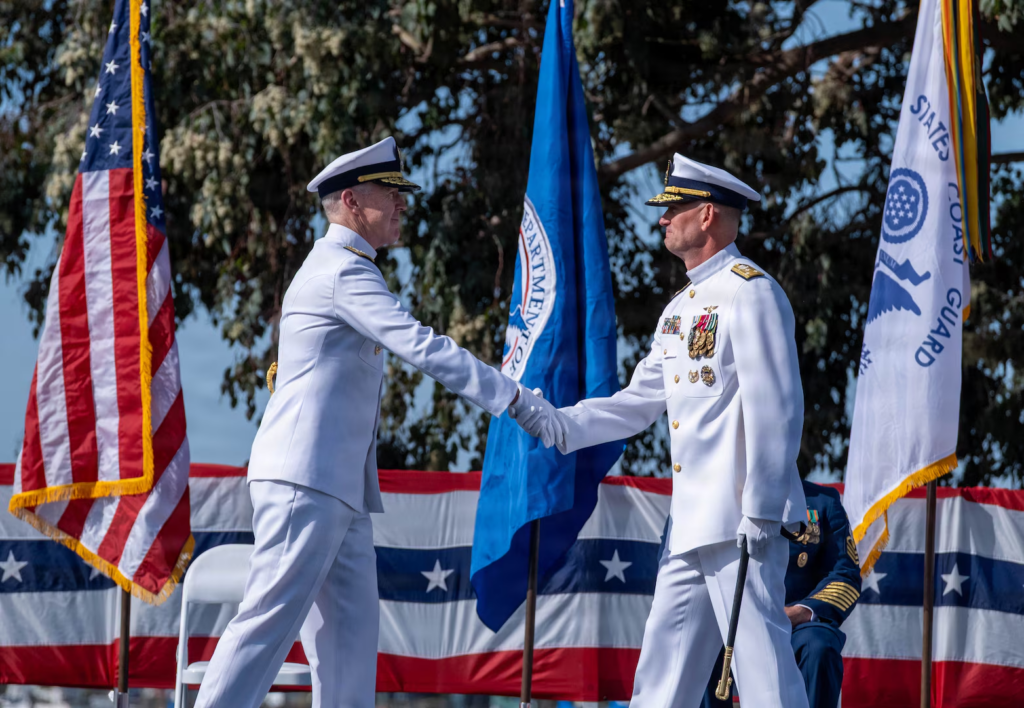
 Adm. Kevin Lunday (left), commandant of the U.S. Coast Guard, shakes hands with Vice Adm. Joe Buzzella during an assumption of command ceremony, March 26, 2026, at Coast Guard Island, Alameda, California. The ceremony formally marked Vice Adm. Joe Buzzella as the commander of Coast Guard Pacific Area and Defense Force West. (U.S. Coast Guard photo by Petty Officer 3rd Class Charlie Valor)

From U.S. Coast Guard Pacific Area, March 31, 2026 

ALAMEDA, Calif. – The U.S. Coast Guard held a formal assumption of command ceremony for Vice Adm. Joe Buzzella as he assumed the duties and responsibilities of U.S. Coast Guard Pacific Area and Defense Force West Commander during an event Thursday, at Coast Guard Island in Alameda.  

Adm. Kevin Lunday, commandant of the U.S. Coast Guard presided over the ceremony. Senior Coast Guard leadership and distinguished guests joined in recognizing Vice Adm. Buzzella’s commitment to leading the Service.  

Vice Adm. Buzzella formally assumed the responsibilities of commander, Coast Guard Pacific Area, overseeing all Coast Guard operations across the Pacific theater—an area encompassing more than 74 million square miles. He reaffirmed the Service’s enduring role as a vital instrument of national power responsible for ensuring maritime safety, security, and stewardship; strengthening partnerships with allies and advancing U.S. interests throughout the Indo-Pacific region.  

“It is an honor to assume command of Coast Guard Pacific Area and Defense Force West,” said Vice Adm. Buzzella. “Across this vast and vital region, Coast Guardsmen stand the watch. Every day, our crews are saving lives, protecting and ensuring we control, secure and defend our nation’s borders. I am humbled by the opportunity to lead this team and remain committed to supporting the readiness, resilience, and mission excellence of the Pacific Area workforce and their families.”   

As Pacific Area commander, Vice Adm. Buzzella will lead Coast Guard operations throughout the Indo-Pacific, the Polar Regions and Western Hemisphere, focusing on enhancing operational readiness, strengthening international partnerships, and advancing strategic priorities in support of national security objectives.  


Duffy Announces $35 Million Investment to Revitalize America’s Small Shipyards

MARAD’s Small Shipyard Grant program received a 200% increase in funding for 2026 

WASHINGTON, D.C. – U.S. Department of Transportation Secretary Sean P. Duffy announced today that the Maritime Administration (MARAD) will invest $35 million into revitalizing America’s small shipyards.  

The investment will go toward: 

  • Upgrading ship repair and construction facilities 

  • Purchasing new equipment, including cranes, plasma cutters, and welding systems 

  • Bolstering maritime training programs to supercharge the maritime workforce 

“This 200% increase in shipyard investments underscores President Trump’s commitment to restoring America’s maritime dominance strategy. Revitalizing this once great industry enhances our national security, reshores good paying jobs, and ensures goods get to where they need to go affordably,” said U.S. Transportation Secretary Sean P. Duffy. 

“Thanks to President Trump and Secretary Duffy, the maritime industry is getting the resources it needs to restore U.S. strength on the seas,” said MARAD Administrator Stephen M. Carmel. “This $35 million investment will empower our domestic maritime industry to modernize facilities, foster competitive operations, and equip the American worker with the skills needed to restore our nation’s maritime dominance.” 

President Donald J. Trump and Secretary Sean P. Duffy are committed to restoring U.S. maritime dominance. As such, the criteria for this grant program includes prioritizing projects that incorporate innovative technology.   

Additional Information: 

Since 2008, MARAD’s Small Shipyard Grant Program has awarded 382 grants for $320.5 million. These funds equip American shipyards with the tools they need to build American ships. 

Eligible shipyards must be in a single geographic location and may not have more than 1,200 production employees. Eligible shipyards must construct, repair, or reconfigure vessels 40 feet in length or greater for commercial or government use, or construct, repair, or reconfigure vessels 100 feet in length or greater for non-commercial vessels. 

The Notice of Funding Opportunity outlines the application criteria. Applicants are encouraged to submit eligible projects as soon as possible but must do so by May 11, 2026. 


CENTCOM Refutes Media Claims of U.S. Strikes in Lamerd, Iran 

From U.S. Central Command, March 31, 2026 

TAMPA, Fla. — U.S. Central Command Spokesperson U.S. Navy Capt. Tim Hawkins provided the following statement: 

Several media outlets recently reported accusations of U.S. forces striking a sports hall and residential area in the city of Lamerd, Iran, on Feb. 28. After looking into the reports, U.S. Central Command has confirmed the accusations are false. 

U.S. forces did not launch any strikes at any time into the city of Lamerd or anywhere within 30 miles during the opening day of Operation Epic Fury. Furthermore, video footage circulated by media outlets alleging U.S. involvement does not show a Precision Strike Missile (PrSM). A PrSM is 13 feet in length. The munition depicted in the video appears to be twice as long, consistent with the dimensions and silhouette of an Iranian Hoveyzeh cruise missile. 

U.S. forces do not target civilians, unlike the Iranian regime which has attacked civilian locations in neighboring countries more than 300 times. 


Coast Guard Repatriates 60 Aliens to Dominican Republic Following Voyage Interdiction

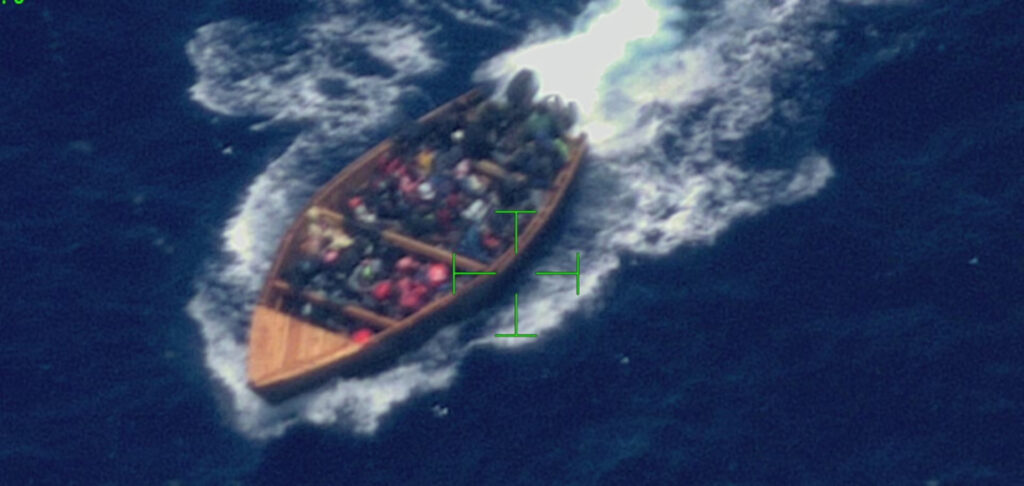
Coast Guard Cutter Thetis and a Customs and Border Protection multi-role enforcement aircraft crew interdict an unlawful migration voyage vessel in Mona Passage waters off Puerto Rico, March 27, 2026. Thetis crewmembers repatriated 60 migrants and transferred them to Dominican Republic Navy authorities in Santo Domingo, Dominican Republic, March 30, 2026. (U.S. Coast Guard photo) 

From U.S. Coast Guard Southeast District, March 30, 2026 

SAN JUAN, Puerto Rico — The crew of Coast Guard Cutter Thetis repatriated 60 aliens to Santo Domingo, Dominican Republic, Monday, following the interdiction of an unlawful migration vessel voyage in Mona Passage waters northwest of Aguadilla, Puerto Rico.   

The repatriated aliens were transferred to Dominican Republic Navy authorities including 43 men and 11 women who claimed Haitian nationality and five other men and one woman who claimed Dominican Republic nationality. No minors were identified in this case.   

The interdiction occurred Friday afternoon after a Customs and Border Protection Caribbean Air and Marine Branch Multi-Role Enforcement aircraft crew on a routine patrol detected a makeshift vessel, approximately 50 nautical miles from Aguadilla, Puerto Rico. Sector San Juan watchstanders diverted the Coast Guard Cutter Thetis and launched an Air Station Borinquen MH-60T Jayhawk helicopter to respond. Once on-scene, Thetis deployed the cutter’s Over the Horizon small boat whose crew took positive control of the suspect vessel. Following the interdiction, the Thetis crew safely embarked all the migrants.   

“The swift response, effective communications and seamless coordination between Coast Guard Thetis, Sector San Juan personnel and our CBP partners led to a successful interdiction and resulted in sixty lives saved,” said Cmdr. Matthew Romano, Sector San Juan chief of response.  “The resolve of the Coast Guard, our Homeland Security Task Force – San Juan and of our Dominican Republic Navy partners to detect and stop these potentially deadly voyages is unwavering.  To those thinking of taking part in an unlawful migration voyage, don’t take to the sea!  These voyages most often involve unseaworthy and grossly overloaded makeshift vessels with no lifesaving equipment.  They are highly unstable and could capsize without warning killing everyone onboard. Individuals taking part in these voyages should also realize they may be subject to criminal prosecution and or repatriated to their country of origin or departure.”   

Once aboard a Coast Guard cutter, aliens are processed to determine their identity and are provided with food, water, shelter and basic medical attention.   

The United States Coast Guard, along with its Operation Vigilant Sentry partners, maintains a continued presence with air, land, and sea assets in the Florida Straits, the Windward Passage, the Mona Passage, and the Caribbean Sea. Operation Vigilant Sentry’s multi-layered approach is designed to protect the safety of life at sea while preventing unlawful maritime entry to the United States and its territories.  


U.S. Strengthens Maritime Security Cooperation with Kenya During NAVAF Commander’s Visit

Adm. George Wikoff, commander, U.S. Naval Forces Europe and Africa, and Major General Paul Otieno, commander, Kenya Navy, take part in the Close Quarters Battle (CQB) Facility Inauguration ceremony, on Kenya Navy Base Mtongwe in Mombasa. (U.S. Navy Photo by MC1Robert J. Baldock)

From By U.S. Naval Force Europe, U.S. Naval Forces Africa, March 31, 2026 

U.S. Naval Forces Africa (NAVAF) strengthened its longstanding security partnership with Kenya during Adm. George Wikoff’s visit to Nairobi and Mombasa, March 24–25.   

The visit, Wikoff’s first to Africa as the NAVAF commander, highlighted the United States Navy’s ongoing support to Kenya’s maritime operations, counterterrorism efforts, and regional security leadership along the Western Indian Ocean and the Somali border. 

Throughout his engagements, Wikoff underscored the shared U.S.–Kenya commitment to enhancing interoperability, expanding partner capacity, and investing in infrastructure and training that enable Kenyan forces to deter and respond to emerging threats. 

“Kenya is a critical maritime and security partner in East Africa and the Western Indian Ocean,” said Wikoff. “Our cooperation is built on shared interests and shared sacrifices, and together we are working to promote stability, protect vital sea lanes, and counter those who threaten regional security.” 

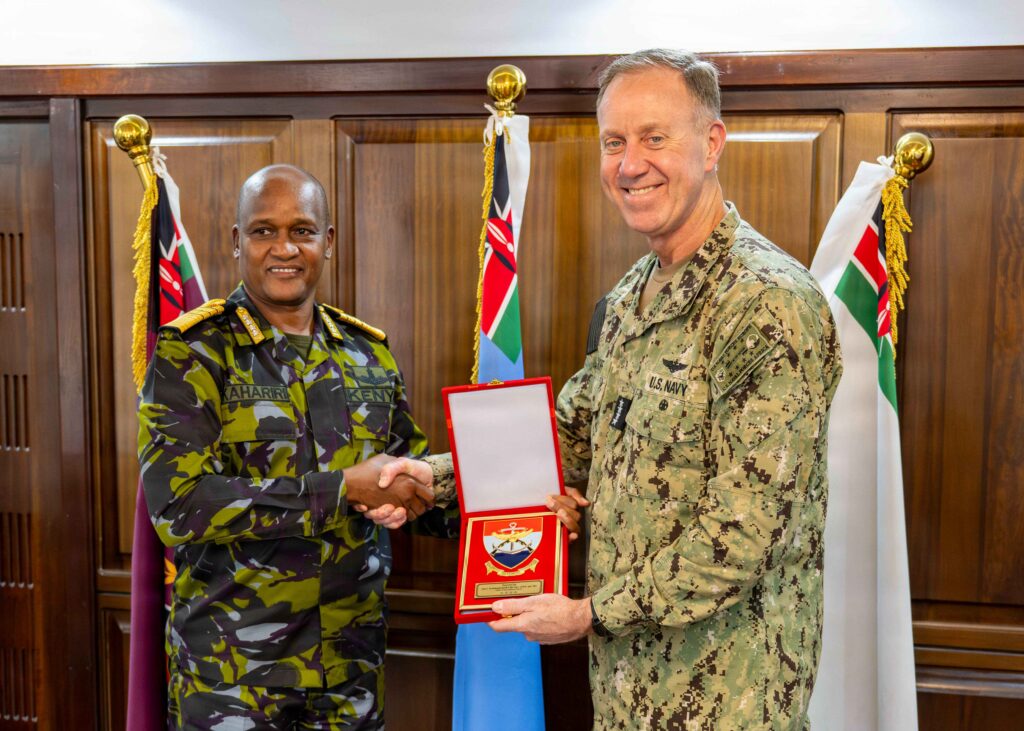
In Nairobi, Wikoff met with the Chief of the Kenya Defence Forces (KDF), General Charles Muriu Kahariri, to discuss ongoing collaboration in counterterrorism, maritime security, regional stability, and long-term defense modernization and innovation. 

The discussion focused on aligning defense cooperation with broader U.S. diplomatic and economic goals, reinforcing strategic coordination at the senior level, and advancing Kenya’s role as a security anchor in the region. 

“General Kahariri and I reaffirmed that our defense cooperation is not just a one-time effort — it is strategic, ongoing, and aligned with our broader diplomatic and economic partnerships,” Wikoff said. “Together, we are focused on countering terrorism, strengthening maritime security, and modernizing our forces so we are ready for current and future challenges.” 

In Mombasa, Wikoff met with Major General Paul Owuor Otieno, commander of the Kenya Navy, to review ongoing maritime initiatives, including joint training, information sharing, and efforts to improve maritime domain awareness across the Western Indian Ocean. The leaders discussed ways to bolster Kenya’s ability to secure its maritime approaches, counter illicit maritime activities, and further integrate Kenyan naval forces into regional and international security efforts. 

Wikoff and Otieno then attended the after-action review for Cooperation Afloat Readiness and Training (CARAT) 2026, a series of naval exercises with African partners, including Kenya, to bolster maritime security, improve interoperability, and address regional security challenges in the Western Indian Ocean. The review assessed operational effectiveness and interoperability gains and identified lessons to guide future joint exercises and operations. 

“CARAT 2026 shows what we can achieve when we train and operate together,” Wikoff said. “By integrating our capabilities and sharing information, we are better prepared to secure the maritime domain, disrupt illicit networks, and respond swiftly when threats emerge.” 

Wikoff and Otieno concluded their visit by commissioning the Kenya Navy Marine Range and Close Quarters Battle (CQB) Complex at Kenya Navy Base Mtongwe in Mombasa County. The new facility will provide a modern, specialized training environment to significantly enhance the operational readiness of the Kenya Navy Marine Commandos, supporting advanced training in close-quarters combat, marksmanship, tactical movement, and integrated maritime operations. 

“The Marine Range and CQB Complex is a tangible demonstration of our commitment to Kenya’s security and regional leadership,” said Wikoff. “By investing in infrastructure and training, we are empowering Kenyan forces with the tools and skills they need to lead in securing their coastlines and maritime approaches.” 

The KNAV Marine CQB Complex is a $750,000 Section 333 Building Partnership Capacity (BPC) design-build contract managed by Naval Facilities Engineering Systems Command (NAVFAC) Europe, Africa, Central (EURAFCENT). This specialized facility is designed to enhance the maritime and coastal interdiction capabilities of the newly established KNAV Marine Commandos, who are playing an increasingly prominent role in regional counterinsurgency operations along the coast and littorals. The scope includes a 100-meter small-arms range, a live-fire shoot house, and a dry-run rehearsal facility. 

Wikoff’s visit reaffirmed NAVAF’s role as a trusted, long-term partner to Kenya amid increasing competition from external actors. 

Through senior leader engagements, joint exercises, and targeted investments in training and infrastructure, the United States and Kenya are working together to strengthen counterterrorism cooperation, enhance maritime security, and promote stability across East Africa and the Western Indian Ocean. 

“Our partnership with Kenya is enduring and future-focused,” Wikoff said. “Together, we are building the capabilities, relationships, and trust that underpin regional security and create the conditions for lasting peace and prosperity.” 

For more than 80 years, NAVEUR-NAVAF has forged strategic relationships with Allies and partners, leveraging a foundation of shared values to preserve security and stability. Headquartered in Naples, Italy, NAVEUR-NAVAF operates U.S. naval forces in the U.S. European Command and U.S. Africa Command areas of responsibility. 


I MEF launches Operation Clean Sweep IV to improve barracks habitability 

From I Marine Expeditionary Force Communication Strategy and Operations 

March 30, 2026  

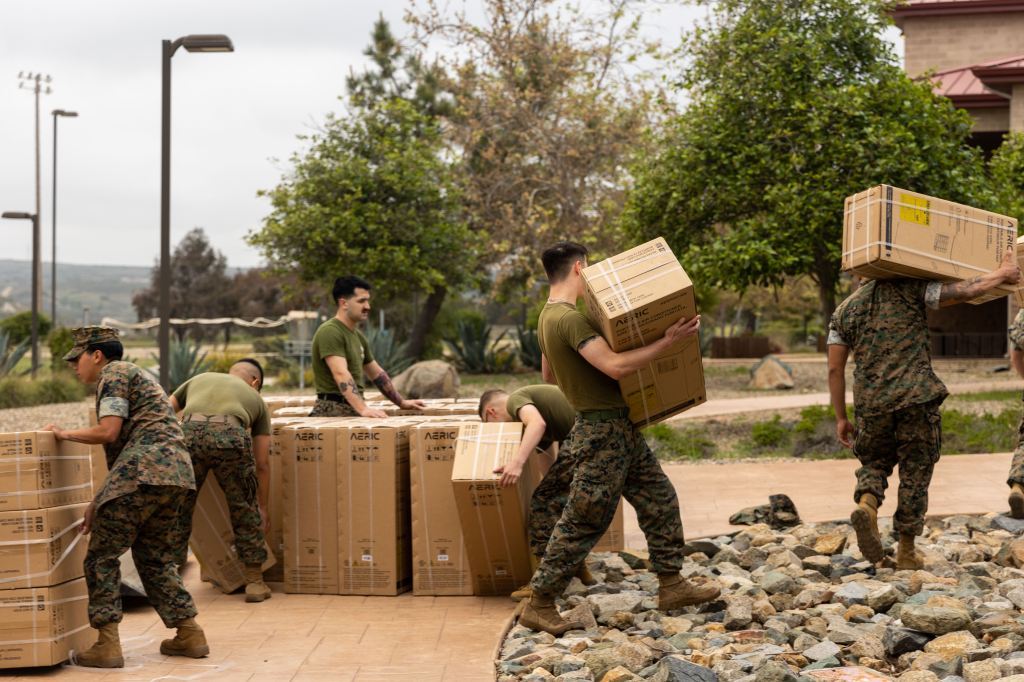
MARINE CORPS BASE CAMP PENDLETON, Calif. – I Marine Expeditionary Force and Marine Corps Installations West-Marine Corps Base Camp Pendleton launched Operation Clean Sweep IV today, continuing a focused effort to improve barracks conditions and strengthen operational readiness.  

OCS IV is part of the I MEF / MCI-West Barracks 360 Reset initiative and supports the Commandant of the Marine Corps’ broader Barracks 2030 effort to improve unaccompanied housing across the force. The operation focuses on resident empowerment, leadership engagement and measurable, proactive maintenance. 

Barracks 360 Reset began in 2024 with recurring standdowns to surge maintenance and self-help support. The first iteration at Camp Pendleton ran Oct. 16-30, 2024, addressing deferred work through both self-help and contracted support. OCS II followed March 24-April 11, 2025, expanding training while broadening resources to additional bases. OCS III ran Sept. 15-26, 2025, and continued expanding these efforts to Marine Corps Logistics Base Barstow, Marine Corps Air Ground Combat Center Twentynine Palms and Marine Corps air stations Miramar and Yuma. 

I MEF and MCI-West continue Barracks 360 Reset efforts to improve living conditions and operational readiness through enhanced command oversight, maintenance backlog reduction and resident engagement. 


U.S. and Colombian Navies Reinforce Partnership at Maritime Staff Talks

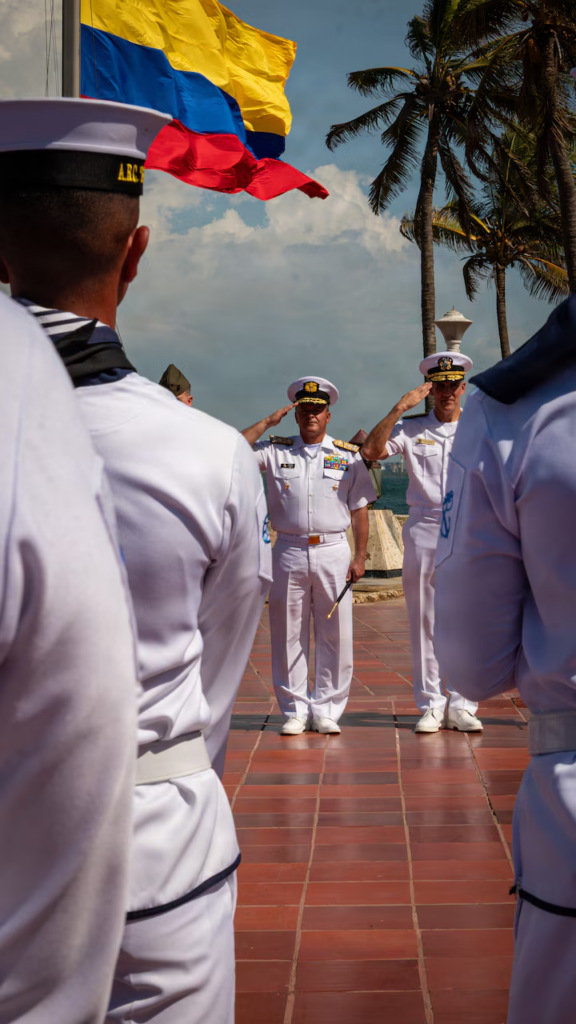
Rear Adm. Carlos Sardiello, commander of U.S. Naval Forces Southern Command/U.S. 4th Fleet, participates in an opening ceremony March 24, 2026 in Cartagena, Colombia. Sardiello, led the U.S. delegation for the annual Maritime Staff Talks, reaffirming the enduring partnership between the two nations and outlining a path for future collaboration in the maritime domain.  

By Ensign Paul Archer, March 30, 2026 

CARTAGENA, Colombia  –  Senior naval leaders from the United States and Colombia convened in Cartagena from April 24-27, 2026 for the annual Maritime Staff Talks (MST), reaffirming the enduring partnership between the two nations and outlining a path for future collaboration in the maritime domain. 

The U.S. delegation, led by Rear Adm. Carlos Sardiello, commander of U.S. Naval Forces Southern Command/U.S. 4th Fleet, was hosted by the Chief of Naval Operations of the Colombian Navy, Vice Adm. Carlos Serrano. The tri-service U.S. contingent also included Maj. Gen. Douglas Clark, Deputy Commander of U.S. Marine Corps Forces, South, along with representatives from the Joint Interagency Task Force South and the U.S. Coast Guard. 

The talks focused on enhancing interoperability, deepening commitment to mutual security, and advancing a bilateral strategy to address shared challenges across the maritime environment. Key areas of discussion included leveraging upcoming multinational exercises such as PANAMAX and UNITAS to ensure seamless teamwork against common threats. 

“The challenges we face in the maritime domain, stemming from illicit trafficking demand a unified response to ensure regional stability,” said Rear Adm. Sardiello. “Through these annual maritime staff talks, we continue to strengthen our partnership and expand operational commitments that increase our combined readiness and effectiveness across the maritime domain.” 

As part of the MST, both the U.S. and Colombian delegations delivered presentations on their respective mission objectives and ongoing maritime operations. The agenda also included tours of the COTECMAR Shipyard, the Almirante Padilla Naval Academy, and other key naval facilities in Cartagena, providing the U.S. delegation with firsthand insight into Colombia’s naval capabilities and strategic infrastructure. 

The event concluded with the signing of minutes by Rear Adm. Sardiello and Vice Adm. Serrano, formally documenting the key agreements reached and solidifying a collaborative path forward. Both leaders reiterated their shared commitment to the robust and lasting partnership between the United States and Colombia. 

U.S. Naval Forces Southern Command/U.S. 4th Fleet serves as a trusted maritime partner for Caribbean, Central, and South American maritime forces, working to promote unity, security, and stability throughout the region. 


Australia, India, Japan, New Zealand, U.S. complete exercise Sea Dragon 2026

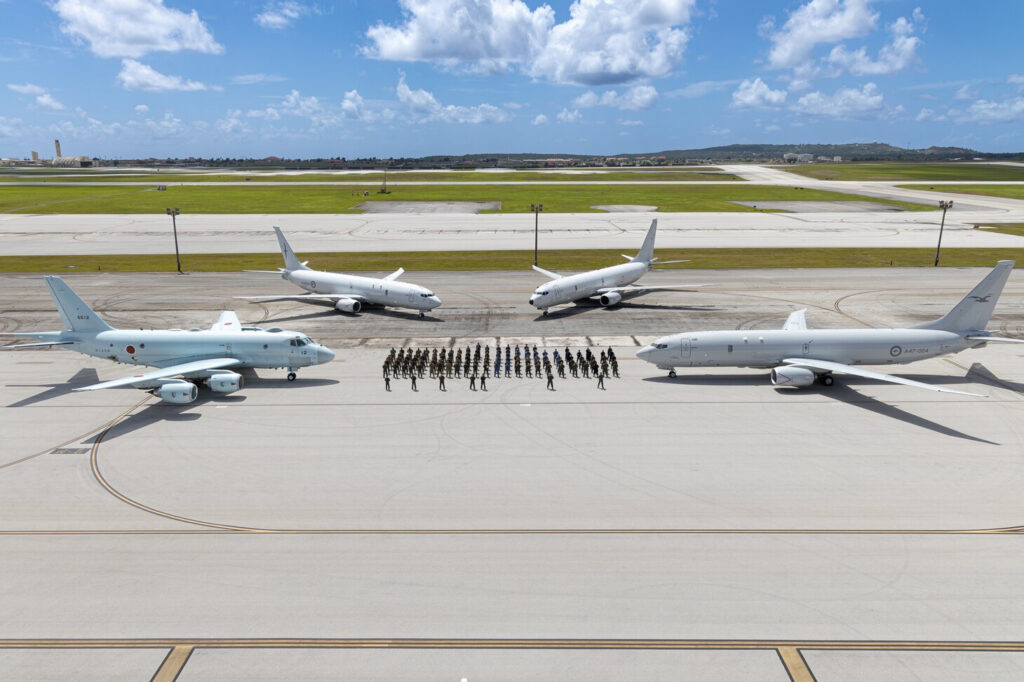
Sea Dragon anti-submarine warfare (ASW) competition participants pose for a group photo at Andersen Air Force Base, Guam, March 18, 2026. Participating nations include Royal Australian Air Force, Royal New Zealand Air Force, Indian Navy, Japan Maritime Self Defense Force, and the United States Navy. Sea Dragon is a U.S.-led, multinational exercise designed to train anti-submarine warfare tactics and to operate together in response to maritime security challenges in the Indo-Pacific region. (U.S. Navy Photo by Mass Communication Specialist First Class Ryan A. LeCompte)

ANDERSEN AIR FORCE BASE, Guam — Exercise Sea Dragon 2026 successfully concluded at Andersen Air Force Base, marking the completion of 20 days of intensive multinational anti-submarine warfare (ASW) training, March 28. 

Hosted by U.S. Navy Commander, Task Force (CTF) 72, two U.S. Navy P-8A Poseidon aircraft from Patrol and Reconnaissance Squadron (VP) 4 and VP-45, joined a multilateral force of P-8A aircraft from the Indian Navy (IN), Japan Maritime Self-Defense Force (JMSDF), Royal Australian Air Force (RAAF), and Royal New Zealand Air Force (RNZAF). 

Sea Dragon 2026 continues to enhance the shared maritime domain awareness interoperability developed during previous iterations. This iteration improved on participating nations’ ability to conduct multinational ASW operations inside a complex and dynamic exercise environment. 

“What we do in Sea Dragon builds more than skill—it establishes a ASW team across nations. The shared experience empowers us to fight together more effectively,” said Lt. Paolo Aguilar, assigned to VP-4. 

VP-45 naval aviator Lt. Caitlin Tucker stated, “Exercises like Sea Dragon highlight the strength of our partnerships and alliances. They show that together, we’re stronger, more capable, and ready to deter any aggressor in the Indo-Pacific.” 

Sea Dragon 2026 featured a structured training format to include a mobile ASW training target, referred to as the MK-30 “Sled”, for tracking drills. The exercise also featured a U.S. Navy anti-submarine warfare exercise (ASWEX), where exercise participants engaged in a hunt to locate an active U.S. Navy submarine in the area. This year, forces operated in the vicinity of Saipan to employ recoverable exercise torpedoes, and demonstrate expansion of capabilities trained among the five nations. 

As with previous years, Sea Dragon 2026 included a competitive component in which each nation’s performance was assessed and graded to earn the Dragon Belt award, testing each nation’s ASW tactics and response effectiveness in a realistic scenario. 

This year, VP-3 of the JMSDF emerged victoriously, securing the Dragon Belt for 2026. The Dragon Belt was previously held by the RAAF since their victory in 2025. 

Exercises like Sea Dragon 2026 demonstrate the U.S. Navy’s commitment to regional security and strengthening maritime partnerships with allied and partner nations. Exercise Sea Dragon has been held annually since 2019. 

VP-4, part of CTF-72, is stationed in Whidbey Island, Washington, and is currently deployed to Kadena Air Base in Okinawa, Japan. VP-45, also part of CTF-72, is stationed in Jacksonville, Florida, and is currently deployed to Misawa Air Base in Misawa, Japan. Throughout the deployments, both squadrons will be conducting maritime patrol and reconnaissance and theater outreach operations within the U.S. 7th Fleet area of operations. 

 U.S. 7th Fleet, the U.S. Navy’s largest forward-deployed numbered fleet, routinely interacts and operates with allies and partners in preserving a free and open Indo-Pacific region. 


Navy Commissions Submarine USS Massachusetts 

March 30, 2026 | By Navy Petty Officer 2nd Class Kaitlin Young, Submarine Readiness Squadron 32 |  

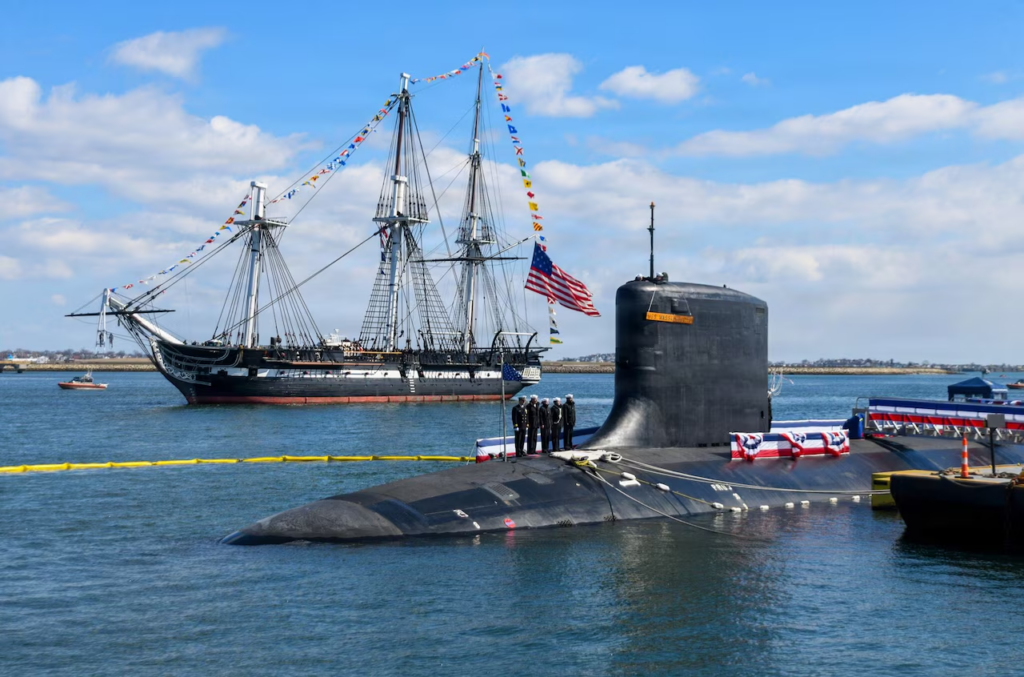
The Navy commissioned the submarine USS Massachusetts in a traditional ceremony held March 28 at Boston Harbor. 

The ceremony culminated a yearslong process to bring the Massachusetts into service. It is the fifth Navy vessel named after the commonwealth of Massachusetts, following the most recent, USS Massachusetts, a battleship that participated in nearly every major Pacific campaign from 1943 to 1945 and earned 11 battle stars for its World War II service.  

Navy Cmdr. Michael Siedsma, the Massachusetts’ commanding officer, spoke proudly of his crew’s efforts.   

“To the crew, the plank owners, the ‘Iron Patriots’ of the USS Massachusetts, we did it,” he said. “Your hard work and unshakable dedication [are] evident. I am amazed and humbled by what we have accomplished.” 

Sheryl Sandberg, the ship’s sponsor, gave the traditional order to “man our ship and bring her to life.” The crew responded, “Aye, aye, ma’am,” before ceremonially running aboard the submarine. 

Sandberg spoke about the Navy’s enduring legacy. 

“In three months, our nation will celebrate the 250th anniversary of the signing of the Declaration of Independence. But as many of you here know, the Navy already celebrated this milestone last October. What does that tell us? It tells us: We don’t have a Navy because we have a country; we have a country because we had a Navy!”  

Following the hoisting of the colors and commissioning pennant, Navy Adm. William Houston, director of the Naval Nuclear Propulsion Program, highlighted the crew’s hard work and the unit’s role in national defense.   

“[The] Massachusetts is playing an incredible role in our security,” he said. “Your crew represents the best that our Navy and our nation [have to offer]. You train relentlessly to bring this warship to life and earned the trust placed on you.” 

The Massachusetts is the 12th Virginia-class submarine and was christened at the Newport News Shipbuilding yard in Newport News, Virginia, May 6, 2023.  

As it joins the fleet, the Massachusetts brings significant warfighting capability, underscoring the nation’s asymmetrical advantage at sea. Virginia-class submarines have enhanced stealth, sophisticated surveillance capabilities and special warfare enhancements that enable them to meet the Navy’s multimission requirements.  

Each Virginia-class submarine is 7,800 tons, 377 feet in length and has a beam of 34 feet. It is designed with a reactor plant that does not require refueling during the planned life of the ship, reducing life-cycle costs while increasing underway time.