GA Integrates OPTIX Software for USMC Common Intelligence Picture WTI Course
From General Atomics Aeronautical Systems, Inc.
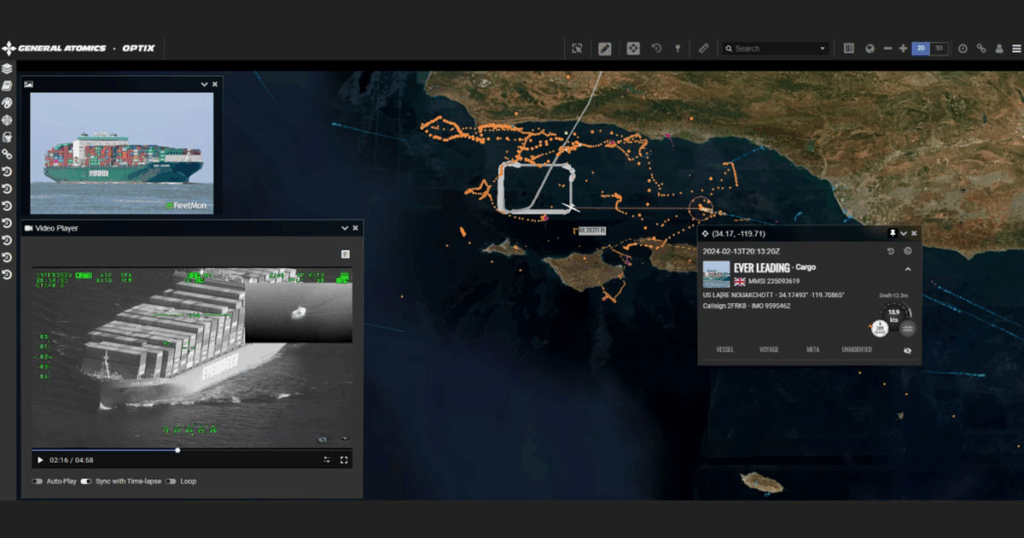
SAN DIEGO – 19 May 2025 – General Atomics Aeronautical Systems, Inc. (GA-ASI) has successfully integrated the advanced Optix software—developed by General Atomics Integrated Intelligence, Inc. (GA-i3)—into the U.S. Marine Corps (USMC) Common Intelligence Picture (CIP) for a multi-service Weapons and Tactics Instructor (WTI) course.
This milestone marks a significant enhancement in the USMC’s Intelligence, Surveillance, and Reconnaissance (ISR) capabilities, delivering a unified operational view critical to the training of future aviation leaders. For the USMC, this integration directly supports the deployment and effectiveness of the GA-ASI-supplied MQ-9A Medium-Altitude, Long-Endurance (MALE) Unmanned Aircraft System within the Marine Air-Ground Task Force (MAGTF).
Achieved through close collaboration with Marine Aviation Weapons and Tactics Squadron One (MAWTS-1) and Marine Operational Test and Evaluation Squadron One (VMX-1), the integration brought together engineers from GA-ASI and GA-i3 alongside USMC unmanned aviation operations experts. Their combined efforts enabled the seamless deployment of the Optix software during the rigorous WTI 2-25 training cycle.
USMC MQ-9A operations during the exercise took place at Yuma, Arizona, and the Strategic Expeditionary Landing Field (SELF) at Twenty-Nine Palms, California—the Marine Corps’ only expeditionary runway in the U.S. The live-fire training environment provided an invaluable opportunity to evaluate the MQ-9A’s role in complex combat scenarios.
By introducing Optix into this high-demand setting, Marines gained access to real-time data fusion, a shared operational picture, and enhanced collaborative decision-making—tools critical for modern battlefield success.
“The integration of Optix software represents a key step toward the effective deployment of the MQ-9A MUX MALE platform within the MAGTF and joint operations,” said Doug Brouwer, Senior Director for USMC Programs at GA-ASI. “It enables near real-time situational awareness and improves the decision-making process across the battlespace.”
Andrew Majchrowicz, Project Manager for Department of Defense Programs at GA-i3, added: “Equipping Marines with advanced ISR tools like Optix enhances the common intelligence picture and operational readiness in live-fire environments. This is a critical milestone in our shared goal of enabling joint-force effectiveness and full operational integration of the MQ-9A.”
The successful deployment of Optix within the WTI course underscores General Atomics’ continued commitment to delivering cutting-edge solutions that empower the U.S. military with unmatched intelligence and operational capabilities for future multi-domain operations.
USCGC Calhoun Offloads More than $141M in Illegal Narcotics at Port Everglades
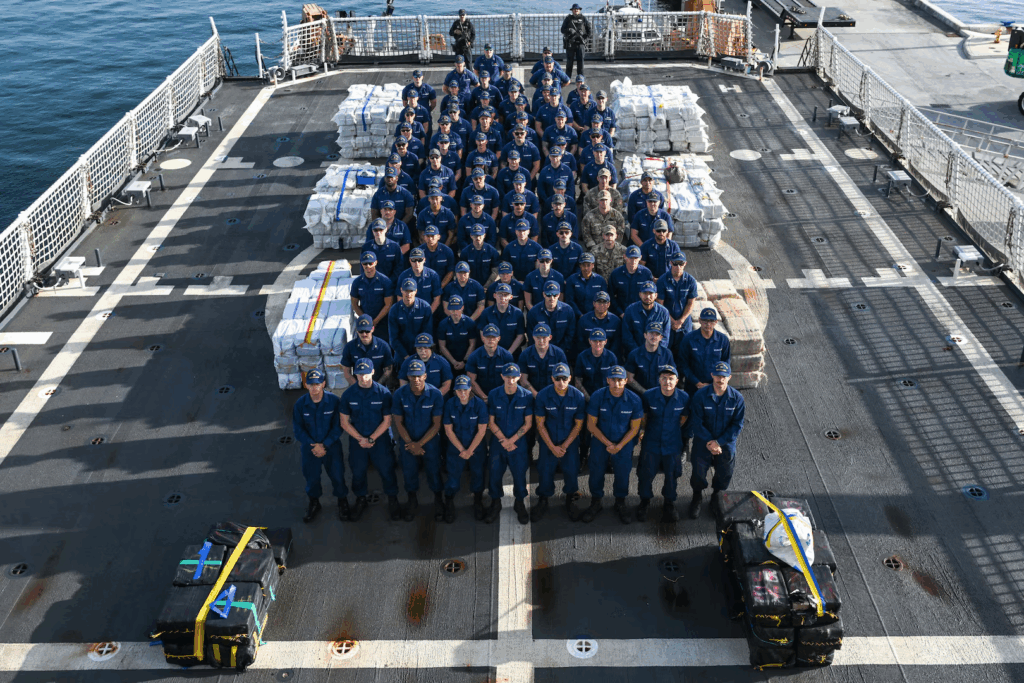
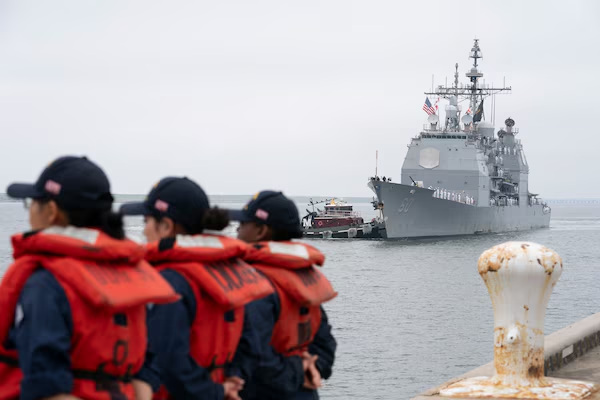
Crew members aboard U.S. Coast Guard Cutter Calhoun (WMSL 759) pose before preparing to offload pallets of illegal narcotics in Port Everglades, May 16, 2025. Calhoun’s crew offloaded more than 19,055 pounds of cocaine and marijuana valued at approximately $140.9 million in Port Everglades, May 16, 2025. (Coast Guard photo by Petty Officer 3rd Class Jessica Walker)
From U.S. Coast Guard 7th District, May 16, 2025
MIAMI – U.S. Coast Guard Cutter Calhoun’s crew offloaded approximately 19,055 pounds of cocaine and marijuana, worth an estimated $140.9 million, Friday, at Port Everglades.
The seized contraband was the result of five interdictions in the Atlantic Ocean and Caribbean Sea by interagency partners. The resulting criminal investigations are linked to substantial amounts of transnational criminal organizations and including the foreign terrorist organization, Tren de Aragua.
On April 12, the Calhoun’s crew, under tactical control of Coast Guard Atlantic Area, detected a suspicious fishing vessel in international waters exhibiting behavior consistent with narcotic trafficking approximately 1,200 miles west of Las Palmas, Canary Islands. The crew interdicted the suspicious vessel, seizing approximately 10,000 pounds of cocaine.
On May 1, a military patrol aircraft located a suspicious vessel approximately 100 miles off Colombia. A Coast Guard law enforcement detachment deployed on USS Minneapolis Saint Paul interdicted the vessel, seizing approximately 1,500 pounds of cocaine.
On May 5, a military patrol aircraft located a suspicious vessel approximately 80 miles off Dominican Republic. Calhoun’s crew interdicted the vessel, seizing approximately 825 pounds of cocaine.
On May 6, Calhoun’s crew interdicted a suspicious vessel approximately 85 miles off Haiti. A law enforcement crew stopped the vessel, seizing approximately 3,135 pounds of cocaine and 14 pounds of marijuana.
On May 7, a military patrol aircraft located two suspicious vessels approximately 155 miles off Dominican Republic. Calhoun’s crew interdicted both vessels, seizing approximately 3,580 pounds of cocaine.
“I’m incredibly proud of Calhoun’s role in continuing to disrupt the flow of illicit narcotics,” said Capt. Matthew Hammond, Calhoun’s commanding officer. “The Coast Guard and our partners work tirelessly to deny drug trafficking organizations access to smuggling routes bound for the United States and dismantle transnational criminal activity abroad, which threaten Americans here at home.”
The following crews also assisted with interdiction operations:
U.S. Coast Guard Tactical Law Enforcement Team-South
Detecting and interdicting illicit drug traffickers on the high seas involves significant interagency and international coordination. Joint Interagency Task Force-South, in Key West, conducts the detection and monitoring of aerial and maritime transit of illegal drugs. Once an interdiction becomes imminent, the law enforcement phase of the operation begins, and control of the operation shifts to the U.S. Coast Guard for the interdiction and apprehension phases. Interdictions in the Caribbean Sea are performed by members of the U.S. Coast Guard under the authority and control of the Seventh Coast Guard District, headquartered in Miami.
These interdictions relate to Organized Crime Drug Enforcement Task Forces’ Strike Force initiatives and designated investigations. OCDETF identifies, disrupts, and dismantles the highest-level criminal organizations that threaten the United States using a prosecutor-led, intelligence-driven, multi-agency approach. Additional information about the OCDETF program can be found at https://www.justice.gov/OCDETF.
Calhoun, commissioned in 2024, is the newest 418-foot Legend-class national security cutters homeported in North Charleston, South Carolina. The cutter’s primary missions are counter-drug operations and defense readiness.
Make a difference on land, at sea or in the air with the Coast Guard. Visit GoCoastGuard.com to learn more about active duty and reserve, officer and enlisted opportunities. Information on how to apply to the U.S. Coast Guard Academy can be foundhere.
RTX’s Raytheon Delivers 250th RAM Launcher to U.S. Navy
From RTX, May 19, 2025
RAM is a vital component of naval defense, protecting high-value assets and the lives of thousands of sailors and marines
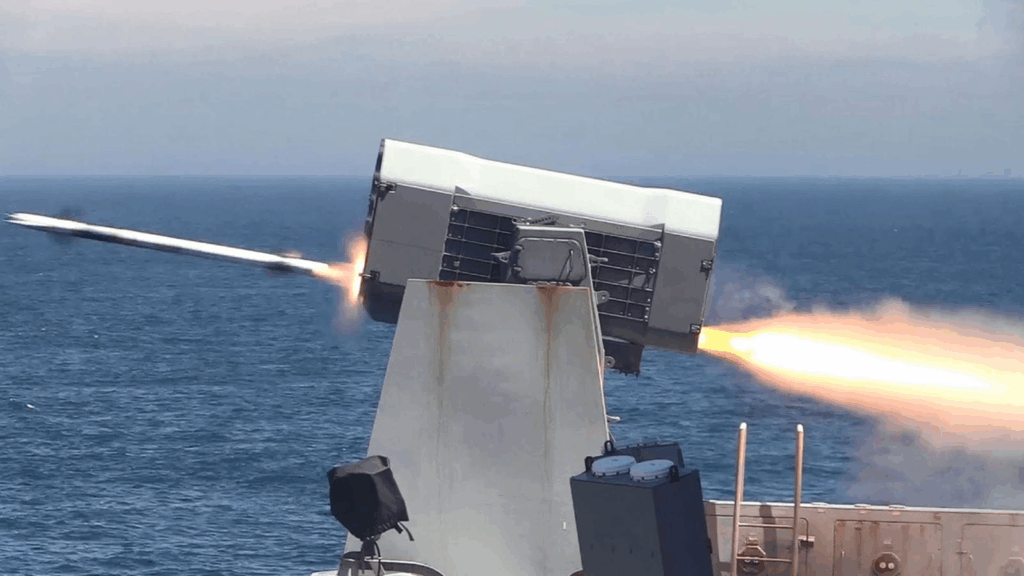
TUCSON, Ariz. (May 19, 2025) – Raytheon, an RTX (NYSE: RTX) business and German industrial partner RAM-Systems GmbH, delivered the 250th RAM MK49 Guided-Missile Launching System (GMLS) to the U.S. Navy. It will be deployed on the USS Pittsburgh, a new-construction San Antonio-class amphibious transport dock.
The RAM program, which will celebrate its 50th anniversary next year, is a bilateral partnership between the U.S. and Germany with Raytheon serving as a prime contractor. In addition to the U.S. and Germany, RAM customers include Egypt, Greece, Japan, the Republic of Korea, Mexico, Netherlands, Saudi Arabia, Qatar, Türkiye and the United Arab Emirates.
“The RAM missile system has been a cornerstone of naval defense capabilities for decades, and this 250th GMLS delivery is a testament to the important role it plays in defending U.S. and allied forces,” said Barbara Borgonovi, president of Naval Power at Raytheon. “As we continue to modernize and expand the deployment of RAM, it remains a critical asset in protecting our sailors and ships from evolving threats.”
As the world’s premier ship self-defense effector, RAM protects naval assets ranging in size from 220-foot corvettes to 1,100-foot nuclear powered aircraft carriers from advanced anti-ship cruise missiles, aircraft, drones, and other incoming threats.
Raytheon and its German industrial partners continue to invest in modernizing the RAM system to increase production capacity to meet growing global demand as well as enhance the capabilities of the RAM effector and launching system. This includes Raytheon’s GMLS manufacturing facilities – which have recently doubled production capacity – in addition to weapon system upgrades and supporting RAM integration aboard new naval platforms.
Coast Guard to Reduce Flag Officer Positions by 25%
By Richard R. Burgess, Senior Editor
ARLINGTON, Va. — The U.S. Coast Guard has been ordered to reduce the number of admirals by at least 25% before next year, the service announced.
In a May 25 directive from Acting Commandant Adm. Kevin Lunday, the service announced that the reductions were part of its Force Design 2028 initiative.
“As part of Force Design 2028, the Secretary of the Department of Homeland Security has determined that there is redundant executive oversight in our force structure which hinders efficient decision making and Service effectiveness,” The opening statement of the announcement said.
“As a result, and consistent with similar efforts within the Department of Defense, the Secretary has ordered a reduction of no less than 25% of flag officer positions by 1 January 2026,” the announcement said. “The positions to be eliminated and the plan to reorganize the flag corps will be announced in separate correspondence.”
The Coast Guard currently has approximately 45 flag officers.
The service also has negated the results of its fiscal 2025 promotion board for the rank of rear admiral (lower Half) while folding opportunity in next year’s selection board.
“The Secretary also disapproved the Promotion Year (PY) 2025 rear admiral (lower half) (RDML) selection board report after determining that the guidance to that board did not align with this Administration’s policies,” the announcement said. “The Secretary’s action also supports planning to reorganize the leadership structure. Officers who were considered by the PY25 RDML selection board and who are otherwise eligible, including those previously selected, will be considered by the PY26 RDML selection board that will convene under new guidance.”
Harrier Finds Final Home in Fort Worth Aviation Museum
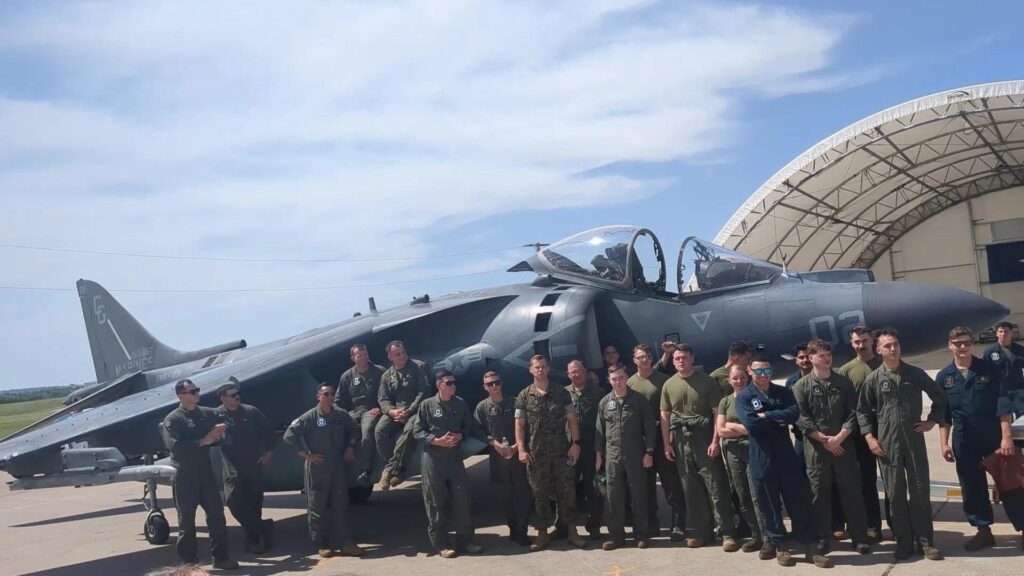
Retired AV-8B II+ Harrier, BUNO 165357, was inducted into its final landing spot at the Fort Worth Aviation Museum on May 13.
From Naval Air Systems Command, May 16, 2025
FORT WORTH, Texas — After years of soaring through the skies, a retired AV-8B II+ Harrier found its new home May 13 at the Fort Worth Aviation Museum, ready to inspire a new generation of aviators and engineers.
A collaborative effort between the AV-8B Weapons Systems Program Office (PMA-257), Headquarters, U.S. Marine Corps, Marine Aircraft Group 14 and Marine Attack Squadron (VMA) 231 ensured the retired Harrier was demilitarized and safe for display, ready for its new role as a museum exhibit.
VMA-231’s Capt. Zach “Yoda” Moore flew the aircraft to the museum initially performing a fly-by at the observation area before vertically landing.
“Of over 40 aircraft [at the Fort Worth Aviation Museum], this is one of the most unique and interesting aircraft to have been flown into our museum,” said Ben Guttery, the museum’s collections manager. “This aircraft’s extensive combat history is very important to us and will be greatly appreciated by the public. The AV-8B II+ will eventually be bookend displayed next to the AV-8A demonstrating the many changes of the Harrier from when it first went into service with the U.S. Marines.”
This aircraft, BUNO 165357, originally entered service with the U.S. Marine Corps as a Day Attack variant on Sept. 16, 1985. It was stricken and remanufactured reentering service on June 12, 1998 as an AV-8B Harrier II+. It flew with Marine Attack Squadrons (VMAs) 223, 231 and 542, logging 995 recorded combat flight hours and a combined total of 8,955 flight hours in support of multiple Marine Expeditionary Unit deployments, Operation Iraqi Freedom, Operation Enduring Freedom deployments, humanitarian efforts and Request for Forces.
Pablo “Louie” Sanchez, PMA-257 logistics assistant program manager and museum task force lead, said, “The Marine demilitarization crew led by Chief Warrant Officer 2 Neil Vislosky has done a phenomenal job in preparation for this event to include coordination with the Marines of Marine Aviation Logistics Squadron 41 and Marine Fighter Attack Squadron 112 at Joint Reserve Base Fort Worth demonstrating professionalism every step of the way to make this a successful event.”
According to its official website, the Fort Worth Aviation Museum has the “most touchable warbirds in North Texas” and aims to preserve, inspire and educate. The museum’s vision is to celebrate and showcase the people and aviation accomplishments of North Texas, in a museum and science center that can preserve and display our heritage, educate the community, and inspire young people to stay in school and achieve their full potential. Its slogan, “Giving wings to youth and community through our aviation roots,” highlights the importance of Harrier’s preservation initiatives.
The AV-8B Harrier II+ is a vertical/short takeoff and landing, light attack jet used by the U.S. Marine Corps, and the Italian and Spanish navies. In service for four decades, its mission is to destroy surface targets and escort friendly aircraft in austere conditions during expeditionary, joint and combined operations.
The platform provides close and deep air support, including armed reconnaissance and air interdiction, and conducts offensive and defensive anti-air warfare. The AV-8B Harrier II+ can operate from carriers and other suitable seagoing platforms, advanced bases, expeditionary airfields and remote tactical landing sites offering versatility, firepower and mobility to effectively counter enemies engaged by U.S. and allied ground forces.
Readiness, Shipbuilding Top Priorities for Navy
May 15, 2025 | By C. Todd Lopez, DoD News
On Capitol Hill yesterday, Navy Secretary John Phelan told lawmakers that increasing shipbuilding to better outfit the Navy, developing an accountable and innovative warfighter culture and improving the welfare of the fighting force were his top priorities.
Phelan, alongside Acting Chief of Naval Operations Adm. James W. Kilby, and Commandant of the Marine Corps Gen. Eric M. Smith, briefed the House Appropriations Committee’s defense subcommittee on current challenges and their plans to address them.
“My North Star, or No. 1 priority as secretary, is the readiness of our sailors and Marines,” Phelan said, adding that the priorities he outlined will guide his decision-making as he leads the department.
After Phelan was sworn in as the Navy secretary in late March, he visited troops and facilities in the Indo-Pacific region, the southern border, the USS Gravely, several military installations, as well as public and private shipyards.
“Rebuilding our hollowed-out maritime industrial base is a national security imperative, as outlined in the Restoring America’s Maritime Dominance executive order signed by President [Donald J.] Trump,” he said. “Over the past month, I visited … eight shipyards across the nation’s East Coast and the Indo-Pacific. I spoke directly with shipyard leaders and the hard-working tradesmen essential to our maritime operations. I now have a clear picture of where our shipbuilding dollars have been going, and [I] am developing a plan to fix what’s broken.”
Phelan told lawmakers that submarine building challenges include the complexity of the ship, workforce experience, supply chain issues and, in some cases, a lack of modernization at shipbuilding facilities. During his meetings with shipyard workers and industry leaders, he discussed the state of shipbuilding and identified ways to improve workflow.
“It was very interesting in some of [the leaders’] assessments of what they did not perceive to be as problems,” Phelan said, adding that when he met with the workers, he received the opposite response.
His visit to a shipyard in Japan showcased the difference in shipbuilding processes. There, he found workers get the same productivity in one shift that American shipyards might get in three shifts.
“I believe that’s for two reasons,” Phelan said. “One, their average worker is 50 years old; it is a career … they’ve been in that shipyard a very long time. Two, when I spoke to the welders in Japan, they … spend zero time on paperwork. Our welders spend between 30% and 40% of their time filling out paperwork … that is a problem.”
Phelan said he saw positive things at U.S. yards that might be implemented across the rest of the U.S. shipbuilding industry to speed up things like U.S. submarine production.
“I do think we can get the calendar shifted left, but it’s going to take a lot of hard work and a lot of effort,” he said.
Kilby told lawmakers the Navy faces three challenges, and it is working to solve them with congressional assistance.
First, he said, is a shortage of approximately 23,000 sailors manning ships.
“Thanks to process improvements and targeted investments, we are on plan to reduce that number significantly by the close of fiscal year 2026,” Kilby said. “We’re committed to attracting and developing Americans who can innovate, solve hard problems and dominate in combat.”
The Navy missed recruiting goals in fiscal year 2023 but raised its goals in fiscal year 2024 and then exceeded its target when it recruited more than 40,000 new sailors.
“[That’s] the most since 2003, and we are currently on pace to exceed our recruiting goal for fiscal year 2025,” he said.
Kilby said a second issue involves strain on the munitions industrial base. Ordinance expenditures in the Red Sea against the Houthis have highlighted challenges with manufacturing replacement munitions.
“The Navy is working with both our traditional [prime contractors] and new entrants to close this gap, developing kinetic and non-kinetic weapons at speed and at scale,” he said.
In submitted testimony, Kilby said the Navy is investing in expanding capacity and adding new suppliers across its weapons portfolio, including rocket motors, warheads and engines.
Finally, Kilby said, platform readiness is a priority for the Navy.
“Our platforms are not as ready as they need to be,” he said. “We set an ambitious goal to make 80% of our ships, submarines and aircraft combat surge ready by Jan. 1, 2027. To do that, we are reducing maintenance delays. We are improving manning, training, modernization and sustainment. In all of these efforts, consistent and predictable funding is foundational. We appreciate the continued support of this committee.”
Smith said as the commandant of the Marine Corps, his top priority is achieving a 3.0 amphibious ready group/marine expeditionary unit presence. He added that this would mean the Marines have one amphibious ready group constantly deployed off the East Coast, one deployed off the West Coast and one sporadically deployed out of the naval force in Japan.
“The amphibious ready group with marine expeditionary unit embarked is the most versatile tool in our nation’s arsenal,” he said. “It is the Swiss Army knife of the joint force, and we’re working closely with our Navy partners to maximize this capability.”
Smith said accelerating force design is another priority for the Marines, adding that the Marines are in the implementation phase — integrating new technology, refining organizational structure and strengthening the joint force.
“Force design is our righteous journey to adapt to the changing character of war. The nature of war remains the same, but the character changes,” Smith said.
Regarding quality of life, Smith said Marines want the basics. He told lawmakers, “Every Marine deserves a clean, safe place to lay their head at night. They don’t ask for much, but they do ask for that.”
Smith called the Barracks 2030 program the most consequential infrastructure investment in Marine Corps history. He noted that it will provide every Marine with safe, modern living conditions.
“And quality of life goes beyond our barracks,” he added. “We’re also investing in the well-being of Marine families, because retaining our Marines means supporting those who stand by them.”
USS Normandy Returns from Deployment to 4th Fleet
From U.S. 2nd Fleet, May 15, 2025
NORFOLK, Va. – The Ticonderoga-class guided-missile cruiser USS Normandy (CG 60) returned to Naval Station Norfolk May 15, concluding a nearly three-month deployment to the U.S. 4th Fleet area of responsibility.
The crew departed Feb. 25, 2025 with their mission focused on strengthening maritime partnerships, enhancing regional security, and conducting multinational naval operations in the Caribbean and surrounding waters.
“I could not be more proud of Normandy’s sailors and their relentless drive to execute the nation’s tasking,” said Capt. Nathan Diaz, commanding officer of USS Normandy. “While independently deployed, it was an honor for our crew to reinforce the maritime commons with partners like Colombia, France, Guyana, the Netherlands, Panama and the U.K.”
During the deployment, Normandy engaged in several notable exercises to include the Trilateral Maritime Exercise March 3 and the Bilateral Exercise with Guyana March 27. The Trilateral Maritime Exercise was executed alongside the Royal Navy’s HMS Medway and the Royal Netherlands Navy’s HNLMS Groningen. This operation included coordinated maneuvers and aviation drills, featuring a Royal Netherlands NH-90 helicopter, aimed at enhancing interoperability among allied naval forces.
The Bilateral Exercise with Guyana was conducted in partnership with the Guyana Defence Force patrol vessel GDFS Shahoud. Supported by Normandy’s embarked MH-60R Seahawk helicopter from Helicopter Maritime Strike Squadron 50, the exercise focused on formation maneuvers and communication drills to bolster regional maritime cooperation.
Throughout its deployment, Normandy also participated in Theater Security Cooperation port visits and collaborative operations with regional partners, reinforcing the U.S. Navy’s commitment to unity, security, and stability in the Caribbean, Central, and South American maritime regions.
“The crew of Normandy has exceeded all expectations while operating with partner and ally nations and strengthening maritime partnerships in the Caribbean,” said Rear Adm. Paul Lanzilotta, commander of Carrier Strike Group Twelve. “The successful completion of their third deployment in the last year and a half is a testament to the grit, determination, and selflessness of the Sailors and their families.”
Normandy is a multi-mission Air Warfare, Undersea Warfare, Naval Surface Fire Support and Surface Warfare surface combatant capable of supporting carrier battle groups, amphibious forces or operating independently and as flagships of surface action groups.
Normandy was commissioned in Dec. 1989 and was named after the World War II Battle of Normandy.
U.S. 2nd Fleet, reestablished in 2018 in response to the changing global security environment, develops and employs maritime ready forces to fight across multiple domains in the Atlantic and Arctic in order to ensure access, deter aggression and defend U.S., allied, and partner interests.
FRCE inducts first CH-53K King Stallion for maintenance
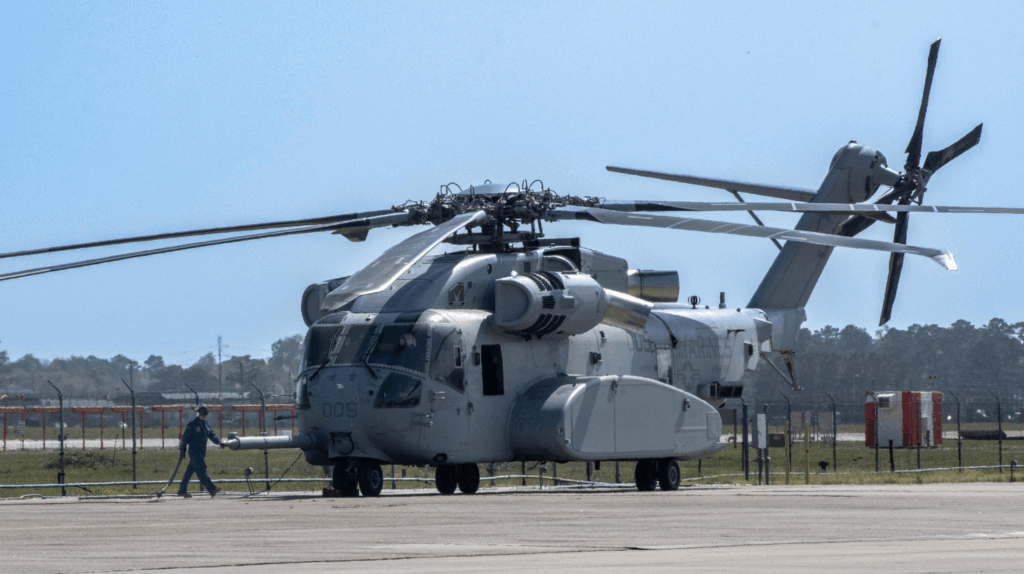
Marine Master Sgt. Richard Hughes, maintenance chief at Fleet Readiness Center East (FRCE), prepares to secure the rotor blades of a CH-53K King Stallion helicopter that arrived at the depot April 4 for routine maintenance. FRCE inducted the aircraft April 17 as the first of 14 planned for induction as part of the Age Exploration Program, Depot (AEPD); it is the first King Stallion ever inducted for depot-level maintenance. (U.S. Navy photo)
From FRCE, May 15, 2025
MARINE CORPS AIR STATION CHERRY POINT, N.C. — Fleet Readiness Center East (FRCE) opened a new chapter in its support of naval aviation’s heavy lift mission with the induction of a CH-53K King Stallion April 17, marking the first time the platform has ever been inducted for depot-level maintenance.
The aircraft arrived April 4 from Marine Heavy Helicopter Squadron 461 (HMH-461) onboard Marine Corps Air Station New River, and is the first of 14 CH-53K helicopters that will undergo routine maintenance at FRCE as part of the Age Exploration Program, Depot (AEPD). AEPD collects information regarding the aircraft’s condition through controlled testing and analysis and assists in the development of effective and efficient maintenance schedule for new aircraft.
FRCE Commanding Officer Capt. Randy J. Berti said the induction of the CH-53K – also known as the “Kilo” – allows the command to continue its long history of supporting the H-53 community while expanding its role in sustaining the new heavy lift platform.
“For many years, FRC East has provided the heavy lift community with world-class service in support of sustainment,” Berti said. “As aviation technology continues to evolve, we’re excited to add the CH-53K King Stallion to our portfolio. This first induction as part of the Age Exploration Program will allow us to learn more about the aircraft and refine the processes and procedures that will help us continue our critical role in driving flight line readiness for our nation’s warfighters.”
The CH-53K King Stallion is the U.S. Marine Corps’ heavy-lift replacement for the venerated CH-53E Super Stallion. The King Stallion is the largest and most powerful helicopter in the U.S. Department of Defense and will expand the fleet’s ability to move more material, faster throughout the area of responsibility. The CH-53K is designed to carry 27,000 pounds at a mission radius of 110 nautical miles in U.S. Navy high/hot environments, which is almost triple the baseline of the CH-53E. Its maximum external lift capability is 36,000 pounds. It is also designed to have a smaller shipboard footprint, lower operating costs per aircraft, and fewer direct maintenance man hours per flight hour.
The AEPD induction arrives following years of coordination between FRCE, the Fleet Support Team, the Naval Air Systems Command H-53 Heavy Lift Helicopters Program Office (PMA-261) and the Marines who fly the Kilo.
“This first CH-53K induction into depot maintenance signifies the maturation of the platform and the readiness of our sustainment enterprise,” said PMA-261 Assistant Program Manager for Logistics Lt. Col. Matthew Russell. “The exceptional collaboration between PMA-261, FRC East, Marine Aircraft Group 29, and the Fleet Support Team, which began over three years ago, has established a foundation for long-term support of the King Stallion’s heavy-lift capability.”
FRCE H-53 Branch Head Michael Paul said the arrival of the CH-53K, in many ways, represents a new horizon – both for the rotary-wing program at the depot and for the fleet.
“Simply put, it’s our future. The legacy platform, the CH-53E, has been there for 40-plus years and it’s slowly being phased out,” he explained. “The MH-53E, the last few are in the plant right now – we have four left – and then that will be the end of our planned maintenance for the MH community, the Navy version of the aircraft. The CH variant flown by the Marine Corps is shrinking its footprint here, with just about five inductions per year.
“And so the future, not only for FRC East but also for the fleet, is the K model program. It’s the newest generation helicopter out there, and so that means that this is the future for the next 20, 30 or 40 years, for the product team here.”
Jeff Warren, CH-53K capability establishment lead at FRCE, said the Kilo’s arrival at the depot also represents the future of the platform’s sustainment schedule. The 14 inductions under AEPD will help determine the aircraft’s planned maintenance interval (PMI) schedule. A planned maintenance interval is a period of time prescribed for the execution of a maintenance event.
“This aircraft’s induction corresponds with a specific number of flight hours, which has been set as a mark on the wall,” he said. “It will be inspected to see if there’s any major structural damage, along with the 13 more behind it. Their condition is going to dictate whether future aircraft PMI events need to happen at this number of flight hours or, if we’re not seeing any major structural issues or overall fatigue of the aircraft, whether the PMI event can be bumped out by an additional number of flight hours. It’s setting a precedent of what the future schedule will look like for depot-level maintenance.”
Warren said the depot’s findings during AEPD will have implications that stretch down to all levels of maintenance, from the heavy maintenance, repair and overhaul at the depot level (D-level) to the maintenance performed at the organizational level (O-level) by the squadrons flying the aircraft, and the intermediate level (I-level) performed by the maintenance and logistics squadrons in between.
“The squadron’s already doing those O-level maintenance actions, but during AEPD, we’re performing O-level and I-level maintenance in conjunction with the depot level. We’re verifying processes and procedures,” Warren said. “This allows us to critique and refine the O- and I-level technical data, to red-line it, effectively, and then develop the depot-level tech data to assist with future depot requirements, because FRC East is the first-ever to conduct depot-level maintenance on the CH-53K.”
Paul said his team on the H-53 line will perform around 800 inspections on the aircraft in order to properly assess its condition, a process that will take almost half of the planned AEPD cycle time.
“We developed a generic template for the inspect and repair phase using the CH-53E and MH-53 as a starting point, assuming the work on the Kilo will be like and similar,” Paul explained. “However, this is the first time any K model aircraft will be disassembled and inspected at this level, and there are differences. It’s computer-based, sensor-based, fly-by-wire, with more composite.
“We have some ideas of what we’re going to find, but there are going to be some areas we’re looking into that nobody has inspected before. We are physically putting our eyes on everything: framing, composite, flight controls, every wiring harness, all the wiring … everything has to be looked at,” Paul continued. “We’re going to conduct these 800-plus inspections, gather the details of any discrepancies we find, correct those we know how to correct, and refer to engineering for solutions the ones we don’t have any knowledge of. Based on their solutions, we will implement those changes to correct those discrepancies, as well. There are a lot of unknowns going in, but it’s an exciting time for the group here.”
Current labor estimates for the AEPD process are based on the PMI process for the CH-53E and MH-53E, and only include work on the airframe itself and not on components that will eventually get routed to back shops, once those capabilities are established. Until then, components will be removed from the aircraft, visually assessed, and exchanged for new components if replacement is required.
According to Warren, the depot should stand up its first batch of CH-53K component capabilities this summer, with the first engines capability established in early fall. All told, FRCE plans to establish capability on about 150 components and dynamic components for the Kilo. The second CH-53K scheduled for AEPD induction should arrive at FRCE in late 2026, with the next two following within fiscal year 2027. FRCE will remain the only depot source of repair for the CH-53K until FRC Southwest, located on Naval Air Station North Island, California, establishes its King Stallion airframes capabilities, which should take place sometime in the early 2030s, he said.
FRCE is North Carolina’s largest maintenance, repair, overhaul and technical services provider, with more than 4,000 civilian, military and contract workers. Its annual revenue exceeds $1 billion. The depot provides service to the fleet while functioning as an integral part of the greater U.S. Navy; Naval Air Systems Command; and Commander, Fleet Readiness Centers.
New Systems Pending, but Coast Guard ‘Stretched Thin,’ Lunday Says
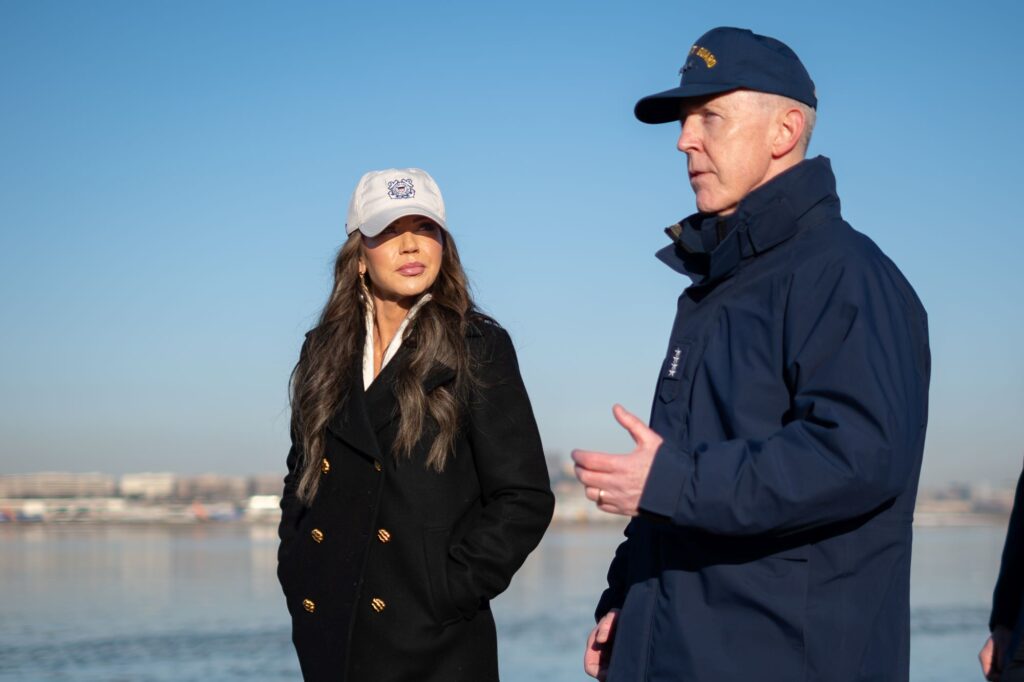
Secretary of Homeland Security Kristi Noem and Admiral Kevin Lunday, acting Commandant of the Coast Guard, shown here discussing response efforts in Washington D.C., January 30, after a helicopter and passenger jet collided. Photo credit: U.S Coast Guard | Petty Officer 1st Class Brandon Giles
Much-needed new ships are on the way for the U.S. Coast Guard, acting Commandant Admiral Kevin Lunday told members of a House Armed Services Committee panel on May 14 as Congress prepares to receive defense budget requests from the new administration.
Lunday noted the service quickly moved resources to the Southern U.S. border in the wake of the presidential election.
“In January of this year, under the leadership of Secretary [Kristi] Noem, I directed our operational commanders to immediately increase Coast Guard presence along the U.S. border and maritime approaches, starting with the southern border where the president has declared a national emergency,” Lunday told members of the committee’s Subcommittee on Homeland Security. “We surged forces, tripling the number of forward-deployed air and surface assets in that area.”
The service also moved to continue operations to control the northern border, including on the Great Lakes, to maritime approaches around Alaska, Hawaii and U.S. territories in the Pacific.
“Tasked with defending the nation’s maritime borders, countering threats like illegal migration and drug trafficking, safeguarding our ports and waterways, responding to maritime disasters, and saving lives, the service is now stretched thin, with significant workforce shortages and aging, underfunded assets and infrastructure nearing collapse,” he said. “The Coast Guard’s current organizational structure and reactive posture are no longer adequate to meet current and emerging challenges.”
Acquisitions
Last month, Lunday debuted a plan called Force Design 2028, aimed at addressing those issues. It will focus on four major areas: People, organization, acquisition and contracting and technology, including an effort to “Develop a high velocity acquisition and contracting system to rapidly deliver the assets the service needs to fulfill its commitment to the American people.”
Some much-needed assets are already in the works, Lunday told members of the panel, with new production milestones achieved.
The service’s top ship acquisition priority is the polar security cutter and Lunday said the first PSC received approval on April 30 for full production by Bollinger Shipyards. Functional design maturity has topped 95 percent, so “they already are construction 10 of the pre-fabrication assembly units, which are the bottom center sections of that new icebreaker,” he said.
Likewise, the service is moving ahead to replace its aging construction tenders and river tenders, which maintain aids to navigation, and some of which have been in service since the 1940s. The DHS has approved the construction of the first eight of the new water commerce cutter being built by Birdon America, with their homeports to be decided later.
New systems are needed in the air as well, Lunday said.
The recent termination of the C-27J missionization program and stalled growth in our HC-130J program place our readiness to conduct various missions in jeopardy, including long range surveillance, disaster response, and border security operations,” he said. “For our rotary wing fleet, it is imperative that we continue and accelerate transition of air stations from the short-range MH-65E to the medium-range MH-60 to ensure sustainability and increase our capability to serve our national priorities.”
Airbus U.S. Space & Defense, L3Harris Partner on Integration for Aerial Logistics Connector
From Airbus U.S. Space & Defense and L3 Harris, May 14, 2025
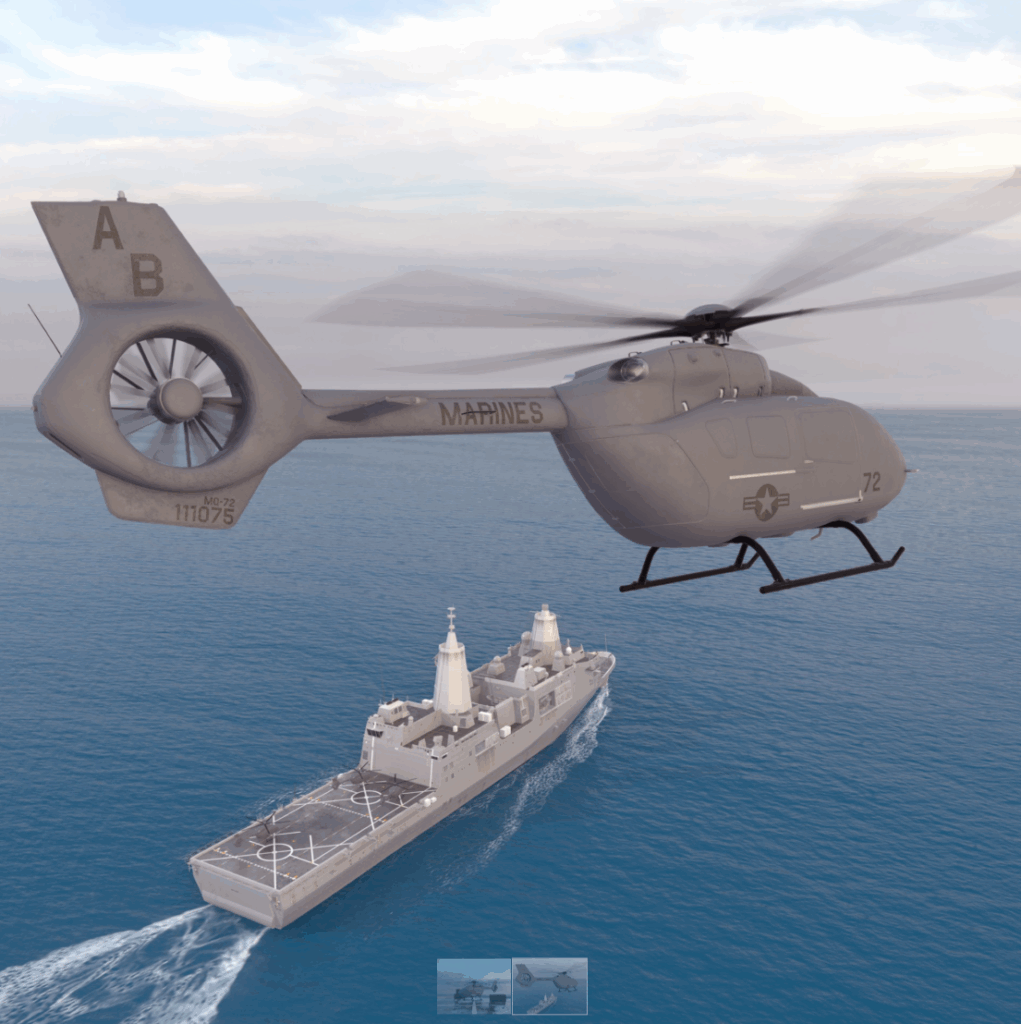
WASHINGTON (May 14, 2025) — Airbus U.S. Space & Defense and L3Harris Technologies (NYSE: LHX) announced a teaming agreement to incorporate L3Harris’ proven platform system integration capabilities on the Airbus MQ-72C Logistics Connector, an unmanned variant of the UH-72 Lakota helicopter.
Airbus will utilize L3Harris’ robust digital backbone with integrated command and control nodes. Combined with their modular open systems approach, the infrastructure enables the U.S. Marines to rapidly integrate third-party, commercial off-the-shelf hardware that will enable maximum system versatility and mission adaptability.
“Our MQ-72C platform is capable of supporting the warfighter on a range of unmanned operations that will support the future fight,” said Robert Geckle, Chairman and CEO, Airbus U.S. Space & Defense. “Partnering with a proven systems integrator opens the aperture on what our aircraft can do operationally in contested and austere environments.”
This partnership will allow the Marines’ mission sets to evolve over the next several years and will enable more advanced levels of systems integration across the Marine Corps and broader joint force.
“We are focused on accelerating development to get this capability into the hands of military personnel,” said Jason Lambert, President, Intelligence, Surveillance and Reconnaissance, L3Harris. “With more than 60 years of experience in aircraft systems integration, L3Harris brings proven expertise developing complex mission system design and integration to enhance operational effectiveness in contested environments.”
The Airbus team is entering the second year of the Aerial Logistics Connector Middle Tier of Acquisition Rapid Prototyping Program, which aims to provide the service with aircraft prototypes to demonstrate capabilities to the warfighter through a series of operational demonstrations and experiments.
The Aerial Logistics Connector effort is one of several across the Department of Defense to deliver logistical support in distributed environments during peer or near-peer conflicts.